
How humanity could enjoy greater prosperity while consuming a fraction of the resources we use today.
Humanity is currently consuming the equivalent of approximately 1.8 Earths every year.
One Planet
But how is that even possible? We only have one planet!
The answer is that we are consuming natural resources and overwhelming nature’s ability to regenerate faster than it can recover.
Imagine a fishing population that can sustainably reproduce 100,000 tonnes of fish annually, while fishing fleets catch 150,000 tonnes. The additional 50,000 tonnes are taken from the existing population, gradually depleting it. Or imagine a forest that grows 1,000 cubic meters of new wood every year, while we harvest 1,500. Eventually, the forest begins to disappear.
The same principle applies to fertile soil, groundwater reserves, and countless other natural resources. And when we burn fossil fuels, we release more CO₂ than natural ecosystems can absorb, causing the excess to accumulate in the atmosphere.
We are effectively consuming tomorrow’s resources today, while leaving the environmental consequences for future generations.
We are living beyond our ecological means mainly because we have spent decades living beyond our financial means.
Our financial numbers can grow indefinitely on paper. Our planet cannot. Unfortunately.
The Astonishing Contradiction
Despite humanity’s extraordinary consumption of natural resources, billions of people still struggle to meet their basic needs. Millions lack adequate housing, food, clean water, healthcare, and other necessities of life.
We are consuming more than our planet can sustainably provide, while still failing to provide adequately for everyone living on it.
But what if the problem is not primarily how much we are capable of producing?
What if the problem is how we organize production, distribution, and consumption in the first place?
What if we could provide everyone with an extraordinary standard of living while consuming dramatically fewer resources than we do today?
And what if we already have the technology to make this possible?
The Extraordinary Waste of Ownership
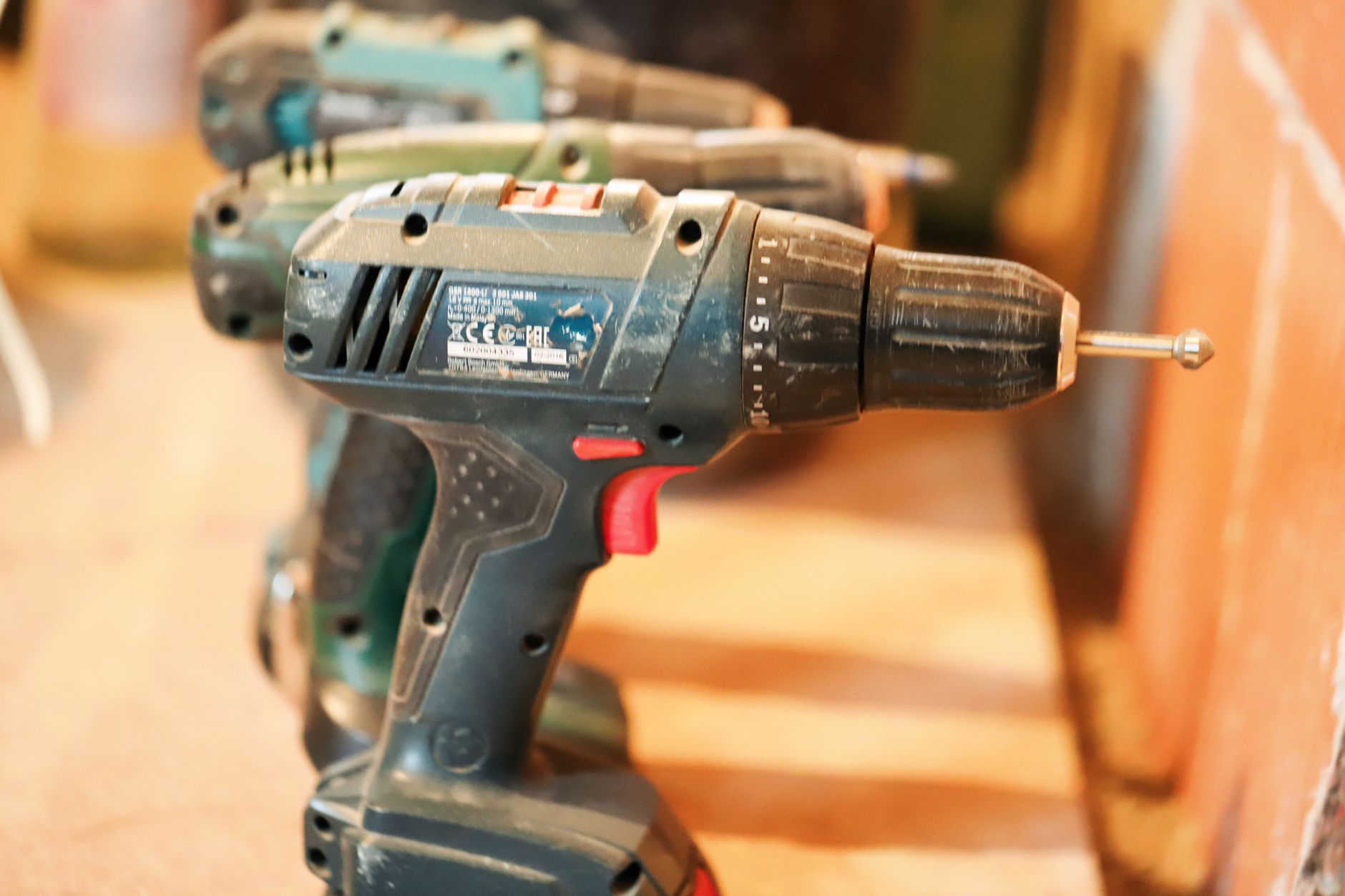
Consider something as ordinary as a cordless battery drill.
Millions of households own one. Some use theirs regularly, while others might use theirs only a few times a year.
For most of their existence, these drills sit in cupboards, garages, and storage rooms, doing absolutely nothing.
Yet every one of them required materials, energy, manufacturing facilities, transportation, and human effort to produce.
And manufacturers continue producing and selling more.
But let’s ask a different question.
How many drills does humanity actually need?
Not how many drills can be sold.
Not how many drills people can be persuaded to buy.
How many drills are genuinely needed to ensure that everyone who needs to drill a hole can do so whenever necessary?
That is a fundamentally different question.
And answering it could change everything.
From Ownership to Usership
Imagine a resource-based economy in which everything is organized around meeting human needs rather than generating monetary transactions.
You need a drill.
You simply request one through your personal interface, and a suitable drill is delivered to your home.
There is no payment, rental fee, or borrowing deadline.
You use it for as long as you need it.
Perhaps you are renovating your home and need it for several months. Perhaps you are a carpenter and use it every day. Or perhaps you only need it to hang a picture.
Whatever your situation, the drill remains available to you for as long as you genuinely need it.
But suppose you finish your project and realize that you probably won’t need it again for some time.
You simply mark it as available in the resource network.
You don’t necessarily have to take it anywhere. It can remain in your cupboard until someone else requests it.
When that happens, the system arranges for the drill to be collected and delivered to its next user.
And if nobody needs it, it can simply remain where it is.
There is no compulsory redistribution, no arbitrary time limit, and no bureaucracy deciding whether you deserve to have a drill.
The system operates through cooperation, trust, and intelligent coordination.
This is the principle of usership rather than ownership.
The important thing is not that everyone possesses their own drill.
The important thing is that everyone has access to a drill whenever they need one.
Networked Abundance
Now imagine that the drill contains a small chip that monitors its technical condition and usage.
The system might notice that it hasn’t been used for a week.
Your personal interface could display a friendly message:
“We notice that your drill hasn’t been used recently. Someone nearby is looking for one. Would you like to make yours available, provided you don’t have any upcoming projects?”
You can answer yes or no.
That’s all.
The technology doesn’t command you. It simply makes cooperation easier.
Such monitoring would be voluntary and privacy-preserving, without tracking your activities or sharing unnecessary personal information.
The system would know how many drills are available, how many are currently needed, and where additional drills might be required.
If demand increases beyond the available supply, more drills will be manufactured.
But here comes another important difference.
Last for Decades
Every drill would be designed to last for decades.
It would be durable, repairable, upgradeable, and eventually recyclable.
There would be no incentive to make it fail prematurely, become unfashionable, or require replacement simply to generate another sale.
The objective would be to manufacture as few drills as necessary while ensuring that everyone always has access to one when needed.
And this principle would apply to virtually everything.
Coordinating the Resources of Humanity
Imagine applying the same system to household appliances, furniture, computers, vehicles, construction equipment, gardening tools, machinery, countless other products. And even houses themselves.
Millions of Empty Homes
Today, we have the extraordinary situation where millions of homes stand empty while millions of people are homeless. In some countries, vacant homes actually outnumber homeless people. Yet these homes remain unoccupied because access to housing is determined by ownership, money, and purchasing power rather than human need. In a future of coordinated abundance, this contradiction would be a thing of the past. Available homes would be matched with people who need them, while new housing would be constructed wherever existing homes could not meet actual demand. Housing would no longer be treated primarily as a financial asset, but as what it fundamentally is: a place for people to live. And in the world I envision you will be able to live in your home as long as you want. And when you want to move, someone else will be able to use that dwelling. No buing or selling. Only use based on what you need.
Some resources would naturally remain with the same person or household for decades.
Others would circulate frequently.
Some would be permanently installed in homes, workplaces, or public infrastructure.
The system wouldn’t impose one rigid model of sharing on everything. It would adapt to the nature of the resource and the needs of the people using it.
And because all these resources would be connected through a global information network, humanity could develop an extraordinarily accurate picture of what is available and what is needed.
Production would respond to actual requirements rather than sales forecasts.
Materials could be allocated according to availability, ecological impact, and agreed human priorities.
Products could be repaired before they fail.
Surplus resources could be redirected to where they are needed.
And unnecessary production could be avoided before it even begins.
This is what I call coordinating abundance.
Not producing unlimited quantities of everything, hoping it will sell.
But intelligently coordinating what we have, producing what we genuinely need, and ensuring that everyone has access to the resources necessary for a fulfilling life.
The Economic Calculation Problem
More than a century ago, economist Ludwig von Mises argued that an economy without market prices for productive resources would face a fundamental problem.
How would it calculate what to produce, how much to produce, and where to allocate resources?
Centralized Economic Planning
The Soviet Union subsequently demonstrated many of the difficulties associated with centralized economic planning.
Production quotas, bureaucratic decision-making, inaccurate information, shortages, and long waiting times became familiar features of that system.
People could sometimes wait years for housing or other goods.
But a modern resource-based economy would look nothing like the Soviet system.
Mises was writing in 1920.
He could hardly have imagined today’s global communication networks, artificial intelligence, sensors, automated production facilities, and computational capabilities.
Today, billions of people can communicate their needs almost instantaneously.
Products themselves can report their condition and availability.
Manufacturing systems can monitor material requirements and production capacity.
AI can help identify shortages, forecast demand, optimize distribution, and compare different ways of using available resources.
This does not mean that every allocation problem automatically disappears. Scarce resources still require decisions about priorities, and competing needs must be considered transparently.
But the information-gathering problem that once seemed overwhelming can now be approached in entirely new ways. We do not need a centrally planned system.
We can have a decentralized system based on need.
State Your Need
Unlike a monetary economy, where purchasing power determines much of what counts as demand, a resource-based economy would register people’s needs directly. You simply state your need into the system and the system takes care of it, producing and distributing whatever is needed. And everything doesn’t have to come from machines. It can come from humans too, who might be voluntary taking part in the production because the feel like it. Be it a homestead producing a big surplus of tomatoes that are shared, or a violin maker having hand crafted a new violin. The violin can be given as a gift to whomever the maker chooses, or be added to the system and then go to whomever has stated a need for a violin.
There would also be no commercial incentive to persuade people to consume more than they need merely to increase sales.
The purpose of the system would not be to maximize transactions.
It would be to maximize human well-being through the intelligent use of available resources.
Less Than One Earth
Now let’s return to the extraordinary fact that humanity currently consumes the equivalent of approximately 1.8 Earths annually.
What could happen if we applied these principles across the entire global economy?
- We would eliminate much of the unnecessary duplication of products that spend most of their lives unused.
- We would manufacture products designed to last decades rather than years.
- We would coordinate production with actual needs, substantially reducing overproduction and waste.
- We would recover and reuse materials wherever technically practical, reducing the need for new extraction.
- We would optimize transportation, construction, agriculture, energy systems, and industrial processes to minimize unnecessary resource expenditure.
And finally, we could introduce something that may be just as important as technological optimization.
A little self-restraint.
Not deprivation.
Not poverty.
Not the abandonment of modern comforts.
Simply the realization that we do not need everything we might be persuaded to want.
Could humanity reduce its ecological footprint from approximately 1.8 Earths to less than one?
A Simple Illustration
If we reduced our present ecological footprint by 30%, we would still require the equivalent of approximately 1.21 Earths.
A 40% reduction would bring us down to approximately 1.04 Earths.
And a 50% reduction would bring us to approximately 0.87 Earths. And this would not mean eating only half of what we do today, even though that could be good for us in many cases. No, it would mean wasting much less, and using what we have much more efficiently.
In other words, starting from 1.8 Earths, a reduction of just over 42% would theoretically bring humanity well within the annual regenerative capacity of our planet.
These are illustrative calculations, not predictions. Ecological footprints include different environmental pressures, and reducing material extraction does not automatically translate into an identical reduction in ecological footprint.
But they reveal the scale of the opportunity.
Research into circular production, longer product lifetimes, sharing, and resource efficiency already indicates that substantial reductions in material requirements are technically possible.
And a resource-based economy could combine these strategies within a system whose very purpose is to minimize unnecessary resource use.
Could we eventually achieve an ecological footprint of 0.9 Earths? Or even less?
We cannot know without detailed modelling, practical experimentation, and a thorough understanding of the resources needed to provide a good life for everyone.
But the possibility deserves serious investigation.
Because the question is no longer simply how humanity can reduce consumption.
It is how much consumption could become unnecessary if we fundamentally changed the way we organize civilization.
Abundance Without Overconsumption
Here is perhaps the most remarkable aspect of this vision.
Imagine living in such a world.
You have a comfortable home, excellent food, reliable transportation, modern technology, entertainment, healthcare, and access to everything necessary for a rich and fulfilling life.
You don’t feel restricted.
You don’t feel deprived.
You don’t feel that you are constantly sacrificing something for the sake of the planet.
In fact, you might feel considerably more prosperous than you do today.
Yet behind the scenes, humanity could be extracting dramatically fewer resources, manufacturing far fewer unnecessary products, and generating far less waste.
Your refrigerator might last 100 years.
Your washing machine might be repaired and upgraded rather than replaced.
Your vehicle might be part of an intelligent transportation network.
Your home might be constructed from durable, reusable materials.
And your cordless drill might spend part of its life helping other people instead of gathering dust in your cupboard.
All without compromising your freedom or convenience.
Of course, this would require reliable infrastructure, sufficient reserves, excellent logistics, and the ability to respond quickly to emergencies and unexpected needs.
Efficiency must never come at the expense of resilience.
But the central principle remains.
We could maximize the experience of abundance while minimizing the consumption of resources.
And this brings us to a fundamental misunderstanding that has shaped much of modern civilization.
We have confused prosperity with consumption.
We have confused wealth with ownership.
And we have confused economic growth with human progress.
But these things are not necessarily the same.
A society that produces twice as many products is not automatically twice as prosperous.
A person who owns fifty tools is not necessarily better off than someone who has reliable access to thousands.
And a civilization that consumes nearly two planets’ worth of resources a year is not necessarily providing a better life than one that lives comfortably within the capacity of a single planet.
Perhaps genuine prosperity is not about how much we consume.
Perhaps it is about how well we live.
A New Understanding of Prosperity
Since you have read this far, I assume you like to read! And if you would like to read some more, maybe immerse yourself in a story from the future world described in this article?
If so, I invite you to check out the novel: Waking Up – A Journey Towards a New Dawn for Humanity.
There, you will experience this new world firsthand through the eyes of the bewildered billionaire Benjamin Michaels, a man who chose cryonic preservation in an attempt to escape his terminal cancer. He wakes up in this world 100 years later and is shocked, to say the least…
Leave a Reply