Tag: PROTOPIA

  • Ecosystem or Egosystem?

    Ecosystem or Egosystem?

    From Nature’s Balance to Human Separation

    Nature spent billions of years creating an ecosystem.

    Humanity created an egosystem.

    The Web of Life Without Ownership

    Look closely at the natural world. 

    Forests, rivers, oceans, insects, birds, bacteria, fungi, and mammals all participate in an intricate web of life. Countless species compete at times, cooperate at others, and continuously recycle the same resources over and over again. The system itself has no concept of ownership. No tree claims the sunlight alone. No river demands payment for its water. No forest builds fences around the rain.

    The Rise of the Ego

    Then came us.

    Gifted with extraordinary intelligence, imagination, and self-awareness, we also developed something else: the ego. The persistent feeling that we are separate from one another, that survival depends on securing more than everyone else. The fear of not having enough. 

    Gradually, the ecosystem became an egosystem.

    From Stewardship to Ownership

    Instead of saying, “There is enough for all of us if we care for it wisely,” we began claiming pieces of the Earth as our own. We built fences, borders, and walls. We fought over land, minerals, water, forests, and eventually even ideas.

    Ownership replaced stewardship.

    Trading replaced sharing.

    Competition replaced cooperation.

    Money became the language through which access to the Earth’s resources was decided.

    The Birth of the Monetary Mindset

    The monetary system did not emerge in a vacuum. It emerged from minds that increasingly viewed the world through separation rather than connection. Once enough people believed that “mine” mattered more than “ours,” a system built on ownership, trade, and accumulation became almost inevitable.

    Living Inside the Egosystem

    Today we still live inside that egosystem.

    We measure success by monetary wealth rather than well-being. We compete for jobs, status, and possessions while surrounded by astonishing technological and natural abundance. We have learned how to produce enough to feed billions, yet millions still go hungry because access depends more on purchasing power than on human need.

    The Ego in Action

    The ego continues to shape our world in subtle and obvious ways. Nations arm themselves not only for protection, but out of fear of losing power. Corporations prioritize profit over planetary health, extracting resources faster than ecosystems can regenerate. Individuals compare, compete, and consume, often chasing identities built on status rather than substance.

    We see it in conflicts that could have been avoided through cooperation and communication. In food wasted while others starve. In oceans filled with plastic while we continue to produce even more. In the relentless pursuit of growth, even when that growth undermines the very ecosystems that sustain life.

    A Different Question

    Nature asks a different question.

    Can the whole system continue to flourish?

    Our egosystem asks another.

    How can I get more?

    Signs of Awakening

    And yet, something is changing.

    Across the world, signs of awakening are emerging. People are beginning to question the assumptions that built the egosystem. Movements for peace, sustainability, and social justice are growing and have been doing so for decades. Communities are rediscovering cooperation, and work together to grow healthy food. Renewable energy is replacing fossil fuels more and more. Forests are being restored. Cities are being redesigned with nature in mind.

    More and more individuals are recognizing that personal well-being cannot be separated from the well-being of others, or from the health of the planet itself.

    The Great Shift

    This is the beginning of a shift.

    Not a sudden revolution, but a gradual remembering.

    A remembering that we are not separate from nature, but expressions of it.

    A remembering that true security comes not from accumulation, but from collaboration and connection.

    Returning to the Ecosystem

    Perhaps the greatest transition humanity will ever make is not from one technology to another, nor from one political ideology to another.

    It is from the egosystem back to the ecosystem.

    Not by abandoning civilization, but by bringing civilization back into harmony with the living world that made it possible in the first place.

    A New Way of Living

    When we finally understand that we are not owners of the Earth but rather temporary stewards of it, everything changes.

    In that awakening, the world begins to transform. Systems once built on competition evolve toward collaboration. Resources are managed for collective well-being rather than individual gain. Technology is guided by wisdom, not just profitability. The boundaries between “mine” and “yours” soften into a shared sense of responsibility.

    The World We Can Create

    This is the world imagined in the book Waking Up – A journey towards a new dawn for humanity.

    A world where humanity has remembered its place within the greater whole.

    A world where the egosystem has given way to an ecosystem of consciousness.

    Perhaps humanity’s future depends on nothing less than this choice. Choose to continue the egosystem until we perish or choose to turn completely back to the ecosystem… 

    Follow the bewildered billionaire Benjamin Michaels when he wakes up after 100 years in cryostasis, only to find a world that has embraced the ecosystem. The egosystem he relied on of money, trading and ownership is gone. His dream of expanding his empire is shattered, but maybe a new dream is born in him…?

    Discover his story

  • Living Off the Land

    Living Off the Land

    In a traditional and survivalist context, living off the land means becoming entirely self-reliant by growing your own food, foraging, harvesting natural energy (like solar or wind), and building your own shelter. This is the traditional view. But maybe it actually means something more? Something much deeper and truly life altering for the whole of humanity?

    For countless people around the world, a quiet revolution has already begun.

    Some are buying small farms. Others are transforming ordinary backyards and frontyards into thriving food forests. Lawns are becoming vegetable gardens. Empty plots are filling with fruit trees, herbs, berries, and flowers that attract bees and butterflies instead of lawnmowers.

    Many of these people aren’t doing it to become rich.

    They’re doing it because something deep inside tells them there must be another way to live.

    One YouTuber joked that the easiest way to make friends is to grow too many tomatoes. Suddenly neighbors stop by. Conversations begin. Surplus is shared. What started as gardening quietly becomes community.

    Others have discovered unexpected benefits. Front-yard gardens reduce soil erosion. Trees provide shade for pedestrians during increasingly hot summers. Birds, insects, and pollinators return. The neighborhood itself becomes more beautiful and alive.

    None of this happens because someone is chasing profit.

    It happens because nature works through abundance.

    More Than Gardening

    At first glance, living off the land might appear to be little more than a hobby.

    In reality, it is something much more profound.

    It is a demonstration that many of our most fundamental needs can be met without passing through the monetary system at all.

    The tomatoes don’t ask for money before they grow.

    The apple tree doesn’t charge rent.

    The bees don’t send invoices for pollination.

    The soil doesn’t negotiate prices.

    Nature simply produces.

    Our role is to care for it.

    A Different Relationship

    Modern society has taught us to see almost everything through ownership.

    My land.

    My house.

    My harvest.

    My products.

    But perhaps that perspective is backwards.

    What if we really are not owners at all?

    What if we are simply temporary stewards of a tiny piece of Earth?

    A steward doesn’t exploit.

    A steward nurtures.

    A steward leaves the land healthier than it was found.

    When enough people think this way, abundance begins replacing scarcity.

    Beyond Money

    If you struggle to imagine a world without ownership, money, or trade, look at these gardens.

    They already exist.

    People exchange seeds, or give them freely when they have an abundance.

    They share knowledge freely.

    They give away excess vegetables.

    Neighbors help each other build greenhouses.

    Children learn where food actually comes from.

    Without realizing it, they are already participating in an economy based less on transactions and more on relationships.

    Not because anyone forced them.

    Because it simply feels natural.

    The Real Wealth

    The old monetary system depends on money.

    People do not.

    Nature certainly does not.

    Forests grew for hundreds of millions of years before the first coin was ever minted.

    Rivers flowed.

    Seeds sprouted.

    Life flourished.

    Money is a human invention.

    Life is not.

    The more we reconnect with the living systems that sustain us, the less dependent we become on artificial systems built around endless consumption and constant economic growth.

    A New Way Forward

    Living off the land does not mean everyone must become a farmer.

    Cities will still exist.

    Technology will continue to develop.

    Science, medicine, engineering, and countless professions will remain essential.

    But the principles behind living off the land can spread everywhere.

    Community gardens.

    Food forests.

    Edible parks.

    Fruit trees along streets.

    Rooftop gardens.

    Shared orchards.

    Regenerative agriculture.

    Every square metre returned to life becomes another step toward a healthier planet.

    From Gardens to Civilization

    Looking back, it all seemed so obvious.

    The seeds of the new world had been there all along.

    They were growing quietly in backyards, community gardens, small farms, balconies, rooftops, and food forests. Millions of people had already begun demonstrating the principle that would eventually transform civilization. They simply didn’t realize how profound it was.

    They weren’t just growing tomatoes.

    They were growing a new way of thinking.

    The tomatoes ripened.

    There were more than enough.

    A neighbor walked by.

    “You want some tomatoes?”

    “Sure!”

    “Take as many as you need. We have a surplus.”

    No negotiation.

    No invoice.

    No transaction.

    Just one human being helping another because there was more than enough for everyone.

    Humanity eventually realized that this simple interaction contained the blueprint for an entirely new civilization.

    If tomatoes could be shared because there was an abundance, why not everything else?

    Need a shovel? Here you go.

    Need building materials? Of course.

    Need a wheelchair? Certainly.

    Need a robot to help in the garden? Why not? We have plenty.

    As long as humanity had the resources, the knowledge, and the ability to produce something sustainably, it simply produced what people needed and shared it directly.

    The same philosophy that had quietly flourished in gardens expanded into neighborhoods.

    Neighborhoods inspired cities.

    Cities inspired nations.

    Eventually, the entire planet awakened to the same simple truth.

    We never actually needed money to satisfy human needs.

    Only the monetary system did.

    Once we understood that, everything changed.

    We stopped producing what generated the highest profit and started producing what created the greatest well-being.

    We stopped measuring success by accumulation and began measuring it by how much life flourished.

    We stopped exploiting the Earth as owners and began caring for it as stewards.

    Technology continued to advance faster than ever before, but now it served humanity instead of an economic machine. Artificial intelligence optimized production and distribution. Robotics handled the repetitive work. Resources were carefully monitored, restored, and shared. Ingenious inventions were spread globally instead of patented. Waste fell dramatically while abundance grew.

    For the first time in history, humanity had aligned its technology with nature instead of against it.

    We took only what we truly needed from the Earth.

    We restored what we used.

    And generation after generation started to leave the planet richer than they had found it.

    Perhaps the future was never waiting for some miraculous invention.

    Perhaps it began the moment we understood that the philosophy of living off the land was never really only about food.

    It was about learning how to live together.

    That is the journey Benjamin Michaels unexpectedly wakes up to one hundred years in the future in Waking Up – A journey towards a new dawn for humanity. A world that at first seems impossible, but that slowly reveals itself to have grown from thousands of small choices made by ordinary people—people who chose stewardship over ownership, abundance over scarcity, and sharing over endless competition.

    Perhaps the future does not begin with a revolution.

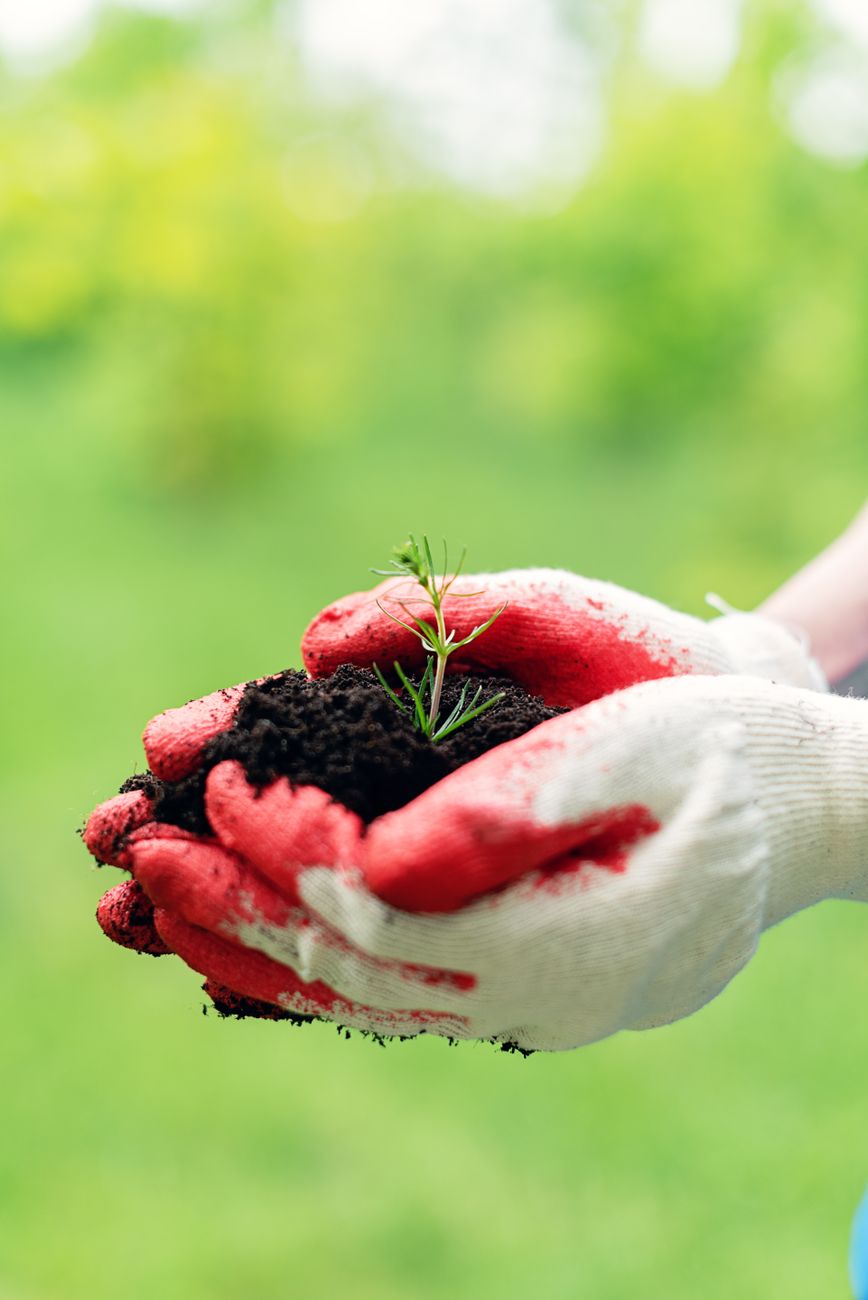
    Perhaps it begins with a single seed.

    Discover the story

  • The Death of Money

    The Death of Money

    It’s an almost apocalyptic title.

    The kind of title that immediately makes you think of empty supermarket shelves, closed banks, worthless banknotes and a world descending into chaos.

    Because if money dies…

    …what happens to us?

    The Book

    That is the question at the heart of The Death of Money, a fascinating book by economist, investment banker, lawyer and bestselling author James Rickards(74). Throughout his career, Rickards has advised governments, major financial institutions and even the U.S. defense and intelligence communities on financial risk, economic warfare and the international monetary system.

    When someone with that background writes a book with a title like The Death of Money, it is worth paying attention.

    Reserve Currency

    Rickards argues that the international monetary system has become increasingly fragile. The U.S. dollar has served as the world’s reserve currency since the end of the Second World War, becoming the foundation of international trade and finance.

    Confidence

    But that foundation rests on something surprisingly fragile.

    Confidence.

    The only value money possesses comes from only this one thing: 

    Our confidence in it.

    Not from gold.

    Not from silver.

    Not from the numbers displayed in our online bank accounts.

    Not even from the paper it is printed on.

    Confidence.

    That is all.

    The moment that confidence disappears…

    …so does the value of the currency.

    That simple observation changes everything.

    Growing debt, relentless fiat money creation, financial crises, geopolitical tensions, currency wars and increasing challenges to the dollar all place pressure on that confidence. Rickards argues that if confidence in the dollar(or other currencies for that matter) is seriously undermined, the consequences could spread throughout the entire international monetary system because no obvious replacement is waiting in the wings.

    Whether or not every prediction unfolds exactly as he expects is almost beside the point.

    His book forces us to confront a question most of us never ask.

    What happens if that confidence is lost?

    The Warnings

    Rickards is far from alone.

    For years, warnings have come from every direction. The LaRouche movement has long argued that the financial system is fundamentally unstable. Mainstream economists warn about unsustainable debt. Investors warn about bubbles. Governments quietly prepare for financial crises. Newspapers speak of inflation, banking instability, currency wars, de-dollarization, recession and geopolitical conflict.

    Different people describe different threats.

    Different people propose different solutions.

    Yet beneath all the disagreement lies the same uncomfortable feeling.

    Something doesn’t feel right.

    Something feels increasingly fragile.

    Perhaps that explains why The Death of Money resonates with so many readers.

    It gives a name to a fear that many people already carry.

    The Disaster

    Now imagine the warnings are right.

    Not every detail.

    Not every prediction.

    But the central concern.

    Imagine confidence suddenly evaporates.

    Banks close.

    Markets crash.

    Currencies collapse.

    Savings lose their value.

    Governments panic.

    Television screens fill with the words nobody ever wanted to hear.

    Financial collapse.

    Currency collapse.

    Economic emergency.

    The death of money.

    Fear spreads around the world.

    Because for centuries we have quietly come to believe that money is civilization itself.

    Without money…

    there is no food.

    No products.

    No joy.

    No work.

    No fun.

    No future.

    No survival.

    One question suddenly becomes more important than every other.

    What shall we do??

    The Illusion

    Will we die??

    No.

    Because money has never fed anyone.

    Money has never grown a single grain of wheat.

    Money has never purified a single drop of water, or made it rain.

    Money has never generated electricity.

    Money has never built a home.

    Money has never healed a patient.

    Money has never made a movie.

    Money has never created wealth.

    People do those things.

    Nature provides the resources.

    Technology transforms those resources.

    Human knowledge makes it all possible.

    Money has only organized access to them.

    It has only kept score.

    Somewhere along the way we forgot the difference.

    We stopped seeing money as a tool.

    We started seeing it as reality itself.

    Money became sacred.

    Question governments and people will argue with you.

    Question capitalism and people will argue with you.

    Question socialism and people will argue with you.

    Question banks and people will argue with you.

    Question money itself…

    …and many people think you’ve lost your mind.

    That is how deeply the illusion has taken hold.

    The Reality

    Imagine every currency disappeared tomorrow.

    What would actually disappear?

    Would the forests disappear?

    Would the rivers disappear?

    Would fertile farmland disappear?

    Would power stations disappear?

    Would hospitals disappear?

    Would engineers suddenly forget how to build?

    Would doctors suddenly forget how to heal?

    Would farmers suddenly forget how to grow food?

    Of course not.

    The real wealth of humanity would still be here.

    The Earth would still be here.

    Its resources.

    Its ecosystems.

    Its energy.

    Its knowledge.

    Its technology.

    Its people.

    Everything that actually sustains life would remain.

    Only the accounting system would have disappeared. And instead of the very unfair accounting system based on confidence in money, our accounting system could simply be based on confidence in each other, technology and Earth itself. Confidence that the Earth provides, technology can optimize and distribute it, and confidence in our own conscience, only taking what we need.

    Money has never been wealth.

    It has only represented wealth.

    The map is not the territory.

    The receipt is not the meal.

    The price tag is not the product.

    And money is not wealth.

    A New World

    James Rickards asks us to contemplate the death of money.

    I think he is asking exactly the right question.

    Because once we stop asking how to save money…

    …we can finally begin asking how to organize the real wealth of this planet directly.

    How do we organize food?

    Water?

    Energy?

    Housing?

    Healthcare?

    Education?

    Knowledge?

    Technology?

    Without depending upon an accounting system whose only value comes from our collective confidence in it.

    If confidence is what gives money value…

    …perhaps confidence itself is the real currency.

    The only remaining question is where humanity chooses to invest it.

    In paper.

    In numbers.

    In financial markets.

    Or in ourselves.

    In science.

    In technology.

    In the Earth.

    In stewardship instead of ownership.

    In the extraordinary abundance of this planet.

    And in each other.

    Maybe the death of money is not the death of our world, but rather the birth of a new one…

    And this world is exactly the one explored in the novel Waking Up: A Journey Towards a New Dawn for Humanity. It is a novel, not describing yet another post-apocalyptic dystopian future, but rather a future protopia, a world that that works for all and is constantly being improved.

    Join the bewildered billionaire Benjamin Michaels as he wakes up one hundred years into the future expecting to expand his empire.

    Instead, he discovers something he never imagined possible.

    Money is gone.

    Ownership is gone.

    Yet humanity has never been wealthier.

    Not because it created even more money.

    But because it finally learned to organize the real wealth of the Earth itself.

    Perhaps the death of money will turn out to be the best thing that ever happened to humanity…

    Discover his story

  • The Hopi Prophecy

    The Hopi Prophecy

    An ancient warning… and humanity’s journey towards a new dawn…

    A Choice, Not a Prediction

    “Humanity will one day stand before two paths.”

    For centuries, the Hopi people of what is now northern Arizona have carried an ancient warning.

    Not a prediction of unavoidable doom.

    Not a promise that the future has already been written.

    A choice.

    According to Hopi tradition, humanity eventually arrives at a crossroads. One path leads ever further from the living world—toward greed, domination, imbalance, and ultimately self-destruction. The other leads toward humility, cooperation, gratitude, and harmony with the Earth.

    It may seem that humanity has already chosen the first path. After all, much of our civilization has been shaped by greed, competition, exploitation, and a growing separation from the natural world. Yet a path is not the same as a destination. Every day, humanity continues to make countless choices—through our values, our technologies, our institutions, and the systems we create. The very fact that we are increasingly recognizing the consequences of our actions, searching for more sustainable ways of living, and reimagining how society might function suggests that the choice is still before us. The crossroads is not a single moment in history. It is the ongoing decision between continuing along a path of imbalance or turning toward one of regeneration, cooperation, and harmony with the Earth. 

    The future is not predetermined.

    It depends upon the path we choose to follow all the way. We can still get on the right path to a new destination.

    Whether one sees this as prophecy, philosophy, or timeless observation matters little.

    Because today, it feels more relevant than ever.

    Standing at the Crossroads

    Look around.

    The signs of imbalance are difficult to ignore.

    A changing climate.

    Disappearing forests.

    Plastic-filled oceans.

    Declining biodiversity.

    Soils losing their fertility.

    Wars over land, energy, and resources.

    Millions living in poverty while unimaginable wealth accumulates elsewhere.

    An economic system demanding perpetual growth on a finite planet.

    Record levels of stress, anxiety, loneliness and depression.

    Never before has humanity possessed such extraordinary technology.

    Never before have we placed such extraordinary pressure upon the very systems that keep us alive.

    If the Hopi prophecy speaks of a crossroads…

    Perhaps we are standing there now.

    The Wisdom of the Hopi

    What makes the Hopi teaching so remarkable is that it is not really about catastrophe.

    It is about relationship.

    For more than a thousand years, the Hopi have lived upon the mesas of Arizona, surviving not by conquering nature but by cooperating with it.

    Their philosophy begins with a simple truth.

    Human beings are not separate from the Earth.

    We belong to it.

    The land is not property.

    Water is not merely a resource.

    Animals are not commodities.

    Forests are not inventories.

    The Earth is a living community of which humanity is only one member.

    Everything is connected.

    To damage one part is ultimately to damage ourselves.

    To care for one part is to strengthen the whole.

    From that understanding flows an entire way of life.

    Take only what you need.

    Share what you have.

    Respect every form of life.

    Think beyond your own lifetime.

    Leave the world healthier for those who follow.

    Live with gratitude.

    Live with humility.

    Live in balance.

    Centuries before ecology became a scientific discipline, the Hopi had already understood one of its most profound truths.

    Life flourishes through relationship.

    Not domination.

    A Wisdom Rediscovered

    The Hopi were never alone.

    Across the world, Indigenous cultures preserved remarkably similar wisdom.

    The Sámi.

    The Māori.

    Aboriginal Australians.

    First Nations across the Americas.

    The Inuit.

    Many different peoples, separated by oceans and continents, arrived at the same understanding.

    Humanity thrives when it lives with nature, not against it.

    For a long time, industrial civilization dismissed such ideas as relics of the past.

    Progress seemed to point elsewhere.

    Produce more.

    Consume more.

    Extract more.

    Compete more.

    Own more.

    Sell more.

    Buy more.

    And so we built a civilization of astonishing power.

    Yet alongside our prosperity came ecological overshoot, pollution, loneliness, inequality, anxiety, conflict, and environmental decline.

    We became incredibly intelligent.

    But perhaps not yet wise.

    The Rediscovery

    Then, slowly, humanity began rediscovering what the Hopi had never forgotten.

    Scientists revealed how intricately connected Earth’s ecosystems really are.

    Climate researchers warned that planetary systems have limits.

    Ecologists demonstrated that every species depends upon countless others.

    Environmental organizations worked tirelessly to protect forests, rivers, wetlands, coral reefs, wildlife, and biodiversity.

    Farmers regenerated exhausted soils.

    Architects designed buildings to work with nature.

    Engineers developed renewable energy.

    Communities embraced repairing, sharing, and local resilience.

    Millions of people planted trees.

    Protected habitats.

    Reduced waste.

    Restored rivers.

    Stopped desert expansion.

    Not because they had all studied Hopi teachings.

    But because they were arriving at many of the same conclusions.

    Ancient wisdom and modern science were beginning to tell the same story.

    Everything is connected.

    The Missing Piece

    At first these movements appeared unrelated.

    Scientists offered evidence.

    Environmental organizations inspired action.

    Engineers created new technologies.

    Indigenous peoples preserved ancient understanding.

    Artificial intelligence accelerated discovery.

    Each held a different piece of the puzzle.

    Eventually humanity realized something profound.

    The environmental crisis…

    The social crisis…

    The economic crisis…

    The mental health crisis…

    They were not separate problems.

    They were symptoms of the same underlying imbalance.

    And that realization led to an even deeper question.

    If we truly believe the Earth is not ours to exploit…

    Why had we built an economic system that rewards exactly that?

    Why must forests become profitable before they are protected?

    Why should clean rivers compete with quarterly earnings?

    Why should healthy ecosystems justify their existence in financial terms?

    Why should houses primarily be investments instead of homes?

    Why should food first become a commodity before it feeds people?

    The more humanity reflected upon these questions, the clearer it became.

    The problem was not simply individual greed.

    The problem was systemic.

    The monetary system itself rewarded extraction more than regeneration.

    Competition more than collaboration.

    Ownership more than stewardship.

    Endless growth more than lasting balance.

    Even the kindest and most conscientious people found themselves participating in a system that produced outcomes they never wanted.

    The Hopi had warned about imbalance.

    Humanity finally understood where much of that imbalance had been designed into civilization itself. In The Monetary System.

    The Great Transformation

    That realization changed everything.

    Not overnight.

    But steadily.

    Peacefully.

    Thoughtfully.

    Humanity began redesigning society around an entirely different question.

    Not:

    “How can we create more monetary wealth?”

    But:

    “How can we help all life flourish?”

    Artificial intelligence no longer optimized profits.

    It optimized resources and natural systems.

    Automation liberated people from repetitive labour.

    Renewable energy replaced finite fuels.

    Agriculture regenerated ecosystems.

    Products were designed to last.

    Materials circulated endlessly.

    Resources flowed where they created the greatest benefit for humanity and the Earth, rather than the greatest financial return.

    Ownership gradually gave way to stewardship.

    Competition increasingly gave way to collaboration.

    The monetary system evolved into something entirely different and eventually it was completely gone.

    Instead, there was a civilization designed to preserve, regenerate, and intelligently optimize the Earth’s resources for the benefit of all living beings.

    Technology did not create this new world.

    It simply became the instrument through which humanity finally lived according to values it had long known in its heart.

    The wisdom came first.

    The system followed.

    Ancient Wisdom Meets the Future

    Looking back, historians found it almost poetic.

    Humanity had searched for the future in laboratories.

    In economics.

    In politics.

    In artificial intelligence.

    Those discoveries proved indispensable.

    Yet one of the most important pieces of the puzzle had quietly been preserved for centuries by a small Indigenous people living among the sandstone mesas of Arizona.

    The Hopi had never offered humanity a detailed blueprint for civilization.

    They had offered something even more valuable.

    A compass.

    A reminder that every generation must choose whether to live against the living world…

    or with it.

    Humanity did not become Hopi.

    Nor did it abandon science for spirituality.

    Instead, it allowed ancient wisdom and modern knowledge to walk hand in hand.

    One restored forest.

    One regenerated ecosystem.

    One technological breakthrough.

    One redesigned community.

    One act of generosity.

    One awakened generation at a time.

    Until, eventually, humanity chose the second path of humility, cooperation, gratitude, and harmony with the Earth.

    A Journey Towards a New Dawn

    This is the civilization that bewilders billionaire Benjamin Michaels when he awakens one hundred years after choosing cryogenic preservation in the hope of escaping his terminal cancer.

    He expected to find a richer world in money.

    Instead, he discovers a wiser one.

    A civilization where technology serves life instead of profit.

    Where stewardship has replaced ownership.

    Where resources are intelligently optimized and shared for the benefit of all.

    Where humanity finally learned that true prosperity is measured not by what we accumulate, but by the health of the living world we leave behind.

    Perhaps that was the deeper meaning of the Hopi prophecy all along.

    Not that the future was already written.

    But that humanity would one day be wise enough to choose it.

    Benjamin’s journey through that remarkable future is told in Waking Up: A Journey Towards a New Dawn for Humanity—a story of how ancient wisdom, human ingenuity, and a new way of organizing civilization opened the door to a new dawn for humanity.

    Discover his story

  •  Be the Change

     Be the Change

    “Be the change you wish to see in the world.”

    It is one of those rare slogans that has spread across the globe.

    Simple.

    Memorable.

    Inspiring.

    But what does it actually mean?

    For many, it means becoming a better person.

    Be kinder.

    More compassionate.

    Help others.

    Protect nature.

    Volunteer.

    Smile at strangers.

    Take responsibility instead of complaining.

    All of these things matter.

    They make the world a little better, one person at a time.

    But perhaps the slogan contains a deeper truth.

    Because no slogan has ever changed the world.

    Words alone never have.

    Only people do.

    More than words

    “Be the change” was never a magical phrase.

    It was an invitation.

    An invitation to stop waiting for politicians.

    Stop waiting for billionaires.

    Stop waiting for corporations.

    Stop waiting for someone else to solve humanity’s problems.

    Instead, it invited each of us to become part of the solution ourselves.

    And little by little, millions accepted that invitation.

    Some planted trees.

    Others cleaned beaches.

    Some invented cleaner technologies.

    Others built stronger communities.

    Some shared knowledge and time freely.

    Others cared for neighbors, strangers and those in need.

    Every act was small.

    Almost invisible.

    Yet together they represented something much larger.

    A shift in consciousness.

    Becoming stewards

    People slowly began to realize that they were not merely consumers.

    Not merely taxpayers.

    Not merely employees.

    They were stewards.

    Caretakers of their communities.

    Caretakers of nature and Planet Earth.

    Caretakers of future generations.

    Instead of asking,

    “What can I get?”

    More and more people began asking,

    “What can I contribute?”

    That single shift changed everything.

    The uncomfortable realization

    But as this movement grew, another realization emerged.

    Many discovered that they were trying to become the change while living inside a system that continuously rewarded the opposite.

    We encouraged kindness.

    The economy rewarded ruthless competition.

    We wanted to protect nature.

    The economy rewarded extracting from it.

    We wanted cooperation.

    The economy rewarded maximizing profit.

    We wanted enough for everyone.

    The economy rewarded accumulation by a minority.

    Good people found themselves swimming against a powerful current.

    And eventually humanity asked the uncomfortable question:

    What if the problem isn’t simply that people need to change?

    What if the system itself needs to change?

    The real meaning

    Perhaps this was the deeper meaning hidden inside the slogan all along.

    Being the change was never only about changing ourselves.

    It was about becoming the generation that dared to create a different civilization.

    A civilization where stewardship replaced ownership.

    Where collaboration replaced competition.

    Where abundance was shared instead of hoarded and sold.

    Where technology served humanity instead of profit.

    Where success was measured by the flourishing of both people and the living planet.

    Not because someone imposed it.

    Because enough people wanted it.

    The tipping point

    History rarely changes overnight.

    It changes quietly.

    One conversation.

    One idea.

    One community.

    One invention.

    One act of courage.

    Then another.

    And another.

    Until one day the impossible becomes inevitable.

    Perhaps that is exactly what happened.

    Enough people embodied the truth behind those three simple words.

    Be the change.

    Not merely as a slogan.

    But as a way of living.

    A critical mass was reached.

    A tipping point.

    Humanity understood that becoming better people inside an exploitative system was not enough.

    The system itself had to become the change.

    And so the old monetary system gradually gave way to something entirely different.

    The Humanitary System

    A civilization designed not to maximize profit, but to optimize life.

    A world where every decision began with a different question:

    “What benefits humanity and the Earth the most?”

    Everything else followed naturally.

    The change became the world

    Looking back, people smiled.

    For generations they had repeated,

    “Be the change you wish to see in the world.”

    They had imagined it was advice for individuals.

    In the end, it became the story of an entire civilization.

    The change was never just you.

    It was never just me.

    It was all of us.

    And when enough of us became the change…

    The whole world became it too.

    This is the world the bewildered billionaire Benjamin Michaels wakes up in 100 years after he was cryogenically frozen, trying to escape his cancer. 

    Imagine his surprise when he wakes up, expecting to continue the expansion of his empire, but there’s no money or ownership in the world anymore… Everything is optimized and shared. He encounters many things on his journey towards a new dawn for humanity…

    Discover his story

  • Imagine a World…

    Imagine a World…

    Imagine a world…

    Without taxes, loans, debts, mortgages, interest payments, lawyers, insurance premiums, financial stress, inflation, recessions, unemployment, politicians, election campaigns, lobbying, corruption, inequality, homelessness, most crime, pollution, environmental destruction, deforestation, collapsing ecosystems, biodiversity loss, species extinction, depleted soils, plastic-filled oceans, fossil fuel dependency, planned obsolescence, overconsumption, food waste, resource scarcity, hunger, preventable disease, child labour, exploitation, economic insecurity, war, refugees, nuclear weapons—or  money.

    At first glance, it sounds like fantasy.

    A paradise that could never exist.

    But before dismissing the idea, let’s take another look at that first paragraph.

    So Called Life

    Every month, you work hard, only to watch a large part of your salary disappear before you have even had the chance to decide what to do with it. Then come the bills. The mortgage. The rent. The electricity. The insurance. The phone. The internet. The car. The unexpected repair. The next tax payment. Another reminder. Another deadline. Another expense.

    You finally find the home you’ve always wanted.

    The price is more than you will earn in decades.

    So you borrow.

    Not for a few months.

    Not for a few years.

    For decades.

    Thirty years of monthly payments. Thirty years of hoping life doesn’t suddenly change for the worse. Thirty years of knowing that missing enough payments could cost you the very place you call home.

    You wake up when the alarm rings.

    Not necessarily because you are inspired by the day ahead.

    But because the bills are waiting.

    The mortgage is waiting.

    The tax office is waiting.

    Life has become a long chain of financial obligations.

    For many people, stress becomes so normal that they no longer even recognize it as stress.

    They simply call it life.

    Promised Solutions

    Meanwhile, political parties promise solutions. Elections come and go. Governments change. Policies change. Yet the underlying problems somehow remain. Society continues arguing over how to manage the system instead of asking whether the system itself could be  different.

    Around us, inequality keeps growing. Some accumulate wealth beyond imagination while others struggle to afford housing, healthcare or even enough food. Entire families work full-time and still live from one payday to the next.

    At the same time, the natural world quietly pays the price.

    Ancient forests disappear.

    Wetlands are drained.

    Topsoil—the thin living skin that feeds humanity—is steadily eroded.

    Rivers are polluted.

    Oceans fill with plastic.

    Coral reefs bleach.

    Fish stocks decline.

    Insects vanish.

    Birdsong grows quieter.

    Species that evolved over millions of years disappear forever.

    The climate becomes increasingly unstable while our economic system continues demanding more production, more consumption and more growth.

    And then there is war.

    Cities reduced to rubble.

    Children growing up surrounded by explosions instead of playgrounds.

    Families fleeing with nothing but what they can carry.

    Entire generations scarred by conflicts they never chose.

    Most of us have become so accustomed to all of this that we rarely stop to ask a simple question:

    Does civilization really have to work this way?

    Because every civilization is designed. More or less.

    Every economic system is designed. More or less.

    Every institution is designed. More or less.

    And what is designed can also be redesigned.

    Every great leap in human history first existed only in someone’s imagination.

    Every bridge.

    Every airplane.

    Every computer.

    Every spacecraft.

    Someone dared to imagine something that many believed was impossible. Yet, we have gone to the moon, invented the internet, aviation, nanotechnology, wireless communication and much much more.

    So why shouldn’t we dream just as boldly for humanity itself? For our future?

    Imagine Another Kind of World

    A world with intelligently optimized management and sharing of Earth’s resources.

    A world with a system designed to create more peace, more food, more health, more joy and more prosperity than humanity has ever imagined.

    A world where homes exist to be lived in instead of traded.

    Where technology removes unnecessary work instead of threatening people’s livelihoods.

    Where food production is optimized to nourish everyone while restoring the ecosystems that sustain us.

    Where energy is clean, abundant and designed around the long-term health of the planet.

    Where science, artificial intelligence and automation continuously improve transportation, healthcare, education and manufacturing—not to maximize quarterly profits, but to maximize human and ecological well-being.

    Where stewardship replaces ownership.

    Where collaboration replaces ruthless competition.

    Where sharing replaces unnecessary trading.

    Where success is measured not by how much one person accumulates, but by how much humanity and nature flourish together.

    It sounds like an impossible dream.

    But then again…

    Nothing has ever changed until someone first imagined that it could.

    That is the invitation of Waking Up: A Journey Towards a New Dawn for Humanity.

    Not to escape reality.

    But to imagine a civilization whose foundations are designed for something entirely different:

    Not endless accumulation.

    But lasting prosperity for all.

    Not profit above all else.

    But the flourishing of humanity and the living world together.

    The billionaire Benjamin Michaels wakes up in exactly this world after 100 years of cryonic sleep, hoping to expand his empire into the future. Imagine his surprise when he finds a world without money that works for all instead…

    Discover his story

  • The Bad Conscience of the West

    The Bad Conscience of the West

    There is a quiet discomfort that many people in the wealthier parts of the world carry with them.

    We rarely speak about it.

    Responsible Choices

    We recycle. We donate to charity. We buy organic food when we can. We choose fair-trade products. We try to make environmentally responsible choices.

    Yet many of us still have the feeling that something isn’t quite right.

    Deep down, we know that much of the prosperity we enjoy has come at a cost that others have paid.

    For centuries, the wealthiest nations built their fortunes by extracting resources, labour and wealth from other parts of the world, largely disregarding the life of the people we took it from.

    Colonialism officially belongs to history, but many of the economic structures that replaced it continue to concentrate wealth in some regions while leaving others struggling with poverty, conflict and environmental destruction.

    The minerals for our phones and computers are mined in poorer countries.

    The cotton for our clothes is grown there.

    The garments are stitched there.

    The coffee is harvested there.

    The cocoa is harvested there.

    The raw materials leave.

    The finished products arrive in our shops.

    The profits largely remain with multinational corporations and wealthy economies.

    When the Waste Comes Back

    The story doesn’t end when we have finished using those products.

    When our phones become obsolete…

    When our computers are replaced…

    When our televisions are upgraded…

    When refrigerators, washing machines and countless other products reach the end of their deliberately short lives…

    Where does much of it end up?

    Far too often, it is shipped back to poorer countries as waste.

    Discarded Electronics

    Mountains of discarded electronics stretch across the landscape.

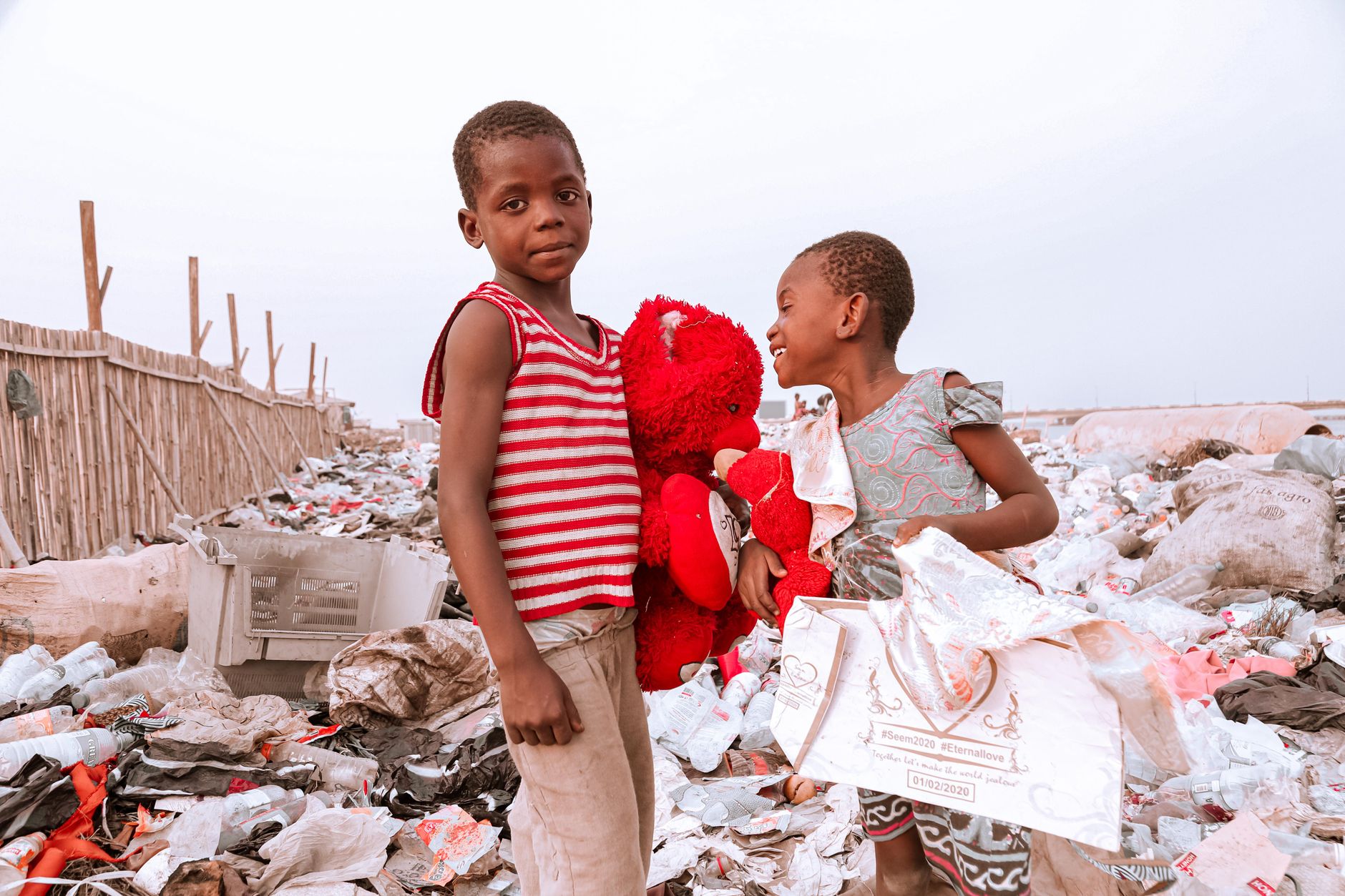
    Men, women and children search through toxic piles of broken computers, televisions and mobile phones looking for tiny fragments of copper, aluminium or gold that might earn enough money to buy food for another day.

    Plastic insulation is burned to recover valuable metals.

    Lead, mercury and countless other toxic substances seep into the soil and water.

    Poisonous smoke fills the air.

    People sacrifice their health—and sometimes their lives—for scraps that wealthier societies no longer want.

    The same countries that supplied many of the raw materials are now asked to deal with much of the waste.

    The same pattern repeats itself elsewhere.

    Rivers are polluted by chemicals from textile production.

    Oil spills poison coastlines.

    Forests disappear to satisfy global demand.

    Communities lose clean water so others can enjoy inexpensive products.

    Children work where they should be learning.

    Families survive on wages that would be unimaginable in the countries consuming the finished goods.

    Good People in a Bad System

    None of this is an accusation against ordinary people.

    Most of us simply buy what is available in the shops. We did not create these supply chains. We did not design the monetary system that rewards the cheapest production regardless of the human or environmental cost.

    We were born into it.

    And perhaps that is why so many people feel powerless.

    We recycle.

    We donate.

    We consume a little less.

    These are good things.

    But they only soften the symptoms.

    They cannot solve a system whose primary objective is endless economic growth, continuous consumption and maximum financial return.

    As long as profit remains the overriding objective, environmental destruction, inequality and exploitation are not unfortunate accidents.

    They are predictable outcomes.

    The Three Foundations

    So why does this keep happening?

    Why do resources flow in one direction while pollution and waste often flow back in the other?

    Why do billions of people still struggle in a world that already possesses the knowledge, technology and productive capacity to provide everyone with a good life?

    I believe the answer can be traced back to three foundations of our current civilisation.

    Money.

    Trade.

    Ownership.

    Together they determine who gains access to the world’s resources—not according to human need or what benefits humanity most, but according to purchasing power, financial return and private control.

    Everything else follows naturally.

    If cutting down a rainforest is profitable, it happens.

    If producing disposable products increases sales, it happens.

    If shipping electronic waste halfway around the world is cheaper than processing it responsibly, it happens.

    The system is simply doing exactly what it was designed to do.

    A Different Foundation

    In the future world described in Waking Up, humanity has realized that these three foundations no longer served civilization.

    Instead of endlessly trying to regulate a system that continuously recreated the same problems, humanity chose a different foundation altogether.

    Money.

    Trade.

    Ownership.

    They stepped away from all three.

    Instead, humanity simply chose to optimize and share the Earth’s resources directly.

    Not through markets.

    Not through financial transactions.

    Not through competition.

    But through stewardship, collaboration and intelligent global coordination supported by artificial intelligence, robotics and sustainable technology.

    The objective of civilisation changed completely.

    No longer to maximise profit.

    But to optimise the world.

    Optimize human wellbeing.

    Optimize the use of resources.

    Optimize technology.

    Optimize agriculture.

    Optimize nature itself and our relationship with it.

    Optimize the future for generations yet to come.

    A World with Good Conscience

    Once that became humanity’s shared purpose, everything else began to change.

    Products were designed to last.

    Waste became a valuable resource instead of a problem.

    Pollution was designed out of the system rather than cleaned up afterwards.

    Communities collaborated instead of competing.

    The Earth’s abundance was managed for everyone instead of accumulated by a fortunate few.

    No country needed to become rich at another country’s expense.

    No child needed to search through toxic waste just to survive another day.

    No river needed to be poisoned for the sake of quarterly profits.

    No rainforest needed to disappear simply because it was financially profitable.

    For the first time in history, humanity could truly live with a clear conscience.

    Not because people had become poorer.

    Not because they had learned to feel guilty about living well, or become good at suppressing their conscience..

    But because they finally knew that their wellbeing no longer depended upon someone else’s suffering.

    That is the civilization imagined in the book.

    A world where humanity has finally understood that the greatest wealth on Earth is not money, trade or ownership.

    It is the planet itself.

    And our willingness to share it fairly.

    An Impossible Dream

    If this sounds like an impossible dream, you’re not alone.

    Benjamin Michaels thought exactly the same.

    In Waking Up: A Journey Towards a New Dawn for Humanity, the former billionaire awakens after one hundred years of cryonic sleep expecting to return to the world he once knew. Instead, he finds a civilization where the monetary system have become history, replaced by a society built on sharing, stewardship and the optimization of the world for everyone.

    At first, he fights it.

    Then he questions it.

    Eventually, he begins to discover that perhaps humanity didn’t lose its civilization after all.

    Perhaps it finally found it.

    Discover the story.

  • Designed to Last

    Designed to Last

    Take a look around your home.

    How many things do you own that were designed to last?

    Not just last through the warranty period. Not just survive for a few years before being replaced. But truly last and be functional indefinitely.

    A dining table passed down through generations.

    A cast iron pan that outlives its owner.

    A well-built house standing strong after a century.

    A quality tool that works as well today as it did decades ago.

    These things still exist. But they have become increasingly rare.

    In the previous article Designed to Break, we explored how many products today appear to be built with constant replacement in mind. Phones that become obsolete. Appliances that fail shortly after the warranty expires. Products that are difficult or impossible to repair.

    But what if we turned the entire idea upside down?

    What if we designed everything to last?

    A Different Design Philosophy

    Imagine a world where every product is designed according to four simple principles:

    • Last as long as possible.
    • Be easy to repair.
    • Be easy to upgrade.
    • Be easy to recycle.

    Suddenly, the question is no longer:

    “How many units can we sell?”

    The question becomes:

    “How well can this serve humanity?”

    A washing machine might last a hundred years instead of ten.

    A mobile phone might receive upgrades instead of being replaced.

    A refrigerator might be designed so every component can be changed in minutes.

    A house might be built to stand for centuries.

    The goal shifts from maximizing sales to maximizing usefulness.

    Nature Does Not Waste

    The natural world provides an interesting example.

    In a forest, nothing is truly wasted.

    Leaves fall and become soil.

    Dead trees nourish insects and fungi.

    Nutrients circulate continuously through the ecosystem.

    Nature does not operate on a “take, use, discard” model.

    It operates on cycles.

    Human civilization, by contrast, often follows a straight line:

    Extract.

    Manufacture.

    Consume.

    Discard.

    Repeat.

    And of course, this puts an unreasonable strain on our planet.

    Yet there is no physical law saying it has to be this way.

    We can design our systems differently.

    From Consumption to Circulation

    When products are designed to last, something remarkable happens.

    We stop thinking in terms of consumption.

    Instead, we think in terms of stewardship.

    Materials are no longer viewed as disposable resources.

    They become valuable assets circulating through society.

    The steel in one building can become the steel in another building.

    The materials in an old phone can become the materials in a new one.

    Clothing can be repaired, repurposed, and eventually recycled into new clothing.

    The more efficient these cycles become, the less need there is for continuous extraction of new resources. 

    Today, less than 6% of all products and “waste” is recycled.

    The Real Resource Problem

    Many people believe humanity’s greatest challenge is a lack of resources.

    But perhaps the larger challenge is how we use the resources we already have.

    Today, enormous amounts of food are wasted.

    Perfectly functional products are discarded.

    Buildings sit empty.

    Materials are buried in landfills.

    Resources are extracted faster than ecosystems can regenerate them.

    What if the problem is not that the Earth lacks abundance?

    What if the problem is that our systems are not designed to preserve it?

    Designed to Last

    A sustainable future is not necessarily a future of sacrifice.

    It may be a future of better design.

    Better products.

    Better systems.

    Better stewardship.

    A future where things are built to serve rather than to sell.

    A future where waste becomes increasingly rare.

    A future where humanity learns to operate more like nature itself—circulating resources instead of constantly extracting and consuming them.

    Perhaps the greatest innovation of the future will not be a new technology.

    Perhaps it will be a simple shift in mindset.

    From designed to break.

    To designed to last.

    Financial collapse

    Of course, this also reveals something much bigger.

    A world where everything is genuinely designed to last is difficult to reconcile with an economy that depends on continuous growth and consumption.

    Today’s monetary system relies on a constant flow of economic activity. Products are manufactured, sold, replaced, and manufactured again. Raw materials are continually extracted. New products continually enter the market. Consumption keeps the economic engine turning.

    If products suddenly lasted for decades, could be upgraded indefinitely, and were almost completely repaired and recycled, the demand for continuous new production would fall dramatically.

    That is why the challenge is not simply one of engineering or resources.

    It is mainly one of economic design.

    A civilization optimized for stewardship naturally seeks to preserve resources.

    A growth-dependent economy naturally depends on a continual flow of production and consumption.

    These are two fundamentally different ways of organizing society.

    Perhaps this is why building a truly sustainable civilization is not only about inventing better products.

    It is about asking a deeper question:

    Can a system built upon continual growth ever fully embrace a world designed to last?

    So the question becomes: Could humanity create a world where everything is designed to last, be repaired, upgraded, and eventually recycled? 

    Looking at humanity today one should think not. Nevertheless, in the novel Waking Up – A Journey Towards a New Dawn for Humanity

    humanity did actually awaken and created such a world.

    Follow  the former billionaire Benjamin Michaels who awakens one hundred years into the future and discovers a civilization built exactly on these principles.

    Discover the story.

    And if this article resonates with you, please share it. Because the only way we can create a better future for our children is if we can imagine it ourselves.

  • The Tipping Point

    The Tipping Point

    How many people does it take to change the world?

    It is a fascinating question.

    Critical Mass

    History shows us that major changes rarely happen because everyone suddenly agrees. The end of slavery, women’s right to vote, the civil rights movement, the fall of apartheid, and even the end of the Cold War all began with relatively small groups of people who saw the world differently.

    Researchers studying social change have suggested that a committed minority of perhaps 10–25 percent of a population may be enough to create a critical mass where an idea begins to spread rapidly through society.

    But there is something even more interesting about these historical examples.

    The Same System

    None of these movements changed the underlying system itself.

    Slavery ended, but the system of ownership remained.

    Women gained the vote, but the political system remained.

    Apartheid ended, but the system of trade remained.

    Governments changed, political parties changed, laws changed, and rights expanded. Yet both the monetary system and the political system remained largely intact.

    The basic foundation of civilization continued.

    The game stayed the same.

    Only some of the rules changed.

    That does not diminish the importance of these achievements. 

    They represented enormous steps forward for humanity. But they were surface reform movements, not systemic transformations.

    They changed how people could participate in the system.

    They did not fundamentally change the system itself.

    A New Revolution

    That is why I believe we may be approaching something fundamentally different today.

    For the first time in human history, humanity is not merely debating who should govern the system.

    We are beginning to question the system itself.

    For thousands of years, every civilization has relied on human labor in some form.

    Slavery.

    Feudalism.

    Serfdom.

    Capitalism.

    Wage labor.

    Different names. Different forms. But the same basic principle.

    Some people performed the work that society needed, while others benefited from the results.

    The central question was always:

    Who will do the work?

    Who will do the menial boring work that needs to be done so the upper classes can thrive?

    The New Factor

    Today, for the first time in history, that question is beginning to change.

    Artificial intelligence and robotics are advancing at extraordinary speed.

    Machines can already perform many physical tasks. AI is beginning to perform intellectual tasks that previously required highly educated professionals.

    This is not merely another technological improvement.

    It represents the possibility that humanity may eventually no longer need millions or billions of people to perform routine labor in order to keep society functioning.

    The Paradox

    The paradox, though, is that all these millions and billions of people are the ones that make up the monetary system itself. The monetary system has always been based on a working class earning money, spending money, taking up loans and paying back loans. Without enough people keeping money in circulation there will be no monetary system. And the world as we know it today will not function.

    The New Future

    Whether that future arrives in ten years, fifty years, or one hundred years is not the point.

    The point is that it is conceivable now . For the first time we can actually see and feel it is possible.

    And once that possibility appears, entirely new questions emerge.

    If AI and robots can increasingly perform necessary work, why must survival still depend on employment?

    If abundance is technologically possible, why should scarcity remain the organizing principle of society?

    If resources can be managed intelligently, why must access depend primarily on money?

    Waking Up

    Technology alone is not enough.

    A new system cannot emerge simply because new tools exist.

    Human beings must also recognize the possibility and move toward it.

    That may be the second tipping point now taking place.

    Around the world, more and more people are beginning to question assumptions that previous generations largely accepted as inevitable.

    Must we organize society around money, trading and ownership?

    Must competition always dominate?

    Must access to life’s necessities depend upon purchasing power?

    Or could there be another way?

    The conversation itself is changing.

    And conversations often precede transformations.

    The Awakening

    The awakening taking place today is not only about technology or spirituality.

    It is also about understanding the consequences of the system we currently live within.

    Powerful Incentives

    For generations, the monetary system has provided powerful incentives for innovation, production, and economic growth. 

    Yet those same incentives often encourage overconsumption, waste, planned obsolescence, resource depletion, and the pursuit of profit even when it conflicts with human or environmental well-being.

    At the same time, the system depends upon a form of economic coercion. Most people cannot simply choose whether to participate. They must earn money in order to gain access to food, housing, healthcare, and the other necessities of life.

    The result is a civilization that often measures success by financial growth rather than human flourishing or ecological health.

    As technology advances, more people are beginning to ask whether this arrangement still makes sense.

    The real awakening, then, is not merely recognizing what AI and robotics can do.

    It is recognizing that humanity may no longer need to organize itself around assumptions that were created for a very different age.

    Perhaps the tipping point is reached when enough people see both sides of the equation:

    Not only that a new possibility exists.

    But that the old way is no longer serving either humanity or the planet as well as it could.

    A Systemic Shift

    Previous revolutions asked:

    Who should be in charge?

    This revolution asks:

    How should civilization itself be organized?

    Previous revolutions replaced rulers.

    This revolution may replace the system itself.

    Previous revolutions changed the players.

    This revolution may change the game.

    The New Foundation

    For thousands of years, humanity has experimented with different forms of governance, different political systems, and different economic models.

    Yet nearly all of them shared one common foundation: competition for access to resources through money, force, and ownership.

    What if that foundation itself is no longer necessary?

    What if advances in technology allow us to move from governing people toward managing resources?

    From control toward coordination.

    From competition toward collaboration.

    From ownership toward stewardship.

    The Impossible

    Of course, such a transformation will not happen overnight.

    Most people still think within the framework they were born into. That is natural. Every generation does.

    People once believed slavery was necessary.

    People once believed kings ruled by divine right.

    People once believed women should not vote.

    People once believed apartheid would last forever.

    The impossible often appears impossible until it becomes inevitable.

    Perhaps that is where we stand today.

    Not at the end of one political era.

    Not at the beginning of another ideology.

    But at the threshold of something much larger.

    A transition from governance through power and control toward coordination through knowledge, cooperation, and intelligent resource management.

    A transition from competing over access to resources toward managing resources for the benefit of all.

    A transition from asking who owns the world to asking how best to care for it.

    The Choice

    Will it happen?

    No one knows.

    How many people are needed?

    No one knows that either.

    History suggests that tipping points often become visible only after they have already begun.

    For years, nothing seems to happen.

    Then suddenly, everything changes.

    Perhaps the real tipping point is not technological at all.

    Perhaps it is the moment enough people realize that the way we organize civilization is not a law of nature.

    It is a choice.

    And choices can change.

    In any case, the most important tipping point is within the minds and hearts of people. If they are to have a choice at all they must know another choice is possible.

    That is exactly why I wrote the book Waking Up – A journey towards a new dawn for humanity. To give humanity a vision. To give an inspiration that another world might be possible.

    So. If this article resonates with you, I ask you to share it. Because if you truly want the tipping point to happen showing this possible choice to the world is the most important thing we can do.

    And if you would like to explore this possible vision of a future beyond scarcity, ownership, and artificial divisions, you can find the novel here:

    Discover the story

  • The Impossible Choice

    The Impossible Choice

    We hear it everywhere.

    “Make better choices.”

    “Vote with your wallet.”

    Vote for this president!

    No, for this president!

    “It’s up to you.”

    Choose organic or conventional.

    Choose vegan or omnivore.

    Choose electric or gasoline.

    On the surface, it sounds empowering. Almost liberating. A billion choices.

    But is it really?

    The Illusion of Choice

    Because when we look closer, something doesn’t quite add up.

    Most of our “choices” are made within a system we did not choose.

    We don’t choose:

    • how food is produced
    • how cities are designed
    • how energy systems are structured
    • how access to basic needs is controlled
    • the political system
    • the monetary system

    We simply choose between the options that are made available to us.

    And those options are shaped by a system that mostly prioritizes profit, financial growth, and competition over human well-being and planetary health.

    So when we are told to “vote with our wallet,” what we are really being told is:

    Try to fix a systemic problem through your personal consumption”.

    The Limits of Individual Responsibility

    Individual choices matter. Of course they do.

    They signal values. They shape culture. They can spark change.

    But they cannot carry the weight of a system that is fundamentally flawed.

    The Impossible Choice

    Because in many cases:

    • the most sustainable option is the most expensive
    • the most convenient option is the least healthy
    • the most profitable option is the most destructive

    So the individual is placed in an impossible position:

    Do what is best for you in the short term… or what is best for the world in the long term.

    That is not real freedom. That is an impossible choice by design.

    So obviously, when our choices are limited by our wallets, the result will almost always be that we choose what we can afford. And since most people can’t afford the most sustainable and highest-quality products, much of what gets produced ends up being lower-quality—often less sustainable, and in many cases harmful to both people and the planet.

    A Systemic Problem

    The real issue is not that people are making bad choices.

    The real issue is that the system often makes the wrong choices easy… and the right choices impossible.

    And no amount of personal optimization can fully overcome that.

    So the question shifts.

    Not:

    Are we making the right choices?

    But:

    Why is the system producing the wrong outcomes in the first place?

    Can We Choose a Better System?

    This leads to a deeper and more important question:

    Can we, collectively, choose a system that works better for everyone?

    At first, that might sound unrealistic.

    But think about it.

    Everything around us is already the result of more or less collective choices:

    • laws
    • rules
    • infrastructure
    • currencies
    • ownership structures
    • markets

    None of these are natural laws. They are agreements.

    So if we can collectively – although unconsciously – agree on a system that produces stress, inequality, scarcity, pollution, war and insecurity…

    Why couldn’t we agree on one that produces health, stability, peace, abundance and well-being?

    Not Collectivism but Alignment

    For those who are wary of collectivism, this is not about forcing people into a shared system against their will.

    It is about discovering a way of organizing society where:

    What is good for the individual… is also good for everyone.

    We already see this alignment in everyday life:

    • hygiene protects both you and others
    • traffic rules keep everyone safe
    • public infrastructure benefits all who use it

    These are not experienced as loss of freedom.

    They are experienced as common sense.

    The Freedom to Not Trade

    Today, we are not just choosing—we are forced to participate.

    We must trade:

    • our time
    • our skills
    • our energy
    • our property

    In order to access:

    • food
    • housing
    • mobility
    • healthcare

    Opting out of this system is not really possible.

    Because opting out means losing access to survival and life itself.

    In that sense, participation is not a choice.

    It is a condition.

    Now imagine a different foundation.

    A system where access to basic needs is not dependent on money or trade.

    Where resources are organized and distributed based on need and availability.

    In such a system, something interesting happens:

    Trade is no longer required for survival.

    And when something is no longer required… it becomes optional.

    You could still trade if you really wanted to.

    Create your own system. Trade goods or services.

    But then the question naturally arises:

    Why would you need to or want to?

    When Choice Becomes Real

    In today’s system:

    • Freedom means choosing how you participate in trade

    In a resource-based system:

    • Freedom means choosing whether you participate in trade at all

    That is a profound shift.

    Because for the first time, choice becomes real.

    Not a constrained selection between predefined options…

    But the ability to step outside the necessity altogether.

    A System That Works for All

    This is not about perfection.

    It is about alignment.

    A system works when it removes the conflict between:

    • individual well-being
    • and collective well-being

    When people don’t have to choose between themselves and the world.

    When thriving is not a privilege, but a natural outcome of how society is organized.

    The Real Power of Choice

    So perhaps the real power of choice is not found in what we buy.

    But in what we are willing to imagine.

    And eventually… what we are willing to build together.

    Because the systems we live in are not fixed.

    They are chosen collectively, whether consciously or not.

    And if they are chosen…

    They can be changed.

    Discover the story

    👉 Discover the story of Benjamin Michaels who wakes up 100 years in the future and experience a world where humanity has made a conscious choice and created a world that works for all. If this sounds interesting, then the novel Waking Up – A journey towards a new dawn for humanity is for you.

    If this perspective resonates, please share this article.