Author: haraldsando@gmail.com

  •  Be the Change

     Be the Change

    “Be the change you wish to see in the world.”

    It is one of those rare slogans that has spread across the globe.

    Simple.

    Memorable.

    Inspiring.

    But what does it actually mean?

    For many, it means becoming a better person.

    Be kinder.

    More compassionate.

    Help others.

    Protect nature.

    Volunteer.

    Smile at strangers.

    Take responsibility instead of complaining.

    All of these things matter.

    They make the world a little better, one person at a time.

    But perhaps the slogan contains a deeper truth.

    Because no slogan has ever changed the world.

    Words alone never have.

    Only people do.

    More than words

    “Be the change” was never a magical phrase.

    It was an invitation.

    An invitation to stop waiting for politicians.

    Stop waiting for billionaires.

    Stop waiting for corporations.

    Stop waiting for someone else to solve humanity’s problems.

    Instead, it invited each of us to become part of the solution ourselves.

    And little by little, millions accepted that invitation.

    Some planted trees.

    Others cleaned beaches.

    Some invented cleaner technologies.

    Others built stronger communities.

    Some shared knowledge and time freely.

    Others cared for neighbors, strangers and those in need.

    Every act was small.

    Almost invisible.

    Yet together they represented something much larger.

    A shift in consciousness.

    Becoming stewards

    People slowly began to realize that they were not merely consumers.

    Not merely taxpayers.

    Not merely employees.

    They were stewards.

    Caretakers of their communities.

    Caretakers of nature and Planet Earth.

    Caretakers of future generations.

    Instead of asking,

    “What can I get?”

    More and more people began asking,

    “What can I contribute?”

    That single shift changed everything.

    The uncomfortable realization

    But as this movement grew, another realization emerged.

    Many discovered that they were trying to become the change while living inside a system that continuously rewarded the opposite.

    We encouraged kindness.

    The economy rewarded ruthless competition.

    We wanted to protect nature.

    The economy rewarded extracting from it.

    We wanted cooperation.

    The economy rewarded maximizing profit.

    We wanted enough for everyone.

    The economy rewarded accumulation by a minority.

    Good people found themselves swimming against a powerful current.

    And eventually humanity asked the uncomfortable question:

    What if the problem isn’t simply that people need to change?

    What if the system itself needs to change?

    The real meaning

    Perhaps this was the deeper meaning hidden inside the slogan all along.

    Being the change was never only about changing ourselves.

    It was about becoming the generation that dared to create a different civilization.

    A civilization where stewardship replaced ownership.

    Where collaboration replaced competition.

    Where abundance was shared instead of hoarded and sold.

    Where technology served humanity instead of profit.

    Where success was measured by the flourishing of both people and the living planet.

    Not because someone imposed it.

    Because enough people wanted it.

    The tipping point

    History rarely changes overnight.

    It changes quietly.

    One conversation.

    One idea.

    One community.

    One invention.

    One act of courage.

    Then another.

    And another.

    Until one day the impossible becomes inevitable.

    Perhaps that is exactly what happened.

    Enough people embodied the truth behind those three simple words.

    Be the change.

    Not merely as a slogan.

    But as a way of living.

    A critical mass was reached.

    A tipping point.

    Humanity understood that becoming better people inside an exploitative system was not enough.

    The system itself had to become the change.

    And so the old monetary system gradually gave way to something entirely different.

    The Humanitary System

    A civilization designed not to maximize profit, but to optimize life.

    A world where every decision began with a different question:

    “What benefits humanity and the Earth the most?”

    Everything else followed naturally.

    The change became the world

    Looking back, people smiled.

    For generations they had repeated,

    “Be the change you wish to see in the world.”

    They had imagined it was advice for individuals.

    In the end, it became the story of an entire civilization.

    The change was never just you.

    It was never just me.

    It was all of us.

    And when enough of us became the change…

    The whole world became it too.

    This is the world the bewildered billionaire Benjamin Michaels wakes up in 100 years after he was cryogenically frozen, trying to escape his cancer. 

    Imagine his surprise when he wakes up, expecting to continue the expansion of his empire, but there’s no money or ownership in the world anymore… Everything is optimized and shared. He encounters many things on his journey towards a new dawn for humanity…

    Discover his story

  • Imagine a World…

    Imagine a World…

    Imagine a world…

    Without taxes, loans, debts, mortgages, interest payments, lawyers, insurance premiums, financial stress, inflation, recessions, unemployment, politicians, election campaigns, lobbying, corruption, inequality, homelessness, most crime, pollution, environmental destruction, deforestation, collapsing ecosystems, biodiversity loss, species extinction, depleted soils, plastic-filled oceans, fossil fuel dependency, planned obsolescence, overconsumption, food waste, resource scarcity, hunger, preventable disease, child labour, exploitation, economic insecurity, war, refugees, nuclear weapons—or  money.

    At first glance, it sounds like fantasy.

    A paradise that could never exist.

    But before dismissing the idea, let’s take another look at that first paragraph.

    So Called Life

    Every month, you work hard, only to watch a large part of your salary disappear before you have even had the chance to decide what to do with it. Then come the bills. The mortgage. The rent. The electricity. The insurance. The phone. The internet. The car. The unexpected repair. The next tax payment. Another reminder. Another deadline. Another expense.

    You finally find the home you’ve always wanted.

    The price is more than you will earn in decades.

    So you borrow.

    Not for a few months.

    Not for a few years.

    For decades.

    Thirty years of monthly payments. Thirty years of hoping life doesn’t suddenly change for the worse. Thirty years of knowing that missing enough payments could cost you the very place you call home.

    You wake up when the alarm rings.

    Not necessarily because you are inspired by the day ahead.

    But because the bills are waiting.

    The mortgage is waiting.

    The tax office is waiting.

    Life has become a long chain of financial obligations.

    For many people, stress becomes so normal that they no longer even recognize it as stress.

    They simply call it life.

    Promised Solutions

    Meanwhile, political parties promise solutions. Elections come and go. Governments change. Policies change. Yet the underlying problems somehow remain. Society continues arguing over how to manage the system instead of asking whether the system itself could be  different.

    Around us, inequality keeps growing. Some accumulate wealth beyond imagination while others struggle to afford housing, healthcare or even enough food. Entire families work full-time and still live from one payday to the next.

    At the same time, the natural world quietly pays the price.

    Ancient forests disappear.

    Wetlands are drained.

    Topsoil—the thin living skin that feeds humanity—is steadily eroded.

    Rivers are polluted.

    Oceans fill with plastic.

    Coral reefs bleach.

    Fish stocks decline.

    Insects vanish.

    Birdsong grows quieter.

    Species that evolved over millions of years disappear forever.

    The climate becomes increasingly unstable while our economic system continues demanding more production, more consumption and more growth.

    And then there is war.

    Cities reduced to rubble.

    Children growing up surrounded by explosions instead of playgrounds.

    Families fleeing with nothing but what they can carry.

    Entire generations scarred by conflicts they never chose.

    Most of us have become so accustomed to all of this that we rarely stop to ask a simple question:

    Does civilization really have to work this way?

    Because every civilization is designed. More or less.

    Every economic system is designed. More or less.

    Every institution is designed. More or less.

    And what is designed can also be redesigned.

    Every great leap in human history first existed only in someone’s imagination.

    Every bridge.

    Every airplane.

    Every computer.

    Every spacecraft.

    Someone dared to imagine something that many believed was impossible. Yet, we have gone to the moon, invented the internet, aviation, nanotechnology, wireless communication and much much more.

    So why shouldn’t we dream just as boldly for humanity itself? For our future?

    Imagine Another Kind of World

    A world with intelligently optimized management and sharing of Earth’s resources.

    A world with a system designed to create more peace, more food, more health, more joy and more prosperity than humanity has ever imagined.

    A world where homes exist to be lived in instead of traded.

    Where technology removes unnecessary work instead of threatening people’s livelihoods.

    Where food production is optimized to nourish everyone while restoring the ecosystems that sustain us.

    Where energy is clean, abundant and designed around the long-term health of the planet.

    Where science, artificial intelligence and automation continuously improve transportation, healthcare, education and manufacturing—not to maximize quarterly profits, but to maximize human and ecological well-being.

    Where stewardship replaces ownership.

    Where collaboration replaces ruthless competition.

    Where sharing replaces unnecessary trading.

    Where success is measured not by how much one person accumulates, but by how much humanity and nature flourish together.

    It sounds like an impossible dream.

    But then again…

    Nothing has ever changed until someone first imagined that it could.

    That is the invitation of Waking Up: A Journey Towards a New Dawn for Humanity.

    Not to escape reality.

    But to imagine a civilization whose foundations are designed for something entirely different:

    Not endless accumulation.

    But lasting prosperity for all.

    Not profit above all else.

    But the flourishing of humanity and the living world together.

    The billionaire Benjamin Michaels wakes up in exactly this world after 100 years of cryonic sleep, hoping to expand his empire into the future. Imagine his surprise when he finds a world without money that works for all instead…

    Discover his story

  • Everything is Fine

    Everything is Fine

    The sun is shining.

    A gentle breeze moves through the trees.

    The birds are singing.

    The sky is blue.

    The air feels fresh.

    Everything is fine.

    Or is it?

    I’m sorry to interrupt this idyllic moment, but here is the reality…

    Everything is not fine

    Under the surface activities are happening that slowly undermines our seeming idyll.

    Oil

    Every single day, humanity burns approximately 103 million barrels of oil.

    Much of it fuels the cars that carry us to work, the trucks that stock our supermarkets, the ships that move goods across oceans and the aircraft that fill our skies.

    It keeps our modern civilization moving.

    It also fills our atmosphere.

    Coal

    Every day, humanity burns approximately 24 million tonnes of coal.

    Mountains are excavated.

    Entire landscapes are transformed.

    Gigantic furnaces reduce ancient forests—compressed over hundreds of millions of years—into heat, electricity and smoke.

    The carbon that nature stored over geological time is released back into the atmosphere in a matter of hours.

    Natural Gas

    Humanity also burns roughly 12 billion cubic meters of natural gas every single day.

    Although often described as the cleanest fossil fuel, it still releases enormous amounts of carbon dioxide when burned, and methane leaks during extraction and transport further contribute to warming.

    The result

    The result is an unprecedented pollution of our planet.

    Carbon Dioxide

    Together, these fossil fuels release more than 100 million tonnes of carbon dioxide into the atmosphere every day.

    You cannot see it.

    You cannot smell it.

    You cannot taste it.

    Yet it quietly accumulates year after year, trapping more of the Sun’s heat and slowly changing the climate that made human civilization possible.

    But CO2 is not all.

    Sulfur Dioxide

    Around 78,000 tonnes of sulfur dioxide are released every day.

    It reacts with moisture in the atmosphere to form acid rain, damaging forests, lakes, soils and crops, while also irritating the lungs of those who breathe it.

    Nitrogen Oxides

    Every day, approximately 52,000 tonnes of nitrogen oxides enter the atmosphere.

    These gases help create smog and ground-level ozone, making it harder to breathe, especially for children, the elderly and people with asthma.

    Fine Particles

    More than 5,000 tonnes of microscopic particulate matter (PM₂.₅) are released every day globally.

    These particles are so small that they bypass the body’s natural defenses, travel deep into the lungs and can even enter the bloodstream.

    From there, they contribute to inflammation throughout the body, increasing the risk of heart attacks, strokes and chronic lung disease.

    Carbon Monoxide

    Around 45,000 tonnes of carbon monoxide are emitted every day, together with thousands of tonnes of the other harmful pollutants.

    While outdoor concentrations are usually diluted, this pollution adds to the complex mixture of contaminants that millions of people breathe every day.

    The consequences 

    The consequences are staggering.

    Human Health

    Air pollution contributes to around seven million premature deaths every year.

    Behind that number are real people.

    A child struggling to catch a full breath during an asthma attack.

    An elderly person whose weakened heart can no longer cope with polluted air.

    A family sitting in a hospital room while a loved one slowly loses the ability to breathe.

    A patient with lung cancer enduring months of coughing, chest pain, exhaustion and treatment, hoping each scan will bring better news than the last.

    Statistics are easy to read.

    Living them is something entirely different.

    The Climate

    The atmosphere remembers everything we release.

    Every day, another hundred million tonnes of carbon dioxide are added.

    The oceans absorb part of it.

    Forests absorb part of it.

    Nature does everything it can to soften the impact.

    But not all of it disappears.

    The result is a gradual warming of the atmosphere and the oceans, melting glaciers and polar ice, rising sea levels, changing rainfall patterns, stronger heatwaves, more severe droughts in some regions, heavier floods in others and increasing pressure on agriculture and water supplies.

    Nature

    Wildlife cannot negotiate with climate.

    Forests cannot relocate.

    Coral reefs cannot simply swim to cooler waters.

    Species that evolved over thousands or millions of years are being forced to adapt within decades.

    Some can.

    Many cannot.

    And Yet…

    The Illusion

    Tomorrow morning…

    The sun will shine again.

    A gentle breeze may once again move through the trees.

    The birds will still sing.

    The sky may still be blue.

    The air may still feel wonderfully fresh.

    Everything might still look fine.

    That is the illusion.

    Nature is working around the clock to hide the consequences from us.

    The wind disperses pollution.

    Rain washes particles from the air.

    Forests absorb carbon.

    The oceans absorb heat.

    Earth is constantly cleaning up after us.

    Until one day, it can no longer keep pace.

    So Why Don’t We Simply Stop?

    We would like to change this, wouldn’t we?

    Most of us would.

    But how?

    Our entire civilization has been built on abundant fossil energy.

    Our transportation depends on it.

    Our industries depend on it.

    Global trade depends on it.

    Much of modern agriculture depends on it.

    Our monetary system has grown around this enormous flow of concentrated energy. Fossil fuels are the core of the monetary system, and without them we will basically have no monetary system. No jobs, no transportation, no trade, no money, which in this system means no food or any products of any kind…

    Replacing it is not as simple as turning off one machine and switching on another.

    It means transforming the foundations of how our civilization operates.

    That is why the transition seems so impossible. If we can’t have a monetary system, what system can we have? 

    Fortunately, there is another way to imagine the future. A future with a true economy, heeding the original meaning of the word “economy”: proper household management.

    In Waking Up, Benjamin Michaels awakens in a civilization that has abandoned the monetary system altogether. It no longer depends on fossil fuels to sustain its way of life. Humanity has reorganized society around stewardship, intelligent resource management, renewable energy, automation and cooperation rather than endless growth driven by the old system.

    It is not simply a future with different technology.

    It is a future built on different foundations.

    Perhaps that is what we should really be asking ourselves.

    Not merely how to replace fossil fuels…

    But what kind of civilization we want to power.

    If you want a glimpse into a world where this has happened, the novel Waking Up – A journey towards a new dawn for humanity is for you.

    Discover the story

  • Egoistic Altruism

    Egoistic Altruism

    At first glance, the term sounds like a contradiction.

    How can altruism possibly be egoistic? Aren’t they complete opposites? Doesn’t altruism mean putting others before yourself, while egoism means putting yourself first?

    Perhaps that is exactly where we have been thinking too narrowly.

    Perhaps the greatest act of egoism is not to take more from the world, but to help create a world that works for everyone—including yourself.

    Two Paths

    Imagine two different ways of pursuing your own happiness.

    1.

    The first is to accumulate as much wealth, power and security for yourself as possible, hoping that your own little corner of the world will remain protected, regardless of what happens around you.

    But what if what happens around you is a collapsing world of climate change, pollution, resource depletion, conflict and war?

    What if food systems become increasingly unstable? What if ecosystems continue to deteriorate? What if political tensions escalate and millions of people are forced to flee their homes? What if growing inequality leads to greater unrest and insecurity?

    How much protection can monetary wealth really provide in a world that is gradually falling apart?

    History has shown that no fortress is completely secure when civilization itself is under pressure. We all breathe the same air. We all depend on functioning ecosystems. We all rely on stable societies.

    Perhaps the smartest way to protect yourself is not simply to build higher walls around your own life, but to help prevent the world outside those walls from collapsing in the first place.

    2.

    The second path is very different.

    Instead of trying to secure only your own future, you work to create a society where everyone has access to clean air, clean water, education, healthcare, meaningful work, abundant food and peaceful communities.

    Which of these two worlds would you rather live in?

    Helping Yourself by Helping Everyone

    We often think of altruism as self-sacrifice.

    But perhaps that is an outdated way of looking at it.

    If crime decreases, your neighbourhood becomes safer.

    If pollution declines, you breathe cleaner air.

    If nature and people are healthier, new diseases spread less easily.

    If children everywhere receive good education, society becomes more innovative and stable.

    If conflicts are prevented through peaceful understanding and respect, your own world becomes more peaceful.

    Every improvement to the world around you improves your own quality of life as well.

    Helping others is not always a sacrifice.

    Sometimes it is simply intelligent self-interest or “logical egoism”.

    The Meaning of Self

    Perhaps the mistake lies in how we define the word “self.”

    We often imagine ourselves as isolated individuals competing against everyone else.

    In reality, we are deeply interconnected.

    Our health depends on the health of our environment.

    Our safety depends on the stability of our societies.

    Our prosperity depends on countless other people doing meaningful work every day.

    The quality of our own lives is inseparable from the quality of the world we all share.

    Once we understand this, altruism no longer stands in opposition to egoism.

    It becomes one of its most logical expressions.

    The Highest Form of Egoism

    This is not about becoming selfless.

    It is about recognizing reality.

    The most rational long-term investment you can make in your own future is to contribute to a civilization where everyone has the opportunity to flourish.

    Not because you expect something in return from any particular person.

    Not because you seek praise or recognition.

    But because you understand that your own well-being is woven into the well-being of humanity as a whole.

    Helping others ultimately means helping yourself.

    A Different Future

    In the novel Waking Up: A Journey Towards a New Dawn for Humanity, humanity has reached this realization.

    People no longer organize society around ownership, competition and profit as the primary objective.

    Instead, they organize it around optimizing life itself.

    The result is not a world where individuals lose.

    It is a world where everyone wins.

    Including those who once believed that looking after themselves meant competing against everyone else.

    Perhaps that is the real meaning of egoistic altruism.

    Not sacrificing yourself for the world.

    But understanding that the world you create for everyone else is the very same world you will wake up in tomorrow.

    The former  billionaire Benjamin Michaels wakes up in this world after 100 years of cryonic sleep. He had never imagined the world would have turned to this…

    Discover his story

  • The Bad Conscience of the West

    The Bad Conscience of the West

    There is a quiet discomfort that many people in the wealthier parts of the world carry with them.

    We rarely speak about it.

    Responsible Choices

    We recycle. We donate to charity. We buy organic food when we can. We choose fair-trade products. We try to make environmentally responsible choices.

    Yet many of us still have the feeling that something isn’t quite right.

    Deep down, we know that much of the prosperity we enjoy has come at a cost that others have paid.

    For centuries, the wealthiest nations built their fortunes by extracting resources, labour and wealth from other parts of the world, largely disregarding the life of the people we took it from.

    Colonialism officially belongs to history, but many of the economic structures that replaced it continue to concentrate wealth in some regions while leaving others struggling with poverty, conflict and environmental destruction.

    The minerals for our phones and computers are mined in poorer countries.

    The cotton for our clothes is grown there.

    The garments are stitched there.

    The coffee is harvested there.

    The cocoa is harvested there.

    The raw materials leave.

    The finished products arrive in our shops.

    The profits largely remain with multinational corporations and wealthy economies.

    When the Waste Comes Back

    The story doesn’t end when we have finished using those products.

    When our phones become obsolete…

    When our computers are replaced…

    When our televisions are upgraded…

    When refrigerators, washing machines and countless other products reach the end of their deliberately short lives…

    Where does much of it end up?

    Far too often, it is shipped back to poorer countries as waste.

    Discarded Electronics

    Mountains of discarded electronics stretch across the landscape.

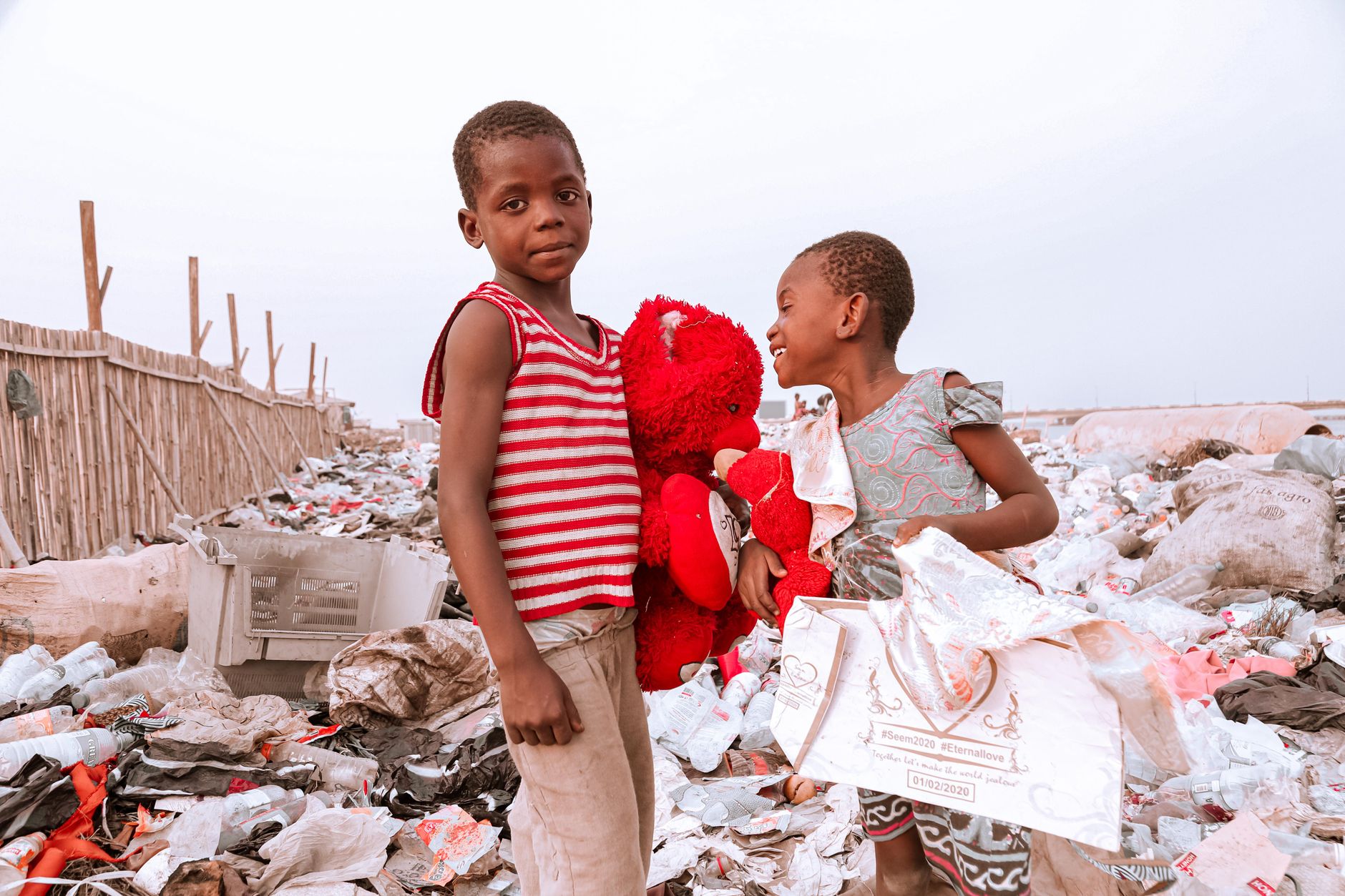
    Men, women and children search through toxic piles of broken computers, televisions and mobile phones looking for tiny fragments of copper, aluminium or gold that might earn enough money to buy food for another day.

    Plastic insulation is burned to recover valuable metals.

    Lead, mercury and countless other toxic substances seep into the soil and water.

    Poisonous smoke fills the air.

    People sacrifice their health—and sometimes their lives—for scraps that wealthier societies no longer want.

    The same countries that supplied many of the raw materials are now asked to deal with much of the waste.

    The same pattern repeats itself elsewhere.

    Rivers are polluted by chemicals from textile production.

    Oil spills poison coastlines.

    Forests disappear to satisfy global demand.

    Communities lose clean water so others can enjoy inexpensive products.

    Children work where they should be learning.

    Families survive on wages that would be unimaginable in the countries consuming the finished goods.

    Good People in a Bad System

    None of this is an accusation against ordinary people.

    Most of us simply buy what is available in the shops. We did not create these supply chains. We did not design the monetary system that rewards the cheapest production regardless of the human or environmental cost.

    We were born into it.

    And perhaps that is why so many people feel powerless.

    We recycle.

    We donate.

    We consume a little less.

    These are good things.

    But they only soften the symptoms.

    They cannot solve a system whose primary objective is endless economic growth, continuous consumption and maximum financial return.

    As long as profit remains the overriding objective, environmental destruction, inequality and exploitation are not unfortunate accidents.

    They are predictable outcomes.

    The Three Foundations

    So why does this keep happening?

    Why do resources flow in one direction while pollution and waste often flow back in the other?

    Why do billions of people still struggle in a world that already possesses the knowledge, technology and productive capacity to provide everyone with a good life?

    I believe the answer can be traced back to three foundations of our current civilisation.

    Money.

    Trade.

    Ownership.

    Together they determine who gains access to the world’s resources—not according to human need or what benefits humanity most, but according to purchasing power, financial return and private control.

    Everything else follows naturally.

    If cutting down a rainforest is profitable, it happens.

    If producing disposable products increases sales, it happens.

    If shipping electronic waste halfway around the world is cheaper than processing it responsibly, it happens.

    The system is simply doing exactly what it was designed to do.

    A Different Foundation

    In the future world described in Waking Up, humanity has realized that these three foundations no longer served civilization.

    Instead of endlessly trying to regulate a system that continuously recreated the same problems, humanity chose a different foundation altogether.

    Money.

    Trade.

    Ownership.

    They stepped away from all three.

    Instead, humanity simply chose to optimize and share the Earth’s resources directly.

    Not through markets.

    Not through financial transactions.

    Not through competition.

    But through stewardship, collaboration and intelligent global coordination supported by artificial intelligence, robotics and sustainable technology.

    The objective of civilisation changed completely.

    No longer to maximise profit.

    But to optimise the world.

    Optimize human wellbeing.

    Optimize the use of resources.

    Optimize technology.

    Optimize agriculture.

    Optimize nature itself and our relationship with it.

    Optimize the future for generations yet to come.

    A World with Good Conscience

    Once that became humanity’s shared purpose, everything else began to change.

    Products were designed to last.

    Waste became a valuable resource instead of a problem.

    Pollution was designed out of the system rather than cleaned up afterwards.

    Communities collaborated instead of competing.

    The Earth’s abundance was managed for everyone instead of accumulated by a fortunate few.

    No country needed to become rich at another country’s expense.

    No child needed to search through toxic waste just to survive another day.

    No river needed to be poisoned for the sake of quarterly profits.

    No rainforest needed to disappear simply because it was financially profitable.

    For the first time in history, humanity could truly live with a clear conscience.

    Not because people had become poorer.

    Not because they had learned to feel guilty about living well, or become good at suppressing their conscience..

    But because they finally knew that their wellbeing no longer depended upon someone else’s suffering.

    That is the civilization imagined in the book.

    A world where humanity has finally understood that the greatest wealth on Earth is not money, trade or ownership.

    It is the planet itself.

    And our willingness to share it fairly.

    An Impossible Dream

    If this sounds like an impossible dream, you’re not alone.

    Benjamin Michaels thought exactly the same.

    In Waking Up: A Journey Towards a New Dawn for Humanity, the former billionaire awakens after one hundred years of cryonic sleep expecting to return to the world he once knew. Instead, he finds a civilization where the monetary system have become history, replaced by a society built on sharing, stewardship and the optimization of the world for everyone.

    At first, he fights it.

    Then he questions it.

    Eventually, he begins to discover that perhaps humanity didn’t lose its civilization after all.

    Perhaps it finally found it.

    Discover the story.

  • Designed to Last

    Designed to Last

    Take a look around your home.

    How many things do you own that were designed to last?

    Not just last through the warranty period. Not just survive for a few years before being replaced. But truly last and be functional indefinitely.

    A dining table passed down through generations.

    A cast iron pan that outlives its owner.

    A well-built house standing strong after a century.

    A quality tool that works as well today as it did decades ago.

    These things still exist. But they have become increasingly rare.

    In the previous article Designed to Break, we explored how many products today appear to be built with constant replacement in mind. Phones that become obsolete. Appliances that fail shortly after the warranty expires. Products that are difficult or impossible to repair.

    But what if we turned the entire idea upside down?

    What if we designed everything to last?

    A Different Design Philosophy

    Imagine a world where every product is designed according to four simple principles:

    • Last as long as possible.
    • Be easy to repair.
    • Be easy to upgrade.
    • Be easy to recycle.

    Suddenly, the question is no longer:

    “How many units can we sell?”

    The question becomes:

    “How well can this serve humanity?”

    A washing machine might last a hundred years instead of ten.

    A mobile phone might receive upgrades instead of being replaced.

    A refrigerator might be designed so every component can be changed in minutes.

    A house might be built to stand for centuries.

    The goal shifts from maximizing sales to maximizing usefulness.

    Nature Does Not Waste

    The natural world provides an interesting example.

    In a forest, nothing is truly wasted.

    Leaves fall and become soil.

    Dead trees nourish insects and fungi.

    Nutrients circulate continuously through the ecosystem.

    Nature does not operate on a “take, use, discard” model.

    It operates on cycles.

    Human civilization, by contrast, often follows a straight line:

    Extract.

    Manufacture.

    Consume.

    Discard.

    Repeat.

    And of course, this puts an unreasonable strain on our planet.

    Yet there is no physical law saying it has to be this way.

    We can design our systems differently.

    From Consumption to Circulation

    When products are designed to last, something remarkable happens.

    We stop thinking in terms of consumption.

    Instead, we think in terms of stewardship.

    Materials are no longer viewed as disposable resources.

    They become valuable assets circulating through society.

    The steel in one building can become the steel in another building.

    The materials in an old phone can become the materials in a new one.

    Clothing can be repaired, repurposed, and eventually recycled into new clothing.

    The more efficient these cycles become, the less need there is for continuous extraction of new resources. 

    Today, less than 6% of all products and “waste” is recycled.

    The Real Resource Problem

    Many people believe humanity’s greatest challenge is a lack of resources.

    But perhaps the larger challenge is how we use the resources we already have.

    Today, enormous amounts of food are wasted.

    Perfectly functional products are discarded.

    Buildings sit empty.

    Materials are buried in landfills.

    Resources are extracted faster than ecosystems can regenerate them.

    What if the problem is not that the Earth lacks abundance?

    What if the problem is that our systems are not designed to preserve it?

    Designed to Last

    A sustainable future is not necessarily a future of sacrifice.

    It may be a future of better design.

    Better products.

    Better systems.

    Better stewardship.

    A future where things are built to serve rather than to sell.

    A future where waste becomes increasingly rare.

    A future where humanity learns to operate more like nature itself—circulating resources instead of constantly extracting and consuming them.

    Perhaps the greatest innovation of the future will not be a new technology.

    Perhaps it will be a simple shift in mindset.

    From designed to break.

    To designed to last.

    Financial collapse

    Of course, this also reveals something much bigger.

    A world where everything is genuinely designed to last is difficult to reconcile with an economy that depends on continuous growth and consumption.

    Today’s monetary system relies on a constant flow of economic activity. Products are manufactured, sold, replaced, and manufactured again. Raw materials are continually extracted. New products continually enter the market. Consumption keeps the economic engine turning.

    If products suddenly lasted for decades, could be upgraded indefinitely, and were almost completely repaired and recycled, the demand for continuous new production would fall dramatically.

    That is why the challenge is not simply one of engineering or resources.

    It is mainly one of economic design.

    A civilization optimized for stewardship naturally seeks to preserve resources.

    A growth-dependent economy naturally depends on a continual flow of production and consumption.

    These are two fundamentally different ways of organizing society.

    Perhaps this is why building a truly sustainable civilization is not only about inventing better products.

    It is about asking a deeper question:

    Can a system built upon continual growth ever fully embrace a world designed to last?

    So the question becomes: Could humanity create a world where everything is designed to last, be repaired, upgraded, and eventually recycled? 

    Looking at humanity today one should think not. Nevertheless, in the novel Waking Up – A Journey Towards a New Dawn for Humanity

    humanity did actually awaken and created such a world.

    Follow  the former billionaire Benjamin Michaels who awakens one hundred years into the future and discovers a civilization built exactly on these principles.

    Discover the story.

    And if this article resonates with you, please share it. Because the only way we can create a better future for our children is if we can imagine it ourselves.

  • Designed to Break

    Designed to Break

    We live in a world where things are not only allowed to break.

    They are expected to. And needed to.

    Phones slow down. Printers stop accepting perfectly good ink. Washing machines fail because one cheap plastic part gives up. Clothes are made to last a season. Software updates make older devices feel obsolete. Cars become increasingly difficult to repair without specialized tools, subscriptions, diagnostics, and permission.

     New phones, new cars, new clothes, new devices. More sales… More more more…

    And then we call this progress.

    But is it?

    Or have we built an entire civilization around the quiet assumption that everything must eventually become waste so that something new can be produced, sold, bought and consumed?

    Most people want things that last.

    The planet certainly benefits when things last.

    Yet our economic system mostly benefits when they do not.

    And there we find one of the great contradictions of our age.

    The Contradiction

    People want things that last.

    The planet needs things that last.

    The monetary system needs things to be replaced.

    That is the contradiction at the heart of modern civilization.

    If a washing machine lasts fifty years instead of ten, fewer washing machines need to be produced. If a phone can be upgraded indefinitely instead of replaced every few years, fewer phones need to be manufactured. If products are easy to repair, fewer new products need to be sold.

    From the perspective of resource conservation, this is excellent.

    From the perspective of a growth-dependent economy, it is not.

    The economy depends on production, consumption, and replacement. New products must constantly enter the market. Factories must keep producing. Retailers must keep selling. Investors expect growth. Governments measure success mostly through economic expansion.

    The result is a permanent tension between what is best for people and the planet and what is best for a system that depends on continuous consumption.

    The Push and Pull

    This does not mean that manufacturers sit in secret meetings plotting how to make your washing machine fail next week. Maybe some do.

    But the reality is more subtle.

    Engineers often want to build the best products possible. Consumers want reliability. Governments impose regulations and warranties. Consumer organizations fight for durability and repairability.

    Yet all these forces operate inside a system where revenue ultimately depends on future sales.

    That creates backwards incentives.

    How durable should a product be?

    How easy should it be to repair?

    How available should spare parts be?

    How long should software support continue?

    The answers are usually influenced not only by engineering but by economics.

    If left entirely to the logic of profit and growth, many products might have had even shorter lifespans than they do today.

    Fortunately, society pushes back.

    Consumer protection laws, warranties, right-to-repair movements, environmental regulations, and public expectations all act as counterweights.

    Society is essentially saying:

    “No, you cannot simply sell us products that almost immediately fail.”

    The fact that such laws are necessary tells us something important about the underlying incentives.

    The Replacement Economy

    Our modern economy depend on movement.

    Money must circulate.

    Businesses must grow.

    Sales must continue.

    If products last too long, replacement slows down.

    So fashion changes.

    Models are updated.

    Software becomes incompatible.

    Batteries are glued in.

    Parts become difficult to obtain.

    Repairs become expensive.

    New versions appear long before the old ones are truly worn out.

    Not because humanity needs it.

    Because the economy benefits from it.

    The planet, meanwhile, pays the bill.

    The Cost of Waste

    Every replacement product requires resources.

    More mining.

    More manufacturing.

    More transportation.

    More packaging.

    More waste.

    More energy.

    More pollution.

    A civilization genuinely focused on sustainability would naturally ask:

    “How do we make this last as long as possible?”

    A civilization focused on economic growth must ask:

    “How soon can we sell another one?”

    The difference between those two questions is enormous.

    One seeks stewardship.

    The other seeks turnover.

    The Hidden Abundance

    There is another side to planned obsolescence that is rarely discussed.

    Every product replaced before it is truly worn out represents resources that never needed to be used again in the first place. Every phone, appliance, vehicle, or gadget that could have lasted longer reveals something important:

    Humanity is already producing far more than it actually needs.

    If products were designed for maximum durability and repairability, we could enjoy the same quality of life while consuming far fewer resources.

    In that sense, planned obsolescence is not only wasteful. It is evidence of abundance being squandered. The very fact that we can afford to replace so many products proves how much productive capacity we already possess.

    The tragedy is that so much of this capacity is spent replacing things that could have continued serving us for many years to come.

    More People or More Waste?

    This discussion also raises an uncomfortable question.

    Many people argue that humanity’s greatest problem is overpopulation. If there were simply fewer people, they say, the planet would be healthier and resources would stretch further.

    Population certainly matters. No ecosystem can grow indefinitely.

    But population alone does not explain the world we see around us.

    If it did, environmental impact would be distributed relatively evenly across humanity.

    Instead, we find enormous differences in consumption between countries, regions, and individuals. We find products designed to be discarded. We find food wasted while others go hungry. We find houses standing empty while people lack housing. We find mountains of perfectly usable products thrown away every day.

    In such a world, it becomes difficult to argue that population alone is the central problem.

    Perhaps the more important question is this:

    How many people could the Earth support if we designed our systems for durability, efficiency, sharing, repairability, stewardship, and long-term thinking instead of perpetual consumption?

    The answer may be far larger than many assume.

    When we look at planned obsolescence, waste, overproduction, and resource mismanagement, it becomes clear that the challenge is not simply the number of people.

    It is the way we have organized our civilization.

    Designed to Last

    But could we actually have an abundant world that works for all with products designed to last? We could, but not within the monetary system of today.

    But imagine a different set of incentives within a completely different system.

    Imagine a world where the goal is not maximizing sales but maximizing usefulness.

    A phone would be designed to last.

    A washing machine would be easy to repair.

    Buildings would be constructed for generations.

    Products would be modular, upgradeable, and recyclable.

    The question would no longer be:

    “How do we sell another one?”

    The question would become:

    “How do we make the best one?”

    That single shift changes everything.

    Because when resources are viewed as the common inheritance of humanity, waste becomes irrational.

    Planned obsolescence becomes absurd.

    Deliberately designing products to fail begins to look less like good business and more like collective self-sabotage.

    The Deeper Question

    The issue is not really about phones, washing machines, or printers.

    It is about civilization itself.

    Do we want a world where products must eventually fail because the economy depends on replacement?

    Or do we want a world where products are designed to serve people, conserve resources, and help create the best possible world for all beings on Earth?

    That is the deeper question.

    And perhaps the answer is obvious.

    A sane world would not be designed to break.

    A sane world would be designed to last.

    This is one of the themes explored in the novel Waking Up – A Journey Towards a New Dawn for Humanity, where humanity has moved beyond money, ownership, trade, and artificial scarcity into a world focused on stewardship, collaboration, and the intelligent use of Earth’s resources.

    The former billionaire Benjamin Michaels wakes up in this world after 100 years in cryonic preservation. What he discovers is shocking at first and it takes him a while to understand the new world…

    If this vision resonates with you, please share this article and help spread the conversation. As the only way we can create a better world for our children is if we first can visualize it ourselves…

    Discover the story

  • The Tipping Point

    The Tipping Point

    How many people does it take to change the world?

    It is a fascinating question.

    Critical Mass

    History shows us that major changes rarely happen because everyone suddenly agrees. The end of slavery, women’s right to vote, the civil rights movement, the fall of apartheid, and even the end of the Cold War all began with relatively small groups of people who saw the world differently.

    Researchers studying social change have suggested that a committed minority of perhaps 10–25 percent of a population may be enough to create a critical mass where an idea begins to spread rapidly through society.

    But there is something even more interesting about these historical examples.

    The Same System

    None of these movements changed the underlying system itself.

    Slavery ended, but the system of ownership remained.

    Women gained the vote, but the political system remained.

    Apartheid ended, but the system of trade remained.

    Governments changed, political parties changed, laws changed, and rights expanded. Yet both the monetary system and the political system remained largely intact.

    The basic foundation of civilization continued.

    The game stayed the same.

    Only some of the rules changed.

    That does not diminish the importance of these achievements. 

    They represented enormous steps forward for humanity. But they were surface reform movements, not systemic transformations.

    They changed how people could participate in the system.

    They did not fundamentally change the system itself.

    A New Revolution

    That is why I believe we may be approaching something fundamentally different today.

    For the first time in human history, humanity is not merely debating who should govern the system.

    We are beginning to question the system itself.

    For thousands of years, every civilization has relied on human labor in some form.

    Slavery.

    Feudalism.

    Serfdom.

    Capitalism.

    Wage labor.

    Different names. Different forms. But the same basic principle.

    Some people performed the work that society needed, while others benefited from the results.

    The central question was always:

    Who will do the work?

    Who will do the menial boring work that needs to be done so the upper classes can thrive?

    The New Factor

    Today, for the first time in history, that question is beginning to change.

    Artificial intelligence and robotics are advancing at extraordinary speed.

    Machines can already perform many physical tasks. AI is beginning to perform intellectual tasks that previously required highly educated professionals.

    This is not merely another technological improvement.

    It represents the possibility that humanity may eventually no longer need millions or billions of people to perform routine labor in order to keep society functioning.

    The Paradox

    The paradox, though, is that all these millions and billions of people are the ones that make up the monetary system itself. The monetary system has always been based on a working class earning money, spending money, taking up loans and paying back loans. Without enough people keeping money in circulation there will be no monetary system. And the world as we know it today will not function.

    The New Future

    Whether that future arrives in ten years, fifty years, or one hundred years is not the point.

    The point is that it is conceivable now . For the first time we can actually see and feel it is possible.

    And once that possibility appears, entirely new questions emerge.

    If AI and robots can increasingly perform necessary work, why must survival still depend on employment?

    If abundance is technologically possible, why should scarcity remain the organizing principle of society?

    If resources can be managed intelligently, why must access depend primarily on money?

    Waking Up

    Technology alone is not enough.

    A new system cannot emerge simply because new tools exist.

    Human beings must also recognize the possibility and move toward it.

    That may be the second tipping point now taking place.

    Around the world, more and more people are beginning to question assumptions that previous generations largely accepted as inevitable.

    Must we organize society around money, trading and ownership?

    Must competition always dominate?

    Must access to life’s necessities depend upon purchasing power?

    Or could there be another way?

    The conversation itself is changing.

    And conversations often precede transformations.

    The Awakening

    The awakening taking place today is not only about technology or spirituality.

    It is also about understanding the consequences of the system we currently live within.

    Powerful Incentives

    For generations, the monetary system has provided powerful incentives for innovation, production, and economic growth. 

    Yet those same incentives often encourage overconsumption, waste, planned obsolescence, resource depletion, and the pursuit of profit even when it conflicts with human or environmental well-being.

    At the same time, the system depends upon a form of economic coercion. Most people cannot simply choose whether to participate. They must earn money in order to gain access to food, housing, healthcare, and the other necessities of life.

    The result is a civilization that often measures success by financial growth rather than human flourishing or ecological health.

    As technology advances, more people are beginning to ask whether this arrangement still makes sense.

    The real awakening, then, is not merely recognizing what AI and robotics can do.

    It is recognizing that humanity may no longer need to organize itself around assumptions that were created for a very different age.

    Perhaps the tipping point is reached when enough people see both sides of the equation:

    Not only that a new possibility exists.

    But that the old way is no longer serving either humanity or the planet as well as it could.

    A Systemic Shift

    Previous revolutions asked:

    Who should be in charge?

    This revolution asks:

    How should civilization itself be organized?

    Previous revolutions replaced rulers.

    This revolution may replace the system itself.

    Previous revolutions changed the players.

    This revolution may change the game.

    The New Foundation

    For thousands of years, humanity has experimented with different forms of governance, different political systems, and different economic models.

    Yet nearly all of them shared one common foundation: competition for access to resources through money, force, and ownership.

    What if that foundation itself is no longer necessary?

    What if advances in technology allow us to move from governing people toward managing resources?

    From control toward coordination.

    From competition toward collaboration.

    From ownership toward stewardship.

    The Impossible

    Of course, such a transformation will not happen overnight.

    Most people still think within the framework they were born into. That is natural. Every generation does.

    People once believed slavery was necessary.

    People once believed kings ruled by divine right.

    People once believed women should not vote.

    People once believed apartheid would last forever.

    The impossible often appears impossible until it becomes inevitable.

    Perhaps that is where we stand today.

    Not at the end of one political era.

    Not at the beginning of another ideology.

    But at the threshold of something much larger.

    A transition from governance through power and control toward coordination through knowledge, cooperation, and intelligent resource management.

    A transition from competing over access to resources toward managing resources for the benefit of all.

    A transition from asking who owns the world to asking how best to care for it.

    The Choice

    Will it happen?

    No one knows.

    How many people are needed?

    No one knows that either.

    History suggests that tipping points often become visible only after they have already begun.

    For years, nothing seems to happen.

    Then suddenly, everything changes.

    Perhaps the real tipping point is not technological at all.

    Perhaps it is the moment enough people realize that the way we organize civilization is not a law of nature.

    It is a choice.

    And choices can change.

    In any case, the most important tipping point is within the minds and hearts of people. If they are to have a choice at all they must know another choice is possible.

    That is exactly why I wrote the book Waking Up – A journey towards a new dawn for humanity. To give humanity a vision. To give an inspiration that another world might be possible.

    So. If this article resonates with you, I ask you to share it. Because if you truly want the tipping point to happen showing this possible choice to the world is the most important thing we can do.

    And if you would like to explore this possible vision of a future beyond scarcity, ownership, and artificial divisions, you can find the novel here:

    Discover the story

  • The New Deal of Humanity

    The New Deal of Humanity

    Every day we hear about deals.

    Trade deals.

    Peace deals.

    Security deals.

    Resource deals.

    Immigration deals.

    Nations negotiate. Companies negotiate. Organizations negotiate. Individuals negotiate.

    Some agreements succeed. Some fail. Many are eventually broken.

    And when they break, we negotiate new ones. Or fight wars… 

    Humanity has been doing this for thousands of years.

    But have we ever stopped to ask why so many of our agreements are temporary?

    Why do peace agreements become wars? Why do trade agreements become disputes? Why do alliances become rivalries? Why does cooperation so often dissolve into competition?

    Most people would say that this is simply human nature.

    But what if it isn’t?

    The Assumption Beneath Every Deal

    Almost every agreement humanity has ever made rests upon the same underlying assumption:

    We are separate.

    Separate nations.

    Separate interests.

    Separate economies.

    Separate peoples.

    This assumption seems obvious. After all, we live in different countries, speak different languages, and possess different resources.

    One nation has oil.

    Another has fertile farmland.

    Another has rare minerals.

    Another has advanced technology.

    Because resources and advantages are distributed unevenly, we create deals.

    We trade.

    We bargain.

    We negotiate.

    We compromise.

    And for a while it works.

    Until circumstances change.

    Then the agreements are renegotiated all over again.

    The Root of Separation

    Many spiritual traditions tell a similar story in different forms.

    In the biblical story, Adam and Eve take a bite from the tree of knowledge and become separated from God.

    Whether taken literally or symbolically, the story points toward something profound.

    Humanity began to experience itself as separate.

    Separate from nature.

    Separate from the divine.

    Separate from one another.

    Since then we have organized our societies around that perception.

    My land.

    Your land.

    My resources.

    Your resources.

    My people.

    Your people.

    My country.

    Your country.

    And because we see ourselves as separate, we must constantly negotiate between competing interests.

    The Great Awakening

    Yet something remarkable may be happening today.

    For the first time in history, humanity can see itself as a single interconnected system.

    The internet connects us instantly.

    Climate change ignores borders.

    Economic crises spread globally.

    Pandemics spread globally.

    Technology spreads globally.

    Artificial intelligence spreads globally.

    Increasingly, our challenges are not national challenges.

    They are human challenges.

    At the same time, many people speak of a spiritual awakening, a growing realization that beneath our apparent differences we are part of something larger than ourselves.

    Perhaps these are not separate developments.

    Perhaps humanity is slowly waking up to the fact that we are not nearly as separate as we once believed.

    A New Deal

    If humanity truly awakens, then perhaps the most important agreement in history will not be negotiated between governments.

    Perhaps it will be negotiated between all of us.

    A New Deal of Humanity.

    Not a deal based on ownership.

    Not a deal based on competition.

    Not a deal based on who can accumulate the most resources.

    But a deal based on stewardship.

    A shared understanding that the Earth is our common home.

    That its resources are the common inheritance of all humanity.

    That our role is not to own the planet, but to care for it.

    To optimize it.

    To manage it wisely.

    To leave it better than we found it.

    From Ownership to Stewardship

    Many of the problems we face today can be traced back to one idea:

    Ownership.

    Ownership has undoubtedly served important purposes throughout history. It helped create stability, security, and personal freedom.

    But ownership also creates division.

    Once something is owned, access becomes restricted.

    Boundaries appear.

    Competition begins.

    Scarcity is often amplified.

    Conflicts emerge.

    Stewardship offers a different perspective.

    A steward does not ask:

    “How much can I earn on this?”

    A steward asks:

    “How can I best care for this for everyone including me?”

    The difference may seem subtle, but it changes everything.

    One Humanity

    The New Deal of Humanity does not require us to eliminate nations, cultures, languages, or traditions.

    Diversity is one of humanity’s greatest strengths.

    A unified humanity is not a uniform humanity.

    People will still be different.

    Cultures will still be different.

    Local communities will still be different.

    But beneath those differences would be a deeper recognition:

    That every child born on Earth belongs to the same human family.

    That every nation exists on the same planet.

    That every person depends upon the same biosphere.

    That our destinies are increasingly intertwined.

    A World That Works for Everyone

    Imagine a world where humanity’s primary goal is not economic growth, but human and natural flourishing.

    A world where technology is used to free people rather than replace them.

    A world where resources are managed according to need and sustainability rather than profit.

    A world where collaboration becomes more important than competition.

    A world where nobody needs to lose for somebody else to win.

    This may sound idealistic.

    Yet every great transformation in history began as an idea that seemed impossible.

    The abolition of slavery.

    Universal education.

    Democracy.

    Human rights.

    All were once dismissed as unrealistic dreams.

    The Agreement We Have Been Waiting For

    Perhaps the next step in humanity’s evolution is not a technological breakthrough.

    Perhaps it is a shift in perception.

    A realization that separation has taken us as far as it can.

    A realization that lasting peace cannot be negotiated indefinitely between competing fragments.

    It must eventually emerge from a recognition of our shared humanity.

    The New Deal of Humanity is not a treaty.

    It is not a political platform.

    It is not an ideology.

    It is a simple recognition that we rise or fall together.

    And perhaps the moment humanity truly understands that, everything changes.

    These ideas are explored further in the novel Waking Up: A Journey Towards a New Dawn for Humanity, which imagines a future world built on stewardship, collaboration, and the recognition that humanity is one interconnected family.

    Please share this article if it resonates with you.

  • The Problem with Money

    The Problem with Money

    Most people think the problem with money is that they don’t have enough of it. And it is needed for almost everything. 

    We spend most of our lives trying to earn it, save it, invest it, borrow it, and protect it. Governments want economic growth. Companies want higher profits. Individuals want larger salaries. Everywhere we look, the answer seems to be the same:

    More money.

    If people are struggling, we need more money.

    If businesses are struggling, we need more money.

    If economies are slowing down, we need more money.

    Money has become the universal solution to almost every problem.

    But what if the problem with money is not that there is too little of it?

    What if the problem is that we have misunderstood what money actually is?

    Money is not food.

    Money is not water.

    Money is not energy.

    Money is not housing.

    Money is not healthcare.

    Money is not wealth.

    Money is simply a symbol that represents wealth.

    And once we understand that distinction, two fundamental problems become impossible to ignore.

    Problem #1: More money does not create more resources

    Imagine that every person on Earth woke up tomorrow with twice as much money in their bank account.

    Would there suddenly be twice as much food?

    Twice as many houses?

    Twice as much fresh water?

    Twice as much farmland?

    Twice as much energy?

    Twice as many doctors, teachers, engineers, and builders?

    Of course not.

    The amount of real wealth on Earth would remain exactly the same.

    Not a single additional resource would have been created.

    This is because money is not the thing itself. It is merely a claim on the thing.

    The real wealth is the food, the water, the energy, the housing, the technology, the knowledge, and all the natural resources that support life.

    Creating more money does not automatically create more of any of these.

    In fact, the opposite often happens.

    More money encourages more consumption.

    More consumption encourages more production.

    More production requires more extraction of resources.

    The result is a faster depletion of the very wealth upon which our lives depend.

    Yet we continue to act as though creating more money somehow creates more wealth.

    It doesn’t.

    If humanity printed ten trillion dollars tomorrow, the forests would not become larger.

    The resources would remain exactly as they are.

    Money can only redistribute claims on wealth.

    It cannot create wealth by itself.

    Problem #2: Too much money reduces the value of money itself

    The second problem is equally important.

    Money is strange because the more of it we create, the less valuable it becomes. The fact is that money only has value if there isn’t too much of it. Imagine you had a yearly income of 10 million dollars every year after tax. Sounds wonderful? You could buy everything you want. Now imagine everyone else also having the same income. What would happen if? Prices would rise accordingly and inflation would skyrocket. A bread would no longer cost 3 dollars, but probably closer to 300…

    When money is created faster than goods and services are produced, inflation follows.

    Prices rise.

    Purchasing power falls.

    The numbers in our bank accounts may become larger, but those numbers buy less.

    In other words, creating more money will actually make money itself less valuable.

    The proposed solution to a lack of money is often more money.

    Yet too much money weakens the value of money.

    This creates a bizarre situation.

    We are constantly chasing larger numbers while the meaning of those numbers gradually declines.

    People demand higher wages because prices have increased.

    Businesses raise prices because costs have increased.

    Governments inject more money into the economy because it needs “stimulation“. 

    And the cycle continues.

    The irony is that if money truly were wealth, creating more of it would make everyone richer.

    But because money is only a symbol of wealth, creating more symbols does not increase the wealth itself.

    The Great Confusion

    Perhaps the deepest problem with money is that we have confused the symbol with reality.

    We talk about wealth when we often mean money.

    We talk about prosperity when we often mean financial growth.

    We talk about economic success while paying less attention to the condition of the real world beneath the numbers.

    It is a little like mistaking a map for the territory.

    Or a menu for the food itself. 

    A map can be useful.

    But nobody can eat a map.

    Nobody can drink a menu.

    Nobody can live inside a map.

    Likewise, money can be useful.

    But money itself cannot feed us, shelter us, heal us, or sustain us.

    Only real wealth can do that.

    And true wealth is not found in bank accounts.

    True wealth is clean water.

    True wealth is fertile soil.

    True wealth is healthy ecosystems.

    True wealth is knowledge.

    True wealth is healthcare.

    True wealth is housing.

    True wealth is community.

    True wealth is meaningful relationships.

    True wealth is time.

    Perhaps humanity’s future depends on recognizing the difference between the symbol and the reality.

    Because once we do, we can stop asking how to create more money and start asking a far more important question:

    How do we create and manage real wealth for everyone?

    Call to Action

    Can you imagine a world that no longer measures success by money?

    A world where the goal is not endless economic growth, but the intelligent management of resources, the well-being of people, and the health of the planet itself?

    What if humanity eventually realized that creating more money does not create more wealth—and that true wealth has been here all along?

    This is exactly the question explored in the novel Waking Up: A Journey Towards a New Dawn for Humanity.

    The book follows Benjamin Michaels, a billionaire from our time who awakens one hundred years in the future to discover a world that has moved beyond money, profit, and artificial scarcity. A world built around cooperation, stewardship, advanced technology, and the shared prosperity of our planet.