Tag: Abundance

  • The Grocery Store

    The Grocery Store

    Imagining the new world

    This article is dedicated to Zanny Minton Beddoes, Editor-in-Chief of The Economist.

    In her recent interview with Elon Musk, she asked a simple but profound question. Musk said: “By 2036, money might not matter at all“, whereupon Zanny asked:  “But in all practical terms, what would daily life look like in a moneyless world?”

    This article is an attempt to answer that question by imagining one of the most ordinary experiences of all: going to the grocery store.

    Many people have trouble imagining a world without money.

    So let’s make it simple.

    1. Abundance

    1. Imagine that the new world does not have any less abundance than today. But rather more. Imagine that all the goods, services, tools, food, technology, homes, healthcare, transport, and everything else we genuinely need are still here and are being updated as time goes by. 

    2. Grocery store

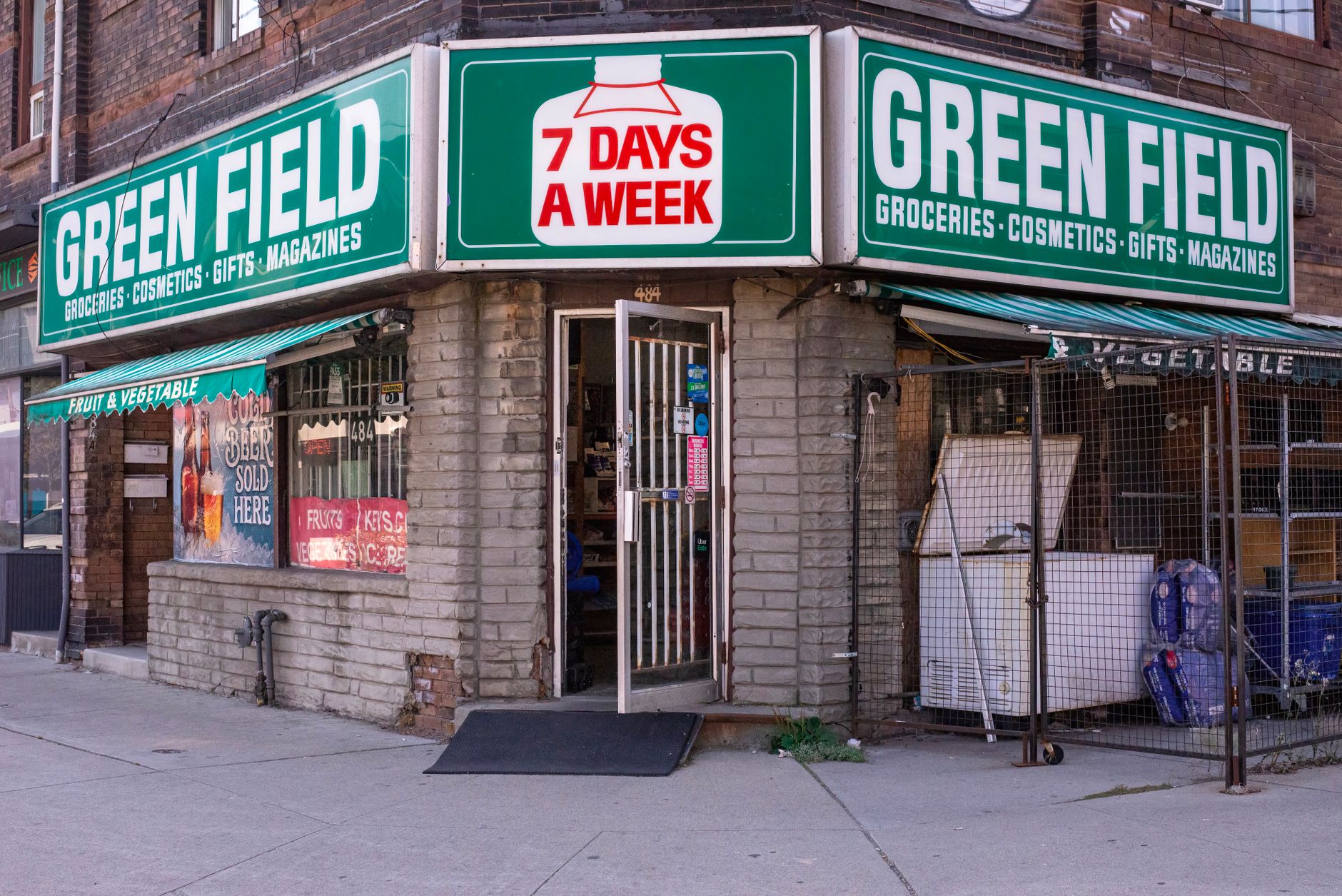
    You walk in, and the shelves are full. There are vegetables, fruit, bread, juice, household products, and everything else people in that area normally use. Perhaps there are fewer screaming labels, fewer fake choices, and far less wasted packaging — but the products are there.

    The difference is not that the store has disappeared.

    The difference is how it works.

    3. Behind the scenes

    1. Behind the scenes, an intelligent coordination system keeps track of what is actually needed and used. If people take more tomatoes, more tomatoes are produced, transported, and restocked. If people drink more orange juice, the system notices. If demand falls, production adjusts. All of it happens automatically through AI and robotics and the people who finds working with logistics interesting and fulfilling. 

    Not through prices.

    Not through profit.

    Not through competition.

    Through real need and actual use.

    While keeping it sustainable.

    AI, robotics, logistics, farming, transportation, storage, and local production all work together to keep the store supplied. The system responds to real use, not market speculation.

    And if you prefer to grow your own food, you can do that too. Whatever surplus you get you share with your neighbors and friends and get even more friends.

    If oranges grow where you live, you can grow oranges. If you want to make your own orange juice, you can order a juicer. If you want to plant vegetable beds, you can get the tools you need. If you produce more than your household uses, you can store it, share it with neighbors, or let the system know it is available.

    Nothing mystical is required.

    The new world can look surprisingly much like the world we already know.

    There will still be grocery stores, cafés, restaurants, workshops, farms, delivery systems, homes, tools, and everyday life.

    But the foundation is different.

    No Meaningless Jobs

    Today, money decides who gets what. Ownership decides who controls what. Prices decide what people can access. And millions of people are coerced into low-paid, exhausting, often meaningless jobs simply to survive.

    In a moneyless, resource-based society, the question changes.

    Instead of asking, “Can you afford it?” we ask, “Is it needed?”

    Instead of forcing people to take any job they can get just to pay bills, we ask, “What are you naturally good at? What do you love doing? Where can your contribution bring joy, usefulness, and meaning?”

    Of course, the grocery store is only one small example.

    The same principle would apply throughout society.

    Buildings would be maintained, renovated, and gradually upgraded according to need, sustainability, safety, and environmental impact. Roads, railways, water systems, energy networks, and public spaces would continuously evolve as better solutions become available.

    Vehicles would become cleaner, safer, and more efficient over time. Production methods would also improve whenever new technologies, materials, or processes could reduce waste, lower environmental impact, or provide a better quality of life.

    Society would not stand still.

    Innovation would continue. Research would continue. Development would continue.

    The difference is that progress would no longer be driven by profit, competition, or planned obsolescence, but by a simple question:

    How can we do this better?

    Better for people.

    Better for future generations.

    And better for nature and the planet that supports us all.

    The grocery store therefore becomes more than a place of consumption.

    It becomes a simple example of a different civilization.

    A civilization where the purpose of food production is not profit, but nourishment.

    A civilization where technology is not used to displace people into poverty, but to free people from unnecessary struggle.

    A civilization where abundance is organized intelligently, responsibly, and for everyone.

    That is the shift.

    Not from grocery stores to empty shelves.

    Not from comfort to sacrifice.

    But from money-based access to need-based coordination.

    From forced labor to meaningful contribution.

    From ownership and trade to stewardship and care.

    The future may not look as strange as we think.

    It may look like walking into a grocery store, taking what you need, knowing others can do the same — and realizing that civilization has finally grown up.

    If this sounds impossible, remember that every system humanity has ever lived under was once considered impossible before it existed.

    The future begins when we dare to imagine it. 

    And perhaps that is the real challenge.

    Not building the technology.

    Not producing the resources.

    But allowing ourselves to imagine that humanity can organize itself in a completely different way. And that is exactly what I have imagined in the novel Waking Up – A Journey Towards a New Dawn for Humanity.

    It follows the bewildered billionaire Benjamin Michaels when he wakes up after one hundred years of cryonic preservation only to to discover a world where money, ownership, and trade have become historical curiosities—and where humanity has built a civilization based on cooperation, stewardship, and abundance.

    Could such a world ever exist?

    There is only one way to find out.

    👉 Discover the story

    And please share this article if it resonates.

    I thank you.

  • Can It Really Work?

    Can It Really Work?

    As people discover Waking Up, one question comes up again and again:

    Can it really work?

    Can we actually live in peace and harmony on planet Earth—without war, without constant conflict? Will there truly be enough for everyone to live in abundance? And perhaps the biggest question of all: how on Earth do we get from here… to there?

    A world that works for all? Really?

    For the first time in human history, we can actually begin to seriously consider it.

    The planet is not bigger than before. But our means are.

    For most of human history, we lived with limited technology, limited knowledge, and a mindset shaped by survival. Even on a vast and abundant planet, a fear of scarcity took hold. And from that fear, we created systems to protect ourselves—systems of ownership, trade, and money.

    In trying to secure (more than) enough, we created the very conflicts we feared.

    War. Competition. Hoarding.

    But today, something is different.

    We have unprecedented technological capability. We have global communication. We have the knowledge to produce and distribute what humanity actually needs.

    And yet, sometimes, it still feels like we are barbarians.

    But if we look a little deeper… there might be something else there.

    We might have been barbarians—and sometimes still are.

    But there is an awakening going on.

    More and more people want peace, and are beginning to realize it starts within.

    Peace and Harmony

    Is it possible?

    Yes. But not by accident.

    It requires agreement.

    Not a political agreement. Not a treaty between nations. A human agreement.

    A moment where humanity collectively reaches a threshold and says: enough is enough.

    Enough war.
    Enough conflict.
    Enough pollution, degradation, stress, disease, death, and destruction.

    And then something deeper happens.

    We realize it starts with us. The individual.

    Because what we focus on grows.

    If we continue to focus on fear, division, and scarcity, we will continue to create exactly that. But if we shift our focus—individually and collectively—toward peace, cooperation, and trust, something else begins to emerge.

    This is not wishful thinking. It is observable human behavior.

    Fear reproduces fear.
    Trust reproduces trust.

    A peaceful world is not imposed. It is grown.

    Abundance

    Will there be enough?

    Yes.

    Enough for everyone’s need—but not for endless greed.

    And that distinction matters.

    Today, we already produce more than enough food, housing, and goods for everyone on Earth. The issue is not production. The issue is distribution—and more importantly, the system that governs access.

    carrying capacity

    There’s also a deeper point often missed in this conversation: Earth’s “carrying capacity” is not a fixed number. It changes with how we organize ourselves, how we produce, and how we distribute. The planet already sustains more than 8 billion people today—but inefficiently and unevenly. When resources are managed intelligently, waste is reduced, and production is aligned with real needs rather than profit, the effective carrying capacity rises. In other words, the limit is not just physical—it is systemic.

    Money and pricing create artificial scarcity.

    They decide who gets access—not based on need, but on purchasing power.

    Remove that layer, and something remarkable happens:

    we can finally focus on producing what is actually needed.

    Not what sells.
    Not what manipulates attention.
    Not what advertising convinces us to desire.

    Without advertising driving artificial demand, much of what we consider “normal consumption” simply fades away.

    What remains is a quieter, more grounded form of abundance:

    • Enough food
    • Enough housing
    • Enough tools, technology, and comfort

    But far less waste.
    Far less stress.
    Far less conflict.

    A sustainable abundance.

    Not excess for the sake of excess—but sufficiency that allows life to flourish.

    The Transition

    And then we arrive at the hardest part.

    How do we get there?

    It feels impossible.

    And that feeling is completely understandable.

    Because we are trying to imagine a fundamentally different system… from inside the current one.

    That’s like trying to imagine color while living in a black-and-white world.

    This is precisely why I wrote Waking Up.

    Not as a blueprint.

    But as a bridge. An inspiration.

    A vision of the future

    A way to step into that imagined future and experience it—not as an abstract idea, but as a lived reality through the eyes of Benjamin Michaels.

    Because every transformation in human history begins the same way:

    Someone imagines it.

    Then a few more people begin to see it.

    And eventually, what once seemed impossible becomes inevitable.

    One Generation

    Many people assume that creating a world like this would take many generations.

    But it doesn’t have to.

    It can begin—and largely unfold—within a single generation.

    How?

    By focusing on the next one.

    If we teach our children about the possibility of a world that works for all—and actively help them create it—we change everything at the root.

    Children raised in a competitive, hostile environment tend to reproduce that environment.

    Children raised in a collaborative, creative and optimized environment tend to become collaborative and creative themselves.

    So what are we really dealing with?

    Not an overpopulation problem.

    But a mindset problem.

    A misunderstanding of how we relate to each other and to the resources of this planet.

    When children grow up learning how to collaborate, how to care, and how to intelligently organize and optimize resources for the well-being of all, they naturally begin to build a world that reflects those values.

    And suddenly, the narrative shifts.

    Having children is no longer seen as adding pressure to an “overpopulated” planet.

    It becomes part of the solution.

    Because each new generation—raised with a different understanding—moves us closer to a sustainable world that works for all. And each new generation doesn’t have to be much larger than the previous one as long as we voluntary stick to an average replacement rate of max two children per woman.

    So… Can It Really Work?

    Yes.

    But only when enough of us can imagine it clearly enough to begin moving toward it.

    That’s where it starts.

    👉 Step into that world through Benjamin Michaels and experience it for yourself:


    Discover the story here

    And if this perspective resonates with you, please share this article. That’s how new ideas begin to move.. I thank you.

  • But What Can We Actually Have?

    But What Can We Actually Have?

    This is one of the most honest and important questions I get from readers of Waking Up – A Journey Towards a New Dawn for Humanity.

    People ask:

    “But what can we actually have in a world like that?”

    And it’s a fair question.

    Because when you hear about a world beyond both capitalism and communism, this is exactly where your mind goes.

    So here, I’ll try to answer it.

    Because let’s be clear:

    • In communism, everything was collected, measured, and distributed by the state.
    • In capitalism, we can accumulate as much as we can manage to control — money, land, resources — often far beyond what we could ever use.

    And many people instinctively reject both.

    They don’t want to stand in line for a ration.
    They don’t want to live in a world where a few own everything either.

    So the real question becomes:

    What can we actually have in the new kind of world described in the novel?

    The False Choice

    We have been taught that there are only two options:

    1. Central control → where someone else decides what you get
    2. Unlimited accumulation → where individuals compete to take as much as possible

    But both models share the same flaw:

    They disconnect access from actual use.

    • In communism, access is restricted regardless of abundance
    • In capitalism, access is expanded regardless of need — yet still restricted for many despite abundance

    Neither asks the most important question:

    What is actually needed, possible, and sustainable?

    A Different Starting Point

    In a resource-based, post-monetary world — like the one explored in Waking Up — the question shifts entirely.

    Instead of asking:

    “What are you allowed to have?”

    We ask:

    “What can be provided — for everyone — without harming the environment that supports us?”

    This is not ideology.
    This is engineering.

    In Waking Up, Aweena — a guide in the future world — puts it simply when guiding Benjamin, the protagonist who has awakened into it and is made of questions:

    “It’s really just simple accounting. If we have the resources and they can be utilized sustainably and at no one else’s expense, why shouldn’t everyone have what they want and need?”

    That’s it.

    But What About Unlimited Desire?

    Today, voices like Elon Musk suggest that in the future, technology — AI and robotics — may be able to fulfill almost any human desire.

    And that raises a natural question:

    What if I want something extreme?

    What if I want a gold-plated castle… just for me and my family?

    Clearly, not everyone can have that in the physical world.

    So does that mean we go back to limitation, rationing, or hierarchy?

    Not necessarily.

    Two Layers of Reality

    In Waking Up, this challenge is approached differently.

    There is a distinction between:

    • Physical reality (what actually consumes resources)
    • Experienced reality (what we perceive and feel)

    Through advanced nano-lens technology, people can experience environments that feel completely real — including living in a golden castle, if they wish.

    It looks real.
    It feels real.
    But it does not require vast physical resources.

    Meanwhile, the actual physical world is designed intelligently and sustainably.

    So instead of forcing reality to match every fantasy…

    we expand experience —
    while keeping physical systems in balance.

    The Real Constraints

    When it comes to the physical world, the limits are not political — they are practical.

    How much land do we actually have?

    The world has about 104 million km² of habitable land.

    But not all of that should be used by us.

    We want to preserve:

    • natural reserves
    • as much forest as possible
    • biodiversity and ecosystems

    So instead of looking at all habitable land, let’s focus on what is already part of human use:

    • cities and settlements
    • agricultural land (which in many cases can be regenerated and optimized)

    And let the rest remain for nature.

    It’s also worth noting that some currently barren or desert areas are already in the process of being regenerated — for example in parts of Africa and China — meaning that over time, additional land could become both habitable and productive again. This also means that the percentage of land available for dwellings could increase over time, without encroaching on forests or natural reserves.

    So let’s do a simple thought experiment

    If we kept the global population stable at 10 billion people, and we assume an average of 4 people per household, that would mean about 2.5 billion families. The UN’s household database defines household size as the average number of usual residents per household, which is the basis for this kind of estimate. (unstats.un.org)

    If we reserved:

    • 5% of habitable land for homes, gardens, and local community space, that would give about 2,080 m² per family
    • 10% of habitable land for that purpose, it would give about 4,160 m² per family

    Those figures are simple arithmetic based on global land area and assumed household size. They are not a prescription, but they show something important:

    even with 10 billion people, the question is not only whether there is space — but how intelligently we choose to use it.

    So what does this actually mean in real terms?

    Let’s take a clear, tangible example:

    What if every family on Earth had around 4,000 m² of land?

    Let that sink in.

    EVERY FAMILY ON EARTH could have this if we simply divided land and distributed resources intelligently.

    And of course — not every family would even want or need this much.

    And that’s the point.

    In a world designed around reality instead of scarcity and competition, we could actually have what we want — at least, for the most part.

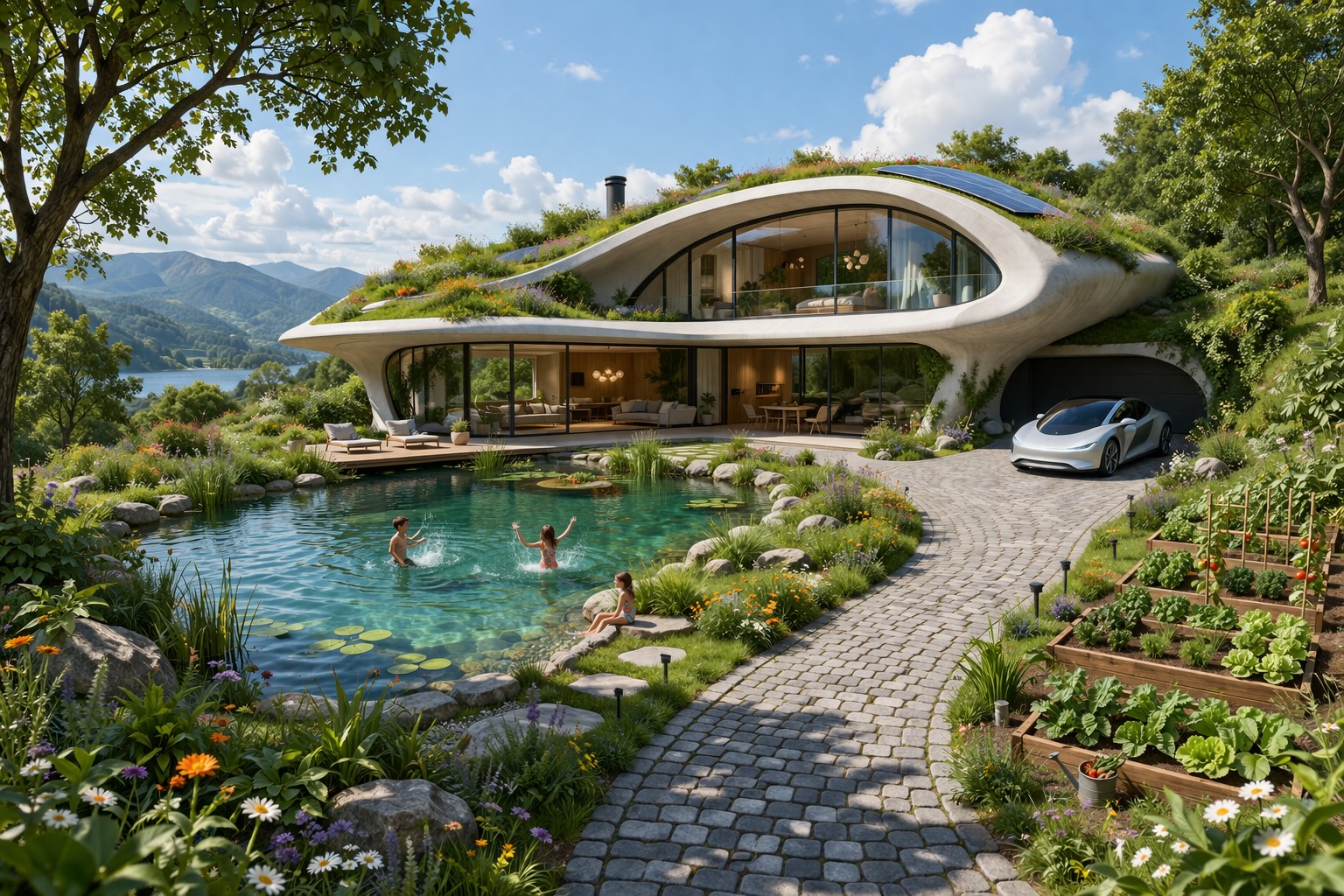
    On that land, a family could have:

    • a 500 m² house — spacious, well-designed, lasting quality and highly functional
    • built to stay cool in the summer and warm in the winter
    • with room for the whole family — and guests

    And still have:

    • a large garden with trees, food production, and open space
    • privacy, swimming pool, nature, and room to breathe

    And this is not an extreme scenario.

    It fits within a framework where we:

    • preserve natural reserves
    • keep large forest areas intact
    • maintain efficient agriculture
    • and even expand usable land over time through regeneration

    So the real realization is this:

    we are not lacking land.

    We are lacking intelligent distribution and use of it.

    That is the difference.

    What About Location?

    Of course, this raises another very human question:

    What about where people live?

    We would have to be adults about this — not fall back into fighting over the most desirable locations.

    A fair approach could combine belonging and chance:

    • If a family is native to a place, or has lived on a piece of land for generations, they should have first choice to remain there.
    • For new allocations, or when multiple families want the same location, there could be a transparent draw.

    If two families want the exact same spot, a simple, fair draw resolves it — not wealth, not power, not influence.

    This may feel unfamiliar at first.

    But compare it to today:

    Access to the best locations is already decided — just by money.

    A fair system would simply replace that with belonging, transparency, and equality of opportunity.

    Available Resources

    If we stop wasting, hoarding, and duplicating unnecessarily, the equation changes dramatically.

    We must look at:

    • Food production
    • Materials
    • Energy
    • Manufacturing

    And ask:

    What is truly possible when everything is designed for efficiency instead of profit?

    From Ownership to Access

    Today, we ask:

    “Who owns this?”

    In the new model, we ask:

    “Who needs this — and how do we provide it intelligently?”

    You don’t need to own ten houses. You need access to the space you actually use.

    You don’t need to hoard goods.
    You need reliable access to what improves your life.

    When systems are designed properly:

    Access becomes more abundant than ownership ever was.

    An Example From Reality

    Think about it this way:

    Today, a billionaire might own five tropical islands — but only has access to those five.

    In a system based on shared access instead of ownership, that same person could potentially enjoy thousands of tropical islands.

    In other words, when we share, everyone will have more.

    Less ownership.
    More access.

    And in the end — more freedom.

    So… What Can You Have?

    You can have everything that can exist:

    • within physical limits
    • without harming ecosystems
    • without depriving others

    And beyond that?

    You can experience far more than physical reality alone could ever provide.

    What You Cannot Have

    Let’s be equally honest.

    You cannot have:

    • Unlimited private control over shared resources
    • Excess that comes at the expense of others
    • Systems that degrade the planet for personal gain

    Not because of ideology.

    Because it simply doesn’t work.

    The Real Answer

    So what can you actually have?

    You can have:

    Everything that can be created, sustained, and shared — without taking it from someone else or from the future.

    That’s the boundary.

    And within that boundary:

    There is far more available than we have ever allowed ourselves to imagine.

    A Final Thought

    This is not about less.

    It is about alignment with reality.

    Because when access is based on what is possible — rather than what can be bought or controlled —

    we stop fighting over pieces…

    and start building a world that actually works.

    Curious what such a world could really look like, what it would be like to live in one?

    If so, read Waking Up – A Journey Towards a New Dawn for Humanity

    And if this article resonates with you — feel free to share it. I would appreciate that immensely, and thank you.

  • What do we actually have?

    What do we actually have?

    We often hear the same sentence repeated again and again in political debates, budget meetings, and everyday conversations:

    “There isn’t enough money.”

    Not enough money for better schools.
    Not enough money for safer infrastructure.
    Not enough money for healthcare, climate transition, or protecting children.

    But do we actually have enough resources if money is not the obstacle?

    Money is not a resource.

    Money is a permission system. A token. A bookkeeping layer placed on top of physical reality. And it is man-made. We create it from nothing — mostly as debt — and inject it into circulation as loans that must be repaid with interest.

    Yet repayment does not come from money itself.

    It comes from extracting, producing, transporting, consuming — from the planet. The main resource depletion comes from trying to repay the never ending debt.

    So for a moment, let’s remove money entirely.

    If we omit it completely, what do we actually have?

    We have energy.
    We have land.
    We have water.
    We have materials.
    We have technology.
    We have knowledge.
    We have human time and skill.
    And we have ecological regeneration rates.

    That is the real inventory of civilization.

    Do We Physically Have Enough?

    For basic human wellbeing, the answer is clearly yes.

    Food

    We already produce more than enough food globally to feed every human being on Earth. Several times over. Hunger today is not caused by insufficient production. It is caused by distribution systems, purchasing power, conflict, and waste. In other words, it is caused by the monetary system itself.

    Energy

    The amount of solar energy striking Earth each day exceeds total global human energy consumption many times over. Wind, geothermal, hydro, and storage technologies are already capable of supplying far more than we currently harness. The constraint is not energy availability — it is infrastructure, investment priorities, and political will.

    Housing

    In many countries, empty homes coexist with homelessness. We have the materials, the construction knowledge, and the technical capacity to house everyone safely. The bottleneck is not bricks, timber, or engineering. It is access.

    Water

    The planet holds vast freshwater reserves, and we possess desalination, purification, recycling, and distribution technologies. Water itself is part of a continuous planetary cycle — it evaporates, condenses, falls, flows, and can be cleaned and reused again and again. The issue is not that water does not exist. It is how it is managed, allocated, polluted, and whether we choose to treat it as a renewable flow rather than a disposable commodity.

    Technology & Coordination

    Never in history have we had this level of technical sophistication. We can monitor ecosystems from satellites, design regenerative agriculture systems, 3D-print buildings, coordinate global logistics in real time, and model climate systems with advanced computation.

    The limiting factor is not capacity.

    The limiting factor is organization.

    The Real Constraint: Regeneration Rates

    There is, however, a physical boundary.

    The planet regenerates forests, fisheries, soil, and freshwater at measurable rates. It absorbs waste and carbon at measurable rates.

    If extraction exceeds regeneration, systems destabilize.

    This is not ideological. It is biological and thermodynamic.

    So the real resource question is not:

    “Is there enough money?”

    It is:

    “Are we operating within ecological renewal rates?”

    If we align civilization with regeneration rather than with financial return, abundance becomes possible.

    Not infinite growth — but sustainable sufficiency.

    What We Have, In Reality

    We have:

    • Enough food production capacity
    • Vast renewable energy potential
    • Sufficient material resources for safe housing
    • Advanced global coordination technology
    • Knowledge accumulated across centuries
    • Billions of skilled human beings capable of contribution

    What we lack is not resources.

    We lack alignment.

    Money often makes scarcity appear natural. But most of today’s scarcity is structural — created by ownership systems, pricing mechanisms, debt pressures, and competitive growth incentives.

    When money becomes the primary lens, access is rationed by purchasing power.

    When physics becomes the lens, access is organized by availability and regeneration.

    Remove the permission-token layer, and civilization must face physical reality directly.

    That may sound restrictive.

    In truth, it may be clarifying.

    Because once we look at what we actually have — energy, land, materials, knowledge, and human capability — it becomes difficult to argue that poverty, homelessness, and ecological collapse are caused by a lack of resources.

    They are caused by how we choose to organize them.

    So perhaps the real question has never been:

    “Do we have enough money?”

    Perhaps the real question is:

    Do we have enough wisdom to use what we already have?

    If this reflection resonates with you, I invite you to explore these ideas further in Waking Up – A Journey Towards a New Dawn for Humanity, where a future civilization has already reorganized itself around physical reality rather than financial abstraction.

    And please share this article if it resonates. The conversation about resources, value, and our collective future is one worth expanding. Don’t you think?

  • How We Can ALL live a Life of Luxury on Earth — Without Breaking the Planet

    How We Can ALL live a Life of Luxury on Earth — Without Breaking the Planet

    From Excess to Access — A glimpse into the next Paradigm where Abundance, Technology, and Wisdom unite to create a world that works for everyone.

    Imagine a world where every human being lives in comfort and beauty.

    Where homes are energy-self-sufficient, food is fresh and locally grown, transport is clean and free, and no one worries about bills, borders, or basic survival.

    It sounds like a dream — but it’s only our outdated economic system that makes it seem impossible.

    The Myth of Scarcity

    We’ve been raised to believe there’s not enough for everyone — not enough land, not enough jobs, not enough “money.” Yet the Earth is overflowing with resources.

    We have enough sunlight striking the planet each hour to power civilization for a year. We produce 43 kg of food per day per person per year. But most is wasted to create profit. We have enough empty homes to house every homeless person several times over. Enough food to feed everyone — if we stopped throwing away most of it.

    Scarcity isn’t a natural law. It’s a policy decision.

    Scarcity is an artificial outcome of a system that rewards hoarding and punishes sharing — where competition, debt, and profit come before cooperation, dignity, and Life itself.

    The Real Meaning of Luxury

    Luxury today is marketed as excess — yachts, jets, and exclusivity. But true luxury has nothing to do with waste.

    Real luxury is freedom from stress, clean air, time to create, connection, and purpose.

    It’s walking barefoot on living soil, sleeping in peace, eating food you can trust, and feeling as part of something larger than yourself.

    When we redefine luxury from excess to access, the equation changes completely.

    A world where everyone has access to clean healthy water, sustainable energy, creative tools, and regenerative design is not only possible — it’s inevitable once we stop measuring life in old outdated currency.

    The Paradise Is Already Here

    There are over 100,000 tropical islands on Earth — from the turquoise lagoons of the Pacific to the coral-fringed coasts of the Indian Ocean and Caribbean.

    Humanity has more than 620,000 kilometers of coastline, much of it pristine and uninhabited. There is, quite literally, enough paradise for everyone.

    If we organized wisely, each of us could spend a good part of our year on a tropical beach, sipping an umbrella drink served by elegant solar-powered robots. If that’s what we wanted.

    And there would still be plenty of room — because people are beautifully different. Not everyone wants a Mai Tai under the palm trees. Some prefer mountain air, snow, forests, deserts, or bustling creative cities. The abundance of this planet includes the diversity of our dreams.

    The Tools Are Already Here

    We already possess everything required to build this world: renewable energy, 3D-printed housing, circular materials, global knowledge sharing, and AI-assisted logistics that can map and manage resources with stunning precision.

    What we lack isn’t technology — it’s alignment.

    A willingness to use these tools for collaboration instead of competition.

    The shift is from ownership to stewardship — from “mine” to “ours.” When resources become a shared inheritance instead of private property, abundance stops being an illusion.

    A Glimpse from the Future

    In Waking Up – A Journey Towards a New Dawn for Humanity, Benjamin Michaels wakes to a world that has made this transition.

    Money no longer exists. The Natural Exchange System ensures that everyone’s needs are met intelligently and sustainably. Cities of Light shine as living ecosystems — where architecture, art, and nature merge.

    It’s not a utopia. It’s simply what happens when humanity grows up — when we stop surviving and start thriving together.

    The Invitation

    The new world isn’t waiting in the future; it’s waiting in us.

    Every act of sharing, repairing, planting, and caring moves us closer. Every moment we choose collaboration over competition, we bring a fragment of paradise into form.

    We can all live a life of luxury — not by taking more, but by realizing we already have enough to share with everyone.

    🌍 Discover how humanity awakens in a world beyond money.

    Read Waking Up – A Journey Towards a New Dawn for Humanity and join the movement toward a world that truly works for all. Ebook is only $4,99