
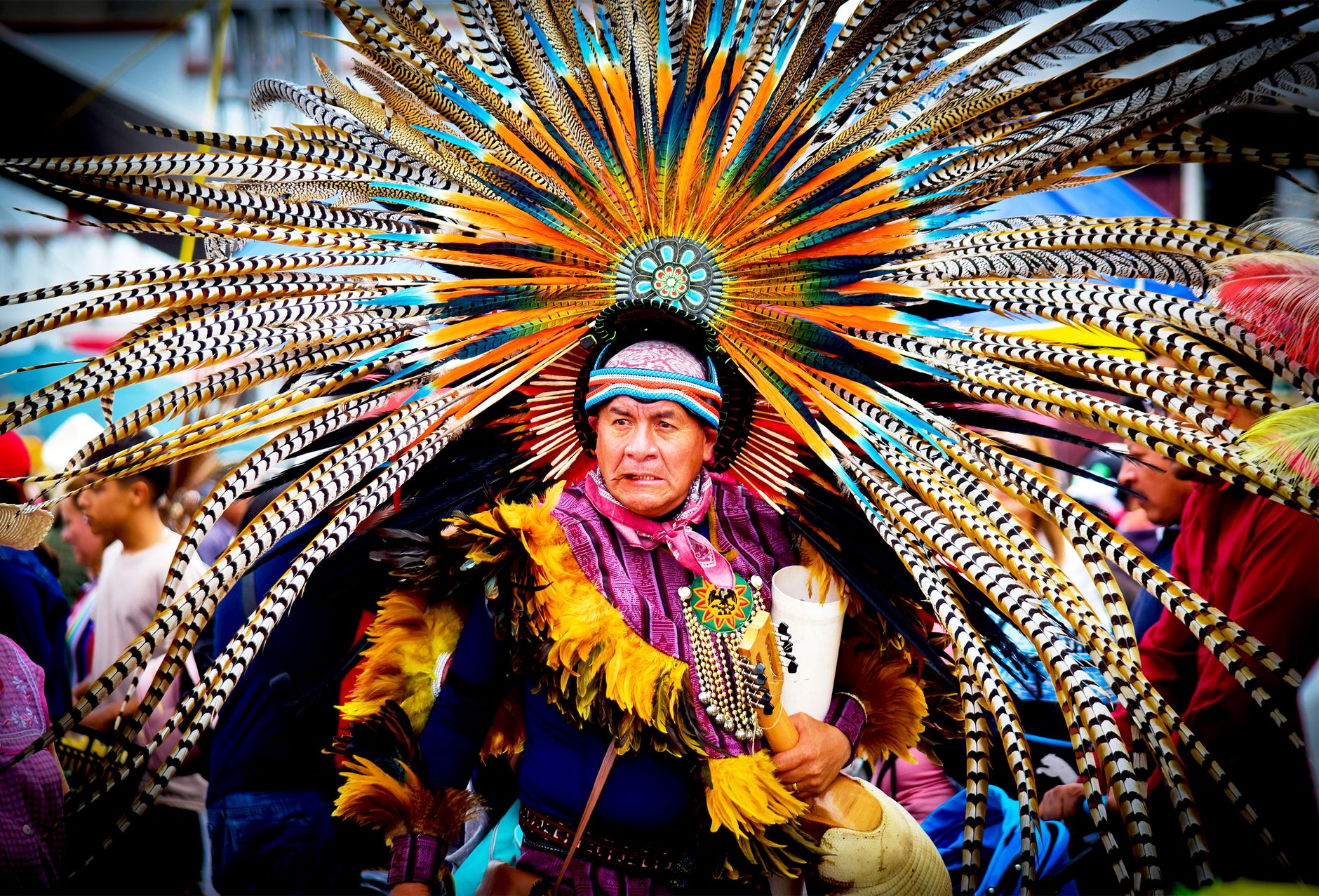
An ancient warning… and humanity’s journey towards a new dawn…
A Choice, Not a Prediction
“Humanity will one day stand before two paths.”
For centuries, the Hopi people of what is now northern Arizona have carried an ancient warning.
Not a prediction of unavoidable doom.
Not a promise that the future has already been written.
A choice.
According to Hopi tradition, humanity eventually arrives at a crossroads. One path leads ever further from the living world—toward greed, domination, imbalance, and ultimately self-destruction. The other leads toward humility, cooperation, gratitude, and harmony with the Earth.
It may seem that humanity has already chosen the first path. After all, much of our civilization has been shaped by greed, competition, exploitation, and a growing separation from the natural world. Yet a path is not the same as a destination. Every day, humanity continues to make countless choices—through our values, our technologies, our institutions, and the systems we create. The very fact that we are increasingly recognizing the consequences of our actions, searching for more sustainable ways of living, and reimagining how society might function suggests that the choice is still before us. The crossroads is not a single moment in history. It is the ongoing decision between continuing along a path of imbalance or turning toward one of regeneration, cooperation, and harmony with the Earth.
The future is not predetermined.
It depends upon the path we choose to follow all the way. We can still get on the right path to a new destination.
Whether one sees this as prophecy, philosophy, or timeless observation matters little.
Because today, it feels more relevant than ever.
⸻
Standing at the Crossroads
Look around.
The signs of imbalance are difficult to ignore.
A changing climate.
Disappearing forests.
Plastic-filled oceans.
Declining biodiversity.
Soils losing their fertility.
Wars over land, energy, and resources.
Millions living in poverty while unimaginable wealth accumulates elsewhere.
An economic system demanding perpetual growth on a finite planet.
Record levels of stress, anxiety, loneliness and depression.
Never before has humanity possessed such extraordinary technology.
Never before have we placed such extraordinary pressure upon the very systems that keep us alive.
If the Hopi prophecy speaks of a crossroads…
Perhaps we are standing there now.
⸻
The Wisdom of the Hopi
What makes the Hopi teaching so remarkable is that it is not really about catastrophe.
It is about relationship.
For more than a thousand years, the Hopi have lived upon the mesas of Arizona, surviving not by conquering nature but by cooperating with it.
Their philosophy begins with a simple truth.
Human beings are not separate from the Earth.
We belong to it.
The land is not property.
Water is not merely a resource.
Animals are not commodities.
Forests are not inventories.
The Earth is a living community of which humanity is only one member.
Everything is connected.
To damage one part is ultimately to damage ourselves.
To care for one part is to strengthen the whole.
From that understanding flows an entire way of life.
Take only what you need.
Share what you have.
Respect every form of life.
Think beyond your own lifetime.
Leave the world healthier for those who follow.
Live with gratitude.
Live with humility.
Live in balance.
Centuries before ecology became a scientific discipline, the Hopi had already understood one of its most profound truths.
Life flourishes through relationship.
Not domination.
⸻
A Wisdom Rediscovered
The Hopi were never alone.
Across the world, Indigenous cultures preserved remarkably similar wisdom.
The Sámi.
The Māori.
Aboriginal Australians.
First Nations across the Americas.
The Inuit.
Many different peoples, separated by oceans and continents, arrived at the same understanding.
Humanity thrives when it lives with nature, not against it.
For a long time, industrial civilization dismissed such ideas as relics of the past.
Progress seemed to point elsewhere.
Produce more.
Consume more.
Extract more.
Compete more.
Own more.
Sell more.
Buy more.
And so we built a civilization of astonishing power.
Yet alongside our prosperity came ecological overshoot, pollution, loneliness, inequality, anxiety, conflict, and environmental decline.
We became incredibly intelligent.
But perhaps not yet wise.
The Rediscovery
Then, slowly, humanity began rediscovering what the Hopi had never forgotten.
Scientists revealed how intricately connected Earth’s ecosystems really are.
Climate researchers warned that planetary systems have limits.
Ecologists demonstrated that every species depends upon countless others.
Environmental organizations worked tirelessly to protect forests, rivers, wetlands, coral reefs, wildlife, and biodiversity.
Farmers regenerated exhausted soils.
Architects designed buildings to work with nature.
Engineers developed renewable energy.
Communities embraced repairing, sharing, and local resilience.
Millions of people planted trees.
Protected habitats.
Reduced waste.
Restored rivers.
Stopped desert expansion.
Not because they had all studied Hopi teachings.
But because they were arriving at many of the same conclusions.
Ancient wisdom and modern science were beginning to tell the same story.
Everything is connected.
⸻
The Missing Piece
At first these movements appeared unrelated.
Scientists offered evidence.
Environmental organizations inspired action.
Engineers created new technologies.
Indigenous peoples preserved ancient understanding.
Artificial intelligence accelerated discovery.
Each held a different piece of the puzzle.
Eventually humanity realized something profound.
The environmental crisis…
The social crisis…
The economic crisis…
The mental health crisis…
They were not separate problems.
They were symptoms of the same underlying imbalance.
And that realization led to an even deeper question.
If we truly believe the Earth is not ours to exploit…
Why had we built an economic system that rewards exactly that?
Why must forests become profitable before they are protected?
Why should clean rivers compete with quarterly earnings?
Why should healthy ecosystems justify their existence in financial terms?
Why should houses primarily be investments instead of homes?
Why should food first become a commodity before it feeds people?
The more humanity reflected upon these questions, the clearer it became.
The problem was not simply individual greed.
The problem was systemic.
The monetary system itself rewarded extraction more than regeneration.
Competition more than collaboration.
Ownership more than stewardship.
Endless growth more than lasting balance.
Even the kindest and most conscientious people found themselves participating in a system that produced outcomes they never wanted.
The Hopi had warned about imbalance.
Humanity finally understood where much of that imbalance had been designed into civilization itself. In The Monetary System.
⸻
The Great Transformation
That realization changed everything.
Not overnight.
But steadily.
Peacefully.
Thoughtfully.
Humanity began redesigning society around an entirely different question.
Not:
“How can we create more monetary wealth?”
But:
“How can we help all life flourish?”
Artificial intelligence no longer optimized profits.
It optimized resources and natural systems.
Automation liberated people from repetitive labour.
Renewable energy replaced finite fuels.
Agriculture regenerated ecosystems.
Products were designed to last.
Materials circulated endlessly.
Resources flowed where they created the greatest benefit for humanity and the Earth, rather than the greatest financial return.
Ownership gradually gave way to stewardship.
Competition increasingly gave way to collaboration.
The monetary system evolved into something entirely different and eventually it was completely gone.
Instead, there was a civilization designed to preserve, regenerate, and intelligently optimize the Earth’s resources for the benefit of all living beings.
Technology did not create this new world.
It simply became the instrument through which humanity finally lived according to values it had long known in its heart.
The wisdom came first.
The system followed.
⸻
Ancient Wisdom Meets the Future
Looking back, historians found it almost poetic.
Humanity had searched for the future in laboratories.
In economics.
In politics.
In artificial intelligence.
Those discoveries proved indispensable.
Yet one of the most important pieces of the puzzle had quietly been preserved for centuries by a small Indigenous people living among the sandstone mesas of Arizona.
The Hopi had never offered humanity a detailed blueprint for civilization.
They had offered something even more valuable.
A compass.
A reminder that every generation must choose whether to live against the living world…
or with it.
Humanity did not become Hopi.
Nor did it abandon science for spirituality.
Instead, it allowed ancient wisdom and modern knowledge to walk hand in hand.
One restored forest.
One regenerated ecosystem.
One technological breakthrough.
One redesigned community.
One act of generosity.
One awakened generation at a time.
Until, eventually, humanity chose the second path of humility, cooperation, gratitude, and harmony with the Earth.
⸻
A Journey Towards a New Dawn
This is the civilization that bewilders billionaire Benjamin Michaels when he awakens one hundred years after choosing cryogenic preservation in the hope of escaping his terminal cancer.
He expected to find a richer world in money.
Instead, he discovers a wiser one.
A civilization where technology serves life instead of profit.
Where stewardship has replaced ownership.
Where resources are intelligently optimized and shared for the benefit of all.
Where humanity finally learned that true prosperity is measured not by what we accumulate, but by the health of the living world we leave behind.
Perhaps that was the deeper meaning of the Hopi prophecy all along.
Not that the future was already written.
But that humanity would one day be wise enough to choose it.
Benjamin’s journey through that remarkable future is told in Waking Up: A Journey Towards a New Dawn for Humanity—a story of how ancient wisdom, human ingenuity, and a new way of organizing civilization opened the door to a new dawn for humanity.
⸻
Leave a Reply