
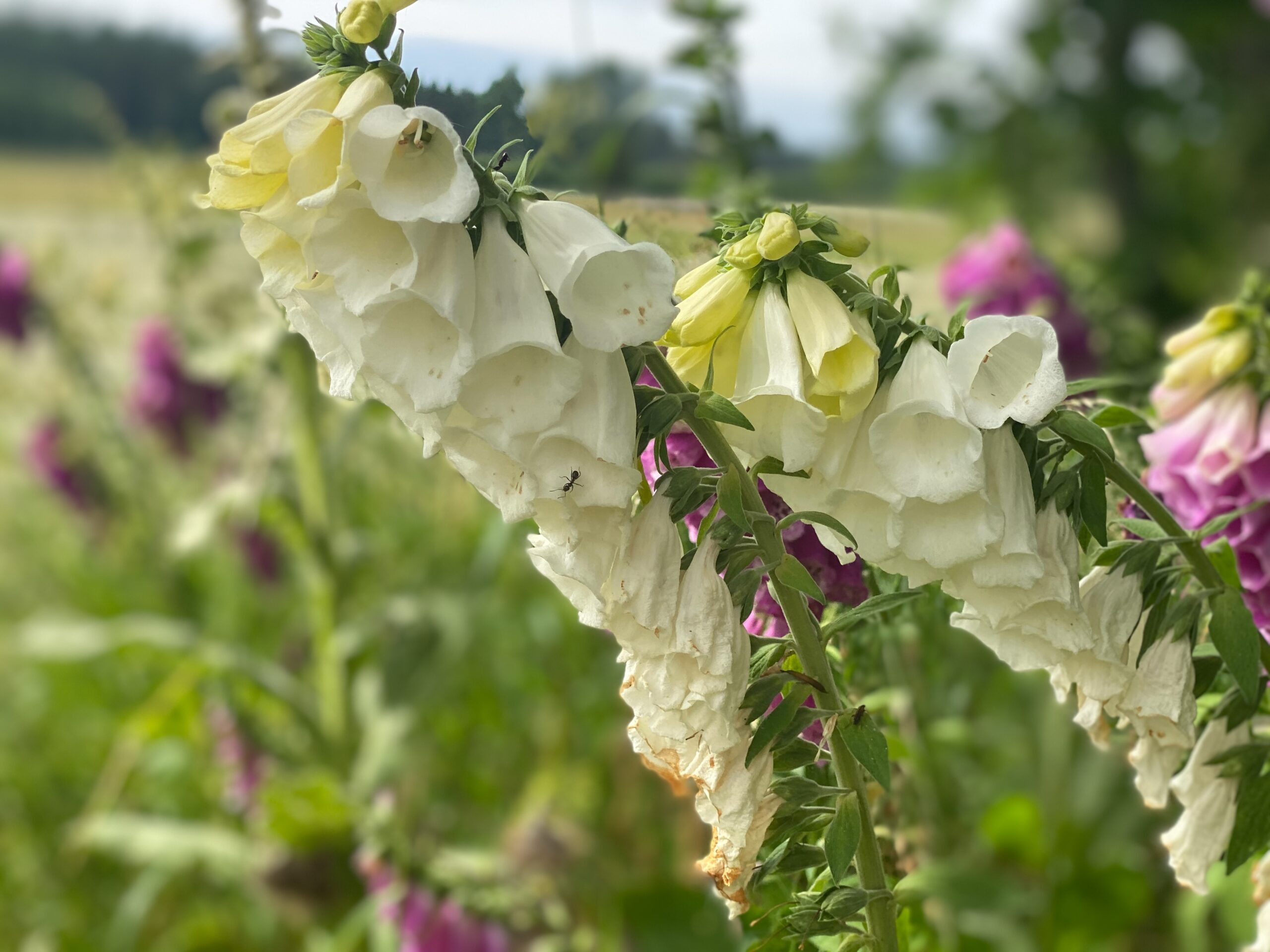
In a traditional and survivalist context, living off the land means becoming entirely self-reliant by growing your own food, foraging, harvesting natural energy (like solar or wind), and building your own shelter. This is the traditional view. But maybe it actually means something more? Something much deeper and truly life altering for the whole of humanity?
For countless people around the world, a quiet revolution has already begun.
Some are buying small farms. Others are transforming ordinary backyards and frontyards into thriving food forests. Lawns are becoming vegetable gardens. Empty plots are filling with fruit trees, herbs, berries, and flowers that attract bees and butterflies instead of lawnmowers.
Many of these people aren’t doing it to become rich.
They’re doing it because something deep inside tells them there must be another way to live.
One YouTuber joked that the easiest way to make friends is to grow too many tomatoes. Suddenly neighbors stop by. Conversations begin. Surplus is shared. What started as gardening quietly becomes community.
Others have discovered unexpected benefits. Front-yard gardens reduce soil erosion. Trees provide shade for pedestrians during increasingly hot summers. Birds, insects, and pollinators return. The neighborhood itself becomes more beautiful and alive.
None of this happens because someone is chasing profit.
It happens because nature works through abundance.
More Than Gardening
At first glance, living off the land might appear to be little more than a hobby.
In reality, it is something much more profound.
It is a demonstration that many of our most fundamental needs can be met without passing through the monetary system at all.
The tomatoes don’t ask for money before they grow.
The apple tree doesn’t charge rent.
The bees don’t send invoices for pollination.
The soil doesn’t negotiate prices.
Nature simply produces.
Our role is to care for it.
A Different Relationship
Modern society has taught us to see almost everything through ownership.
My land.
My house.
My harvest.
My products.
But perhaps that perspective is backwards.
What if we really are not owners at all?
What if we are simply temporary stewards of a tiny piece of Earth?
A steward doesn’t exploit.
A steward nurtures.
A steward leaves the land healthier than it was found.
When enough people think this way, abundance begins replacing scarcity.
Beyond Money
If you struggle to imagine a world without ownership, money, or trade, look at these gardens.
They already exist.
People exchange seeds, or give them freely when they have an abundance.
They share knowledge freely.
They give away excess vegetables.
Neighbors help each other build greenhouses.
Children learn where food actually comes from.
Without realizing it, they are already participating in an economy based less on transactions and more on relationships.
Not because anyone forced them.
Because it simply feels natural.
The Real Wealth
The old monetary system depends on money.
People do not.
Nature certainly does not.
Forests grew for hundreds of millions of years before the first coin was ever minted.
Rivers flowed.
Seeds sprouted.
Life flourished.
Money is a human invention.
Life is not.
The more we reconnect with the living systems that sustain us, the less dependent we become on artificial systems built around endless consumption and constant economic growth.
A New Way Forward
Living off the land does not mean everyone must become a farmer.
Cities will still exist.
Technology will continue to develop.
Science, medicine, engineering, and countless professions will remain essential.
But the principles behind living off the land can spread everywhere.
Community gardens.
Food forests.
Edible parks.
Fruit trees along streets.
Rooftop gardens.
Shared orchards.
Regenerative agriculture.
Every square metre returned to life becomes another step toward a healthier planet.
From Gardens to Civilization
Looking back, it all seemed so obvious.
The seeds of the new world had been there all along.
They were growing quietly in backyards, community gardens, small farms, balconies, rooftops, and food forests. Millions of people had already begun demonstrating the principle that would eventually transform civilization. They simply didn’t realize how profound it was.
They weren’t just growing tomatoes.
They were growing a new way of thinking.
The tomatoes ripened.
There were more than enough.
A neighbor walked by.
“You want some tomatoes?”
“Sure!”
“Take as many as you need. We have a surplus.”
No negotiation.
No invoice.
No transaction.
Just one human being helping another because there was more than enough for everyone.
Humanity eventually realized that this simple interaction contained the blueprint for an entirely new civilization.
If tomatoes could be shared because there was an abundance, why not everything else?
Need a shovel? Here you go.
Need building materials? Of course.
Need a wheelchair? Certainly.
Need a robot to help in the garden? Why not? We have plenty.
As long as humanity had the resources, the knowledge, and the ability to produce something sustainably, it simply produced what people needed and shared it directly.
The same philosophy that had quietly flourished in gardens expanded into neighborhoods.
Neighborhoods inspired cities.
Cities inspired nations.
Eventually, the entire planet awakened to the same simple truth.
We never actually needed money to satisfy human needs.
Only the monetary system did.
Once we understood that, everything changed.
We stopped producing what generated the highest profit and started producing what created the greatest well-being.
We stopped measuring success by accumulation and began measuring it by how much life flourished.
We stopped exploiting the Earth as owners and began caring for it as stewards.
Technology continued to advance faster than ever before, but now it served humanity instead of an economic machine. Artificial intelligence optimized production and distribution. Robotics handled the repetitive work. Resources were carefully monitored, restored, and shared. Ingenious inventions were spread globally instead of patented. Waste fell dramatically while abundance grew.
For the first time in history, humanity had aligned its technology with nature instead of against it.
We took only what we truly needed from the Earth.
We restored what we used.
And generation after generation started to leave the planet richer than they had found it.
Perhaps the future was never waiting for some miraculous invention.
Perhaps it began the moment we understood that the philosophy of living off the land was never really only about food.
It was about learning how to live together.
That is the journey Benjamin Michaels unexpectedly wakes up to one hundred years in the future in Waking Up – A journey towards a new dawn for humanity. A world that at first seems impossible, but that slowly reveals itself to have grown from thousands of small choices made by ordinary people—people who chose stewardship over ownership, abundance over scarcity, and sharing over endless competition.
Perhaps the future does not begin with a revolution.
Perhaps it begins with a single seed.
Leave a Reply