
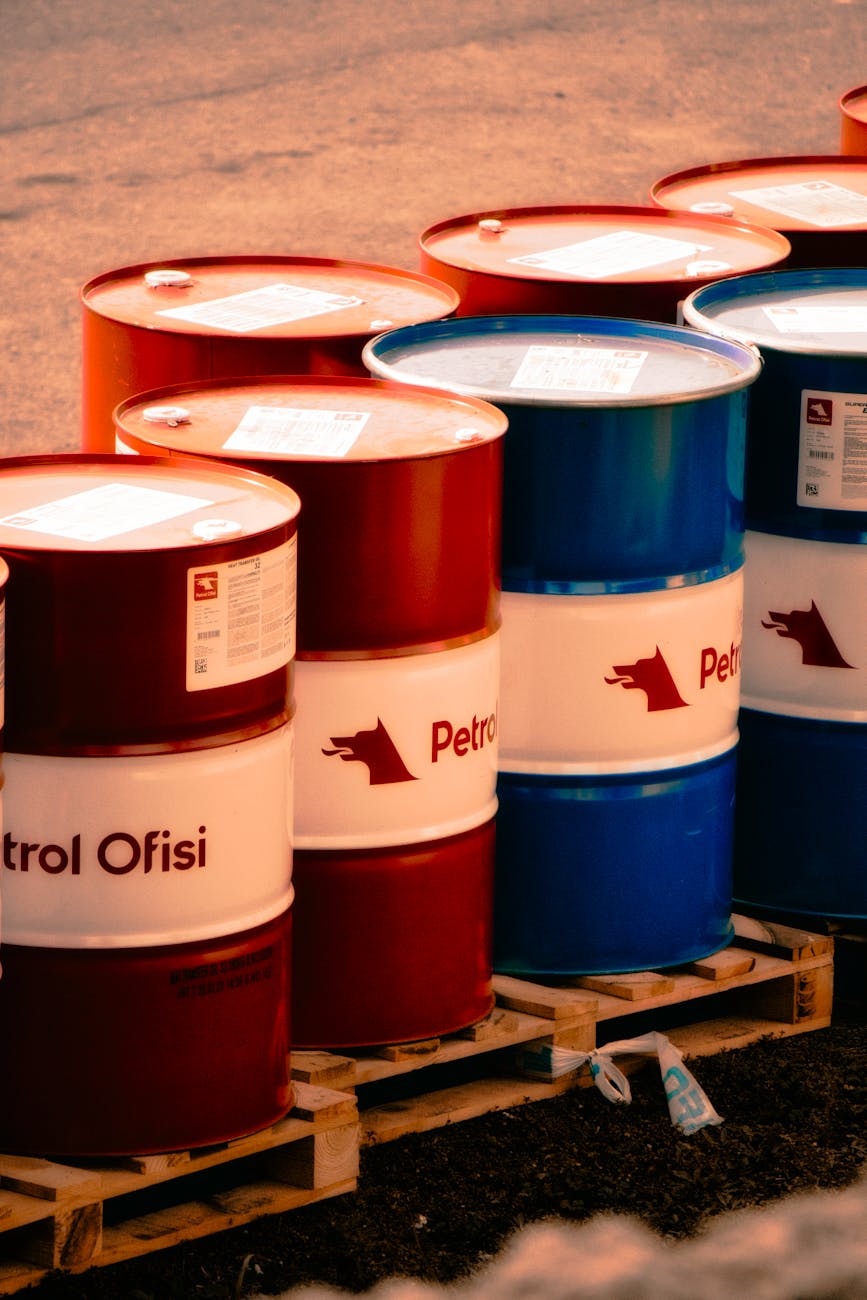
This week, in Santa Marta, Colombia, more than 50 countries have gathered for a major climate meeting to discuss how to phase out oil, coal, and gas — not as a distant idea, but as an urgent necessity.
Because the pressure is no longer abstract.
It shows up as rising temperatures.
Extreme weather.
Supply shocks.
Geopolitical tensions.
It shows up in energy crises, in conflicts over transport routes, in sudden shifts that ripple through the global economy.
And underneath it all lies a growing realization:
The current energy model — and the system built around it — cannot continue indefinitely.
Not The First Attempt
Among those leading the conversation is Johan Rockström, one of the world’s most respected climate scientists, known for the concept of planetary boundaries — the idea that Earth has limits we must stay within to maintain a stable and livable planet.
He and others are not questioning if we must act, but how to do it in time.
And this is not the first attempt.
At a previous meeting in Brazil, efforts to move forward were halted when a coalition of oil‑producing countries pushed back and blocked progress.
Which raises an uncomfortable reality:
They bring proposals:
Rules.
Regulations.
Fees.
Taxes.
An action plan.
And yet — it stalls.
Because we’ve been here before.
Meetings. Agreements. Targets. Promises.
And still, the world struggles to move fast enough.
So the question is no longer:
Do we know what to do?
We do.
The real question is:
Why aren’t we doing it?
The Hidden Loop
We tax what we want less of.
But at the same time:
Governments depend on tax revenue.
Economies depend on activity being taxed.
Jobs depend on that activity continuing.
So we end up in a strange loop:
We try to drastically reduce something…
that the system still depends on.
Which means:
We cannot remove it completely.
Only regulate it.
The Consumption Engine
And underneath it all lies another driver:
Consumption.
Because the system doesn’t just run on energy — it runs on us constantly consuming it.
Fuel. Food. Housing. Clothing. Products. Everything.
Every part of the economy depends on it.
Which creates another uncomfortable reality:
We know we consume too much.
But reducing consumption at scale would halt the economy —
and risk collapsing the very system people depend on.
So again, we are caught in the dilemma:
We try to reduce the pressure…
while still needing the behavior that creates it.
Which means:
We cannot remove it completely. Only regulate it.
The System Constraint
This is not about a lack of intelligence.
We have the data.
We have the technology.
We have the warnings.
And now — we even have global meetings agreeing on direction.
So what’s missing?
A vision
A vision of a completely new system.
One that is not dependent on infinite growth — a model that inevitably drives resource depletion, inequality, pollution and environmental breakdown.
But instead, a system focused on the wellbeing of all humans, nature, and the planet itself.
Structure — yes.
But more importantly, the willingness to imagine and adopt something fundamentally different.
Because every solution proposed:
Rules.
Regulations.
Taxes.
All of them must operate within the current system.
And that system has boundaries.
It must:
Keep economies stable.
Protect jobs.
Avoid collapse.
Maintain growth.
So any change must be:
Careful.
Gradual.
Controlled.
And thus not really changing anything.
Even when the problem is hyper urgent.
A Real-Time Example of the Trap
Right as leaders meet to discuss phasing out fossil fuels, reality responds.
When traffic through the Strait of Hormuz is disrupted, China increases efforts to produce gas from coal.
Not because it wants to increase emissions.
But because it needs energy security.
And within the current system, energy security cannot be compromised.
So the system adapts — not toward sustainability, but toward stability.
Even if that means turning to something more polluting.
This is the trap in real time:
We try to move away from fossil fuels…
But when pressure rises, the system falls back on whatever keeps it running.
Why Progress Feels So Slow
This is why meetings stall.
Why agreements weaken.
Why action plans get diluted.
Not because people don’t care.
But because the system defends itself.
Oil-producing nations protect revenue.
Industries protect investments.
Governments protect stability.
Everyone is acting rationally —
inside an irrational system that makes real change extremely difficult.
The Real Question
The real question is:
How can we truly thrive as humanity within nature and its limits on planet Earth?
Not:
What are we allowed to do within the system?
But:
What system can work and replace the one we have?
And maybe even:
When can we do it?
A Shift in Perspective
What if the problem isn’t just fossil fuels?
What if the problem is the system and the fuels that co-created each other — and still sustain each other?
When the growth‑fixated monetary system discovered fossil fuels, it took off completely — turning fossil fuels into the most important cornerstone of the monetary economy.
Remove that cornerstone, and the whole structure is at risk of collapsing.
Which is why it cannot be removed completely — at least not safely — unless a new system is ready to take its place.
Because as long as:
Growth is mandatory…
Profit drives decisions…
Competition sets the pace…
Any solution must stay within the limits that protect those foundations.
The Edge We’re Standing On
This is where we are now.
We know what needs to happen.
We are trying to act.
But we are trying to do it without changing the system that created the problem in the first place.
And that might be why it feels so hard.
One Step Further
What happens if we don’t just adjust the system…
but question it?
Not through collapse.
Not through chaos.
But through redesign.
Because maybe the real transition isn’t just about energy.
Maybe it’s about how we organize everything.
A Different Way to Imagine It
What would a world look like where solving planetary problems doesn’t threaten the system itself?
Where progress isn’t slowed down by the need to protect outdated structures?
Where change can actually happen at the speed it needs to?
Because the constraints of money and trading are no longer dictating what is possible.
Step Into That World
In the novel Waking Up – A Journey Towards a New Dawn for Humanity, the former billionaire Benjamin Michaels wakes up 100 years into the future —
into a world where the system itself has been redesigned.
A world where resources are optimized and managed, not owned. Where cooperation replaces competition. Where solving problems is no longer limited by profit or growth.
What if that world isn’t just fiction…
but a direction?
And please share this article if it resonates. I thank you.
Leave a Reply