Tag: climate change

  • The System We Can’t Escape — But Must

    The System We Can’t Escape — But Must

    This week, in Santa Marta, Colombia, more than 50 countries have gathered for a major climate meeting to discuss how to phase out oil, coal, and gas — not as a distant idea, but as an urgent necessity.

    Because the pressure is no longer abstract.

    It shows up as rising temperatures.
    Extreme weather.
    Supply shocks.
    Geopolitical tensions.

    It shows up in energy crises, in conflicts over transport routes, in sudden shifts that ripple through the global economy.

    And underneath it all lies a growing realization:

    The current energy model — and the system built around it — cannot continue indefinitely.

    Not The First Attempt

    Among those leading the conversation is Johan Rockström, one of the world’s most respected climate scientists, known for the concept of planetary boundaries — the idea that Earth has limits we must stay within to maintain a stable and livable planet.

    He and others are not questioning if we must act, but how to do it in time.

    And this is not the first attempt.

    At a previous meeting in Brazil, efforts to move forward were halted when a coalition of oil‑producing countries pushed back and blocked progress.

    Which raises an uncomfortable reality:

    They bring proposals:

    Rules.
    Regulations.
    Fees.
    Taxes.

    An action plan.

    And yet — it stalls.

    Because we’ve been here before.

    Meetings. Agreements. Targets. Promises.

    And still, the world struggles to move fast enough.

    So the question is no longer:

    Do we know what to do?

    We do.

    The real question is:

    Why aren’t we doing it?


    The Hidden Loop

    We tax what we want less of.

    But at the same time:

    Governments depend on tax revenue.
    Economies depend on activity being taxed.
    Jobs depend on that activity continuing.

    So we end up in a strange loop:

    We try to drastically reduce something…
    that the system still depends on.

    Which means:

    We cannot remove it completely.
    Only regulate it.

    The Consumption Engine

    And underneath it all lies another driver:

    Consumption.

    Because the system doesn’t just run on energy — it runs on us constantly consuming it.

    Fuel. Food. Housing. Clothing. Products. Everything.

    Every part of the economy depends on it.

    Which creates another uncomfortable reality:

    We know we consume too much.

    But reducing consumption at scale would halt the economy —

    and risk collapsing the very system people depend on.

    So again, we are caught in the dilemma:

    We try to reduce the pressure…

    while still needing the behavior that creates it.

    Which means:

    We cannot remove it completely. Only regulate it.


    The System Constraint

    This is not about a lack of intelligence.

    We have the data.
    We have the technology.
    We have the warnings.

    And now — we even have global meetings agreeing on direction.

    So what’s missing?

    A vision

    A vision of a completely new system.

    One that is not dependent on infinite growth — a model that inevitably drives resource depletion, inequality, pollution and environmental breakdown.

    But instead, a system focused on the wellbeing of all humans, nature, and the planet itself.

    Structure — yes.

    But more importantly, the willingness to imagine and adopt something fundamentally different.

    Because every solution proposed:

    Rules.
    Regulations.
    Taxes.

    All of them must operate within the current system.

    And that system has boundaries.

    It must:

    Keep economies stable.
    Protect jobs.
    Avoid collapse.
    Maintain growth.

    So any change must be:

    Careful.
    Gradual.
    Controlled.

    And thus not really changing anything.

    Even when the problem is hyper urgent.


    A Real-Time Example of the Trap

    Right as leaders meet to discuss phasing out fossil fuels, reality responds.

    When traffic through the Strait of Hormuz is disrupted, China increases efforts to produce gas from coal.

    Not because it wants to increase emissions.

    But because it needs energy security.

    And within the current system, energy security cannot be compromised.

    So the system adapts — not toward sustainability, but toward stability.

    Even if that means turning to something more polluting.

    This is the trap in real time:

    We try to move away from fossil fuels…

    But when pressure rises, the system falls back on whatever keeps it running.


    Why Progress Feels So Slow

    This is why meetings stall.

    Why agreements weaken.

    Why action plans get diluted.

    Not because people don’t care.

    But because the system defends itself.

    Oil-producing nations protect revenue.
    Industries protect investments.
    Governments protect stability.

    Everyone is acting rationally —

    inside an irrational system that makes real change extremely difficult.


    The Real Question

    The real question is:

    How can we truly thrive as humanity within nature and its limits on planet Earth?

    Not:

    What are we allowed to do within the system?

    But:

    What system can work and replace the one we have?

    And maybe even:

    When can we do it?


    A Shift in Perspective

    What if the problem isn’t just fossil fuels?

    What if the problem is the system and the fuels that co-created each other — and still sustain each other?

    When the growth‑fixated monetary system discovered fossil fuels, it took off completely — turning fossil fuels into the most important cornerstone of the monetary economy.

    Remove that cornerstone, and the whole structure is at risk of collapsing.

    Which is why it cannot be removed completely — at least not safely — unless a new system is ready to take its place.

    Because as long as:

    Growth is mandatory…
    Profit drives decisions…
    Competition sets the pace…

    Any solution must stay within the limits that protect those foundations.


    The Edge We’re Standing On

    This is where we are now.

    We know what needs to happen.

    We are trying to act.

    But we are trying to do it without changing the system that created the problem in the first place.

    And that might be why it feels so hard.


    One Step Further

    What happens if we don’t just adjust the system…

    but question it?

    Not through collapse.

    Not through chaos.

    But through redesign.

    Because maybe the real transition isn’t just about energy.

    Maybe it’s about how we organize everything.


    A Different Way to Imagine It

    What would a world look like where solving planetary problems doesn’t threaten the system itself?

    Where progress isn’t slowed down by the need to protect outdated structures?

    Where change can actually happen at the speed it needs to?

    Because the constraints of money and trading are no longer dictating what is possible.


    Step Into That World

    In the novel Waking Up – A Journey Towards a New Dawn for Humanity, the former billionaire Benjamin Michaels wakes up 100 years into the future —

    into a world where the system itself has been redesigned.

    A world where resources are optimized and managed, not owned. Where cooperation replaces competition. Where solving problems is no longer limited by profit or growth.

    What if that world isn’t just fiction…

    but a direction?

    👉 Discover the story here

    And please share this article if it resonates. I thank you.
  • The Inevitable Truth

    The Inevitable Truth

    Something is deeply wrong.

    We can feel it everywhere.

    The climate is changing faster than expected. Forests burn. Oceans warm. Species disappear. Weather becomes more extreme, more unpredictable. Entire regions are slowly becoming harder to live in.

    At the same time, millions of people struggle to meet basic needs. Food insecurity exists alongside food waste. Homelessness exists alongside empty homes. Stress, anxiety, and burnout are rising, even in the wealthiest societies.

    And then there is pollution.

    Not just CO₂ — but soot, chemicals, plastics, and particles filling the air, water, and soil. Soot from burning fossil fuels and industrial activity doesn’t just disappear. It lingers, darkens ice, accelerates melting, and harms human health.

    We know this.

    We talk about it constantly. Governments meet. Agreements are signed. Targets are set.

    And still… it continues.

    Which leads to a difficult question:

    Why?


    Time Is Running Out

    Climate change is not something waiting for us in the future.

    It is here. Now.

    We are already living in it.

    So the question becomes inevitable:

    Is it too late?
    Is there no hope left for humanity on planet Earth?
    Or do we still have time?

    The truth is this:

    It is not too late.

    But we are no longer early.

    We still have time — but not much.

    If we act quickly, we can still protect our future.

    But acting quickly doesn’t mean small adjustments.

    It means drastic changes to the way our world works.

    If you look at the trajectory, it can feel overwhelming.

    Even if emissions are reduced slightly, the system as a whole keeps pushing in the same direction. Growth. Production. Consumption. Expansion.

    We are told to recycle more, drive less, eat differently, buy smarter.

    But at the same time, the global system depends on increasing production and consumption every single year.

    It’s like trying to slow down a car… while pressing the accelerator.

    And deep down, many people feel it:

    Something doesn’t add up.


    What We Can Actually Control

    Some pollution is beyond our control.

    Volcanoes erupt. Forest fires burn. Nature releases soot and particles into the atmosphere.

    And once that soot is up there, it’s too late to stop.

    But that’s not where the real problem lies.

    Because what we can control — and what we are choosing not to control — is everything else.

    Every day, we burn enormous amounts of fossil fuels. Not because we have no alternatives, but because our entire system depends on it.

    Energy production, transport, manufacturing, agriculture — all tied to continuous extraction, consumption and combustion.

    And soot from these sources is not a natural accident.

    It is a direct consequence of how our system operates.


    The Uncomfortable Reality

    So why don’t we just stop?

    If we know that burning fossil fuels is driving pollution, climate change, and environmental destruction… why don’t we simply stop doing it?

    Because stopping it at the scale and speed required would do something else.

    It would stop the system. It would mean a total collapse of the monetary system itself.


    The System Behind the Symptoms

    The issue is not that we don’t understand the problems.

    We understand them very well.

    The issue is that the system we rely on to function as a global society is built on the very activities that are causing our demise.

    The monetary system depends on continuous growth and consumption.

    Growth depends on production.

    Production depends heavily on energy — and that energy still largely comes from fossil fuels.

    If you remove that foundation too quickly, you don’t just remove emissions — you trigger a chain reaction. The faster we cut, the more we pull the rug out from under the very system that keeps goods, jobs, and services flowing.

    You remove supply chains.

    You remove jobs.

    You remove the flow of goods that people depend on for daily life.

    In short:

    You risk collapse.


    The Trap

    This creates a trap that is incredibly difficult to escape.

    On one hand, we must reduce pollution, emissions, and environmental damage — and we must do it fast.

    On the other hand, doing it as fast as we really need to threatens the survival of the system that currently keeps billions of people alive.

    That is the core tension: the speed required to solve the problem is the same speed that risks collapsing the whole system.

    So we try to compromise.

    We tweak — more efficient engines, slightly better fuel standards, LED lights instead of old bulbs, electric cars that still rely on massive industrial supply chains and energy systems.

    We adjust — new climate targets, carbon taxes, subsidies for renewables, regulations that try to slow things down without stopping the overall growth machine.

    We patch — carbon offset programs, planting trees to compensate for emissions, cleaning plastic from oceans, installing filters and capture systems — all attempts to deal with the consequences after the damage has already been done by the monetary system.

    But the core direction remains unchanged.

    Because changing the core would mean questioning the system itself.


    The Inevitable Truth

    At some point, this contradiction cannot continue.

    We cannot simultaneously depend on a system that requires continuous consumption, extraction and burning…

    …and expect to stop the consequences of that very same extraction and burning.

    Something has to give.

    Either we continue as we are and face escalating environmental consequences.

    Or we replace the system — deliberately — before the consequences force that change upon us.


    What Comes Next?

    This is not about blame.

    It’s not about individuals making better choices.

    It’s about recognizing that the problems we see are not isolated.

    They are symptoms of a system.

    And the system producing those symptoms cannot solve them without fundamentally changing itself, or rather, being replaced.

    That realization can feel uncomfortable.

    But it can also be the beginning of something else.

    Because once we see the systemic problem clearly…

    We can start asking a different question.

    Not just:

    “How do we fix the symptoms?”

    But:

    “What kind of system would actually make those symptoms disappear?”


    Call To Action

    What would the world look like if we designed it from the ground up — not around profit and a polluting system, but around what actually works for people and the planet?

    In the novel Waking Up – A Journey Towards a New Dawn for Humanity, you don’t just read about that question… you step into it through Benjamin Michaels’ eyes.

    👉 Discover the story here

    And if this perspective resonates… please share this article. I thank you.

  • Climate Change Is the Symptom — Not the Disease

    Climate Change Is the Symptom — Not the Disease

    In the UK this week, spring flowers were reported blooming in January.

    Not in a greenhouse.
    Not as a freak anecdote.
    But across regions — measured, recorded, and described as part of a trend.

    The same reports note that the UK has just experienced its warmest years since measurements began in 1884.

    This is not speculation.
    It is observation.

    Plants do not follow politics. They respond to temperature. When ecosystems start behaving out of season, it tells us something fundamental has shifted.

    This is climate change in its early, quiet form.
    And if left unchecked, it does not stop here.

    From Climate Change to Possible Collapse

    Climate change is not just about warmer weather or uncomfortable summers.

    Left unresolved, it can lead to global ecological collapse — not the end of the planet, but the breakdown of the living systems that support food, water, stability, and human cooperation.

    This is the point where climate change stops being an environmental issue and becomes a civilizational one.

    Nature stops buffering our mistakes.
    Ecosystems lose resilience.
    And societies built on constant growth and consumption begin to strain and fracture.

    The Real Cause

    At the root of this lies one dominant driver:

    systemic pollution.

    The largest source of pollution is not individual behavior.
    Not culture.
    Not human nature.

    It is the economic system itself — a system that requires endless extraction, growth, consumption and combustion in order to function.

    A Measure of Success?

    As long as success is measured in money, damage that does not appear on balance sheets becomes invisible.

    When profit depends on extraction, extraction continues.
    When growth is mandatory, limits are ignored.

    Burning fossil fuels is not an accident of this system.
    It is a requirement of it.

    No offset, no efficiency gain, no future technology can change that physical reality while the underlying incentive structure remains the same.

    The system is doing exactly what it was designed to do.

    A Precedent We Forget: The Ozone Layer

    We have faced a planetary threat like this before.

    In the late 20th century, scientists discovered that human‑made chemicals — CFCs — were thinning the ozone layer. The result was direct and measurable harm: more ultraviolet radiation reached the surface, increasing the risk of skin cancer, cataracts, and damage to ecosystems.

    The response was decisive.

    CFCs were identified as the cause and phased out globally through the Montreal Protocol. Not adapted to. Not offset. Stopped.

    And once the cause was removed, the ozone layer began to recover.

    This matters because it proves something essential:

    When humanity identifies a root cause and removes it, planetary systems heal.

    The difference today is not physics. It is scale.

    CFCs were a side branch of the economy.
    Fossil fuels are the cornerstone of the entire monetary system.

    That is why climate change has been harder to confront — not because the solution is unclear, but because it challenges the very system that runs our world.

    Can We Stop It at All?

    This is the question people are often afraid to ask:

    Can we actually stop this — not slow it, not manage it, but stop the collapse trajectory altogether?

    The honest answer is:

    Yes.

    But only if we are willing to stop absolutely all pollution.

    Not symbolic reductions.
    Not offsets.
    Not promises for later.

    All pollution.

    And that immediately reveals the deeper truth.

    Stopping all pollution means stepping beyond an economy that depends on pollution to survive.

    It means letting go of a system built on endless competition, extraction, consumption and growth — and replacing it with one aligned with life.

    This is not a technical leap.
    It is a systemic one.

    Which means we have to not only change one part of the economy like we did to fix the ozone layer, we have to change THE WHOLE ECONOMIC SYSTEM ITSELF. 

    An Awakening — Not a Dystopia

    In the novel Waking Up – A Journey Towards a New Dawn for Humanity, the future is not a dystopia where climate change ran rampant and humanity collapsed into endless struggle.

    It is the opposite.

    At a certain point in future history, humanity experienced an awakening.

    Not a mystical event — but a moment of collective clarity.

    Humanity stopped asking how to dominate, outcompete, or survive at someone else’s expense.

    And started asking a radically simple question instead:

    Why not just be friends?

    Why fight over resources on a shared planet?
    Why organize society around fear, scarcity, and competition?

    Why not simply collaborate — and create the best possible world for all life?

    That shift changed everything.

    Once the incentive to compete and extract was removed, pollution stopped at the source.

    Climate change no longer dominate daily life.

    Not because it was ignored — but because its cause was removed.

    In Waking Up, the future is calmer.
    More humane.
    More cooperative.

    Climate change is not the story.

    It is what stopped being the story once humanity chose to grow up.

    Follow Benjamin Michaels

    Through the eyes of Benjamin Michaels, you are invited to step into that future — not as fantasy, but as a plausible consequence of choices we could still make. It is not too late.

    👉 Follow Benjamin Michaels into that future in Waking Up – A Journey Towards a New Dawn for Humanity.

    Because the world does not need more dystopias.

    It needs a vision of what becomes possible when humanity finally chooses cooperation over destruction. If this resonates with you, please share this article. And to get more, subscribe to the newsletter below…

  • When We Have No Choice but to Collaborate

    When We Have No Choice but to Collaborate

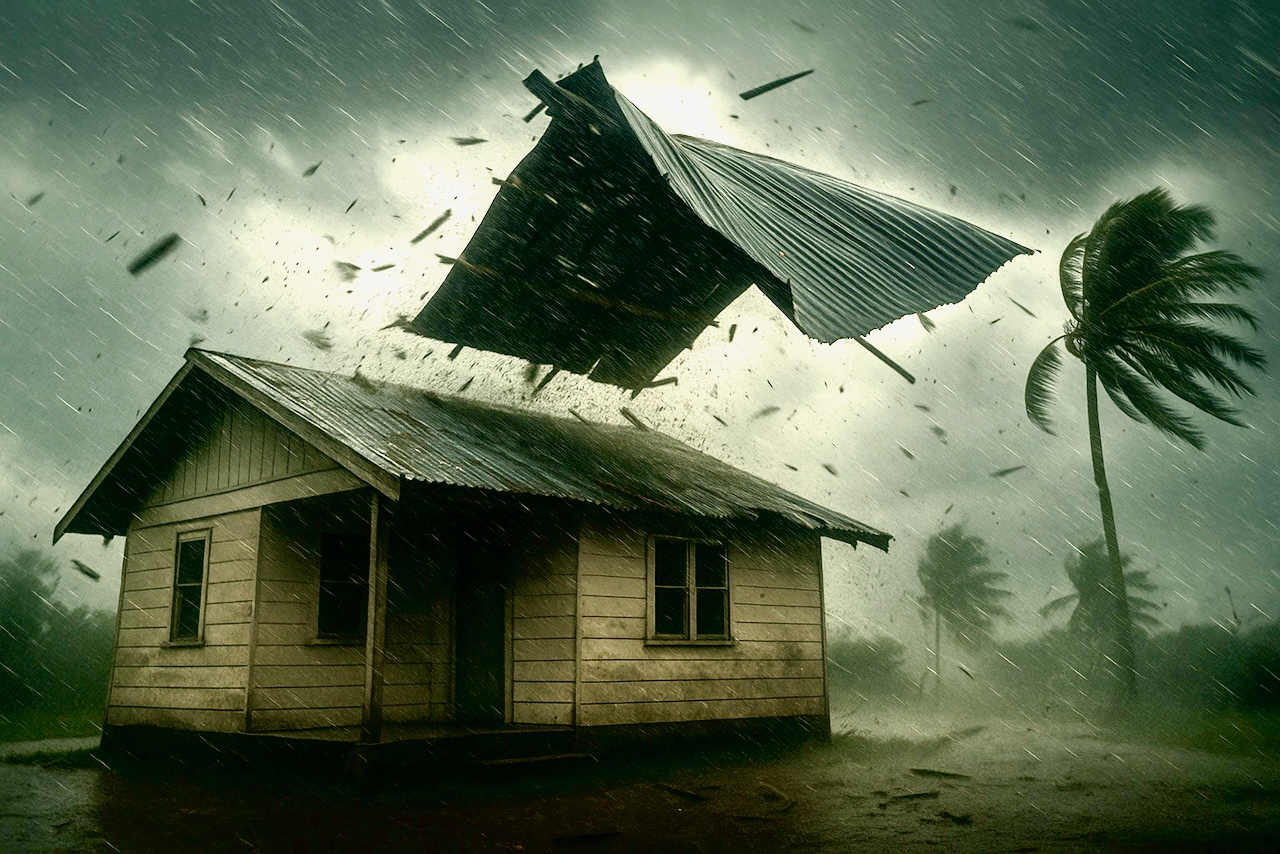
    When hurricanes tear roofs from homes like Band-Aids, when rivers overflow entire cities, when wildfires blacken skies from Canada to Greece — nature reminds us of something we’ve long forgotten: we’re all in the same boat.

    The recent devastation in Jamaica, where Hurricane Melissa left unimaginable destruction and forced hundreds of thousands to evacuate, is not an isolated event. It’s part of a rising pattern — storms, floods, and fires now so powerful that no nation, no corporation, no ideology, and certainly no family or individual  can handle them alone.

    Collaboration is no longer optional

    When disaster strikes, competition collapses.

    Think of the wildfires in Greece and California, where thousands of firefighters from different nations joined forces because the flames ignored borders.

    Or the COVID-19 pandemic, which revealed that no country can isolate itself from an invisible threat — we either share information and medicine, or we all suffer.

    Or the floods in Pakistan, submerging a third of the country and demanding global aid to prevent famine and disease.

    And the European droughts of 2022 and 2023, which exposed the fragility of an entire continent: the Rhine and Danube ran so low that barges carrying coal and grain could no longer pass; France’s nuclear plants had to reduce output because cooling water was too warm; Spain’s reservoirs dried to cracked mud plains as farmers watched their crops die.

    Suddenly, the flow of water — once taken for granted — became a shared lifeline, forcing nations that had long competed for energy and trade to co-manage rivers, power grids, and emergency reserves simply to keep their societies running.

    Even space debris orbiting Earth is now a shared danger, forcing rivals to coordinate to keep satellites — and civilization — functional.

    These are not moral choices. They’re survival imperatives.

    Nature, physics, and biology are saying the same thing:

    Collaborate — or collapse.

    Proof that we can

    History shows that when humanity truly faces extinction-level threats, we can rise above our divisions.

    The Montreal Protocol (1987) — one of the rare global environmental successes — saw countries unite to phase out ozone-depleting chemicals. The ozone layer is now healing.

    The international vaccine effort during COVID-19, despite chaos and politics, became the fastest cooperative medical breakthrough in history.

    The International Space Station, built by fifteen nations once divided by war, still circles the Earth as a living symbol of what humanity can achieve when it stops competing and starts co-creating.

    The Global Seed Vault in Svalbard safeguards the genetic foundation of our food systems, maintained through peaceful cooperation even between nations in conflict.

    Each example declares the same truth: when survival is at stake, collaboration beats control.

    Can We Stop Climate Change?

    The uncomfortable truth is: no, we can’t stop it entirely.

    Not anymore. The system is already in motion — oceans have warmed, glaciers are melting, and feedback loops like methane release and forest die-back are accelerating. What we’re witnessing now are the lagging effects of decades of fossil-fuel addiction. Even if we stopped all emissions today, the planet would keep warming for decades.

    But that doesn’t mean we’re powerless.

    It means we’re entering the era of responsibility — where humanity decides whether this transformation becomes a collapse or a rebirth.

    Here’s what we still can do:

    Slow the momentum. Every fraction of a degree we prevent means fewer hurricanes, less drought, and millions of lives saved. Renewable energy, regenerative agriculture, and reforestation aren’t just “green projects” — they’re emergency brakes on a speeding train.

    Adapt intelligently. Cities can be redesigned for resilience: water recycling, local food systems, hurricane safe buildings, self-sufficient energy grids, and shared resource hubs — prototypes of what Cities of Light could become.

    Heal ecosystems, not just economies. Nature can recover faster than we imagine — coral reefs, forests, and soils — if we simply stop harming them and assist their regeneration.

    Collaborate globally. Climate doesn’t care about politics. Shared data, open technology, and cooperative disaster response must become the new norm.

    Transform consciousness. Ultimately, the crisis is not environmental — it’s psychological. It’s the illusion of separation that allows destruction. When we see Earth not as a resource to exploit but as a living system of which we are part, everything changes.

    Do we have the money?

    But here’s a question few dare to ask out loud:

    Do we even have the money to do everything we must — to prepare, to brace, to rebuild, and to restore balance in the face and aftermath of accelerating climate change?

    Every expert agrees we have the resources, the technology, and the human capacity. What we lack is the permission of an outdated system — one that measures possibility in dollars instead of reality.

    So maybe it’s time to ask not “can we afford it?” but rather “can we afford to keep measuring life in this way?”

    The Monetary System

    But even if we did try to fund everything through the existing system, it would likely destabilize that very system. The monetary architecture we rely on was built for perpetual growth and profit — not planetary repair. Pouring tens of trillions into climate mitigation and adaptation without corresponding “returns” would expose how money itself depends on expansion, debt, and competition. Printing(digital and physical) or borrowing enough to save the planet would trigger inflation, strain supply chains, and shake the foundations of the global economy, revealing a painful irony: even survival doesn’t fit within the logic of our financial model.

    Yet that may be precisely the point of awakening. The moment we realize that saving life on Earth could bankrupt the very system designed to measure it, we also see what must come next — a transition from a profit-driven economy to a resource-based coordination system where collaboration and need, not capital, decides what can be done.

    From crisis to awakening

    Climate change is not the end of the world. It’s the end of a way of living in the world.

    And in that ending lies the beginning of something extraordinary — a civilization finally mature enough to act as one organism.

    The storms, the fires, the floods — they are the Earth’s way of saying:

    “Grow up. Work together. Remember who you are.”

    Because the truth is simple:

    When the storms come, there’s only one safe place to stand — together.

    The Natural Exchange System

    In the novel Waking Up – A journey towards a new dawn for humanity, the human population has awakened to precisely this truth. If we are to survive as a species on this planet, we must enter the phase of responsible collaboration, where we abandon the most destructive system on Earth: The Monetary System – and replace it with one where people and nature is front and center, not profit.

    Follow Benjamin Michaels when he wakes up in a world where humanity has taken collaboration to its utmost limit —

    and abandoned this system.

    In its place, a new model has emerged — one that works for both people and planet:

    NES — the Natural Exchange System, a society that mimics nature in human interactions.

    Just like in nature, exchange happens effortlessly — without money or trading — when each part contributes what it’s meant to and finds fulfillment in doing it.

    The soil doesn’t send an invoice to the tree for nutrients, nor does the bee demand payment for pollination. The ecosystem thrives through spontaneous reciprocity — a living flow of giving and receiving that keeps the whole balanced.

    In this same spirit, AI and robotics take care of tasks no one feels called to do — cleaning streets, collecting waste, managing logistics — freeing human beings to focus on creativity, empathy, learning, and the joy of purposeful living.

    Call To Action

    Waking Up – A Journey Towards a New Dawn for Humanity isn’t a blueprint — but it is an inspiration.

    A vision of what becomes possible when humanity dares to move beyond money, fear, and separation — and begins to live by trust, collaboration, and care for the planet and each other.

    By reading it — and by sharing these articles — you help spread that vision.

    Every person who awakens to a new way of thinking brings us closer to the tipping point where change becomes inevitable.

    Read it. Share it. Be part of the awakening.

  • Can We Change Climate Change? If So, How?

    Can We Change Climate Change? If So, How?


    Climate change is often portrayed as an unstoppable force — a tidal wave of destruction that humanity can only brace for. But the truth is, we are not powerless passengers. The real question isn’t just whether climate change is happening, but whether we can change it. And the answer is yes — though it requires changing more than our lightbulbs, or eating less meat. It demands a deep transformation of our systems, our mindset, and our values.

    Concrete Signs in Today’s World


    The evidence is already here, in the headlines and on our streets. In France recently, deadly floods swept across entire regions, leaving citizens openly blaming climate change and demanding urgent action from leaders. Wildfires have raged through Canada and Greece, fueled by record heat. The United States has also been hit hard: in January 2025, Southern California endured a series of devastating wildfires that burned over half a million acres, destroyed or damaged more than 18,000 structures, displaced over 200,000 people, and caused dozens of deaths. Scientists confirm that the extreme heat, drought, and winds that fueled these fires were made more likely by human-driven climate change. Only months later, heavy rains triggered flash floods and mudslides across California, especially in areas destabilized by previous wildfires. In earlier years, massive flooding from atmospheric rivers caused billions in damages and dozens of deaths. Meanwhile, Pakistan has suffered historic floods, displacing millions, and Southern Europe has endured repeated, deadly heatwaves. Africa and South America face worsening droughts that devastate crops and water supplies. These are not distant warnings. They are present realities that show how deeply climate change is reshaping our world.

    Systems Over Symptoms


    We’ve been told to recycle, drive less, or eat less meat. These actions matter, but they’re like a band-aid on a deep wound. The core drivers of climate change are systemic: fossil-fuel dependency, industrial agriculture, and an economic system that rewards endless consumption. To change climate change, we must change the very structures that fuel it. We have to make drastic changes, unless we want to go down with the planet itself. We simply must STOP. To save our planet — and our lives on it — we  have to stop. Stop the endless consumption. Stop burning fossil fuels. Stop producing meat in ways that destroy ecosystems. Stop. Stop. Stop. If we don’t stop it ourselves, the planet will stop it for us. And that will be ugly. We simply have to stop the culprit: The monetary system. But of course stopping today’s monetary system is impossible as we all depend on it for jobs and money… Read on if you’re curious about a possible solution.

    The Tools Are Already Here


    Solar panels, wind turbines, tidal power, hydrogen storage, regenerative farming, rewilding — the solutions already exist. What we lack is not technology, but the will to apply it at scale. The longer we delay, the more we lock ourselves into outdated systems. Imagine if the same urgency we put into weapons and wars were channeled into renewable grids and sustainable cities.

    How Certain Are We?


    Most scientists agree that todays climate change is primarily man-made, caused by greenhouse gas emissions from human activity. If that is the case, then we can change it — because what humanity caused, humanity can reverse. But even if science were wrong, and climate change is driven by forces beyond our control, the need for global collaboration would only grow stronger. If we are truly passengers on this ride, then at the very least we should work together, minimize harm, and prepare with dignity. Why add wars among ourselves to the challenge of facing a turbulent planet?

    Escaping the Growth Addiction


    Our global economy behaves like an addict: always craving more, never satisfied. Growth at all costs drives deforestation, pollution, and exploitation. Money becomes the drug, and the planet pays the price. Breaking this addiction means building systems that value life, collaboration, and resilience over profit.

    From Fear to Possibility


    Fear paralyzes; vision empowers. Instead of framing the climate crisis as the end of the world, we can see it as the birth of a new one. Cities designed like ecosystems. Energy drawn from sun, wind, and water. Communities thriving without waste or scarcity. The shift is not only possible — it is already beginning in pockets around the globe.

    Conclusion


    Can we change climate change? Yes — but only by changing ourselves, our priorities, and our systems. If we don’t stop this runaway train of destruction, nature will stop it for us, and the outcome will be catastrophic. But there is another way: a resource-based economy, where collaboration and abundance replace scarcity and profit. And where the economy is designed to take care of the planet, nature and the whole of humanity itself.

    In the book Waking Up – A Journey Towards a New Dawn for Humanity, there is a picture drawn of a new world where this resource based economy has been adopted on the whole planet. Benjamin Michaels, the billionaire protagonist is shocked when he wakes up after 1oo years in cryonic sleep, only to find there is no more money in the world and all resources are optimized and shared…

    🌍 Discover more about humanity’s next chapter here:

  • Can We Stop Climate Change? Or is that even the right question?

    Can We Stop Climate Change? Or is that even the right question?

    We Are almost Out of Time

    The Earth is sending signals. Not gentle ones anymore, but sirens. Fires, floods, droughts, tipping points. Climate change is not in the future — it’s now.  

    And no, we can’t stop all of it. But we can still stop the worst of it.  

    We can still choose what kind of world comes next.  

    But That window is closing fast.  

    The real question isn’t can we stop it?  

    It’s will we change — radically, collectively, now?

    What’s Already Gone — And What’s Still in Our Hands

    – The damage is real and irreversible in places — polar melt, coral collapse, mass species loss.  

    – But we are not powerless.  

    – The science is clear: the sooner we act, the more suffering we prevent.  

    – Every fraction of a degree matters. Every year matters. Every decision matters.

     What’s Missing Isn’t Tech — It’s Trust

    – We have the solutions: clean energy, rewilding, regenerative food systems, circular design.  

    – What we don’t have is a system designed for global cooperation.  

    – Today’s world runs on short-term profits, national interests, and fear.  

    – But the climate doesn’t care about borders. The atmosphere is One.  

    The real emergency is this:

    we’re still acting like separate tribes on a dying planet.

    What Could Be — The World We are Capable of Creating

    In Waking Up, my novel, I paint a vision of a different future.  

    Not fantasy — possibility.

    – A world without money, where trust has replaced trade.  

    – A planet restored — where we live in harmony with nature, not in conquest of it.  

    – Communities where people contribute their gifts freely, because economy no longer depends on scarcity.  

    – Global systems run on collaboration, gratitude, and shared purpose — a Global Resource Based Economy with a Natural Exchange System – not fear and debt.

    This isn’t utopia. It’s what could emerge when we stop asking, “What’s in it for me?”  

    And start asking, “What’s best for all of us? Including me?”

     ⚠️  We Have One Shot — And It’s Now

    – We are living through a narrowing doorway.  

    – If we don’t unite across borders, classes, and ideologies now, we will miss it.  

    – The coming years will decide whether Earth becomes a furnace of survival…  

    …or a flourishing garden of rebirth.

     💡 This Is the Awakening

    We don’t need more doom. We need direction.  

    We need a vision that’s bigger than carbon stats and political soundbites.  

    We need to remember that another world is still possible — but only if we create it together.

    That’s the message of Waking UpA journey towards a new dawn for humanity  

    Not just a novel — an inspiration. A mirror. A call.  

    Because whether we make it through this moment or not…  

    will depend on whether we wake up — together — in time.

    Call to Action

    If this message speaks to you, I invite you to preorder the e-book Waking Up for just $0.99 — available at this special price until the official launch on May 2, 2025.
    Your preorder doesn’t just get you the story early and cheaply — it helps amplify the message and bring more eyes to a vision of a healed world.

    Let’s reach the goal together.