
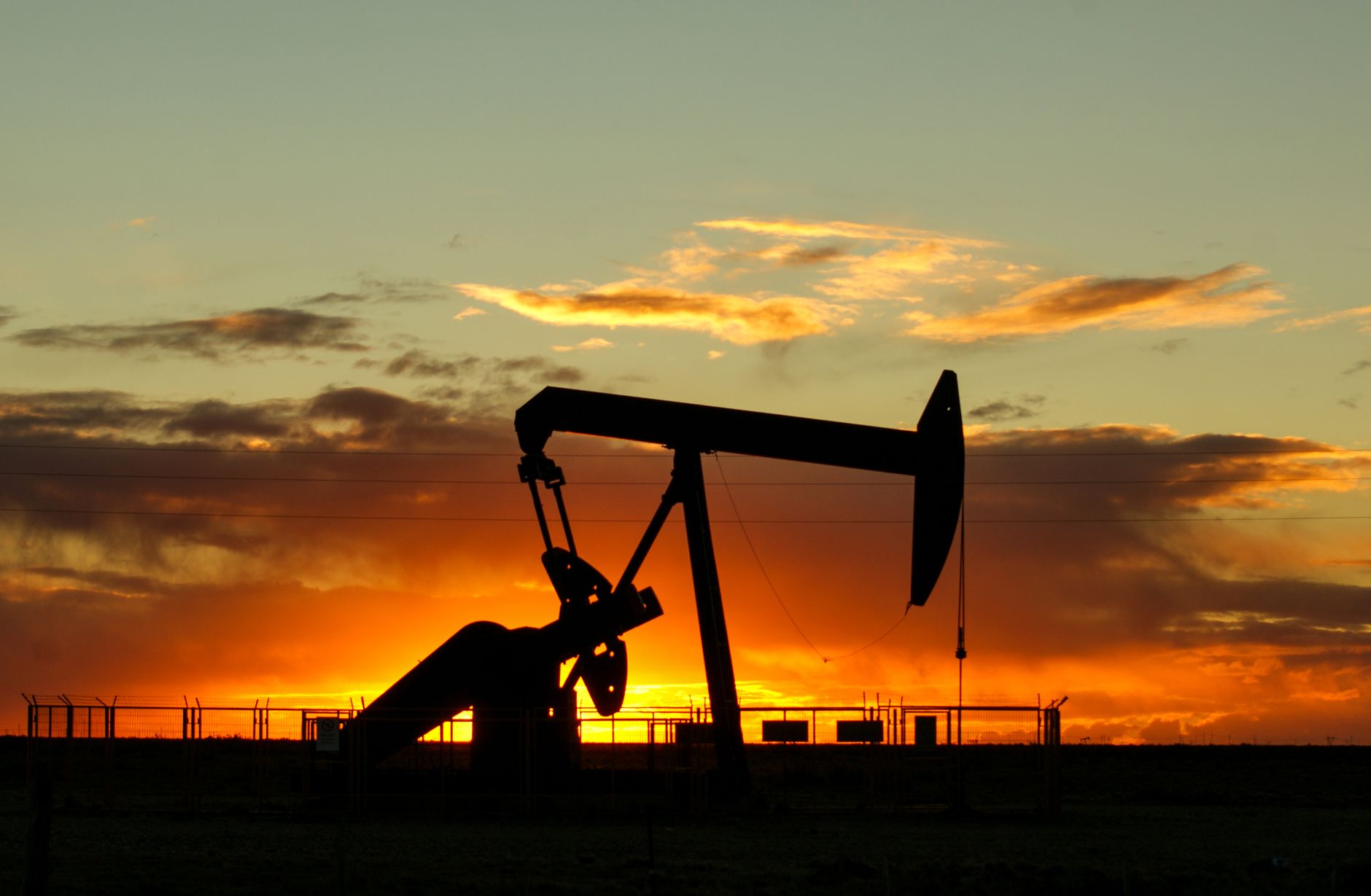
Europe’s gas storage is low. Gas prices may rise. Electricity prices may rise with them—even in Sweden.
This is presented as if Europe is running out of energy.
Meanwhile, the sun continues to pour an incomprehensible amount of energy onto Spain and the rest of southern Europe every day. The wind continues to blow across the Earth. Rivers continue to flow through Scandinavia. We already possess the technology required to capture, store, distribute and intelligently combine all of these sources.
The gas may be scarce.
Energy is not.
What we are witnessing is not merely an energy problem. It is a perfect demonstration of the system of scarcity.
The Actual Need
Europe does not need gas.
Europe needs energy.
Gas is only one possible means of providing heat, electricity and industrial power. Yet because enormous investments, markets and infrastructure have been built around gas, a shortage of gas is treated as a shortage of energy itself.
This is extraordinarily narrow thinking.
The Clean River
Imagine someone standing beside a clean river and declaring that there is nothing to drink because the shop has run out of bottled water. The person has confused one commercial product with the underlying need that the product was supposed to satisfy.
We do this throughout the economy.
We do not fundamentally need oil.
We need transportation, heat, materials and industrial processes. We do not need one particular metal. We need whatever function that metal performs. We do not need concrete in every conceivable construction. We need safe and durable buildings. We do not need one particular crop from one particular supplier. We need nutritious food.
The Sane Civilization
In a sane civilization, we would always begin by identifying the actual need. We would then examine every available resource, technology and method capable of meeting it.
If one resource became scarce, we would not run around like headless chickens announcing the end of civilization. We would look for alternatives. We would substitute materials, redesign products, recycle components, improve efficiency or find a completely different way to achieve the desired result.
A particular resource may be scarce without the solution being scarce.
But that is not how our present system thinks.
Market Thinking
Unfortunately we don’t live in a sane civilization at the moment.
The monetary system does not primarily ask how human needs can be met with the resources available. It asks what can be owned, traded and sold profitably through the system that already exists.
Europe has built a market around gas. Companies own extraction rights, pipelines, terminals, storage facilities, power plants and contracts. Governments have designed policies around this structure. Financial markets trade expectations about its future availability. Millions of incomes, investments and institutional interests have become attached to maintaining it.
Consequently, when gas becomes scarce, the response is not simply to move as quickly as possible toward whatever abundant alternatives are available. The shortage becomes a market event. Prices rise. Traders speculate. Households worry. Industries demand support. Governments compete for supplies.
The system has mistaken its own dependency for a law of nature.
In Sweden, electricity prices can be affected by European gas prices even though very little Swedish electricity is generated from gas. Electricity is traded through interconnected markets, and expensive gas-generated electricity elsewhere can influence prices far beyond the place where that gas is actually burned.
The Labyrinth
Spain may simultaneously receive an abundance of solar energy. But instead of regarding this as part of Europe’s shared energy capacity, we place a labyrinth of markets, ownership structures, pricing mechanisms, national interests and insufficiently coordinated infrastructure between the sunlight and the people who need energy.
Then we point to the resulting bottleneck and call it scarcity.
We have created a monetary maze between the resource and the need. When the resource cannot pass efficiently through the maze, we conclude that there is not enough.
Scarcity Within
The deepest scarcity, however, is not found in a gas storage facility. It is created in the human mind.
It begins with the belief that there cannot possibly be enough for everyone. It is the narrow, frightened and egoic conviction that human beings are separate competitors trapped in a struggle over an inadequate world. If I do not acquire as much as possible for myself, someone else will take it. If others gain access, I must be losing something.
From that belief, we created institutions based on ownership, competition, accumulation and exclusion. Those institutions then restrict access to resources and produce deprivation. Finally, the deprivation is offered as proof that the original belief was correct.
The scarcity mindset creates the scarcity system. The scarcity system restricts access. Restricted access reinforces the scarcity mindset.
It is a closed loop operating inside a world of extraordinary natural wealth, technological capability and human ingenuity.
This does not mean that every resource is infinite. Earth is a finite planet. Some materials are genuinely rare. Ecosystems have limits, and reckless extraction can destroy the very foundations of human life.
But physical limits do not require a civilization based on permanent scarcity. They require intelligence.
They require us to know what resources exist, understand the rate at which they can safely be used, eliminate unnecessary waste, recover materials, develop alternatives and design products around what is sustainably available.
The belief that physical limits force us to compete, hoard and exclude one another is not realism. It is a failure of imagination.
Money Needs Scarcity
Money does not merely help us manage scarcity. The monetary system depends upon scarcity in order to function.
If something is genuinely abundant and freely accessible, there is little reason to buy or sell it. Nobody can build an enormous fortune selling something that everyone can already obtain freely whenever they need it.
For trade to remain necessary, there must be a barrier between people and the things they require. Sometimes that barrier is a genuine physical limitation. But it can also be created through ownership, prices, patents, restricted distribution, deliberate underproduction or the destruction of surplus.
If there were true abundance, we would not need money or trading.
This creates a fundamental contradiction at the heart of the monetary system. It claims to pursue abundance through economic growth, innovation and increased production. Yet genuine abundance threatens the very prices and profits upon which the system depends.
If housing were freely available to everyone, housing would cease to be an enormously profitable investment vehicle. If clean energy were universally available, energy empires could no longer collect fortunes from controlling access to it. If nutritious food were produced in abundance and distributed according to need, hunger could no longer coexist with mountains of discarded food. If knowledge and technology were openly shared, artificial monopolies built around controlling them would disappear.
The system therefore does not merely distribute what exists. It determines who is permitted access.
That is why food can be destroyed while people go hungry. Houses can remain empty while people are homeless. Factories can remain idle while essential needs go unmet. Medicines can exist while patients are unable to obtain them. Renewable energy can surround us while families fear their next electricity bill.
These are not always shortages of the things themselves. They are shortages of permission, purchasing power and access.
Proof of Abundance
Despite the extreme inefficiency of the present system, we are, amazingly enough, still here. We extract vastly more resources than necessary because of the profit motive, manufacture disposable products, transport goods absurd distances, destroy unsold food, demolish usable buildings, discard functioning technology and bury valuable materials in landfills.
Yet Earth has continued to provide for billions of people in spite of all this waste.
That alone is evidence of the extraordinary abundance our planet has to offer.
But under the monetary system, this abundance is available primarily to those with enough money to access it. Some people can command more food, land, energy, housing and manufactured products than they could possibly use, while others are denied the essentials of life. What we call abundance today is therefore an abundance built upon extreme inequality, relentless extraction and enormous waste.
It is not an abundance we have created intelligently. It is an abundance we have plundered selectively.
And this cannot continue for much longer—not if we expect humanity to continue for much longer on this planet. The fact that Earth has survived our inefficiency until now does not mean its capacity is limitless. It means we have been given an extraordinary margin of abundance and have mistaken that generosity for permission to waste it.
Manufacturing Waste
The present system extracts far more resources than humanity actually needs—not because people require everything being produced, but because companies must continue selling in order to survive and generate profit. A product that lasts for fifty years is less profitable than one that must be replaced every five. A device that can be repaired and upgraded indefinitely creates fewer sales than one that is sealed, unsupported and eventually declared obsolete.
The result is an economy built around continuous turnover. Countless competing companies manufacture slightly different versions of the same products, duplicate factories and distribution networks, cover everything in disposable packaging and spend enormous resources persuading us to replace things that still work. Unsold food is destroyed, usable clothing is discarded, buildings remain empty, machinery stands idle and valuable materials are buried in landfills because providing access without payment would undermine their market value.
Humanity now extracts approximately 100 billion tonnes of materials from Earth every year, while the global economy remains only about eight percent circular. There is no precise calculation of how much extraction would disappear without the profit motive, but a reduction of twenty to forty percent is entirely conceivable once products were designed for durability, repair, sharing, standardization and complete material recovery. The same resources could provide a far higher standard of living while placing dramatically less pressure on the planet.
This means that removing the profit incentive would not create deprivation. It would effectively create abundance.
We would no longer need to extract enough resources to satisfy human needs and keep billions of products flowing continuously through the machinery of sales and profit. We would produce what was actually needed, make it as durable as possible, share rarely used equipment, repair what broke and recover its materials when it finally reached the end of its useful life.
Abundance does not require producing an infinite number of disposable things. It means ensuring that everyone can access what they need. By removing the commercial requirement to manufacture, sell, discard and replace as much as possible, humanity could create greater abundance for everyone while extracting considerably less from Earth.
Extreme Wealth
This also explains why extreme billionaires could not exist in a world where everyone had enough.
A billion euros is not a billion pieces of food, houses, cars or solar panels. It is a claim upon real resources and productive capacity. It gives one person extraordinary power to command land, materials, technology and human activity.
That power has meaning only because access is unequally distributed.
If everyone could obtain excellent housing, food, healthcare, education, transportation, communication and energy without payment, currency would lose its practical power. A billionaire might still possess a vast numerical fortune, but there would be little that fortune could command which everyone else could not already access.
Extreme wealth is therefore not evidence that society has created abundance. It is evidence that access to abundance has been concentrated through the ingenious monetary system. Ingenious for the billionaires, that is.
The greater the distance between the billionaire and the person who cannot afford electricity, food or shelter, the more successfully the system has manufactured scarcity for one person while manufacturing almost unlimited purchasing power for another.
The fortunes at the top and the deprivation at the bottom are not unrelated accidents. They are two results of the same system.
Another Logic
A sane world with a global resource-based economy would begin from a completely different question.
Not:
What can be sold?
Not:
Who can afford it?
Not:
Which shortage will produce the highest price?
But:
What do we need, what resources do we have available, and how can we use them intelligently for everyone?
If humanity needed energy, we would map all available energy sources and build the most effective combination. Solar energy from sunnier regions could be integrated with wind, hydroelectricity, geothermal energy, storage and an interconnected grid. Production would be planned around physical reality rather than profitability.
If a particular material became scarce, a global resource inventory would reveal that fact before it became a crisis. Products would be redesigned. Alternative materials would be developed. Existing components would be recovered. Wasteful uses would be discontinued, while essential uses received priority.
There would still be limits. There would still be engineering challenges, ecological constraints and difficult decisions. But we would face those challenges as one civilization trying to solve them—not as competing owners attempting to profit from them.
The greatest abundance available to humanity is not any single resource. It is our capacity to think, adapt, invent and cooperate. There are usually many ways to meet the same underlying need.
Yet we suppress that abundance when we trap every solution inside the question of whether it is profitable.
Europe worries about the gas in its storage tanks while an immense fusion reactor shines above us every day. That image captures the entire insanity of the present system.
We are not living in a world without solutions. We are living inside a system that repeatedly overlooks them because they do not fit its narrow logic.
The ultimate scarcity is not a lack of sunlight, resources, technology or human capability.
It is the scarcity inside our thinking.
And the moment we leave that thinking behind, we may discover that the world was far more abundant than we had ever allowed it to become.
The Abundant World
In the novel Waking Up: A Journey Towards a New Dawn for Humanity, billionaire Benjamin Michaels awakens in 2115 to discover that humanity has finally abandoned the system of scarcity. Money, trade and ownership have been replaced by stewardship, intelligent resource management and optimized sharing. The world did not become abundant because Earth suddenly produced infinite resources. It became abundant because humanity stopped wasting what it already had.
Discover the world that became possible when humanity finally chose abundance over scarcity here.
Leave a Reply