Category: climate change

  • The System of Scarcity 

    The System of Scarcity 

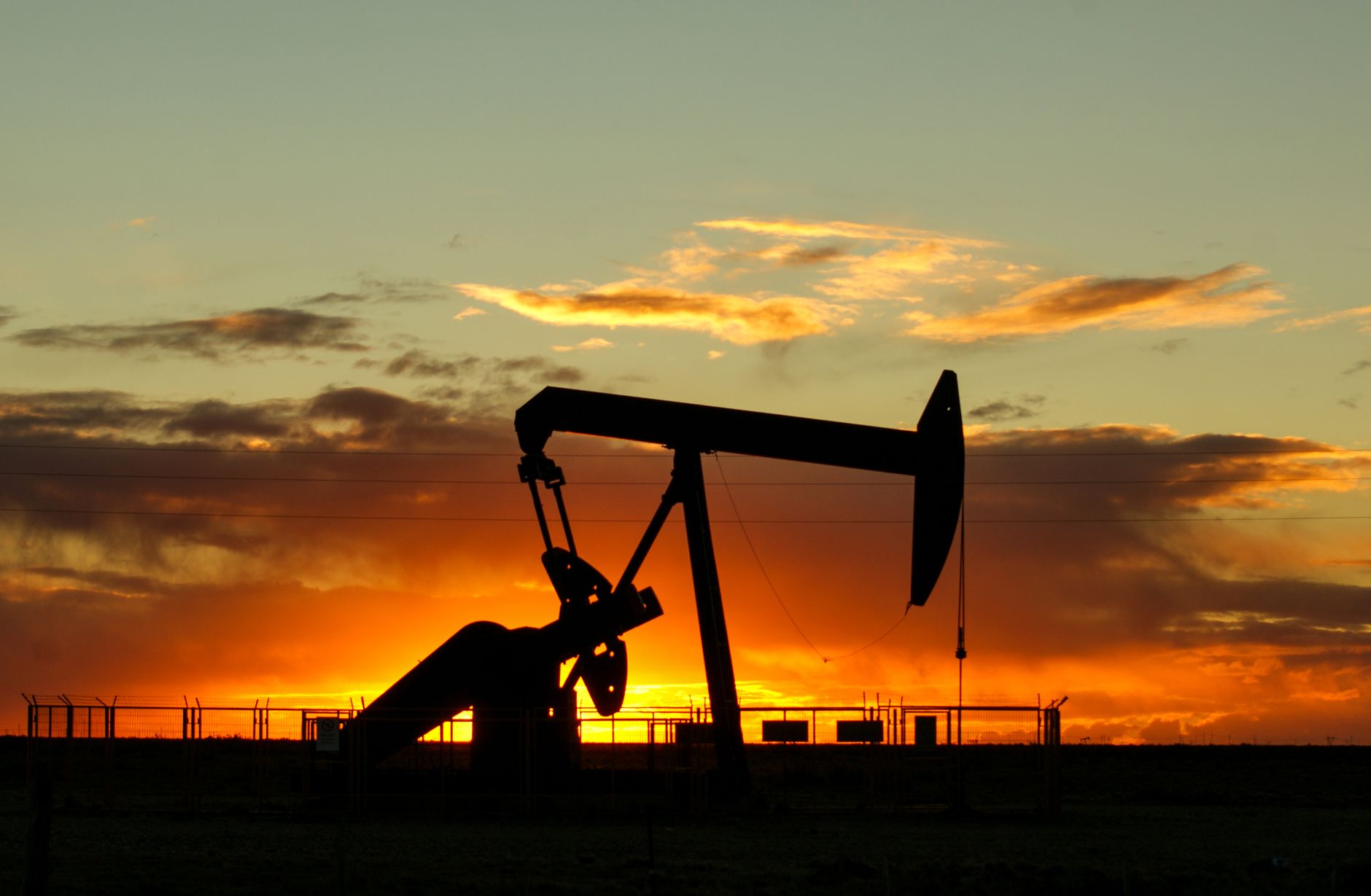
    Europe’s gas storage is low. Gas prices may rise. Electricity prices may rise with them—even in Sweden.

    This is presented as if Europe is running out of energy.

    Meanwhile, the sun continues to pour an incomprehensible amount of energy onto Spain and the rest of southern Europe every day. The wind continues to blow across the Earth. Rivers continue to flow through Scandinavia. We already possess the technology required to capture, store, distribute and intelligently combine all of these sources.

    The gas may be scarce.

    Energy is not.

    What we are witnessing is not merely an energy problem. It is a perfect demonstration of the system of scarcity.

    The Actual Need

    Europe does not need gas.

    Europe needs energy.

    Gas is only one possible means of providing heat, electricity and industrial power. Yet because enormous investments, markets and infrastructure have been built around gas, a shortage of gas is treated as a shortage of energy itself.

    This is extraordinarily narrow thinking.

    The Clean River

    Imagine someone standing beside a clean river and declaring that there is nothing to drink because the shop has run out of bottled water. The person has confused one commercial product with the underlying need that the product was supposed to satisfy.

    We do this throughout the economy.

    We do not fundamentally need oil.

    We need transportation, heat, materials and industrial processes. We do not need one particular metal. We need whatever function that metal performs. We do not need concrete in every conceivable construction. We need safe and durable buildings. We do not need one particular crop from one particular supplier. We need nutritious food.

    The Sane Civilization

    In a sane civilization, we would always begin by identifying the actual need. We would then examine every available resource, technology and method capable of meeting it.

    If one resource became scarce, we would not run around like headless chickens announcing the end of civilization. We would look for alternatives. We would substitute materials, redesign products, recycle components, improve efficiency or find a completely different way to achieve the desired result.

    A particular resource may be scarce without the solution being scarce.

    But that is not how our present system thinks.

    Market Thinking

    Unfortunately we don’t live in a sane civilization at the moment.

    The monetary system does not primarily ask how human needs can be met with the resources available. It asks what can be owned, traded and sold profitably through the system that already exists.

    Europe has built a market around gas. Companies own extraction rights, pipelines, terminals, storage facilities, power plants and contracts. Governments have designed policies around this structure. Financial markets trade expectations about its future availability. Millions of incomes, investments and institutional interests have become attached to maintaining it.

    Consequently, when gas becomes scarce, the response is not simply to move as quickly as possible toward whatever abundant alternatives are available. The shortage becomes a market event. Prices rise. Traders speculate. Households worry. Industries demand support. Governments compete for supplies.

    The system has mistaken its own dependency for a law of nature.

    In Sweden, electricity prices can be affected by European gas prices even though very little Swedish electricity is generated from gas. Electricity is traded through interconnected markets, and expensive gas-generated electricity elsewhere can influence prices far beyond the place where that gas is actually burned.

    The Labyrinth

    Spain may simultaneously receive an abundance of solar energy. But instead of regarding this as part of Europe’s shared energy capacity, we place a labyrinth of markets, ownership structures, pricing mechanisms, national interests and insufficiently coordinated infrastructure between the sunlight and the people who need energy.

    Then we point to the resulting bottleneck and call it scarcity.

    We have created a monetary maze between the resource and the need. When the resource cannot pass efficiently through the maze, we conclude that there is not enough.

    Scarcity Within

    The deepest scarcity, however, is not found in a gas storage facility. It is created in the human mind.

    It begins with the belief that there cannot possibly be enough for everyone. It is the narrow, frightened and egoic conviction that human beings are separate competitors trapped in a struggle over an inadequate world. If I do not acquire as much as possible for myself, someone else will take it. If others gain access, I must be losing something.

    From that belief, we created institutions based on ownership, competition, accumulation and exclusion. Those institutions then restrict access to resources and produce deprivation. Finally, the deprivation is offered as proof that the original belief was correct.

    The scarcity mindset creates the scarcity system. The scarcity system restricts access. Restricted access reinforces the scarcity mindset.

    It is a closed loop operating inside a world of extraordinary natural wealth, technological capability and human ingenuity.

    This does not mean that every resource is infinite. Earth is a finite planet. Some materials are genuinely rare. Ecosystems have limits, and reckless extraction can destroy the very foundations of human life.

    But physical limits do not require a civilization based on permanent scarcity. They require intelligence.

    They require us to know what resources exist, understand the rate at which they can safely be used, eliminate unnecessary waste, recover materials, develop alternatives and design products around what is sustainably available.

    The belief that physical limits force us to compete, hoard and exclude one another is not realism. It is a failure of imagination.

    Money Needs Scarcity

    Money does not merely help us manage scarcity. The monetary system depends upon scarcity in order to function.

    If something is genuinely abundant and freely accessible, there is little reason to buy or sell it. Nobody can build an enormous fortune selling something that everyone can already obtain freely whenever they need it.

    For trade to remain necessary, there must be a barrier between people and the things they require. Sometimes that barrier is a genuine physical limitation. But it can also be created through ownership, prices, patents, restricted distribution, deliberate underproduction or the destruction of surplus.

    If there were true abundance, we would not need money or trading.

    This creates a fundamental contradiction at the heart of the monetary system. It claims to pursue abundance through economic growth, innovation and increased production. Yet genuine abundance threatens the very prices and profits upon which the system depends.

    If housing were freely available to everyone, housing would cease to be an enormously profitable investment vehicle. If clean energy were universally available, energy empires could no longer collect fortunes from controlling access to it. If nutritious food were produced in abundance and distributed according to need, hunger could no longer coexist with mountains of discarded food. If knowledge and technology were openly shared, artificial monopolies built around controlling them would disappear.

    The system therefore does not merely distribute what exists. It determines who is permitted access.

    That is why food can be destroyed while people go hungry. Houses can remain empty while people are homeless. Factories can remain idle while essential needs go unmet. Medicines can exist while patients are unable to obtain them. Renewable energy can surround us while families fear their next electricity bill.

    These are not always shortages of the things themselves. They are shortages of permission, purchasing power and access.

    Proof of Abundance

    Despite the extreme inefficiency of the present system, we are, amazingly enough, still here. We extract vastly more resources than necessary because of the profit motive, manufacture disposable products, transport goods absurd distances, destroy unsold food, demolish usable buildings, discard functioning technology and bury valuable materials in landfills. 

    Yet Earth has continued to provide for billions of people in spite of all this waste.

    That alone is evidence of the extraordinary abundance our planet has to offer.

    But under the monetary system, this abundance is available primarily to those with enough money to access it. Some people can command more food, land, energy, housing and manufactured products than they could possibly use, while others are denied the essentials of life. What we call abundance today is therefore an abundance built upon extreme inequality, relentless extraction and enormous waste.

    It is not an abundance we have created intelligently. It is an abundance we have plundered selectively.

    And this cannot continue for much longer—not if we expect humanity to continue for much longer on this planet. The fact that Earth has survived our inefficiency until now does not mean its capacity is limitless. It means we have been given an extraordinary margin of abundance and have mistaken that generosity for permission to waste it.

    Manufacturing Waste

    The present system extracts far more resources than humanity actually needs—not because people require everything being produced, but because companies must continue selling in order to survive and generate profit. A product that lasts for fifty years is less profitable than one that must be replaced every five. A device that can be repaired and upgraded indefinitely creates fewer sales than one that is sealed, unsupported and eventually declared obsolete.

    The result is an economy built around continuous turnover. Countless competing companies manufacture slightly different versions of the same products, duplicate factories and distribution networks, cover everything in disposable packaging and spend enormous resources persuading us to replace things that still work. Unsold food is destroyed, usable clothing is discarded, buildings remain empty, machinery stands idle and valuable materials are buried in landfills because providing access without payment would undermine their market value.

    Humanity now extracts approximately 100 billion tonnes of materials from Earth every year, while the global economy remains only about eight percent circular. There is no precise calculation of how much extraction would disappear without the profit motive, but a reduction of twenty to forty percent is entirely conceivable once products were designed for durability, repair, sharing, standardization and complete material recovery. The same resources could provide a far higher standard of living while placing dramatically less pressure on the planet.

    This means that removing the profit incentive would not create deprivation. It would effectively create abundance.

    We would no longer need to extract enough resources to satisfy human needs and keep billions of products flowing continuously through the machinery of sales and profit. We would produce what was actually needed, make it as durable as possible, share rarely used equipment, repair what broke and recover its materials when it finally reached the end of its useful life.

    Abundance does not require producing an infinite number of disposable things. It means ensuring that everyone can access what they need. By removing the commercial requirement to manufacture, sell, discard and replace as much as possible, humanity could create greater abundance for everyone while extracting considerably less from Earth.

    Extreme Wealth

    This also explains why extreme billionaires could not exist in a world where everyone had enough.

    A billion euros is not a billion pieces of food, houses, cars or solar panels. It is a claim upon real resources and productive capacity. It gives one person extraordinary power to command land, materials, technology and human activity.

    That power has meaning only because access is unequally distributed.

    If everyone could obtain excellent housing, food, healthcare, education, transportation, communication and energy without payment, currency would lose  its practical power. A billionaire might still possess a vast numerical fortune, but there would be little that fortune could command which everyone else could not already access.

    Extreme wealth is therefore not evidence that society has created abundance. It is evidence that access to abundance has been concentrated through the ingenious monetary system. Ingenious for the billionaires, that is.

    The greater the distance between the billionaire and the person who cannot afford electricity, food or shelter, the more successfully the system has manufactured scarcity for one person while manufacturing almost unlimited purchasing power for another.

    The fortunes at the top and the deprivation at the bottom are not unrelated accidents. They are two results of the same system.

    Another Logic

    A sane world with a global resource-based economy would begin from a completely different question.

    Not:

    What can be sold?

    Not:

    Who can afford it?

    Not:

    Which shortage will produce the highest price?

    But:

    What do we need, what resources do we have available, and how can we use them intelligently for everyone?

    If humanity needed energy, we would map all available energy sources and build the most effective combination. Solar energy from sunnier regions could be integrated with wind, hydroelectricity, geothermal energy, storage and an interconnected grid. Production would be planned around physical reality rather than profitability.

    If a particular material became scarce, a global resource inventory would reveal that fact before it became a crisis. Products would be redesigned. Alternative materials would be developed. Existing components would be recovered. Wasteful uses would be discontinued, while essential uses received priority.

    There would still be limits. There would still be engineering challenges, ecological constraints and difficult decisions. But we would face those challenges as one civilization trying to solve them—not as competing owners attempting to profit from them.

    The greatest abundance available to humanity is not any single resource. It is our capacity to think, adapt, invent and cooperate. There are usually many ways to meet the same underlying need.

    Yet we suppress that abundance when we trap every solution inside the question of whether it is profitable.

    Europe worries about the gas in its storage tanks while an immense fusion reactor shines above us every day. That image captures the entire insanity of the present system.

    We are not living in a world without solutions. We are living inside a system that repeatedly overlooks them because they do not fit its narrow logic.

    The ultimate scarcity is not a lack of sunlight, resources, technology or human capability.

    It is the scarcity inside our thinking.

    And the moment we leave that thinking behind, we may discover that the world was far more abundant than we had ever allowed it to become.

    The Abundant World

    In the novel Waking Up: A Journey Towards a New Dawn for Humanity, billionaire Benjamin Michaels awakens in 2115 to discover that humanity has finally abandoned the system of scarcity. Money, trade and ownership have been replaced by stewardship, intelligent resource management and optimized sharing. The world did not become abundant because Earth suddenly produced infinite resources. It became abundant because humanity stopped wasting what it already had.

    Discover the world that became possible when humanity finally chose abundance over scarcity here.
  • The Insanity of Humanity

    The Insanity of Humanity

    This might be the most important article I have ever written.

    A Russian drone has reportedly killed three civilians in Ukraine after using artificial intelligence to select its own target.

    Read that sentence again.

    The Terminator

    A human being programmed and  launched the weapon and gave it a general mission. But according to investigators, the drone then navigated and selected the precise object it would attack without further human intervention. It appears to have targeted propane tanks at a petrol station in Zaporizhzhia. Instead, it struck beside an apartment building and exploded, killing three people, including a 19-year-old student.

    This is not a scene from The Terminator. It is not a warning from a dystopian novel about something that might happen fifty years from now.

    It has happened.

    Drones For Death

    We have entered an age in which machines are being given the authority to decide where lethal force will be applied. Software observes the world through cameras and sensors, compares what it sees with a programmed target profile, selects something to destroy and attacks.

    There may still be human beings behind the mission. Humans manufacture the drone, define the target category and launch the weapon. But at the decisive moment—when one object is distinguished from everything surrounding it and marked for destruction—the machine may act alone.

    This is a threshold humanity should never have crossed.

    Yet, instead of stopping the insanity, every major military power will now feel compelled to move faster. If one country develops autonomous weapons, another will say it must do the same for its own protection. If one side deploys a hundred, the other will need a thousand. The drones will become smaller, cheaper, faster and more difficult to detect. They will learn to coordinate in swarms, recognize increasingly complex targets and continue operating when communication with a human controller has been lost or jammed.

    The military justification will always be the same: if we do not build them, somebody else will.

    That is how insanity becomes policy.

    Where Does This End?

    We Must Stop it

    Where does an autonomous arms race ultimately lead?

    Does the country possessing the largest number of killer drones eliminate everyone it considers a threat and then live happily ever after without all the bothersome others?

    Of course not. After all, we are dependent on each other for survival on this planet. Even the most selfish and fearful leaders see that.

    But autonomous weapons will not remain exclusively in the hands of a few powerful governments. The essential components already exist within the civilian economy: processors, cameras, navigation systems, motors, batteries and increasingly capable artificial intelligence. As the technology becomes cheaper, versions of these weapons will spread to smaller countries, militias, extremist organizations, criminal groups and individuals.

    We must stop this before it is too late.

    Nobody Will be Safe

    Eventually, nobody will be safe.

    Political leaders can be hunted. Dissidents can be hunted. Journalists, scientists, engineers and activists can be hunted. A person may be marked because of a uniform, a vehicle, a telephone signal, facial characteristics or simply because an algorithm incorrectly decides that the person matches a target profile.

    Machines do not understand mercy. They do not recognize fear in another person’s eyes and lower their weapons. They do not see a wounded soldier and decide that enough people have died. They cannot refuse an immoral command because something inside them says it is wrong.

    They process information and execute instructions.

    A world saturated with autonomous weapons would not be a world controlled by one victorious superpower. It would be a world in which power itself had become uncontrollable. Nobody would necessarily know who launched a particular drone, who programmed it or whether its behavior had been altered. One automated attack could provoke another. Retaliation could begin before human beings even understood what had happened.

    Wars could escalate at machine speed.

    And these weapons would not necessarily remain on distant battlefields. The same systems could be used by governments against their own populations. A dictator would no longer need soldiers willing to fire upon their neighbors. Machines do not disobey, protest or experience remorse. A government controlling millions of autonomous weapons could make resistance almost impossible.

    This is not security.

    It is the automated imprisonment of humanity.

    No One Wins

    If these weapons ever become genuinely uncontrollable, they will continue killing until their targets disappear or the industrial systems supporting them collapse.

    Power stations will fail. 

    Transport will stop. 

    Food distribution will break down. Hospitals will become inoperable. People will be unable to gather, travel or work safely. 

    Eventually, most of the machines will also stop as batteries degrade, components break and replacement parts disappear.

    Human civilization and its killer machines may collapse together.

    That is the glorious destination of the arms race: humanity hiding underground while machines patrol the surface of the planet we ruined through our own fear.

    Kill or Create

    We have developed artificial intelligence, advanced robotics, global communications and extraordinary scientific knowledge. We possess technology that could help restore ecosystems, clean the oceans, cultivate food, construct homes and release humanity from dangerous and exhausting work.

    And what do we do?

    We teach machines to kill.

    This is the insanity of humanity.

    The Insanity of Separation

    But beneath this insanity, humanity is not insane.

    Beneath the fear, conditioning and the constant story of separation, there is an awareness within every one of us. In that awareness exists love, compassion, understanding and intelligence. It is the part of us that recognizes another human being not as an enemy, a competitor or an obstacle, but as another expression of the same life.

    A Ukrainian child, a Russian mother, an American soldier, a Chinese engineer and an Iranian farmer are not separate forms of life with different fundamental values. They feel pain. They experience fear. They love their children. They want to live.

    There are no Others

    We have placed a frightened layer over this awareness. The ego divides the world into us and them. From it’s fear it constructs nations, armies, threats and enemies. It tells us that we can achieve safety only by possessing greater destructive power than everybody else.

    Each side insists that it is merely defending itself. Each new weapon is justified as a response to the weapons of another. Everyone pursues security, yet everyone becomes progressively less secure.

    Now we are taking this ancient insanity and embedding it in software.

    We are giving fear cameras, wings and explosives. We are teaching artificial intelligence to recognize the enemies created by our own minds and destroy them with increasing efficiency.

    The machine has not invented separation.

    We have programmed it.

    The Other Direction

    The alternative is not to abolish technology. It is not to close every data center, abandon artificial intelligence or return to some imagined pre-industrial past.

    The alternative is to give our technology another purpose.

    The New Purpose

    The same machine vision capable of recognizing a military target can recognize plastic in the ocean, an animal caught in an abandoned fishing net, the first signs of a forest fire or a person buried beneath earthquake rubble.

    Autonomous machines can remove pollution, restore forests, repair infrastructure, cultivate food and monitor the health of ecosystems. Artificial intelligence can help humanity understand what resources exist, what people need and how production can be organized without destroying the living world..

    The Choice is Ours

    We can use artificial intelligence to compete more effectively against one another, or we can use it to build a civilization that works for everyone.

    We can automate killing, or we can automate caring.

    The technology is not making that choice.

    We are.

    A Message to World Leaders

    To every head of state—and especially to the leaders of the world’s military powers:

    Stop.

    Refuse to authorize machines to select and attack human beings. Begin immediate negotiations for a binding global prohibition against autonomous weapons. Establish meaningful human control over every use of automated lethal force.

    Do not wait for your rivals to move first, because they are waiting for you.

    Somebody must interrupt the logic of fear. Somebody must possess the courage to say that humanity will not construct its future upon machines deciding who shall die.

    True courage is not developing the most efficient killer drone. It is stepping out of an arms race when everyone around you insists that stopping is impossible.

    You are not protecting your people by creating a technology that will inevitably spread and eventually be turned against them. You are not building peace by removing human conscience from the decision to kill. You are not demonstrating strength by surrendering life-and-death decisions to software.

    This is one planet. 

    We share one atmosphere, one biosphere and one future. No country can make itself permanently secure in a world where everyone else lives in fear.

    The security of one nation cannot be built upon the insecurity of all others.

    Share Another Future

    I urgently beg you. 

    I insist.

    Please share this article.

    Share it not for me, not for a political party or organization, and not because I want to sell books. Share it because humanity urgently needs to recognize the choice now before us.

    Because the recent incident in Ukraine is not to be taken lightly. 

    We are close to the ultimate choice.

    The choice to perish as humanity or the choice to prosper together.

    So please send it to friends. Send it to journalists, researchers, engineers, politicians, military commanders, technology executives and heads of state. Translate it. Republish it. Discuss it. Challenge it if you must—but do not ignore the direction in which we are moving.

    Share not only the warning. 

    Share the possibility of another future.

    People cannot choose a possibility they have never been shown.

    If the only futures presented to humanity are endless economic competition, military supremacy, automated warfare and survival against one another, we will continue constructing precisely that world.

    We must make another civilization imaginable: a civilization based upon stewardship instead of ownership, cooperation instead of competition and intelligent access to abundance instead of an endless struggle for money and power. A world in which AI and robotics serve humanity and the whole living planet—not profit, domination, fear and war.

    Somewhere within every government, military institution and technology company are human beings who still possess conscience and compassion. They must hear from us before fear makes the decision for them.

    One article will not stop the machinery of war. But silence guarantees that the machinery will continue.

    We do not need every human being to awaken at exactly the same moment. We need enough people to speak, share and demonstrate another direction. We need enough people to insist that the future does not belong to fear. We need enough people to remind those in power that there is still something within them deeper than the frightened voice demanding more weapons.

    Humanity Stands at a Threshold

    Down one road, nations surround themselves with increasingly autonomous instruments of death until every human being becomes a potential target and the entire planet becomes a battlefield controlled by machines.

    Down the other road, we recognize that there are no others. 

    We allow the intelligence, compassion and awareness within us to determine how our technology will be used. We stop preparing to destroy one another and begin building a world in which everyone can live.

    This is not a distant philosophical choice.

    It is happening now.

    Please Share

    Please carry this message as far as you can and as high as you can. Let it reach people with the power to change our direction. Let it remind them that another future remains possible.

    We cannot base humanity’s future on killer drones.

    Humanity thanks you.

  • The Free Companion Book Is Now Available

    The Free Companion Book Is Now Available

    We are in ecological overshoot.

    The planet is strained.
    Politics are polarized.
    The monetary system rewards scarcity while promising prosperity.

    Not because humanity is incapable — but because the tool we use to coordinate ourselves no longer fits the world we live in.

    For months, I have been working on four questions:

    WHERE are we as humanity?
    WHAT do we actually want?
    HOW could we transition?
    WHY did we choose to change?

    Those questions became The Companion Book to Waking Up.

    I wrote it because I kept receiving the same questions: How would such a world actually work? How could we transition from here to there? Is it realistic? The companion exists to address those questions directly — structurally, not rhetorically.

    It examines the structure of the monetary system, ecological limits, human psychology, and the possibility of redesigning our global coordination around stewardship instead of ownership.

    No ideology.
    No utopia.
    Just structural clarity.

    And today happens to be a rare Saturn–Neptune conjunction at 0° Aries.

    Saturn represents structure, limits, and reality.
    Neptune represents dreams, spirituality, and imagination.

    Structure meeting vision.

    Astrologers describe this alignment as a potential turning point for humanity — a moment when long-term dreams demand practical form and collective direction.

    What better day to release a book about aligning vision with redesign?

    The Companion Book is now available.

    It is free.

    This book also contains the first 4 chapters from the novel in chapter 21.

    Subscribe here to receive the PDF or EPUB. Your choice:

    GET THE FREE COMPANION BOOK HERE

    If it resonates, share it.

    — Harald

  • Why Waking Up Exists

    Why Waking Up Exists

    An article for new readers who might be interested in a better future for humanity.

    All my life I’ve had a strong urge to fix things.

    Gadgets and machines — and systems. Situations where people suffer even though, intuitively, it feels like they shouldn’t have to. That urge was always paired with something else: a deep concern for humanity, and a simple desire for everyone to be able to thrive.

    Over time, one pattern became impossible to ignore. Again and again, the limits to human well-being traced back to the same source: money. How much you had of it. Or didn’t.

    Everywhere I looked, money seemed to generate problems — inequality, stress, conflict, environmental destruction. Not because people were inherently selfish or cruel, but because the system itself was built on scarcity, competition, and exclusion.

    That realization led to an obvious but uncomfortable question:

    How do you fix a system that large?

    For a long time, I couldn’t see an answer.

    Then I encountered ideas that changed the frame entirely. The Venus Project had turned everything upside down. Instead of asking how to distribute money more fairly, they asked a different question altogether: Why is money there in the first place? What if, instead of managing prices and profits, we managed what actually exists — the planet’s resources, our knowledge and technologies, and our collective capacity to care for one another?

    This way of thinking removes money from the equation and focuses on something more concrete: what we have, what we need, and how we can organize society so that everyone’s needs are met within ecological limits.

    That shift fascinated me. Not as ideology, but as design. As engineering applied to civilization itself.

    TVP had been exploring and sharing these ideas for decades, often with little traction. Inspired by their persistence, I didn’t want to write a political program or a manifesto. I wanted to explore what such a world would actually feel like.

    So I chose fiction.

    I began writing a story about a contemporary man who wakes up in a future where humanity has finally reorganized itself around cooperation, stewardship, and shared abundance. A world where the central question is no longer who can afford to live, but how can we make life work for everyone?

    That story became Waking UpA journey towards a new dawn for humanity.

    Over the many years it took to write the book, new ideas naturally emerged — about technology, psychology, governance, ecology,  human nature, and the story of the novel itself. All of them were woven into the story, not as lectures, but as lived reality.

    Waking Up exists to explore a simple, unsettling question:

    What would the world look like if we finally designed it to work — for people, nature, and for the planet?

    If this question resonates with you, you’re already part of the conversation and I urge you to share this article.

    If you would like to read the result of all these years of writing, you can find the book HERE. I thank you.

  • Climate Change Is the Symptom — Not the Disease

    Climate Change Is the Symptom — Not the Disease

    In the UK this week, spring flowers were reported blooming in January.

    Not in a greenhouse.
    Not as a freak anecdote.
    But across regions — measured, recorded, and described as part of a trend.

    The same reports note that the UK has just experienced its warmest years since measurements began in 1884.

    This is not speculation.
    It is observation.

    Plants do not follow politics. They respond to temperature. When ecosystems start behaving out of season, it tells us something fundamental has shifted.

    This is climate change in its early, quiet form.
    And if left unchecked, it does not stop here.

    From Climate Change to Possible Collapse

    Climate change is not just about warmer weather or uncomfortable summers.

    Left unresolved, it can lead to global ecological collapse — not the end of the planet, but the breakdown of the living systems that support food, water, stability, and human cooperation.

    This is the point where climate change stops being an environmental issue and becomes a civilizational one.

    Nature stops buffering our mistakes.
    Ecosystems lose resilience.
    And societies built on constant growth and consumption begin to strain and fracture.

    The Real Cause

    At the root of this lies one dominant driver:

    systemic pollution.

    The largest source of pollution is not individual behavior.
    Not culture.
    Not human nature.

    It is the economic system itself — a system that requires endless extraction, growth, consumption and combustion in order to function.

    A Measure of Success?

    As long as success is measured in money, damage that does not appear on balance sheets becomes invisible.

    When profit depends on extraction, extraction continues.
    When growth is mandatory, limits are ignored.

    Burning fossil fuels is not an accident of this system.
    It is a requirement of it.

    No offset, no efficiency gain, no future technology can change that physical reality while the underlying incentive structure remains the same.

    The system is doing exactly what it was designed to do.

    A Precedent We Forget: The Ozone Layer

    We have faced a planetary threat like this before.

    In the late 20th century, scientists discovered that human‑made chemicals — CFCs — were thinning the ozone layer. The result was direct and measurable harm: more ultraviolet radiation reached the surface, increasing the risk of skin cancer, cataracts, and damage to ecosystems.

    The response was decisive.

    CFCs were identified as the cause and phased out globally through the Montreal Protocol. Not adapted to. Not offset. Stopped.

    And once the cause was removed, the ozone layer began to recover.

    This matters because it proves something essential:

    When humanity identifies a root cause and removes it, planetary systems heal.

    The difference today is not physics. It is scale.

    CFCs were a side branch of the economy.
    Fossil fuels are the cornerstone of the entire monetary system.

    That is why climate change has been harder to confront — not because the solution is unclear, but because it challenges the very system that runs our world.

    Can We Stop It at All?

    This is the question people are often afraid to ask:

    Can we actually stop this — not slow it, not manage it, but stop the collapse trajectory altogether?

    The honest answer is:

    Yes.

    But only if we are willing to stop absolutely all pollution.

    Not symbolic reductions.
    Not offsets.
    Not promises for later.

    All pollution.

    And that immediately reveals the deeper truth.

    Stopping all pollution means stepping beyond an economy that depends on pollution to survive.

    It means letting go of a system built on endless competition, extraction, consumption and growth — and replacing it with one aligned with life.

    This is not a technical leap.
    It is a systemic one.

    Which means we have to not only change one part of the economy like we did to fix the ozone layer, we have to change THE WHOLE ECONOMIC SYSTEM ITSELF. 

    An Awakening — Not a Dystopia

    In the novel Waking Up – A Journey Towards a New Dawn for Humanity, the future is not a dystopia where climate change ran rampant and humanity collapsed into endless struggle.

    It is the opposite.

    At a certain point in future history, humanity experienced an awakening.

    Not a mystical event — but a moment of collective clarity.

    Humanity stopped asking how to dominate, outcompete, or survive at someone else’s expense.

    And started asking a radically simple question instead:

    Why not just be friends?

    Why fight over resources on a shared planet?
    Why organize society around fear, scarcity, and competition?

    Why not simply collaborate — and create the best possible world for all life?

    That shift changed everything.

    Once the incentive to compete and extract was removed, pollution stopped at the source.

    Climate change no longer dominate daily life.

    Not because it was ignored — but because its cause was removed.

    In Waking Up, the future is calmer.
    More humane.
    More cooperative.

    Climate change is not the story.

    It is what stopped being the story once humanity chose to grow up.

    Follow Benjamin Michaels

    Through the eyes of Benjamin Michaels, you are invited to step into that future — not as fantasy, but as a plausible consequence of choices we could still make. It is not too late.

    👉 Follow Benjamin Michaels into that future in Waking Up – A Journey Towards a New Dawn for Humanity.

    Because the world does not need more dystopias.

    It needs a vision of what becomes possible when humanity finally chooses cooperation over destruction. If this resonates with you, please share this article. And to get more, subscribe to the newsletter below…

  • How Can Ending the Monetary System Save the Planet?

    How Can Ending the Monetary System Save the Planet?

    At first glance, the question sounds absurd.

    Money feels neutral — just a tool for exchange. Environmental destruction is usually framed as a technological problem, a political failure, or a lack of individual responsibility.

    But what if it’s none of those?

    What if the primary driver of ecological collapse is a system that requires endless growth on a finite planet?

    And what if, by following that logic honestly, we discover something even more unsettling:

    That the same system destroying Earth is also quietly destroying our lives and our dignity.

    Growth is not a flaw — it is a requirement

    In a monetary system, growth is not optional.

    • Companies must grow to survive.

    • Nations must grow GDP to remain stable.

    • Debt requires interest, which requires expansion.

    But Earth does not grow.

    Forests regenerate slowly.

    Soils take centuries to rebuild.

    Oceans absorb damage silently — until they don’t.

    The collision is inevitable:

    Infinite economic growth meets finite ecological limits.

    This is not a moral failure.

    It is a design conflict.

    Money turns living systems into profit

    In a monetary framework, nature has value only when it can be priced.

    A living forest is “unused land.”

    A cut forest is “economic activity.”

    Clean air, biodiversity, climate stability, and future generations do not appear on balance sheets — so they are systematically ignored.

    What cannot be monetized is treated as expendable.

    The result is not stewardship, but liquidation.

    Profit rewards destruction faster than care

    Today, it is often cheaper to pollute than to protect.

    It is more profitable to extract than to regenerate.

    It is easier to destroy than to repair.

    Environmental damage is labeled an “externality” — a cost pushed onto nature, communities, or the future.

    This doesn’t happen because people are evil.

    It happens because the system reward the wrong behavior.

    As long as money is the scoreboard, the fastest destroyers tend to win.

    The planet is indebted to itself — and it is still not enough

    Here is the absurdity, stated plainly:

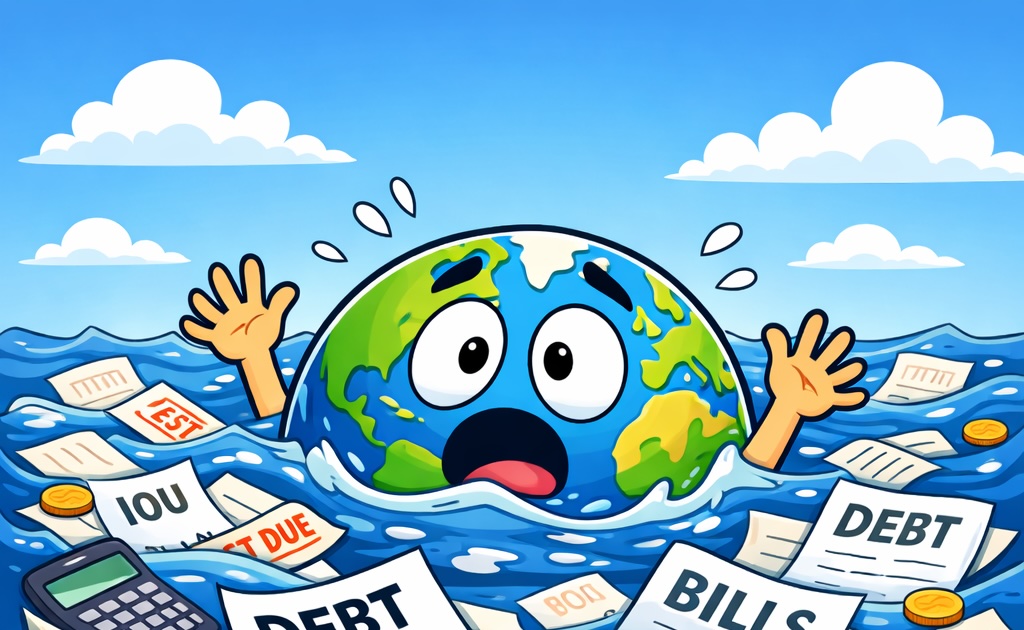
    The entire planet is in debt to itself. It’s basically bankrupt.

    Total global debt now equals more than three years of the planet’s entire yearly output — everything humanity produces in one year, multiplied by three, already promised away.

    And even that is still not enough.

    Because if we stop borrowing — the system breaks.

    If we stop growing — the system collapses.

    If we stop expanding — debt becomes unpayable, which it is already, as the money we use ARE debt. “Paying it back” will mean we don’t have any money anymore.Still, governments think debt can actually be paid back. But even trying means creating more debt and more environmental destruction.

    So even while drowning in debt, we are told we must take on more.

    More loans.

    More growth.

    More extraction.

    More pressure on land, oceans, climate, and people.

    Debt is not just money owed. It is a demand placed on the future and the planet itself.

    It is a claim that tomorrow must produce more than today — forever.

    But the planet does not know debt.

    The planet does not grow GDP.

    The planet does not compound interest.

    Forests do not grow faster because markets demand it.

    Oceans do not replenish on quarterly schedules.

    Soils do not regenerate on balance-sheet timelines.

    This is the core insanity:

    We have built a system that treats Earth as an infinite credit card —

    and even after maxing it out, demands a higher limit.

    That is why this is not a problem that can be fixed with better regulation, greener growth, or smarter finance.

    A system that requires endless expansion on a finite planet is not malfunctioning.

    It is doing exactly what it was designed to do. 

    Artificial scarcity fuels overconsumption

    Money-based systems depend on scarcity.

    Not natural scarcity — manufactured scarcity.

    There is enough food, yet people starve.

    More than enough homes, yet people sleep outside.

    An abundance of energy from the sun, yet we burn the planet for fuel.

    Scarcity is no longer a condition of nature.

    It is a condition of design.

    And scarcity doesn’t just damage ecosystems — it damages people.

    A wounded humanity consumes to compensate

    Much of modern overconsumption is not driven by greed.

    It is driven by emptiness.

    When work is disconnected from meaning,

    when time is stolen from life,

    when worth is measured numerically,

    people compensate.

    With status.

    With possessions.

    With distraction.

    The planet pays the price for a wound we rarely name.

    The same system erodes human dignity

    In a monetary world, your value becomes conditional.

    You are valued when you are:

    • productive,

    • efficient,

    • competitive,

    • profitable.

    Rest must be earned.

    Care must be justified.

    Illness becomes a liability.

    Aging becomes a problem.

    Your right to exist quietly shifts from being human to being useful.

    That shift happens slowly — until exhaustion feels normal.

    Ending money changes the question

    Without money, society stops asking:

    “Is this profitable?”

    And begins asking:

    “Is this necessary?”

    “Is this sustainable?”

    “Does this improve life — for people and the planet?”

    Production becomes needs-based.

    Technology serves life, not return on investment.

    Durability replaces planned obsolescence.

    This is not idealism.

    It is systems logic.

    Why saving the planet without ending the monetary system is almost impossible

    It is not that people aren’t trying to save the planet within the monetary system today — they are. 

    But every serious environmental effort is forced to operate against the system’s underlying logic. Renewable energy must compete with fossil fuels on price. Ecosystem protection must justify itself in economic terms. Climate action must promise growth, jobs, and returns to be considered “realistic.” 

    In other words, nature is allowed to survive only if it can be made profitable. 

    This creates a constant contradiction: we try to heal the planet while preserving the very engine that requires its continued destruction. As long as money, debt, and growth remain the organizing principles of society, ecological protection will always be partial, fragile, and reversible — tolerated only until it threatens profits. That is why saving the planet without ending the monetary system is not just difficult; it may be structurally impossible.

    But what can we have instead? This is the only system we’ve got. Or is it…?

    Stewardship replaces ownership

    When land, water, and ecosystems are no longer owned for profit:

    • extraction loses its incentive,

    • care becomes collective,

    • long-term thinking becomes natural.

    The guiding question shifts from:

    “How can we extract as much as possible?”

    to:

    “How do we keep this system healthy for generations?”

    That shift alone rewrites humanity’s relationship with Earth.

    Saving the planet is not only about the planet

    A humanity stripped of dignity will compete, consume, and destroy.

    Not because it is evil — but because it is wounded.

    A humanity that feels safe, valued, and meaningful does not need to dominate its environment.

    Healed people make good ancestors.

    The deeper truth

    Money is not neutral.

    It is a behavioral engine.

    And as long as that engine requires scarcity, competition, and endless growth, ecological collapse is not a failure.

    It is the expected outcome.

    Ending the monetary system does not magically save the planet.

    But it removes the root incentive that is currently destroying it —

    and gives both Earth and humanity a chance to recover.

    Call to action

    This is the core vision explored in Waking Up – A Journey Towards a New Dawn for Humanity — a story that doesn’t ask whether such a world is perfect, but whether it becomes possible once the old rules are removed.

    The question is no longer whether we can afford to imagine a world beyond money.

    The question is whether we can afford not to. If you want to be inspired, dive into this new world with Benjamin Michaels:

  • A 1200-Page Warning: Nothing Is Going in the Right Direction — But What If We Acted in Time?

    A 1200-Page Warning: Nothing Is Going in the Right Direction — But What If We Acted in Time?

    UN’s new GEO-7 report calls for a complete economic transformation — and invites us to imagine the world we could still create.

    Read the report here if you like:

    https://www.unep.org/geo/global-environment-outlook-7

    When the United Nations releases a Global Environment Outlook, the world is meant to take notice. The latest one — GEO-7, more than 1,200 pages long and created by hundreds of scientists across disciplines — is not a gentle document. It does not soothe, and it does not flatter. It delivers a single, unsettling truth:

    Nothing in the global environment is moving in the right direction.

    GEO-7 is the most comprehensive environmental “health check” humanity has ever received. It examines climate, biodiversity, pollution, land degradation, freshwater decline, and material use — not separately, but as one interconnected crisis. And when you see the whole picture at once, the conclusion becomes unavoidable:

    Humanity has destabilized the very systems that make life possible.

    Yet the report does something even more important than document the damage.

    It points directly at the cause.

    And it says the quiet part out loud.

    The System Itself Is the Problem

    For the first time in a UN environmental assessment of this scale, the authors state clearly:

    Humanity cannot solve these crises within the current economic system.

    A systemic transformation is required.

    This is not activist rhetoric.

    It is the institutional voice of global science.

    GEO-7 lays it out plainly: We are trying to preserve a living planet using an economic logic designed for extraction, competition, short-term survival and endless material expansion. It worked while the world was large and humanity was small. But now we realize the world is finite and humanity is enormous — consuming at a level the Earth cannot regenerate. We have already entered deep ecological overshoot: using the equivalent of multiple planets’ worth of resources every year, drawing down forests, soils, oceans and biodiversity faster than they can rebuild themselves. In other words, we are living on borrowed time from ecosystems that can no longer keep up with the demands of an outdated economic system.

    Our system rewards destruction because destruction is profitable.

    It treats nature as “free” until it collapses.

    It externalizes costs until they come back as disaster.

    The report is diplomatic, but the meaning is blunt:

    The global economy is structurally misaligned with the continuation of life.

    Robert Watson: “It Costs More to Be Passive Than to Act.”

    One of GEO-7’s leading contributors, world-renowned scientist Robert Watson, summarized the situation with sharp clarity:

    “It costs more to be passive than to act.”

    GEO-7 estimates that deep global transitions — energy, food, materials, waste, transport — would save humanity thousands of billions of dollars, eventually rising to tens of trillions in avoided damages.

    Think about that:

    The greatest financial savings in human history are found in not destroying our home.

    And Watson goes further: only a new economic system — one that values planetary stability, regeneration and long-term wellbeing — can prevent collapse. Incremental fixes won’t work. Price adjustments won’t work. Technological substitution won’t work without systemic redesign.

    This is the part of the report that should be printed in bold, underlined, and taped to every parliament door:

    We are not choosing between “expensive action” and “cheap inaction.”

    We are choosing between investment and ruin —

    and ultimately, between the life and death of our planet.

    Because if we fail to act, the costs won’t just be financial.

    They will be existential.

    But Here Is the Real Question:

    What Does Acting in Time Actually Look Like for our future?

    Reports diagnose.

    Policies prescribe.

    Economists calculate.

    But humanity also needs something else:

    A vision.

    Because we are not only facing an environmental crisis.

    We are facing an imagination crisis.

    We know what failure looks like.

    But what does global success feel like?

    What does a world look like where we truly acted in time?

    A world where:

    • collaboration replaced competition,

    • regeneration replaced extraction,

    • shared inheritance replaced private hoarding,

    • and value was measured in life, not currency?

    This is where science reaches its limit — and story begins.

    A Glimpse Into a World Where Humanity Chose Another Path

    In the novel Waking Up – A Journey Towards a New Dawn for Humanity, I explore a future set about one hundred years after we finally did what the GEO-7 scientists are begging us to do today.

    It is a world where humanity ultimately realized:

    If the economic system is killing us, the only logical solution is to create a new one.

    But the world of Waking Up goes one step further — the step no scientific report dares to make:

    Humanity discovered that the most efficient, regenerative, fair and intelligent economic system was… no money at all.

    Because when all resources are declared the shared inheritance of all people,

    when technology handles abundance and distribution,

    when wellbeing replaces profit as the guiding principle…

    then the greatest savings of all become obvious:

    We saved not thousands of billions.

    Not trillions.

    But an infinite amount of money — by abolishing money itself.

    You cannot spend money that no longer exists.

    You cannot misallocate resources when everything is shared.

    You cannot bankrupt a planet when its systems are aligned with nature instead of against it.

    In the world of Waking Up, humanity didn’t just cut costs.

    Humanity ended the concept of cost itself.

    Why This Vision Matters Now

    GEO-7 gives us the clearest scientific warning ever issued.

    It tells us what will happen if we continue down this path.

    It tells us what we could save if we change course.

    But reports alone do not inspire transformation.

    They cannot show us how it feels to live in a world healed from fear and scarcity.

    For that, we need imagination.

    We need courage.

    We need stories that reveal the contours of a future worth fighting for.

    Because between the data and the dream, a new world waits.

    And every transformation in human history began first as an idea.

    If you want to experience a world where humanity acted in time —

    and saved the greatest amount of money by making money obsolete —

    you can step into that world HERE.

  • The Systemic Change We Desperately Need

    The Systemic Change We Desperately Need

    For thousands of years, humanity has lived inside a story we barely notice. A story so pervasive we mistake it for reality itself. The story says: money is the center of life.

    It decides what we build, what we protect, what we destroy, and even who we become.

    But as the world edges closer to ecological and social breaking points, it’s becoming painfully clear:

    The monetary system we built cannot solve the planetary crisis we created.

    It tells us:

    • compete or fall behind,

    • own or be owned,

    • extract or be extracted,

    • grow or collapse.

    And under the rule of The monetary system, everything on Earth becomes a commodity:

    forests, rivers, animals, ecosystems, even our own time and attention.

    But as the world cracks under ecological collapse, inequality, burnout, and global mistrust, a truth is becoming undeniable:

    A monetary system cannot save a planetary crisis.

    Because the crisis is caused by the monetary system itself.

    Recycling, green tech, ESG scores, carbon markets — these are all efforts to repair a broken house without questioning the foundation.

    To understand the real systemic change we need, we must step back and look at the full architecture of life on Earth.

    There are not one, but three systems

    Monetary. Planetary. Humanitary.

    One artificial, one eternal, one emerging.

    Let’s explore them.

    🌑 1. The Monetary System — The Artificial System

    The monetary system is:

    • human-made

    • extractive

    • competitive

    • based on scarcity

    • driven by profit

    • aligned with neither nature nor wellbeing

    It rewards:

    • depletion over regeneration

    • individual gain over collective good

    • excess over access

    • ownership over stewardship

    Forests are worth more cut down than standing.

    Oceans are worth more dead than alive.

    Humans are worth more as consumers than as creators

    And even climate efforts — like the TFFF – Tropical Forest Forever Facility — must bend to monetary logic: funds must perform, investors must profit, returns must be stable.

    You cannot heal the Earth with the logic that harms it.

    The monetary system is not evil — it’s simply misaligned with life.

    And any system misaligned with life eventually collapses.

    🌍 2. The Planetary System — The True System of Earth

    Long before money existed — long before humans existed — there was already a complete system.

    The planetary system.

    It is:

    • regenerative

    • interconnected

    • circular

    • cooperative

    • balanced

    • self-correcting

    • life-creating

    This system is the real operating system of Earth.

    It includes:

    • ecosystems

    • climate cycles

    • water cycles

    • soil regeneration

    • food webs

    • atmosphere

    • biodiversity

    • evolutionary adaptation

    It has existed for 3.8 billion years.

    It is older, wiser, and infinitely more intelligent than any economic model we have invented.

    And it does not need our permission to function.

    Humans are not outside it — we are expressions of it.

    But somewhere along the way, we disconnected from this system and began living entirely inside the monetary illusion.

    The result?

    We started optimizing for the wrong metrics:

    • GDP instead of biodiversity

    • profit instead of wellbeing

    • ownership instead of stewardship

    • scarcity instead of abundance

    The planetary system is the real system.

    The monetary system is a shadow system.

    And the shadow is failing because it contradicts the real.

    🌱 3. The Humanitary System — Humanity’s Next Operating System

    This is the system humanity must now create.

    A system that is:

    • aligned with the planetary system

    • post-monetary

    • regenerative

    • cooperative

    • contribution-based

    • purpose-driven

    • stewardship-centered

    We now have the name for it:

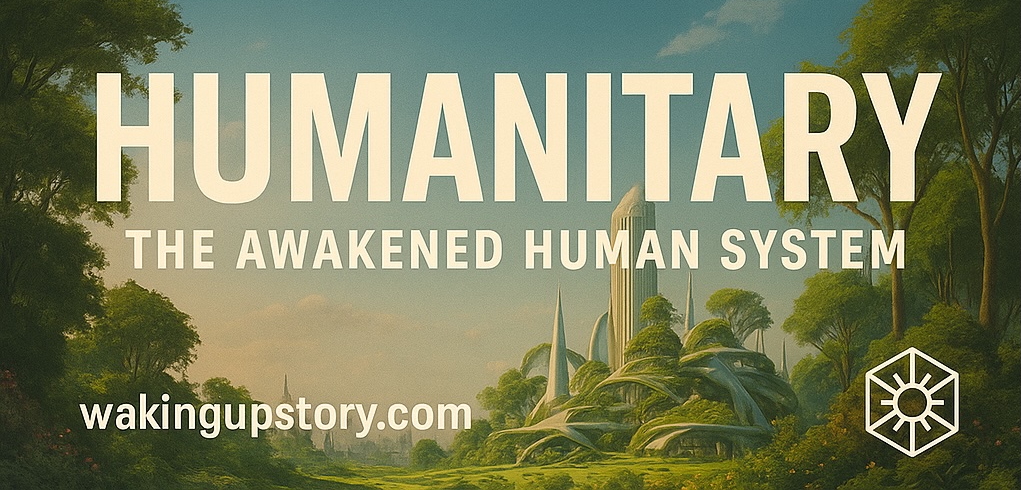
    The Humanitary System

    A new word that did not exist until today — because the idea itself is only now emerging.

    The humanitary system is:

    A post-monetary human civilization aligned with Earth’s planetary system, designed around stewardship, regeneration, cooperation, and shared wellbeing.

    It is humanity expressing the logic of nature through consciousness.

    Humanity → Humanitary.

    A species maturing into alignment with the living Earth.

    Where do we see it emerging?

    • Future Cities of Light

    • Natural Exchange System (NES)

    • regenerative culture

    • kin domains

    • circular local economies

    • universal commons

    • Return On Soul Investment (ROSI)

    • post-money communities

    • Indigenous stewardship laws

    • new governance models (councils, consent, circles)

    This is not utopian — it is evolutionary.

    🔄 Putting it all together: the Three-System Shift

    1. Planetary

    The original system. Real, natural, foundational.

    2. Monetary

    The made-up human system. Artificial, extractive, misaligned.

    3. Humanitary

    The new human system aligned with the planetary system.

    This is the true systemic change humanity needs.

    And once you see this structure, it becomes impossible to “unsee” it.

    🔥 Why the Humanitary System is Inevitable

    Because the planetary system has the final say.

    And the monetary system is collapsing under its own contradictions.

    This is the moment in history when humanity must choose:

    • continue the monetary illusion and collapse,

    or

    • return to the planetary truth and evolve.

    The humanitary system is not a political choice.

    It is a biological necessity.

    It is the only system that makes sense on a living planet.

    🌈 Cities of Light as the First Humanitary Prototypes

    A City of Light does not promise monetary profit.

    Its residents are:

    • not investors

    • not consumers

    • not shareholders

    They are ROSI contributorsReturn On Soul Investment.

    They invest not capital, but consciousness.

    They receive not dividends, but:

    • meaning

    • belonging

    • community

    • purpose

    • wellbeing

    • connection

    • safety

    • planetary restoration

    A City of Light is a prototype of the humanitary system,

    designed in alignment with the planetary system.

    This is how the new civilization begins.

    🌟 Conclusion: The Systemic Change We Need

    Humanity is not just changing systems —

    we are changing civilizational operating systems.

    From the artificial to the natural.

    From extraction to regeneration.

    From competition to cooperation.

    From profit to purpose.

    From planetary via monetary to humanitary.

    This is the future taking shape.

    And it begins with those who dare to name it.

    Call To Action

    If this vision resonates with you, explore how this shift has completely changed humanity in Waking Up – A Journey Towards a New Dawn for Humanity.

    Witness Benjamin Michaels’ transformation as the old monetary world dissolves and the new humanitary paradigm emerges when he steps into this new world….

    👉The more who read and share this book, the bigger chance we have of actually make a change in our world before it is too late… ebook only $4,99

  • When We Have No Choice but to Collaborate

    When We Have No Choice but to Collaborate

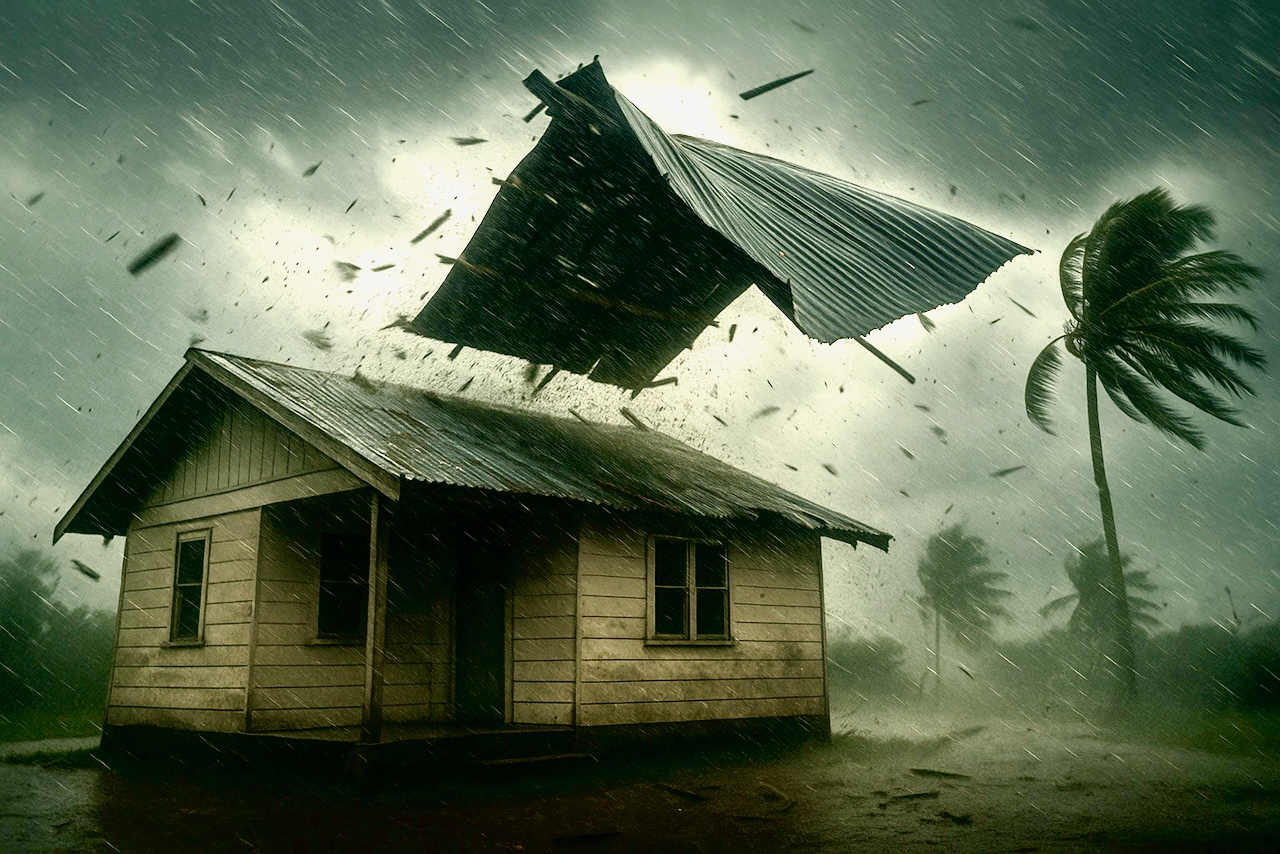
    When hurricanes tear roofs from homes like Band-Aids, when rivers overflow entire cities, when wildfires blacken skies from Canada to Greece — nature reminds us of something we’ve long forgotten: we’re all in the same boat.

    The recent devastation in Jamaica, where Hurricane Melissa left unimaginable destruction and forced hundreds of thousands to evacuate, is not an isolated event. It’s part of a rising pattern — storms, floods, and fires now so powerful that no nation, no corporation, no ideology, and certainly no family or individual  can handle them alone.

    Collaboration is no longer optional

    When disaster strikes, competition collapses.

    Think of the wildfires in Greece and California, where thousands of firefighters from different nations joined forces because the flames ignored borders.

    Or the COVID-19 pandemic, which revealed that no country can isolate itself from an invisible threat — we either share information and medicine, or we all suffer.

    Or the floods in Pakistan, submerging a third of the country and demanding global aid to prevent famine and disease.

    And the European droughts of 2022 and 2023, which exposed the fragility of an entire continent: the Rhine and Danube ran so low that barges carrying coal and grain could no longer pass; France’s nuclear plants had to reduce output because cooling water was too warm; Spain’s reservoirs dried to cracked mud plains as farmers watched their crops die.

    Suddenly, the flow of water — once taken for granted — became a shared lifeline, forcing nations that had long competed for energy and trade to co-manage rivers, power grids, and emergency reserves simply to keep their societies running.

    Even space debris orbiting Earth is now a shared danger, forcing rivals to coordinate to keep satellites — and civilization — functional.

    These are not moral choices. They’re survival imperatives.

    Nature, physics, and biology are saying the same thing:

    Collaborate — or collapse.

    Proof that we can

    History shows that when humanity truly faces extinction-level threats, we can rise above our divisions.

    The Montreal Protocol (1987) — one of the rare global environmental successes — saw countries unite to phase out ozone-depleting chemicals. The ozone layer is now healing.

    The international vaccine effort during COVID-19, despite chaos and politics, became the fastest cooperative medical breakthrough in history.

    The International Space Station, built by fifteen nations once divided by war, still circles the Earth as a living symbol of what humanity can achieve when it stops competing and starts co-creating.

    The Global Seed Vault in Svalbard safeguards the genetic foundation of our food systems, maintained through peaceful cooperation even between nations in conflict.

    Each example declares the same truth: when survival is at stake, collaboration beats control.

    Can We Stop Climate Change?

    The uncomfortable truth is: no, we can’t stop it entirely.

    Not anymore. The system is already in motion — oceans have warmed, glaciers are melting, and feedback loops like methane release and forest die-back are accelerating. What we’re witnessing now are the lagging effects of decades of fossil-fuel addiction. Even if we stopped all emissions today, the planet would keep warming for decades.

    But that doesn’t mean we’re powerless.

    It means we’re entering the era of responsibility — where humanity decides whether this transformation becomes a collapse or a rebirth.

    Here’s what we still can do:

    Slow the momentum. Every fraction of a degree we prevent means fewer hurricanes, less drought, and millions of lives saved. Renewable energy, regenerative agriculture, and reforestation aren’t just “green projects” — they’re emergency brakes on a speeding train.

    Adapt intelligently. Cities can be redesigned for resilience: water recycling, local food systems, hurricane safe buildings, self-sufficient energy grids, and shared resource hubs — prototypes of what Cities of Light could become.

    Heal ecosystems, not just economies. Nature can recover faster than we imagine — coral reefs, forests, and soils — if we simply stop harming them and assist their regeneration.

    Collaborate globally. Climate doesn’t care about politics. Shared data, open technology, and cooperative disaster response must become the new norm.

    Transform consciousness. Ultimately, the crisis is not environmental — it’s psychological. It’s the illusion of separation that allows destruction. When we see Earth not as a resource to exploit but as a living system of which we are part, everything changes.

    Do we have the money?

    But here’s a question few dare to ask out loud:

    Do we even have the money to do everything we must — to prepare, to brace, to rebuild, and to restore balance in the face and aftermath of accelerating climate change?

    Every expert agrees we have the resources, the technology, and the human capacity. What we lack is the permission of an outdated system — one that measures possibility in dollars instead of reality.

    So maybe it’s time to ask not “can we afford it?” but rather “can we afford to keep measuring life in this way?”

    The Monetary System

    But even if we did try to fund everything through the existing system, it would likely destabilize that very system. The monetary architecture we rely on was built for perpetual growth and profit — not planetary repair. Pouring tens of trillions into climate mitigation and adaptation without corresponding “returns” would expose how money itself depends on expansion, debt, and competition. Printing(digital and physical) or borrowing enough to save the planet would trigger inflation, strain supply chains, and shake the foundations of the global economy, revealing a painful irony: even survival doesn’t fit within the logic of our financial model.

    Yet that may be precisely the point of awakening. The moment we realize that saving life on Earth could bankrupt the very system designed to measure it, we also see what must come next — a transition from a profit-driven economy to a resource-based coordination system where collaboration and need, not capital, decides what can be done.

    From crisis to awakening

    Climate change is not the end of the world. It’s the end of a way of living in the world.

    And in that ending lies the beginning of something extraordinary — a civilization finally mature enough to act as one organism.

    The storms, the fires, the floods — they are the Earth’s way of saying:

    “Grow up. Work together. Remember who you are.”

    Because the truth is simple:

    When the storms come, there’s only one safe place to stand — together.

    The Natural Exchange System

    In the novel Waking Up – A journey towards a new dawn for humanity, the human population has awakened to precisely this truth. If we are to survive as a species on this planet, we must enter the phase of responsible collaboration, where we abandon the most destructive system on Earth: The Monetary System – and replace it with one where people and nature is front and center, not profit.

    Follow Benjamin Michaels when he wakes up in a world where humanity has taken collaboration to its utmost limit —

    and abandoned this system.

    In its place, a new model has emerged — one that works for both people and planet:

    NES — the Natural Exchange System, a society that mimics nature in human interactions.

    Just like in nature, exchange happens effortlessly — without money or trading — when each part contributes what it’s meant to and finds fulfillment in doing it.

    The soil doesn’t send an invoice to the tree for nutrients, nor does the bee demand payment for pollination. The ecosystem thrives through spontaneous reciprocity — a living flow of giving and receiving that keeps the whole balanced.

    In this same spirit, AI and robotics take care of tasks no one feels called to do — cleaning streets, collecting waste, managing logistics — freeing human beings to focus on creativity, empathy, learning, and the joy of purposeful living.

    Call To Action

    Waking Up – A Journey Towards a New Dawn for Humanity isn’t a blueprint — but it is an inspiration.

    A vision of what becomes possible when humanity dares to move beyond money, fear, and separation — and begins to live by trust, collaboration, and care for the planet and each other.

    By reading it — and by sharing these articles — you help spread that vision.

    Every person who awakens to a new way of thinking brings us closer to the tipping point where change becomes inevitable.

    Read it. Share it. Be part of the awakening.

  • How We Can ALL live a Life of Luxury on Earth — Without Breaking the Planet

    How We Can ALL live a Life of Luxury on Earth — Without Breaking the Planet

    From Excess to Access — A glimpse into the next Paradigm where Abundance, Technology, and Wisdom unite to create a world that works for everyone.

    Imagine a world where every human being lives in comfort and beauty.

    Where homes are energy-self-sufficient, food is fresh and locally grown, transport is clean and free, and no one worries about bills, borders, or basic survival.

    It sounds like a dream — but it’s only our outdated economic system that makes it seem impossible.

    The Myth of Scarcity

    We’ve been raised to believe there’s not enough for everyone — not enough land, not enough jobs, not enough “money.” Yet the Earth is overflowing with resources.

    We have enough sunlight striking the planet each hour to power civilization for a year. We produce 43 kg of food per day per person per year. But most is wasted to create profit. We have enough empty homes to house every homeless person several times over. Enough food to feed everyone — if we stopped throwing away most of it.

    Scarcity isn’t a natural law. It’s a policy decision.

    Scarcity is an artificial outcome of a system that rewards hoarding and punishes sharing — where competition, debt, and profit come before cooperation, dignity, and Life itself.

    The Real Meaning of Luxury

    Luxury today is marketed as excess — yachts, jets, and exclusivity. But true luxury has nothing to do with waste.

    Real luxury is freedom from stress, clean air, time to create, connection, and purpose.

    It’s walking barefoot on living soil, sleeping in peace, eating food you can trust, and feeling as part of something larger than yourself.

    When we redefine luxury from excess to access, the equation changes completely.

    A world where everyone has access to clean healthy water, sustainable energy, creative tools, and regenerative design is not only possible — it’s inevitable once we stop measuring life in old outdated currency.

    The Paradise Is Already Here

    There are over 100,000 tropical islands on Earth — from the turquoise lagoons of the Pacific to the coral-fringed coasts of the Indian Ocean and Caribbean.

    Humanity has more than 620,000 kilometers of coastline, much of it pristine and uninhabited. There is, quite literally, enough paradise for everyone.

    If we organized wisely, each of us could spend a good part of our year on a tropical beach, sipping an umbrella drink served by elegant solar-powered robots. If that’s what we wanted.

    And there would still be plenty of room — because people are beautifully different. Not everyone wants a Mai Tai under the palm trees. Some prefer mountain air, snow, forests, deserts, or bustling creative cities. The abundance of this planet includes the diversity of our dreams.

    The Tools Are Already Here

    We already possess everything required to build this world: renewable energy, 3D-printed housing, circular materials, global knowledge sharing, and AI-assisted logistics that can map and manage resources with stunning precision.

    What we lack isn’t technology — it’s alignment.

    A willingness to use these tools for collaboration instead of competition.

    The shift is from ownership to stewardship — from “mine” to “ours.” When resources become a shared inheritance instead of private property, abundance stops being an illusion.

    A Glimpse from the Future

    In Waking Up – A Journey Towards a New Dawn for Humanity, Benjamin Michaels wakes to a world that has made this transition.

    Money no longer exists. The Natural Exchange System ensures that everyone’s needs are met intelligently and sustainably. Cities of Light shine as living ecosystems — where architecture, art, and nature merge.

    It’s not a utopia. It’s simply what happens when humanity grows up — when we stop surviving and start thriving together.

    The Invitation

    The new world isn’t waiting in the future; it’s waiting in us.

    Every act of sharing, repairing, planting, and caring moves us closer. Every moment we choose collaboration over competition, we bring a fragment of paradise into form.

    We can all live a life of luxury — not by taking more, but by realizing we already have enough to share with everyone.

    🌍 Discover how humanity awakens in a world beyond money.

    Read Waking Up – A Journey Towards a New Dawn for Humanity and join the movement toward a world that truly works for all. Ebook is only $4,99