
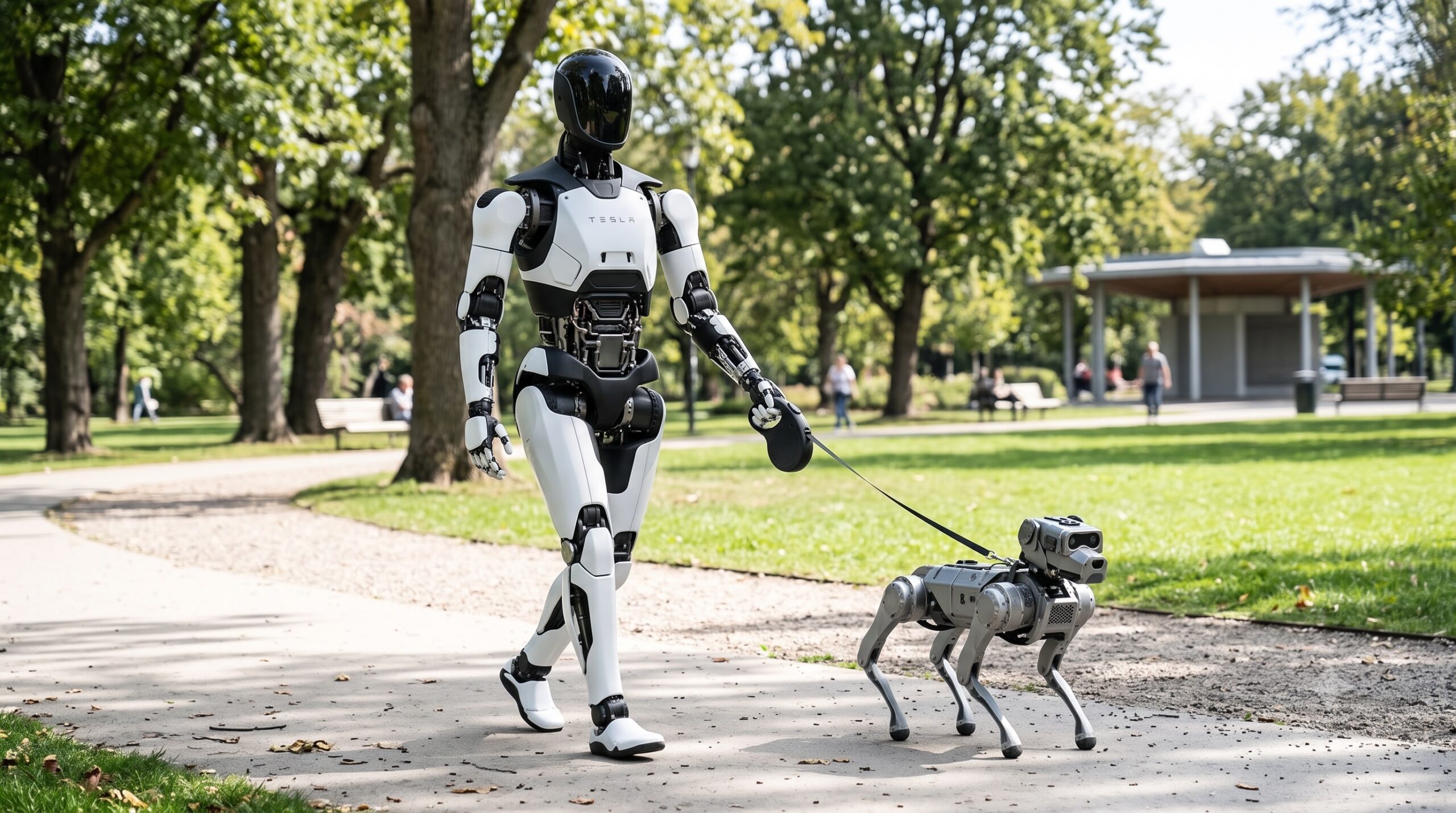
In several interviews over the years, Elon Musk has suggested that a future without money may one day become possible, and maybe even inevitable.
He has argued that sufficiently advanced artificial intelligence and robotics could create such extraordinary abundance that money might eventually become unnecessary. He has also repeatedly praised The Culture, Iain M. Banks’ celebrated science fiction series about a highly advanced civilization where artificial intelligence manages an economy of abundance and money has disappeared altogether.
That is a remarkable thing to hear from the richest man on Earth.
Here is someone who has built some of the world’s most valuable companies, accumulated immense wealth, and mastered today’s monetary system better than almost anyone else alive. Yet he openly entertains the possibility that money itself may not be a permanent feature of civilization. Maybe it’s just to sound interesting. Who knows?
But why Elon Musk says it or is right is almost beside the point.
The truly interesting question is whether we are prepared to follow that line of thought all the way to its conclusion.
Human Economy
The monetary system humanity has created has been built around people.
People own land, businesses and resources. People work for wages. People buy and sell. People borrow money and repay loans. People invest, consume and pay taxes. Money is not simply coins, banknotes or numbers on a screen. It is the accounting system for billions of human interactions taking place every single day.
Now imagine a future where artificial intelligence and robotics gradually perform most of the productive work.
The machines build the houses, manufacture the products, grow the food, transport the goods. They maintain the infrastructure. They even design the next generation of machines.
The more capable the technology becomes, the less human labour is required.
But. Machines do not earn salaries. They do not buy groceries. They do not take out mortgages. They do not pay income tax. They do not participate in the monetary economy in the way people do. And they never will.
If the productive activity that once belonged to billions of people is increasingly carried out by machines, then the foundation upon which today’s monetary system was built is fundamentally changing.
Without economic activity from people, there will be no monetary system
Thus, our problem is not merely an employment issue.
It is a civilization issue.
Follow Through
This is where I think the conversation usually stops.
We hear that artificial intelligence will create abundance.
We hear that robots will do the work.
We hear that people may receive a universal basic income.
Then the discussion ends.
But surely that is where the discussion should begin.
Where does that income come from?
How does a monetary system continue functioning if fewer and fewer people participate in the productive economy?
What happens to wages?
What happens to prices?
What happens to ownership?
What happens to profit?
What happens to money?
Every one of these questions is connected to every other.
You cannot remove the human foundation from a system that has always depended upon human participation without asking whether the system itself is still appropriate.
Perhaps Elon Musk has already followed this chain of thought all the way through.
Perhaps he hasn’t.
I honestly don’t know.
But humanity eventually will have to.
Our Choice
Technology will not answer these questions for us.
Artificial intelligence may create extraordinary abundance, but it cannot decide how civilization should organize itself once that abundance exists.
That decision belongs to us.
Perhaps we will find a way to preserve some form of monetary system.
Perhaps we won’t.
What matters is that we consciously examine the possibilities instead of automatically assuming that yesterday’s solutions must also be tomorrow’s.
Throughout history, humanity has continually modified the monetary system. We have moved from barter to coins, from coins to paper money, from paper money to digital banking, from national currencies to cryptocurrencies.
Every generation has tried to improve the system it inherited.
Perhaps artificial intelligence will allow us to improve it once again.
Or perhaps it is inviting us to ask a much more fundamental question.
After all, regardless of the benefits money has brought, it has also been intertwined with poverty, inequality, debt, financial crises, exploitation, corruption, pollution, wars over resources and environmental destruction. It has been one of humanity’s most powerful inventions, but also one of its most troublesome.
So if technology eventually gives us the opportunity to build a civilization beyond artificial scarcity, beyond involuntary labour and perhaps even beyond money itself…
Wouldn’t it be prudent to at least explore that possibility instead of desperately trying to preserve a failing system at all costs?
That may be the most important choice humanity has ever made.
⸻
The Future
In the novel Waking Up: A Journey Towards a New Dawn for Humanity, Mankind has already made that choice, continuing civilization without a monetary system and instead created an optimized world providing a high degree of abundance for everyone on Earth. The former billionaire Benjamin Michaels wakes up in this world after one hundred years of cryonic sleep, only to discover that money and ownership no longer exist and that his dream of expanding his empire has become meaningless.
Now imagine if that billionaire had been Elon Musk…
Leave a Reply