Tag: ELON MUSK

  • The Grocery Store

    The Grocery Store

    Imagining the new world

    This article is dedicated to Zanny Minton Beddoes, Editor-in-Chief of The Economist.

    In her recent interview with Elon Musk, she asked a simple but profound question. Musk said: “By 2036, money might not matter at all“, whereupon Zanny asked:  “But in all practical terms, what would daily life look like in a moneyless world?”

    This article is an attempt to answer that question by imagining one of the most ordinary experiences of all: going to the grocery store.

    Understandably, many people have trouble imagining a world without money.

    So let’s make it simple.

    1. Abundance

    1. Imagine that the new world does not have any less abundance than today. But rather more. Imagine that all the goods, services, tools, food, technology, homes, healthcare, transport, and everything else we genuinely need are still here and are being updated as time goes by. 

    2. Grocery store

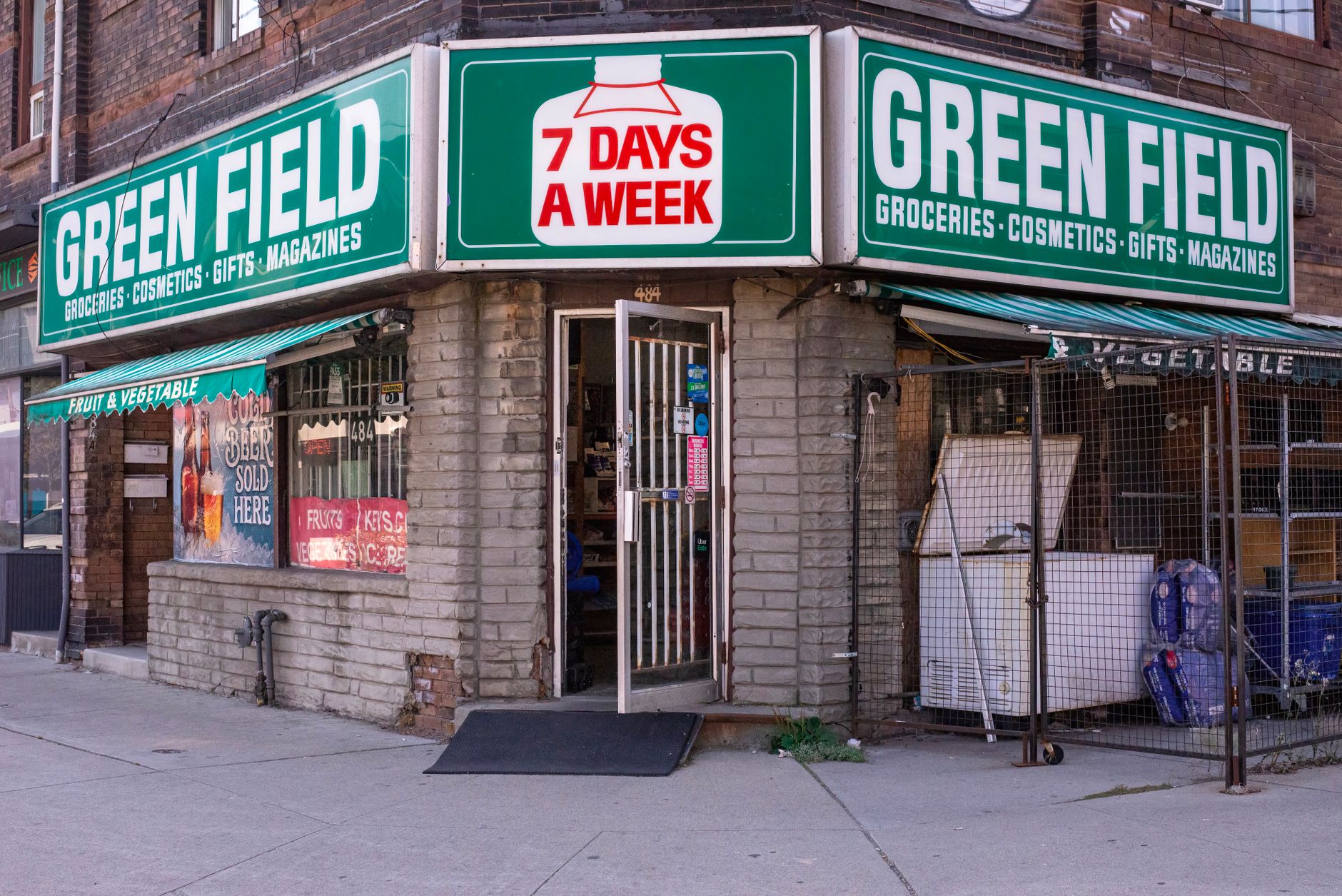
    You walk in, and the shelves are full. There are vegetables, fruit, bread, juice, household products, and everything else people in that area normally use. Perhaps there are fewer screaming labels, fewer fake choices, and far less wasted packaging — but the products are there.

    The difference is not that the store has disappeared.

    The difference is how it works.

    3. Behind the scenes

    1. Behind the scenes, an intelligent coordination system keeps track of what is actually needed and used. If people take more tomatoes, more tomatoes are produced, transported, and restocked. If people drink more orange juice, the system notices. If demand falls, production adjusts. All of it happens automatically through AI and robotics and the people who finds working with logistics interesting and fulfilling. 

    Not through prices.

    Not through profit.

    Not through competition.

    Through real need and actual use.

    While keeping it sustainable.

    AI, robotics, logistics, farming, transportation, storage, and local production all work together to keep the store supplied. The system responds to real use, not market speculation.

    And if you prefer to grow your own food, you can do that too. Whatever surplus you get you share with your neighbors and friends and get even more friends.

    If oranges grow where you live, you can grow oranges. If you want to make your own orange juice, you can order a juicer. If you want to plant vegetable beds, you can get the tools you need. If you produce more than your household uses, you can store it, share it with neighbors, or let the system know it is available.

    Nothing mystical is required.

    The new world can look surprisingly much like the world we already know.

    There will still be grocery stores, cafés, restaurants, workshops, farms, delivery systems, homes, tools, and everyday life.

    But the foundation is different.

    No Meaningless Jobs

    Today, money decides who gets what. Ownership decides who controls what. Prices decide what people can access. And millions of people are coerced into low-paid, exhausting, often meaningless jobs simply to survive.

    In a moneyless, resource-based society, the question changes.

    Instead of asking, “Can you afford it?” we ask, “Is it needed?”

    Instead of forcing people to take any job they can get just to pay bills, we ask, “What are you naturally good at? What do you love doing? Where can your contribution bring joy, usefulness, and meaning?”

    Of course, the grocery store is only one small example.

    The same principle would apply throughout society.

    Buildings would be maintained, renovated, and gradually upgraded according to need, sustainability, safety, and environmental impact. Roads, railways, water systems, energy networks, and public spaces would continuously evolve as better solutions become available.

    Vehicles would become cleaner, safer, and more efficient over time. Production methods would also improve whenever new technologies, materials, or processes could reduce waste, lower environmental impact, or provide a better quality of life.

    Society would not stand still.

    Innovation would continue. Research would continue. Development would continue.

    The difference is that progress would no longer be driven by profit, competition, or planned obsolescence, but by a simple question:

    How can we do this better?

    Better for people.

    Better for future generations.

    And better for nature and the planet that supports us all.

    The grocery store therefore becomes more than a place of consumption.

    It becomes a simple example of a different civilization.

    A civilization where the purpose of food production is not profit, but nourishment.

    A civilization where technology is not used to displace people into poverty, but to free people from unnecessary struggle.

    A civilization where abundance is organized intelligently, responsibly, and for everyone.

    That is the shift.

    Not from grocery stores to empty shelves.

    Not from comfort to sacrifice.

    But from money-based access to need-based coordination.

    From forced labor to meaningful contribution.

    From ownership and trade to stewardship and care.

    The future may not look as strange as we think.

    It may look like walking into a grocery store, taking what you need, knowing others can do the same — and realizing that civilization has finally grown up.

    If this sounds impossible, remember that every system humanity has ever lived under was once considered impossible before it existed.

    The future begins when we dare to imagine it. 

    And perhaps that is the real challenge.

    Not building the technology.

    Not producing the resources.

    But allowing ourselves to imagine that humanity can organize itself in a completely different way. And that is exactly what I have imagined in the novel Waking Up – A Journey Towards a New Dawn for Humanity.

    It follows the bewildered billionaire Benjamin Michaels when he wakes up after one hundred years of cryonic preservation only to to discover a world where money, ownership, and trade have become historical curiosities—and where humanity has built a civilization based on cooperation, stewardship, and abundance.

    Could such a world ever exist?

    There is only one way to find out.

    👉 Discover the story

    And please share this article if it resonates.

    I thank you.
  • The Most Important Choice

    The Most Important Choice

    In several interviews over the years, Elon Musk has suggested that a future without money may one day become possible, and maybe even inevitable.

    He has argued that sufficiently advanced artificial intelligence and robotics could create such extraordinary abundance that money might eventually become unnecessary. He has also repeatedly praised The Culture, Iain M. Banks’ celebrated science fiction series about a highly advanced civilization where artificial intelligence manages an economy of abundance and money has disappeared altogether.

    That is a remarkable thing to hear from the richest man on Earth.

    Here is someone who has built some of the world’s most valuable companies, accumulated immense wealth, and mastered today’s monetary system better than almost anyone else alive. Yet he openly entertains the possibility that money itself may not be a permanent feature of civilization. Maybe it’s just to sound interesting. Who knows?

    But why Elon Musk says it or is right is almost beside the point.

    The truly interesting question is whether we are prepared to follow that line of thought all the way to its conclusion.

    Human Economy

    The monetary system humanity has created has been built around people.

    People own land, businesses and resources. People work for wages. People buy and sell. People borrow money and repay loans. People invest, consume and pay taxes. Money is not simply coins, banknotes or numbers on a screen. It is the accounting system for billions of human interactions taking place every single day.

    Now imagine a future where artificial intelligence and robotics gradually perform most of the productive work.

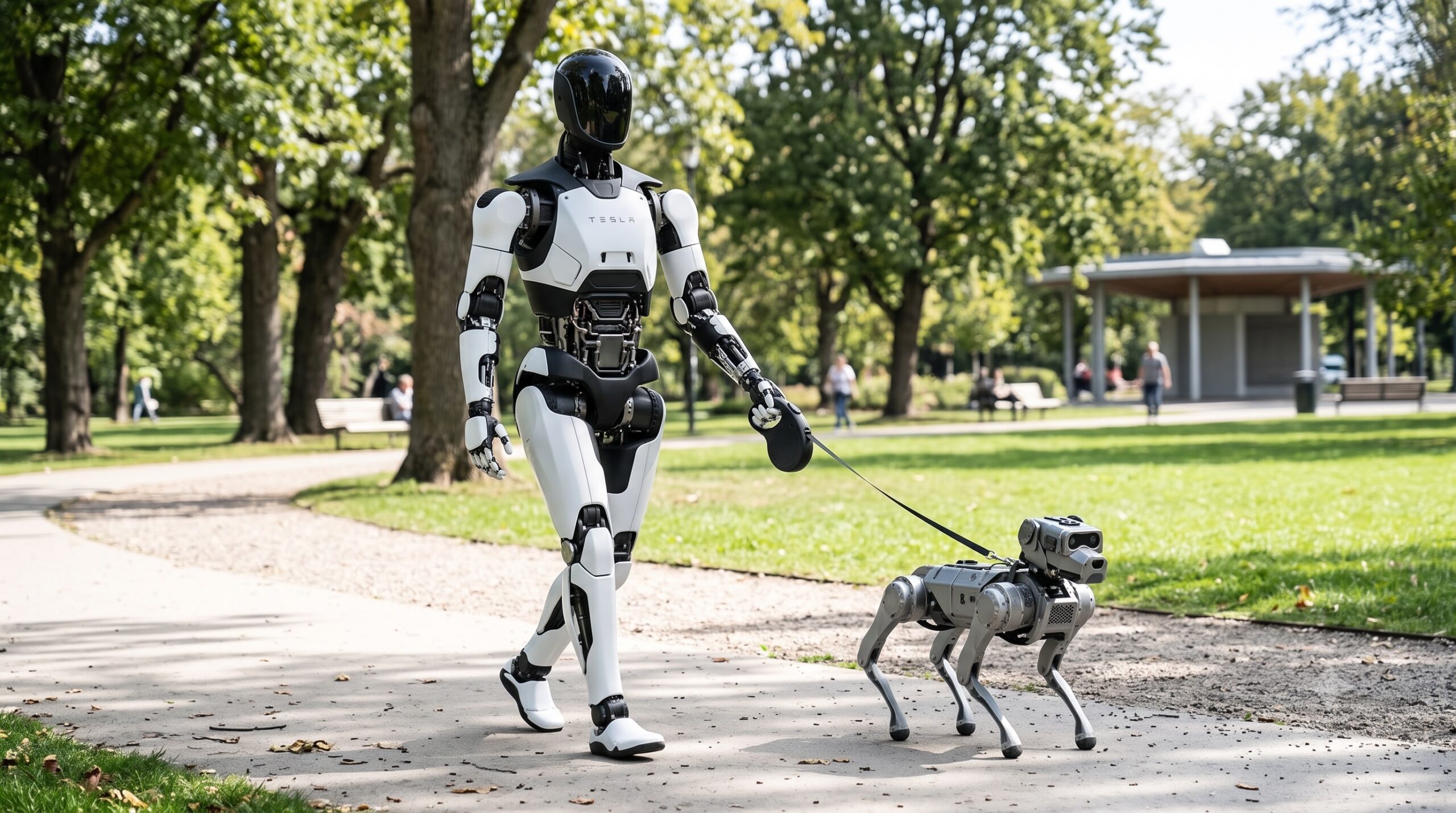
    The machines build the houses, manufacture the products, grow the food, transport the goods. They maintain the infrastructure. They even design the next generation of machines.

    The more capable the technology becomes, the less human labour is required.

    But. Machines do not earn salaries. They do not buy groceries. They do not take out mortgages. They do not pay income tax. They do not participate in the monetary economy in the way people do. And they never will.

    If the productive activity that once belonged to billions of people is increasingly carried out by machines, then the foundation upon which today’s monetary system was built is fundamentally changing.

    Without economic activity from people, there will be no monetary system

    Thus, our problem is not merely an employment issue.

    It is a civilization issue.

    Follow Through

    This is where I think the conversation usually stops.

    We hear that artificial intelligence will create abundance.

    We hear that robots will do the work.

    We hear that people may receive a universal basic income.

    Then the discussion ends.

    But surely that is where the discussion should begin.

    Where does that income come from?

    How does a monetary system continue functioning if fewer and fewer people participate in the productive economy?

    What happens to wages?

    What happens to prices?

    What happens to ownership?

    What happens to profit?

    What happens to money?

    Every one of these questions is connected to every other.

    You cannot remove the human foundation from a system that has always depended upon human participation without asking whether the system itself is still appropriate.

    Perhaps Elon Musk has already followed this chain of thought all the way through.

    Perhaps he hasn’t.

    I honestly don’t know.

    But humanity eventually will have to.

    Our Choice

    Technology will not answer these questions for us.

    Artificial intelligence may create extraordinary abundance, but it cannot decide how civilization should organize itself once that abundance exists.

    That decision belongs to us.

    Perhaps we will find a way to preserve some form of monetary system.

    Perhaps we won’t.

    What matters is that we consciously examine the possibilities instead of automatically assuming that yesterday’s solutions must also be tomorrow’s.

    Throughout history, humanity has continually modified the monetary system. We have moved from barter to coins, from coins to paper money, from paper money to digital banking, from national currencies to cryptocurrencies.

    Every generation has tried to improve the system it inherited.

    Perhaps artificial intelligence will allow us to improve it once again.

    Or perhaps it is inviting us to ask a much more fundamental question.

    After all, regardless of the benefits money has brought, it has also been intertwined with poverty, inequality, debt, financial crises, exploitation, corruption, pollution, wars over resources and environmental destruction. It has been one of humanity’s most powerful inventions, but also one of its most troublesome.

    So if technology eventually gives us the opportunity to build a civilization beyond artificial scarcity, beyond involuntary labour and perhaps even beyond money itself…

    Wouldn’t it be prudent to at least explore that possibility instead of desperately trying to preserve a failing system at all costs?

    That may be the most important choice humanity has ever made.

    The Future

    In the novel Waking Up: A Journey Towards a New Dawn for Humanity, Mankind has already made that choice, continuing civilization without a monetary system and instead created an optimized world providing a high degree of abundance for everyone on Earth. The former billionaire Benjamin Michaels wakes up in this world after one hundred years of cryonic sleep, only to discover that money and ownership no longer exist and that his dream of expanding his empire has become meaningless.

    Now imagine if that billionaire had been Elon Musk…

    Discover the story

  • Elon Musk: The America Party — a new dawn for humanity..?

    Elon Musk: The America Party — a new dawn for humanity..?

    When Elon Musk recently announced the possible launch of The America Party, reactions ranged from excitement to skepticism. Memes exploded across social media, pundits rushed to speculate, and ordinary people asked: Is he serious? But beyond the noise lies a deeper current — a growing hunger, not just for new political choices, but for a new direction altogether.

    Elon Musk: The Reasoning Mind in a Polarized World

    Musk is not your typical political figure. He’s a systems thinker, a problem-solver, and a visionary whose track record includes rethinking everything from transport and energy to space travel and AI. For most of his public life, he’s avoided the political spotlight, preferring to build and innovate rather than legislate. Even his occasional political comments — including brief alliances or endorsements — seemed less like ideological stances and more like calculated responses to a flawed menu of options.

    With The America Party, he appears to be stepping onto the stage with intent: not to support the status quo, but to disrupt it.

    From Polarization to Possibility

    The idea behind Musk’s new party is clear: the majority of people — the so-called 80% in the middle — feel alienated by the extremes of current politics. They want solutions, not slogans. They want progress, not partisanship. In that sense, The America Party may tap into something very real.

    But the real question isn’t whether we need another party. It’s whether we need a new kind of consciousness.

    Waking Up: Not Left, Not Right — But Human

    In Waking Up: A Journey Towards a New Dawn for Humanity, I explore a future that goes beyond politics. It’s not about left or right or the middle. It’s not even about parties. It’s about people — realizing their own power, their shared humanity, and their relationship with the Earth and each other.

    It’s not a blueprint. It’s an invitation to be inspired. A story that imagines a cooperative, post-monetary world where humans don’t own the planet — they steward it. A world that doesn’t run on fear and competition, but on trust, creativity, and care.

    It’s a future that can’t be engineered solely through innovation or ideology. It begins with an inner shift — a change in values, perception, and purpose.

    Beyond the 80% — A Vision for the 100%

    While Musk’s new movement speaks to “the middle,” the transformation we need must speak to everyone — not just all humans, but animals, insects, forests, oceans, and ecosystems.

    Politics today is not only confined by artificial borders and interest groups — it’s tied to the monetary system itself. Decisions are driven by cost-benefit calculations, not by what truly nurtures life.

    But the planet doesn’t operate by party lines or profit margins. And any real shift must go deeper than policy — it must involve a broader, more thoughtful way of living and relating to one another and the world.

    Waking Up invites us to imagine exactly that: a society rooted in care, cooperation, and shared responsibility — beyond money, beyond division, beyond control.

    The Real Frontier Isn’t Mars — It’s Earth

    Elon Musk often speaks of colonizing Mars — building a future beyond Earth. But maybe, just maybe, the greatest leap forward is not escaping Earth, but fully arriving here.

    This isn’t a utopian fantasy. It’s the most grounded, necessary conversation we can have. Because if we don’t change course — if we don’t learn to live differently — we risk losing the very ground we stand on. Not to speak of if we venture off the planet. Going out there with the same greedy mindset we’ve had here? Wow, now that will be a party…

    So perhaps The America Party is a sign? A step. A bridge. But if we cross it, let’s not stop at better policies. Let’s aim for a better world.

    One that works — not just for America, but for all life on Earth.

    Let’s create  it together.