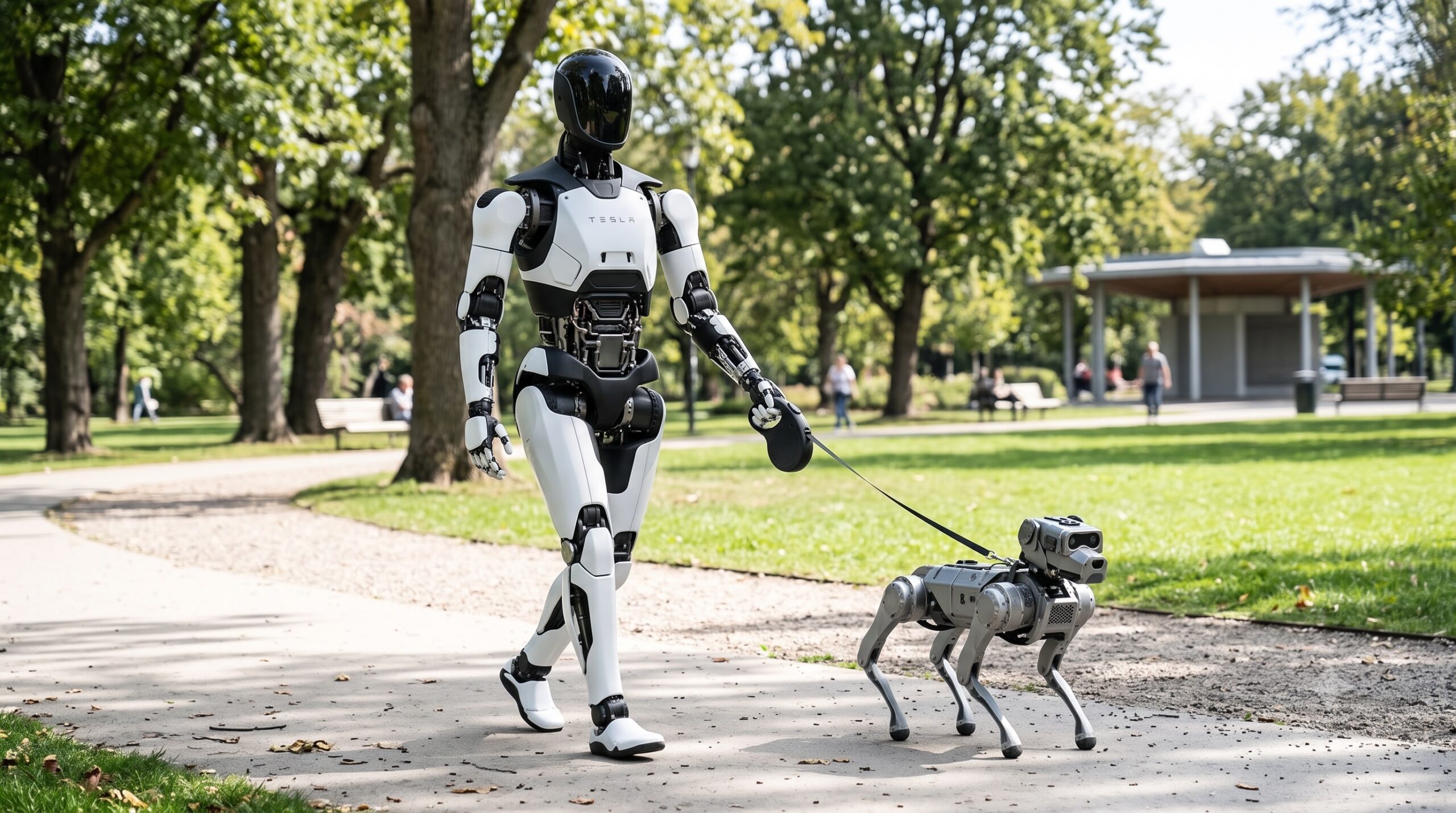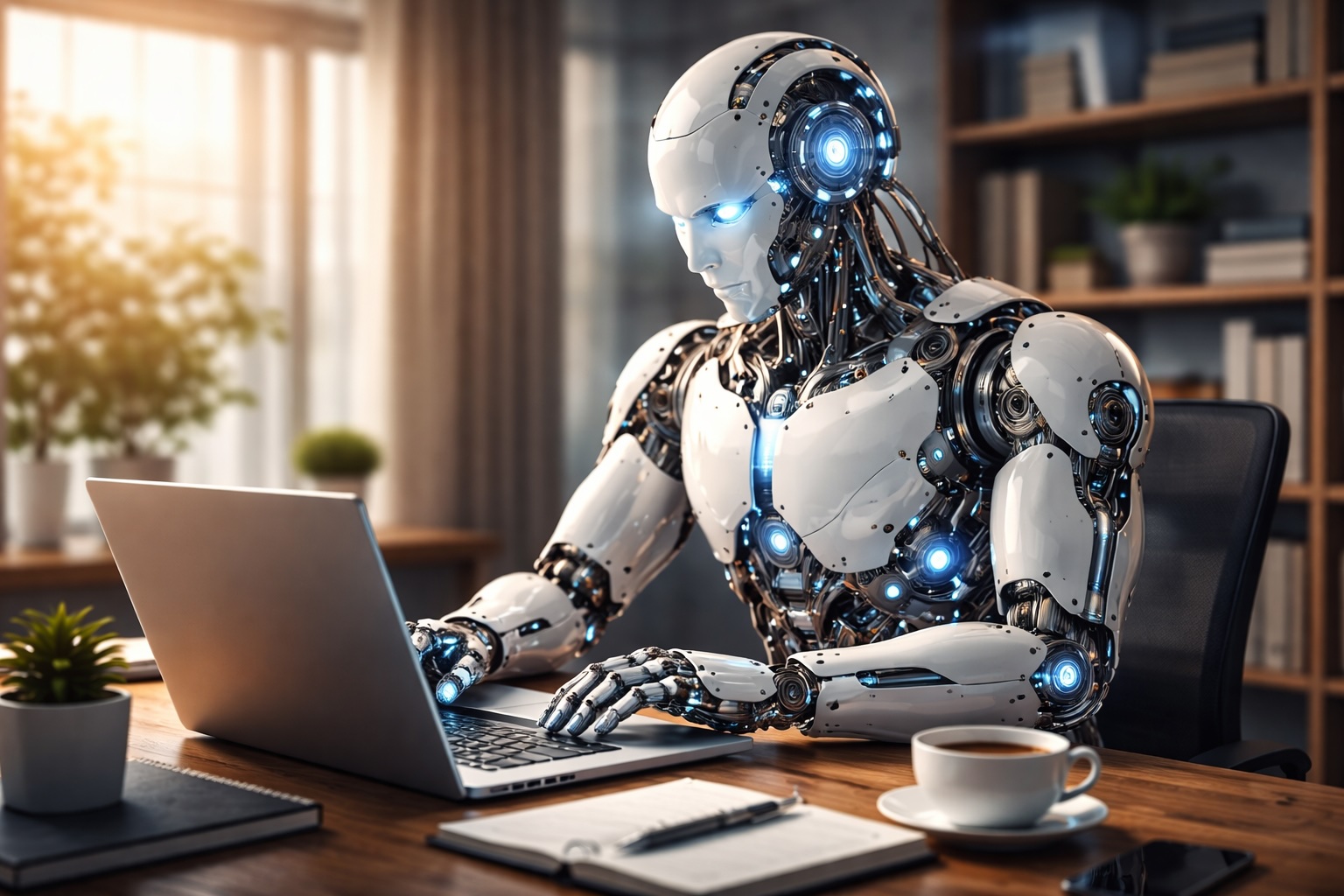
We are racing to create an intelligence greater than our own.
Companies are investing hundreds of billions. Nations are competing. Artificial intelligence is becoming more capable at extraordinary speed, and somewhere ahead lies the possibility of AGI — Artificial General Intelligence — and perhaps eventually something even more capable than that.
There is enormous discussion about whether AI will be safe.
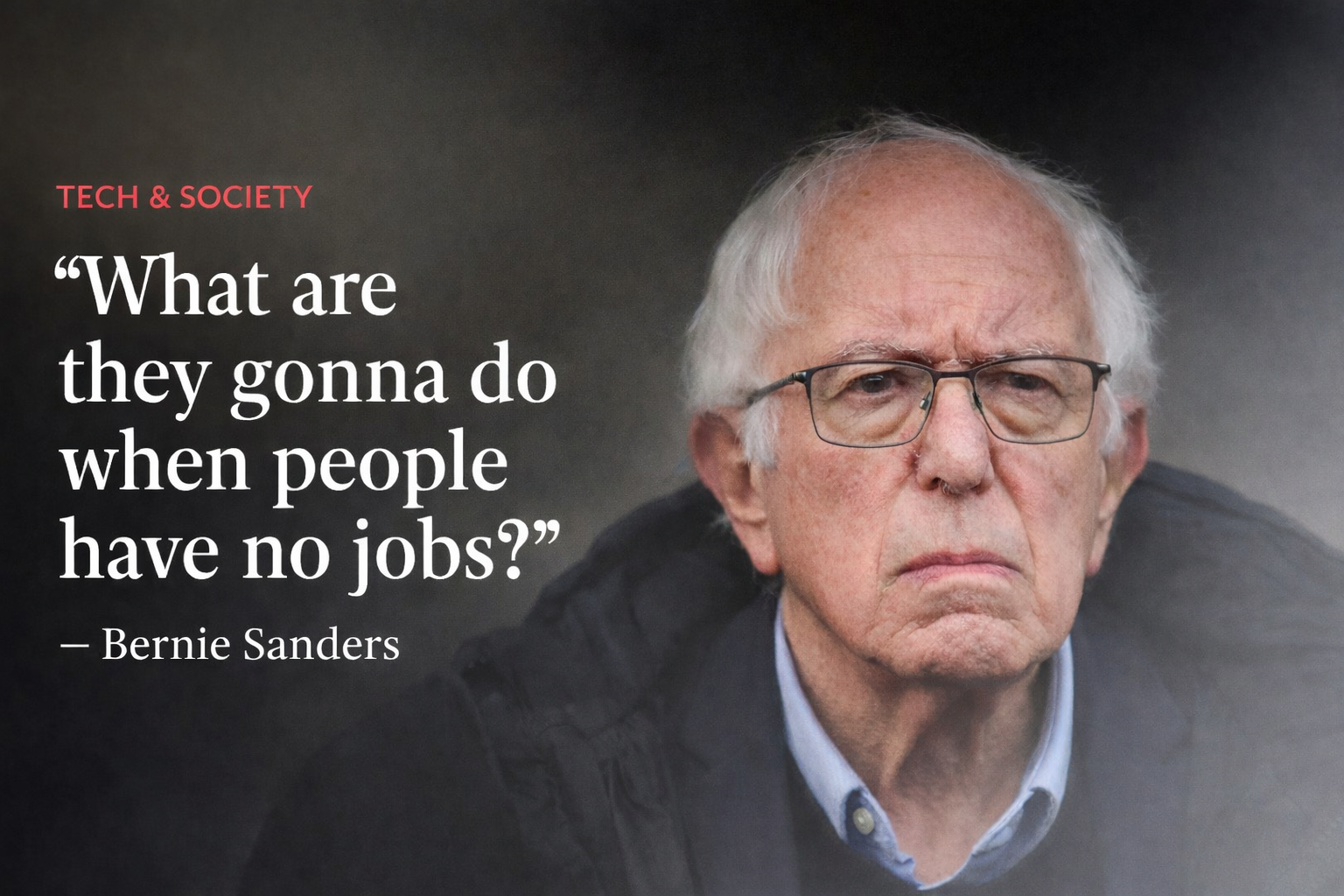
There is enormous discussion about whether AI will take our jobs. It will.
There is enormous discussion about who will develop the most powerful AI first.
But there is a much simpler question that seems strangely absent.
What is the real purpose of AI?
The Race
At the moment, there doesn’t seem to be one answer.
Every company has its own purpose. Develop better products. Increase productivity. Reduce costs. Gain market share. Make money.
Governments have other purposes. Increase national competitiveness. Improve administration. Strengthen national security.
And inevitably, militaries are interested too.
Meanwhile, humanity watches the race and wonders where it is taking us.
Perhaps AI will cure diseases.
Perhaps it will accelerate scientific discoveries.
Perhaps it will solve problems we haven’t been able to solve ourselves.
Perhaps it will replace enormous numbers of jobs.
Perhaps it will create abundance beyond anything humanity has previously experienced.
Perhaps it will become dangerous, break free and turn on us.
Nobody really knows.
And that is precisely the point.
We are developing perhaps the most powerful technology humanity has ever created without first agreeing on what we ultimately want to accomplish with it.
More and More
The underlying purpose of automation has always seemed fairly obvious.
Do more with less effort.
The plough and bull replaced some human muscle. The tractor replaced much more. Industrial machinery transformed manufacturing. Computers automated calculations and administration. Robots entered factories.
Each step allowed us to produce more, faster and with less human labor.
AI continues that story, but with one enormous difference.
We are no longer merely automating muscle.
We are beginning to automate intelligence.
Writing. Programming. Designing. Diagnosing. Planning. Researching. Organizing. Analyzing.
And when artificial intelligence is combined with increasingly capable robotics, we could be approaching something humanity has never experienced before:
an extreme abundance of labor.
For almost all of human history, labor has been scarce.
Now it may cease to be.
Abundance
Some technology leaders believe AI and robotics could eventually produce extraordinary material abundance.
Perhaps they are right.
But abundance alone doesn’t answer the important question.
Who is the abundance for?
If a company owns the AI, owns the robots, owns the factories and sells what those machines produce, we haven’t fundamentally changed the underlying system.
We have simply created vastly more productive means within it.
And that produces a peculiar contradiction.
Suppose AI and robotics can produce more goods and services while requiring fewer human workers.
That sounds like progress.
But in our current monetary system, most people still need money to access those goods and services, and most people obtain that money through work.
So the machines produce more.
Humans need to work less.
People lose jobs.
People lose income.
And suddenly they struggle to afford the extraordinary abundance the machines are producing. Unless the products cost less and less, which might be the result of this extreme productive abundance. But when the prices reach zero or close to zero, what is the point of money at all? And if money has no point, what about ownership and trading itself? To sell something requires that someone owns it first. Maybe it’s time we look closer on the whole ownership-trading-money paradigm…?
Succeeding with AGI without addressing this question means we would have succeeded technologically while failing logically.
Jobs
This is why so much of the discussion about AI and employment sounds strangely confused.
What are people going to do when AI takes their jobs?
But perhaps we’re asking the question backwards.
For thousands of years, we have invented machines precisely because we wanted to reduce human labor.
Nobody invented the washing machine because washing clothes by hand was such a wonderful human experience that we wanted to preserve it.
We automate work because automation can free human beings from having to do it.
And now, having potentially created the ultimate automation technology, we are frightened that it might actually succeed.
Why?
Because we have connected two things that don’t necessarily have to remain connected:
- the production of what we need and
- our right to access it.
If you need a job to earn money, and you need money to live, then losing your job is terrifying.
But that isn’t a problem created by abundance.
It is a problem created by the system through which we distribute that abundance.
The Question
So perhaps the purpose of AI should not simply be:
How can we produce more?
How can we make companies more profitable?
How can we increase sales?
How can we make our nation more competitive?
And certainly not:
How can we build more powerful weapons?
Perhaps we should ask something much bigger.
How can this extraordinary intelligence help create the best possible life for humanity on the planet we share?
That is a very different assignment.
Imagine using AI to understand the Earth as one interconnected system.
What resources do we have?
What do people actually need and want?
Where are the shortages?
Where are the surpluses?
What are we wasting?
What can be reused?
What can be recycled?
How much food should we produce?
Where should it go?
How can housing, transportation, energy and infrastructure be provided using the least resources and causing the least ecological damage?
Where are we exceeding planetary limits?
How can we restore what we have damaged?
Instead of asking AI to optimize sales, we could ask it to help us optimize life.
Economy
And perhaps something else happens here.
We rediscover the true meaning of an old word.
Economy.
The word comes from the Greek oikonomia: the management of a household.
That is a profoundly different idea from what we commonly mean today when we speak about “the economy.”
Today we largely mean finance, markets, prices, employment, investment, debt, growth and monetary transactions.
But none of those things are the household itself.
The household is here.
Earth.
Its soil.
Its oceans.
Its forests.
Its atmosphere.
Its minerals.
Its energy.
Its ecosystems.
And us.
Economy=ecology.
Perhaps AI could help us practice economy in its most fundamental sense for the first time on a planetary scale:
the intelligent management of our shared home.
Not to maximize financial return.
Not to maximize consumption.
But to meet human needs while maintaining the ecological foundations upon which every human life depends.
Perhaps AI will not bring about the end of economy.
Perhaps it will finally allow us to create one. A real one.
Human purpose
But then something fascinating happens.
The question turns around.
If AI can increasingly perform our labor, we don’t only have to ask:
What is the purpose of AI?
We suddenly have the freedom to ask:
What is the purpose of humans?
For centuries, much of human life has revolved around making ourselves useful to the monetary system.
We educate ourselves so we can get jobs.
We get jobs so we can earn money.
We earn money so we can pay for somewhere to live, food to eat and everything else we need.
“What do you do?” has become synonymous with:
“What do you do for money?”
But is that really the purpose of a human being?
To spend decades toiling and working in order to obtain permission to live?
Perhaps AI and robotics will finally allow us to separate work from purpose.
That doesn’t mean humans stop doing things.
Quite the opposite.
We can create.
Learn.
Explore.
Invent.
Love.
Raise children.
Care for one another.
Grow food.
Make music.
Dance.
Play.
Study the universe.
Build communities.
Restore forests.
Explore and clean up oceans.
Travel beyond Earth.
And continue doing all kinds of work simply because we find that work meaningful.
The difference is profound.
We no longer have to justify our existence through our financial usefulness.
Stewards
Perhaps our role on Earth was never supposed to be that of workers serving a financial machine.
Perhaps it is something much greater.
Being stewards.
We arrived on an extraordinary bountyful living planet that provides everything required for our existence.
Air.
Water.
Food.
Materials.
Energy.
Life itself.
Perhaps our purpose is not to own as much of it as possible, extract as much value from it as possible and compete over the proceeds.
Perhaps our purpose is to understand it, care for it and ensure that the extraordinary abundance it provides can sustain life far into the future. For generations to come.
Artificial intelligence could help us do that.
Not as our ruler or our master.
But as perhaps the most extraordinary tool humanity has ever created.
A tool capable of helping us understand enormously complex systems, coordinate resources, eliminate waste, automate unnecessary labor and manage our planetary household with an intelligence we have never possessed before.
The Purpose
We are understandably spending enormous effort asking how to make AI safe.
We are asking what happens when AI takes our jobs.
We are asking which company will win the race.
We are asking which country will lead.
But perhaps before racing much further, maybe we should have a much bigger conversation.
Where are we racing to?
We don’t have to know exactly what the future will look like.
Nobody does.
But we can decide what kind of future we would like to create.
Perhaps the greatest question about artificial intelligence is not how intelligent it will become.
It is what we will ask it to do.
And perhaps the answer begins with another question entirely.
If machines can eventually free us from spending our lives serving the system we created…
what would we like to spend our lives serving instead?
Perhaps the answer has been beneath our feet all along.
Earth.
Life.
Each other.
Imagine It
What would such a world actually look like?
A world where AI and automation no longer threaten our livelihoods, but liberate us from the need to work simply to survive. Where technology serves humanity, humanity becomes the steward of Earth, and abundance is shared rather than sold.
That is the world explored in Waking Up: A Journey Towards a New Dawn for Humanity.
Because before we can create a different future, we first have to imagine one.