
There is a quiet discomfort that many people in the wealthier parts of the world carry with them.
We rarely speak about it.
Responsible Choices
We recycle. We donate to charity. We buy organic food when we can. We choose fair-trade products. We try to make environmentally responsible choices.
Yet many of us still have the feeling that something isn’t quite right.
Deep down, we know that much of the prosperity we enjoy has come at a cost that others have paid.
For centuries, the wealthiest nations built their fortunes by extracting resources, labour and wealth from other parts of the world, largely disregarding the life of the people we took it from.
Colonialism officially belongs to history, but many of the economic structures that replaced it continue to concentrate wealth in some regions while leaving others struggling with poverty, conflict and environmental destruction.
The minerals for our phones and computers are mined in poorer countries.
The cotton for our clothes is grown there.
The garments are stitched there.
The coffee is harvested there.
The cocoa is harvested there.
The raw materials leave.
The finished products arrive in our shops.
The profits largely remain with multinational corporations and wealthy economies.
When the Waste Comes Back
The story doesn’t end when we have finished using those products.
When our phones become obsolete…
When our computers are replaced…
When our televisions are upgraded…
When refrigerators, washing machines and countless other products reach the end of their deliberately short lives…
Where does much of it end up?
Far too often, it is shipped back to poorer countries as waste.
Discarded Electronics
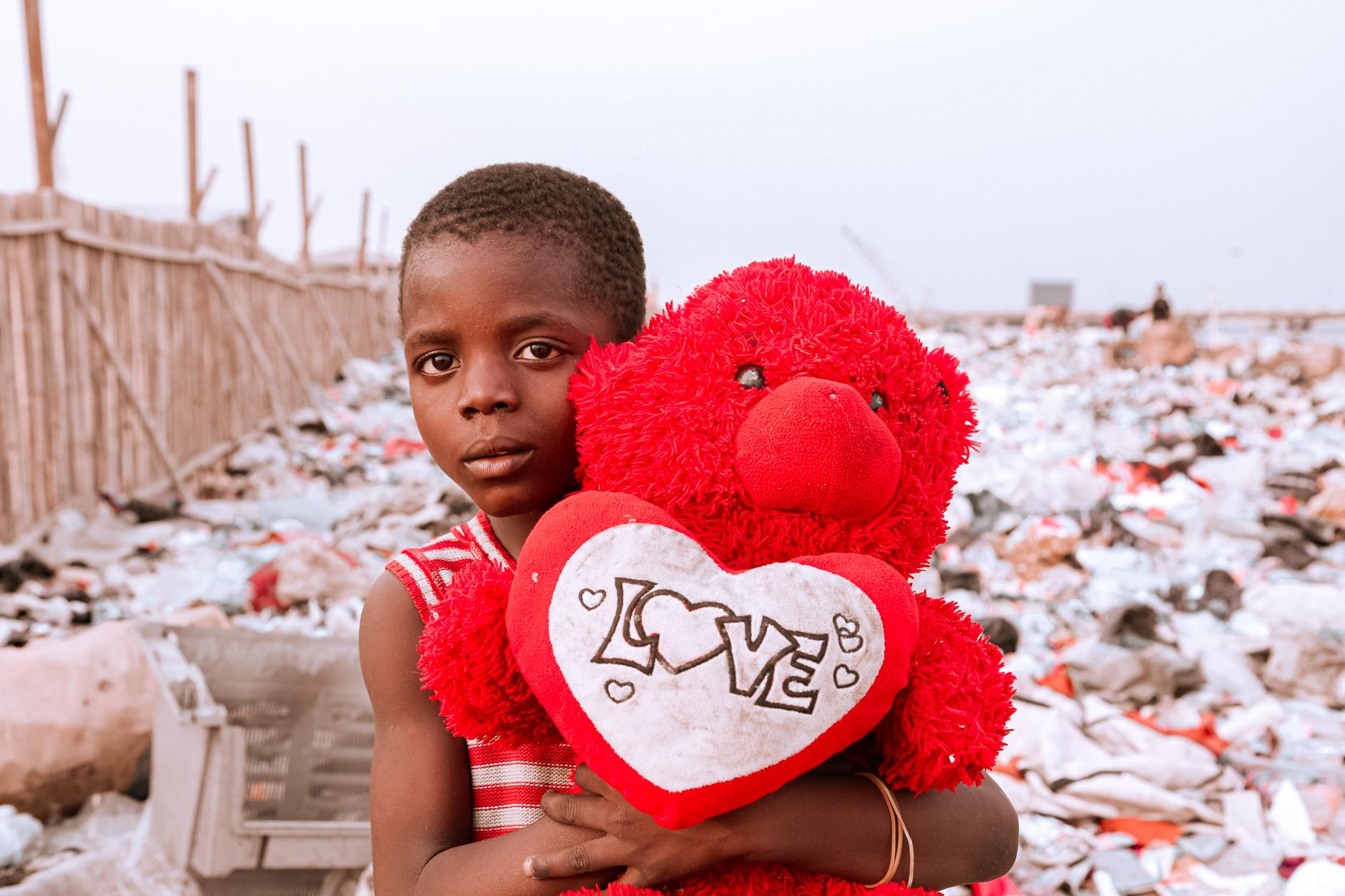
Mountains of discarded electronics stretch across the landscape.
Men, women and children search through toxic piles of broken computers, televisions and mobile phones looking for tiny fragments of copper, aluminium or gold that might earn enough money to buy food for another day.
Plastic insulation is burned to recover valuable metals.
Lead, mercury and countless other toxic substances seep into the soil and water.
Poisonous smoke fills the air.
People sacrifice their health—and sometimes their lives—for scraps that wealthier societies no longer want.
The same countries that supplied many of the raw materials are now asked to deal with much of the waste.
The same pattern repeats itself elsewhere.
Rivers are polluted by chemicals from textile production.
Oil spills poison coastlines.
Forests disappear to satisfy global demand.
Communities lose clean water so others can enjoy inexpensive products.
Children work where they should be learning.
Families survive on wages that would be unimaginable in the countries consuming the finished goods.
Good People in a Bad System
None of this is an accusation against ordinary people.
Most of us simply buy what is available in the shops. We did not create these supply chains. We did not design the monetary system that rewards the cheapest production regardless of the human or environmental cost.
We were born into it.
And perhaps that is why so many people feel powerless.
We recycle.
We donate.
We consume a little less.
These are good things.
But they only soften the symptoms.
They cannot solve a system whose primary objective is endless economic growth, continuous consumption and maximum financial return.
As long as profit remains the overriding objective, environmental destruction, inequality and exploitation are not unfortunate accidents.
They are predictable outcomes.
The Three Foundations
So why does this keep happening?
Why do resources flow in one direction while pollution and waste often flow back in the other?
Why do billions of people still struggle in a world that already possesses the knowledge, technology and productive capacity to provide everyone with a good life?
I believe the answer can be traced back to three foundations of our current civilisation.
Money.
Trade.
Ownership.
Together they determine who gains access to the world’s resources—not according to human need or what benefits humanity most, but according to purchasing power, financial return and private control.
Everything else follows naturally.
If cutting down a rainforest is profitable, it happens.
If producing disposable products increases sales, it happens.
If shipping electronic waste halfway around the world is cheaper than processing it responsibly, it happens.
The system is simply doing exactly what it was designed to do.
A Different Foundation
In the future world described in Waking Up, humanity has realized that these three foundations no longer served civilization.
Instead of endlessly trying to regulate a system that continuously recreated the same problems, humanity chose a different foundation altogether.
Money.
Trade.
Ownership.
They stepped away from all three.
Instead, humanity simply chose to optimize and share the Earth’s resources directly.
Not through markets.
Not through financial transactions.
Not through competition.
But through stewardship, collaboration and intelligent global coordination supported by artificial intelligence, robotics and sustainable technology.
The objective of civilisation changed completely.
No longer to maximise profit.
But to optimise the world.
Optimize human wellbeing.
Optimize the use of resources.
Optimize technology.
Optimize agriculture.
Optimize nature itself and our relationship with it.
Optimize the future for generations yet to come.
A World with Good Conscience
Once that became humanity’s shared purpose, everything else began to change.
Products were designed to last.
Waste became a valuable resource instead of a problem.
Pollution was designed out of the system rather than cleaned up afterwards.
Communities collaborated instead of competing.
The Earth’s abundance was managed for everyone instead of accumulated by a fortunate few.
No country needed to become rich at another country’s expense.
No child needed to search through toxic waste just to survive another day.
No river needed to be poisoned for the sake of quarterly profits.
No rainforest needed to disappear simply because it was financially profitable.
For the first time in history, humanity could truly live with a clear conscience.
Not because people had become poorer.
Not because they had learned to feel guilty about living well, or become good at suppressing their conscience..
But because they finally knew that their wellbeing no longer depended upon someone else’s suffering.
That is the civilization imagined in the book.
A world where humanity has finally understood that the greatest wealth on Earth is not money, trade or ownership.
It is the planet itself.
And our willingness to share it fairly.
An Impossible Dream
If this sounds like an impossible dream, you’re not alone.
Benjamin Michaels thought exactly the same.
In Waking Up: A Journey Towards a New Dawn for Humanity, the former billionaire awakens after one hundred years of cryonic sleep expecting to return to the world he once knew. Instead, he finds a civilization where the monetary system have become history, replaced by a society built on sharing, stewardship and the optimization of the world for everyone.
At first, he fights it.
Then he questions it.
Eventually, he begins to discover that perhaps humanity didn’t lose its civilization after all.
Perhaps it finally found it.
Leave a Reply