
Benedict Cumberbatch has a new documentary out called How to Live on Earth. It’s freely available on Youtube and It opens with a wonderfully simple observation:
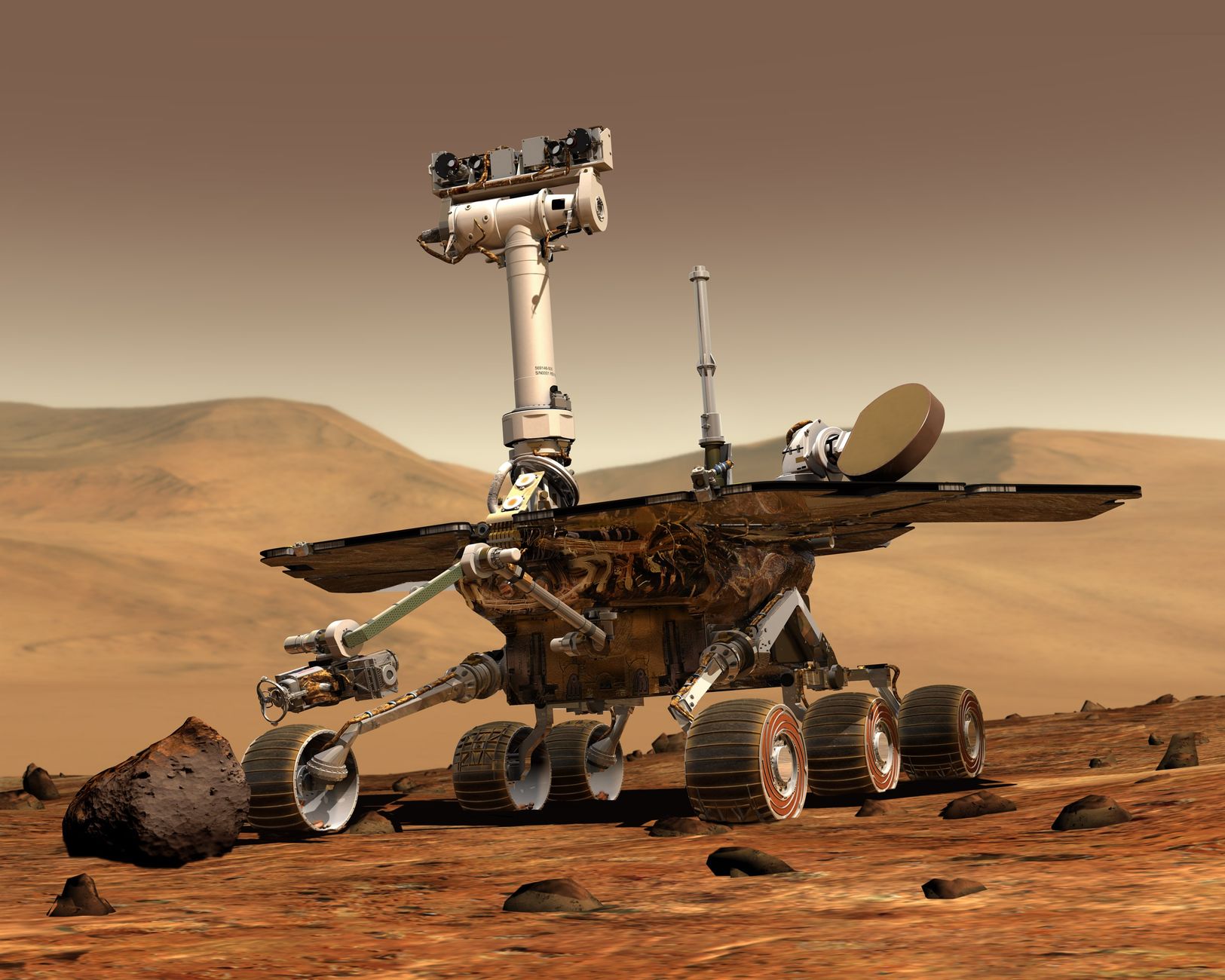
Some people have suggested that if things don’t work out here on Earth, we could live on Mars.
But Mars is horrible.
There’s no water, no atmosphere, no plants and no animals.
Not habitable, in other words.
Why would anyone want to live on Mars?
Here’s another idea:
How about we first figure out:
how to live on Earth?
Welcome to Earth’s greatest how-to video.
Something we have apparently only just discovered we need; A how-to video for Earth. There are how-to videos for everything. Finally we have one for Earth itself. I love that, even though I don’t agree with all the conclusions it makes.
The documentary is beautifully made with crisp colorful images from all over the world showing both the beauty and the environmental destruction that exists on our planet interspersed with interviews of natives, locals and experts.
Because after thousands of years of civilization, after splitting the atom, walking on the Moon, mapping the human genome and creating artificial intelligence, there is one rather fundamental thing Homo sapiens still hasn’t mastered:
How to live on and properly take care of the main planet we have.
And How to Live on Earth sets out to find some answers.
Not by dreaming about another planet, but by looking more carefully at this one.
It asks three deceptively simple questions:
How do we value nature?
How do we feed the future?
How do we feel human?
They sound like separate questions.
By the end, they don’t feel separate at all.
How to Value Nature
We have developed a rather peculiar way of valuing the world around us.
A forest standing peacefully may have relatively little monetary value to whoever owns it.
Cut it down and suddenly there is timber to sell.
A mountain may remain untouched for millions of years. Discover something valuable beneath it, tear it apart and financial economic value is created.
Fish swimming in an ocean contribute relatively little to our economy.
Catch them, process them, package them and sell them and suddenly they do.
For centuries we have become extraordinarily good at assigning monetary value to what we can extract from nature.
But what about what nature does simply by remaining alive?
A forest stores carbon, regulates water and provides habitat.
Wetlands absorb water and reduce flooding.
Healthy soil retains moisture, cycles nutrients and grows food.
Insects pollinate plants.
Countless organisms maintain ecosystems upon which human civilization ultimately depends.
All of this has value.
Enormous value.
True value.
But how much is it worth?
That question will become important later.
How to Feed the Future
The documentary then turns to something even more fundamental.
Food.
How do we feed billions of human beings without progressively destroying the systems that produce that food?
Industrial agriculture has given humanity extraordinary productive capacity, but monocultures, soil degradation, habitat destruction and resource-intensive food production have also imposed enormous costs on the living world. The film continues with showing how they in China have started to manually pollinate pear trees because the bees that used to do the job for free has disappeared. It’s very time consuming and costly.
Onwards, the film explores regenerative farming, changing what we eat, reducing our dependence on resource-intensive meat production and developing alternatives such as proteins made from mycelium, insects and the sun itself.
But one of the examples that stayed with me most comes from Sumatra.
There, children are learning how to create biodiversity directly.
Instead of treating agriculture as a battle in which nature must be cleared away so that a single monocrop can dominate, they are learning to create permaculture gardens and food forests.
Many species grow together.
Humans can eat from them.
Wildlife can eat from them.
Villagers can harvest a much wider variety of useful products than they could from a monoculture.
And orangutans are returning.
There is something wonderfully simple about this.
Nobody needs to choose between feeding human beings and protecting nature.
The objective becomes allowing both to thrive.
The villagers can, of course, sell what they harvest. They still live inside a monetary society and need incomes like everyone else.
Nothing wrong with that.
But money isn’t what makes the food forest work.
Soil does.
Water does.
Plants do.
Insects do.
People do.
Orangutans do.
Life does.
And perhaps those children are learning something much more important than agriculture.
They are learning how to live on Earth.
How to Feel Human
Then comes perhaps the most beautiful of the documentary’s three questions.
How do we feel human?
The answer leads us back to nature again.
Trees in cities.
Gardens.
Parks.
Green buildings.
Places where people can walk, sit, play and breathe among other living things.
We increasingly discover that contact with nature matters deeply to human well-being.
Perhaps we shouldn’t be surprised.
For almost our entire evolutionary history, nature wasn’t something we visited.
It was home.
We didn’t evolve next to nature.
We evolved inside it.
Our bodies are made from the same elements as everything around us.
We breathe oxygen produced by living systems.
We drink water circulating through the planet.
Everything we eat ultimately comes from the Earth.
We did not arrive here from somewhere else.
We are nature.
Which brings us back to that first question.
How do we value it?
Bankable Nature
One of the documentary’s answers is ingenious and clever.
If our economic system makes destroying nature profitable, perhaps we can reverse the incentive.
The proposed mechanism is called a Natural Asset Company, or NAC. An ecosystem—such as a forest, wetland or other natural area—is placed under the stewardship of a company. The ecological services it provides are given an estimated monetary value, shares in the company can then be sold to investors, and the capital raised is used to protect and restore the ecosystem.
In other words, the idea is to make nature itself an investable asset.
Make preserving nature profitable.
Nature performs an almost unimaginable amount of useful work.
Forests store carbon. Wetlands control water. Soil produces food. Ecosystems maintain biodiversity.
Economists can attempt to calculate the monetary value of these services.
And from this comes the idea of the Natural Asset Company, or NAC.
Large areas of natural value can be represented through companies.
Shares can be issued.
Investors can put money into those companies.
Capital can flow toward protecting and restoring ecosystems instead of destroying them.
In effect:
If greed helped destroy nature, perhaps greed can be harnessed to save it.
I understand the idea.
It may even sound glorious on paper.
Changing Our Mindset
But the more I thought about it, the more something bothered me.
We haven’t actually changed the way we think.
We have found another way of monetizing nature.
ROI
Investors expect something.
ROI.
Return on Investment.
You put money into something because eventually you expect more money back.
Some Natural Asset Companies could generate some conventional income. Ecotourism perhaps. Sustainable agricultural products. Carbon credits. Biodiversity credits. Payments for ecosystem services.
But much of the supposed monetary value of an ecosystem isn’t actually being sold.
A wetland may perform immensely valuable ecological functions while generating very little cash.
So we attempt to calculate what those functions are worth.
We translate them into economic value.
Economic value becomes share capital.
Investors buy shares.
And if those shares appreciate, they may eventually be sold to another investor for more money.
Look at what has happened.
Nature → estimated economic value → financial asset → shares → money.
Nature has been financialized.
Again.
The method has changed.
The mindset hasn’t.
The Universal Asset Fund
Perhaps we should take the idea to its logical conclusion.
How much is the universe worth?
A quadrillion dollars?
A quintillion?
Let’s calculate it.
The Sun must be extraordinarily valuable. Without it, virtually every ecosystem on Earth collapses.
The Moon provides useful tidal services.
The atmosphere provides oxygen.
Gravity performs an invaluable service by preventing us from floating into space.
So let’s calculate the combined monetary value of everything and establish the Universal Asset Fund — UAF.
You can buy shares.
The money raised will be distributed to the Earth, Moon and Sun so they can continue operating and producing value for the fund.
Naturally, we will need performance targets.
The Sun should continue producing approximately the agreed amount of sunlight.
The Moon will remain responsible for tidal services.
Earth should maintain acceptable atmospheric conditions.
And the universe will be expected to maintain existence.
If everything performs well, the intrinsic value of the Universal Asset Fund should increase.
Your shares may appreciate.
You can then sell them to another investor, realize your return in dollars, euros or yen and buy yourself a new car.
Or perhaps a robot.
Ridiculous?
Of course.
The universe doesn’t need a fund.
Neither does the Sun.
Neither does oxygen.
And nature doesn’t need a stock price before it becomes valuable.
What Is Oxygen Worth?
Seriously.
How much is oxygen worth?
Ten trillion dollars?
A hundred trillion?
A quadrillion?
Pick a number.
Nothing about oxygen changes.
Take oxygen away, however, and something rather interesting happens.
Money becomes irrelevant.
The banks can remain open.
The stock markets can continue displaying numbers.
Every billionaire can retain every dollar in every account.
It won’t matter.
Because the civilization using the money will disappear.
And perhaps this reveals the fundamental mistake.
Money may be extraordinarily powerful inside the human system we created.
But it is completely irrelevant to the physical processes upon which that system depends.
The forest doesn’t care about dollars.
Soil doesn’t respond to stock prices.
Orangutans don’t reproduce because biodiversity credits appreciate.
Rain doesn’t fall because somebody calculated its economic value.
Nature operates in physical reality.
So do we.
The Monetary Mindset
Money began as a tool.
But over thousands of years it became something much larger.
It became a way of seeing.
What can I own?
What can I sell?
What can I extract?
What is my return?
What is it worth?
A forest became timber.
Land became real estate.
Minerals became commodities.
Fish became catch.
Oil became reserves.
Nature became assets.
And enormous advantages accumulated to those who controlled those assets.
This way of thinking has helped transform the planet.
Now we are confronting the consequences.
Forests disappearing.
Habitats fragmented.
Species vanishing.
Oceans depleted.
Soils deteriorating.
A destabilizing climate.
And one proposed answer is to extend the same language even further.
Natural capital.
Natural assets.
Financial valuation.
Investment.
Shares.
ROI.
Maybe we should ask whether this is really the transformation we need.
Finding new ways of monetizing nature is not the way to save nature.
Perhaps the deeper task is to stop looking at nature through money.
Think Like an Elephant
An elephant doesn’t know what money is.
Neither does a newborn baby.
Neither understands investment, interest, ownership, assets or financial returns.
But both understand what actually matters.
Food.
Air.
Water.
Warmth.
Safety.
Relationship.
An elephant doesn’t know the market value of a watering hole.
It knows thirst.
A baby doesn’t know the price of milk.
It knows hunger.
A child doesn’t need a financial incentive to play.
And perhaps there is wisdom in that simplicity.
What if instead of teaching ourselves increasingly sophisticated ways of putting prices on the world, we trained ourselves to experience its real value again?
Take off your shoes.
Walk through the grass.
Eat a tomato.
Watch an elephant.
Listen to birds returning to a forest.
Feel sunlight on your face.
None of these things requires a financial valuation.
They require something much simpler:
Attention.
Pay Attention
We say pay attention. Maybe that is our true currency? Attention. And what we pay attention to is what we get more of. Pay attention to money and money may increase. Pay attention to the natural world around us and our joy of being in it may increase. The beauty of attention is that it is not a currency we rely on a central bank to create. We all have it within us already. We just need to use it. And the more we use it, the more we can create for everyone. Because it doesn’t run out. We control it through our choices. Choose to pay attention to whatever you like, and that will grow in your world.
Calculation in Kind
Abandoning monetary thinking doesn’t mean abandoning calculation.
Quite the opposite.
We need to calculate what actually matters.
How much food can this land sustainably produce?
How many people can it feed?
How much water is available?
How much energy do we need?
How much renewable energy can we produce?
How healthy is the soil?
How much material do we have?
How much carbon is the forest absorbing?
Which species are returning?
What does an ecosystem need in order to regenerate?
What do human beings actually need to live good lives?
Tonnes.
Litres.
Kilowatt-hours.
Hectares.
Calories.
Nutrients.
Materials.
Energy.
Time.
Those are physical realities.
We can calculate them directly.
We don’t eat money.
We eat food.
We don’t drink economic value.
We drink water.
We don’t breathe GDP.
We breathe air.
Perhaps the greatest how-to video on Earth has been pointing toward something remarkably simple all along:
Pay attention to what actually matters.
True Value
And then there is value that cannot meaningfully be calculated at all.
The joy of eating those vegetables.
The pleasure of walking barefoot in the grass.
Watching an orangutan swing through a restored forest.
Swimming in a clean river.
Hearing birds in the morning.
Playing with your children.
Making something.
Loving someone.
Being alive.
How much is any of that worth?
The question itself becomes ridiculous.
Perhaps some things aren’t priceless because we haven’t yet developed sophisticated enough economic models to calculate their correct price.
Perhaps they’re priceless because price has nothing to do with their value.
Four Chapters
Near the end of the documentary, Cumberbatch takes an enormous step backwards and looks at the whole story of Earth.
He describes it in four chapters.
Chapter One
Earth before life.
Chapter Two
Life appears and evolves into the extraordinary living world around us.
Chapter Three
Intelligent life appears.
That intelligence becomes incredibly powerful.
It develops agriculture, cities, industry, science and technology. Eventually it becomes capable of transforming the entire planet.
Unfortunately, it also becomes capable of threatening the living systems upon which it depends.
That is where we are now.
Chapter Four
A time when intelligent life finally learns how to become a positive force on its planet.
I love that idea.
But it leaves us with one final question.
What would make us a positive force?
More cleverness?
Or true wisdom?
The Wise Human
Homo sapiens is usually translated as wise human.
We have demonstrated intelligence beyond question.
But perhaps wisdom looks different.
Maybe Chapter Four doesn’t begin when we finally calculate the correct monetary value of every forest, river, wetland and species on Earth.
Maybe it begins when we understand that they never needed a monetary value in the first place.
Maybe it begins when a child in Sumatra learns to grow food in a way that also gives an orangutan somewhere to live.
When we measure what needs measuring.
Food.
Water.
Energy.
Resources.
Ecological health.
Human needs.
And stop trying to measure what cannot meaningfully be measured.
Wonder.
Beauty.
Love.
Belonging.
Joy.
Life.
Perhaps the transition from Chapter Three to Chapter Four is ultimately a transition from price to true value.
From extraction to regeneration.
From ownership to relationship and stewardship.
From financial accumulation to abundance of life.
From asking:
What can I get from this?
to asking:
How can all of this thrive?
How to Live on Earth
And so we arrive back where Cumberbatch started.
How do we live on Earth?
Perhaps we have made the answer far more complicated than it needs to be.
Understand what we actually need.
Understand what the Earth can sustainably provide.
Use our extraordinary science and technology to bring those two things together.
Feed everyone.
House everyone.
Restore forests.
Regenerate soils.
Protect oceans.
Bring wildlife back.
Create beautiful places to live.
Reduce the amount of unnecessary work human beings have to do.
And leave enough space for the rest of life to flourish too.
Then stop trying to put a price on everything, and simply enjoy what no balance sheet could ever measure:
Joy and love.
Enjoy it.
Eat the food.
Swim in the sea.
Watch the orangutans.
Love someone.
Make something.
Take off your shoes.
Feel the grass.
Look around.
This is home.
Perhaps that is Chapter Four.
Perhaps that is what Homo sapiens was supposed to mean all along.
And what might Chapter Four actually look like?
That is the world explored in Waking Up— A journey towards a new dawn for humanity. A future seen through the eyes of Benjamin Michaels, a bewildered billionaire from our time who wakes up a century later to discover that humanity has finally learned how to live on Earth.
Not perfectly. Not without challenges of course. But without money, without ownership of the Earth’s resources, and without the need to turn nature into a financial asset before deciding it is worth anything.
Perhaps the future begins with something as simple as imagining it as a drastically different world from today?
Leave a Reply