
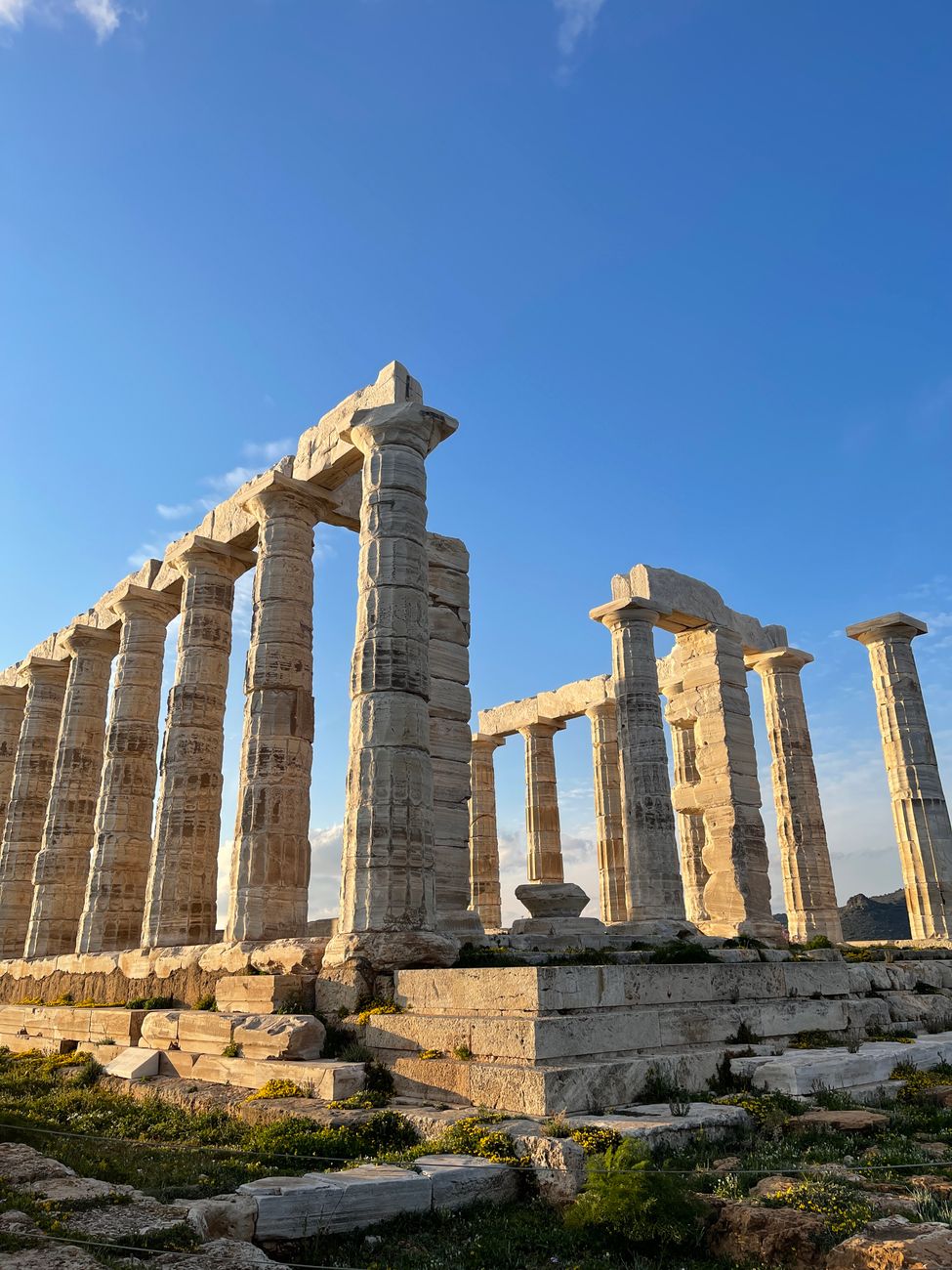
Most great civilizations in history has been temporary.
The Egyptians believed their civilization would endure forever. The Romans thought the same. So did countless kingdoms, empires, and nations throughout history.
Yet most of them eventually declined, fragmented, or disappeared.
Perhaps the most dangerous assumption we make today is that our own civilization is somehow different.
We tend to think of modern civilization as permanent. Money and ownership has lasted for generations and seem to last forever.
But will it?
Our economic system depends on endless growth on a finite planet. Our political systems struggle to solve increasingly global problems. Our industries consume resources faster than nature can regenerate them. Climate change, ecological degradation, resource depletion, and geopolitical tensions all raise an uncomfortable question:
Are we building a civilization that can last?
Or are we simply living in the latest chapter of another temporary one?
The First Permanent Civilization
For the first time in history, humanity possesses something no previous civilization ever had.
A full global view.
We can communicate instantly across continents. We can monitor weather systems from space. We can track resources, production, transportation, and consumption in real time. Artificial intelligence is rapidly increasing our ability to understand complex systems and coordinate information.
The technical ability to manage a global civilization is already here.
The challenge is no longer primarily technological.
It is human.
The question is not whether we can coordinate.
The question is: coordinate toward what?
Defining Success
Before we can create a permanent civilization, we must decide what success actually means.
Do we want everyone to have access to food, water, shelter, healthcare, and education?
Do we want to preserve the ecosystems that support life?
Do we want future generations to inherit a thriving planet?
Do we want to reduce unnecessary suffering?
Do we want peace and cooperation to become easier than conflict and competition?
Most people, regardless of nationality, religion, or political belief, would probably answer yes to all these questions.
Perhaps humanity already agrees on far more than we think.
Our disagreements often concern methods rather than goals.
And perhaps the greatest challenge facing humanity is not a lack of technology, resources, or intelligence.
Perhaps it is simply that we have never clearly defined what success for humanity actually looks like.
Human Hubris
But even if we solve our environmental and economic challenges, another question remains.
What about us?
History is filled with examples of civilizations that were not destroyed by a lack of resources, but by arrogance, corruption, tribalism, greed, and the concentration of power.
The Romans had resources.
Many empires possessed advanced technologies for their time.
What often failed was not the physical system, but the people operating within it.
This does not mean human beings are flawed beyond repair.
It simply means that human beings are human.
A permanent civilization cannot depend upon perfect people alone.
It must be designed to remain healthy despite imperfect people.
The goal is not to eliminate human hubris.
The goal is to prevent hubris from gaining enough influence to threaten the entire civilization.
Decentralized but Coordinated
This may be one of the most important lessons humanity has yet to learn.
Power concentrated in one ruler, one party, one corporation, one ideology, or one elite group eventually creates risks for everyone.
The larger the concentration of power, the larger the consequences when mistakes are made.
A permanent civilization would likely require a different approach.
Not centralized control.
Not chaos.
But decentralized management combined with global coordination.
Local communities understand local needs.
Regions understand regional challenges.
At the same time, humanity increasingly possesses the ability to coordinate knowledge, resources, and information globally.
A neighborhood can make decisions about its own affairs.
A region can manage its own resources.
A global network can provide information about planetary systems, resource availability, ecological impacts, and long-term consequences.
The result is neither a world government nor a collection of isolated groups.
It becomes a living network.
A civilization where decisions are made at the lowest practical level while knowledge is shared at the highest possible level.
Councils Instead of Rulers
If humanity wishes to create a civilization that lasts for centuries or millennia, we may need to move beyond the ancient model of rulers.
The challenge is not finding the perfect king, president, emperor, billionaire, or political party.
Humanity has spent thousands of years trying that approach.
The challenge is designing systems that remain stable and flexible regardless of who occupies a particular position.
One possible path is a network of councils operating at neighborhood, community, regional, national, and global levels.
Not rulers.
But
Direct democracy.
Collaborators.
Stewards.
Combined with transparent information systems and advanced AI capable of analyzing consequences and identifying risks, such a structure could provide continuous feedback and self-correction.
Humans would continue to provide wisdom, creativity, compassion, and values.
AI would provide analysis, memory, modeling, and perspective.
Together they would create a civilization that learns rather than commands.
The Great Awakening
Yet no system alone can guarantee permanence. A permanent civilization ultimately requires something deeper.
A shift in consciousness.
Not necessarily toward a particular religion, ideology, or belief system.
But toward a broader understanding of who we are.
For most of history, survival encouraged us to think in terms of tribes, nations, classes, religions, and competing groups. Money, ownership and property was inherited through generations.
Conscious Awareness
Perhaps the next stage of civilization requires us to think as one human family. And create a new form of inheritance. An inheritance where conscious awareness is inherited. The conscious awareness that we are one global family trying our best to survive on this planet forever.
Not because we become identical.
Not because we lose our individuality.
But because we recognize our shared destiny.
The atmosphere belongs to all of us.
The oceans belong to all of us.
The land belong to all of us.
The future belongs to all of us.
A civilization that intends to last forever must care about people it will never meet and generations not yet born.
Self-Correction, Not Perfection
Perhaps the secret of a permanent civilization is not perfection.
Perfection does not exist.
Perhaps the secret is simply self-correction.
A civilization humble enough to admit mistakes.
Wise enough to learn from them.
Flexible enough to change before those mistakes become fatal.
A civilization that never assumes it has reached the end of history.
A civilization that understands it is always evolving.
Because the moment a civilization believes it has become perfect, it stops learning.
And the moment it stops learning, decline begins.
The Balanced Civilization
The permanent civilization may not be humanity’s most powerful civilization.
It may be humanity’s most balanced civilization.
A civilization where power is distributed, knowledge is shared, resources are managed intelligently, and no individual or institution can accumulate enough influence to threaten the whole.
A civilization based on stewardship rather than ownership.
Collaboration rather than domination.
Long-term thinking rather than short-term gain.
Perhaps humanity’s greatest achievement will not be artificial intelligence, fusion power, space travel, or even reaching the stars.
Perhaps our greatest achievement will be creating the first civilization in history that can truly go on forever.
A civilization capable of enduring not merely for centuries, but for countless generations to come.
The Permanent Civilization.
A civilization designed not simply to survive.
But to thrive.
Forever.
⸻
In the novel Waking Up: A Journey Towards a New Dawn for Humanity, humanity has just made this transition and discovered what becomes possible when we begin to see ourselves as one global family.
The bewildered billionaire Benjamin Michaels wakes up in this future after 100 years of cryonic sleep. He was trying to escape his cancer in 2015, and hoped to wake up again continuing the expansion of his empire. Imagine his surprise when there is no money in the world anymore…
You can discover his whole story here if you like.
If this vision resonates with you, please share this article. The conversation about humanity’s future belongs to all of us.
Leave a Reply