
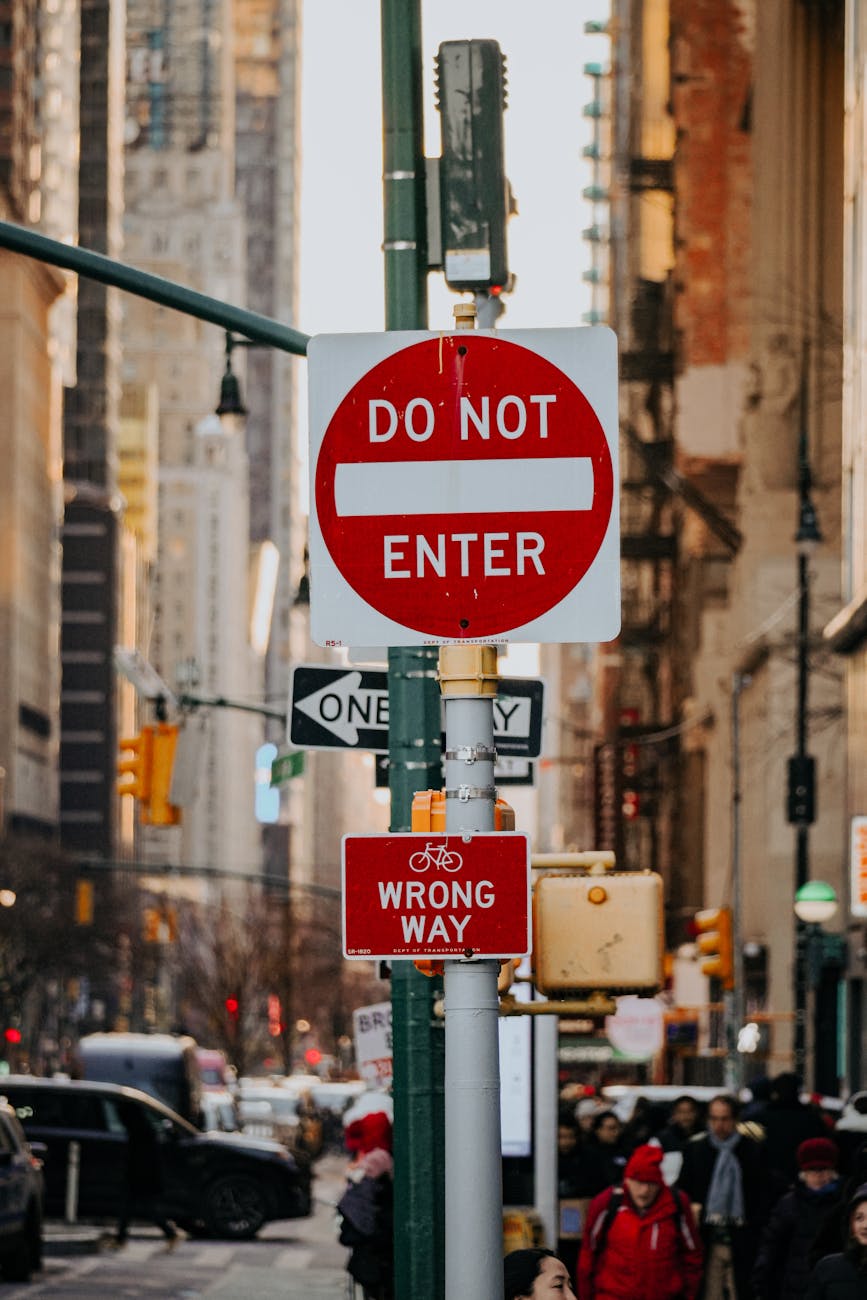
Why is everything so backwards?
I have wondered about this my entire life.
Why do we pollute the planet we live on? Why do we burn immense amounts of fossil fuels even when we know the consequences? Why are there so many wars and conflicts? Why do we make products designed to break instead of last? Why are so many people trapped in jobs they do not actually care about?
These questions started to bother me already as a child.
When I was around fourteen years old, I had become deeply concerned about our world and the environment. In Norway, I had two years left before I was legally allowed to drive a small motorcycle or moped. I remember thinking:
“Surely, by the time I’m sixteen, all mopeds will be electric.”
It seemed obvious to me.
If gasoline polluted the air and damaged the planet, then surely society would naturally move toward cleaner technology as fast as possible.
Two years later I bought a used gasoline moped.
Nothing had changed.
That realization stayed with me.
Because I had assumed society would make the most logical, rational and educated choices.
But over time I began to realize something strange:
Society is not primarily organized around what is most logical, healthy, sustainable, or meaningful.
It is organized around what keeps the current system running.
Survival systems
Most of humanity’s systems were not created from a calm, intelligent drawing board where humanity collectively asked:
“What kind of world would create the best life for everyone and for the planet itself?”
Instead, our systems evolved out of survival.
Scarcity.
Fear.
Competition.
Control.
For thousands of years, survival often depended on controlling land, food, labor, energy, and resources. From this came kingdoms, empires, ownership systems, borders, armies, trade systems, and eventually the modern monetary system.
None of this necessarily happened because humanity was evil. Or because of “human nature”.
It happened because humanity was trying to survive.
But survival systems have momentum.
And once giant systems like today’s monetary system are established, they tend to continue even after humanity has technologically outgrown many of the original limitations.
Today we have enough technology and food to feed everyone.
We can desalinate water.
We can automate enormous amounts of labor.
We can coordinate globally.
We can (actually) build products that last.
We can produce renewable energy.
We can even use AI to optimize logistics and resource management.
Yet much of the system still rewards:
- short-term profit over long-term responsibility,
- extraction over regeneration,
- endless growth over balance,
- competition over cooperation,
- and planned obsolescence over durability.
The result is a civilization that often feels upside down and backwards.
Passion vs. Survival
As I grew older, another contradiction became obvious.
I was a drummer.
What I really wanted was to play music.
But music did not reliably pay the bills.
So instead, like millions of people around the world, I searched for jobs that could generate the most money in the shortest amount of time. Because I didn’t want to waste my time selling it hour by hour to a meaningless job. I wanted to make music. So I aimed for least work for the most pay.
Mostly sales.
Ironically, I was actually quite good at it.
But I hated it.
And that raises another strange question:
Why are so many people spending their lives doing things they do not truly care about simply because those activities generate money? The answer is obvious of course: We are trapped in this system. We need money and must often do things we don’t really care about to get it.
How many musicians became salesmen?
How many artists became marketers?
How many inventors became exhausted office workers?
How many people quietly buried what they loved simply to survive?
That is one of the most backwards aspects of the modern world.
The activities that often give human beings the deepest meaning — art, music, care, creativity, connection, beauty — are frequently valued less economically than activities focused primarily on moving money around, and that doesn’t really create anything.
People end up trapped between:
“What gives me life?”
and:
“What allows me to survive?”
Then came the biggest question
Eventually I started asking something even deeper:
What actually is money? Where does it come from?
As a child, money felt almost mystical.
You imagine it as something solid and real.
Something earned.
Something stored somewhere.
Then one day you shockingly discover that most modern money is actually created through debt. From nothing.
Banks issue loans from keystrokes, and new money enters circulation.
That realization changed everything for me.
Not because I suddenly wanted to become a banker.
Quite the opposite.
I began wondering:
How can ordinary people spend their entire lives working stressful jobs for money while large amounts of money itself can effectively be created from nothing through accounting systems?
And on top of that, this newly created money is lent out with interest attached to it.
The more I thought about it, the stranger it all became.
Because if most money enters society as debt, then the system itself requires endless repayment, endless growth, endless economic expansion. And this expansion is reflected in the real world where more resources constantly has to be exploited and extracted.
The machine must constantly keep moving. And that’s where we find ourselves today. Prisoners in a prison of debt. A money system based on money that we lended to ourselves. With interest.
Produce. Consume. Lend. Borrow. Repay. Grow. Repeat.
Suddenly many things that once looked irrational started making systemic sense.
Why endless growth? Why constant pressure? Why burnout? Why environmental destruction? Why products designed to break? Why constant competition?
Because the system itself depends on perpetual growth.
The backwards incentives
This does not mean all bankers are evil.
It does not mean all businesses are bad.
It does not mean humanity is hopeless.
In fact, humanity also creates extraordinary beautiful things:
music,
medicine,
science,
friendship,
art,
compassion,
rescue systems,
healing,
reforestation,
cooperation,
and acts of incredible kindness.
The problem is not humanity itself.
The problem is that we live in an outdated system that was designed for scarcity and often incentivize behavior that conflicts with our deeper human values.
A system built around monetary growth will naturally reward monetary growth.
Even when growth becomes destructive.
A system built around scarcity will naturally create competition.
Even when abundance is technologically possible.
A system built around ownership accumulation will naturally concentrate power and resources.
Even when humanity has more than enough for everyone.
And perhaps that is why so many people quietly feel that something is fundamentally off.
Because deep down, many human beings instinctively understand that civilization should be organized around life itself.
Not merely around financial expansion.
Maybe we are Transitional
Humanity is not evil.
Perhaps we are simply a transitional civilization.
A species powerful enough to build global technological systems…
but only now beginning to seriously question what those systems are actually for.
Maybe future generations will look back at our era with disbelief.
They may wonder why we poisoned ecosystems for profit.
Why we allowed poverty and hunger in a world of abundance.
Why we burned out millions of people doing meaningless work.
Why we designed economies around endless consumption on a finite planet.
And maybe they will also see this period differently than we do now.
Not as the final form of civilization.
But as the painful, chaotic transition between survival-based systems…
and a truly mature civilization.
Humanity is Waking Up
Despite everything, there are signs everywhere.
Renewable energy.
Reforestation projects.
Technological cooperation.
Growing systemic awareness.
Questions about ownership, sustainability, purpose, and meaning.
More and more people are beginning to ask the same question:
“Why is everything so backwards?”
And maybe that question itself is the beginning of humanity waking up.
Discover the Story
These questions and ideas became the foundation for my novel, Waking Up – A Journey Towards a New Dawn for Humanity.
The story follows Benjamin Michaels, a former billionaire dying from cancer in 2015 who chooses cryonic preservation and wakes up one hundred years later into a completely transformed world — a world where humanity has moved beyond money, scarcity thinking, and the systems that once divided people.
What he discovers forces him to question everything he thought civilization was. Want to see what he discovers? If so, you can:
And if this article resonstes with you, I ask you to share it.
Because the only way we can give our children and future generations a chance is if we ourselves wake up today and see the possibility of this future that works for all…
Leave a Reply