
This is a continuation of the conversation about a revolution of humanity.
But before we go further, it’s worth pausing for a simple question:
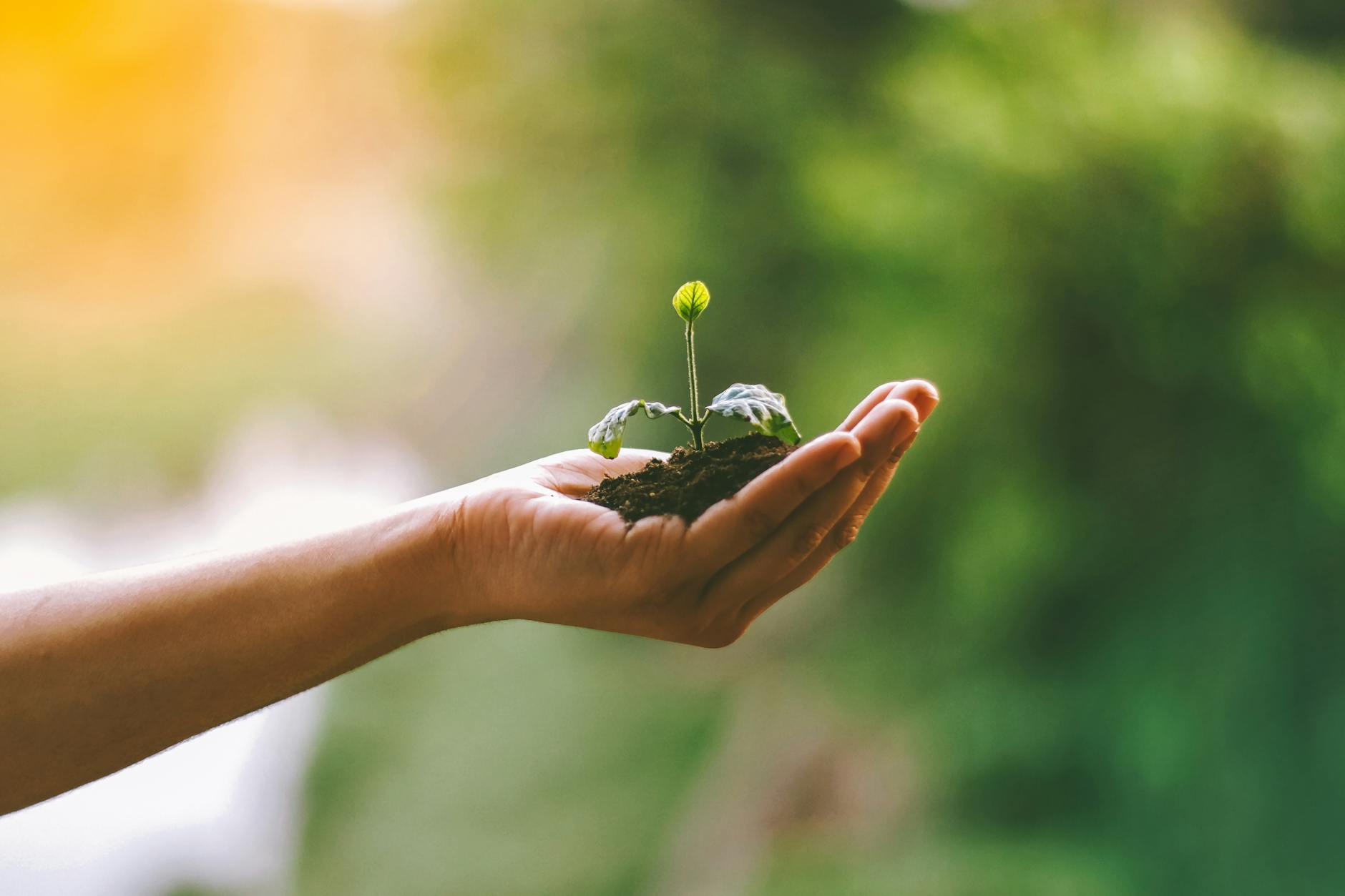
What is actually stewardship?
By definition stewardship is a practice committed to ethical value that embodies the responsible planning and management of resources. It can apply to the environment and nature, economics, health, places, property, information, and cultural resources.
The Humanitary System
Notice the word responsible.
It is something our monetary system is not—arguably one of the most irresponsible systems ever invented. That brings us back to the humanitary system, the system mentioned in an earlier article. The irresponsible monetary system is built on ownership, while the responsible humanitary system is built on stewardship.
Because if we are serious about creating a new world—one not driven by money—we cannot stop at only removing money itself.
We must also rethink ownership.
Because without money, there is nothing to buy and sell.
And if nothing can be bought or sold, the idea of ownership as we know it begins to lose its meaning.
So the question becomes:
What replaces ownership?
This is where stewardship enters—not as an abstract ideal, but as a practical alternative.
Instead of asking who owns something, we ask who takes care of it.
Instead of control, we focus on responsibility.
Instead of exclusion, we move toward access and use.
And once you look at the world through that lens, something interesting happens.
Because perhaps the shift we are talking about is not as distant as it seems.
Perhaps it is already here—quietly, partially, and waiting to be recognized.
We have already done it.
The Places We Do Not Own
We have already declared the Moon beyond ownership—through an agreement that no nation can claim it, no flag can make it property, and no one can own a piece of it simply by arriving first. It belongs, in principle, to all of humanity.
We have already set aside an entire continent—Antarctica—for cooperation, where territorial claims are frozen, no military activity is allowed, and nations work together in research rather than competing for control or resources.
We already share the air, the oceans, and even the space above our heads.
Stewardship is not a stranger to humanity.
We just apply it selectively.
⸻
Beyond our atmosphere, humanity made a quiet but profound decision. Through the Outer Space Treaty, no nation may claim the Moon, the planets, or the Sun. The entire solar system, at least in principle, was set aside as something no one can own.
Even within our everyday world, we find variations of the same idea. In Greenland, you can own your home, but not the land beneath it. The land itself remains held in common, allocated for use rather than possession.
And above us, circling Earth, the International Space Station operates as a shared human endeavor. Built and maintained by multiple nations, it functions without a single owner, sustained by cooperation rather than control.
⸻
The Commons We Depend On
Some of the most essential systems in our lives are already beyond ownership.
No one owns the air.
No one owns the rain.
No one owns the high seas.
These are not abstract ideas. They are practical realities. The atmosphere sustains every breath we take. The oceans regulate our climate and connect our world. They are governed, managed, and sometimes contested—but fundamentally, they are not owned in the way land is owned.
When something becomes too vast, too essential, or too interconnected, ownership begins to break down.
⸻
A Pattern Hiding in Plain Sight
If we step back, a pattern emerges.
We choose stewardship over ownership when:
• The stakes are global
• Conflict would be catastrophic
• Cooperation is simply more effective
We have already applied this logic to space, to a continent, to the systems that sustain life itself.
Not everywhere. But enough to prove that the idea is not foreign to us.
⸻
The Question We Avoid
If we can do this for the Moon…
If we can do this for Antarctica…
If we can do this for the air we breathe and the oceans that surround us…
Why not here?
Why do we accept stewardship in the places that are most obviously shared…
But cling to ownership in the one place where we are all equally dependent?
⸻
Not a New Idea
This is not about inventing something new.
It is about recognizing something we already practice.
Stewardship is not a stranger to humanity.
It is a principle we return to when the alternative no longer makes sense.
The real question is not whether it works.
The real question is where—and when—we are willing to apply it next.
⸻
A Story From the Future
In Waking Up – A Journey Towards a New Dawn for Humanity, Benjamin Michaels wakes into a world where this choice has already been made.
A world where the Earth’s resources are no longer owned, but stewarded.
Where humanity has chosen cooperation over competition—not as an ideal, but as a practical necessity.
It is not presented as a theory.
It is simply life, once we decide to make it so.
If this perspective resonates, please share this article. Thank you.
Leave a Reply