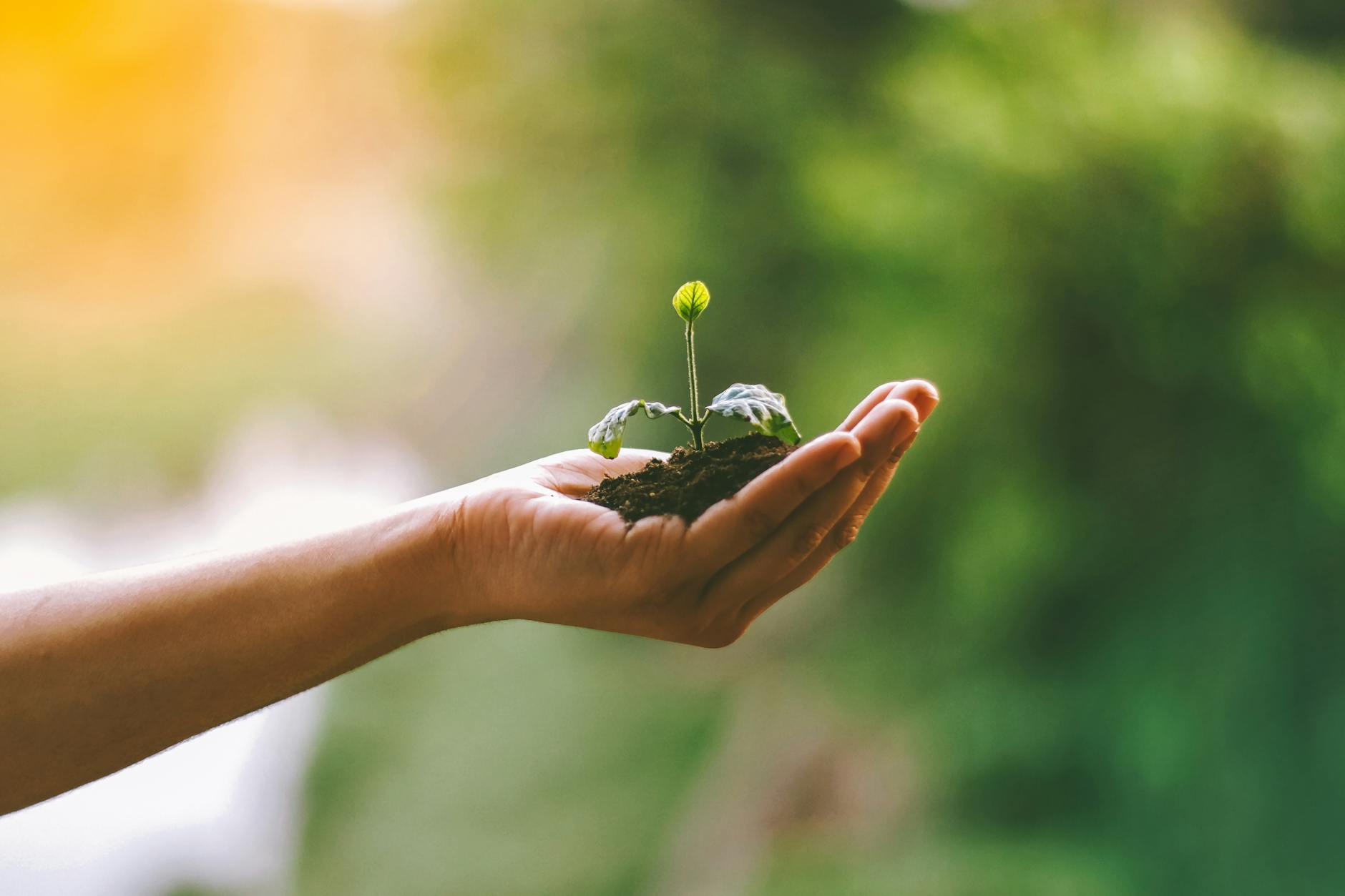
Tag: OWNERSHIP

  • Stewardship Is Not a Stranger

    Stewardship Is Not a Stranger

    This is a continuation of the conversation about a revolution of humanity.

    But before we go further, it’s worth pausing for a simple question:

    What is actually stewardship?

    By definition stewardship is a practice committed to ethical value that embodies the responsible planning and management of resources. It can apply to the environment and nature, economics, health, places, property, information, and cultural resources.

    The Humanitary System

    Notice the word responsible.
    It is something our monetary system is not—arguably one of the most irresponsible systems ever invented. That brings us back to the humanitary system, the system mentioned in an earlier article. The irresponsible monetary system is built on ownership, while the responsible humanitary system is built on stewardship.

    Because if we are serious about creating a new world—one not driven by money—we cannot stop at only removing money itself.

    We must also rethink ownership.

    Because without money, there is nothing to buy and sell.
    And if nothing can be bought or sold, the idea of ownership as we know it begins to lose its meaning.

    So the question becomes:
    What replaces ownership?

    This is where stewardship enters—not as an abstract ideal, but as a practical alternative.

    Instead of asking who owns something, we ask who takes care of it.
    Instead of control, we focus on responsibility.
    Instead of exclusion, we move toward access and use.

    And once you look at the world through that lens, something interesting happens.

    Because perhaps the shift we are talking about is not as distant as it seems.

    Perhaps it is already here—quietly, partially, and waiting to be recognized.

    We have already done it.

    The Places We Do Not Own

    We have already declared the Moon beyond ownership—through an agreement that no nation can claim it, no flag can make it property, and no one can own a piece of it simply by arriving first. It belongs, in principle, to all of humanity.
    We have already set aside an entire continent—Antarctica—for cooperation, where territorial claims are frozen, no military activity is allowed, and nations work together in research rather than competing for control or resources.
    We already share the air, the oceans, and even the space above our heads.

    Stewardship is not a stranger to humanity.
    We just apply it selectively.

    Beyond our atmosphere, humanity made a quiet but profound decision. Through the Outer Space Treaty, no nation may claim the Moon, the planets, or the Sun. The entire solar system, at least in principle, was set aside as something no one can own.

    Even within our everyday world, we find variations of the same idea. In Greenland, you can own your home, but not the land beneath it. The land itself remains held in common, allocated for use rather than possession.

    And above us, circling Earth, the International Space Station operates as a shared human endeavor. Built and maintained by multiple nations, it functions without a single owner, sustained by cooperation rather than control.

    The Commons We Depend On

    Some of the most essential systems in our lives are already beyond ownership.

    No one owns the air.
    No one owns the rain.
    No one owns the high seas.

    These are not abstract ideas. They are practical realities. The atmosphere sustains every breath we take. The oceans regulate our climate and connect our world. They are governed, managed, and sometimes contested—but fundamentally, they are not owned in the way land is owned.

    When something becomes too vast, too essential, or too interconnected, ownership begins to break down.

    A Pattern Hiding in Plain Sight

    If we step back, a pattern emerges.

    We choose stewardship over ownership when:

    • The stakes are global
    • Conflict would be catastrophic
    • Cooperation is simply more effective

    We have already applied this logic to space, to a continent, to the systems that sustain life itself.

    Not everywhere. But enough to prove that the idea is not foreign to us.

    The Question We Avoid

    If we can do this for the Moon…
    If we can do this for Antarctica…
    If we can do this for the air we breathe and the oceans that surround us…

    Why not here?

    Why do we accept stewardship in the places that are most obviously shared…
    But cling to ownership in the one place where we are all equally dependent?

    Not a New Idea

    This is not about inventing something new.

    It is about recognizing something we already practice.

    Stewardship is not a stranger to humanity.
    It is a principle we return to when the alternative no longer makes sense.

    The real question is not whether it works.

    The real question is where—and when—we are willing to apply it next.

    A Story From the Future

    In Waking Up – A Journey Towards a New Dawn for Humanity, Benjamin Michaels wakes into a world where this choice has already been made.

    A world where the Earth’s resources are no longer owned, but stewarded.
    Where humanity has chosen cooperation over competition—not as an ideal, but as a practical necessity.

    It is not presented as a theory.
    It is simply life, once we decide to make it so.

    👉 Discover the journey.

    If this perspective resonates, please share this article. Thank you.
  • Everyone a Landlord — From Ownership to Stewardship

    Everyone a Landlord — From Ownership to Stewardship

    For centuries, humanity has measured success through ownership — of land, of things, even of each other’s time. It has shaped our countries, our cities, our politics, and our sense of worth. Yet beneath the surface of this structure lies a quiet absurdity: how can we truly own what was here long before us, and will remain long after?

    The next step in our evolution isn’t to extend ownership, but to outgrow it completely— to move from possession to participation, from control to care, from ownership to stewardship. That understanding, for me, began long ago in a house outside Oslo, Norway.

    A Seed Planted in Childhood

    When I was young, my mother rented out rooms in our big house. She had inherited a bit of money, bought the house, and made ends meet by letting others live there.

    I saw people come and go — teachers, students, workers — handing over their rent month after month for something already built, already paid for. Even as a child, it didn’t feel right. Why should people have to pay just to exist somewhere? I really wanted everyone to be able to get free money just like us.

    But of course, I soon understood that if absolutely everyone owned houses there would be no one to rent them. There clearly was an imbalance in the world.

    That early sense of imbalance would later grow into a vision of a world where sanity rules instead of profit — where fairness isn’t an ideal, but a foundation.

    The Mirror of Ownership

    Later I saw how that household was a miniature version of Earth itself. Those who own — land, housing, resources — are sustained by those who don’t. Not always by cruelty, but by design.

    Ownership quietly governs who must work, who may rest, who lives with security, and who struggles with debt. And yet we seldom question it. We call it normal.

    But what if the very structure of ownership — the belief that life and land can belong to a few individuals — is the real flaw?

    The Turning Point: Discovering a Sane Design

    Decades later, I discovered The Venus Project and its vision of a Resource-Based Economy (RBE) — and the pattern finally came together.

    Here was the model that made my lifelong intuition tangible. A system where ownership dissolves into stewardship — where resources are shared intelligently, technology serves all humanity, and access replaces price.

    With an RBE, my childhood idea of “everyone a landlord” could finally come true — not through rent and property, but through universal belonging. Everyone would, in effect, be a responsible owner — not of separate things, but of the shared planet itself.

    The Ladder of Awakening: TMS → UBI → UO (RBE)

    Human progress toward sanity can be seen as an evolution of understanding:

    1. TMS – The Monetary System

    A structure built on ownership, scarcity and control. Humanity must earn its right to live.  A small part of humanity has taken control over something that should belong to everyone.

    2. UBI – Universal Basic Income

    A compassionate attempt to soften the edges of that system by redistributing purchasing power. A kind patch, but still a patch — money and ownership remains the gatekeeper.

    3. UO – Universal Ownership

    The realization that the next step is not redistribution but redesign. Everyone shares stewardship of the planet and its resources.

    That final stage — Universal Ownershipis the Resource-Based Economy: the world functioning on sanity, efficiency, and shared responsibility. We are all equal owners and stewards of Planet Earth.

    The Shape of Sanity

    In a sane world, we build things to last because waste is irrational.

    We share because collaboration works.

    We use technology to free, not enslave.

    We stop selling survival and start cultivating life.

    When ownership becomes stewardship, competition transforms into collaboration.

    Work becomes contribution.

    The economy becomes an ecosystem.

    The Moral Foundation

    At the root lies a truth so obvious we overlook it:

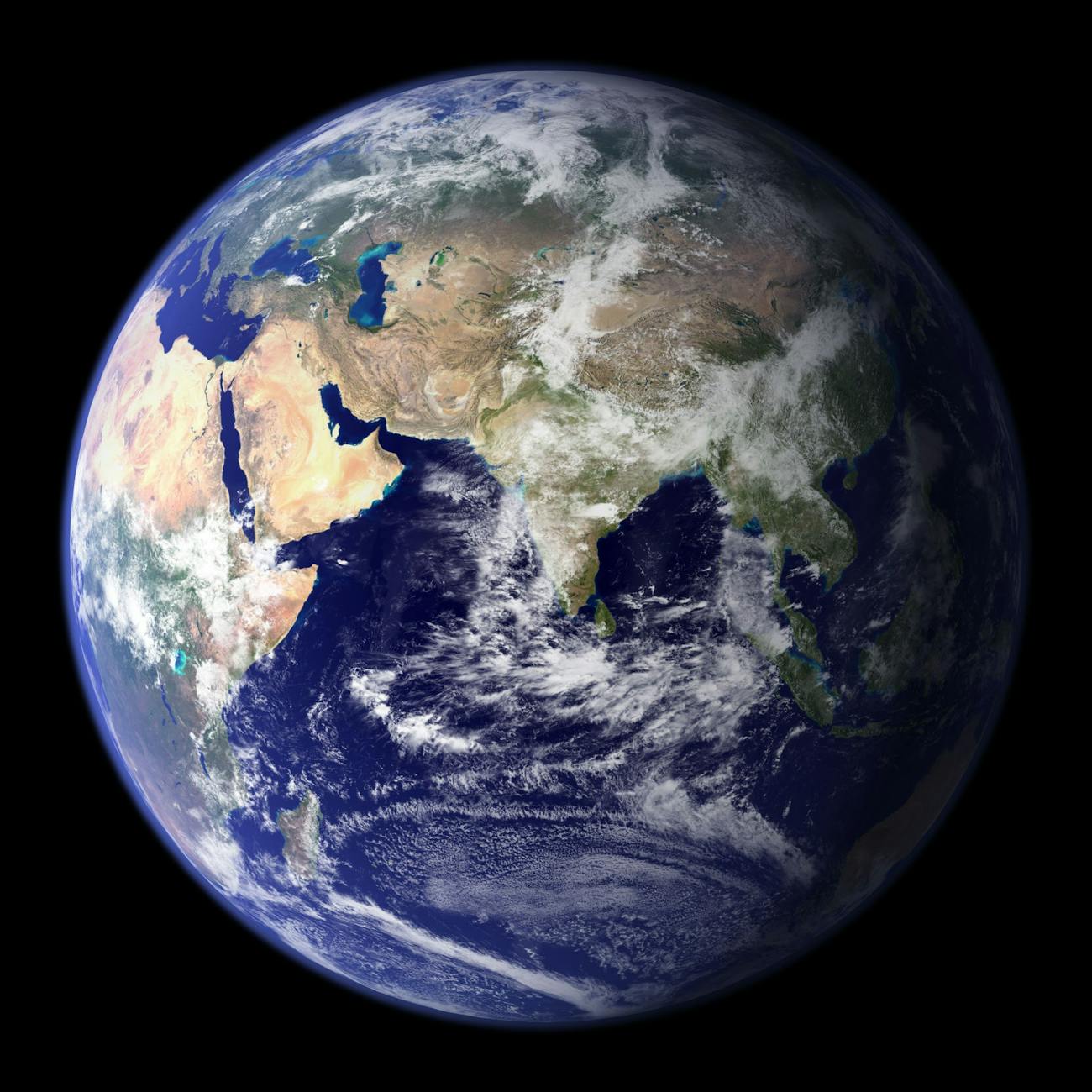
    The Earth was never meant to be owned.

    Just as the Moon was declared “the province of all humankind” under the 1967 Outer Space Treaty — belonging to no nation, corporation, or individual — so too can Earth be seen through that same lens. Our planet Earth, no less than the Moon, is a shared inheritance, not a possession. 

    The shift from ownership to stewardship begins with recognizing that no one can truly own what sustains us all — we can only care for it, together, as co-guardians of our common home.

    Money and ownership was once a tool for coordination — now it’s the master of everything.

    A Resource-Based Economy simply returns design and decision-making to where it belongs: within humanity itself, aligned with the wellbeing of all. Because when everyone belongs, no one has to pay rent on life anymore. 

    A New Dawn

    That journey — from confusion to clarity, from ownership to stewardship — is what inspired Waking Up – A Journey Towards a New Dawn for Humanity.

    The book reflects what I’ve always believed: that sanity is possible, and that it begins with how we see ownership itself. Once we recognize that we already belong here, the rest unfolds naturally.

    Follow the former billionaire Benjamin Michaels into this vision of stewardship and belonging when he wakes up in a world where humanity already has awakened…