
So you think my book and proposal are unrealistic?
Good!
Most things that ever became anything in this world were.
“That’s unrealistic.”
“Humans will never change.”
If you’ve ever tried to describe a better future for humanity, you’ve likely heard some version of this.
Not disagreement. But dismissal.
The moment you step outside what is considered “realistic,” the conversation often ends before it begins.
Part of the reason is simple:
The world feels overwhelming.
Too many problems.
Too many variables.
Too much to hold in one mind.
War.
Conflict.
Crime.
Pollution.
Disease.
Topsoil erosion.
Environmental collapse.
The list goes on.
And then comes a proposal:
One new system that can solve all of this?
Hahaha… yeah, right.
So what does the mind do?
It narrows it down.
Simplifies.
“It’s just too many people.”
Clean. Simple. Manageable.
But also… an oversimplification.
Yes, overconsumption and inequality play a huge role.
But then what?
What is the actual solution?
Cull half of humanity?
Or redesign the system that produces these outcomes in the first place?
Because it is the system.
The monetary system demands constant consumption and profit just to keep running.
It has to keep extracting.
It has to keep producing.
It has to keep polluting.
Because if it stops… the jobs stop.
The income stops.
And the system itself begins to collapse.
Of course, population should be stabilized—voluntarily, through education and awareness.
But we cannot realistically reduce humanity back to 1950 levels just to keep an outdated system running at full speed.
We can make this work.
But only if we are willing to rethink the system itself.
And wake up—just a little bit.
When things feel overwhelming, the mind looks for relief.
It reaches for the simplest explanation.
A single cause.
A single answer.
Something that makes the chaos feel manageable.
And once it finds that… it holds onto it.
Not just because it’s true.
But because it brings a kind of rest.
So when a new idea appears—something that expands the picture instead of simplifying it—it doesn’t feel like help.
It feels like more to carry.
And the fastest way to deal with that… is to reject it.
Call it naïve.
Call it unrealistic.
Call it childish.
End of discussion.
Because it’s not really about the idea.
It’s about what people believe is possible—and what they feel they can handle.
But here’s the interesting part:
We’ve seen this exact reaction many times before.
The Pattern We Keep Forgetting
Again and again throughout history, the same pattern appears:
- A new idea emerges — often simple, often human
- It is dismissed as naïve, unrealistic, or dangerous
- The majority rejects it
- A minority persists
- Conditions begin to shift
- The “impossible” becomes reality
- And eventually… it becomes normal
Then we forget it was ever considered impossible in the first place.
Here are some “impossible” examples from history:
Ending Slavery
In the late 1700s, a small group of abolitionists in Britain began campaigning against the slave trade. They were mocked and dismissed. How could an empire built on global trade suddenly abandon one of its most profitable systems?
William Wilberforce stood in Parliament year after year, proposing abolition bills that were voted down repeatedly. Outside, activists gathered evidence, told stories, and exposed the brutality many preferred not to see.
It took decades. But in 1807, the British slave trade was abolished. Later, slavery itself was outlawed.
What was once considered economically impossible… was ended by persistence.
Women’s Rights
In 1893, New Zealand became the first country to grant women the right to vote.
Before that, the idea was ridiculed. Women were said to be too emotional, too irrational, too unsuited for politics.
Kate Sheppard and others organized petitions—one of them so long it had to be rolled out across Parliament. Thousands of women signed their names, demanding a voice.
The law passed.
What was once “unnatural”… became the beginning of a global shift.
Humans Flying
In 1903, two bicycle mechanics took a fragile wooden machine to a windy beach in North Carolina.
The Wright brothers had no institutional backing, no advanced degrees—just a stubborn belief that controlled flight was possible.
Their first flight lasted 12 seconds.
Short. Fragile. Easy to dismiss.
But it worked.
Within decades, humans were crossing oceans through the air.
Leaving Earth
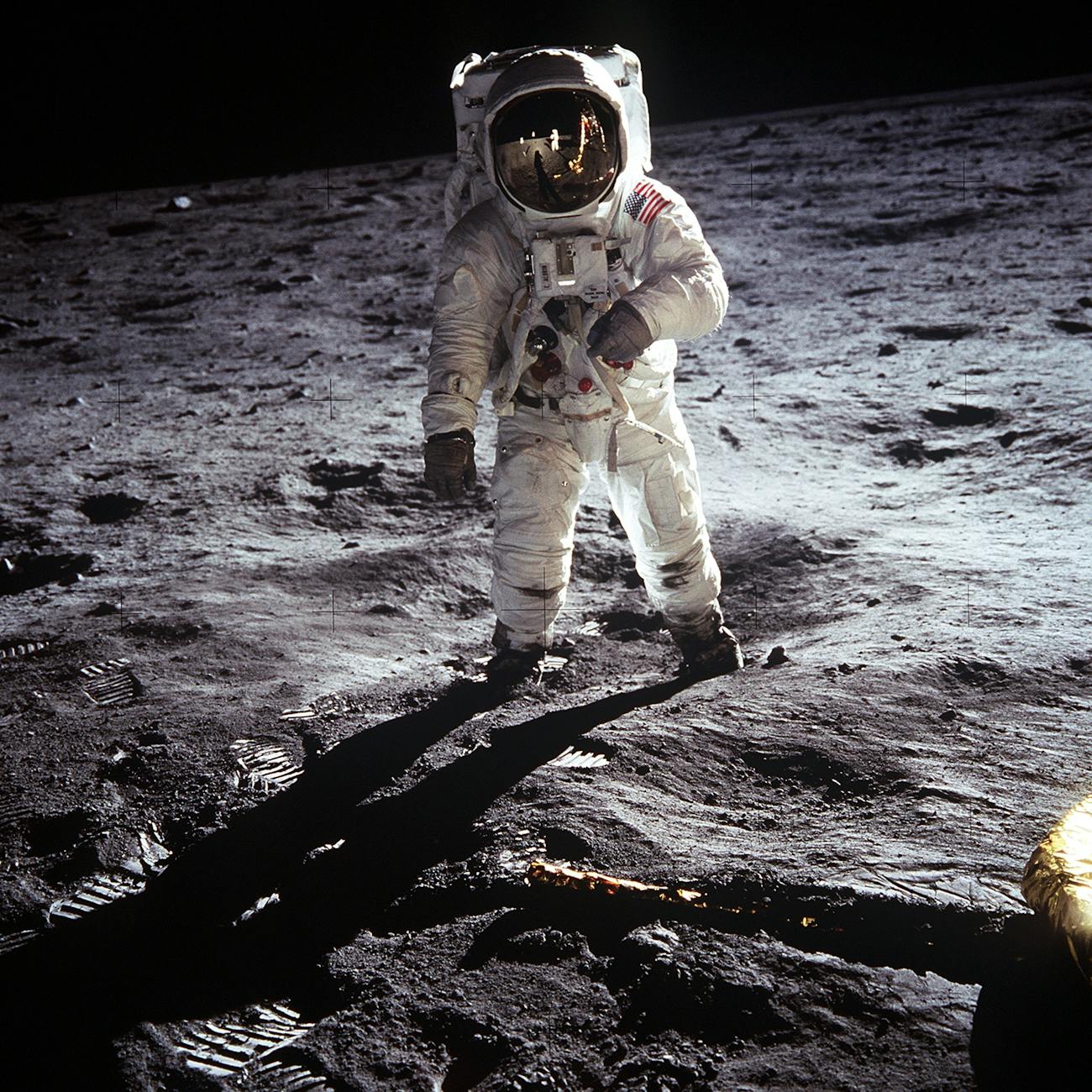
In 1969, a human being stepped onto the Moon.
Neil Armstrong climbed down the ladder and placed his foot on a surface no human had ever touched before.
Just a few decades earlier, this belonged entirely to science fiction.
And yet there he was.
Looking back at Earth.
A species that once struggled to leave the ground… had left the planet.
World Connected
In 1969, a message was sent between two computers in California.
The system crashed after two letters: “LO”.
It was the beginning of ARPANET.
At the time, no one imagined a world where billions of people would carry devices in their pockets, instantly connected to nearly all human knowledge.
What started as a fragile experiment… became the internet.
Peaceful Enemies
In 1950, just five years after World War II, France and Germany were still defined by centuries of conflict.
Then came a radical idea: instead of competing over coal and steel—the resources needed for war—countries would share control of them.
The European Coal and Steel Community was formed.
Former enemies became partners.
Over time, cooperation replaced rivalry.
One of the most war-torn regions in history moved toward lasting peace.
So What About Today?
Today we hear:
“A world that works for all is unrealistic.”
“Humans are too selfish.”
It’s too many of us.
“It will never happen.”
But history whispers something else:
We have said this before.
Every time we stood at the edge of a new possibility.
The Real Question
Maybe the question is not:
Is it possible?
History has already answered that.
Maybe the question is:
What are we calling impossible today…
that future generations will see as obvious?
Hard Facts
Let’s step out of opinion for a moment and look at the latest available data:
- Global population (2024/2025 est.): 8.3 billion people
- Food production capacity: enough to feed approximately 10 billion people
- Food waste (FAO): 1.3 billion tonnes per year (≈33% of all food produced)
- Undernourished people (FAO 2023): 735 million people
- Homeless (UN est.): 150 million people
- Empty homes (global est.): over 200 million vacant properties
- Wildlife decline (WWF Living Planet Index): 69% average decline since 1970
- Recoverable nature: Despite this decline, vast ecosystems still remain and have shown the ability to recover when protected and restored
These are not small gaps.
They are structural mismatches.
If we already have:
- enough food
- enough space
- enough knowledge
…and still fail to meet basic human needs,
then the question is no longer simply how many we are.
The question becomes:
How are we organizing what we already have?
A Personal Note
A world that works for all once felt impossible to me too.
Unfamiliar. Hard to imagine.
But the idea wouldn’t leave me.
So I explored it.
And eventually, I wrote it.
So that you too could imagine the impossible…
Step Into That Possibility
If you want to experience a future where humanity has made that leap — where we’ve moved beyond the limitations we take for granted today — follow Benjamin Michaels into that world.
Please share this article if it resonates. I thank you.
Leave a Reply