
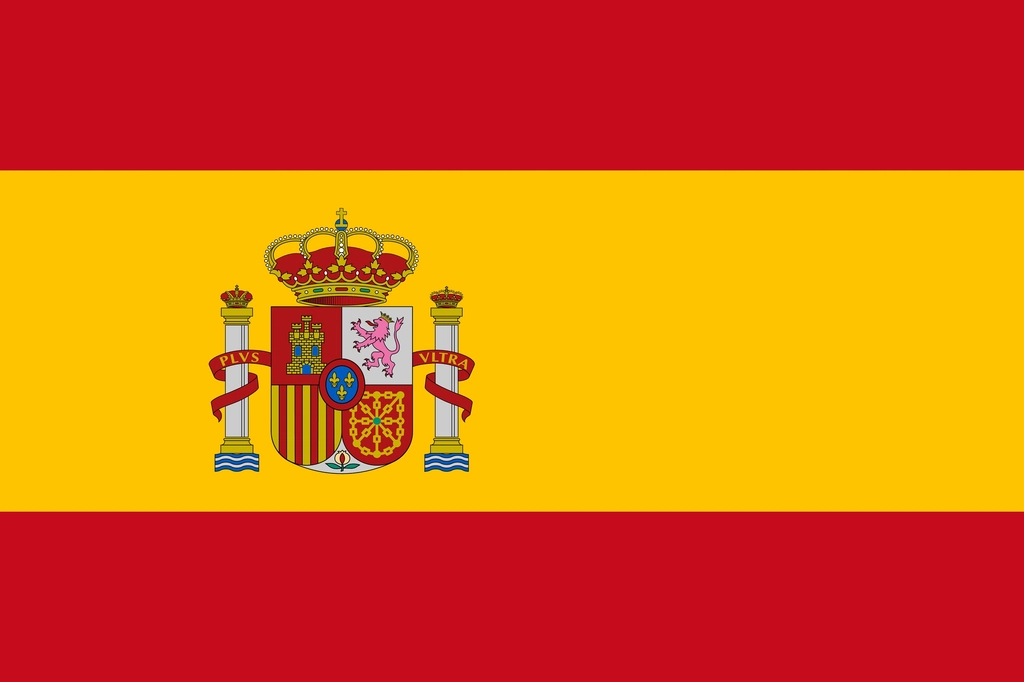
Yesterday Spain made a remarkable decision.
As tensions rise in the escalating conflict between Israel and Iran, Spain refused to be drawn into the war. The Spanish government denied the use of its military bases for offensive operations and signaled clearly that it would not participate in military escalation.
Prime Minister Pedro Sánchez summarized the position in four simple words:
“No a la guerra.” — No to war.
The position was not without pressure. The United States reportedly pushed hard for cooperation and the use of Spanish bases, but Madrid stood firm. Rather than joining the escalation, Spain held its line and called for restraint. In the wider European Union, several leaders signaled understanding and support for Spain’s stance, reinforcing the idea that diplomacy — not another expanding war — should guide the response.
In a world where nations often line up quickly behind military alliances, that refusal stands out.
Spain did not deny the seriousness of the situation in the Middle East. But it chose a different response. Instead of contributing to escalation, it called for restraint, diplomacy, and de‑escalation.
This stance is not accidental. It reflects something deeper in Spanish society.
Spain knows what war does to a country.
Civil War
The Spanish Civil War tore the nation apart. Families were divided. Cities were destroyed. The trauma of that conflict echoed through generations. Even after the war, decades of dictatorship reshaped the country politically, socially, and even environmentally through massive infrastructure projects that altered landscapes and water systems.
The lesson was harsh, but it was learned.
War leaves scars that last far longer than the battles themselves.
Perhaps that is why modern Spain developed such a strong cultural instinct for peace.
In 2003, when the Iraq War began, millions of Spaniards filled the streets with a simple message:
“No a la guerra.”
The same words that echo again today.
No To War
Spain still maintains an army and remains part of international alliances. But within Spanish society there is often a strong skepticism toward war and military escalation.
The culture leans toward something else: coexistence.
And this may not be surprising.
For centuries Spain has been a crossroads of civilizations. Romans, Arabs, Jews, Christians, and many others have shaped its culture. When so many cultures have lived on the same land, the simplistic idea of “us versus them”becomes harder to sustain.
You begin to realize something deeper:
We are all part of the same human story.
In a world that often seems to drift toward confrontation, Spain’s stance in the current crisis offers a quiet reminder of another possibility.
Human history has been marked by wars for centuries. Empires rose and fell through conflict. Nations armed themselves in endless cycles of fear, retaliation, and dominance.
But what if that long chapter of history is not the final one?
What if humanity eventually learns from those scars?
Are we Waking Up?
In Waking Up, the world of the 22nd century looks back at our time much the same way we now look back at the brutal wars of the past. Humanity finally realized that endless conflict was a dead end. Instead of competing for control, people began organizing the world around cooperation, shared stewardship of the planet, and the understanding that we are ultimately one human family.
Seen from that perspective, moments like Spain’s decision today feel like small glimpses of that future — reminders that nations can choose restraint instead of escalation, and dialogue instead of destruction.
Perhaps these moments are early signs of a lesson humanity is slowly beginning to understand.
Could you imagine a world that truly moved beyond “us vs. them”?
Benjamin Michaels wakes up in such a world in Waking Up – A Journey Towards a New Dawn for Humanity — a future where humanity has learned to organize itself around cooperation rather than conflict.
Please share this article if it resonates.
Leave a Reply