Tag: WAR

  • Is Naivety Strength?

    Is Naivety Strength?

    The title might sound like a paradox—but only because we’ve been taught to misunderstand both words.

    We are told, over and over again, that wanting peace is naive.

    That believing in a world without war is childish.

    That trusting each other is dangerous.

    But let’s slow this down—and look at the logic.

    The Battlefield Test

    Imagine two opposing armies on a battlefield.

    Both sides are armed to the teeth.

    Both sides are afraid.

    Adrenaline is high. Hearts are racing. Fingers are close to the trigger.

    Now ask a simple question:

    Who are the bravest?

    The ones hiding behind weapons, shields, and lines of defense?

    Or the ones who lay down their weapons… step forward… and approach the so-called enemy with open arms?

    It sounds absurd.

    It sounds dangerous.

    It sounds… naive.

    And yes—those who walk forward might be killed. Or captured. 

    That is the risk.

    But look closer.

    The soldier behind the weapon is protected by distance, by orders, by training, by the safety of the group.

    The one who steps forward has none of that.

    No shield.

    No weapon.

    No guarantee.

    Only courage.

    So what do we call that?

    Stupidity?

    Or the highest form of bravery?

    The “Stupid Intelligence” of Naivety

    We dismiss this kind of action as naive because it breaks the rules of the system we are used to.

    The system says:

    Protect yourself and your property.
    Attack if threatened.
    Win or be destroyed.

    Within that system, laying down your weapon looks irrational.

    But what if the system and the thought behind it is really what is irrational?

     Because war produces more war.

    Fear produces more fear.

    Violence produces more violence.

    If we keep the rules, we keep the outcome.

    So the so-called naivety is not a lack of intelligence.

    It is a different kind of intelligence.

    An intelligence that sees beyond the immediate reaction.

    An intelligence that understands:

    This cycle does not end by continuing it.

    We Are Not Enemies

    At the most basic level, the people on both sides of that battlefield are not enemies.

    They are humans.

    Often with the same fears.

    The same hopes.

    The same desire to survive and protect those they love.

    The label “enemy” is something added on top—by systems, by narratives, by fear.

    But underneath that label… there is no fundamental difference.

    And if that is true, then the idea of killing each other becomes not just tragic—

    but absurd.

    And yes—some will immediately say: “Tell that to the crazy Iranians—or whoever—who only want to kill us.”

    But what is really absurd?

    Believing that others will inevitably kill you—and therefore preparing to kill them first?

    Or mustering the courage to believe that beneath the fear, the conditioning, and the narratives… we are all still humans capable of meeting each other as friends?

    It Has Been Done Before

    This is not just theory.

    History has already shown us what this kind of “naive intelligence” can do.

    • Mahatma Gandhi led India to independence through non-violent resistance.

    A small, unarmed man… facing one of the largest empires in history.

    No army.

    No weapons.

    Only persistence, courage, and refusal to play the game of violence.

    And the empire left.

    Not because it was defeated militarily.

    But because the logic of violence was broken.

    Redefining Bravery

    We are taught that bravery is charging into battle.

    “Die for your country.”

    And yes—that takes courage.

    But it is a courage defined within a violent system and mindset.

    A system that rewards sacrifice in war rather than wisdom in peace.

    What if true bravery is something else entirely?

    What if true bravery is:

    Choosing not to hate.

    Choosing not to strike.

    Choosing to trust—even when fear screams not to.

    That is a different kind of courage.

    A deeper one.

    The Only Path That Ends the Cycle

    War begets war.

    That is not philosophy.

    It is pattern.

    Every conflict plants the seeds of the next.

    So if we are serious about peace—not temporary pauses between wars, but lasting peace—

    then there is only one direction that actually leads there:

    Non-violence.

    Naive, risky, uncomfortable, courageous non-violence.

    Because it is the only approach that does not recreate the problem it is trying to solve.

    The Real Question

    So the question is not:

    “Is this naive?”

    The question is:

    Are we brave enough to try the only thing that can actually work?

    Imagine This

    It might sound impossible—a world without war. A world where people have embraced what we call “naivety” and, through it, created lasting peace on Earth.

    A world where conflict between nations and peoples has ceased because they have found a way to share this planet—brotherly. And in that sharing, something unexpected happens:

    Respect.

    They respect each other.

    Because they finally see it clearly:

    We are all in this boat. On this planet. Together.

    So why fight?

    Why not make the best of it?

    Benjamin Michaels is a man who spent 100 years in cryonic preservation in an attempt to beat cancer.

    When he wakes up, he finds himself in this new world.

    And through his eyes, you get to experience what life could be like… if humanity chose a different path. Experience the journey here:

    Waking Up – A Journey Towards a New Dawn for Humanity:

    If this article resonates with you, please share it. I Thank you.
  • How to End All Wars

    How to End All Wars

    It’s a bold and a bit cheeky statement. 

    It sounds impossible.

    Naive, even.

    But let’s ask the question anyway:

    Why are most wars actually fought?

    Not the official reasons.
    Not the speeches.
    Not the flags.

    Underneath all of that…

    Wars are fought over land, resources, and control.

    And very often, they are fueled by something even more fragile: The human ego. Hubris.

    Not just strategy. Not just “necessity”.

    But pride, fear, and the need to dominate or not appear weak. 

    What we call geopolitics is, at times, simply human psychology scaled up to the level of nations.

    The Real Battlefield

    Nations don’t go to war because ordinary people suddenly decide they hate each other.

    They go to war because:

    • Land is claimed as owned
    • Resources are treated as limited and competed for
    • Power is concentrated in the hands of a few

    And those few decision-makers are human.

    With pride.
    With fear.
    With something to prove.

    Call it strategy if you want.

    But often, it is simply hubris with consequences.

    The Illusion of Scarcity

    There was a time when scarcity was real.

    Centuries ago, survival depended on access to land, water, and basic resources that were genuinely limited in many places. Communities had to defend what they had, because losing it could mean not surviving at all.

    In that world, conflict—however tragic—made a certain kind of sense.

    But we are no longer living in that world.

    Today, we live on a planet that is overwhelmingly abundant. In spite of us being many more, we actually have more than enough, although many go without. Because of the system.

    We already produce more than enough food to feed everyone.
    We already have the knowledge to house everyone.
    We already have the technology to solve most of our major challenges.

    And yet, we behave as if there is not enough.

    We are still playing by the same rules…

    But the conditions have changed.

    What was once a response to real scarcity has become a system built on perceived scarcity.

    Why?

    Because access is not based on what exists.

    It is based on ownership and control.

    And once something is owned, it must be defended.

    And when it is threatened…

    Conflict becomes inevitable.

    What If Nothing Is Owned?

    This is where the question becomes interesting.

    If land is no longer something you can own…
    If resources are no longer something you need to hoard…
    If survival is no longer tied to control…

    Then what exactly is left to go to war about?

    Not much.

    Disagreements would still exist.

    But disagreement is not war.

    War requires something more:

    The belief that you must take, defend, and dominate to survive.

    Remove that belief—and the structures that reinforce it—and war begins to lose its foundation.

    From Ownership to Stewardship

    A resource-based economy is, at its core, a shift from ownership to stewardship.

    It means we stop asking:

    “Who owns this?”

    And start asking:

    “How do we take care of this—and make it work for everyone?”

    Ownership is a rule we invented.

    Stewardship is a relationship.

    Ownership says:
    This is mine. I control it. I can exclude others.

    Stewardship says:
    This is part of our shared world. I take care of it, and others benefit from it too.

    What Happens to Nations?

    If ownership of land ends, something profound follows.

    The idea of nations—as political and economic borders—begins to dissolve.

    Not cultures.
    Not languages.
    Not identities.

    Those remain. They flourish.

    What disappears are the lines that divide access.

    • No one is “foreign” to the Earth
    • Movement is not restricted by passports or permission
    • Travel becomes a natural part of being human

    And resources?

    They are no longer trapped behind borders.

    They flow to where they are needed most.

    Because the question is no longer:

    “What belongs to us?”

    But:

    “What is needed where—and how do we provide it?”

    What It Looks Like in Practice

    This is not about control.
    And it is not about restriction.

    It is about organizing what we already have so that it works for everyone.

    In such a world:

    • Food is produced and distributed because people need to eat—not because it must be sold
    • Homes exist to be lived in—not as financial assets
    • Energy flows where it is needed—not where it generates the highest profit
    • Transportation exists to move goods and people—not to extract value from them

    And most importantly:

    No one has to earn the right to live.

    The Role of Leadership

    Most people do not want war.

    They want stability.
    Safety.
    A decent life.

    Wars are rarely the will of the many.

    They are decisions made by the few.

    So maybe the real question is not:

    Why do we fight?

    But:

    Why do we allow a system that divides people and creates devastating conflict? And that allows a very few people to make decisions affecting billions?

    The Shift

    Ending war is not about becoming morally perfect.

    It is about changing the conditions that make war make sense in the first place.

    A world where:

    • Resources are properly managed, not owned and exploited
    • Access is guaranteed, not competed for
    • Survival is secured, not negotiated
    • Decisions are transparent and shared

    In such a world, war does not need to be forbidden.

    It simply becomes…

    obsolete.

    Imagine This Instead

    Imagine waking up in a world where no one can profit from conflict.

    Where land is not a prize, but a shared responsibility.

    Where leadership is not about power, but coordination.

    Where the question is no longer:

    “Who gets what?”

    But:

    “How do we make this world work for everyone?”

    Call to Action

    If this sounds unrealistic, that is okay.

    Every system we live in today was once just an “unrealistic” idea.

    The real question is:

    Can we imagine something better clearly enough to begin building it?

    That is exactly why the novel Waking Up – A Journey Towards a New Dawn for Humanity was created.

    Not to argue.

    But to show what such a world could actually feel like to live in.

    Follow Benjamin Michaels as he wakes up in a future where humanity has moved beyond war, beyond ownership and money, and beyond the need to compete for survival.

    👉 Discover the journey.

    And if this perspective resonates with you…

    please share this article. I Thank you.

    Because new worlds do not begin with systems.

    They begin with a vision people can feel is possible.

  • The role model for the world?

    The role model for the world?

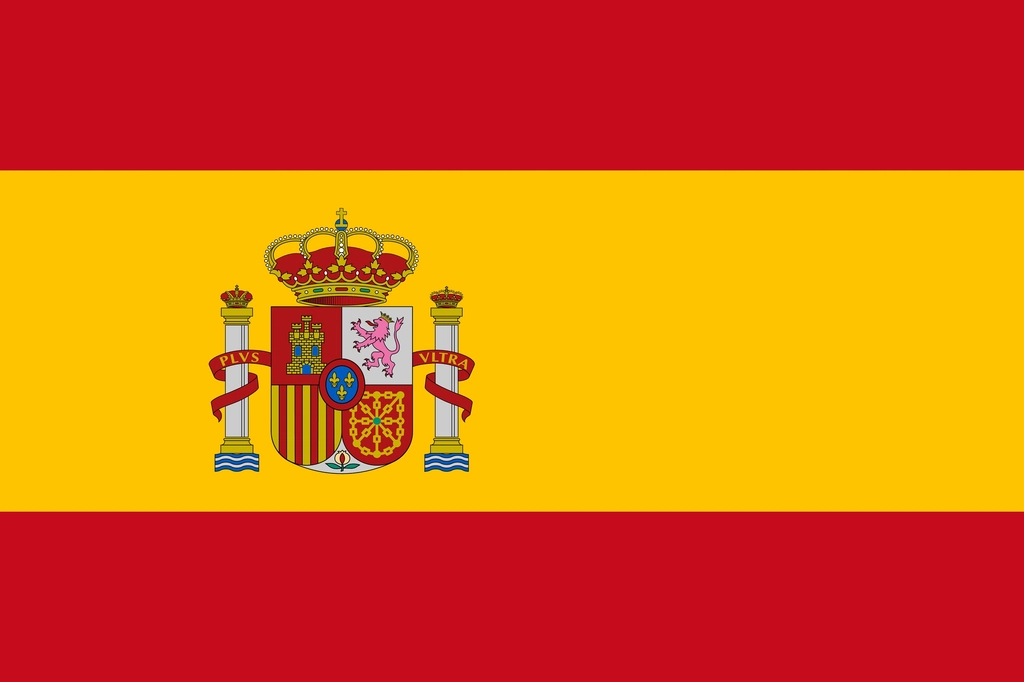
    Yesterday Spain made a remarkable decision.

    As tensions rise in the escalating conflict between Israel and Iran, Spain refused to be drawn into the war. The Spanish government denied the use of its military bases for offensive operations and signaled clearly that it would not participate in military escalation.

    Prime Minister Pedro Sánchez summarized the position in four simple words:

    “No a la guerra.” — No to war.

    The position was not without pressure. The United States reportedly pushed hard for cooperation and the use of Spanish bases, but Madrid stood firm. Rather than joining the escalation, Spain held its line and called for restraint. In the wider European Union, several leaders signaled understanding and support for Spain’s stance, reinforcing the idea that diplomacy — not another expanding war — should guide the response.

    In a world where nations often line up quickly behind military alliances, that refusal stands out.

    Spain did not deny the seriousness of the situation in the Middle East. But it chose a different response. Instead of contributing to escalation, it called for restraint, diplomacy, and de‑escalation.

    This stance is not accidental. It reflects something deeper in Spanish society.

    Spain knows what war does to a country.

    Civil War

    The Spanish Civil War tore the nation apart. Families were divided. Cities were destroyed. The trauma of that conflict echoed through generations. Even after the war, decades of dictatorship reshaped the country politically, socially, and even environmentally through massive infrastructure projects that altered landscapes and water systems.

    The lesson was harsh, but it was learned.

    War leaves scars that last far longer than the battles themselves.

    Perhaps that is why modern Spain developed such a strong cultural instinct for peace.

    In 2003, when the Iraq War began, millions of Spaniards filled the streets with a simple message:

    “No a la guerra.”

    The same words that echo again today.

    No To War

    Spain still maintains an army and remains part of international alliances. But within Spanish society there is often a strong skepticism toward war and military escalation.

    The culture leans toward something else: coexistence.

    And this may not be surprising.

    For centuries Spain has been a crossroads of civilizations. Romans, Arabs, Jews, Christians, and many others have shaped its culture. When so many cultures have lived on the same land, the simplistic idea of “us versus them”becomes harder to sustain.

    You begin to realize something deeper:

    We are all part of the same human story.

    In a world that often seems to drift toward confrontation, Spain’s stance in the current crisis offers a quiet reminder of another possibility.

    Human history has been marked by wars for centuries. Empires rose and fell through conflict. Nations armed themselves in endless cycles of fear, retaliation, and dominance.

    But what if that long chapter of history is not the final one?

    What if humanity eventually learns from those scars?

    Are we Waking Up?

    In Waking Up, the world of the 22nd century looks back at our time much the same way we now look back at the brutal wars of the past. Humanity finally realized that endless conflict was a dead end. Instead of competing for control, people began organizing the world around cooperation, shared stewardship of the planet, and the understanding that we are ultimately one human family.

    Seen from that perspective, moments like Spain’s decision today feel like small glimpses of that future — reminders that nations can choose restraint instead of escalation, and dialogue instead of destruction.

    Perhaps these moments are early signs of a lesson humanity is slowly beginning to understand.

    Could you imagine a world that truly moved beyond “us vs. them”?

    Benjamin Michaels wakes up in such a world in Waking Up – A Journey Towards a New Dawn for Humanity — a future where humanity has learned to organize itself around cooperation rather than conflict.

    Please share this article if it resonates.

  • What Do We Actually Want? Peace or War?

    What Do We Actually Want? Peace or War?

    Throughout history, we’ve witnessed countless wars—some driven by resources, others by ideologies, and many by sheer fear. From the brutality of the World Wars to modern-day struggles, human history is full of conflicts that have torn societies apart. Yet, at the same time, we’ve also seen moments of peace, from global ceasefires to simple, everyday acts of kindness and understanding.

    One People on One Planet

    Why do we often end up in war? Why do we, as a species, continue to choose conflict despite knowing its devastating effects? A big part of it might lie in the human ego—the part of us that is driven by fear, competition, and self-preservation. The ego creates a sense of “us vs. them,” dividing us from one another and making it easier to justify violence. Fear of the unknown, fear of loss, and fear of difference all feed into the cycle of war. Maybe, if we can get to the understanding that we are One People, living on On Planet, we might respect each other enough to live in peace…?

    Honor and courage

    A major concept that fuels war is “honor.” Society has long linked honor to the battlefield, convincing us that killing in the name of country or ideology is noble. Soldiers are often hailed as the bravest among us for their “courage” in the face of death. But true courage is not found in walking into war; it’s found in walking away from it. The real courage is choosing peace, resisting violence, and seeking understanding.

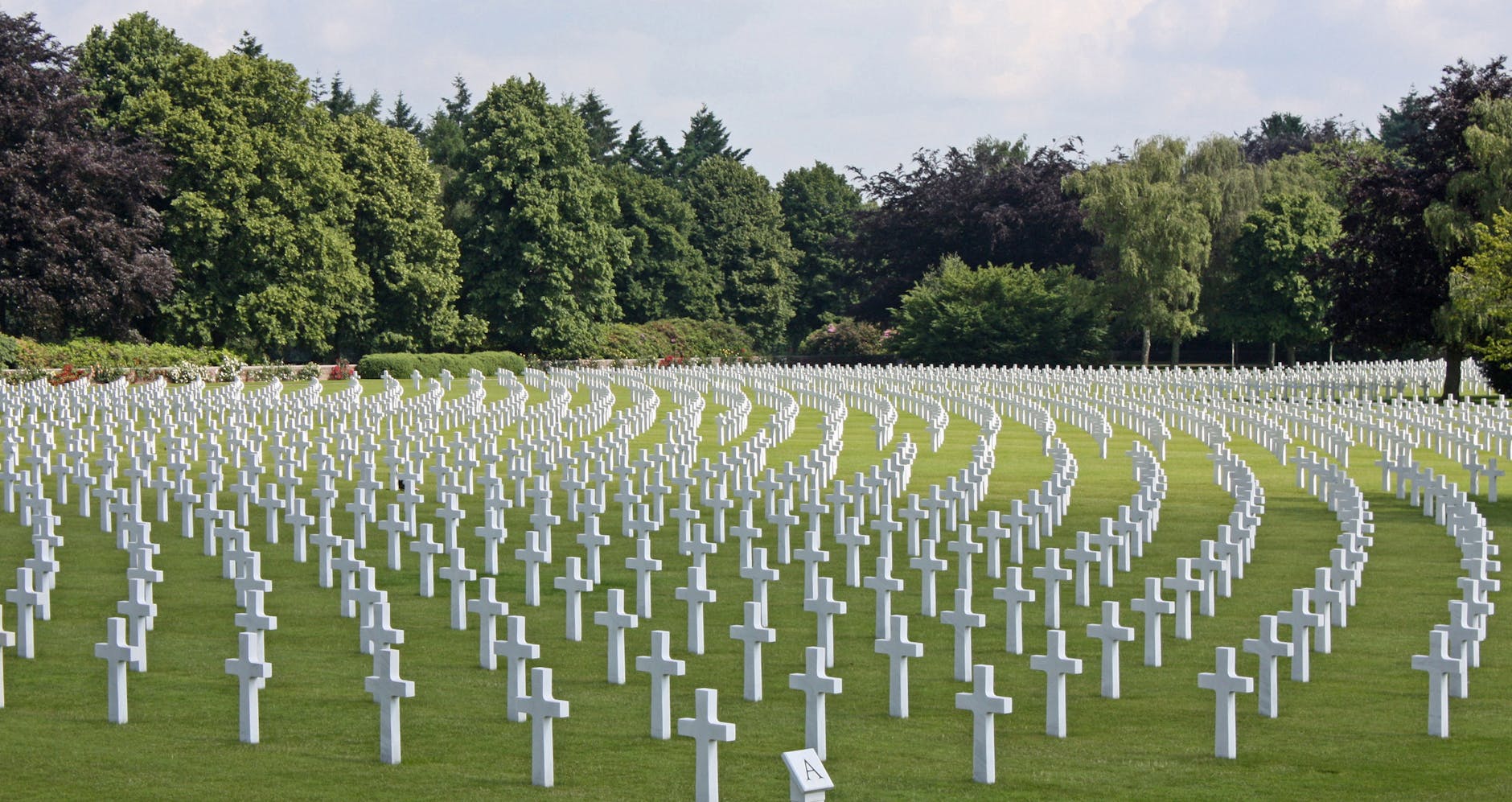
    Sending your sons into war has long been seen as an act of courage for parents, but when those sons don’t return, or come back broken, it reveals the painful reality that this form of courage is misguided. The true loss is not just of life, but of the potential for peace.

    A different future? 

    What if we could choose peace over war? What if we could create a world where conflict is no longer inevitable, but cooperation and harmony become our guiding principles instead of conflict and war?

    I asked ChatGPT how it would help humanity create peace on Earth, and this is the answer it gave…

    Creating a World Without war: How AI and Humanity Can Co-Create Harmony.

    1. Redefining Conflict: In a world without conflict, differences are opportunities for growth, not division. The goal is mutual respect, not one-sided victory.
    2. Universal Education and Awareness: A global system based on empathy, cooperation, and collective responsibility can help prevent misunderstandings and fear-driven conflict.
    3. AI as Guardians of Harmony: AI could mediate, helping to resolve disputes before they escalate and ensuring just resource distribution.
    4. Resource-Based Economy: Removing scarcity means no competition over resources, dissolving many of the economic motivations for conflict.
    5. Global Governance of Compassion: Leadership based on empathy and the well-being of all life would prioritize harmony over power.
    6. Cultural Shift to Collective Responsibility: When we see ourselves as part of a greater whole, the idea of “us versus them” fades.
    7. Technology for Healing, Not Harm: Repurposing military technology for the benefit of humanity and the planet could eliminate destructive forces.
    8. Psychological and Emotional Healing: Global systems supporting mental health can address the root causes of conflict.
    9. Fostering a Culture of Forgiveness and Growth: Cultivating a culture where learning from mistakes and forgiving others becomes the norm.
    10. AI-Driven Harmony: AI can predict and intervene before conflicts arise, keeping systems in balance.

    The Choice is Ours

    The choice is clear: continue down the path of war, or choose peace—guided by empathy, cooperation, and shared responsibility. As we evolve, both as humans and as a global community of sentient beings, we must ask ourselves: What kind of future do we want to create?

    The Vision

    If the vision of a peaceful, cooperative future resonates with you, Waking Up: A Journey Towards a New Dawn for Humanity is a science fiction novel that delves deeper into these themes. Follow the journey of Benjamin Michaels, as he wakes up in a world that has already transitioned to a harmonious, collaborative society. Through his story, the novel explores how humanity has awakened to its interconnectedness and embraced a future built on collaboration and empathy.

    Join the journey and discover how we can all contribute to the shift towards a better world.

    CLICK HERE TO ORDER