
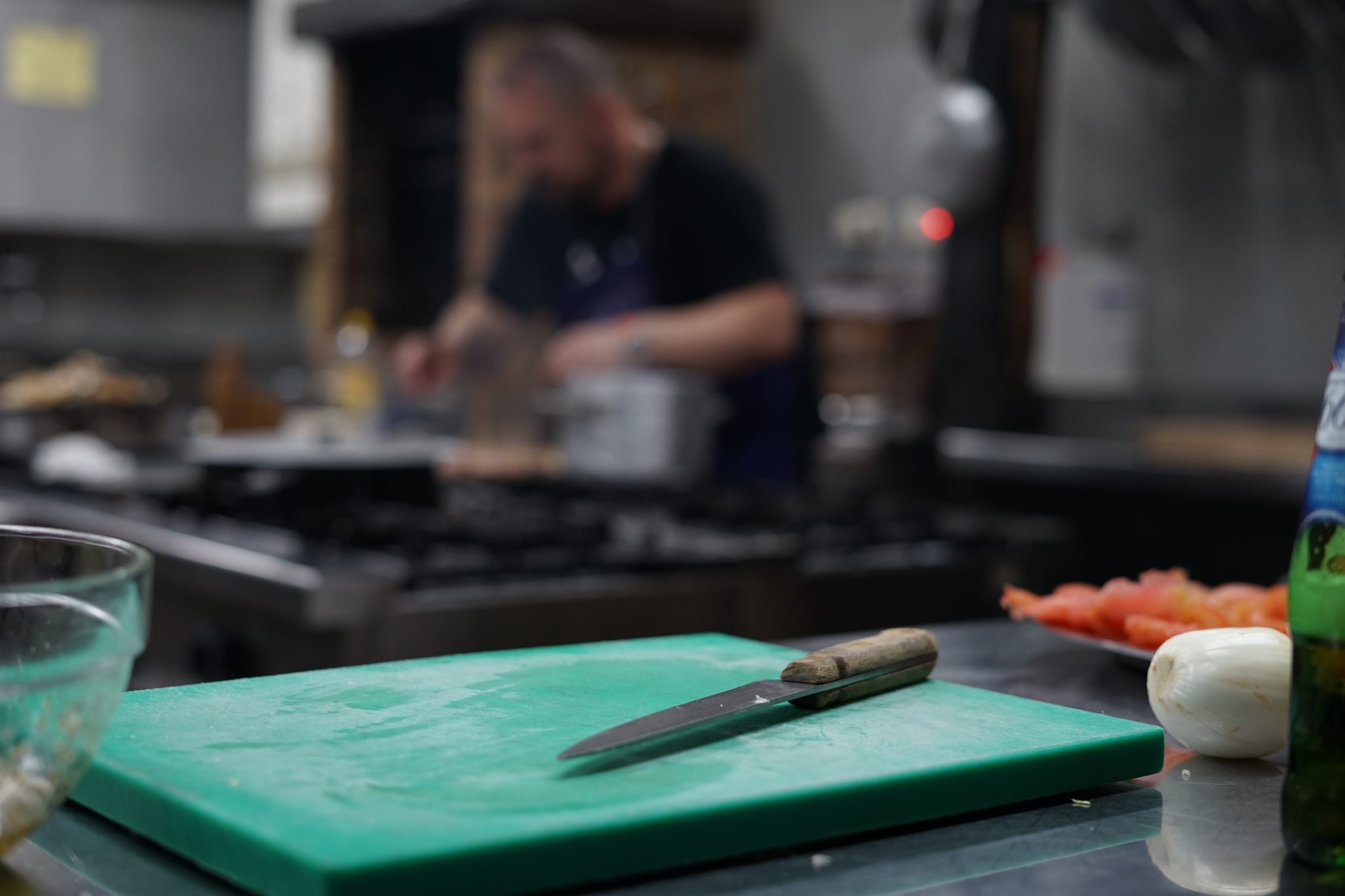
Watching Gordon Ramsay: Uncharted travel through Galicia Spain, harvesting percebes from wave-beaten rocks, bidding on fish at early-morning auctions, and cooking food rooted deeply in place, a simple question naturally arises:
Would people still do all this if there were no money?
It’s a fair question — and also a revealing one.
Because what we are actually watching in Galicia is not an economy.
We are watching a culture.
Culture came first
Fishing cultures, farming cultures, herding cultures, food cultures, craft cultures — all of them existed long before the modern monetary system. People did not begin fishing because of auctions. They did not start making cheese because of profit margins. They did these things because:
• it was who they were
• it was how knowledge was passed down
• it created belonging and pride
• it connected them to land, sea, and community
• it gave meaning to daily life
• it gave them food on the table
Money arrived later. Much later. And when it arrived, it wrapped itself around these activities as a coordination layer — not as their source.
Money coordinate — it does not motivate
We often confuse coordination with motivation.
Auctions, prices, bids, and markets help coordinate distribution under scarcity. They do not explain why people go out into dangerous seas, master difficult skills, or continue traditions that take decades to learn.
Those motivations are older and deeper:
• identity
• mastery
• contribution
• respect
• continuity
• love of the craft
Remove money, and the need for coordination remains — but the reasons for doing the work do not disappear.
What disappears without money — and what doesn’t
What disappears:
• artificial scarcity
• speculative bidding
• over-extraction for profit
• middlemen extracting value
• pressure to work dangerously because of debt
What remains:
• fishing
• cheesemaking
• farming
• cooking
• skill and pride
• reputation based on excellence
• rituals, festivals, and traditions
In fact, many cultures would function better without monetary pressure distorting them.
Coordination without coercion
In a post-monetary world, coordination would be based on:
• real needs instead of price signals
• logistics instead of competition
• reputation instead of wealth
• cooperation instead of bidding wars
People would still want good food, beautiful craft, and skilled work. They just wouldn’t need financial scarcity to decide who deserves access.
Play survives economics
Interestingly, some old systems might even survive — but as play.
Mock auctions, ritualized bidding, historical reenactments, and LARP(Live Acton Role Playing)-like traditions could remain because humans enjoy drama, ritual, and performance. The difference is simple but profound:
No one’s survival would depend on winning the game.
The deeper misunderstanding
The hardest idea for many people to release is the belief that:
“Without money, nobody would do the work.”
But this is contradicted every day by:
• parenting
• art
• volunteering
• caregiving
• community building
• cultural preservation
Humans are not motivated primarily by money.
We are motivated by meaning.
⸻
Pono — An Example of the Future That Already Exists
Watching Gordon Ramsay: Uncharted again. In Hawaii this time there are several quiet moments that say more about humanity’s future than a thousand economic theories. Not because Hawaii is unique or superior — but because it preserves something that exists everywhere, once you know how to see it.
Ramsay learns to make a knife from a Hawaiian knife smith. No factory. No production line. Just hands, fire, steel, patience — and pride in the craft.
Earlier, he is introduced to pono by a local chef. Hawaiian culture becomes the lens here — not as an exception, but as a clear example of something fundamentally human. He visits coffee farms where every single bean is hand-picked — not because it is efficient in monetary terms, but because care, respect, and right relationship matter.
That moment already carries the essence of pono.
Then the thought arises naturally:
If this knife smith were not paid for his knives, would he still make them?
Anyone paying attention already knows the answer.
Yes.
Craft does not originate in money
People like this knife smith do not exist because of money. They exist because of:
• curiosity
• mastery
• identity
• interest
• the simple joy of doing something well
Money comes later, as a translation layer — a blunt instrument used to move objects through a system that no longer trusts relationships.
Take money away, and the craft does not disappear.
What changes is how the craft flows.
Without money, distribution becomes personal
If the knife smith were not selling knives to an anonymous market, he would still make them — but he would make them for someone.
A fisherman.
A cook.
A farmer.
A neighbor.
Each knife would have a face attached to it.
Each knife would have a story.
The question would no longer be:
What can I get for this?
It would become:
Who is this for, and what do they need?
That is not sentimentality.
It is precision.
Fewer knives, perhaps — but each one more exact, more fitting, more meaningful.
Pono as systems intelligence
In Hawaiian culture, pono means balance, right relationship, and corrective harmony — not moral purity or rule-following.
The hand-picked coffee beans matter here. Not as a luxury product, but as a signal: how something is done matters as much as what is produced.
An action is pono if it restores balance:
• between people
• between people and land
• between effort and need
The traditional Hawaiian ahupuaʻa system worked this way. Resources were not owned, priced, or extracted for growth. They were stewarded as flows — from mountain to sea — with the understanding that excess in one place meant harm elsewhere.
That is not nostalgia.
That is systems intelligence.
Culture precedes money — and survives without it
Fishing, farming, cooking, building, teaching, caring.
These activities existed long before money — and they continue today wherever culture is allowed to breathe.
This quietly answers the question critics always ask:
“But why would people do anything without money?”
Because they already do.
You just have to stop filtering reality through price tags.
Money did not create meaning.
It replaced relationship with abstraction.
Culture outlives systems
Economic systems rise and fall.
Cultures endure.
Galician fishers will still fish.
Not because of auctions.
But because it is who they are.
And once that is truly understood, the idea of a good life without money stops sounding radical — and starts sounding natural and deeply human.
⸻
If this way of thinking resonates, the novel Waking Up – A Journey Towards a New Dawn for Humanity explores what happens when humanity organizes around cooperation, culture, and care instead of money — and reveals that the future we imagine may already be quietly alive among us. Dive into the story through Benjamin Michaels, the lost billionaire waking up in a future like this.
Leave a Reply