Category: PARADIGM SHIFT

  • What Is Actually Possible?

    What Is Actually Possible?

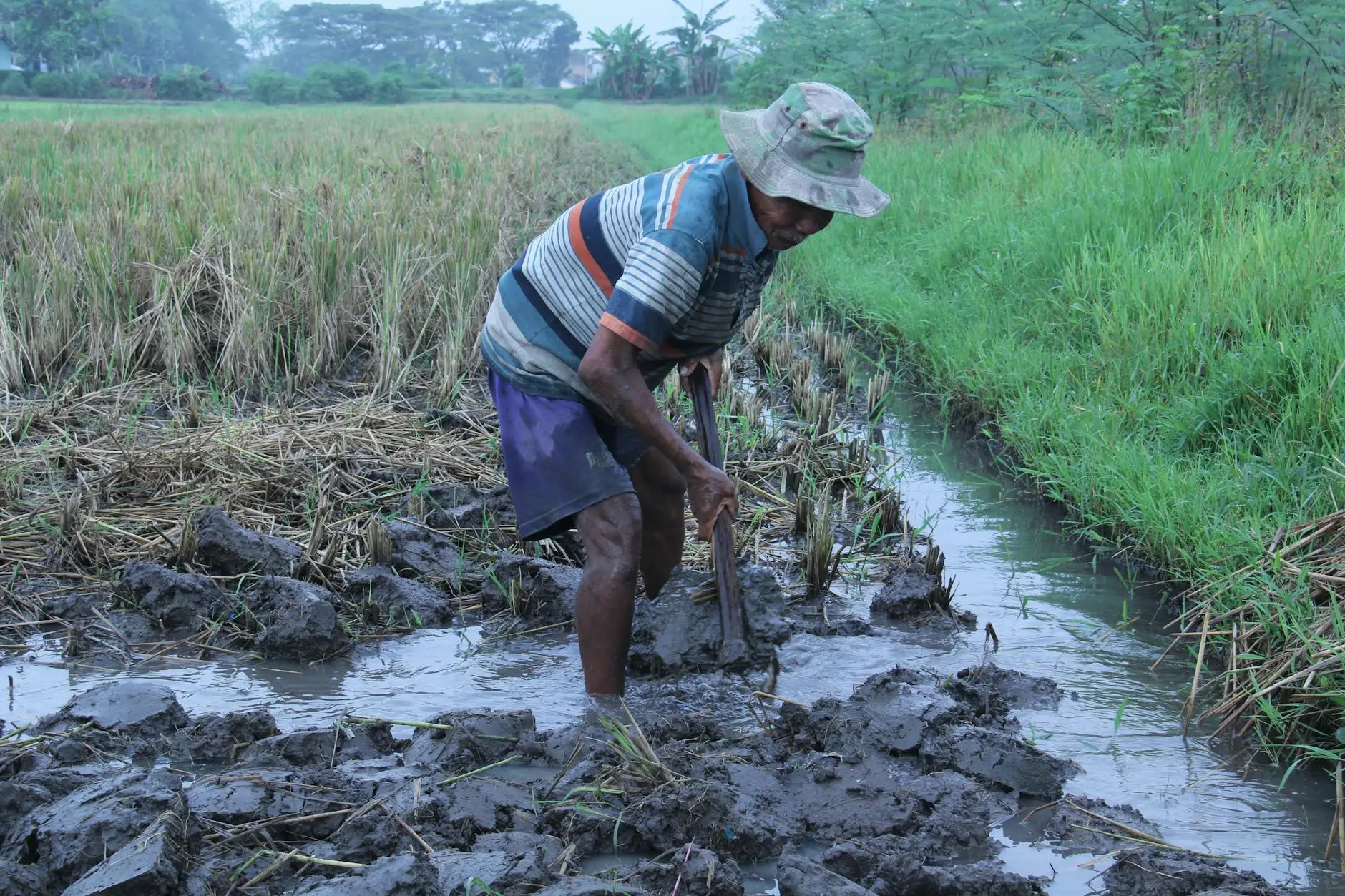
    For most of human history, labor was inseparable from survival.

    Food was foraged by foot and fields were cultivated by hand.
    Buildings were raised by muscle.


    Empires were constructed on the backs of slaves, serfs, and the working poor.

    Brutal Work

    For centuries, it seemed obvious that a ruling class required a laboring class. That some would command and others would toil. That hard, repetitive, and often brutal work was simply the price of civilization.

    In ancient societies, this labor was enforced through slavery.
    In feudal systems, through serfdom.
    In early industrial capitalism, through exhausting factory work. The structure changed, but the necessity of large-scale human labor did not.

    Even well into the 20th century, most people assumed that civilization would always require millions of people to perform monotonous, dangerous, or degrading tasks. The debate was about wages and rights — not about whether such labor could disappear altogether.

    Automation was expected to assist human workers, not replace drudgery itself.

    The idea that machines could eliminate the need for unwanted labor sounded utopian — or naive.

    Yet here we are.

    Artificial Intelligence

    In just the past few decades — and especially in the last ten to fifteen years — automation, robotics, and artificial intelligence have advanced at a speed few predicted. Machines no longer merely assist human labor; in many domains, they perform it independently.

    What once required forced labor, then industrial labor, can now increasingly be handled by systems that do not tire, suffer, or demand wages.

    This historical shift forces a serious question.

    The Fundamental Questions

    If we no longer need human beings to perform the most dangerous, exhausting, or monotonous tasks — what kind of civilization becomes possible?

    We have already asked two fundamental questions in previous articles:

    What do we actually want?
    What do we actually have?

    Now we arrive at the question that determines everything:

    What is actually possible?

    Because between desire and reality lies possibility.
    And possibility is not fixed. It expands with knowledge, courage, and imagination.

    Technological Possibility

    If we look honestly at humanity’s technological capacity today, something remarkable becomes clear.

    For the first time in history, we possess the tools to produce abundance without requiring mass human drudgery.

    We can:
    • Automate most portions of repetitive and dangerous labor.
    • Coordinate global supply chains in real time.
    • Monitor ecosystems, climate patterns, soil health, and material flows with extraordinary precision.
    • Manufacture goods with extreme efficiency using robotics and advanced fabrication systems.
    • Process and distribute information globally in milliseconds.

    And we must add something that would have sounded like science fiction only a decade ago:

    Artificial intelligence and advanced robotics have progressed at extraordinary speed.

    Tasks once believed to require uniquely human perception, judgment, and adaptability are now performed by machines.
    Factories operate with minimal human presence.
    Warehouses move autonomously.
    Robots assist in surgery, maintain infrastructure, explore hazardous environments, and handle toxic materials.

    Only a short time ago, many believed it would take generations before machines could perform most necessary but undesirable labor.
    Today, in many sectors, they already can.

    The limiting factor is no longer technological capability.
    It is how we design the economic and governance structures around that capability.

    From a purely technical standpoint, we now have the ability to eliminate most compulsory drudgery. Human labor could increasingly shift from survival-driven necessity to voluntary contribution, creativity, research, care, and exploration.

    And this changes everything.

    Solar Power: An Overlooked Revolution

    Energy has always been the backbone of civilization.

    For centuries, societies relied on muscle, wood, coal, oil, and gas. Energy scarcity shaped hierarchy and conflict. Control over fuel meant control over civilization.

    But the Earth receives an astonishing amount of energy every single day.

    Every hour, more solar energy hits the planet than humanity currently consumes in an entire year. And that is a fact.

    In other words: The total amount of energy humanity use in one whole year hits earth in ONE HOUR. This extreme energy abundance is often overlooked.

    We do not need to capture all of it.
    We do not need deserts covered in panels from horizon to horizon.

    We only need to harness a fraction of what already arrives freely to power humanity completely.

    Modern photovoltaic technology is no longer experimental or marginal — it is mature, scalable, and already widely deployed. Even at today’s efficiency levels, existing solar panel technology could generate more than enough electricity to power global civilization if installed at sufficient scale. Large-scale solar farms, rooftop installations, and integrated infrastructure systems are not future concepts; they are operating right now across continents. Storage technology, smart grids, and decentralized energy systems are already capable of balancing variable supply, and while they continue to improve, the current level of technology alone is sufficient to create large-scale renewable energy abundance if prioritized and deployed intelligently.

    The technical challenge of powering humanity sustainably is no longer insurmountable. It is an engineering and deployment question — not a physics limitation.

    When energy is abundant and renewable, the foundation of scarcity thinking begins to weaken. Energy underlies water purification, manufacturing, transportation, communication — nearly every essential system. In many cases, it does not even need to pass through electricity: solar thermal systems can directly power water heating, desalination, industrial heat processes, and sanitation infrastructure, reducing complexity while increasing efficiency and resilience.

    Abundant clean energy changes the economic equation at its root.

    And that shift alone makes entirely new civilizational models possible.

    Land and Physical Resources

    Another common objection is: “There isn’t enough.”

    But enough of what? Because there is.

    There is enough agricultural land to feed humanity. Roughly half of the planet’s habitable land is already used for agriculture, and the majority of that is devoted to livestock and feed production rather than direct human nutrition. Even without expanding farmland, more efficient crop use, regenerative practices, and dietary shifts could feed billions more people on existing land.
    There is enough renewable energy potential to power civilization many times over.
    There are sufficient raw materials — if used intelligently, recycled efficiently, designed for durability, and embedded in circular production systems instead of disposable ones.

    And we should acknowledge something important:

    Even with our present system that is clearly unsustainable, humanity is already feeding many billions of people and housing many billions of people. We have already proven there is enough, albeit unsustainably.

    The problem is not that we lack resources.
    The problem is that we use them inefficiently, wastefully, and unevenly.

    We produce enough food for everyone — yet food is wasted while others go hungry.
    We build enough housing — yet some own multiple properties while others sleep outside.
    We generate enormous wealth — yet access depends on purchasing power rather than human need.

    The Earth is finite, yes.
    But finite does not mean insufficient.

    A well-managed finite system can support long-term stability. A poorly managed system collapses even if resources are abundant.

    So the real task is not to invent abundance from nothing.
    It is to make what we already produce sustainable.
    To align production with ecological limits.
    And to ensure that everyone receives what they need — not only those who have enough money to claim it.

    Already today, humanity has the technical and material capacity for every person on Earth to live in what previous generations would have called luxury — safe housing, clean water, abundant food, clean energy, healthcare, education, and global connectivity.

    Beyond material comfort, we also possess the productive power to free enormous amounts of human time — time to create, to learn, to explore, to rest, and to do what genuinely pleases us.

    And in principle, we even have the logistical capacity to offer mobility and choice of location — the option to live in the climate and environment one prefers, rather than being confined by economic necessity.

    The barrier is not capacity.
    It is how we organize access, distribution, and the value we assign to human life beyond labor.

    The Human Mind

    Here is where the conversation becomes deeper.

    Even if technology allows it.
    Even if resources allow it.

    Do we allow it?

    For thousands of years, humanity has operated inside a monetary habit. We measure value in currency. We organize life around earning, competing, accumulating, and securing.

    Money has shaped our psychology.

    It has trained us to think in scarcity terms:
    • Not enough jobs.
    • Not enough profit.
    • Not enough growth.
    • Not enough security.

    But habits are not destiny.

    Human beings have shifted paradigms before.
    We moved from tribal structures to agricultural civilizations.
    From monarchies to democracies.
    From slavery to abolition.
    From isolated tribes to global networks.

    Each shift once seemed impossible.
    Until it wasn’t.

    The deeper question is this:

    can we expand our sense of identity — from isolated individuals competing for survival to participants in a planetary system that must be cared for collectively?

    That shift is psychological before it is economic.

    The Monetary Habit

    The monetary system is not merely a tool. It is a pattern of thought.

    It rewards short‑term gain over long‑term stability.
    It converts living ecosystems into financial assets.
    It turns access to life’s necessities into permission tokens.

    Is it possible to move beyond that?

    Technically — yes.

    Practically — it would require transition, experimentation, and courage.

    We would need:
    • Local and regional prototypes that demonstrate new coordination models.
    • Governance systems rooted in transparency and contribution rather than ownership and accumulation.
    • Education that prepares people for participation, creativity, and stewardship instead of narrow competition.
    • Technological systems aligned with ecological limits.

    None of this violates physics.
    None of this violates biology.
    None of this violates human potential.

    It only challenges habit.

    And habits can change.

    A Global Classless Society

    For thousands of years, societies were structured around necessity.
    Those who controlled land, tools or force commanded everything.
    Those without access labored.

    Class was not merely ideology.
    It was a structural consequence of scarcity and labor intensity.

    If survival required large populations performing exhausting physical work, then hierarchy followed almost automatically. Control the land, control the energy source, control the tools — and you controlled people.

    But if production can be largely automated…
    If energy can be abundant…
    If coordination can be managed intelligently at scale…

    Then the material foundation of class hierarchy weakens.

    For the first time since organized civilization began, humanity has the technological capacity to build a global society where survival does not depend on belonging to a laboring class — and where access to life’s necessities is not restricted to those who accumulate financial tokens.

    This does not mean uniformity.
    It does not mean sameness.
    It does not mean the end of diversity, ambition, creativity, or excellence.

    It means the end of structural dependency.
    The end of a permanent underclass required for others to live comfortably.

    In principle, we now possess the tools for the first truly classless civilization in history — not enforced by ideology, but enabled by automation, energy abundance, and intelligent coordination.

    For most of modern history, attempts at equality have been framed through competing ideologies — communism, socialism, capitalism — each proposing different mechanisms to manage scarcity, ownership, and power. But all of them were designed in eras where large-scale human labor and energy limitation were structural realities.

    For the first time, we may not need an -ism to force equality or justify hierarchy. If survival and production are no longer constrained in the same way, sharing the planet becomes a design question rather than an ideological battle.

    No previous era could even seriously contemplate this.
    Ours can.

    The question is not whether it is technically possible.
    The question is whether we have the maturity to build it.

    The Real Boundary

    The boundary of possibility is rarely material.
    It is cognitive.

    When people believe something is impossible, they stop exploring.
    When they believe it may be possible, creativity awakens.

    A moneyless or post‑monetary civilization sounds radical because we are inside the monetary habit.
    But from the outside, future generations may look back at debt‑driven growth on a finite planet and find that era far more radical than anything we are proposing.

    So what is actually possible?

    More than we think.
    Less than we fantasize.
    Exactly as much as we are willing to mature into.

    The future is not predetermined.
    It is designed — consciously or unconsciously — by the systems we maintain and the ones we dare to build.

    Interestingly, we already know how to set money aside when conditions demand it. In war rooms, disaster zones, space missions, submarines, or tightly coordinated survival environments, systems are not organized around shopping, price tags, or profit. They are organized around coordination. Resources are allocated. Roles are assigned. Systems are stabilized. Competition quietly steps aside because it is no longer the most efficient organizing principle. This reveals something crucial: the monetary habit is not hard‑wired into human nature — it is context‑dependent. When circumstances change, we adapt immediately. The real question, then, is not whether humanity can coordinate beyond money, but whether we are willing to recognize that planetary stability and technological abundance may justify doing so — not from fear in a bunker, but from conscious design on a global scale.

    Imagine This

    You fall asleep in a world driven by debt, deadlines, and division.

    You wake up in a world where survival is guaranteed, energy is harnessed freely from the sun, machines handle the dangerous work, and no child is born into a permanent underclass.

    You wake up and everything you thought was “just the way it is”… isn’t.

    That is the shock Benjamin Michaels experiences in Waking Up – A Journey Towards a New Dawn for Humanity.

    He doesn’t read about the future.
    He opens his eyes inside it.

    Through his awakening, you walk through cities without price tags, systems without poverty, and a civilization that has matured beyond ideological battles over scarcity.

    Not as a manifesto.
    Not as theory.
    But as lived reality.

    Could this world exist?

    Step into it.


    Wake up with Benjamin Michaels.

    And if this vision matters to you, please share this article. The conversation itself is part of the transition.

    And don’t forget, the free companion book is out now.

  • Prices vs. Priceless — A Different Way to Hear the Speech

    Prices vs. Priceless — A Different Way to Hear the Speech

    Prices Coming Down

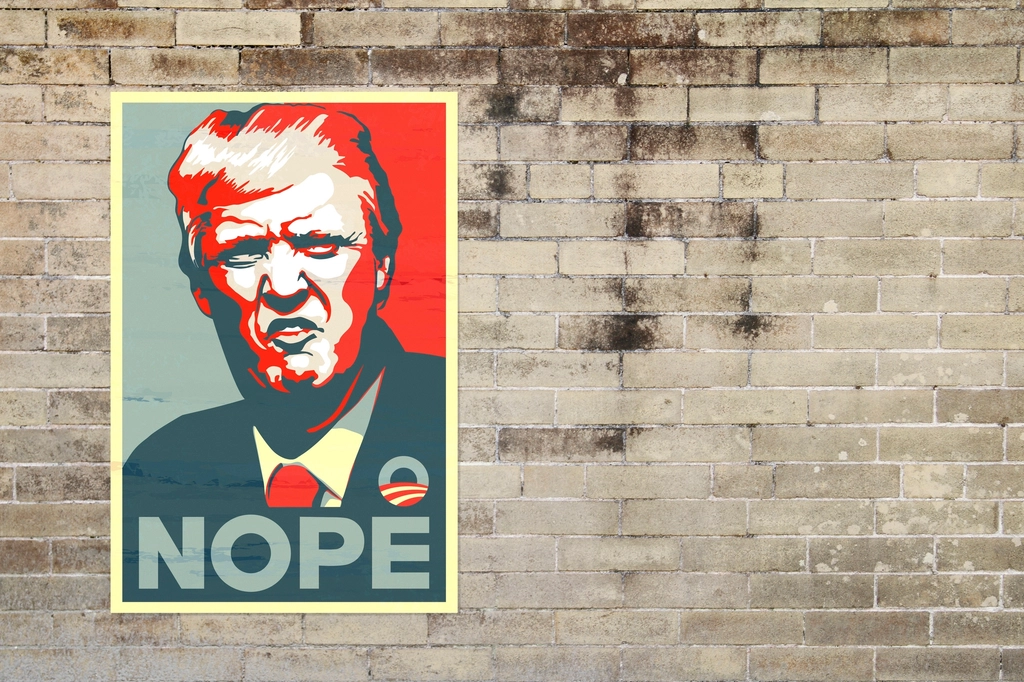
    In his State of the Union address on February 24, 2026, President Trump spoke confidently about prices coming down and economic strength returning. Whether one agrees politically or not, it raises an interesting and deeper question:

    What do we actually mean when we talk about prices?

    The language of coordination

    In a monetary economy, prices are the language of coordination. They signal scarcity, demand, cost, and profit. When inflation slows, politicians celebrate. When prices rise too fast, they warn of crisis. When prices fall too fast, economists fear recession.

    The system depends on prices staying within a narrow band. Too high? Instability. Too low? Instability again.

    That alone tells us something important.

    Prices are not just numbers. They are the mechanism that keeps the entire structure operating. Wages, debt, taxation, investment — everything flows through the price mechanism.

    Collapsing System

    So when we hear that prices are “plummeting,” it sounds positive. But if prices truly collapsed across the board, the system itself would stall. Revenue disappears. Production slows. Jobs vanish. The very thing meant to create stability would generate the opposite.

    And that leads to a more radical thought — not about left or right politics — but about structure.

    What if the real evolution of civilization is not about better price management… but about eventually moving beyond price as the core organizing principle?

    This idea is not new. During the Great Depression, observers like Jacque Fresco noticed a striking contradiction: factories could produce, stores had goods, resources existed, and people were willing to work — yet millions suffered. The problem was not empty shelves. It was empty pockets. Money had stalled, and access stalled with it.

    That simple observation planted a radical question: if the goods exist, why should access depend entirely on a financial token?

    From that contradiction grew the concept of a Resource‑Based Economy — a system where coordination is grounded in physical resources, energy, and scientific management rather than fluctuating purchasing power.

    In today’s system, prices can never go to zero for a very long time. Zero price means zero revenue. Zero revenue means systemic breakdown.

    But in a different kind of world — one based on coordinated access to shared resources rather than ownership and monetary exchange — the question of price becomes irrelevant.

    In a resource‑based economy (RBE), coordination would not happen through price signals but through direct measurement of resources, production capacity, and real human needs. Availability would be tracked physically. Sustainability would be calculated scientifically. Distribution would be optimized intelligently. Instead of asking, “Who can pay?”, the system would ask, “What exists, what is needed, and how do we align the two responsibly?”

    In such a framework, scarcity is addressed through planning and innovation, not through rising prices. Abundance is shared through access, not through purchasing power. The mechanism shifts from competition over money to coordination around resources.

    Not lower prices.
    Not higher prices.


    But priceless.

    A Different Operating System

    That doesn’t mean collapse. It means a different operating system — one where availability, sustainability, and intelligent coordination replace buying power as the gatekeeper of access.

    Whether such a transition happens in decades or centuries is another discussion. But it’s worth noticing this:

    As long as our civilization depends on prices staying in a perfectly balanced range to avoid crisis, we are operating inside a fragile design.

    The future question may not be:
    “How do we manage prices better?”

    But:
    “Can humanity eventually coordinate itself without needing them at all?”

    That is the deeper conversation.

    If this perspective resonates with you, please share this article.

    And if you’re curious about how such a world might function, follow the former billionaire Benjamin Michaels into the world of Waking Up – A Journey Towards a New Dawn for Humanity and get a glimpse into the priceless world of the future…

  • The New World on This Earth

    The New World on This Earth

    The Language of a “New Earth”

    In recent years, many have spoken about a coming New Earth.

    Channelings describe guidance from higher councils. Some speak of the Arcturians. Others describe DNA activations, frequency upgrades, and planetary ascension. There are daily transmissions, spiritual messages, and visions of humanity stepping into a higher timeline.

    For many, this language carries hope. It suggests that something greater is unfolding — that humanity is not alone, and that transformation is inevitable.

    I do not dismiss the symbolism in this.

    But I interpret it differently.

    Earth vs. World

    The Earth is a planet.

    The world is the society we have built upon it.

    The oceans, forests, atmosphere and soil — these belong to the planet.

    Money, ownership(or stewardship) systems, nation-states, laws, markets, institutions — these belong to the world.

    The planet is natural.

    The world is constructed.

    This distinction matters.

    Because if the world is constructed, it can be reconstructed.

    What If the “New Earth” Is This Earth?

    When I hear channelings about a New Earth, I do not imagine relocation.

    I do not imagine boarding starships.

    I do not imagine abandoning this planet for another dimension.

    I imagine something far more radical — and far more grounded.

    I imagine a new world built on this same Earth.

    The soil remains, only improved.

    The oceans remain, only cleaned.

    The sun still rises, only through clean air.

    But the agreements change.

    From Ascension to Responsibility

    Some narratives suggest that humanity will be upgraded — that our DNA will be activated, that higher beings will assist, that a collective shift will simply arrive.

    I don’t argue with that. It might be.

    But whether or not Arcturians are transmitting messages, one thing remains clear:

    No external force can redesign our economic system for us.

    No galactic council can restructure ownership into stewardship on our behalf.

    No frequency upgrade can automatically replace incentives rooted in fear and scarcity.

    If a new world is to emerge, it will emerge because humanity consciously chooses to grow up.

    That is not less spiritual.

    It is more responsible.

    A New Consciousness Emerging

    If there is a “New Earth” unfolding, it begins with something subtle but undeniable: a new consciousness waking up within humanity.

    Across cultures and continents, more people are questioning old assumptions. More people sense that something about our current systems does not align with our deeper values. More people feel the tension between what we have built and what we know, inwardly, is possible. Thus, the New Earth is taking shape in our minds. In Consciousness.

    This is not mystical spectacle.

    It is awareness.

    It is the growing realization that:

    • endless extraction cannot continue

    • value and worth is not the same as price

    • ownership is not the same as stewardship

    • competition is not the only way to organize society

    That awakening is consciousness expanding beyond fear-based survival logic.

    And when consciousness changes, behavior follows.

    A Shift in Consciousness That Becomes Structure

    A real shift in consciousness is not fireworks in the sky.

    It is a change in perception that leads to new behavior.

    And new behavior leads to new systems.

    When enough people:

    • stop equating worth with money

    • stop accepting artificial scarcity as natural

    • stop believing that ownership must enclose abundance

    Then the structure of the world begins to change.

    That is the New Earth.

    Not because the planet changed — but because the agreements did.

    The New World on This Earth

    The New World does not require escape.

    It does not require denial of science.

    It does not require rejection of spirituality.

    It requires clarity.

    The planet is already here.

    The resources are already here.

    Human creativity is already here.

    What must evolve is the story we are living inside.

    If humanity chooses cooperation over competition, stewardship over extraction, and shared inheritance over exclusive ownership — then a new world emerges on this Earth.

    No rescue.

    No relocation.

    No waiting.

    Just a conscious decision.

    And perhaps that is the most profound shift of all.

    A new world begins the moment we realize it is ours to build.

    If this perspective resonates with you, please share this article so the conversation can expand.

    Follow Benjamin Micheals when he wakes up in a new world where humanity has already been waking up in the novel Waking Up – A journey towards a new dawn for humanity.

  • The Unquestionable System

    The Unquestionable System

    In the beginning, no one owned the world.

    Land was used, not possessed.

    Resources were shared, not abstracted.

    Access to life was governed by custom, ecology, and relationship — not by permission or price.

    Then something subtle — and decisive — happened.

    Some people began to claim that the universe itself had an order. A cosmic structure governing seasons, fertility, success, failure, harmony, and chaos. And more importantly, they claimed the authority to interpret that order.

    This is where the modern monetary system truly begins.

    Claiming the order of everything

    This shift is first clearly documented in ancient Mesopotamia, particularly in Sumer — the earliest known complex civilization.

    Once cosmic order was named, it could be administered.

    Those who claimed to understand it — priests, kings, early administrators — did not initially present themselves as rulers or owners. They presented themselves as intermediaries between humanity and reality itself.

    The land, they said, belonged to the gods.

    Water followed divine logic.

    Time was sacred.

    Humans were allowed to participate — conditionally.

    This was the crucial shift: access to life became something that could be granted, measured, and withdrawn.

    From shared to administered access

    With cosmic order in place, coordination followed.

    Land was allocated.

    Water was regulated.

    Harvests were stored.

    Labor was scheduled.

    Nothing was yet called “ownership.” But everything became administered.

    And administration requires records.

    Clay tablets tracked grain, silver, livestock, and labor — not to facilitate exchange between equals, but to record who had received what, and therefore what was owed.

    Most money never circulated.

    It existed as numbers.

    Debt came before cash.

    When obligation became moral reality

    Because obligation was framed as part of cosmic order, repayment was not optional.

    Failing to repay was not merely an economic problem. It was moral disorder. It meant being out of alignment with reality itself.

    This is how control became internal.

    People did not comply primarily because of force.

    They complied because the system defined what was right, normal, and real.

    When stewardship hardened into control

    At first, the system provided genuine coordination.

    Surpluses were managed.

    Risk was shared.

    Infrastructure was maintained.

    But the structure contained a quiet escalation.

    When obligations could accumulate.

    When repayment was enforced regardless of harvest or circumstance.

    When access had no guaranteed exit.

    Stewardship hardened into control.

    Administration became authority.

    Authority became permanent.

    And permanence quietly became ownership.

    From cosmic order to unquestionable system

    Over time, the gods faded.

    Temples lost authority.

    Kings fell.

    But the structure survived.

    Cosmic order did not disappear — it secularized.

    Today, the authority once claimed by gods is carried by abstractions:

    • “The economy”

    • “The market”

    • “Growth”

    • “Creditworthiness”

    • “Fiscal responsibility”

    These are treated not as tools, but as forces of nature.

    This is why the monetary system feels all-encompassing. It’s not only a system governing money. 

    It governs food, housing, healthcare, education, mobility, time, and even self‑worth.

    It is not merely pervasive.

    It is assumed.

    And what is assumed is rarely questioned.

    Why almost no one questions it

    When a system presents itself as reality itself, critique sounds irrational.

    Questioning money does not invite discussion.

    It triggers reflexive responses:

    • “Unrealistic.”

    • “Naïve.”

    • “Utopian.”

    These are not arguments.

    They are symptoms of a system that inherited cosmic authority.

    Money no longer needs priests.

    It has internalized obedience.

    One system everywhere — and nowhere accountable

    Because the monetary system is treated as neutral and inevitable, it is allowed to shape almost every aspect of modern life without ever being held responsible for its consequences.

    Today, money quietly governs:

    • what food is grown and what is destroyed

    • where people may live, and where they may not

    • which lives are supported and which are deemed “unviable”

    • how long products last, and how quickly they must be replaced

    • whether ecosystems are protected or sacrificed

    The system does not ask whether something is needed, healthy, or sustainable.

    It asks whether it is profitable.

    The planetary cost of an unquestionable system

    When profit becomes the primary goal, destruction becomes rational.

    Forests are cleared because growth demands expansion.

    Oceans are depleted because regeneration does not fit quarterly reports.

    Soil is exhausted because long-term balance does not register as value.

    Climate breakdown, mass extinction, and ecological collapse are not failures of humanity.

    They are logical outcomes of a system that converts life into numbers and treats limits as obstacles.

    The human cost

    The same logic applies to people.

    When access to life is mediated by money:

    • stress becomes structural

    • insecurity becomes normal

    • competition replaces cooperation

    • worth is confused with income

    Entire populations live in permanent precarity — not because resources are scarce, but because access is conditional.

    The system extracts not only labor, but attention, time, health,  meaning and value.

    Nature as collateral damage

    In a monetary system, nature does not exist.

    Only exploitable resources do.

    Rivers become assets.

    Forests become commodities.

    Animals become units.

    What cannot be priced is ignored.

    What cannot be owned is vulnerable.

    This is not accidental.

    It is the consequence of placing an abstract accounting system above the living world.

    Seeing the continuity

    This is the long arc:

    Cosmic order → administered access → obligation → ownership → abstraction → unquestionable system.

    Different eras.

    Different language.

    Same structure.

    Money did not become powerful because it worked better than alternatives.

    It became powerful because it absorbed the authority to define reality.

    Returning — without going backward

    A moneyless world is often imagined as regression.

    It is the opposite.

    It is a return to shared access — without myth.

    Where early societies relied on belief and authority to coordinate resources, a mature civilization can rely on:

    • real‑time data

    • transparent logistics

    • ecological limits

    • distributed decision‑making

    • advanced production technologies

    In other words:

    What once required cosmic authority can now be handled by information and coordination.

    Back to our roots — forward in capability

    Removing money is not about removing structure.

    It is about removing sacred abstraction.

    Provision instead of obligation.

    Access instead of permission.

    Coordination instead of control.

    Not a new cosmic order.

    No unquestionable system at all.

    Just humans — consciously organizing reality with tools powerful enough to finally make myth unnecessary.

    If this resonates, please share this article.

    And if you want to explore this transition through story rather than theory, the novel Waking Up – A Journey Towards a New Dawn for Humanity imagines a world that has already taken this step.

    Sometimes the most radical act is not rebellion —

    but remembering that we are allowed to redesign what humans once invented.

  • Why Waking Up Exists

    Why Waking Up Exists

    An article for new readers who might be interested in a better future for humanity.

    All my life I’ve had a strong urge to fix things.

    Gadgets and machines — and systems. Situations where people suffer even though, intuitively, it feels like they shouldn’t have to. That urge was always paired with something else: a deep concern for humanity, and a simple desire for everyone to be able to thrive.

    Over time, one pattern became impossible to ignore. Again and again, the limits to human well-being traced back to the same source: money. How much you had of it. Or didn’t.

    Everywhere I looked, money seemed to generate problems — inequality, stress, conflict, environmental destruction. Not because people were inherently selfish or cruel, but because the system itself was built on scarcity, competition, and exclusion.

    That realization led to an obvious but uncomfortable question:

    How do you fix a system that large?

    For a long time, I couldn’t see an answer.

    Then I encountered ideas that changed the frame entirely. The Venus Project had turned everything upside down. Instead of asking how to distribute money more fairly, they asked a different question altogether: Why is money there in the first place? What if, instead of managing prices and profits, we managed what actually exists — the planet’s resources, our knowledge and technologies, and our collective capacity to care for one another?

    This way of thinking removes money from the equation and focuses on something more concrete: what we have, what we need, and how we can organize society so that everyone’s needs are met within ecological limits.

    That shift fascinated me. Not as ideology, but as design. As engineering applied to civilization itself.

    TVP had been exploring and sharing these ideas for decades, often with little traction. Inspired by their persistence, I didn’t want to write a political program or a manifesto. I wanted to explore what such a world would actually feel like.

    So I chose fiction.

    I began writing a story about a contemporary man who wakes up in a future where humanity has finally reorganized itself around cooperation, stewardship, and shared abundance. A world where the central question is no longer who can afford to live, but how can we make life work for everyone?

    That story became Waking UpA journey towards a new dawn for humanity.

    Over the many years it took to write the book, new ideas naturally emerged — about technology, psychology, governance, ecology,  human nature, and the story of the novel itself. All of them were woven into the story, not as lectures, but as lived reality.

    Waking Up exists to explore a simple, unsettling question:

    What would the world look like if we finally designed it to work — for people, nature, and for the planet?

    If this question resonates with you, you’re already part of the conversation and I urge you to share this article.

    If you would like to read the result of all these years of writing, you can find the book HERE. I thank you.

  • From Supply and Demand to Demand and Supply

    From Supply and Demand to Demand and Supply

    For centuries, the dominant logic of our economy has been supply and demand.

    Seemingly they try to fulfill a demand. So, something is produced. Then demand is measured again — or manufactured — and price adjusts accordingly. If demand is too low, marketing steps in to create it. If demand is high, prices rise. Scarcity becomes profitable.

    This logic has quietly inverted the purpose of production.

    Instead of producing what people actually need, we produce what can be sold — and then persuade people they need it.

    The result?

    • Overproduction of the non‑essential

    • Underproduction of the essential

    • Rising prices on food, housing, energy, healthcare, and land

    • Ecological overshoot and pollution

    • Stress baked into the system itself

    The hidden flaw in supply‑first thinking

    In a supply‑first world, need is secondary to profitability.

    Food is destroyed to keep prices stable.

    Homes can stand empty while people are homeless.

    Water can be privatized.

    Scarcity can be engineered.

    All of this is considered rational — even responsible — within the logic of supply and demand.

    But rationality is not the same as wisdom.

    A simple reversal that changes everything

    Imagine flipping the logic:

    Demand first. Supply second.

    Nothing is produced unless there is a real demand for it. Which of course is impossible within today’s logic and monetary system.

    And whatever there is a demand for will be produced — as long as:

    • it stays within ecological limits

    • it does not come at the expense of other people

    • it does not damage future generations

    This is not utopian.

    It is simply mature.

    What demand actually means

    In today’s system, demand is distorted by:

    • unequal purchasing power

    • artificial scarcity

    • advertising pressure

    • survival anxiety

    A demand‑first future assumes something radically different:

    That basic needs are already met.

    When people are not forced to compete for survival, demand becomes clearer, calmer, and more truthful. People ask for what they actually need — not what they fear losing status without.

    So what is “need”?

    Need is not limited to bare survival.

    It includes basic needs — food, shelter, water, healthcare, self-realization, safety — and the things people genuinely want once those basics are secure.

    Need emerges wherever a conscious, informed desire exists.

    For example:

    If a group of people want Coca‑Cola, then there is a demand — and meeting that demand becomes a legitimate task.

    In a demand‑first system, the question is not whether something should exist, but how it can be produced responsibly:

    • within ecological limits

    • without exploiting people or ecosystems

    • without externalizing harm to others or the future

    If those conditions can be met, production makes sense.

    If they cannot, the demand itself becomes a conversation — not a market opportunity.

    This shifts production from manipulation to dialogue.

    Needs are no longer guessed at, manufactured, or monetized.

    They are expressed — and answered. People ask for what they actually need — not what they fear losing status without.

    Production as response, not manipulation

    In a demand‑and‑supply world:

    • Production responds to lived needs, not speculative markets

    • Supply chains become adaptive instead of extractive

    • Waste collapses because excess production disappears

    • Prices lose their coercive role and fade from relevance

    Production becomes a service to life — not a mechanism for profit extraction.

    Technology makes this possible

    For the first time in history, we can:

    • measure real demand in real time

    • coordinate production globally

    • model ecological impact before acting

    • distribute without intermediaries designed to skim value

    The barrier is no longer technological.

    It is only conceptual.

    From fear to trust

    Supply‑first systems are built on fear:

    What if there isn’t enough?

    What if someone else gets more?

    What if I lose?

    Demand‑first systems are built on trust:

    We produce because someone needs this.

    We stop when the need is met.

    We respect planetary boundaries.

    This is not about controlling people.

    It is about listening to them.

    The quiet shift already underway

    We already see early signals:

    • on‑demand manufacturing

    • local energy production

    • open‑source collaboration

    • cooperative housing

    • circular design

    These are not anomalies.

    They are previews.

    A world that finally makes sense

    A civilization is mature when it no longer needs scarcity to function.

    When demand guides supply — instead of supply manipulating demand — production aligns with reality rather than fighting it.

    This is not the end of provision.

    It is the end of distortion.

    And it may be one of the simplest ideas powerful enough to change everything.

    If this perspective resonates, please share this article.

    You can explore this vision through story in Waking Up – A Journey Towards a New Dawn for Humanity.

  • The Clean Slate

    The Clean Slate

    Yes, there is huge inequality in the world. And yes, many people therefore argue that we should tax the rich more heavily, believing that this would somehow even things out.

    The problem is that this treats inequality as a mistake of the system — when in fact it is a requirement.

    The monetary system itself needs differences to function. Money only has value because it is scarce, unevenly distributed, and hoardable. If everyone had enough, money would lose its value. So taxation doesn’t fix the problem — it merely tries to soften the sharpest edges while keeping the underlying rules intact.

    That’s why the same problems keep returning.

    The True Face of the system

    Look around.

    We see a world where a tiny number of people accumulate staggering wealth while billions struggle to meet basic needs. Not because there is a lack of resources, but because access is filtered through money.

    We see products deliberately designed to stop working long before their real lifespan is over — not due to technical necessity, but because continuous consumption is required to keep profits flowing. This requirement of the system is of course devastating to the whole planet, causing resource depletion, pollution and climate change.

    We see poverty described as something that is “systemically entrenched” — an almost accidental admission that the problem isn’t individual failure, but structural design.

    These are not isolated issues. They are different expressions of the same logic.

    The wasteful system

    When a system produces inequality, waste, and scarcity as normal outcomes, trying to fix it with the same rules is like rearranging furniture in a house that is on fire.

    Redistribution debates miss the deeper question:

    Why is access to life’s essentials mediated by money at all?

    As long as money remains the central organizing principle, someone must lose so that others can win. Someone must be excluded so that value can exist. Someone must go without so that hoarding makes sense.

    Starting from a clean slate

    Yes — proposing a world without money and ownership sounds drastic.

    But here’s the real question:

    Why do we keep assuming that a centuries‑old system designed for scarcity, competition, and limited information should govern a planet with global awareness, real‑time data, automation, and unprecedented technological capacity?

    Imagine this instead:

    Humanity as one family arriving on Earth together — like a modern Robinson family, but on a planetary scale.

    No inherited privileges.

    No historical debts.

    No artificial scarcity.

    Just one planet, shared by many species, mankind as one of them.

    With today’s technology, we could design a system that takes everything into account:

    • the limits of nature

    • the needs of ecosystems

    • the well‑being of every human being

    • long‑term planetary sustainability

    In such a system, ownership becomes unnecessary. Stewardship replaces possession. Access replaces accumulation.

    From spoiled brats to a global family

    Our current behavior often looks less like civilization and more like a family fighting over toys in a burning house.

    We fight over borders, resources, money, and status — while having more than enough knowledge and technology to ensure a dignified life for everyone.

    A clean slate changes the game entirely.

    No one owns the planet.

    No one owns life’s essentials.

    No one hoards while others starve.

    Not because of moral superiority — but because the system no longer rewards that behavior.

    The real question

    So the question isn’t whether a clean slate is too radical.

    The question is this:

    How long can we keep pretending that patching a broken system will somehow turn it into one that works for everyone?

    Maybe it’s time to stop fixing.

    And start designing. From a clean slate.

    If this perspective resonates, I urge you to share this article..

    Do you want to experience how life in an optimized world can be? If so, explore the story and vision behind this in the novel Waking Up – A journey towards a new dawn for humanity.

  • This Land Was Made for You and Me — And Why We Forgot

    This Land Was Made for You and Me — And Why We Forgot

    When Woody Guthrie wrote “This Land Is Your Land,” it wasn’t meant as a patriotic sing‑along. It was a quiet protest.

    One of the verses that later disappeared tells the real story:

    As I went walking, I saw a sign there,

    And on the sign it said “PRIVATE PROPERTY.”

    But on the other side, it didn’t say nothing —

    This land was made for you and me.

    That line doesn’t celebrate a nation. It questions a system.

    Because the idea that land can be fenced, owned, and withheld from others is not ancient or natural. It is recent — and costly.

    Before land had owners

    For most of human history, land was not owned in the modern sense.

    Indigenous societies across the world understood land as something you belong to, not something that belongs to you. Communities stewarded territories collectively. People used land, cared for it, moved with it’s seasonal rhythm — but did not sell it as an abstract asset.

    Land was identity, ancestry, responsibility.

    When Europeans arrived and asked, “Who owns this land?”, the question itself often made no sense. There was no word for ownership as exclusion. What existed was use, care, and shared obligation.

    This wasn’t naïveté. It was systems literacy before the word existed.

    Enclosure changes everything

    Once land becomes private property, a chain reaction begins:

    1. Exclusion — someone is now outside the fence

    2. Scarcity narratives — “they want to take what’s ours”

    3. Defense structures — borders, armies, enemies

    And then comes the final step we rarely name:

    Young boys are recruited to defend land they will never truly own.

    Nationalism provides the emotional cover. You are told you are defending the nation, the flag, the people. But underneath the symbols, wars are still about territory, resources, and power.

    Private ownership doesn’t just divide land. It divides humanity.

    Guthrie saw it clearly

    Woody Guthrie performed with a guitar carrying the words:

    THIS MACHINE KILLS FASCISTS

    He didn’t mean violence. He meant clarity.

    Songs, stories, and plain truth kill fascism by removing its disguise. Fascism thrives when people are taught to defend systems that quietly exclude them.

    Guthrie looked at hunger beside abundance, fences beside empty land, relief lines in the shadow of churches — and asked a simple question:

    Is this land made for you and me?

    That question is still unanswered.

    What’s different now

    For centuries, exclusive land ownership was justified by scarcity:

    • not enough food

    • not enough space

    • not enough coordination

    • not enough trust

    Today, that justification is collapsing.

    In a high‑tech world:

    • land can be mapped, monitored, and protected without being owned. It is mapped to the responsible stewards instead.

    • cities can take less space while offering more quality of life

    • ecosystems can be restored alongside human flourishing

    • abundance can be designed instead of fought over

    The technical reasons for exclusion are disappearing. What remains are habits, power structures, and fear.

    Returning forward

    This is not about going back to the Stone Age.

    It is about returning to stewardship, supported by modern tools.

    Indigenous cultures had the ethic right.

    We are finally approaching the technology needed to scale it.

    A future where land globally is shared, optimized, and cared for changes something fundamental:

    • there is nothing to conquer

    • nothing to hoard

    • nothing to defend from “others”

    When land stops being a weapon, war loses its fuel.

    Maybe the world is waking up

    An awakening isn’t learning something new.

    It’s realizing that something outdated no longer makes sense and remembering the original value.

    More people are quietly seeing that:

    • idle land beside homelessness is a design failure

    • destroying ecosystems to signal success is irrational

    • sending children to die for abstract ownership claims is obscene

    Woody Guthrie wasn’t dreaming of the future.

    He was reminding us of something we forgot.

    This land was never meant to be owned.

    It was meant to be shared.

    And for the first time in history, humanity may actually be ready to design a world that reflects that truth.

    If this perspective resonates, please share it. Stories are still the most powerful machines we have.

    And if you want to read a full story from a world where humanity has adopted this view globally, follow the former billionaire Benjamin Micheals in Waking Up – A journey towards a new dawn for humanity.

  • The Global Family

    The Global Family

    We are all brothers, sisters, fathers, mothers, daughters, and sons.

    Not metaphorically. Not only spiritually. But literally.

    Modern science confirms what intuition has always whispered: all human beings descend from the same small ancestral family. Long before nations, borders, currencies, religions, or ideologies, there was simply family. Humanity did not begin as competing tribes or opposing camps. It began as people caring for one another in order to survive.

    What we call division today came much much later. 

    For most of our history, cooperation was not a moral ideal — it was a practical necessity. Family bonds expanded into clans, villages, and cultures. Over time, as populations grew and resources were unevenly distributed, systems emerged to manage complexity. Some of those systems brought stability. Others slowly replaced trust with control, kinship with contracts, and belonging with alienation.

    Somewhere along the way, we forgot something fundamental.

    The idea of a global family is not a new invention. It is a remembrance.

    In today’s world, we often speak about humanity as if it were an abstraction — billions of strangers divided by borders, interests, and identities, trading time and resources with money, and not seeing any other possibility. Yet at the smallest scale, humanity already functions without money, ownership, or coercion: within families. Families share. Families care. Families contribute according to ability and receive according to need, not because a system enforces it, but because relationship makes it natural.

    This is the seed

    When families expand their circle of trust beyond blood alone — into communities built on cooperation, contribution, and shared stewardship — something remarkable happens. The logic of family begins to scale. These are what I call Cities of Light: communities that function like extended families rather than competing units.

    And when such families and communities spread across regions, cultures, and continents — not through force, but through resonance — a quiet transformation occurs.

    The global family emerges.

    Not as a centralized authority.

    Not as a uniform culture.

    Not as a political project.

    But as a living network of families across Earth recognizing one another as kin.

    This is the complete realization of the brotherhood of man — not as a slogan, but as a lived reality. A world where diversity is preserved, individuality flourishes, and cooperation replaces fear as the organizing principle of society.

    The global family does not erase differences. It contextualizes them. Just as siblings can be different yet belong to the same family, humanity can remain diverse while acting in shared care for one another and for the planet that sustains us.

    Seen this way, the future does not require humanity to become something new.

    It requires us to remember what we already are.

    If this perspective resonates with you, please share this article, as the more people can imagine a better world, the bigger chance we have of actually getting there.

    And since you’ve read this far, you clearly enjoy reading, and I hope you enjoy this as well. And if you’d like to experience a full story from a future world like this, you can find the book Waking Up – A Journey Towards a New Dawn for Humanity HERE.

  • The Meta‑Crisis — And the World That Could Come After

    The Meta‑Crisis — And the World That Could Come After

    We hear the word crisis so often that it has almost lost its meaning.

    Climate crisis. Economic crisis. Political crisis. Mental‑health crisis. Energy crisis. Trust crisis.

    But what we are actually facing is something deeper and bigger — a meta‑crisis.

    A meta‑crisis is not one problem. It is a web of problems, all feeding each other. Climate breakdown accelerates economic instability. Economic insecurity fuels political polarization. Polarization erodes trust. Loss of trust paralyzes collective action — which in turn worsens climate breakdown.

    Each crisis amplifies the others.

    This is why so many solutions feel ineffective. We keep treating symptoms in isolation, while the underlying system continues to generate the same outcomes.

    A System Under Strain

    Our global system was built for a world that no longer exists.

    It assumes endless growth on a finite planet.

    It rewards competition over cooperation.

    It measures success in money rather than wellbeing.

    For a long time, this system appeared to work. Supermarkets were full. Technology advanced. Comfort increased — for some.

    But the costs were externalized.

    Onto other people.

    Onto future generations.

    Onto nature itself.

    Now the bill is coming due.

    The meta‑crisis is not an accident. It is the predictable result of a system designed without regard for ecological limits, psychological health, or long‑term resilience.

    A Question We Rarely Ask

    Most discussions stop here — with warnings, statistics, and projections of collapse.

    But there is another question worth asking:

    What if humanity acted in time?

    What if we recognized the pattern early enough?

    What if cooperation replaced competition as our default?

    What if technology was used to restore nature and free humans — not to extract more from them?

    What if we acknowledged something even more uncomfortable:

    That the problem was never a lack of solutions — but a lack of alignment.

    Because the truth is this:

    We already have the tools.

    We already have the science.

    We already have the productive capacity to meet everyone’s basic needs.

    We know how to generate abundant renewable energy.

    We know how to automate dangerous and repetitive labor.

    We know how to design cities around people instead of profit.

    We know how to produce more than enough food — sustainably.

    What stands in the way is not technology.

    It is the system we organize ourselves by.

    A system that requires scarcity to function.

    A system that turns necessities into commodities.

    A system that measures success in money rather than human and ecological wellbeing.

    Some visionary projects — such as those exploring resource‑based economies, like The Venus Project — have long argued that a resilient society would require something radical:

    Not reforming the monetary system — but replacing it.

    In such a model, resources are treated as the shared inheritance of humanity.

    Production is guided by real needs and ecological limits, not profit.

    Technology becomes a tool for coordination, not control.

    This is not science fiction.

    It is a different set of rules applied to capabilities we already possess.

    So the real question becomes:

    If the solutions exist — what would the future look like if we actually used them?

    A Thought Experiment

    So what would the world actually look like if we implemented all of this?

    If we treated the planet’s resources as a shared inheritance.

    If production was guided by real human needs and ecological limits.

    If a global, coordinated, resource-based economy replaced the monetary system.

    If technology was used to liberate time and creativity, not monetize it.

    What would daily life feel like?

    How would cities function?

    What would people do with their lives when survival was no longer the primary concern?

    One way to explore that question is through story.

    That is exactly what Waking Up – A journey towards a new dawn for humanity does — through the eyes of Benjamin Michaels.

    Benjamin comes from our world, at its peak – 2015.

    He was not a rebel or an outsider.

    He was a billionaire — someone who had mastered the old system. But suffered from incurable cancer. He chooses cryogenic preservation of his body in the hopes of waking up again to being healed and continue expanding his empire.

    When he wakes up one hundred years into the future, he is shocked to learn about the new moneyless world and expects collapse, chaos, or authoritarian control — the futures our imagination keeps returning to.

    Instead, he finds something else entirely.

    A world where people are thriving.

    A world where basic needs and wants are guaranteed.

    A world where cities are designed around human wellbeing and ecological harmony.

    A world where cooperation is not idealism, but infrastructure.

    Benjamin doesn’t just hear about this world.

    He walks through it.

    Questions it.

    Resists it and almost helps destroying it.

    But slowly begins to understand how humanity stepped back from the brink and started prospering.

    Not Utopia — But Maturity

    This future is not perfect.

    Nature still has momentum.

    Old damage still needs healing.

    Human emotions are still human.

    But the underlying rules have changed.

    Fear is no longer the operating system.

    Scarcity is no longer artificially enforced.

    Survival is no longer the primary driver of human behavior.

    The story does not ask us to believe that humans became saints.

    It asks a simpler question:

    What happens when humanity grows up?

    Why Stories Matter

    Facts inform.

    Stories transform.

    We already know the data.

    We already know the risks.

    What we lack is a shared image of a future worth moving toward.

    That is what the novel,Waking Up – A Journey Towards a New Dawn for Humanity explores — not as prediction, but as possibility.

    Not as ideology, but as a thought experiment and inspiration grounded in existing technology, systems thinking, and human values.

    The Quiet Invitation

    The meta‑crisis is real.

    But collapse is not the only ending available.

    Another path exists — one that does not begin with revolution or force, but with understanding, imagination, and cooperation.

    The question is not whether such a future is guaranteed.

    The question is whether we dare to imagine it — and then start acting as if it were possible.

    If this article resonates, please share it.

    Because the more people start to imagine this future the bigger chance we have of actually getting there.

    And if you want to explore one possible answer to the meta‑crisis through story rather than theory, Waking Up is available now.