
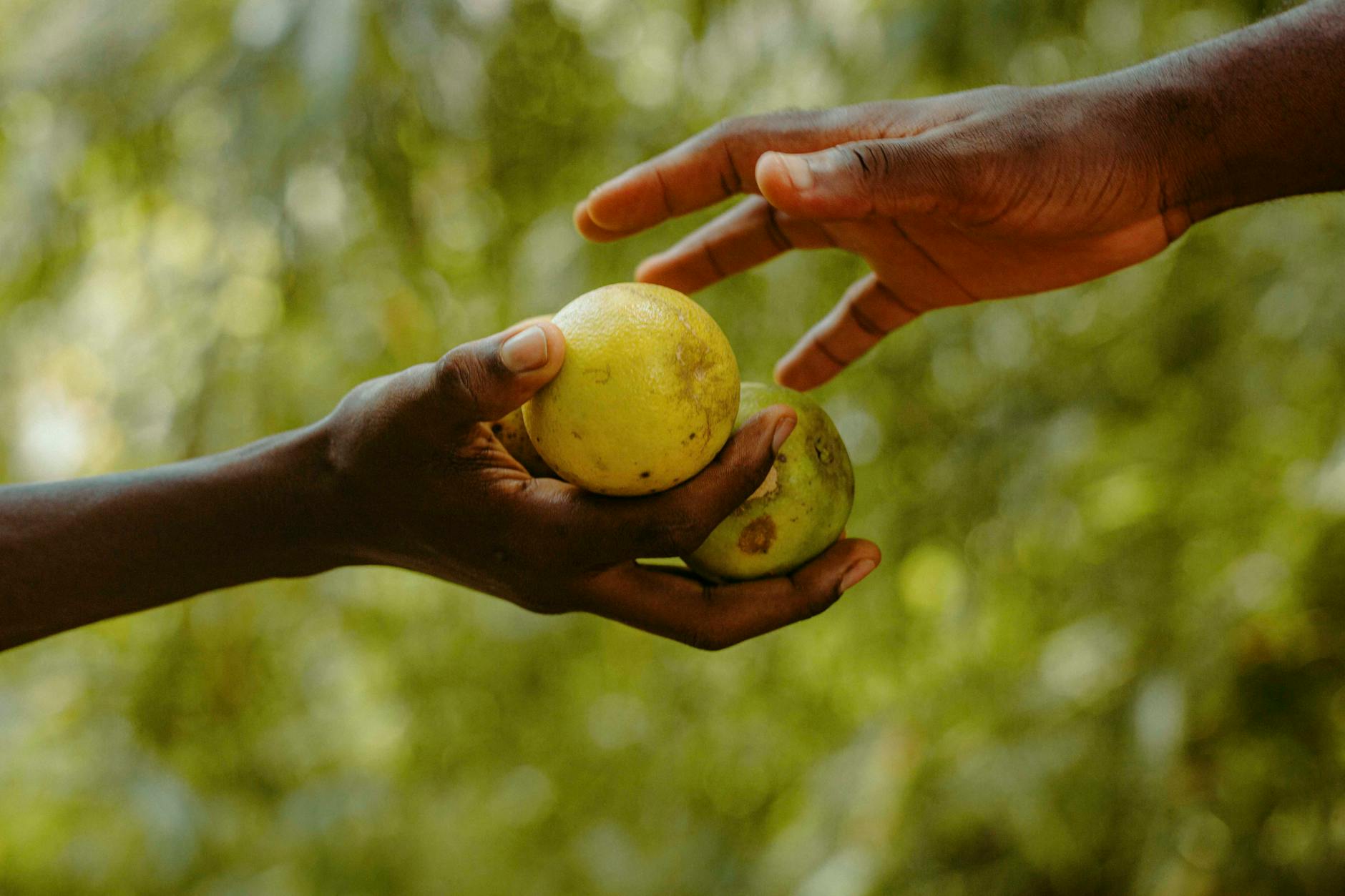
What if generosity wasn’t an act—but the way the world works?
Because nature is already generous.
The sun keeps giving. Rain falls. Rivers flow. Plants grow.
The generosity is already here.
The question is whether we hoard it and sell it back to each other—or build a system that shares it.
Something We Admire
People say we should be more generous.
That sounds nice. It’s also misleading.
You can only be generous when you actually have something to give—time, energy, security, surplus.
For many people, those are exactly the things they don’t have.
So generosity becomes something we admire… but don’t live.
The system makes generosity difficult.
You might want to give, but you can’t give what you don’t have.
Because in a system where a few end up controlling most of the Earth—not just land and resources, but also our time and skills—it’s not so easy.
When your job takes most of your day,
when you’re exhausted by the end of it,
generosity is rarely your default setting.
So the question changes:
What if the system itself was generous?
Not dependent on generosity—but built on it.
Because nature is already generous.
The sun keeps shining.
Rain returns again and again.
Rivers keep moving.
Plants keep growing.
The generosity is already here.
What if, instead of allowing a few to accumulate most of the world’s resources while the rest work to “earn a living,” we started somewhere else?
What if the system said:
“No one owns anything. We optimize everything to create a thriving world for all.”
From that starting point, we would share and optimize the world’s resources from the outset.
We would embed the built-in generosity of nature into the system itself.
It would literally be a generous system.
And from there, something shifts:
When there is no 9–5 job draining your time,
no mortgage hanging over you,
being generous with your time and skills becomes much easier.
So the real question is:
What if generosity is not something we do…
but something that could emerge naturally from the kind of system we live in?
Generosity in the world we know
In today’s world, generosity is the exception.
You have something.
You own it.
And you decide to give some of it away.
That makes you generous.
Notice what this depends on:
- Ownership
- Inequality
- Surplus
Generosity, as we know it, only appears after these conditions are met.
So here’s the uncomfortable truth:
It is much easier to be generous when you feel secure…
than when you are struggling to get by.
When your time is consumed by work,
when your energy is drained,
when your security depends on your next paycheck—
generosity is no longer your default setting.
But the system leaves little room for it.
A different relationship to the world
We are used to thinking:
This is mine.
That makes sense in a world of ownership, where everything is divided, controlled, and protected.
But there is another way.
A much simpler one:
This exists. I am in contact with it. I take what I need—and I make the rest available.
This is not charity.
This is stewardship.
We are not owners of the world.
We are stewards of it.
And from that starting point, something shifts:
Generosity is no longer about giving.
It is about not holding on to what was never yours to begin with.
The limitation of philanthropy
Philanthropy is often presented as the highest form of generosity.
Look closer.
It exists because the system creates imbalance.
Some accumulate far more than they could ever use.
Others struggle to meet basic needs.
So we rely on generosity to patch the gaps.
But a truly generous system would not need philanthropy at all.
Because the imbalance would not exist in the first place.
What if the system itself was generous?
What if we started somewhere else?
Not with ownership and accumulation—
but with a simple premise:
No one owns the Earth. We all share it.
From there, everything changes.
Instead of competing and accumulating, we would:
- map what we actually have
- optimize how we use it
- and make it available where it is needed
Not as charity.
Not as sacrifice.
But as a natural function of the system.
Nature already works like this.
The sun gives.
Rivers flow.
Plants grow.
There is no ownership—only flow, balance, and regeneration.
What if we designed our systems the same way?
The world of Waking Up
In the novel Waking Up – A Journey Towards a New Dawn for Humanity, this shift has already happened.
There is no ownership of resources in the traditional sense.
People are stewards.
A family may care for a piece of land. They grow food, live from it, enjoy it. But the surplus does not accumulate as private control. It flows outward—into the community, into the system, into the whole.
Not because they are unusually generous people.
But because nothing was ever theirs to withhold.
Stewardship and access replaces ownership.
And when people have what they need, something remarkable happens:
Generosity becomes effortless.
The real question
If we want a generous world, we can’t only rely on individual kindness.
We have to ask something deeper:
What kind of system makes generosity natural?
Because when fear and scarcity are no longer the driving forces—
when people have time, security, and enough—
generosity is no longer a sacrifice.
It becomes normal.
A different future
In such a world, we wouldn’t praise generosity.
We would simply live it.
Imagine waking up in a world where generosity isn’t rare—
but the foundation of everything. That is exactly the experience of the former billionaire Benjamin Michaels.
If you like to have this experience yourself, you can get the novel here.
If you like this article I invite you to share it. Thank you.
Leave a Reply