
The fear of overpopulation is not new.
It rose to global prominence in the 1970s, when predictions warned that humanity would soon outgrow the Earth’s capacity to sustain us. At the time, the global population had just passed around 3.7 billion, and many projections assumed near-exponential growth—doubling again within a few decades. Books like The Population Bomb warned of hundreds of millions starving by the 1980s and 1990s. Mass starvation, collapse, and crisis were expected within decades.
But something interesting happened.
Those predictions did not come true.
We did not reach the catastrophic population levels that were forecast.
So the obvious question is:
Why not?
What Actually Happened
Population growth did not continue unchecked.
In many parts of the world, it slowed down naturally.
Why?
Because of education.
Because of improved living standards.
Because of access to healthcare and family planning.
But today, another factor is increasingly visible:
Because of economic pressure and social stress.
Rising housing costs, job insecurity, long working hours, and financial strain are making it harder for many to start or grow families.
When people feel secure, informed, and supported, they tend to have fewer children.
No coercion required.
The Fear Returns
Today, the fear of overpopulation has reemerged.
Once again, it is presented as one of the central problems of our time.
And on the surface, it makes sense.
More people means more consumption.
More pressure on the planet.
It appears to be the simplest explanation.
And therefore, the simplest “solution.”
But simple does not mean correct.
The Convenient Explanation
Blaming overpopulation is convenient.
It directs attention toward people—
instead of toward the system we have built.
Because the uncomfortable truth is this:
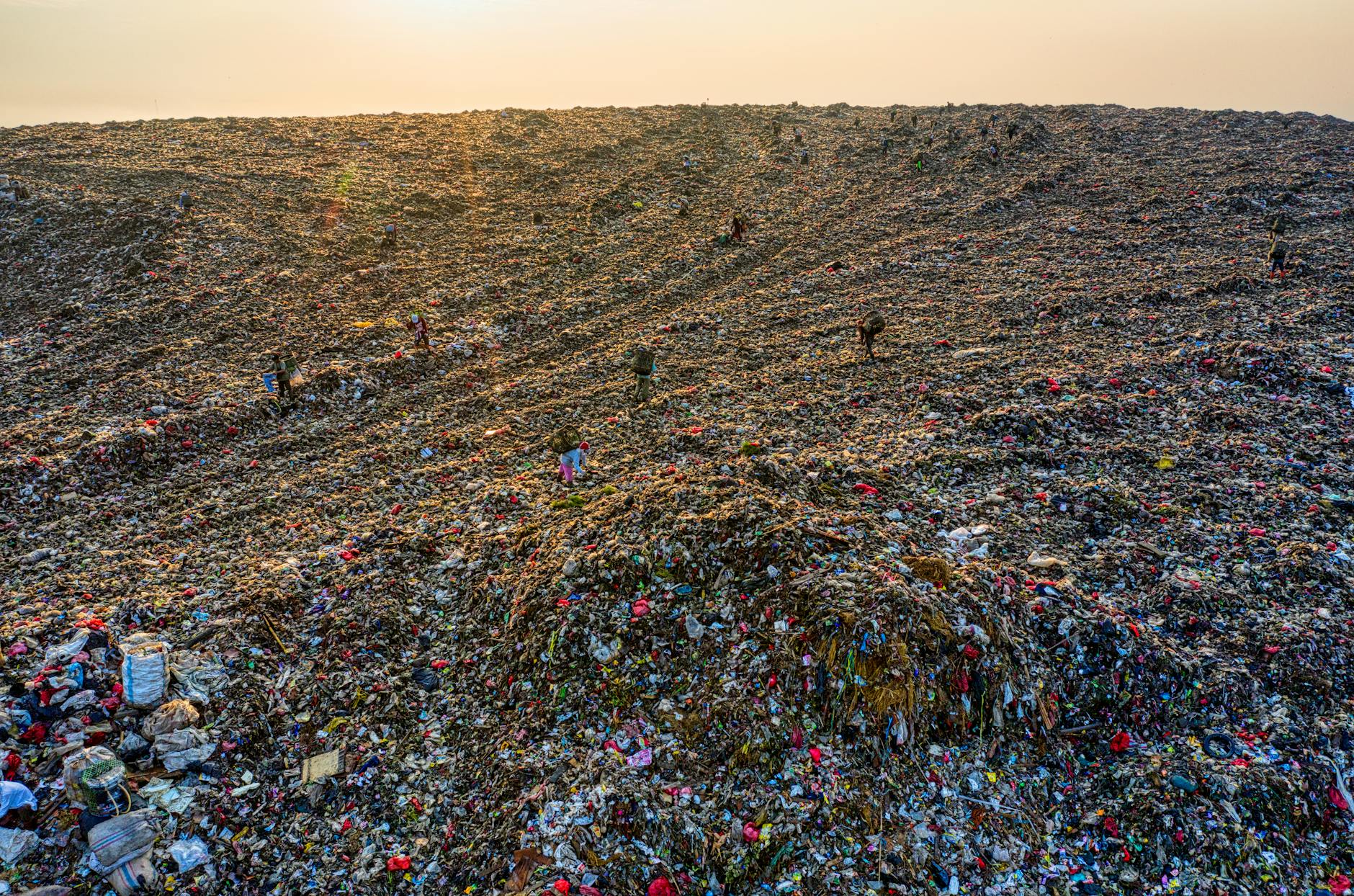
The core problem is not how many we are. It is how we manage what we have.
Carrying Capacity Is Not Fixed
Yes, the Earth has limits.
Of course we must keep our population within its carrying capacity.
But that capacity is not a fixed number.
It depends entirely on how efficiently we use our resources.
According to scientific assessments, the Earth can sustain around 10 billion people—
if resources are managed properly.
That means:
- Optimized production
- Minimal waste
- Sustainable use of materials and energy
- Distribution based on real human needs
A Note on Space, food and Land
Another often overlooked point is how misleading population density can be.
Most of us experience the world through cities, where people are packed closely together. This creates the feeling that the planet itself is overcrowded.
But globally, that is not the case.
There are roughly 4.8 billion hectares of agricultural land on Earth. That equals about 48 trillion square meters.
If we divide that by a global population of around 8.3 billion people, it comes out to roughly:
~5,800–6,000 m² PER PERSON.
This includes land used directly for crops, land used for grazing, and land that contributes to food production or can potentially be restored.
In other words, a family of four would have access to around 2.3–2.4 hectares of land contributing to their food supply.
Of course, land is not evenly distributed, and not all of it is equally productive. And if we also include cities, deserts, forests, and other land types, the total available land per person becomes even greater. But the conclusion is difficult to ignore:
We are not running out of space or resources.
What we are running into is the limits of how we manage that space and those resources. The same applies to food: globally, we already produce more than enough to meet human nutritional needs—yet hunger still exists, not because of lack of production, but because of how access and distribution are organized.
The System We Actually Use
But this is not how our current system operates.
We do not manage resources directly.
We manage money.
And the monetary system is arguably the most wasteful system ever created—it is highly efficient at creating wealth for a few, but not at creating abundance for all.
It prioritizes:
- Profit
- Growth
- Consumption
Which leads to:
- Overproduction
- Overextraction
- Overconsumption
- Massive waste
Not because we need it—
but because the system depends on it.
When Population Looks Like the Problem
In our current system, more people will naturally seem like a problem.
Because the system is already inefficient.
Already wasteful.
Already misaligned with real needs.
So the conclusion becomes:
“Too many people.”
But that conclusion is misleading.
Because what we are really seeing is:
Too inefficient a system.
And this is the remarkable paradox:
We are already around 8.3 billion people on Earth—
even within this highly inefficient and wasteful system.
Which means the issue is not that the planet cannot support us.
The issue is that this system cannot scale much further without increasing stress, inequality, and environmental damage.
So yes—within this system, many more people do become a huge problem.
But that only reinforces the real point:
It is not humanity that has reached its limit.
It is the system.
A Better Way to Stay Within Limits
If we truly care about staying within the Earth’s limits, the answer is not to reduce humanity through fear or force.
The answer is what has already proven to work:
- Education
- Stability
- Access to knowledge and healthcare
This naturally leads to balanced population levels over time.
A Practical Boundary
It is also worth stating something very simple:
If we stay around two children born per woman, we are roughly at replacement level.
That means:
- No exponential growth
- A stable global population over time
This is not a radical idea. It is already happening in many parts of the world—without coercion.
And importantly, this can be achieved through education and empowerment alone.
So what are the alternatives often implied?
Culling? Inhuman.
Antinatalism? A path that ultimately leads to the extinction of humanity.
None of these are real solutions.
The only viable path is the one we already see working:
Informed, secure, educated societies naturally move toward stable population levels.
And at the same time, we must address the deeper issue:
How we manage resources as a global society.
The Real Shift
The real challenge is not population.
It is transition.
From a system that:
- Extracts beyond need
- Produces beyond use
- Distributes based on purchasing power
To one that:
- Optimizes resources
- Reduces waste
- Serves real human and ecological needs
Final Thought
Overpopulation may look like the problem.
But more often, it is a reflection of something deeper.
Because in a world that manages its resources intelligently,
humanity itself is not the problem.
The system is. And the system is also the solution.
A Different Perspective
What if the problem was never the number of people?
What if the real issue is the system we’ve been taught not to question?
And what if a completely different way of organizing the world is not only possible—but already imaginable?
That is exactly the journey explored in Waking Up – A Journey Towards a New Dawn for Humanity.
Benjamin Michaels wakes up 100 years into the future… and discovers a world where money is no longer the organizing principle of society.
👉 Explore the book HERE.
And if this made you see the overpopulation question from a new angle—please share it. That’s how perspectives shift and we create a new world.
Leave a Reply