
Yesterday, I posted the article What do we actually have? that explored whether we actually have enough resources on this planet to fulfill the true needs of humanity. Today I follow up that right away with today’s article; What do we actually want? Because, if we compare what we actually have to what we actually want, maybe we have more than enough for everyone…?
If money is removed as our primary reference point, one question immediately rises to the surface:
What do we actually want?
Not what advertising tells us to want.
Not what status competition pushes us to chase.
Not what financial systems reward.
But what human beings genuinely want — when survival anxiety and vanity comparison are stripped away.
⸻
Desire in a Monetary World
Today, much of desire is shaped by comparison.
Larger houses.
Faster cars.
Exclusive access.
Visible luxury.
But these wants are often symbolic.
They signal status and security.
They signal importance.
They signal success.
Money compresses many human needs into one measurable unit. The higher the number, the more secure and significant one appears.
Yet beneath the surface, most people are not chasing objects.
They are chasing feelings.
Security.
Stability.
Freedom.
Recognition.
Belonging.
Meaning.
Money functions as a shortcut to signal these.
Remove money — and desire must confront reality directly.
⸻
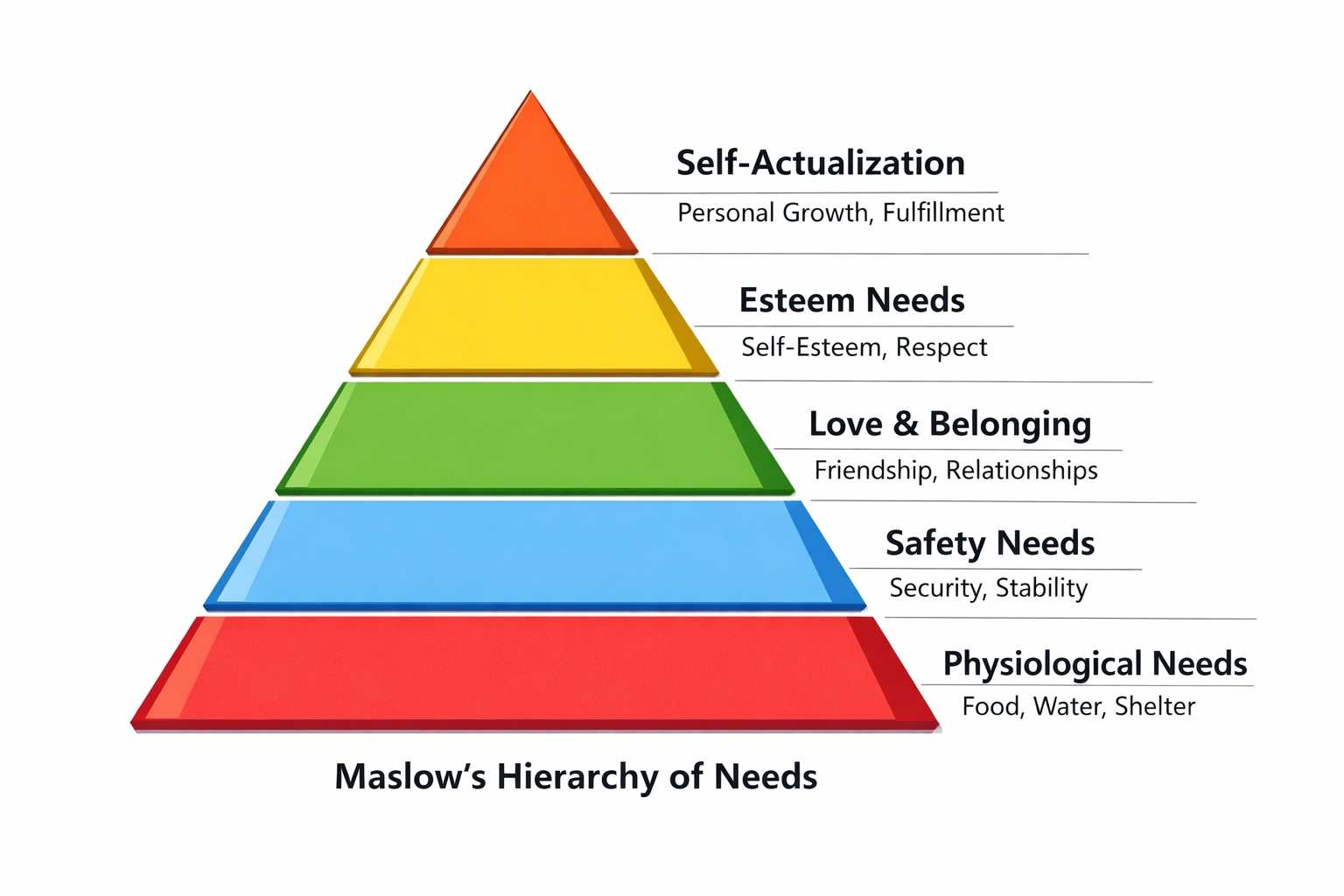
Want vs Need — A Maslow Perspective
Psychologist Abraham Maslow described human motivation as layered.
At the foundation are physiological needs: food, water, shelter, safety.
Above that come belonging and love.
Then esteem.
And at the top, self-actualization — the desire to grow, create, and fulfill one’s potential.
Most modern consumption confuses these layers.
We attempt to satisfy esteem needs with material display.
We attempt to satisfy belonging with status.
We attempt to satisfy security with accumulation far beyond what is physically necessary.
But if the lower levels are structurally guaranteed — if food, shelter, healthcare, and safety are stable — desire naturally moves upward.
From accumulation
to contribution.
From competition
to mastery.
From anxiety
to meaning.
Human wants are not inherently infinite.
They become distorted when basic security is unstable and when competition tries to convince us to buy much more than we need.
⸻
When Wants Meet Physics
Without money as the filter, every desire faces different questions:
Do we have the materials?
Do we have the energy?
Is it regenerative?
Does it increase wellbeing?
Ten private jets for one individual no longer appear impressive.
They appear materially intensive.
Planned obsolescence becomes irrational.
It wastes finite resources.
Extreme accumulation loses its logic when ownership no longer converts into power through pricing.
Wants do not disappear.
They become more honest.
They must justify themselves within planetary limits.
⸻
Abundance in the Light of Real Need
When we strip away comparison, competition and insecurity, something becomes clear.
Human needs are structured.
They are understandable.
They are finite.
Food.
Shelter.
Safety.
Belonging.
Meaning.
Creative growth.
Self-realization.
Now compare that with what the planet can physically provide.
We already produce more than enough food.
We have vast renewable energy potential.
We have the materials and technology to house everyone.
We possess millennia of accumulated knowledge.
We have billions of capable human beings able to contribute. Plus AI and automation.
When real needs are placed next to real resources, the picture changes.
We are not a species lacking capacity.
We are a species misallocating it.
If civilization were organized around meeting genuine human needs within ecological regeneration rates, relative abundance is not utopian — it is realistic.
Not infinite luxury.
Not status escalation.
But security, dignity, comfort, culture, and room for growth.
For everyone.
The scarcity we experience today is not primarily physical.
It is structural.
And once that becomes visible, the question shifts from:
“Do we have enough?”
to
“Why are we organizing ourselves as if we don’t?”
⸻
From Status to Contribution
In a competitive monetary system, success is measured by ownership and purchasing power.
In a resource-aligned civilization, success would shift toward contribution, mastery, creativity, and regenerative impact.
Recognition would not come from extracting more.
It would come from improving more.
When incentives change, culture changes.
⸻
The Deeper Question
When money dominates, we ask:
“Can we afford it?”
When reality dominates, we ask:
“Does it make sense?”
This is not about suppressing desire.
It is about clarifying it.
When security is guaranteed, desire matures.
It moves upward — toward growth, mastery, beauty, and meaning — instead of downward into hoarding and comparison.
So perhaps the real question is not whether human wants are infinite.
Perhaps the real question is:
What kind of civilization are we trying to build?
If it is one based on endless competitive expansion, nothing will ever be enough and we will use up our planet.
If it is one based on dignity, stability, creativity, and regeneration, then our wants are not the problem.
Our system is.
⸻
If this article resonates i invite you to share it. The conversation about desire, value, and our collective future is one worth expanding.
If you want to experience a glimpse into a future where humanity has created a brand new world like this, I invite you to explore these ideas further in Waking Up – A Journey Towards a New Dawn for Humanity, where a future civilization has already redefined wealth, success, and human aspiration.
Sign up for the free newsletter below and receive a free companion book containing the first 4 chapters of the novel and a deeper dive into the concepts of the book.
Leave a Reply