Tag: LIFE

  • Is Life Over for Humanity?

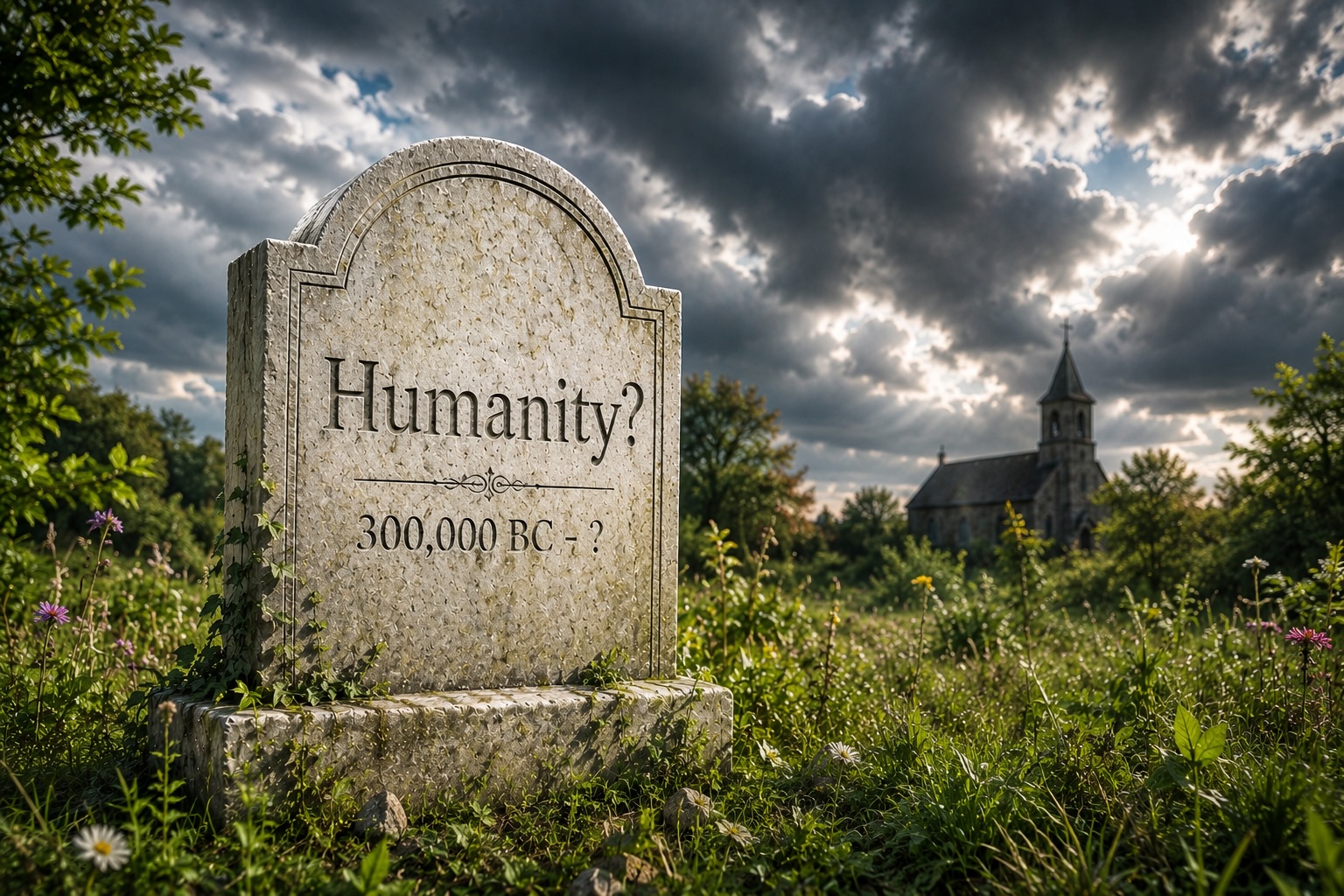
    Is Life Over for Humanity?

    Yesterday I came across another news report.

    Europe’s waterways are at record-low levels.

    The Rhine and the Danube—two of Europe’s most important rivers—have become so shallow that cargo ships can no longer sail fully loaded. Even nuclear power plants are being affected because low water levels interfere with their cooling systems.

    Tomorrow it will probably be another headline.

    A glacier disappearing.

    The north pole ice is already gone.

    Another record-breaking heatwave.

    Another drought.

    Another forestfire.

    Another flood.

    Whether climate change is entirely human-made or not is, in one sense, beside the point.

    What matters is that something fundamental seems to be changing.

    For centuries, humanity has lived on an extraordinarily friendly planet. Rivers carried our goods. Fertile soils produced abundant food. Glaciers stored fresh water. Stable seasons allowed civilizations to flourish.

    Nature quietly made our civilization possible.

    Now the conditions that supported us for so long are becoming less predictable.

    Earth Emergency

    Does this mean life is over for humanity?

    Not necessarily.

    But it does mean we have entered a new reality.

    For most of human history, our greatest challenges were each other.

    From survival with each other on the planet to:

    Empires.

    Wars.

    Borders.

    Politics.

    Economics.

    But today, a new challenge stands above them all:

    The condition of the very planet that makes civilization possible.

    If the rivers continue drying up…

    If agriculture becomes increasingly unstable…

    If ecosystems continue breaking down…

    …then every other problem becomes harder to solve.

    This is no longer just another political issue.

    It is becoming the foundation beneath every political issue.

    And that makes it something entirely different.

    A planetary emergency.

    Fighting Each Other

    Yet look at how we respond.

    We continue acting as though the greatest threat is one another.

    We argue over political parties.

    We blame other countries.

    We compete economically.

    We prepare for wars and go through with them.

    We still seem to believe that if only our side wins, everything will somehow be fine.

    But rivers do not recognize borders.

    The atmosphere does not vote.

    The oceans do not distinguish between left and right.

    Nature has never accepted our illusion of separation.

    What We Normally Do In Emergencies

    Imagine a forest fire racing toward a town.

    Do the firefighters stop to debate politics?

    Do they argue over religion?

    Do they refuse help because it comes from another country?

    Of course not.

    They gather every available person, every vehicle and every resource.

    They work together because the emergency is greater than their disagreements.

    That is what intelligent beings do.

    So why should a planetary emergency be any different?

    History Says It Isn’t Impossible

    Some people will say humanity could never unite.

    History disagrees.

    Few believed the Soviet Union would open itself through Glasnost.

    Few imagined apartheid could end with forgiveness instead of endless revenge.

    Few expected Britain to leave India after centuries of colonial rule.

    History is full of moments that looked impossible…

    …until they happened.

    Not because humanity became perfect.

    But because enough people finally realized that continuing the old way was no longer an option.

    The Hard Question

    So perhaps the question is not whether humanity can survive.

    Perhaps the question is whether our system is designed to deal with a planetary emergency.

    For thousands of years we have built civilization on the system of ownership.

    On money.

    On trade.

    On competition.

    On the pursuit of endless economic growth.

    Those foundations have brought us extraordinary technological progress.

    But have they also encouraged us to treat the planet as something to care for rather than something to exploit?

    If our civilization rewards extracting more, consuming more and competing more, should we really be surprised that the living systems supporting all of us are beginning to struggle?

    Perhaps this is why solving one environmental problem after another never seems enough.

    We are trying to repair the roof while the foundations remain unchanged.

    What About Overpopulation?

    Whenever humanity’s environmental problems are discussed, someone always arrives at the same conclusion.

    “There are simply too many of us.”

    It is true that population matters. No planet can support unlimited growth forever, and we should aim for a stable global population over time.

    But when people talk about rapidly reducing the population, the images that come to mind are not ones I want to think about.

    History has already shown us where that kind of thinking can lead.

    No.

    If we are going to do something drastic, let it be this:

    Let’s drastically redesign the way civilization operates.

    Instead of reducing people, let’s reduce waste.

    Instead of reducing people, let’s reduce pollution.

    Instead of reducing people, let’s reduce the unnecessary consumption of resources.

    Instead of asking how to make humanity smaller, perhaps we should ask how to make humanity wiser.

    Our economic system was established in an age when the planet seemed vast and its resources almost limitless. Today we know better.

    So perhaps the emergency is not that there are eight or nine or ten billion people alive.

    Perhaps the emergency is that billions of people are participating in a civilization that rewards ever-increasing extraction, consumption and economic growth on a planet with clear physical limits.

    That is a systemic design problem.

    And unlike population, a system can be changed. And population will change with it.

    If we have the courage to face reality, the most humane response to our crisis is not to cull humanity.

    It is to redesign civilization so that humanity—and the living world we depend on—can thrive together for generations to come.

    A Civilizational Transition

    This is why I don’t believe another election will solve our problems.

    Nor another war.

    Nor another economic package.

    This is not primarily a political or economic crisis.

    It is a civilizational one.

    The solution is not for one nation to defeat another.

    Nor for one ideology to defeat another.

    The solution is for humanity to begin acting as humanity.

    To recognize that we share one planet, one biosphere and one future.

    To gather our knowledge, technology, resources and compassion—not to compete against one another, but to preserve the extraordinary world that has given us life for so long.

    Because if history has taught us anything, it is that impossible changes sometimes become inevitable.

    Imagine That Future

    This is exactly what has happened in the novel, Waking Up – A Journey Towards a New Dawn for Humanity.

    Humanity has redesigned the whole system from one on endless monetary growth to to a system that supports nature and humanity forever.

    Not by becoming perfect.

    But by growing up.

    By leaving behind the illusion of separation and building a civilization designed to work for everyone—and for the planet that makes every human life possible.

    Perhaps that future begins the same way every great change in history has begun.

    With enough people daring to imagine it.

    The bewildered billionaire Benjamin Michaels wakes up one hundred years into the future expecting to expand his empire.

    Instead, he discovers that humanity finally recognized the emergency and done something about it.

    Are you curious of how the world he wakes up in looks?

    If so, you can discover his story here.

    If you believe there is still hope for humanity and think our future depends on as many as possible waking up to the possibility of a world that works for all I invite you to share this article. I thank you.
  • Life After Redesign

    Life After Redesign

    In the previous article, Redistribution vs. Redesign, I suggested that many of the challenges humanity faces today may not be solved by redistributing wealth within the current system, but by redesigning the system itself. Redistribution attempts to adjust the outcomes of the existing structure, while redesign asks a deeper question: whether the structure itself is what creates the problems in the first place.

    The Question

    That idea often leads to an immediate question:

    What would life actually look like after such a redesign — a redesign that leads to a world without money and ownership?

    Would shops disappear?
    Would production collapse?
    Would society fall into chaos?
    Or could everyday life actually become simpler and more human?

    The Confusion

    For many people, the idea of a world without money or trading sounds confusing at first. But that confusion mainly comes from looking at the question through today’s mindset, where the planet is divided into ownership and access depends on money. If no one owned the planet and no one could claim exclusive ownership over parts of it, there would be nothing to trade in the first place. Money would simply have no role. Instead, the question would shift to something much more practical: how humanity can organize the most intelligent and fair ways of sharing this planet as one global family.

    The Production

    But the assumption of chaos also comes from confusing money with the systems that actually produce and distribute the things we need.

    The farms that grow food would still exist.
    Factories would still produce tools, clothes, and technology.
    Logistics networks would still move goods around the world.
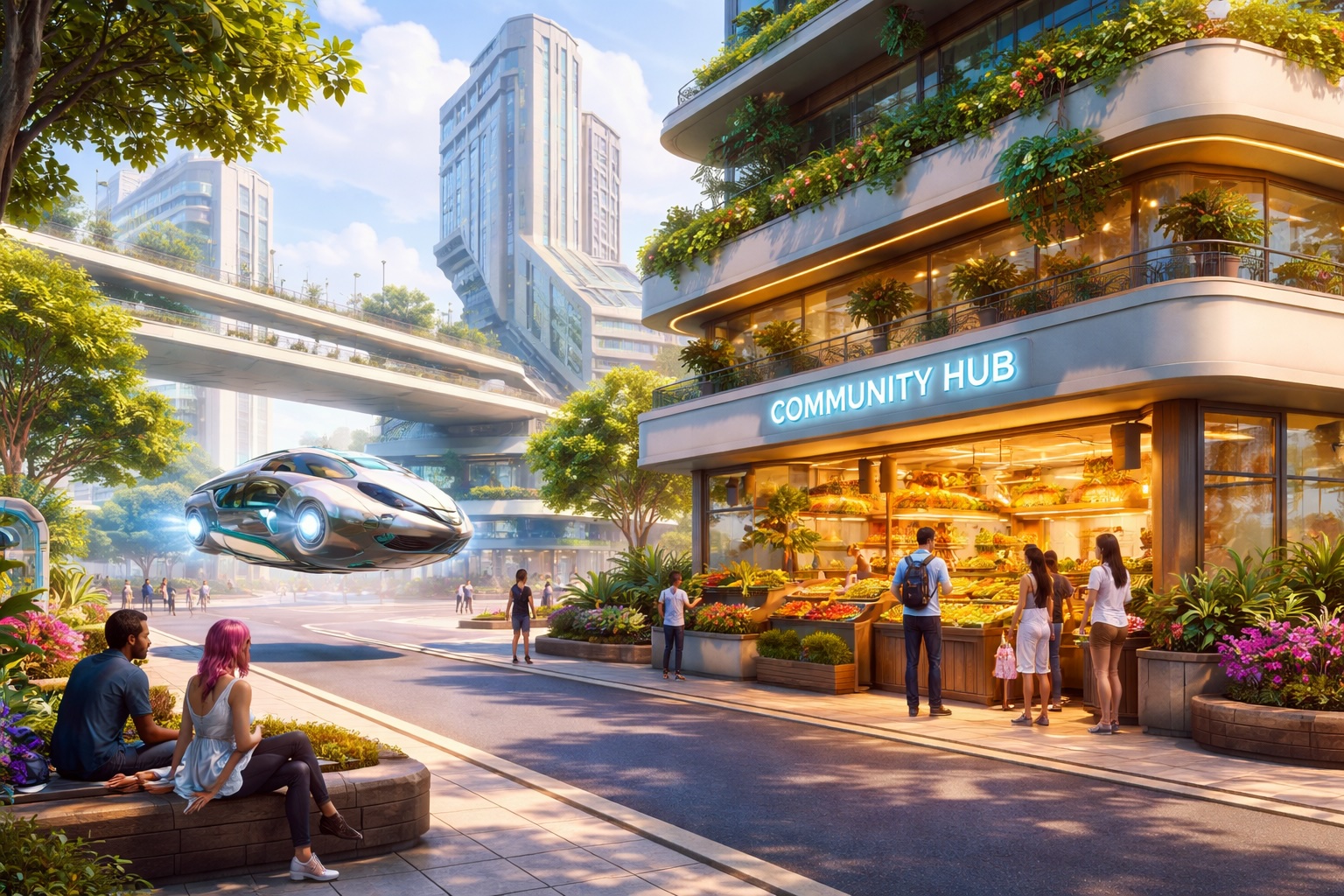
    And places where people collect what they need — shops, distribution centers, or community hubs — would still be there.

    What would disappear is not production or distribution.

    What would disappear is simply the payment step.

    Instead of the chain looking like this:

    Production → Transport → Shop → Payment → Access

    It could simply look like this:

    Production → Transport → Distribution → Access

    In other words, people would still walk into a place where food and everyday goods are available. The difference is that access would no longer depend on having the right amount of money.

    The Trust Based Economy

    At this point many people ask a very practical question: what would stop someone from simply emptying the store and taking far more than they need?

    The impulse to hoard usually comes from fear of scarcity. In a system designed around continuous access to goods, hoarding quickly becomes pointless. If you know you can return tomorrow and find the same items available, there is little reason to take more than you need today.

    Human societies have always relied not only on rules but also on social norms, trust, and simple practicality. Even today we constantly trust each other to honor agreements and to act in good faith. When we buy something in a store, we trust that the contents of the package are actually what the label says they are. We trust each others to heed agreements that we have made. We trust that the money we pay with are not counterfeit. Most people already take what they need in shared situations — at buffets, public spaces, libraries, or community resources. Physical limits also apply: a person can only carry so much, store so much, and consume so much. What can easily be hoarded today is not products themselves but money — a compact, abstract unit that can be accumulated without practical limits. Especially when they are only numbers in an account.

    In smaller, human-scale communities, where people feel connected to the places they live and to each other, social responsibility often becomes a natural regulator. Taking wildly excessive amounts would quickly become visible and socially questioned. And practical limits apply as well — how many bananas could someone realistically hoard anyway? Most fresh food spoils quickly, which naturally discourages stockpiling. Physical good take up space and are not always easily transported.

    In other words, the system would not rely on money to regulate behavior, but on a combination of abundance, transparency, trust, and human social norms.

    Would There Be Enough?

    Another question people often ask is: would there actually be enough for everyone?

    This question also comes from the experience of living inside a system where access depends on money and where scarcity is often artificially created by price, marketing, and competition.

    In reality, modern production systems are already capable of producing enormous quantities of goods. The challenge today is not primarily production or resources, but distribution and the economic rules that control access.

    Food is often destroyed while people go hungry. Houses stand empty while people need housing. Warehouses are full of products waiting for buyers.

    A redesigned system would simply focus production on meeting real human needs rather than maximizing sales. That alone would likely make abundance far easier to achieve.

    Product Design

    Another interesting question is how products themselves might look in such a world — and here too it would largely be up to our own creativity how we design and decorate packaging.

    Today many products are designed primarily to compete for attention. Packaging is colorful, flashy, and optimized for marketing because companies must constantly fight for visibility in stores.

    In a system where products are simply available rather than competing for sales, packaging could become far simpler and more practical.

    A toothpaste tube might indeed look very simple — perhaps mostly white, with a clear label that simply says:

    TOOTHPASTE

    But that does not necessarily mean the world would become dull or boring. Quite the opposite. When products no longer need to scream for attention in order to sell, design can focus on durability, usability, beauty, and sustainability rather than marketing—and it could still be colorful and expressive if that is what people enjoy.

    If we prefer simple black-and-white toothpaste tubes, we can design them that way. If we prefer colorful and playful products on the shelves, we can create that too. Colors and aesthetics would still exist — but they could serve human enjoyment rather than commercial competition.

    The result might actually be environments that are calmer, less visually noisy, and more thoughtfully designed.

    Communities

    Another likely change is how we organize our living environments.

    Today many people live in enormous megacities largely shaped by economic forces. But humans tend to function better in environments that are more human-scale.

    It is easy to imagine communities of perhaps a few thousand to around ten thousand people — large enough to support schools, healthcare, culture, and local production, yet small enough that people feel connected to the place where they live.

    Food could be grown locally where possible, supported by regional and global logistics networks that distribute what cannot be produced close by.

    Contribution

    In such a world, people would no longer need to choose their activities primarily based on what pays the bills.

    Instead, people could contribute in areas where their interests, talents, and curiosity naturally lead them.

    Some people genuinely enjoy farming.
    Some love engineering.
    Some enjoy teaching, cooking, building, researching, or creating music.

    Human beings are naturally curious and creative. When basic survival is secured, contribution often becomes something people want to do, not something they are forced to do. In such an environment, creativity would likely blossom in every field — from science and engineering to art, music, agriculture, architecture, and new ways of organizing everyday life.

    Technology

    And the work that few people enjoy — dangerous, repetitive, or exhausting labor — is exactly the kind of work that modern technology is increasingly capable of handling.

    Automation, robotics, and AI are already transforming industries today.

    In a redesigned system, these technologies could finally be used for what they were always meant to do:

    to free human beings from unnecessary labor — something that is already increasingly possible today, as AI and robotics are reaching the level where they can perform many of the tasks humans currently do.

    Imagine Through Story

    For many readers, this may still feel abstract. After all, we have lived inside a monetary system for so long that imagining life beyond it can be difficult.

    This is precisely why I wrote the novel Waking Up – A Journey Towards a New Dawn for Humanity.

    The story follows Benjamin Michaels, who wakes up one hundred years in the future in a world where humanity has redesigned its systems and learned to organize society in a way that works for everyone and for the planet.

    It is not simply a guided tour of a better future. The story unfolds as a real drama, where Benjamin encounters allies and opponents — including a former secret agent who tries to bring back the old monetary system. He also meets long-lost family, forming relationships that add emotion, tension, and discovery to the journey.

    Through his eyes, readers get a glimpse of what life might actually feel like in such a world — not as theory, but as lived experience.

    Because sometimes the easiest way to explore the future is not through economic models or political debates…

    but by stepping into it through a story.


    If this vision resonates with you, you can explore that world through the novel:

    Waking Up – A Journey Towards a New Dawn for Humanity

    If you think more people should be part of this conversation, please share this article. Thank you.