
Imagining the new world
This article is dedicated to Zanny Minton Beddoes, Editor-in-Chief of The Economist.
In her recent interview with Elon Musk, she asked a simple but profound question. Musk said: “By 2036, money might not matter at all“, whereupon Zanny asked: “But in all practical terms, what would daily life look like in a moneyless world?”
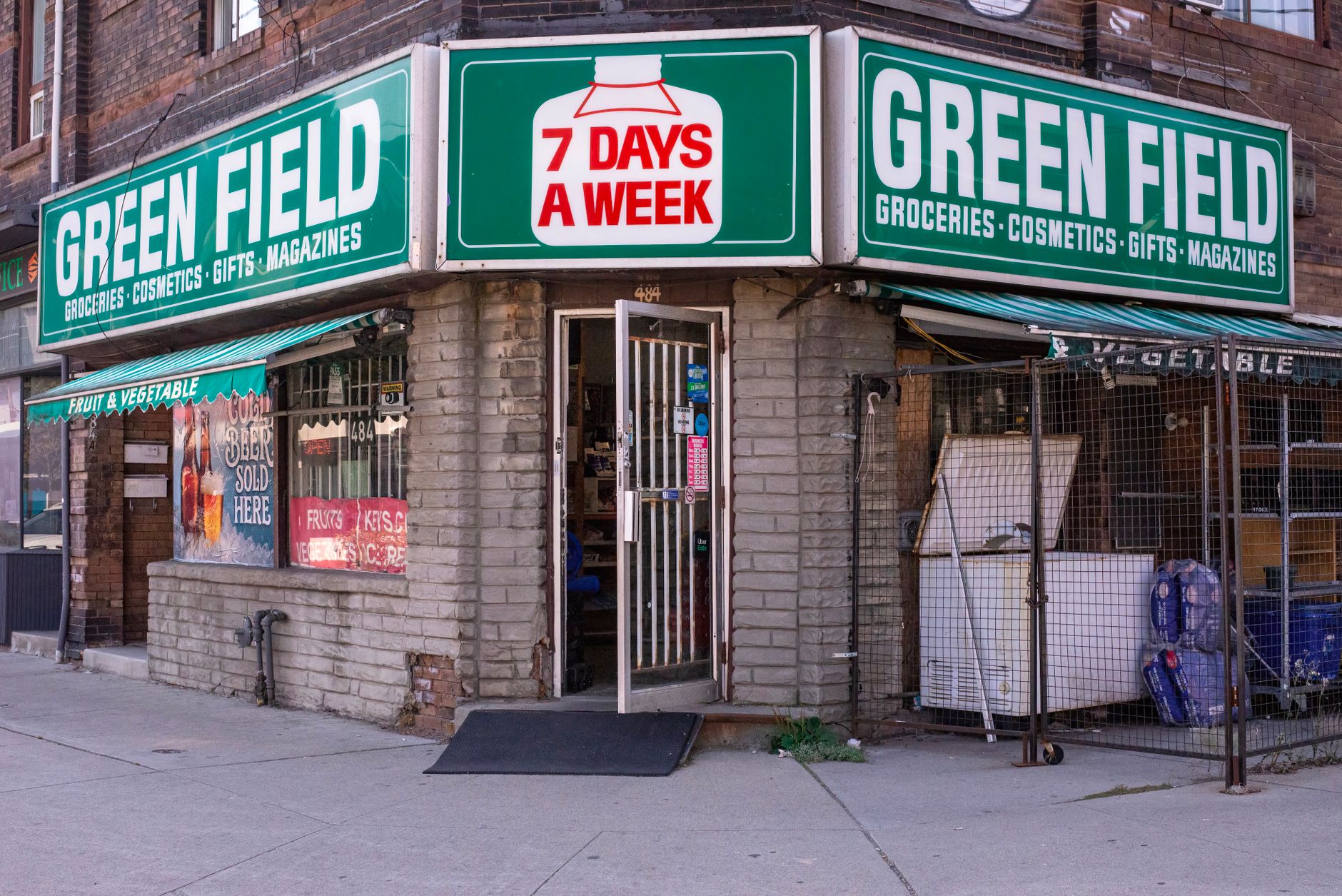
This article is an attempt to answer that question by imagining one of the most ordinary experiences of all: going to the grocery store.
Understandably, many people have trouble imagining a world without money.
So let’s make it simple.
1. Abundance
- Imagine that the new world does not have any less abundance than today. But rather more. Imagine that all the goods, services, tools, food, technology, homes, healthcare, transport, and everything else we genuinely need are still here and are being updated as time goes by.
2. Grocery store
You walk in, and the shelves are full. There are vegetables, fruit, bread, juice, household products, and everything else people in that area normally use. Perhaps there are fewer screaming labels, fewer fake choices, and far less wasted packaging — but the products are there.
The difference is not that the store has disappeared.
The difference is how it works.
3. Behind the scenes
- Behind the scenes, an intelligent coordination system keeps track of what is actually needed and used. If people take more tomatoes, more tomatoes are produced, transported, and restocked. If people drink more orange juice, the system notices. If demand falls, production adjusts. All of it happens automatically through AI and robotics and the people who finds working with logistics interesting and fulfilling.
Not through prices.
Not through profit.
Not through competition.
Through real need and actual use.
While keeping it sustainable.
AI, robotics, logistics, farming, transportation, storage, and local production all work together to keep the store supplied. The system responds to real use, not market speculation.
And if you prefer to grow your own food, you can do that too. Whatever surplus you get you share with your neighbors and friends and get even more friends.
If oranges grow where you live, you can grow oranges. If you want to make your own orange juice, you can order a juicer. If you want to plant vegetable beds, you can get the tools you need. If you produce more than your household uses, you can store it, share it with neighbors, or let the system know it is available.
Nothing mystical is required.
The new world can look surprisingly much like the world we already know.
There will still be grocery stores, cafés, restaurants, workshops, farms, delivery systems, homes, tools, and everyday life.
But the foundation is different.
No Meaningless Jobs
Today, money decides who gets what. Ownership decides who controls what. Prices decide what people can access. And millions of people are coerced into low-paid, exhausting, often meaningless jobs simply to survive.
In a moneyless, resource-based society, the question changes.
Instead of asking, “Can you afford it?” we ask, “Is it needed?”
Instead of forcing people to take any job they can get just to pay bills, we ask, “What are you naturally good at? What do you love doing? Where can your contribution bring joy, usefulness, and meaning?”
Of course, the grocery store is only one small example.
The same principle would apply throughout society.
Buildings would be maintained, renovated, and gradually upgraded according to need, sustainability, safety, and environmental impact. Roads, railways, water systems, energy networks, and public spaces would continuously evolve as better solutions become available.
Vehicles would become cleaner, safer, and more efficient over time. Production methods would also improve whenever new technologies, materials, or processes could reduce waste, lower environmental impact, or provide a better quality of life.
Society would not stand still.
Innovation would continue. Research would continue. Development would continue.
The difference is that progress would no longer be driven by profit, competition, or planned obsolescence, but by a simple question:
How can we do this better?
Better for people.
Better for future generations.
And better for nature and the planet that supports us all.
The grocery store therefore becomes more than a place of consumption.
It becomes a simple example of a different civilization.
A civilization where the purpose of food production is not profit, but nourishment.
A civilization where technology is not used to displace people into poverty, but to free people from unnecessary struggle.
A civilization where abundance is organized intelligently, responsibly, and for everyone.
That is the shift.
Not from grocery stores to empty shelves.
Not from comfort to sacrifice.
But from money-based access to need-based coordination.
From forced labor to meaningful contribution.
From ownership and trade to stewardship and care.
The future may not look as strange as we think.
It may look like walking into a grocery store, taking what you need, knowing others can do the same — and realizing that civilization has finally grown up.
If this sounds impossible, remember that every system humanity has ever lived under was once considered impossible before it existed.
The future begins when we dare to imagine it.
And perhaps that is the real challenge.
Not building the technology.
Not producing the resources.
But allowing ourselves to imagine that humanity can organize itself in a completely different way. And that is exactly what I have imagined in the novel Waking Up – A Journey Towards a New Dawn for Humanity.
It follows the bewildered billionaire Benjamin Michaels when he wakes up after one hundred years of cryonic preservation only to to discover a world where money, ownership, and trade have become historical curiosities—and where humanity has built a civilization based on cooperation, stewardship, and abundance.
Could such a world ever exist?
There is only one way to find out.
And please share this article if it resonates.
I thank you.