
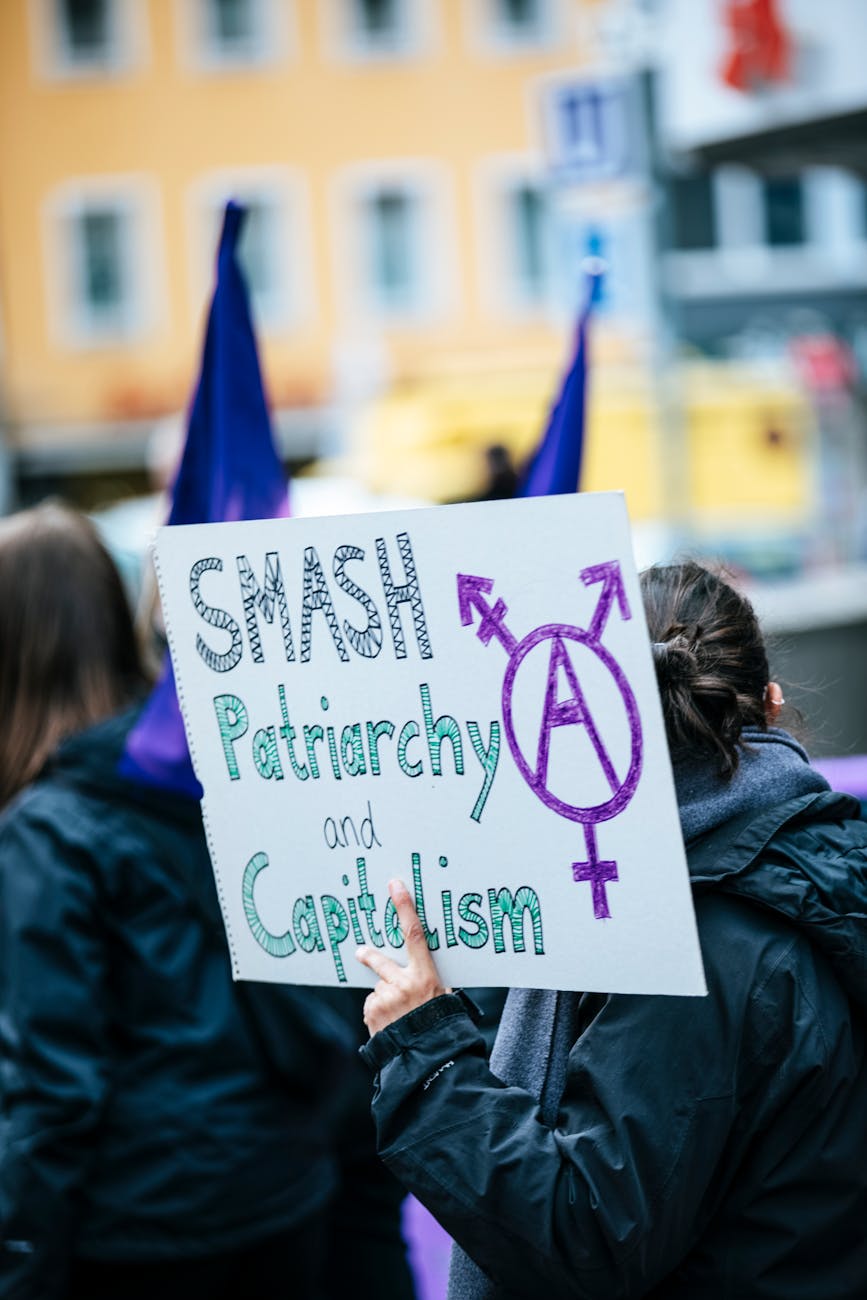
Many visions of social change are built on a familiar story: the poor rise up against the rich, the powerful are overthrown, and a new reality is born from struggle.
This narrative has deep historical roots. Revolutions, political movements, and countless novels have told the story of history as a conflict between classes.
But if humanity truly wants to build a peaceful and livable future, we may need to question whether a transition based on class war can ever lead to lasting harmony.
A Critique Worth Considering
A recent one‑star review of Waking Up criticized the novel for not following the traditional class‑struggle narrative found in many utopian or socialist novels. The reviewer argued that in most classic works about moneyless societies, change comes from ordinary people struggling against the wealthy. In his words, it is “working people struggling to survive” who should create the transformation, not “the super‑rich who get together to decide to abolish money and property.” He also pointed to other well‑known works in the genre such as Looking Backward, News From Nowhere, and The Dispossessed, suggesting that these stories portray social transformation more realistically.
This critique is interesting, because it highlights a fundamental assumption that many people bring to discussions about systemic change: that any transition to a better world must be driven by conflict between social classes.
But is class war really the best path to a better future?
A Clarification
It is also worth clarifying a point that the reviewer appears to have misunderstood. In Waking Up, the new world is not created simply because a group of wealthy people decide to abolish money. The character Amo — the daughter of Benjamin Michaels — initiated the first experiments by using the resources available to her to begin creating moneyless communities, the early Cities of Light, within the existing system. These early initiatives acted as prototypes. As the model proved workable, the idea spread and people across the world participated in building and expanding the new system. In other words, the transition was not an elite decision, but a collective evolution that gradually included people from all parts of society.
The Problem With Class-Based Transitions
Class conflict may explain parts of history, but building a future on resentment and victory over others creates a dangerous foundation.
If one group defeats another, the underlying psychology of power and domination often remains. The roles simply reverse. Yesterday’s oppressed can become tomorrow’s oppressors.
Us Versus Them
A truly stable and cooperative world cannot emerge from a mentality of “us versus them.” It must move beyond the idea that society is fundamentally divided into enemies.
Systems, Not People
Many of the problems humanity faces today are not caused by individual moral failures. They are consequences of the systems we operate within.
Our economic structures reward competition, accumulation, and short-term gain. People within those systems often behave according to the incentives placed in front of them.
This means the challenge is not to defeat a particular class of people, but to rethink the systems that shape behavior. History shows that many revolutions replace the people in power while leaving the underlying system of money and ownership largely intact, allowing the same structural problems to reappear with different players.
But if the rules of the game, and thus the system itself change, human behavior often changes with them.
An Inclusive Transition
A future that truly works for everyone cannot exclude large parts of humanity from the process of building it.
Scientists, engineers, entrepreneurs, workers, artists, teachers, and even those who currently benefit from existing systems all possess knowledge, skills, and resources that will be needed to design a better world.
Instead of framing the transition as a struggle between rich and poor, it may be more productive to see it as a collective realization that the current system no longer serves humanity or the planet.
When that realization spreads, people from all walks of life can begin contributing to the redesign.
From Conflict to Cooperation
History shows that cooperation is one of humanity’s greatest strengths. Entire civilizations have been built through collaboration across cultures, professions, and social groups.
The challenge of the 21st century may not be to win a class war, but to learn how to coordinate our collective intelligence for the benefit of all.
The technologies we have today — automation, artificial intelligence, global communication — make it increasingly possible to organize society in ways that were unimaginable in the past.
But technology alone is not enough. Technology is merely a tool; without the cultural and philosophical mindset to use it wisely, it cannot create a better world.
A Future Built Together
If humanity is to create a truly livable future, it may need to move beyond narratives of victory and defeat.
The real challenge is not to defeat one another, but to redesign the systems that govern our lives.
That work will require the participation of all of us.
And perhaps the most hopeful possibility is that the future will not be built by one class triumphing over another — but by humanity discovering that it is, in the end, one family sharing the same planet.
If this perspective resonates with you, please share this article.
A world beyond money, conflict, and artificial scarcity is explored through story in the novel Waking Up – A Journey Towards a New Dawn for Humanity.
Feel free to check it out.