
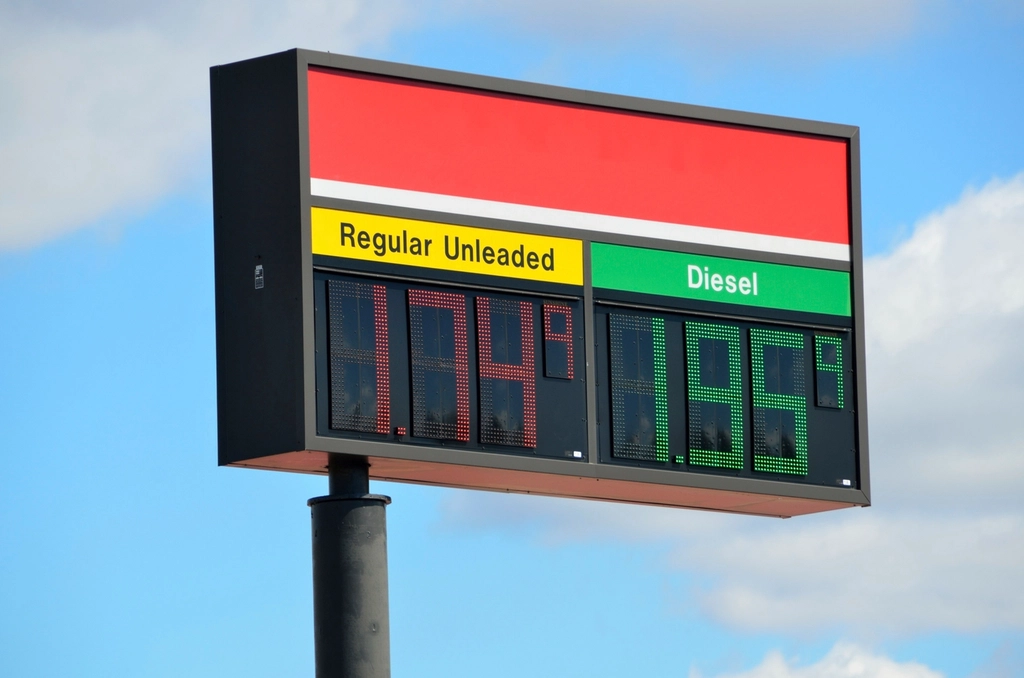
Prices Coming Down
In his State of the Union address on February 24, 2026, President Trump spoke confidently about prices coming down and economic strength returning. Whether one agrees politically or not, it raises an interesting and deeper question:
What do we actually mean when we talk about prices?
The language of coordination
In a monetary economy, prices are the language of coordination. They signal scarcity, demand, cost, and profit. When inflation slows, politicians celebrate. When prices rise too fast, they warn of crisis. When prices fall too fast, economists fear recession.
The system depends on prices staying within a narrow band. Too high? Instability. Too low? Instability again.
That alone tells us something important.
Prices are not just numbers. They are the mechanism that keeps the entire structure operating. Wages, debt, taxation, investment — everything flows through the price mechanism.
Collapsing System
So when we hear that prices are “plummeting,” it sounds positive. But if prices truly collapsed across the board, the system itself would stall. Revenue disappears. Production slows. Jobs vanish. The very thing meant to create stability would generate the opposite.
And that leads to a more radical thought — not about left or right politics — but about structure.
What if the real evolution of civilization is not about better price management… but about eventually moving beyond price as the core organizing principle?
This idea is not new. During the Great Depression, observers like Jacque Fresco noticed a striking contradiction: factories could produce, stores had goods, resources existed, and people were willing to work — yet millions suffered. The problem was not empty shelves. It was empty pockets. Money had stalled, and access stalled with it.
That simple observation planted a radical question: if the goods exist, why should access depend entirely on a financial token?
From that contradiction grew the concept of a Resource‑Based Economy — a system where coordination is grounded in physical resources, energy, and scientific management rather than fluctuating purchasing power.
In today’s system, prices can never go to zero for a very long time. Zero price means zero revenue. Zero revenue means systemic breakdown.
But in a different kind of world — one based on coordinated access to shared resources rather than ownership and monetary exchange — the question of price becomes irrelevant.
In a resource‑based economy (RBE), coordination would not happen through price signals but through direct measurement of resources, production capacity, and real human needs. Availability would be tracked physically. Sustainability would be calculated scientifically. Distribution would be optimized intelligently. Instead of asking, “Who can pay?”, the system would ask, “What exists, what is needed, and how do we align the two responsibly?”
In such a framework, scarcity is addressed through planning and innovation, not through rising prices. Abundance is shared through access, not through purchasing power. The mechanism shifts from competition over money to coordination around resources.
Not lower prices.
Not higher prices.
But priceless.
A Different Operating System
That doesn’t mean collapse. It means a different operating system — one where availability, sustainability, and intelligent coordination replace buying power as the gatekeeper of access.
Whether such a transition happens in decades or centuries is another discussion. But it’s worth noticing this:
As long as our civilization depends on prices staying in a perfectly balanced range to avoid crisis, we are operating inside a fragile design.
The future question may not be:
“How do we manage prices better?”
But:
“Can humanity eventually coordinate itself without needing them at all?”
That is the deeper conversation.
If this perspective resonates with you, please share this article.
And if you’re curious about how such a world might function, follow the former billionaire Benjamin Michaels into the world of Waking Up – A Journey Towards a New Dawn for Humanity and get a glimpse into the priceless world of the future…