Tag: POLITICS

  • Beyond Politics: Rethinking the System Itself

    Beyond Politics: Rethinking the System Itself

    Most political debates today revolve around the same basic assumption:

    That the system itself is fundamentally sound.

    One side wants more regulation.
    Another wants less.
    One side wants higher taxes.
    Another wants lower taxes.
    One side blames corporations.
    Another blames governments.

    But almost nobody stops to ask the deeper question:

    What if many of the problems we face are not caused by bad politicians, bad parties, or bad individuals…

    …but by the structure of the system itself?

    And by “the system,” I mean the broader global economic system itself.

    The monetary system. The market system. The system of profit, debt, competition, and artificial scarcity. 

    The system where nearly all human needs — food, housing, healthcare, security, even survival itself — are tied to money and financial participation.

    Because regardless of who wins elections, the same patterns continue.

    Environmental destruction often continues. Wars continue. Debt continues. Poverty continues. Housing insecurity continues. Food waste continues. Stress, burnout, and anxiety continue.

    Governments change.
    Parties change.
    Leaders change.

    Yet the underlying direction never changes.

    Why?

    Because politics operates on rules that were established centuries ago.

    Rules like ownership, trade, markets, and money itself.

    It is these basic rules we may need to reevaluate if we want any truly lasting change.

    A politician may genuinely want to solve homelessness, ecological collapse, or inequality — but they are still operating inside an economic structure where survival depends on money, competition, growth, profit, and artificial scarcity.

    And this changes everything.

    The Hidden Foundation

    We tend to think politics controls the economy.

    But in many ways, the economy controls politics.

    If an entire society depends on financial growth to survive, then every government — regardless of ideology — becomes pressured to prioritize growth.

    If employment depends on corporate profitability, then profitability becomes more important than human well-being.

    If access to food, housing, healthcare, and security depends on money, then money itself becomes the gatekeeper of life.

    And once that happens, politics becomes reactive instead of transformative.

    Parties argue endlessly about symptoms while the underlying engine runs untouched.

    The Scarcity Machine

    One of the strangest things about modern civilization is this:

    Humanity now possesses enough knowledge, technology, resources, and productive capacity to provide a dignified life for every human on Earth. Without harming nature significantly.

    We produce enough food for everyone. We have enormous productive power.  Automation. Artificial intelligence. Global logistics systems. Advanced agriculture. Industrial capacity beyond anything previous civilizations could imagine.

    And with the right knowledge and technology unhindered by monetary incentives, we can cultivate the land and grow food without losing topsoil or  harming nature.

    Yet millions still struggle for basic security.

    Why?

    Because in the current system, an abundance of goods alone is not enough.

    If you cannot pay, access is denied.

    A supermarket can throw away food while people nearby go hungry.
    Homes can stand empty while people sleep on the streets.
    Factories can slow production while needs remain unmet.

    Not because resources are missing.
    But because money is missing.

    This is a vital distinction.

    The limiting factor is often not physical reality itself.

    It is the financial system governing access to reality.

    Beyond Left and Right

    For more than a century, humanity has largely been trapped inside ideological camps.

    Capitalism versus socialism.
    Left versus right.
    Blue versus red.
    State versus market.

    But perhaps the real question is not which political team should manage the current system.

    Perhaps the deeper question is whether the current operating system itself has reached its limits.

    Because every system produces outcomes according to its design.

    And a system built around competition, monetary dependency, and profit incentives will inevitably generate certain consequences — regardless of the wishes of the people inside it.

    This does not mean people are evil.
    Nor does it mean humanity is doomed.

    It simply means the system matter.

    In fact, the system may matter more than individual morality.

    Even good people can become trapped inside destructive structures.

    Beyond Labels

    Perhaps going beyond politics also means going beyond labels.

    Today we divide ourselves into countless categories: left and right, capitalist and socialist, rich and poor, politician and citizen.

    But behind every label is a human being.

    A billionaire is a person.
    A politician is a person.
    A worker is a person.

    Different experiences. Different beliefs. Different circumstances.

    But still people.

    If humanity is to create a future that works for EVERYONE, everyone should be a part of it through their special skill and knowledge.

    The new world is unlikely to emerge from one group defeating another. It will emerge from people learning to collaborate despite their differences.

    Perhaps that is what lies beyond politics.

    Not the absence of disagreement, but the recognition that before we are anything else, we are all human beings.

    A Different Question

    Maybe the real question of the 21st century is no longer:

    “How do we make this political ideology win?”

    Maybe the real question is:

    “How do we design a system that actually aligns with human well-being and planetary survival?”

    A system where technology truly liberates humanity instead of creating fear of losing jobs. A system where resources are managed intelligently instead of competitively wasted. A system where cooperation becomes structurally rewarded and natural instead of constantly undermined by economic pressure. A system where stewardship gradually replaces extraction and ownership obsession.

    Not through authoritarian control.
    Not through forced equality.
    Not through dictatorship.

    But through a higher level of mutual understanding, communication, organization, transparency, cooperation, and technological coordination.

    Humanity at a Crossroads

    Today, humanity possesses extraordinary tools. We know this.

    Artificial intelligence.
    Automation.
    Renewable energy.
    Global communication.
    Advanced science.

    These tools could help create one of the most beautiful civilizations in history.

    Or they could intensify instability, inequality, surveillance, and collapse.

    The tools themselves are not the problem. Rather, they can be the solution if we let them.

    The question is:

    What kind of system are they serving?

    Because if 21st-century technologies continue operating inside outdated structures built for scarcity, competition, and endless growth, the contradictions may become impossible to manage.

    We are entering an age where humanity may finally need to mature politically, economically, and psychologically at the same time.

    Not merely changing rulers.

    But rethinking the foundations themselves.

    The Conversation We Rarely Have

    Perhaps this is why so many people feel politically homeless today.

    They sense that something deeper is wrong.

    Not simply one party.
    Not simply one leader.
    Not simply one ideology.

    But the entire framework through which modern civilization organizes itself.

    And maybe that realization is not dangerous.

    Maybe it is the beginning of maturity.

    Because once we dare to question the system itself, entirely new possibilities become visible.

    Possibilities that previous generations could barely imagine.

    Not a perfect world.

    But perhaps a far more intelligent, humane, beautiful and sustainable one.

    Perhaps the future will not be decided by politics alone.

    Perhaps it will be decided by our willingness to question assumptions that have gone unchallenged for centuries.

    What if money is not the destination of civilization…

    but merely a stage in its evolution?

    \

    That question is explored in the novel Waking Up – A Journey Towards a New Dawn for Humanity.

    When billionaire Benjamin Michaels is diagnosed with terminal cancer, he chooses cryonic preservation as a last hope. A century later, he wakes up in a world where money, ownership, and poverty have become distant memories—and must come to terms with a civilization built on entirely different principles.

    👉 Discover the story here

    And please share this article if it resonates. That way we may give a new opportunity to our children.
  • Th€ Pain in th€ A$$ of Po£itician$

    Th€ Pain in th€ A$$ of Po£itician$

    Most politicians do not enter politics wanting to make society worse.

    Many genuinely want cleaner cities, safer communities, better healthcare, lower inequality, a stronger economy, and a more sustainable future.

    Then they all collide with the same invisible wall:

    The monetary system itself.

    The Invisible Wall

    Because regardless of ideology, party, or intentions, they hit the same wall:

    • Economic growth must continue.
    • Jobs must be protected.
    • Banks must remain stable.
    • Debt and money must keep circulating.
    • Consumption must continue.
    • Housing prices cannot collapse.
    • Markets must stay “confident.”
    • Energy must stay cheap enough.
    • Inflation must not explode.
    • But also not too much deflation.
    • Climate goals must somehow happen simultaneously.

    And every politician entering the system discovers the same thing:

    The monetary system itself constantly pulls decisions back toward short-term economic survival rather than long-term human and planetary well-being.

    And suddenly long-term human and planetary well-being must compete with the immediate survival demands of the economic machine.

    That is the real pain in the ass of politicians.

    Not necessarily opposing parties.
    Not always the voters.
    Not even corruption in itself.

    But the constant pressure from a system that requires continuous economic motion simply to avoid collapse.

    A System Built on Endless Growth

    Because the modern monetary system is not built around balance. It is built around growth.

    Everything must keep growing. Money must grow. Debt must expand. Consumption must continue. Growth must persist.

    And if that motion slows too much, fear immediately appears:

    Recession. Unemployment. Banking instability. Stock market panic. Political unrest. Falling tax revenues. Debt problems. When we started out with this system it seemed everything could go on forever. Unfortunately it can’t. Now we are seeing the limits.

    The Environmental Trap

    Even politicians who sincerely want environmental reform often find themselves trapped.

    Because most environmental solutions reduce consumption. They reduce extraction. They reduce unnecessary production. They reduce energy demand. They reduce waste. They reduce planned obsolescence.

    But reducing these things inside a growth-based monetary system can simultaneously threaten jobs, profits, pension funds, tax income, and financial stability.

    And suddenly politicians face an impossible balancing act.

    Save the environment too aggressively?
    Risk economic instability.

    Stimulate the economy too aggressively?
    Accelerate ecological destruction.

    Protect jobs?
    Increase emissions.

    Reduce emissions?
    Threaten industries and employment.

    The system constantly pulls politics back toward short-term economic survival.

    Why Politics Feels Contradictory

    This is why governments often appear contradictory.

    One day they speak about climate emergency.
    The next day they approve new oil projects.

    One day they speak about sustainability.
    The next day they stimulate mass consumption to “boost the economy.”

    One day they promise environmental responsibility.
    The next day they panic because inflation rises, housing slows down, or investors become nervous.

    The Green New Dealemma

    This is also why some politicians advocate ideas like a “Green New Deal.”

    The hope is understandable.

    If environmental transformation could also stimulate economic growth, create jobs, generate investment, modernize infrastructure, and keep money circulating, then perhaps the system could save both the economy and the environment simultaneously.

    And to some degree, such policies may indeed slow damage and create positive change.

    But even these proposals collide with the same structural limitations.

    Because large-scale green transitions still require enormous industrial production, mining, energy infrastructure, debt financing, political consensus, global coordination, stable supply chains, and continued economic growth.

    Entire industries would need to transform simultaneously while millions of people still depend on the old system for jobs, pensions, mortgages, investments, and daily survival.

    And this is precisely the trap.

    Critics and energy analysts argue that proposals like the Green New Deal may ultimately fail because of prohibitive costs, logistical unfeasibility, dependence on infrastructure that does not yet exist at the required scale, and enormous political resistance.

    Others fear that such transitions would require massive expansions of government control, regulation, and centralized coordination, creating new tensions around freedom, bureaucracy, taxation, and power.

    And yet, without large-scale transformation, environmental problems continue accelerating.

    So politics becomes trapped between two impossible pressures:

    Change too little, and the ecological crisis deepens.

    Change too aggressively, and the economic and political system itself begins to destabilize.

    Even many of the proposed solutions to the crisis still depend on maintaining the very monetary growth dynamics that helped create the crisis in the first place.

    Because beneath almost every political promise sits the same hidden requirement:

    Keep the economic engine alive.

    Even when the engine itself may be causing many of the problems.

    The Deeper Structural Problem

    And this is where the conversation becomes uncomfortable.

    Because perhaps the issue is not simply bad politicians and bad decisions. Perhaps the issue is that politics itself has become trapped inside a monetary operating system that humanity no longer fully controls.

    A system where survival increasingly depends on maintaining the very dynamics creating instability, threatening both our climate, nature, human wellbeing and the planet itself.

    Infinite growth on a finite planet. Permanent overconsumption. Debt-based expansion. Competition between nations. Competition between corporations. Competition between individuals. All accelerating simultaneously.

    Political Paralysis

    Another symptom of this systemic pressure is how increasingly difficult it seems for many countries to even form stable governments.

    Elections happen.
    Coalitions are negotiated.
    Parties argue endlessly.
    Weeks or months pass.
    And still they often struggle to collaborate.

    Because even when politicians agree that problems exist, they fundamentally disagree about how to handle the economic machine underneath society.

    Raise taxes? Lower taxes? Stimulate growth? Reduce spending? Expand welfare? Cut welfare? Regulate markets? Deregulate markets? Increase energy production? Reduce consumption? Save the environment?

    And all of it happens under enormous pressure from debt, markets, industry, employment, media, lobby groups, and voter anxiety.

    Politics increasingly becomes less about solving problems and more about managing instability inside the inherently unstable monetary system itself.

    The Mechanics

    Politicians are then forced to operate almost like mechanics trying to repair a broken engine while driving at full speed down the highway.

    They cannot simply stop. Because millions of livelihoods depend on the machine continuing to run. But even though the right tools are at hand they cannot be used.

    The Absurdity

    In fact, the more technologically advanced humanity becomes, the more absurd the situation starts to look. We have the tools but don’t use them fully.

    We now possess extraordinary technology. Automation. AI. Global logistics. Scientific knowledge. Robotics. Advanced agriculture. Communication systems.

    Humanity has never had more capacity to coordinate resources intelligently.

    Yet societies still operate as if artificial scarcity, endless competition, and permanent economic anxiety are unavoidable laws of nature.

    A System Humanity No Longer Understands

    Perhaps they are not laws of nature.

    Perhaps they are features of the current system itself.

    And perhaps this is why more people across the world increasingly feel that something fundamental no longer makes sense.

    Because despite incredible technological advancement, stress, burnout, inequality, debt pressure, ecological instability continue growing.

    The machine becomes more advanced. But the human being inside the machine often feels less free.

    Maybe humanity is beginning to realize that the real challenge is no longer technological.

    Maybe it is systemic.

    Beyond Politics

    In the future world of Waking Up, this constant political paralysis no longer dominates civilization.

    Not because humanity suddenly agrees on everything.
    But because the old monetary pressure system is gone.

    Instead of political parties endlessly competing for power while trying to keep economic growth alive, decisions are increasingly based on science, sustainability, systems analysis, ecological balance, human well-being, and what actually works for humanity and the planet long term.

    The goal is no longer ideological victory.
    The goal becomes intelligent stewardship.

    A Peek Into The Future

    In the novel Waking Up – A Journey Towards a New Dawn for Humanity, the former billionaire Benjamin Michaels wakes up 100 years into the future after cryonic preservation.

    What shocks him most is not the technology.

    It is that humanity has moved beyond the monetary operating system itself.

    The future world is no longer organized around profit, debt, ownership accumulation, or endless competition.

    Instead, resources are coordinated intelligently around human and planetary well-being by using the technology that is already available today, but of course have been refined in this future.

    Not because humanity became perfect. But because civilization eventually realized that the old system itself had become the constant pain in the ass of politics, sustainability, and human progress. If you would like a peek into this future you can 

    👉 Discover the story here.

    And if this article resonated with you I invite you to share it. If enough people become aware of this possibility our children might even thrive in that future…

  • The Popularity Contest

    The Popularity Contest

    Why popularity is deciding our future — and what that reveals

    More than 2,400 years ago, Socrates warned that democracy could destroy itself — not through force, but through persuasion.

    To understand why this worried him, we have to remember how democracy first worked.

    In ancient Athens, democracy was direct. Citizens gathered, listened, spoke, and voted on laws, war, and public affairs. It was radical, participatory, and deeply human.

    But it had a weakness.

    In an open assembly, decisions were not made by those who understood an issue best, but by those who argued most convincingly. Rhetoric mattered. Charisma mattered. Emotion could outweigh reason.

    Socrates saw something most people preferred not to see:

    A system based purely on persuasion will tend to reward confidence over competence — and certainty over understanding.

    His concern was not that people would choose badly once.

    It was that the system itself would slowly select for the wrong qualities.

    History proved the concern was not abstract.

    Socrates was executed by a democratic vote.

    Plato’s warning: when democracy hollows out

    After witnessing this, Plato sharpened the critique.

    He described how democracy can decay when freedom loses its grounding in knowledge. When every opinion is treated as equal regardless of consequence, when expertise is rejected, when emotion replaces understanding — democracy begins to eat itself.

    Disorder follows. Fear grows.

    And eventually, a strong voice promises order.

    This was not an argument for kings.

    It was a warning about freedom detached from reality.

    The same weakness — now amplified

    Fast-forward to today.

    Democracy has expanded enormously in scale, but its basic vulnerability has not changed.

    What has changed is the power of persuasion.

    Modern democracies operate through mass media, social platforms, and attention-driven systems that reward speed, outrage, and simplicity.

    Persuasion is no longer local and human-scale.

    It is:

    • amplified

    • repeated

    • optimized

    • monetized

    What Socrates observed in a public square now operates globally, continuously, and at scale.

    The result is a familiar pattern:

    Democracy survives as a procedure.

    But its substance thins.

    Voting remains.

    Deliberation weakens.

    Complexity loses to slogans.

    The symptom that proves the problem

    This is where the weakness becomes visible.

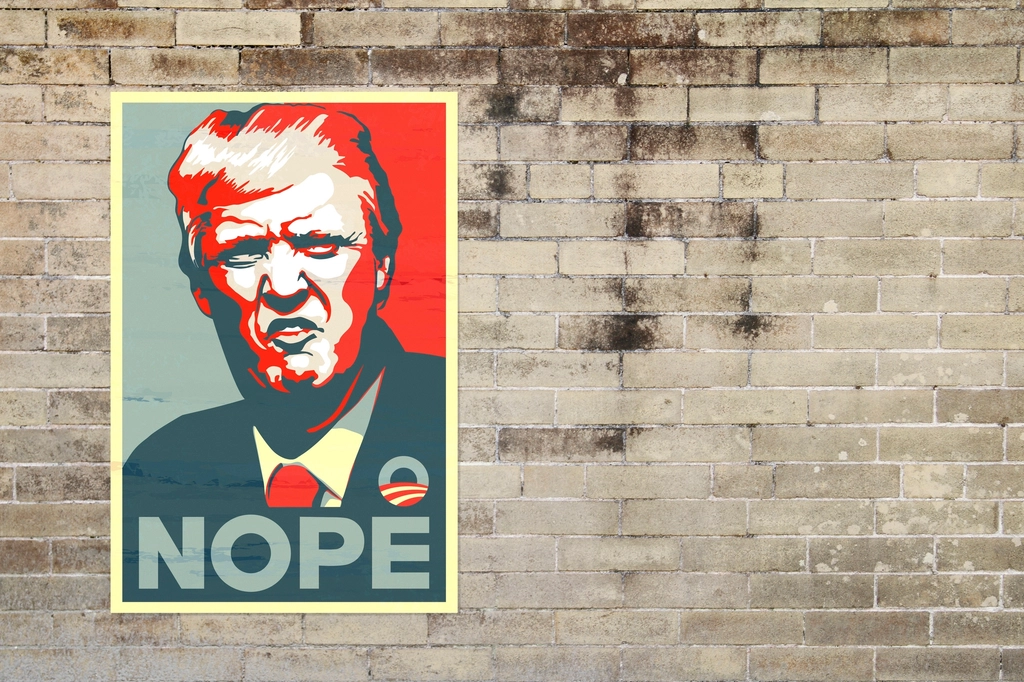
    Donald Trump is not the disease.

    He is the symptom that proves the problem.

    He did not overthrow democracy.

    He succeeded within it.

    By using:

    • emotional mobilisation

    • spectacle

    • identity

    • rhetorical dominance over careful reasoning

    The point is not Trump himself.

    The point is what his rise reveals:

    If a system consistently rewards persuasion over judgment, then the issue is not the individuals it produces.

    The issue is the system itself.

    Democracy by popularity

    Today, we still use the word democracy.

    But in practice, much of it has become something else:

    👉 A popularity contest.

    Voting is called democracy.

    Elections are called democracy.

    Even when:

    • choices are pre-filtered

    • narratives are engineered

    • fear is deliberately triggered

    • attention is algorithmically steered

    …the ritual alone is enough to claim legitimacy.

    This is not simply mob rule.

    It is managed perception.

    The original flaw has not disappeared.

    It has been industrialized.

    The real problem

    This critique is often misunderstood as elitist.

    It is not.

    The problem is not people.

    The problem is asking opinion to carry responsibility that requires understanding.

    Modern societies are extraordinarily complex.

    Climate systems, ecosystems, infrastructure, health, and planetary limits do not respond to opinion. They operate according to reality.

    When decisions are based on popularity instead of knowledge:

    • short-term sentiment overrides long-term consequences

    • narratives replace evidence

    • truth becomes political

    Even failure can still be called democratic — because the procedure was followed.

    Democracy is not finished

    This does not mean democracy has failed.

    It means democracy is unfinished.

    As complexity increases, decision-making cannot rely on persuasion alone.

    At the same time, removing people entirely leads to technocracy and alienation.

    So the question becomes:

    👉 How do we keep human participation

    without letting popularity override reality?

    A simple inversion

    The future described in Waking Up – A Journey Towards a New Dawn for Humanity is built on a simple but radical shift:

    Knowledge sets the boundaries.

    Humans operate freely within them.

    Knowledge answers:

    • What is physically possible?

    • What is ecologically safe?

    • What causes harm — now or later?

    • What affects others without consent?

    These are not matters of opinion.

    They are matters of reality.

    Within those boundaries, human freedom flourishes.

    People still choose, create, express, and explore.

    What disappears is not freedom.

    What disappears is the illusion that popularity equals wisdom.

    Beyond slogans

    The real question is no longer how to defend democracy as a word.

    The real question is this:

    Why should popularity decide our future when knowledge is available?

    We trusted popularity when we lacked tools.

    We now have tools — and still cling to it.

    That is not wisdom.

    That is inertia.

    If you want to explore what a world beyond popularity-based decision-making could look like in lived, human terms, that world is explored in the novel:

    Waking Up – A Journey Towards a New Dawn for Humanity

    If this article resonates, please share it. I thank you.

  • The Dead Horse of Humanity

    The Dead Horse of Humanity

    We keep arguing.

    Left or right.
    Red or blue.
    Taxes up or taxes down.

    Endless debates. Endless opinions. Endless outrage.

    And yet… nothing fundamental changes.

    Because we are not arguing about direction or foundation.

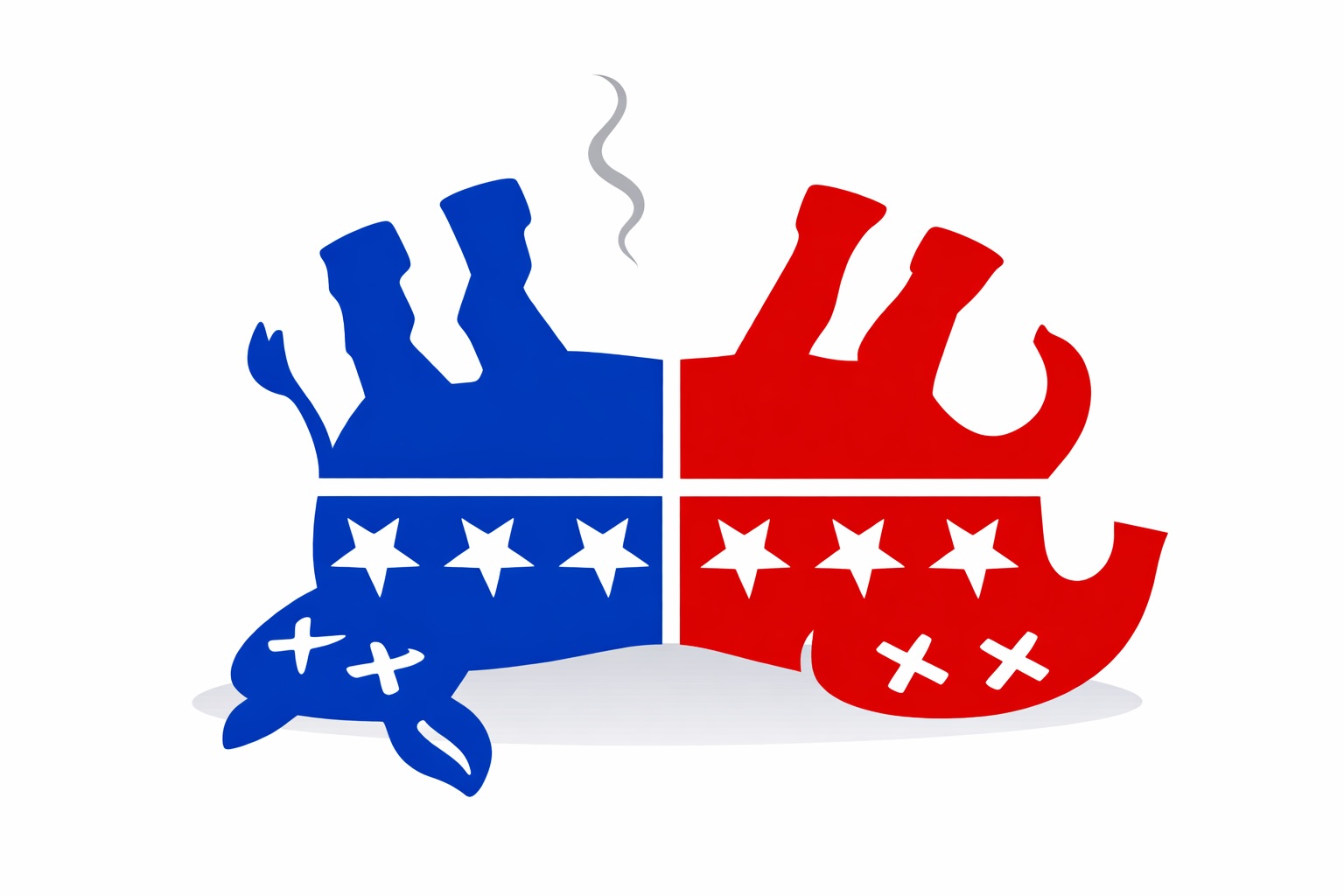
    We are arguing about how to ride a dead horse. Or elephant.


    At some point, honesty becomes unavoidable:

    The system isn’t just “struggling”.
    It isn’t temporarily failing.

    It is exhausted.

    It has taken us as far as it can go.


    And still, we keep flogging it.

    More policies.
    More reforms.
    More elections.
    More promises.

    As if one more election…
    one more leader…
    one more adjustment…

    will somehow bring it back to life.


    But a dead horse doesn’t run.

    No matter how intelligent or persuasive the rider is.
    No matter how passionate the crowd is.
    No matter how loud the debate becomes.


    And what has the debate become?

    Cartoons. Memes. Cheap shots.

    An endless stream of ridicule.

    Dragging the other side down.
    Calling them idiots.
    Scoring points.

    For a moment, it feels satisfying.

    But step back and look at it.

    This is what our “serious” political discourse has become.

    Not problem-solving.
    Not understanding.
    Not even real disagreement.

    Just noise.


    And while we’re busy laughing at each other…

    The building is on fire.

    Climate pressure. Resource strain. Inequality. Instability. Pollution. Habitat loss.

    These are not political opinions.

    They are real-world conditions.


    This is not ideological.

    It never was.

    It is practical.

    We need clean air. We need water. We need food. We need a stable environment to live in.

    Reality does not care whether you are left or right. Blue or red, or black or white.


    And yet we keep treating these practical problems
    as if they are ideological battles.

    As if reality itself is something you can vote on.

    You can’t.

    The planet doesn’t negotiate.
    Physics doesn’t compromise.
    Reality doesn’t care about opinions.


    So what are we doing?

    We are trying to solve systemic problems with the same level of thinking that created them. It won’t work.

    We debate. We vote. We argue.

    But all within the same framework. The same assumptions. The same level of insanity. Because that is what flogging a dead horse it. Insanity.

    And so the horse remains dead.


    Can we please stop bickering for a moment?

    Stop arguing about who is right.
    Stop mocking each other.
    Stop dragging the other side down.


    Because the building is on fire.

    And it doesn’t matter who started the fire
    if we don’t put it out.

    It doesn’t matter who is right if we all burn up with it.


    At some point, humanity has to do something very simple,
    but very difficult:

    Look at reality directly.

    Without sides.
    Without filters.
    Without the need to win.


    And then ask:

    What actually works?


    Because if we don’t stop bickering
    and start dealing with reality…

    we will keep arguing. We will keep choosing sides. We will keep flogging the dead horse.

    And we will keep going nowhere, but up in smoke with the fire…


    A Different Way Forward

    Imagine this: Waking Up in a world that has already stepped off the dead horse.

    A world where humanity stopped arguing about access… and started organizing resources based on what people actually need. Resulting in a thriving world that works for all. With no dead horses or elephants to flog. In Waking Up – A Journey Towards a New Dawn for Humanity, Benjamin Michaels wakes up into this world where the question is no longer “who pays?”

    But:

    What works?

    If you want to experience that world through Ben’s eyes:

    👉 Discover the story here.

    And imagine what happens the moment we stop arguing…
    and start solving.