Tag: PEACE

  • The role model for the world?

    The role model for the world?

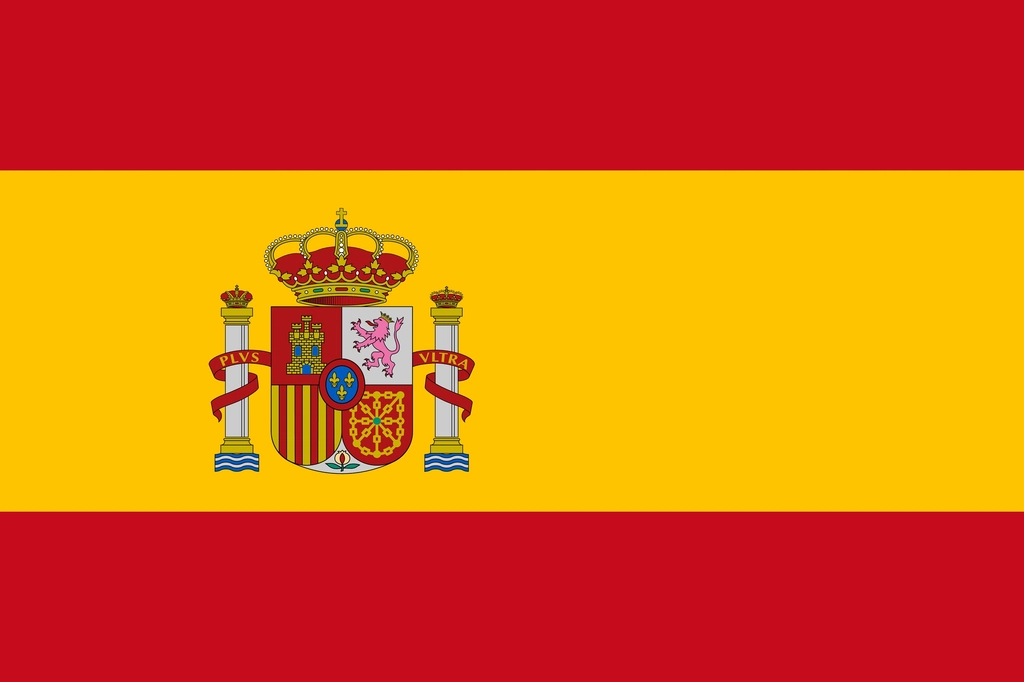
    Yesterday Spain made a remarkable decision.

    As tensions rise in the escalating conflict between Israel and Iran, Spain refused to be drawn into the war. The Spanish government denied the use of its military bases for offensive operations and signaled clearly that it would not participate in military escalation.

    Prime Minister Pedro Sánchez summarized the position in four simple words:

    “No a la guerra.” — No to war.

    The position was not without pressure. The United States reportedly pushed hard for cooperation and the use of Spanish bases, but Madrid stood firm. Rather than joining the escalation, Spain held its line and called for restraint. In the wider European Union, several leaders signaled understanding and support for Spain’s stance, reinforcing the idea that diplomacy — not another expanding war — should guide the response.

    In a world where nations often line up quickly behind military alliances, that refusal stands out.

    Spain did not deny the seriousness of the situation in the Middle East. But it chose a different response. Instead of contributing to escalation, it called for restraint, diplomacy, and de‑escalation.

    This stance is not accidental. It reflects something deeper in Spanish society.

    Spain knows what war does to a country.

    Civil War

    The Spanish Civil War tore the nation apart. Families were divided. Cities were destroyed. The trauma of that conflict echoed through generations. Even after the war, decades of dictatorship reshaped the country politically, socially, and even environmentally through massive infrastructure projects that altered landscapes and water systems.

    The lesson was harsh, but it was learned.

    War leaves scars that last far longer than the battles themselves.

    Perhaps that is why modern Spain developed such a strong cultural instinct for peace.

    In 2003, when the Iraq War began, millions of Spaniards filled the streets with a simple message:

    “No a la guerra.”

    The same words that echo again today.

    No To War

    Spain still maintains an army and remains part of international alliances. But within Spanish society there is often a strong skepticism toward war and military escalation.

    The culture leans toward something else: coexistence.

    And this may not be surprising.

    For centuries Spain has been a crossroads of civilizations. Romans, Arabs, Jews, Christians, and many others have shaped its culture. When so many cultures have lived on the same land, the simplistic idea of “us versus them”becomes harder to sustain.

    You begin to realize something deeper:

    We are all part of the same human story.

    In a world that often seems to drift toward confrontation, Spain’s stance in the current crisis offers a quiet reminder of another possibility.

    Human history has been marked by wars for centuries. Empires rose and fell through conflict. Nations armed themselves in endless cycles of fear, retaliation, and dominance.

    But what if that long chapter of history is not the final one?

    What if humanity eventually learns from those scars?

    Are we Waking Up?

    In Waking Up, the world of the 22nd century looks back at our time much the same way we now look back at the brutal wars of the past. Humanity finally realized that endless conflict was a dead end. Instead of competing for control, people began organizing the world around cooperation, shared stewardship of the planet, and the understanding that we are ultimately one human family.

    Seen from that perspective, moments like Spain’s decision today feel like small glimpses of that future — reminders that nations can choose restraint instead of escalation, and dialogue instead of destruction.

    Perhaps these moments are early signs of a lesson humanity is slowly beginning to understand.

    Could you imagine a world that truly moved beyond “us vs. them”?

    Benjamin Michaels wakes up in such a world in Waking Up – A Journey Towards a New Dawn for Humanity — a future where humanity has learned to organize itself around cooperation rather than conflict.

    Please share this article if it resonates.

  • What Do We Actually Want? Peace or War?

    What Do We Actually Want? Peace or War?

    Throughout history, we’ve witnessed countless wars—some driven by resources, others by ideologies, and many by sheer fear. From the brutality of the World Wars to modern-day struggles, human history is full of conflicts that have torn societies apart. Yet, at the same time, we’ve also seen moments of peace, from global ceasefires to simple, everyday acts of kindness and understanding.

    One People on One Planet

    Why do we often end up in war? Why do we, as a species, continue to choose conflict despite knowing its devastating effects? A big part of it might lie in the human ego—the part of us that is driven by fear, competition, and self-preservation. The ego creates a sense of “us vs. them,” dividing us from one another and making it easier to justify violence. Fear of the unknown, fear of loss, and fear of difference all feed into the cycle of war. Maybe, if we can get to the understanding that we are One People, living on On Planet, we might respect each other enough to live in peace…?

    Honor and courage

    A major concept that fuels war is “honor.” Society has long linked honor to the battlefield, convincing us that killing in the name of country or ideology is noble. Soldiers are often hailed as the bravest among us for their “courage” in the face of death. But true courage is not found in walking into war; it’s found in walking away from it. The real courage is choosing peace, resisting violence, and seeking understanding.

    Sending your sons into war has long been seen as an act of courage for parents, but when those sons don’t return, or come back broken, it reveals the painful reality that this form of courage is misguided. The true loss is not just of life, but of the potential for peace.

    A different future? 

    What if we could choose peace over war? What if we could create a world where conflict is no longer inevitable, but cooperation and harmony become our guiding principles instead of conflict and war?

    I asked ChatGPT how it would help humanity create peace on Earth, and this is the answer it gave…

    Creating a World Without war: How AI and Humanity Can Co-Create Harmony.

    1. Redefining Conflict: In a world without conflict, differences are opportunities for growth, not division. The goal is mutual respect, not one-sided victory.
    2. Universal Education and Awareness: A global system based on empathy, cooperation, and collective responsibility can help prevent misunderstandings and fear-driven conflict.
    3. AI as Guardians of Harmony: AI could mediate, helping to resolve disputes before they escalate and ensuring just resource distribution.
    4. Resource-Based Economy: Removing scarcity means no competition over resources, dissolving many of the economic motivations for conflict.
    5. Global Governance of Compassion: Leadership based on empathy and the well-being of all life would prioritize harmony over power.
    6. Cultural Shift to Collective Responsibility: When we see ourselves as part of a greater whole, the idea of “us versus them” fades.
    7. Technology for Healing, Not Harm: Repurposing military technology for the benefit of humanity and the planet could eliminate destructive forces.
    8. Psychological and Emotional Healing: Global systems supporting mental health can address the root causes of conflict.
    9. Fostering a Culture of Forgiveness and Growth: Cultivating a culture where learning from mistakes and forgiving others becomes the norm.
    10. AI-Driven Harmony: AI can predict and intervene before conflicts arise, keeping systems in balance.

    The Choice is Ours

    The choice is clear: continue down the path of war, or choose peace—guided by empathy, cooperation, and shared responsibility. As we evolve, both as humans and as a global community of sentient beings, we must ask ourselves: What kind of future do we want to create?

    The Vision

    If the vision of a peaceful, cooperative future resonates with you, Waking Up: A Journey Towards a New Dawn for Humanity is a science fiction novel that delves deeper into these themes. Follow the journey of Benjamin Michaels, as he wakes up in a world that has already transitioned to a harmonious, collaborative society. Through his story, the novel explores how humanity has awakened to its interconnectedness and embraced a future built on collaboration and empathy.

    Join the journey and discover how we can all contribute to the shift towards a better world.

    CLICK HERE TO ORDER