Tag: NEW EARTH

  • A Praise to Capitalism

    A Praise to Capitalism

    This may sound strange coming from a website like this, but I am actually grateful for capitalism.

    Truly.

    Because whether we like it or not, capitalism helped shape the modern world.

    It spread products, technology, inventions, medicine, communication systems, engineering, tools, transportation, entertainment, and comforts across the planet at a speed humanity had never seen before.

    Computers. Smartphones. Electricity. Modern cameras. Medical equipment. Transportation systems. Software. The internet. Modern logistics. Streaming. Household appliances. Advanced construction methods.

    All of it spread through the mechanisms of capitalism.

    And for that, I am genuinely grateful.

    Humans Came First

    At the same time, it is important to understand something crucial.

    Capitalism itself did not originate creativity. It did not create intelligence. It did not create imagination. It did not create curiosity. It did not create anything, really.

    Human beings did.

    A scientist discovering a new medicine is driven by curiosity. But then the market system brings it out into the world. An inventor creating a machine is driven by fascination. A musician creating music is driven by emotion. An artist is driven by expression. An engineer is driven by problem-solving.

    Those impulses are deeply human.
    They existed long before capitalism.

    What capitalism did extraordinarily well was spread and amplify those creations.

    It became an enormous global distribution engine.
    A system that rewarded production, competition, investment, expansion, and innovation.

    And for a long time, that worked remarkably well. Too well.

    One of Humanity’s Greatest Accelerators

    Capitalism helped humanity industrialize.
    It helped ordinary people gain access to products and comforts that were once unimaginable luxuries.

    In many ways, capitalism helped humanity grow up technologically.

    It accelerated civilization.

    And unlike older, more rigid systems, it often rewarded initiative, experimentation, risk-taking, and creativity.

    That should not be ignored simply because we also see its problems.

    In fact, refusing to acknowledge capitalism’s strengths only weakens the conversation.

    Because the strengths are obvious.

    The modern world would look completely different without it.

    Every System Has Limits

    The problem is not that capitalism worked.

    The problem is that it worked too well.

    The same engine that created enormous innovation also created enormous pressure.

    The same system that spread products around the world also spread pollution around the planet causing environmental degradation, conflict and resource depletion.

    The same competition that accelerated development also accelerated stress, exploitation, overconsumption, resource extraction, advertising pressure, and geopolitical conflict.

    And now we are beginning to hit the limits.

    Not because humans suddenly became evil.
    But because infinite growth collides with a finite planet.

    A system built on perpetual expansion can become dangerous when it reaches planetary scale.

    Never Ending Growth

    This is perhaps the biggest problem of all.

    Capitalism is extraordinarily good at producing.
    But much less capable of slowing down.

    More growth.
    More production.
    More extraction.
    More consumption.
    More markets.
    More expansion.

    Even when humanity already produces more than enough in most areas.

    The system itself constantly pushes for more.

    The Debt Machine

    Another big reason capitalism struggles to slow down is debt.

    Modern economies are deeply dependent on debt-based growth.

    Governments carry debt.
    Corporations carry debt.
    Individuals carry debt.

    Mortgages.
    Loans.
    Credit cards.
    National debt.
    Corporate expansion loans.

    The entire system is built around the assumption of future growth.

    But debt creates pressure. Interest demand infinite growth and more and more debt, something that does not align with a finite planet a vulnerable ecology.

    Companies must grow to repay loans.
    Nations must grow to manage debt.
    Individuals must work continuously to survive financially.

    Money is debt

    And because money itself is largely created through lending, the system constantly requires expansion in order to remain stable.

    This makes slowing down extremely difficult.

    Even when we know the planet is under pressure. Even when stress levels are rising. Even when overproduction and overconsumption is obvious.

    The system itself keeps demanding economic movement. More growth. More extraction. More consumption. More money. More debt.

    A New Era

    And now, in the age of AI and automation, we must begin asking deeper questions.

    Because humanity is entering a completely new era.

    For most of history, economic systems were built around human labor. The rich owned. People worked. People produced. People earned. People consumed. And this has been the basis of the monetary system and still is. Rich owners and a working class keeping everything going through production and consumption.

    But what happens when machines increasingly begin doing the labor instead?

    What happens when automated productivity explodes beyond anything humanity has previously experienced?

    What happens when general global abundance becomes technically possible?

    What happens when AI can help coordinate logistics, production, transportation, communication, engineering, and resource management on a global scale?

    At that point, humanity may begin facing a completely new question.

    Do we really still need a system built around endless consumption, competition, debt pressure, scarcity, perpetual growth and pollution in order to motivate human creativity and organize society? Can we imagine something else?

    Or have we simply become so used to the current system that we struggle to imagine anything beyond it?

    Because if technology increasingly removes the necessity for large amounts of human labor, then humanity may eventually have to redefine what progress itself actually means.

    Perhaps the next stage of civilization is not about producing more and more forever.

    Perhaps it is finally about learning how to live well on this planet, our home.

    Creativity Will Not Disappear

    One of the biggest fears many people have is this:

    “If capitalism disappeared, humans would stop innovating.”

    But why would they?

    Children create naturally. Artists create naturally. Musicians create naturally. Scientists explore naturally. Humans are naturally curious. We have always found solutions out of necessity. 

    Capitalism amplified these forces. But it did not originate them.

    And that distinction changes everything.

    Because if creativity itself is human nature, then perhaps humanity can eventually organize society differently without losing innovation, intelligence, beauty, technology, or progress. In fact, creativity may even flourish more once survival stress, debt pressure, and constant competition no longer dominate everyday life.

    The Good Parts

    At this point, people may ask:

    “But what about all the great things capitalism gave us?”

    The motivation. The products. The innovation. The technology. The diversity. The development.

    Will all of that disappear in the new world?

    No.

    Absolutely not.

    The New World

    We will build the new world on top of what humanity has already created.

    We will take the best parts with us.

    Human creativity will remain. Innovation will remain. Technology will remain. Diversity will remain and might even be amplified with more security and less stress. Engineering will remain. Curiosity will remain. Beauty will remain. Problem-solving will remain.

    What we will leave behind is not creativity itself.

    What we will leave behind is the excessive exploitation.

    The endless pressure for infinite growth. The destruction of ecosystems. The stress. The artificial scarcity. The debt pressure. The overconsumption. The constant race for profit at any cost. The feeling of insecurity of never having enough to make ends meet.

    Instead, humanity can begin focusing its intelligence and creativity toward something else entirely:

    Creating a world that can actually work forever.

    A world designed not merely for economic growth, but for human and planetary wellbeing, ecological balance, long-term sustainability, and harmony with nature.

    The Humanitary system.

    From planetary through monetary to Humanitary. That is the new world.

    A world that works not only for humans, but for all beings on this planet, including the planet itself.

    A Role Outplayed

    This is therefore not an attack on capitalism.

    It is a recognition of its historical role. But now a role that is outplayed.

    Capitalism helped humanity reach this stage.
    It accelerated civilization.
    It connected the world.
    It spread inventions across the planet.

    But humanity is now reaching the point where the same mechanisms that once helped us evolve are beginning to destabilize both the planet and ourselves.

    Perhaps capitalism was not wrong. Perhaps it was simply a phase. A role to play in history.

    An extremely powerful phase. An important role.

    But every phase of civilization eventually reaches its limits.

    And maybe humanity is now mature enough to begin imagining what comes next.

    Not less creativity.
    Not less intelligence.
    Not less innovation.

    But a new system where those things are finally aligned with human wellbeing, balance, and the long-term health of the planet itself.

    The Great Irony

    And perhaps that is the great irony.

    Capitalism became an enormous global distribution engine. It spread technology, communication systems, production methods, logistics, products and knowledge across the entire planet.

    And now, those very technologies may help humanity shape the next stage beyond it.

    The internet.
    AI.
    Automation.
    Global communication.
    Resource coordination.
    Advanced engineering.

    All the tools that could finally allow humanity to move beyond survival economics and begin creating a world designed around wellbeing, balance, sustainability, and life itself.

    For all. Not just a select few.

    Call To Action

    If you are part of the growing number of people on Earth who would like to see this change, then I strongly recommend reading and sharing this novel.

    Because the only peaceful way humanity can get from here to there is if enough people are first able to imagine it.

    And that is exactly what this novel was designed for. A book that gives you a journey into a future where this change has happened on Earth. 

    Not as a political manifesto or a blueprint. Not as a revolution through violence.

    But as a journey.

    A journey into a future where this transition has already happened.

    But to achieve a peaceful transition to such a world, we must first be able to imagine it.

    That is how all great changes in history begin.

    First in the imagination.
    Then in reality.

    If you want to follow Benjamin Michaels into that future, you can find Waking Up – A Journey Towards a New Dawn for Humanity here:

    👉 Discover the story.

    And if this article resonates with you, I ask you to share it.

    Only together can we create this new world.
  • THE NEW WORLD ORDER

    THE NEW WORLD ORDER

    The phrase new world order has for many people become associated with fear.
    A hidden plan. Control. Manipulation. Domination.
    A world where ordinary people lose even more power while wealth and influence gather at the top.

    But what if we reclaimed the phrase entirely?

    What if the new world order was not an order of control, but an order of awakening?
    Not a world built on profit, fear, and division — but on love, respect, cooperation, and mutual understanding.

    That is the kind of new world order I support.

    Not one where humanity is ruled more efficiently.
    But one where humanity finally begins to live more wisely.

    The old world order

    The world order we have now is presented as normal.
    We are told that competition is natural.
    That war is often necessary.
    That poverty is unfortunate but unavoidable.
    That greed is simply part of human nature.
    That they must lose so we can win.

    But perhaps this is not civilization at its peak.
    Perhaps it is merely an old operating system that humanity has outgrown.

    Because what kind of order is it, really, when entire economies depend on scarcity, anxiety, debt, exploitation, and endless growth on a finite planet?
    What kind of order calls itself successful while people struggle for food, housing, safety, and dignity — in a world that already has enough resources to care for everyone?

    This is not a true order.


    It is organized disorder.


    A system that keeps producing crises and then asks us to believe the crises are accidental.

    The real war

    We are constantly encouraged to take sides.
    This nation against that nation.
    This religion against that religion.
    This ideology against that ideology.
    This political tribe against that political tribe.

    And meanwhile, the deeper conflict remains largely untouched.

    The real conflict is not between ordinary human beings.
    It is between two ways of organizing life on Earth.

    One is based on fear.
    Fear of lack.
    Fear of others.
    Fear of losing status, property, access, security, identity.

    The other is based on love.
    Not sentimental love, but mature love.
    A love that recognizes that humanity shares one planet, one biosphere, one future.
    A love that understands that no system can truly work if it works only for some.

    The old order trains us to see each other as competitors.
    The new order begins when we recognize each other as fellow beings.
    Not enemies. Not obstacles. Not markets.


    But participants in a shared human story.

    Why do we resist peace?

    This may be one of the strangest questions of all.
    Why is resistance to peace so strong?
    Why do freedom, compassion, and cooperation sound naive to so many, while domination, militarization, and economic brutality are treated as realism?

    Maybe because we have been conditioned for so long that the abnormal now feels normal.
    Maybe because many have built identity, wealth, and power inside the old system and cannot imagine life beyond it.
    Maybe because fear is profitable.
    Maybe because division is useful to those who benefit from it.

    And maybe also because genuine peace asks more of us than slogans do.
    It asks us to grow up.
    To listen.
    To understand.
    To stop projecting evil only outward and begin examining the structures we keep participating in.

    A different kind of world order

    A true new world order would not be built on domination from above.
    It would be built on alignment from within.

    It would begin with a simple recognition:


    the Earth and its resources are the common inheritance of humanity.

    From that recognition, everything begins to shift.

    The purpose of society would no longer be to maximize profit.
    It would be to maximize well-being, freedom, meaning, health, ecological balance, and human flourishing.

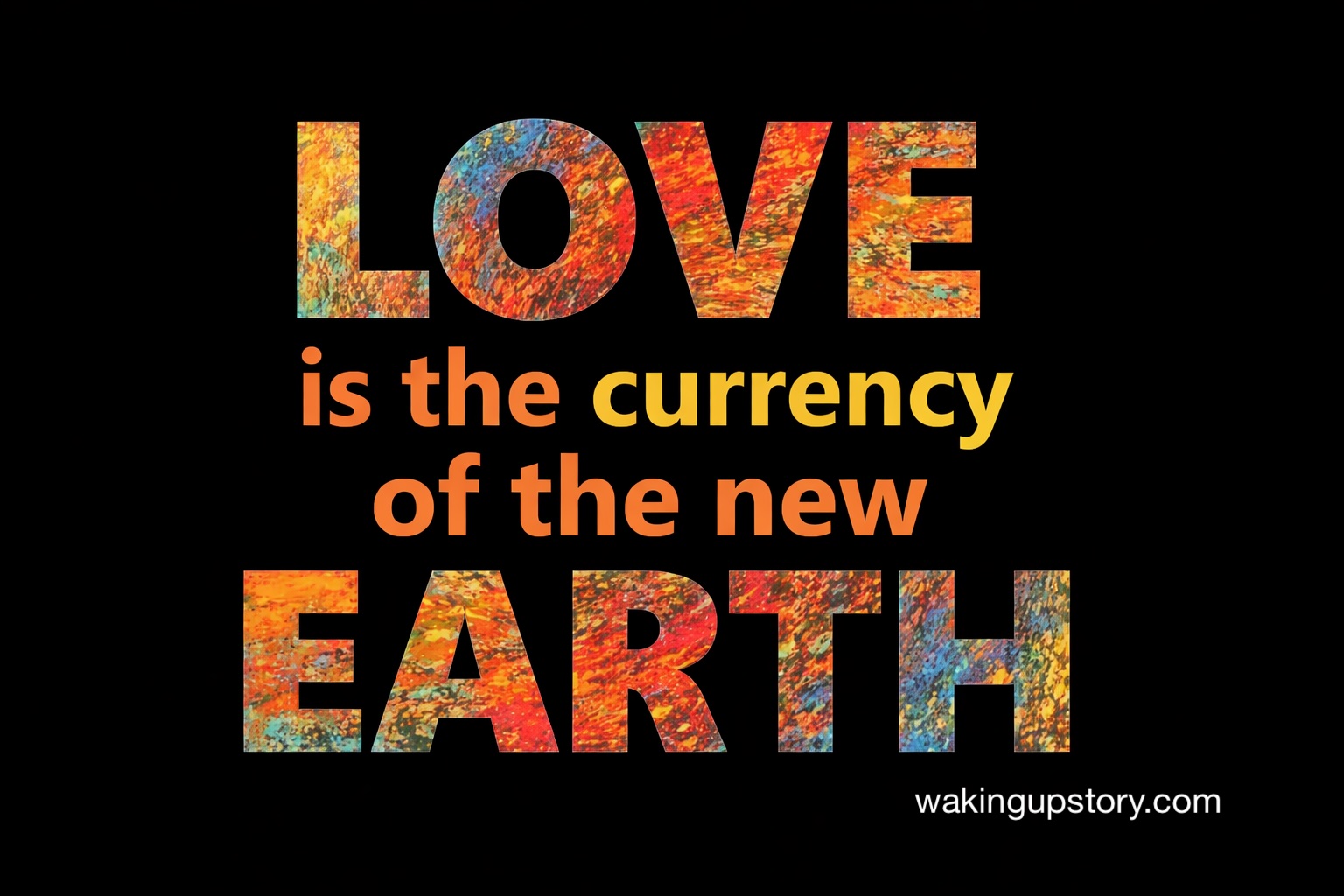
    As someone once put it in a simple but powerful way: “Love is the currency of the new Earth.”

    And you could say that in the world of Waking Up, this is exactly what has emerged — or as they call it: GROJ: Gratitude, Love, and Joy.

    Not as a literal currency, but as the underlying human energy that replaces fear, scarcity, and competition — shaping how we relate, create, and live together.

    Technology would not be used primarily to enrich a few.
    It would be used to serve all.

    Production would no longer be driven mainly by what is most profitable.
    It would be guided by what is most intelligent, humane, and sustainable.

    Politics would not revolve around managing permanent conflict.

    It would be replaced by a planetary stewardship system focused on solving real problems for all life on Earth.

    And other human beings — no matter where they were born — would no longer be seen as threats by default, but as members of the same human family.

    The world of Waking Up

    This is exactly why I wrote Waking Up.

    Because sometimes the clearest way to describe a better future is not through argument alone, but through story.
    Through a world that people can enter.
    Through a character who opens his eyes and finds that humanity did not destroy itself after all, but evolved.

    The world of Waking Up is, in many ways, the true new world order.
    Not a dark global regime, but a planetary civilization based on cooperation instead of competition, stewardship instead of ownership, and intelligent sharing instead of artificial scarcity.

    A world where love is not just a private emotion, but a civilizational principle.

    That may sound unrealistic to some. But perhaps the truly unrealistic idea is believing that the current system — with its wars, waste, stress, inequality, ecological destruction, and permanent insecurity — is the best we can do — or even something that is sustainable at all.

    Time to reclaim the future

    So yes — I support a new world order.

    But not one of fear.
    Not one of coercion.
    Not one of profit-driven control.

    I support a new world order rooted in love, respect, mutual understanding, and the recognition that we are not separate from one another.

    Humanity does not need better ways to dominate.
    It needs better ways to live.

    And perhaps that is where the real awakening begins.

    If this vision resonates with you, please share this article. Thank you.

    And if you want to explore this kind of future through story, have a look at the novel Waking Up – A Journey Towards a New Dawn for Humanity.

    Because maybe the most powerful thing we can do now is not merely to fear the future — but to imagine it better.

  • The New World on This Earth

    The New World on This Earth

    The Language of a “New Earth”

    In recent years, many have spoken about a coming New Earth.

    Channelings describe guidance from higher councils. Some speak of the Arcturians. Others describe DNA activations, frequency upgrades, and planetary ascension. There are daily transmissions, spiritual messages, and visions of humanity stepping into a higher timeline.

    For many, this language carries hope. It suggests that something greater is unfolding — that humanity is not alone, and that transformation is inevitable.

    I do not dismiss the symbolism in this.

    But I interpret it differently.

    Earth vs. World

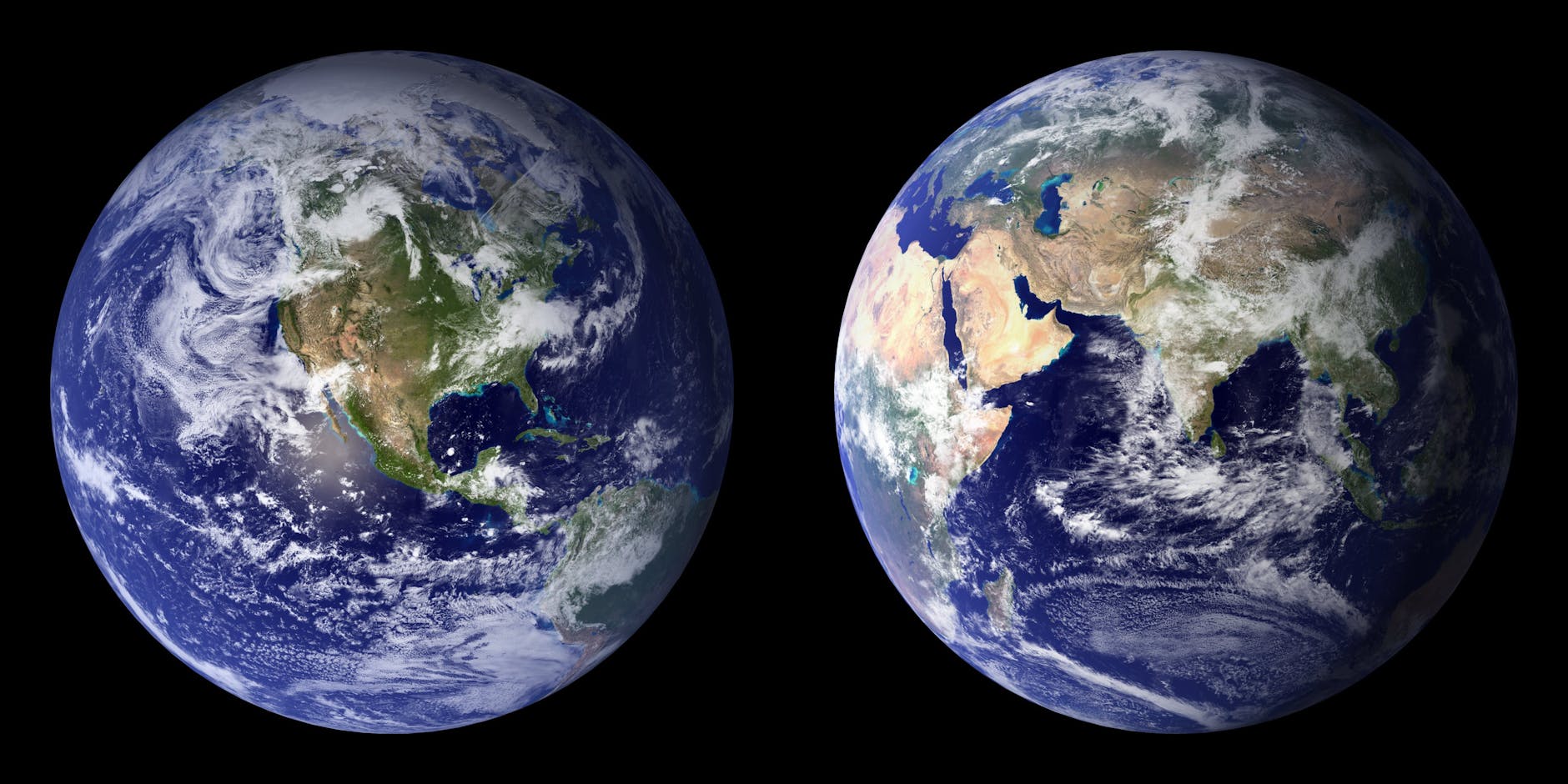
    The Earth is a planet.

    The world is the society we have built upon it.

    The oceans, forests, atmosphere and soil — these belong to the planet.

    Money, ownership(or stewardship) systems, nation-states, laws, markets, institutions — these belong to the world.

    The planet is natural.

    The world is constructed.

    This distinction matters.

    Because if the world is constructed, it can be reconstructed.

    What If the “New Earth” Is This Earth?

    When I hear channelings about a New Earth, I do not imagine relocation.

    I do not imagine boarding starships.

    I do not imagine abandoning this planet for another dimension.

    I imagine something far more radical — and far more grounded.

    I imagine a new world built on this same Earth.

    The soil remains, only improved.

    The oceans remain, only cleaned.

    The sun still rises, only through clean air.

    But the agreements change.

    From Ascension to Responsibility

    Some narratives suggest that humanity will be upgraded — that our DNA will be activated, that higher beings will assist, that a collective shift will simply arrive.

    I don’t argue with that. It might be.

    But whether or not Arcturians are transmitting messages, one thing remains clear:

    No external force can redesign our economic system for us.

    No galactic council can restructure ownership into stewardship on our behalf.

    No frequency upgrade can automatically replace incentives rooted in fear and scarcity.

    If a new world is to emerge, it will emerge because humanity consciously chooses to grow up.

    That is not less spiritual.

    It is more responsible.

    A New Consciousness Emerging

    If there is a “New Earth” unfolding, it begins with something subtle but undeniable: a new consciousness waking up within humanity.

    Across cultures and continents, more people are questioning old assumptions. More people sense that something about our current systems does not align with our deeper values. More people feel the tension between what we have built and what we know, inwardly, is possible. Thus, the New Earth is taking shape in our minds. In Consciousness.

    This is not mystical spectacle.

    It is awareness.

    It is the growing realization that:

    • endless extraction cannot continue

    • value and worth is not the same as price

    • ownership is not the same as stewardship

    • competition is not the only way to organize society

    That awakening is consciousness expanding beyond fear-based survival logic.

    And when consciousness changes, behavior follows.

    A Shift in Consciousness That Becomes Structure

    A real shift in consciousness is not fireworks in the sky.

    It is a change in perception that leads to new behavior.

    And new behavior leads to new systems.

    When enough people:

    • stop equating worth with money

    • stop accepting artificial scarcity as natural

    • stop believing that ownership must enclose abundance

    Then the structure of the world begins to change.

    That is the New Earth.

    Not because the planet changed — but because the agreements did.

    The New World on This Earth

    The New World does not require escape.

    It does not require denial of science.

    It does not require rejection of spirituality.

    It requires clarity.

    The planet is already here.

    The resources are already here.

    Human creativity is already here.

    What must evolve is the story we are living inside.

    If humanity chooses cooperation over competition, stewardship over extraction, and shared inheritance over exclusive ownership — then a new world emerges on this Earth.

    No rescue.

    No relocation.

    No waiting.

    Just a conscious decision.

    And perhaps that is the most profound shift of all.

    A new world begins the moment we realize it is ours to build.

    If this perspective resonates with you, please share this article so the conversation can expand.

    Follow Benjamin Micheals when he wakes up in a new world where humanity has already been waking up in the novel Waking Up – A journey towards a new dawn for humanity.