
“A plant-based diet could save up to 8 billion tonnes of CO₂ a year.”
— Greta Thunberg
She is right.
A worldwide transition towards plant-based food could produce an enormous reduction in greenhouse-gas emissions. It would also free vast areas of the Earth.
Land now used for livestock.
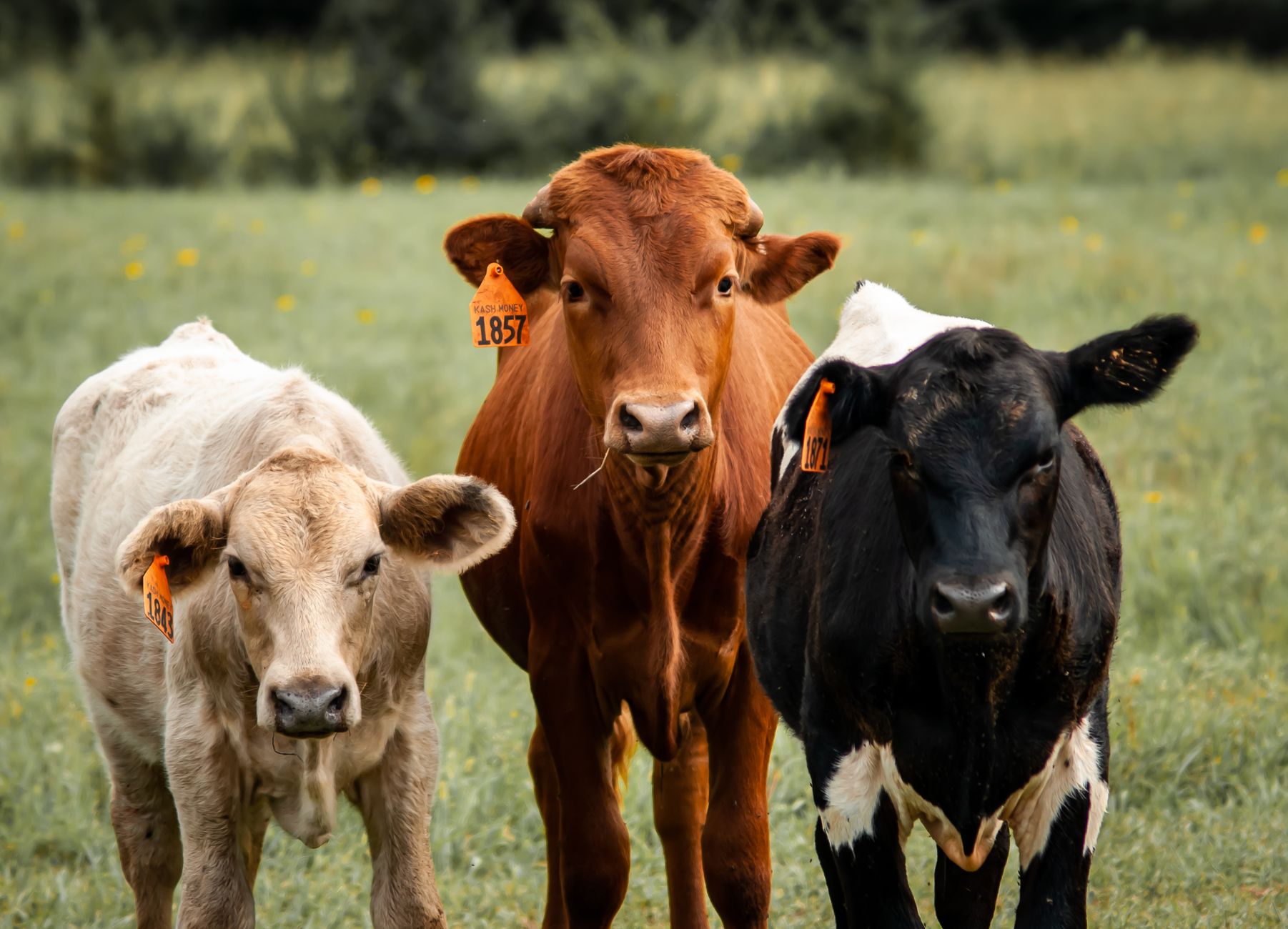
Livestock currently occupies approximately 77 percent of all global agricultural land, including grazing land and cropland used to grow animal feed. Yet meat and dairy provide only around 18 percent of humanity’s calories and 37 percent of its protein.
More than three-quarters of our agricultural land is therefore used to produce less than one-fifth of our food energy.
Moving towards plant-based food would allow immense areas of forest, wetland and grassland to return. Wildlife habitats could reconnect. Billions of animals would no longer be bred inside an industrial production system.
That alone could begin transforming the planet.
But animal agriculture is not the largest source of carbon dioxide emissions.
Fossil fuels are.
The Larger Question
Humanity currently releases close to 37 billion tonnes of carbon dioxide every year through fossil fuels and cement production.
What if we reduced our emissions from coal, oil and gas not by ten or twenty percent, but all the way to zero? Not burning them at all.
What kind of world would that give us?
Exhaust Fumes
It would give us a world no longer heating the atmosphere by continuously burning fossilized life from beneath the ground. A world where cities were no longer covered in exhaust fumes, oceans were no longer forced to absorb an ever-growing quantity of carbon dioxide and global temperatures were no longer driven relentlessly upwards by human industry.
Stopping fossil-fuel burning would prevent more than four times as much carbon dioxide as the worldwide transition towards plant-based food.
Doing both would change everything.
Decades of Promises
Yet despite decades of climate conferences, promises, targets and technological progress, global fossil-fuel emissions remain near record levels.
The problem is not that humanity lacks alternatives. The problem is that our monetary system cannot stop.
The Money Trap
A complete end to fossil-fuel burning is impossible within a monetary system that depends upon continuous production, consumption and economic growth.
Oil companies cannot voluntarily stop selling oil while remaining oil companies. Coal companies cannot leave coal underground when extracting it is the source of their income. Airlines, shipping companies, car manufacturers, construction companies and industrial producers cannot simply reduce their activities to what humanity genuinely needs.
They must earn money, repay debts, protect investments and compete for market share.
Even renewable energy is introduced into this growth machinery. Instead of clean energy replacing fossil energy, it is often added to an expanding total energy supply because the economy must continue growing. Thus, the so-called green energy revolution also adds to the economic activity that continues to destroy life on this planet.
When production becomes cheaper and more efficient, companies rarely decide to produce less. They produce more. When products last longer, fewer replacements can be sold, so durability becomes a threat to profit. When consumption declines, people lose their jobs and governments fear recession.
Waste is not merely a mistake within this structure.
Waste keeps money circulating.
The monetary system cannot calmly decide that humanity has produced enough. Enough means contraction, unemployment, unpaid debt, falling profits and economic crisis. An outlook to a life no one wants.
Yet enough is exactly what the living planet requires.
A River Warning
The consequences are no longer distant or abstract.
Swedish Radio recently reported that drought and exceptionally low water flows are threatening sea trout and freshwater pearl mussels in southern Sweden.
For the sea trout, the situation is critical. This is the time when they should begin migrating from the sea into rivers and streams to spawn. In several smaller waterways in Skåne, water levels are now so low that they may be unable to make the journey.
The freshwater pearl mussel is threatened as well. Its survival is closely connected to trout and salmon because its larvae spend part of their development attached to the gills of these fish. When the fish disappear, the mussel’s reproductive cycle is broken too.
One species does not simply vanish alone.
The trout, the mussel, the insects, the flowing water, the riverbed and the surrounding vegetation belong to one living system. Damage one part severely enough and the effects travel through everything else.
This is how ecological collapse often appears. Not as one spectacular global event, but as thousands of local relationships quietly breaking apart.
A stream becomes too shallow. A fish cannot reach its spawning ground. A mussel cannot reproduce. Another thread is pulled from the web.
Emptying Oceans
The same destruction is happening beneath the surface of the oceans.
The seas have been treated as industrial resources from which the largest possible quantity must be extracted and sold. Enormous fishing fleets criss cross the planet searching for the remaining concentrations of profitable fish. Bottom trawlers scrape across seabeds. Unwanted fish, marine mammals, turtles and seabirds are caught and discarded as bycatch.
When fish populations decline, the monetary system does not automatically stop. Scarcity can increase the value of what remains, creating an incentive to continue hunting a species precisely when it most needs protection. Regulations may be in place to prevent this, but are they strong enough to withstand the economic pressure to keep fishing?
At the same time, fossil-fuel emissions are heating and acidifying the oceans. Agricultural chemicals and industrial pollution flow through rivers into coastal waters. Plastic breaks apart into microscopic particles that travel throughout marine food webs.
We are attacking marine life from every direction and then expressing surprise when fish stocks collapse.
But the oceans are not dead. Their capacity for recovery is extraordinary when the pressure is removed.
The same is true on land.
Beyond Money
The conclusion should now be obvious. It is the relentless pressure of the monetary system itself that drives us to overfish, over extract, overproduce, over consume and pollute. We cannot solve this crisis within the same system that makes continued destruction an economic necessity. Thus, if we truly want to preserve nature and our life on this planet, and live in peace instead of starting to fight with each other to secure the last of dwindling resources, we cannot continue with the monetary system. But we could continue with a resource based economy.
A global resource-based economy would begin with a completely different question.
Instead of asking what can be sold profitably, it would ask what people and ecosystems actually need.
Direct Access
Humanity could assess its available energy, land, water, minerals, forests and productive capacity directly. Artificial intelligence and global information systems could help coordinate those resources without prices, trade or financial competition determining every decision.
We could then plan the end of fossil-fuel use as a needed physical transition.
Renewable-energy systems could be produced where they were most effective. Buildings could be insulated as passive houses. Transportation could be electrified. Products could be designed to last, remain repairable and use standardized components. Unnecessary duplication could be eliminated, and materials could circulate through society instead of repeatedly becoming waste.
We would reduce emissions in two ways:
- We would replace fossil energy with non-polluting energy
- we would stop wasting energy on production serving no genuine human purpose.
A resource-based economy would not require less knowledge, comfort or creativity. It would require far less extraction, pollution and unnecessary physical production.
We could live better while restoring the Earth.
Returning Land
A predominantly plant-based food system would release immense areas now used for grazing livestock and producing animal feed.
Fences could be removed. Wildlife corridors could reconnect fragmented habitats. Forests could spread across former grazing land. Wetlands could be restored. Rivers could flow through regenerated landscapes, protected by vegetation that retained water, stabilized soil and sheltered aquatic life.
Then the animals would return.
Bison could again move across open landscapes. Deer, elk, antelope and wild horses could expand into restored territories. Elephants could regain ancient migration routes. Wolves, bears and large cats could return where human expansion had driven them away.
Birds would return with the forests and wetlands. Insects would return as chemical use declined and diverse vegetation replaced industrial monocultures.
We would stop breeding a few domesticated species by the billion and begin welcoming thousands of wild species back into the world.
That would be true animal abundance.
Returning Waters
Rivers would recover as well.
Wetlands, forests and healthy soils absorb water when rain falls and release it gradually during dry periods. Restoring them would not prevent every drought, but it would make entire landscapes better able to retain water and withstand extremes.
Dams and other unnecessary barriers could be removed where appropriate. Pollution could be stopped at its source. Rivers could again connect mountains, forests, farms, wetlands and seas.
Sea trout could reach their spawning grounds. Salmon could return to rivers from which they had disappeared. Freshwater pearl mussels could reproduce again. Fish would carry marine nutrients upstream, feeding birds, mammals, insects, plants and soil organisms.
The river would no longer be managed merely as water for agriculture, industry or sale. It would be understood as a living system.
Returning Oceans
The restoration would continue beyond the river mouth.
A resource-based economy would have no reason to empty the oceans. There would be no fishing corporations required to increase catches, no international fleets pursuing the last profitable shoals and no market turning rarity into a higher price.
Industrial fishing would end. Spawning grounds would be protected. Bottom trawling would stop. Large marine areas could be left undisturbed while damaged ecosystems recovered.
Mangroves, seagrass meadows, salt marshes, coral reefs and coastal wetlands would be restored. These environments are nurseries for marine life as well as protections against storms, erosion and rising seas.
Fish can reproduce in extraordinary numbers when they are given clean water, intact habitats and enough time. As populations recovered inside protected areas, they would spread into surrounding waters. Large fish would return. Whales, dolphins, seals, seabirds and countless other species would follow the renewed abundance of food.
The oceans could again become almost unimaginable in their richness.
Humans could still fish. But we would take only what populations could continuously regenerate. Fishing would become a relationship with a living ecosystem rather than an industry mining the sea.
The sea would no longer be filled with swimming commodities.
It would be alive again.
Living Homesteads
Ending industrial animal production would not mean removing every domesticated animal from human life.
A few chickens, ducks, goats or sheep could live on homesteads and permaculture farms. Chickens could eat insects and appropriate food leftovers while fertilizing the soil. Ducks could help control pests. Grazing animals would manage vegetation in landscapes suited to them. Manure would return nutrients to the earth instead of becoming concentrated pollution in enormous industrial facilities.
Their numbers would be determined by what the land could sustain, not by how many animal products could be sold.
Some communities might choose to keep no animals. Others might integrate them into gardens, food forests and regenerative farms. There would be no economic incentive to turn a few animals into an ever-expanding industry.
Freedom would exist within responsibility.
A predominantly plant-based civilization could therefore contain far more animal life than our current meat-based civilization. The difference would be that most animals would live freely in functioning ecosystems instead of being bred in factories for human consumption.
Our Place
Humans do not need to withdraw completely from nature.
We need to rediscover our place within it.
Where natural predators could return, they would again help regulate herbivore populations. In places where predators could not safely return or where certain populations exceeded what recovering landscapes could support, humans could hunt as responsible caretakers.
With a shift to a plant based diet we would free up so much land that herbivores would return in an unheard of abundance.
That would not mean commercial hunting, killing for entertainment or exterminating predators that compete with us. Hunting would be guided by ecological knowledge, genuine need and respect for the whole living system. What was taken would be used, and populations would never be reduced beyond what nature could replace.
In this way, native people like eskimo would be encouraged to live in the natural way they have lived for millennia, hunting what they needed for themselves.
The same principle would apply to fishing.
Some people would choose never to hunt, fish or eat animals. Others would participate in this form of stewardship. A mature civilization would accommodate both without rebuilding industrial animal production or commercial fishing.
Humanity would no longer behave as the owner of nature. We would participate in its circulation, protecting the health of the whole while taking only what the living system could continuously regenerate.
The Wild Return
The choice is not between our present civilization and an animal-free world.
The real choice is between continuing to dominate nature and learning to live within it.
The Choice
We can keep burning fossil fuels, draining rivers, emptying oceans, clearing forests, breeding billions of animals and converting the living world into products.
Or we can end the industries destroying the planet, organize our resources intelligently and give nature the space to recover.
A resource-based economy could make that transformation possible. It would remove the financial forces demanding endless extraction and replace them with conscious stewardship of the Earth.
Children would grow up seeing herds moving across open landscapes, birds filling restored wetlands, trout swimming up clear rivers and great shoals of fish moving through living seas. Animals could inhabit our homesteads and food forests while immense wild populations flourished beyond them.
Humanity would no longer encounter animals mainly as packaged products or images on screens. We would meet them again as fellow participants in the same living world.
The wild return would not be nature reclaiming the Earth from humanity.
It would be humanity finally returning to nature.
A world with a global resource based economy can be hard to imagine.
That is exactly why I wrote the novel Waking Up – A journey towards a new dawn for humanity.
The novel gives a glimpse into a future where humanity has chosen to go in this direction, restoring the nature completely while living within it as caretakers.
The story is told through the bewildered billionaire Benjamin Michaels and his awakening into this new world after 100 years of cryonic preservation.
If you like, you can discover his story here.
And please share this article if it resonates.