
A friend of mine in Norway runs a small music blog called Volum11.no
No Corporate Backing
The name itself is a little music joke. It comes from the rockumentary film This Is Spinal Tap, where one of the musicians proudly points to his amplifier and says, “This one goes to 11.” It’s exactly the kind of reference only a true music enthusiast would choose.
He has no sponsors. No corporate backing. No business plan.
He simply listens and writes.
He writes about old albums, new albums, forgotten artists and modern classics. He dissects production techniques, musicianship, lyrics and atmosphere. But he also digs into the lives of the artists themselves—their childhoods, the bands they formed, the musicians they collaborated with, are influenced of and the creative journeys that shaped their music.
Reading his articles feels less like reading reviews and more like traveling through music history.
And he does it simply because he loves music.
Not because anyone told him to.
Not because the government assigned him to do it.
Not because there is huge money in it.
But simply because he loves it.
Reading his articles feels less like reading reviews and more like traveling through music history.
Why Work?
This made me think of a chapter I recently read in Robin Everett Cox’s excellent book What Comes Next? Volume 1: The Illusion of Money: Why We Need a “System Upgrade”.
The chapter is called “Why Work?”, and it asks one of the most fundamental questions of all.
Why do we work?
Many would say, “because we need money”. And that wouldn’t be wrong of course. In the context we are in.
But Robin points to the remarkable response during the COVID-19 pandemic in England, when millions of people volunteered to help total strangers without expecting anything in return. According to Patrick Butler, writing in The Guardian:
“In the space of a few weeks of corona virus lockdown England acquired a million-strong network of social volunteers – surpassing demand and prompting speculation: is this a new sign of social solidarity, and can the newly acquired community spirit survive?”
Robin then writes:
“It is inherent to volunteering that volunteers don’t receive payment for their time. As author Sherry Anderson said, ‘Volunteers don’t get paid, not because they’re worthless, but because they’re priceless.’ Putting a price tag on their labour not only negates their status as volunteers; some studies suggest that, when offered a financial reward, they are inclined to work less and with markedly less enthusiasm.
In short, money can undermine our ‘intrinsic motivation’ to work.”
— Robin Everett Cox, What Comes Next? Volume 1: The Illusion of Money
That paragraph stayed with me.
Our Intrinsic Motivation
“money can undermine our ‘intrinsic motivation’ to work.”
Really?
If so, perhaps we’ve been asking ourselves the wrong question for centuries.
We’ve built an entire civilization around the assumption that money is what motivates people.
Without money, people wouldn’t work.
Without salaries, nobody would contribute.
Without financial incentives, civilization would collapse.
But is that really true?
Volunteers Helping Strangers
When I look around, I don’t see a world driven only by money. Of course, I see people work for money, but that is only because we live within a monetary system that demands money for almost everything. But if there wasn’t any money in the first place, I think we would still work just as much. But for different reasons. Even in today’s world I see lots of work being done for reasons other than money.
I see volunteers helping strangers.
I see parents dedicating countless unpaid hours to raising children.
I see programmers building free open-source software that powers much of the internet.
I see people contributing to Wikipedia.
I see neighbors helping neighbors after floods, fires and earthquakes.
I see people restoring old cars simply because they love them.
I see gardeners spending weekends growing flowers and vegetables.
I see musicians playing, improvising and composing music.
Artists painting.
Writers writing.
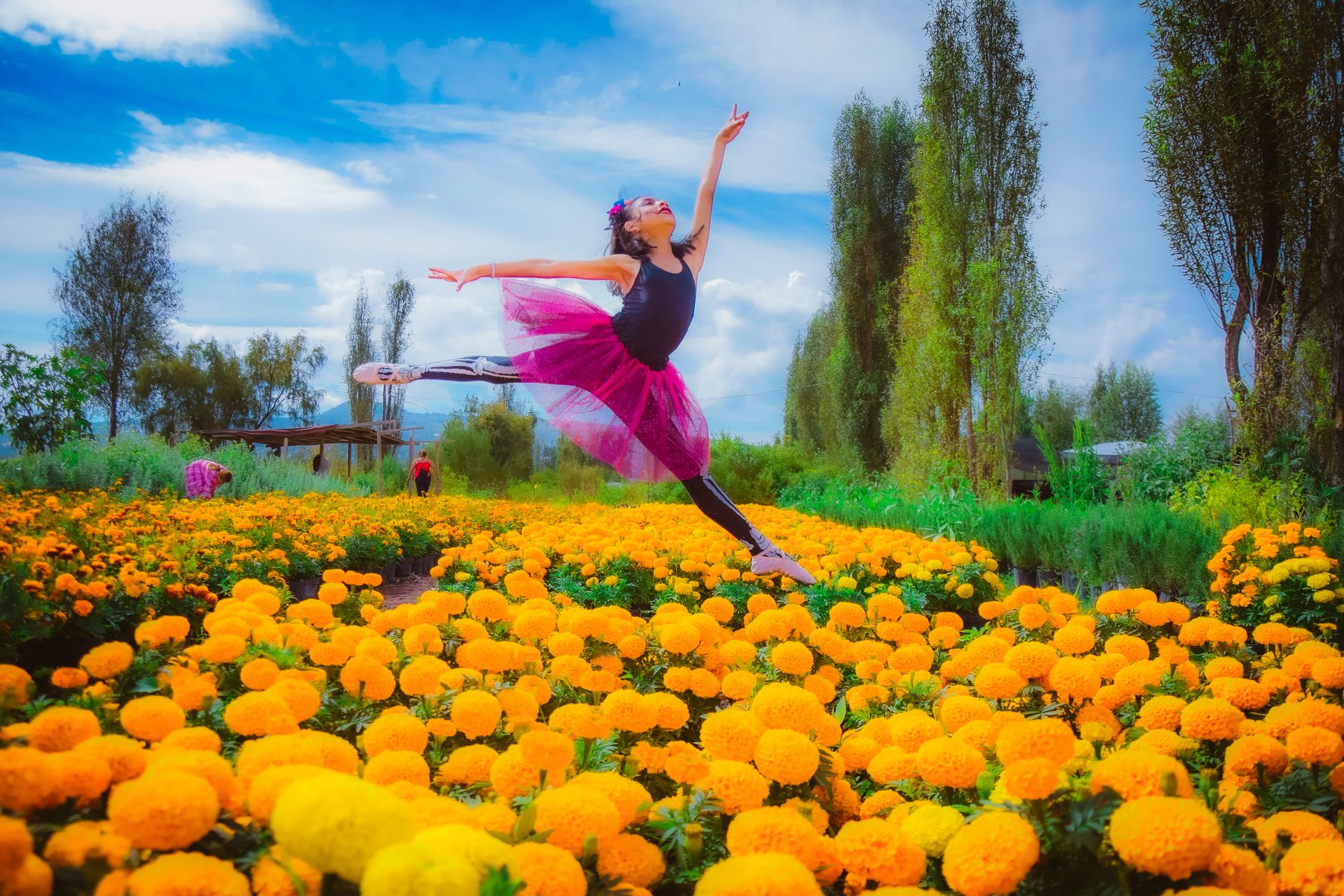
Dancers dancing.
And then I look at the work people actually get paid to do.
The Salary is Not the Dream
Many farmers don’t become farmers because they’re chasing wealth. They genuinely love farming. They love being outdoors, working with the seasons and watching life grow from the soil.
Many builders love construction. They enjoy seeing something tangible rise from an empty plot of land. Something useful. Something needed.
Many teachers love watching children discover something new.
Many nurses love caring for people.
Many security guards and police officers genuinely enjoy being of service and helping others feel safe.
Many engineers love solving problems.
Many scientists love discovering how the world works.
Many chefs love cooking.
For countless people, the salary is not the dream.
It is simply what allows them to continue doing what they already love.
Of course, not everyone has their dream job. Many people work in jobs they would happily leave tomorrow if they could.
But perhaps that, too, tells us something.
Whenever people have the opportunity, they usually try to move closer to what genuinely interests them.
They change careers.
Start businesses.
Study new subjects.
Write books.
Learn instruments.
Travel.
Volunteer.
Create.
Because something inside them keeps pulling them toward meaning.
Toward curiosity.
Toward contribution.
Toward joy.
Maybe that’s what it really means to be human.
Maybe we are not naturally lazy beings who must constantly be bribed into contributing.
Maybe we are naturally curious beings who want to create, build, care, discover and share.
If that’s true, then perhaps the real purpose of a civilization should not be to figure out how to coerce people to work.
Perhaps it should be to make it as easy as possible for people to do what they genuinely love.
But no, no. We have to buy, sell, compete, extract, consume, argue, earn money, go to war, hoard more, stress more, go bankrupt, start all over again and constantly tricking each other into buying as much as physically possible.
Imagine what humanity might become if that was not our starting point.
But rather: A civilization where people aren’t asking:
“How can I make a living?”
But instead:
“How can I best contribute?”
Maybe that’s not an impossible dream.
Maybe we already see glimpses of it every single day.
In volunteers.
In artists.
In teachers.
In farmers.
In builders.
In musicians.
Reward
There is another assumption buried deeply within our economic thinking: that human beings need to receive something from somebody else in return for everything they do. A reciprocal service.
Money.
A favour.
A product.
A service.
Some kind of trade.
Otherwise, why bother?
But perhaps the answer is staring us in the face.
The reward can be in the task itself.
The musician doesn’t necessarily need somebody to reward her for playing music. Playing music is the reward.
The gardener doesn’t need somebody to compensate him for tending his garden. Watching it grow and enjoying the fresh air and nature can be the reward in itself.
The farmer can experience enormous satisfaction from seeing the first shoots emerge from the soil.
The builder can stand back at the end of the day and look at something that didn’t exist before.
And my friend doesn’t spend hours researching the history of musicians and writing articles for Volum 11 because he expects somebody to give him something of equivalent value in return.
He enjoys doing it.
The reward lies in doing what you love.
There can also be another kind of reward—one that doesn’t require a direct exchange.
Think again about those volunteers in England. They weren’t thinking, I’ll help this particular person today as long as this particular person promises to repay me tomorrow.
There was no contract.
No invoice.
No balance sheet.
Perhaps many simply understood something much more fundamental:
We all benefit from living in a society where people help one another.
I contribute when I can. Someone else contributes when they can. And when I eventually need help, likely somebody will be there for me too.
Nobody has to keep score.
That isn’t really trade at all.
It is participation in a society in which people contribute because they care about what they are doing—and about each other.
GROJ
This is an idea I played with in my novel Waking Up.
In the future civilization Benjamin Michaels awakens to, money has disappeared. But the people jokingly say they still have a “currency”.
They call it GROJ: Gratitude, Love, Joy.
It is a rather peculiar currency.
You can’t put it in a bank.
You can’t hoard it.
You can’t accumulate enough of it to become a billionaire.
In fact, GROJ works almost exactly opposite to money.
The more you give away, the more you get.
Help somebody, and you may receive gratitude while experiencing the joy of having helped.
Create something beautiful and share it, and that joy can spread to other people and come back to you in addition to the joy you felt when creating it.
Give love, and you may find yourself surrounded by more of it.
Nobody needs to keep score.
Maybe this is the kind of reward we have underestimated.
Not everything valuable needs to come back to us as payment or ROI.
Sometimes doing it is the reward.
Sometimes giving it away is the reward.
And sometimes the richest person in the room might simply be the one experiencing the most gratitude, love and joy.
In people like my friend in Norway, quietly writing article after article about music…
Just for the love of it.
A World Like That
What if we actually had a world like that? Where everyone only did what they genuinely loved doing?
In the novel Waking Up – A journey towards a new dawn for humanity, the bewildered billionaire Benjamin Michaels wakes up in a world exactly like that. And through his eyes you can get a glimpse into that world too.
Further reading:
Robin Everett Cox – What Comes Next? Volume 1: The Illusion of Money: Why We Need a “System Upgrade”
Volum11 – https://www.volum11.no
Harald Neslein Sandø – Waking Up – A journey towards a new dawn for humanity