Tag: EARTH

  •  The Citizen of Earth

     The Citizen of Earth

    Imagine being born into this world and discovering that you don’t really belong anywhere.

    Not because you have done anything wrong. Not because you are unwilling to contribute to society. But simply because you happened to be born in the wrong country.

    I was listening to a news report on Swedish radio about Afghan people struggling to obtain Swedish citizenship. Some had lived in Sweden for years but were having difficulties proving their identities and fulfilling the requirements for citizenship.

    And it made me think.

    Why do we need citizenship in the first place?

    Why should our fundamental right to belong somewhere on this planet depend on which country we happened to be born in, what documents we possess, or whether a government decides to recognize us?

    After all, we are all inhabitants of Earth, aren’t we?

    Shouldn’t that be enough?

    Born on Earth

    None of us chose where we were born.

    We didn’t choose our parents, our nationality, our native language, or the political and economic circumstances surrounding our birth.

    Yet these entirely accidental circumstances can determine almost everything about our opportunities in life.

    One child is born in a wealthy country with access to healthcare, education, clean water, and relative security. Another is born in a country suffering from poverty, war, or political instability.

    Both children arrive on exactly the same planet.

    Both need nourishment, shelter, protection, affection, education, and opportunities to develop their abilities.

    Yet the systems humanity has created may treat them very differently.

    One may grow up with almost unlimited opportunities, while the other may spend a lifetime struggling to obtain what the first takes for granted.

    And if the second child eventually travels to the first child’s country, seeking a better life, that person may be told they have no right to remain there.

    Why?

    An Imaginary Line

    Because they were born on the wrong side of an imaginary line.

    Of course, borders have legal and administrative significance. But the lines separating countries are human creations. They are not fundamental divisions of the planet itself.

    Nobody is born in the wrong country. We are all born on Earth.

    Who Owns the Planet

    Throughout history, humanity has divided the Earth into territories, kingdoms, empires, and nations.

    We have fought wars over these territories, claimed ownership of land and resources, and established increasingly elaborate systems of laws governing who may live where and who may use what.

    Eventually, we came to accept these arrangements as perfectly natural.

    We speak of our countries, our territories, our borders, and our national resources as though these divisions were inherent features of the world.

    But who actually created the Earth?

    Certainly not the governments that claim authority over different portions of it.

    No nation created the land beneath its territory, the oceans surrounding it, or the natural resources found within its borders.

    And no individual created the planet simply by being born upon it.

    Nevertheless, we have developed a civilization in which access to the Earth’s resources is largely determined by ownership, nationality, and purchasing power.

    A person may be surrounded by abundant food, housing, technology, and other resources, yet be unable to obtain what they need because they lack the money or legal entitlement required to access them.

    We have effectively placed an enormous system of permissions between human beings and the planet that sustains them.

    And then we wonder why so many people struggle to survive.

    All These Ships

    There is an interesting little linguistic coincidence in the words we use to describe our relationships with the world.

    Ownership. Citizenship. Stewardship. Partnership. Friendship.

    They all end in ship.

    Although the suffix does not originate from the word for a sailing vessel, the metaphor is rather appealing.

    We might imagine our individual bodies as vessels carrying us through life. When we form partnerships, families, communities, and nations, we create larger vessels of shared relationships and responsibilities.

    And when we assume ownership or stewardship over something, we become, in a sense, captains responsible for its direction and condition.

    But what kind of captains do we want to be?

    An owner may care deeply for what they possess. Yet ownership can also encourage the pursuit of financial profit at the expense of the very things being owned.

    A steward, on the other hand, is primarily concerned with caring for what has been entrusted to their responsibility.

    Ideally, both would take good care of their vessels.

    But perhaps humanity needs to reconsider the purpose of the enormous planetary vessel we all inhabit.

    Are we here to extract as much wealth as possible from the Earth, or to take care of it and one another?

    From Citizenship to Stewardship

    I have written extensively about the possibility of replacing our monetary economy with a resource-based economy founded on global stewardship.

    In such a civilization, the Earth’s resources would no longer be treated primarily as commodities to be owned, bought, and sold for financial gain.

    Instead, we would collectively manage them to provide for the needs of humanity while preserving the ecosystems upon which all life depends.

    We would use science, technology, artificial intelligence, and intelligent coordination to determine what resources are available, what people need, and how those resources can be utilized as efficiently and sustainably as possible.

    The fundamental objective would no longer be to maximize financial profit.

    It would be to maximize human well-being and the flourishing of life while minimizing unnecessary resource consumption.

    And this brings us back to citizenship.

    In such a world, what qualifications should a person need to receive food, housing, healthcare, education, transportation, or any of the other necessities and opportunities that make a fulfilling life possible?

    Should they need to prove their nationality?

    The Passport

    Should we need a passport?

    Should we need employment, an income, or a certain amount of money in a bank account?

    Or should simply being a living human being with needs be enough?

    I would argue that it should.

    Being born on Earth should be more than sufficient to establish that we belong here and deserve access to the resources necessary for a fulfilling life.

    Of course, this does not mean that every individual could demand unlimited quantities of everything.

    A resource-based economy would still need to coordinate resources, establish priorities, prevent waste, and ensure that our collective consumption remains within the planet’s ecological limits.

    But the guiding principle would be entirely different.

    Instead of asking whether someone can afford what they need or where they come from, we would ask what they need and how we can provide it.

    Instead of organizing access to resources primarily around purchasing power, we would organize it around actual human needs and the resources available to meet them.

    And instead of treating people from other countries as outsiders competing for our resources, we would recognize them as fellow inhabitants of the same planet.

    A World Without Outsiders

    Imagine a world in which nobody is considered an outsider simply because of where they were born.

    A world in which people can move between regions without having to establish that they are worthy of belonging.

    A world in which we recognize that different cultures, languages, traditions, and ways of life can enrich our shared human experience rather than threaten it.

    This would not require us to abandon our cultural identities. Quite the contrary.

    We could still be Norwegian, Swedish, Afghan, Spanish, Chinese, or Brazilian in terms of our heritage, language, and cultural background.

    We would still celebrate the extraordinary diversity of human civilization.

    But those identities would no longer determine our fundamental right to exist, participate, and have our needs met.

    Our communities and regions would still need organization and administration. People would still need identification, and society would still need to coordinate housing, infrastructure, transportation, and the availability of resources.

    But these would become practical questions of coordination rather than questions of whether someone deserves to belong.

    We would no longer need to divide humanity into those who have the right to access the world and those who must seek permission.

    Because we would recognize that we are all already here.

    And perhaps this would also help dissolve some of the fear and suspicion that have divided humanity for so long.

    When we stop viewing other people primarily as competitors for territory, employment, wealth, and resources, we can begin seeing them as fellow participants in a shared civilization.

    Not enemies.

    Not foreigners.

    Not economic burdens.

    But people.

    People with hopes, dreams, abilities, feelings, and needs, just like ourselves.

    The Citizen of Earth

    Perhaps the most interesting thing about the concept of Earth citizenship is that we shouldn’t actually need it.

    We don’t need another passport.

    We don’t need another government issuing certificates confirming that we are legitimate inhabitants of this planet. All we would need is our body, proving we are a living breathing human being on Earth.

    And we certainly don’t need another bureaucracy deciding who qualifies.

    We Are Already Here

    Every human being alive today is an inhabitant of Earth, regardless of nationality, citizenship, wealth, or legal status.

    This is not something any government needs to grant us.

    It is Simply a Fact

    What we need is a civilization that recognizes this fact and organizes itself accordingly.

    A civilization in which the resources of our planet are managed through intelligent stewardship rather than competing claims of ownership.

    A civilization in which the purpose of our economy is to provide for life rather than to perpetuate financial transactions.

    And a civilization in which nobody is denied the necessities of life merely because they were born somewhere else or lack the money to obtain them.

    Perhaps one day we will look back at our present arrangements and wonder why we made something so simple so extraordinarily complicated.

    Why did we require people to prove that they belonged somewhere on the only planet humanity had ever inhabited?

    Why did we allow imaginary lines and financial circumstances to determine who could access the resources necessary for life?

    And why did it take us so long to recognize that we were all sharing the same home?

    Inspire The World

    You might agree with this article and say, sure this is all well and good. But how do we get there? It is a very good question, and I will try to answer:

    We will get there by getting people exited . By letting them know about the possibility of a different world. By getting them inspired.

    And people often get inspired by books, or by movies showing other possibilities. And that is exactly why I wrote the novel: Waking Up: A Journey Towards a New Dawn for Humanity.

    It tells the story of Benjamin Michaels, the bewildered billionaire diagnosed with terminal cancer who chooses cryonic preservation rather than accepting his impending death. When he awakens a hundred years later, he discovers a radically transformed civilization where humanity has moved beyond money, ownership, and the competition for survival.

    It is a story about what our world might become if we chose cooperation, stewardship, and the well-being of all life as the foundations of our civilization.

    This novel was originally a screenplay, both aimed at inspiring people towards creating a new world on planet Earth.

    And since it began as a screenplay, if enough people read the book, it might finally become the movie it was always meant to be, inspiring even more people.

    So, by sharing this article, it might inspire more people. And the more truly inspired people we get, the bigger chance we have of actually creating this civilization on Earth. If you are young enough, it might even be in your lifetime.

    I thank you from the depth of my heart.

    Now, let’s go and create the new world.
  • The Global System

    The Global System

    We live on one planet. One interconnected world, with one atmosphere, one global ocean, and countless ecosystems that together sustain life on Earth.

    Yet human civilization is divided into nearly 200 countries, each with its own political system, government, economic interests, and competing priorities.

    Every few years, people are encouraged to vote for new politicians, new parties, and new governments. Red or blue. Republican or Democrat. Socialist or capitalist. Political campaigns promise change, and sometimes change does happen.

    But while politicians come and go, the fundamental structure of human civilization remains largely the same.

    And the planet doesn’t care who wins the next election.

    Climate change doesn’t recognize national borders. Neither do ocean currents, atmospheric circulation, biodiversity loss, or the consequences of environmental destruction.

    A decision made in one country can affect people on the other side of the world. One government may spend decades reducing pollution, only to see another government reverse its environmental policies after their next election.

     The American government’s decision to withdraw from the Paris climate agreement and pursue policies favoring greater fossil fuel production and consumption has consequences extending far beyond the borders of the country.

    The burning of fossil fuels releases greenhouse gases into an atmosphere shared by the entire planet. Policy changes that encourage additional fossil fuel consumption can therefore result in millions of additional tonnes of greenhouse gas emissions, contributing to global warming regardless of where those emissions originate.

    The consequences are not confined to American territory. They become part of a global climate problem affecting people, ecosystems, agriculture, water supplies, and future generations throughout the world.

    And yet decisions with such far-reaching consequences can be made by a single national government, according to its own political priorities.

    How can the environmental future of the entire planet depend so heavily on the political decisions of individual countries?

    How can humanity possibly manage a single interconnected planet through hundreds of fragmented and competing political systems?

    Perhaps the problem isn’t primarily who governs each country.

    Perhaps the problem is the way human civilization itself is organized.

    The Planetary System

    Long before humanity invented countries, governments, ownership, trade, or money, there was already a global system in place:

    The planetary system.

    It consists of the atmosphere, oceans, forests, rivers, mountains, soil, climate, weather patterns, and the extraordinary diversity of life that has evolved on Earth.

    These are not separate, independent entities. They are interconnected parts of a vast and dynamic natural system.

    The oceans influence the atmosphere. Forests influence rainfall. Plants absorb carbon dioxide and release oxygen. Microorganisms maintain soil fertility. Water continuously circulates through oceans, clouds, rivers, and living organisms.

    Everything is connected.

    And although this system has changed enormously throughout Earth’s history, it has sustained life for billions of years.

    Humanity is part of this system, not separate from it.

    Every breath, every meal, every drop of water, every material used to construct our homes and cities comes from this system and ultimately depends on the functioning of the natural world.

    The planetary system is therefore not merely our environment.

    It is the very foundation of our existence.

    And yet humanity has constructed a civilization that frequently behaves as though this foundation were simply a collection of commodities waiting to be exploited.

    We need a unifying global human system that recognizes and protects the planetary system.

    The Monetary System

    Interestingly, humanity has already established something resembling a global operating system:

    The monetary system.

    Despite all the political divisions, economic ideologies, national borders, and cultural differences, money connects almost every country and community on Earth.

    International trade, banking, investments, production, transportation, and distribution are all coordinated to a remarkable extent through monetary transactions.

    A product manufactured in China may contain materials extracted in Africa, components produced in Europe, and technology developed in America before being sold to someone in Australia.

    The monetary system makes this extraordinary global coordination possible.

    But there is a profound paradox.

    The system that connects humanity economically is also the system that encourages activities capable of destroying the planet and ecosystem  upon which humanity depends.

    The monetary system does not inherently recognize a forest as an essential part of the planetary ecosystem.

    It recognizes timber, land values, commercial opportunities, and potential profits.

    A river becomes a source of economic value. Land becomes property. Minerals become commodities. 

    Of course, money can also be used to protect nature to some degree. Forests can be conserved, pollution can be reduced, and renewable energy can be developed through financial investment.

    But ecological sustainability is not the fundamental organizing principle of the monetary system. It is rather financial profitability, which is a powerful driver of economic decisions, even when profitable activities create environmental damage.

    And this is where the contradiction becomes particularly serious. 

    We try to alleviate the contradiction through rules and regulations, but as long as the monetary system inherently rewards economic expansion, increasing production, growing consumption, and accumulating financial wealth, the planet and ecosystems  will always be at risk.

    The planet has physical limits.

    Natural resources cannot be extracted indefinitely at ever-increasing rates. Ecosystems cannot absorb unlimited amounts of pollution. And economic growth cannot automatically be equated with improvements in human well-being.

    A forest can contribute to economic growth when it is cut down. Pollution can create profitable industries dedicated to cleaning it up. Products can be manufactured, discarded, and replaced long before their useful lives have ended.

    All of this can generate monetary activity.

    But does it generate actual prosperity?

    Does it improve the health of the planet?

    Does it make human civilization more sustainable?

    Not necessarily.

    And beyond environmental destruction, the monetary system can intensify competition over resources, markets, territories, and economic power.

    Ownership becomes something to defend. Resources become something to control. Economic advantage becomes something to fight for.

    Money is certainly not the only cause of human conflict, but the competition surrounding ownership and economic power has played a significant role in conflicts throughout history.

    The irony is extraordinary.

    Humanity has managed to globalize its economy without globalizing its responsibility for the planet.

    The one system that connects nearly everyone on Earth and affects almost every ecosystem is not fundamentally designed to ensure that every being can continue living and thriving on Planet Earth.

    The Fragmented Civilization

    Meanwhile, humanity continues trying to solve global problems through national political systems.

    One country introduces ambitious environmental policies. Another prioritizes industrial expansion. A third withdraws from international commitments after an election.

    And every few years, the political priorities may change again.

    International agreements attempt to coordinate these efforts, but their effectiveness still depends heavily on individual governments and their willingness to cooperate.

    The result is a civilization that recognizes the existence of global problems but continues to manage them largely through fragmented national interests.

    This is not to suggest that elections are meaningless or that political decisions cannot make a difference.

    They certainly can.

    But changing politicians does not necessarily change the underlying principles upon which civilization operates.

    Whether a government calls itself socialist or capitalist, conservative or progressive, it still operates within an international economy dominated by an all encompassing devastating monetary system that perpetuates pollution and inequality. 

    The fundamental question remains largely unanswered:

    How should humanity organize its civilization to ensure that everyone can live prosperous, fulfilling lives on this planet indefinitely?

    That is not merely a national political question.

    It is a planetary question.

    And perhaps it requires an entirely different kind of global system.

    The Humanitary System

    A system in which humanity recognizes its role on Earth as its caretakers, not its exploiters.

    Imagine a global system of operations designed around the reality of the planet itself.

    A system that recognizes the atmosphere, oceans, ecosystems, climate, and natural resources as interconnected parts of the planetary foundation upon which all human life depends.

    A system that does not begin by asking who owns what, how much something costs, or how much profit can be generated.

    Instead, it begins with two fundamental questions:

    1. What do human beings need to live prosperous and fulfilling lives?

    2. And how can those needs be met while maintaining the health and sustainability of the planetary system?

    This is the foundation of what I call the Humanitary System.

    It would be a global operating principle for human civilization, based on stewardship rather than ownership, cooperation rather than economic competition, and the sustainable management of resources rather than the accumulation of monetary wealth.

    Its purpose would not be to replace hundreds of national governments with one enormous centralized authority controlling everyone’s lives.

    Quite the opposite.

    Glocal Communities

    Local communities would retain extensive autonomy, adapting their activities to their own cultures, environments, needs, and circumstances.

    But they would operate within a shared global framework that recognizes the interconnected nature of the planet.

    Climate, biodiversity, resource availability, ecological regeneration, production, transportation, agriculture, energy, and distribution would be understood as parts of one coordinated planetary operation.

    Modern science, global communications, automation, and artificial intelligence could help humanity understand these relationships and coordinate activities accordingly.

    Maximizing Life

    Instead of measuring success primarily through financial growth, civilization could measure its progress through actual human well-being, ecological health, resource availability, and long-term sustainability.

    Instead of treating nature as property to be exploited, humanity could assume responsibility for its stewardship.

    And instead of forcing people to compete financially for access to the necessities of life, resources could be managed and distributed according to genuine needs, availability, and ecological feasibility.

    This would not eliminate every problem, disagreement, or limitation.

    But it would establish a fundamentally different purpose for human civilization.

    Not to maximize financial returns, but to maximize life.

    One Planet One Civilization

    The planetary system already exists.

    It does not need to be invented, negotiated, or approved by any government.

    It is the natural reality within which humanity has evolved and upon which its continued existence depends.

    The monetary system, on the other hand, is a human invention.

    Ownership, prices, financial markets, national economies, and monetary obligations are not laws of nature. They are arrangements humanity has developed over thousands of years.

    And what humanity has invented, humanity can change.

    The purpose is not to eliminate cultural diversity, local independence, or individual freedom.

    It is to recognize that humanity shares one planet and that the organization of human civilization must reflect this fundamental reality.

    The Humanitary System is a proposal for doing precisely that.

    A global system of operations that reflects, respects, and protects the planetary system.

    A civilization that recognizes that the prosperity of humanity cannot be separated from the health of the natural world.

    A civilization in which the resources of the planet are no longer regarded primarily as commodities to be owned and traded, but as the shared foundation of life to be responsibly stewarded.

    An Extraordinary Ability

    Humanity has already demonstrated an extraordinary ability to coordinate activities across the entire planet through the monetary system.

    Imagine applying that same capacity for global coordination to a fundamentally different purpose.

    Not the endless pursuit of financial growth.

    Not the competition for ownership and economic dominance.

    But the flourishing of humanity and the protection of the planet that makes it possible.

    The planetary system sustains life.

    The monetary system sustains economic transactions.

    The Humanitary System would organize human civilization to prosper while sustaining life.

    Humanity does not need to move to a new planet.

    It needs to create a new way of living on the one it already has.

    And perhaps the first step is simply recognizing something that has

     Waking Up in a Different World

    What would life actually be like in a civilization that had replaced the monetary system with a Humanitary system? A world without money, poverty, economic competition, or the constant struggle to earn a living? A world where humanity had finally learned to live in harmony with the planet?

    Imagine falling asleep in today’s world and waking up a hundred years later to discover that everything had changed.

    That is exactly what happens to Benjamin Michaels in the novel, Waking Up: A Journey Towards a New Dawn for Humanity.

    Through his eyes, you can explore a future in which humanity has transformed its civilization beyond anything he could have imagined.

    What would you do if you woke up in such a world?

    Discover the story

  • An Inconvenient Truth… Still.

    An Inconvenient Truth… Still.

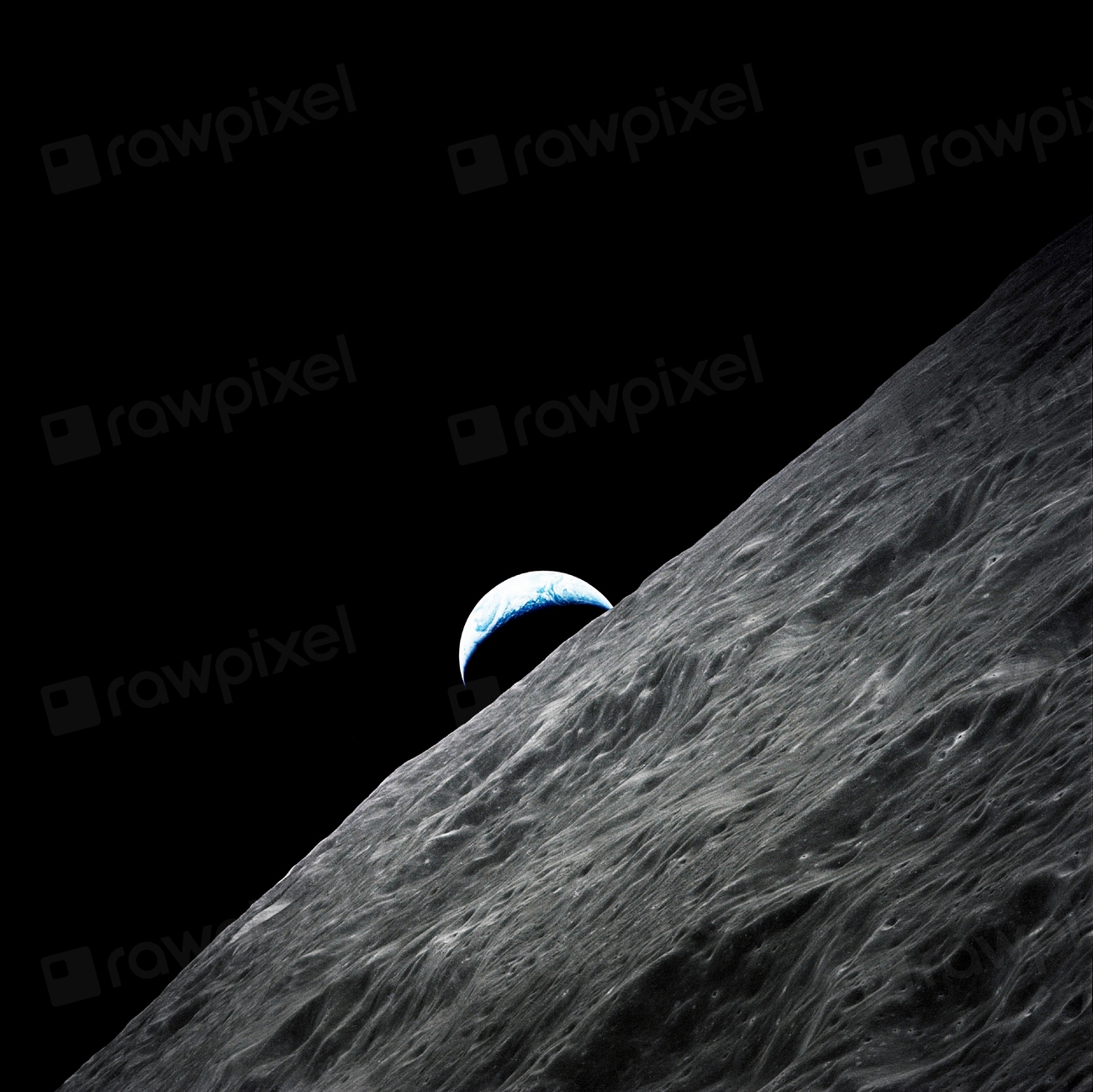
    In 1968, humanity saw itself from the outside for the first time.

    A small blue sphere rising over the gray horizon of the Moon.

    No borders.
    No nations.
    No ownership lines.

    Just one closed system suspended in black space.

    In 1972, the full Earth appeared again — completely illuminated. The image became an icon. A symbol of unity. A symbol of fragility.

    And wrapped around that planet was a razor‑thin layer of atmosphere.

    That thin layer is everything.

    If Earth were the size of an apple, the breathable atmosphere would be thinner than its skin.

    Within that narrow margin exist:

    • Stable temperatures
    • Predictable rainfall
    • Agriculture
    • Freshwater cycles
    • Livable coastlines
    • The conditions that make complex civilization possible

    We have known this for more than fifty years.

    Then came the measurements.

    CO₂ concentrations rising sharply.
    Global temperatures rising sharply.
    Ice mass declining.
    Ocean heat increasing.

    This was not ideology.
    It was physics.

    When climate warnings entered mainstream politics in the early 2000s, the science was already mature. When Al Gore brought his slide presentation to a global audience in the 2006 documentary An Inconvenient Truth, it made the evidence visible to millions — but the data itself had already been accumulating for decades.

    The conclusion was simple:

    Increase greenhouse gases.
    Trap more heat.
    Change the climate system.

    Cause and effect.

    And yet, the debate continued.

    “But climate has always changed.”

    Yes. It has.

    But natural climate shifts do not explain the rapid spike in atmospheric CO₂ since industrialization. They do not explain the acceleration of warming that matches industrial emissions almost perfectly.

    The warming pattern could not be reproduced in models unless human emissions were included.

    This was not controversial fringe science.

    The controversy existed elsewhere.

    Because acknowledging the full implications meant something far larger than switching light bulbs and drive hybrid.

    It meant restructuring industrial civilization.

    Modern economies were built on fossil fuels.

    Coal powered industry.
    Oil powered transport.
    Gas heated homes and produced fertilizer.

    Entire pension systems, stock markets, geopolitical alliances, and national budgets were tied to fossil energy.

    So when science concluded that fossil fuel use had to decline rapidly, it did not merely challenge opinion.

    It threatened the whole economic foundation.

    The resistance was not confusion.

    It was structural self‑defense.

    Extreme flooding in Europe — and Hurricane Katrina in the United States — did not ask who believed in it.

    Hurricanes did not consult political parties.

    Wildfires did not negotiate with quarterly earnings.

    Heatwaves did not care about campaign donations.

    Infrastructure either held — or it failed.

    Insurance markets either absorbed the cost — or they retreated.

    Food systems either adapted — or yields declined.

    This was never primarily a debate about belief.

    It was a collision between physics and incentives.

    Modern monetary economies require growth. That is just how it is.

    Debt must expand.
    GDP must rise.
    Production must increase.
    Consumption must accelerate.

    If growth stalls, markets panic.
    If markets panic, governments fall.

    Serious climate mitigation requires reducing fossil extraction drastically, slowing material throughput, and redesigning energy systems at planetary scale.

    That implies contraction in many sectors, and our global coordination system, also called the monetary system – is not made for this.

    Contraction is punished hard inside a growth‑dependent system.

    So what happened?

    Targets were postponed.
    Deadlines were extended.
    Half‑measures replaced structural redesign.

    Not because politicians are evil or immoral.

    Because they are operating inside a system that cannot voluntarily shrink fast enough to remain stable.

    The atmosphere is finite.
    The planet is finite.

    The growth requirement is not.

    That is the contradiction.

    For over half a century we have had the image.
    For decades we have had the data.

    What we did not have was an economic structure capable of aligning with planetary limits.

    The debate persisted because the true implication was too large to admit — something even Al Gore acknowledged when he noted that fully accepting the science would trigger an unavoidable and far‑reaching imperative to change.

    To stabilize the climate requires more than policy tweaks.

    It requires completely redesigning the incentive architecture of civilization.

    And that is where the real resistance lives.

    The Monetary system itself is the culprit. Nothing else. And that was why no politician could change it. Because the solution is not political.

    It is systemic.

    If you want to explore what a systemic redesign could look like — not as ideology, but as a practical civilizational shift — follow Benjamin Michaels into the world of Waking Up – A Journey Towards a New Dawn for Humanity. The novel explores a world where incentives align with planetary limits and cooperation replaces growth dependency.

    If this resonates, please share this article. The real debate begins when we stop pretending it is one.