I was watching the Disney documentary Wings of Life when an orchid did something extraordinary.
The Orchid
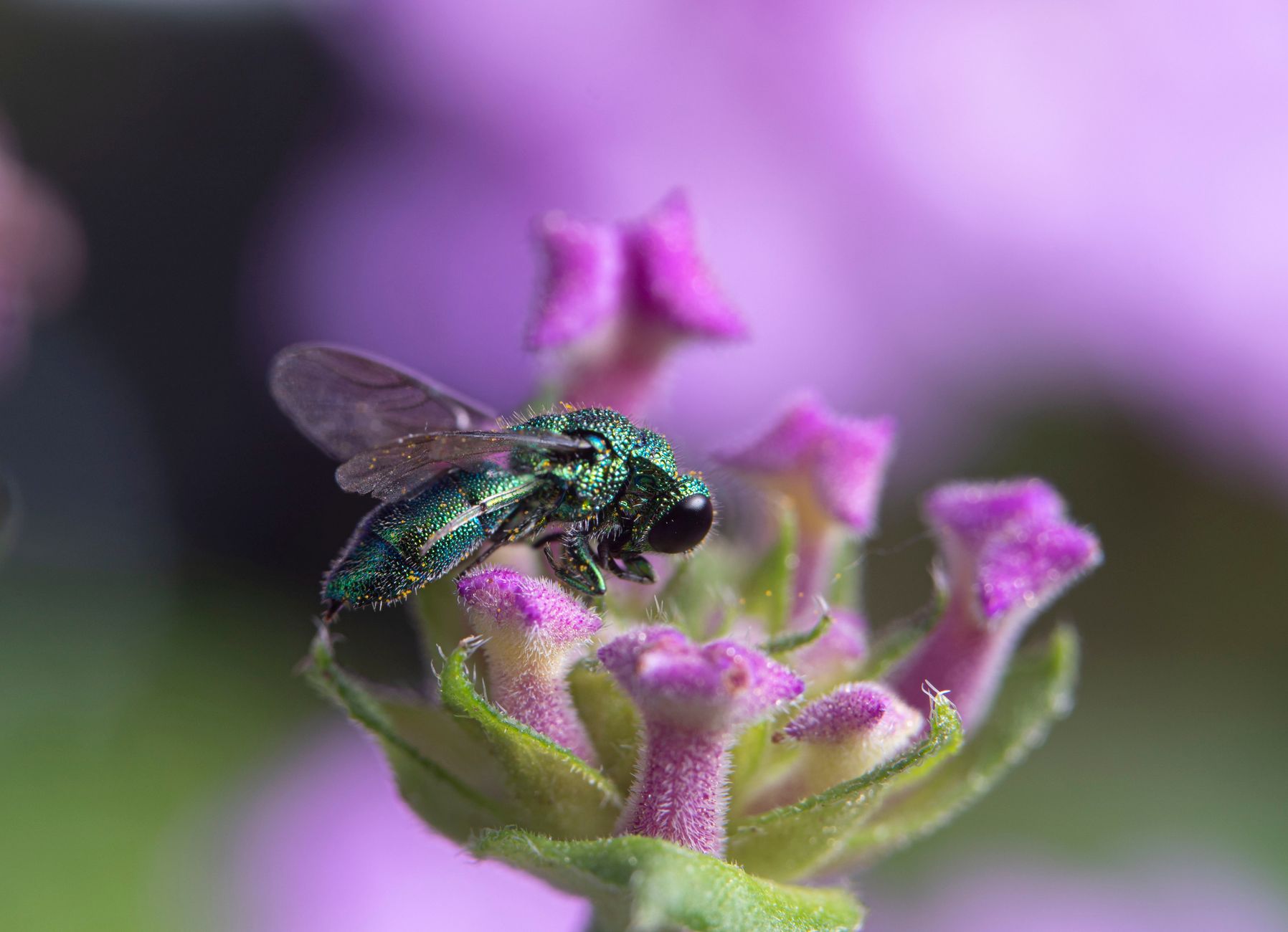
The flower needed a bee to carry its pollen to another orchid. But the bee had no idea that it was participating in the reproductive system of a plant. It wasn’t trying to help the orchid. It wasn’t thinking about biodiversity or the future of the ecosystem.
It was simply behaving like a bee.
The orchid had evolved to take advantage of that behavior. The bee entered the flower, became temporarily trapped inside and had to find its way out. During its escape, two pollen sacs became attached to its body. When the bee later visited another orchid, the pollen came with it.
No agreement was necessary.
No payment changed hands.
No rule told the bee what it was supposed to do.
The bee followed its natural behavior, and that behavior became useful to something beyond itself.
Watching this, I couldn’t help wondering:
Could we design human civilization according to the same principle?
Could we create a world in which humans, simply by behaving like humans, naturally strengthen the society and the planet they live in?
Learn from nature
Nature has had billions of years to develop relationships like the one between the orchid and the bee.
Individual organisms pursue their own needs, yet their behavior becomes entangled with the needs of other organisms and the ecosystems around them. Flowers attract pollinators. Animals distribute seeds. Fungi exchange nutrients with plants. The output of one biological process becomes the input of another.
The organisms involved don’t need to understand the whole system.
We humans are different in one extraordinary respect.
We can understand systems.
And that means we can consciously ask a question nature has been solving through evolution:
How can the natural behavior of the individual contribute to the health of the whole?
Much of our civilization seems to have been designed almost in reverse.
We create systems that encourage destructive behavior and then spend enormous amounts of effort trying to persuade people not to behave according to those systems.
We encourage consumption and then ask people to consume less. We make disposable products convenient and then tell people not to create waste. We reward companies for selling more and then ask them to conserve resources. We make personal accumulation necessary for security and then criticize people for accumulating. We make environmentally destructive choices convenient and then run campaigns asking people to choose differently.
Maybe the problem isn’t human behavior.
Maybe the problem is what our civilization does with it.
Humans will be humans
Humans seek comfort and security. We prefer convenience. We are curious. We imitate one another. We enjoy creating things. We like solving problems. We want to belong. We cooperate. We play. We explore. And very often, we take the path of least resistance.
We can spend another thousand years trying to correct these characteristics.
Or we can design around the creature that actually exists.
Take Convenience
If the environmentally destructive choice is the easiest choice, millions of people will take it. We can lecture them about responsibility, but we are fighting against an enormously powerful behavioral tendency.
So reverse it
Make shared transportation easier than maintaining an unnecessary private vehicle. Make returning a product easier than throwing it away. Make repairing and reusing things automatic wherever possible. Make shared tools readily available instead of requiring every household to purchase its own. Design buildings that conserve energy and recover resources without requiring their occupants to constantly think about doing the right thing.
Then convenience itself begins conserving resources.
People don’t have to become environmental activists.
They simply take the easiest option.
Like the bee, they don’t even need to think about the larger system for their behavior to benefit it.
Make access easier than ownership
Consider how many objects we manufacture that spend almost their entire existence doing nothing.
Cars sit parked. Power drills sit in cupboards. Lawnmowers sit in garages. Tools, appliances, sporting equipment and thousands of other products are manufactured in enormous quantities because each individual or household is expected to own its own.
But most people don’t have a deep emotional desire to own a drill.
They want a hole in the wall.
If the drill they need is always available nearby, perfectly maintained and effortless to access, using a shared drill may actually become more convenient than owning one. It can even be brought to you in minutes when needed.
Suddenly the human preference for convenience reduces the number of drills humanity needs to manufacture.
Apply the same principle across millions of products and the implications become enormous.
This isn’t asking people to sacrifice their quality of life. They still have access to what they need.
In many cases, they could have even better access than they have today.
The difference is that the system has been designed around what humans actually want to accomplish rather than around the assumption that everyone needs to possess everything individually.
Let curiosity work
Human curiosity is another astonishing resource.
Look at what people already do voluntarily.
They photograph wildlife. They contribute to open-source software. They edit encyclopedias. They solve puzzles. They restore old machines. They grow unusual plants. They make music. They study astronomy from their gardens. They answer questions from complete strangers online.
Often there is no financial reward whatsoever.
They do these things because humans like doing things.
Imagine a civilization deliberately designed to unleash that behavior.
Scientific problems could be opened to anyone interested in solving them. Ecological monitoring could involve millions of voluntary participants. Communities could continually experiment with better food production, transportation, architecture and resource management.
Instead of asking only:
How much must we pay someone to do this?
we could ask:
Who would love doing this?
There are billions of curious human minds on this planet.
A civilization designed for life would try very hard not to waste them.
Let people create
The same applies to creativity.
People paint, write, compose music, cook, build, invent and perform because creating things is part of being human.
Today those activities are entangled with survival. People need money, so creativity must often become employment, a business or a product. Success becomes measured in sales, streams, downloads and revenue.
But underneath the economics remains something much older.
The joy of creating something.
And the joy of having someone appreciate it.
A musician doesn’t need money in order to experience the roar of an audience. A writer doesn’t need royalties in order to know that millions of people loved a book. A cook can experience enormous satisfaction watching people enjoy a meal. An inventor can experience the satisfaction of seeing an invention improve people’s lives.
Remove the requirement that every contribution must somehow generate income, and creativity doesn’t disappear.
We might discover how much creativity the struggle for income has been preventing.
Let cooperation spread
Humans also imitate one another.
We copy fashions, language, habits, technologies, ideas and lifestyles. One behavior can begin with a handful of people and spread through an entire culture.
Today that tendency can drive enormous consumption. Someone gets the latest product, others want it, and soon millions of perfectly functional older products are being replaced.
But imitation has no inherent loyalty to consumption.
Imagine a neighborhood where somebody starts a communal garden.
Another person joins because they enjoy growing tomatoes. Someone else plants peppers. Another improves the irrigation system. Someone who loves cooking begins preparing occasional meals from the harvest. Children become interested because adults are doing it. Someone starts composting. Another begins planting fruit trees.
Nobody has ordered any of this.
Nobody has created a regulation requiring neighborhood vegetable production.
One attractive behavior simply produces another.
Cooperation becomes contagious.
Again, the human tendency hasn’t changed.
What it produces has changed.
Security without accumulation
Perhaps one of our strongest natural tendencies is the desire for security.
We want to know that tomorrow we will have food, shelter, healthcare and everything else necessary for life. We want security for ourselves and for the people we care about.
Within the present system, accumulating money and property is a perfectly understandable response.
If access to almost everything depends upon purchasing power, then having more purchasing power means having more security.
Trying to persuade people not to accumulate while leaving that structure intact means fighting human behavior.
So change the structure.
Imagine that everyone has reliable access to housing, food, healthcare, education, transportation, communication and the resources necessary for a good life.
The desire for security doesn’t disappear.
But accumulating money and possessions is no longer necessary to satisfy it.
Instead, personal security increasingly depends upon something else: maintaining a society capable of providing those things reliably.
Suddenly the security of the individual and the security of the whole begin pointing in the same direction.
Stop fighting ourselves
This may be one of the great mistakes in how we think about a better civilization.
We imagine that it requires better humans.
Humans willing to sacrifice more. Humans who consume less. Humans who are always responsible, rational and environmentally conscious. Humans who constantly place the interests of humanity and the planet above their own immediate desires.
And then someone inevitably says:
“It will never work. Human nature won’t allow it.”
But maybe human nature is exactly what could make it work.
We don’t have to make people stop preferring convenience.
W just make sustainability convenient.
We don’t have to make people stop seeking security.
We make shared abundance the most reliable source of security.
We don’t have to convince people to stop being curious.
We give their curiosity worthwhile problems.
We don’t have to teach people not to imitate one another.
Allow useful behaviors to become attractive enough to spread.
We don’t have to force people to create.
Give them the freedom to create what they want.
And we don’t have to constantly ask people to sacrifice their quality of life for nature.
Design a society in which a high quality of life requires fewer resources in the first place, and products designed to increase life in all kinds of ways, from use to packaging.
Designed for life
The orchid doesn’t lecture the bee about responsibility.
It doesn’t ask the bee to understand the ecosystem.
The bee simply follows its nature.
And something useful happens.
Human civilization can learn from that.
Unlike the orchid, we can consciously study the system we are part of. We can understand human behavior, measure resources, understand ecosystems, model consequences and design infrastructure accordingly.
We can ask, for every major system we create:
What will humans naturally do here?
And then:
How can we design this so that when we do it, the result strengthens rather than weakens the whole?
That may be a much more intelligent approach to sustainability than continually asking billions of individuals to overcome their own behavior.
Design transportation so convenience saves energy.
Design production so durability is normal.
Design distribution so sharing is easier than unnecessary ownership.
Design communities so cooperation spreads naturally.
Design access so personal security reinforces collective security.
Design society so curiosity and creativity become resources available to everyone.
Nature arrived at systems like these through billions of years of evolution.
We have something evolution never had.
We can understand the principle and apply it deliberately.
We don’t have to fight human nature to save nature.
We can learn from nature how to work with it.
The bee can remain a bee.
The human can remain human.
What we can change is the world we have designed around ourselves — until ordinary human behavior no longer steadily depletes the planet that sustains us, but becomes one of the forces that helps it flourish.
That would be a civilization truly designed for life.
In the novel Waking Up – A journey towards a new dawn for humanity society has been designed for life.
Follow the bewildered billionaire Benjamin Michaels when he wakes up in this world after 100 years of cryoic preservation.