
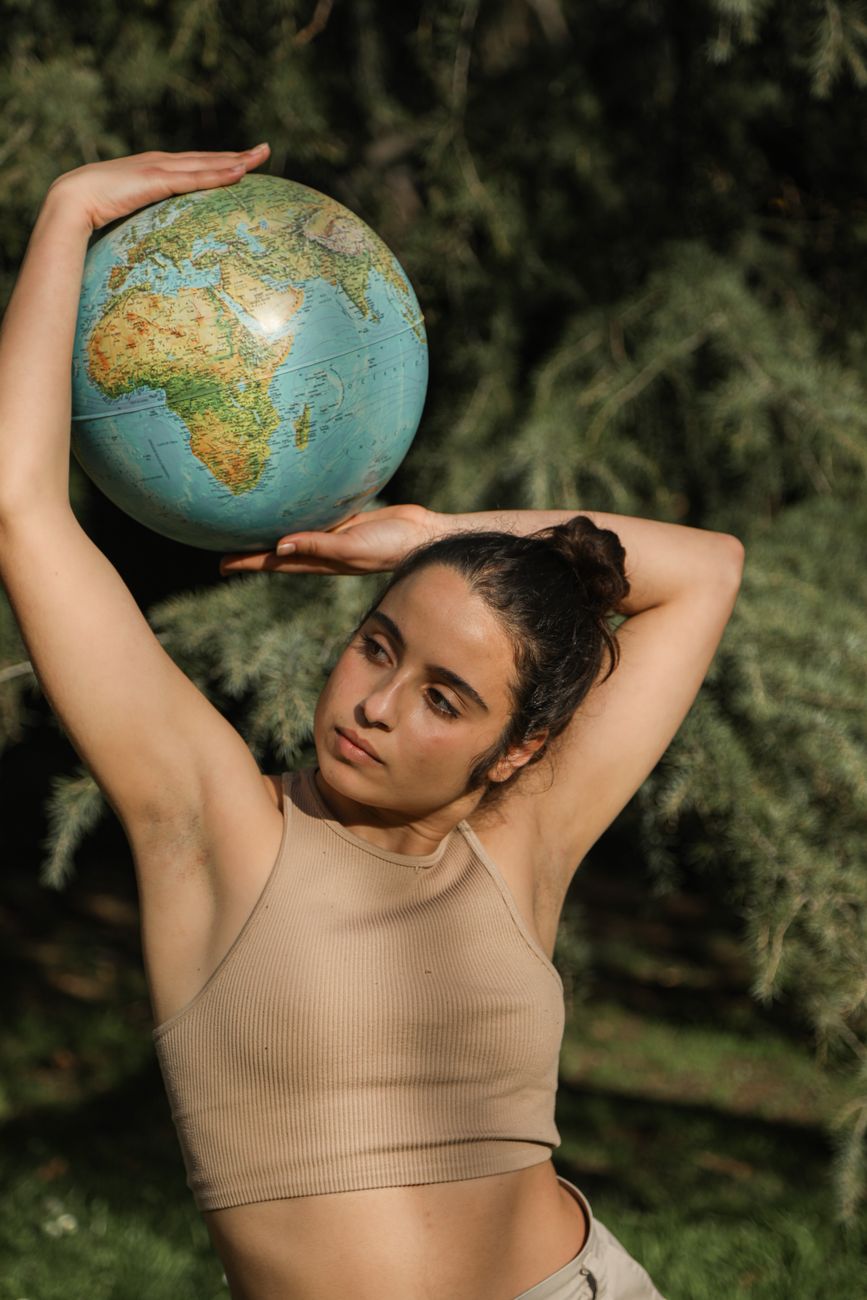
Imagine being born into this world and discovering that you don’t really belong anywhere.
Not because you have done anything wrong. Not because you are unwilling to contribute to society. But simply because you happened to be born in the wrong country.
I was listening to a news report on Swedish radio about Afghan people struggling to obtain Swedish citizenship. Some had lived in Sweden for years but were having difficulties proving their identities and fulfilling the requirements for citizenship.
And it made me think.
Why do we need citizenship in the first place?
Why should our fundamental right to belong somewhere on this planet depend on which country we happened to be born in, what documents we possess, or whether a government decides to recognize us?
After all, we are all inhabitants of Earth, aren’t we?
Shouldn’t that be enough?
Born on Earth
None of us chose where we were born.
We didn’t choose our parents, our nationality, our native language, or the political and economic circumstances surrounding our birth.
Yet these entirely accidental circumstances can determine almost everything about our opportunities in life.
One child is born in a wealthy country with access to healthcare, education, clean water, and relative security. Another is born in a country suffering from poverty, war, or political instability.
Both children arrive on exactly the same planet.
Both need nourishment, shelter, protection, affection, education, and opportunities to develop their abilities.
Yet the systems humanity has created may treat them very differently.
One may grow up with almost unlimited opportunities, while the other may spend a lifetime struggling to obtain what the first takes for granted.
And if the second child eventually travels to the first child’s country, seeking a better life, that person may be told they have no right to remain there.
Why?
An Imaginary Line
Because they were born on the wrong side of an imaginary line.
Of course, borders have legal and administrative significance. But the lines separating countries are human creations. They are not fundamental divisions of the planet itself.
Nobody is born in the wrong country. We are all born on Earth.
Who Owns the Planet
Throughout history, humanity has divided the Earth into territories, kingdoms, empires, and nations.
We have fought wars over these territories, claimed ownership of land and resources, and established increasingly elaborate systems of laws governing who may live where and who may use what.
Eventually, we came to accept these arrangements as perfectly natural.
We speak of our countries, our territories, our borders, and our national resources as though these divisions were inherent features of the world.
But who actually created the Earth?
Certainly not the governments that claim authority over different portions of it.
No nation created the land beneath its territory, the oceans surrounding it, or the natural resources found within its borders.
And no individual created the planet simply by being born upon it.
Nevertheless, we have developed a civilization in which access to the Earth’s resources is largely determined by ownership, nationality, and purchasing power.
A person may be surrounded by abundant food, housing, technology, and other resources, yet be unable to obtain what they need because they lack the money or legal entitlement required to access them.
We have effectively placed an enormous system of permissions between human beings and the planet that sustains them.
And then we wonder why so many people struggle to survive.
All These Ships
There is an interesting little linguistic coincidence in the words we use to describe our relationships with the world.
Ownership. Citizenship. Stewardship. Partnership. Friendship.
They all end in ship.
Although the suffix does not originate from the word for a sailing vessel, the metaphor is rather appealing.
We might imagine our individual bodies as vessels carrying us through life. When we form partnerships, families, communities, and nations, we create larger vessels of shared relationships and responsibilities.
And when we assume ownership or stewardship over something, we become, in a sense, captains responsible for its direction and condition.
But what kind of captains do we want to be?
An owner may care deeply for what they possess. Yet ownership can also encourage the pursuit of financial profit at the expense of the very things being owned.
A steward, on the other hand, is primarily concerned with caring for what has been entrusted to their responsibility.
Ideally, both would take good care of their vessels.
But perhaps humanity needs to reconsider the purpose of the enormous planetary vessel we all inhabit.
Are we here to extract as much wealth as possible from the Earth, or to take care of it and one another?
From Citizenship to Stewardship
I have written extensively about the possibility of replacing our monetary economy with a resource-based economy founded on global stewardship.
In such a civilization, the Earth’s resources would no longer be treated primarily as commodities to be owned, bought, and sold for financial gain.
Instead, we would collectively manage them to provide for the needs of humanity while preserving the ecosystems upon which all life depends.
We would use science, technology, artificial intelligence, and intelligent coordination to determine what resources are available, what people need, and how those resources can be utilized as efficiently and sustainably as possible.
The fundamental objective would no longer be to maximize financial profit.
It would be to maximize human well-being and the flourishing of life while minimizing unnecessary resource consumption.
And this brings us back to citizenship.
In such a world, what qualifications should a person need to receive food, housing, healthcare, education, transportation, or any of the other necessities and opportunities that make a fulfilling life possible?
Should they need to prove their nationality?
The Passport
Should we need a passport?
Should we need employment, an income, or a certain amount of money in a bank account?
Or should simply being a living human being with needs be enough?
I would argue that it should.
Being born on Earth should be more than sufficient to establish that we belong here and deserve access to the resources necessary for a fulfilling life.
Of course, this does not mean that every individual could demand unlimited quantities of everything.
A resource-based economy would still need to coordinate resources, establish priorities, prevent waste, and ensure that our collective consumption remains within the planet’s ecological limits.
But the guiding principle would be entirely different.
Instead of asking whether someone can afford what they need or where they come from, we would ask what they need and how we can provide it.
Instead of organizing access to resources primarily around purchasing power, we would organize it around actual human needs and the resources available to meet them.
And instead of treating people from other countries as outsiders competing for our resources, we would recognize them as fellow inhabitants of the same planet.
A World Without Outsiders
Imagine a world in which nobody is considered an outsider simply because of where they were born.
A world in which people can move between regions without having to establish that they are worthy of belonging.
A world in which we recognize that different cultures, languages, traditions, and ways of life can enrich our shared human experience rather than threaten it.
This would not require us to abandon our cultural identities. Quite the contrary.
We could still be Norwegian, Swedish, Afghan, Spanish, Chinese, or Brazilian in terms of our heritage, language, and cultural background.
We would still celebrate the extraordinary diversity of human civilization.
But those identities would no longer determine our fundamental right to exist, participate, and have our needs met.
Our communities and regions would still need organization and administration. People would still need identification, and society would still need to coordinate housing, infrastructure, transportation, and the availability of resources.
But these would become practical questions of coordination rather than questions of whether someone deserves to belong.
We would no longer need to divide humanity into those who have the right to access the world and those who must seek permission.
Because we would recognize that we are all already here.
And perhaps this would also help dissolve some of the fear and suspicion that have divided humanity for so long.
When we stop viewing other people primarily as competitors for territory, employment, wealth, and resources, we can begin seeing them as fellow participants in a shared civilization.
Not enemies.
Not foreigners.
Not economic burdens.
But people.
People with hopes, dreams, abilities, feelings, and needs, just like ourselves.
The Citizen of Earth
Perhaps the most interesting thing about the concept of Earth citizenship is that we shouldn’t actually need it.
We don’t need another passport.
We don’t need another government issuing certificates confirming that we are legitimate inhabitants of this planet. All we would need is our body, proving we are a living breathing human being on Earth.
And we certainly don’t need another bureaucracy deciding who qualifies.
We Are Already Here
Every human being alive today is an inhabitant of Earth, regardless of nationality, citizenship, wealth, or legal status.
This is not something any government needs to grant us.
It is Simply a Fact
What we need is a civilization that recognizes this fact and organizes itself accordingly.
A civilization in which the resources of our planet are managed through intelligent stewardship rather than competing claims of ownership.
A civilization in which the purpose of our economy is to provide for life rather than to perpetuate financial transactions.
And a civilization in which nobody is denied the necessities of life merely because they were born somewhere else or lack the money to obtain them.
Perhaps one day we will look back at our present arrangements and wonder why we made something so simple so extraordinarily complicated.
Why did we require people to prove that they belonged somewhere on the only planet humanity had ever inhabited?
Why did we allow imaginary lines and financial circumstances to determine who could access the resources necessary for life?
And why did it take us so long to recognize that we were all sharing the same home?
Inspire The World
You might agree with this article and say, sure this is all well and good. But how do we get there? It is a very good question, and I will try to answer:
We will get there by getting people exited . By letting them know about the possibility of a different world. By getting them inspired.
And people often get inspired by books, or by movies showing other possibilities. And that is exactly why I wrote the novel: Waking Up: A Journey Towards a New Dawn for Humanity.
It tells the story of Benjamin Michaels, the bewildered billionaire diagnosed with terminal cancer who chooses cryonic preservation rather than accepting his impending death. When he awakens a hundred years later, he discovers a radically transformed civilization where humanity has moved beyond money, ownership, and the competition for survival.
It is a story about what our world might become if we chose cooperation, stewardship, and the well-being of all life as the foundations of our civilization.
This novel was originally a screenplay, both aimed at inspiring people towards creating a new world on planet Earth.
And since it began as a screenplay, if enough people read the book, it might finally become the movie it was always meant to be, inspiring even more people.
So, by sharing this article, it might inspire more people. And the more truly inspired people we get, the bigger chance we have of actually creating this civilization on Earth. If you are young enough, it might even be in your lifetime.
I thank you from the depth of my heart.
Now, let’s go and create the new world.