Tag: CHANGE

  • The New Perception of Humanity

    The New Perception of Humanity

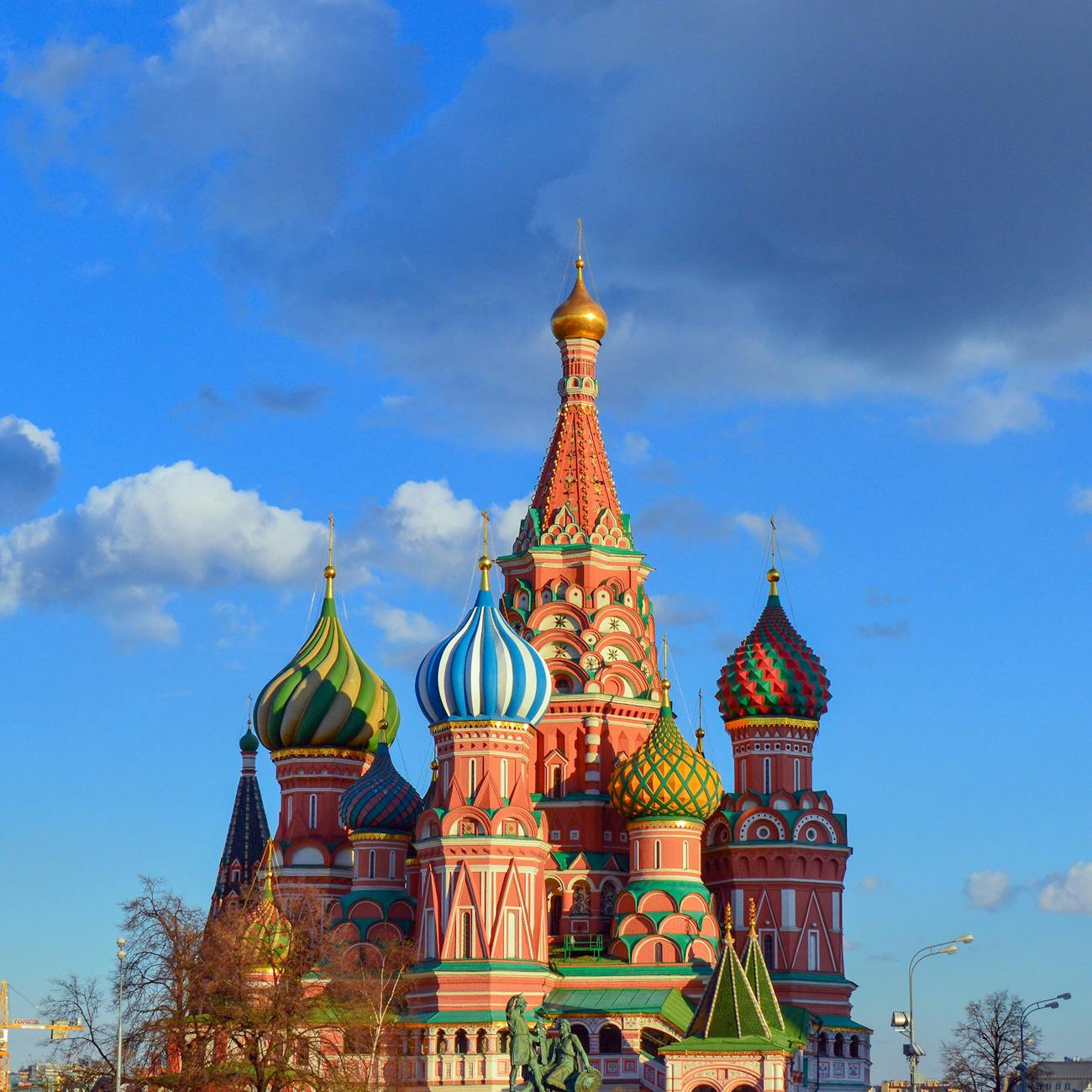
    In 1917, something extraordinary happened in Russia.

    A centuries-old monarchy collapsed under pressure from war, poverty, and unrest. Workers and soldiers revolted, the Tsar abdicated, and a revolutionary movement seized power with a promise of “peace, land, and bread.”

    But to understand why, we have to look at what came before.


    Before the Revolution

    For centuries, Russia was ruled by the Tsars — absolute monarchs who held immense power over land, resources, and people.

    Society was deeply unequal and unfair.

    A small elite controlled vast amounts of land and wealth, while the overwhelming majority lived as peasants, many tied to the land in conditions not far removed from servitude.

    Life for most people was not about freedom or opportunity.

    It was about survival. While the elite lived in vast luxury.

    There was little political voice, little mobility, and very little hope of changing one’s circumstances.

    Pressure Builds

    By the early 20th century, pressure had been building for decades.

    Then came war, economic collapse, and growing unrest.

    And eventually, the system broke.

    Millions rose up against a world they experienced as deeply unfair.

    They wanted something different.

    A world without kings.
    A world without exploitation.
    A world that worked for everyone.

    And for a moment, it seemed possible.


    What Followed in Russia

    What followed can be seen as one of the most ambitious attempts in human history.

    The Attempt

    What followed can be seen as one of the most ambitious attempts in human history.

    An attempt to create a world without kings.

    Private ownership was removed. Land, housing, and production were brought under centralized control.

    The idea was simple and powerful:

    If no one owns everything, then no one can dominate.

    What Worked

    And in some ways, this system worked.

    • Basic needs were often, but far from always, secured. While the system aimed to guarantee essentials like housing, food, and employment, in reality this frequently depended on location, political conditions, and efficiency of local administration. Many people still experienced shortages, poor quality goods, overcrowded housing, and limited access to services, meaning that “security” was uneven and sometimes fragile rather than truly reliable.
    • Housing was guaranteed, but often with long waiting times, limited choice, and standardized living conditions
    • Extreme poverty was reduced

    Where It Breaks Down

    But the disadvantages were profound—and impossible to ignore.

    • Endless waiting times for housing and basic goods
    • Severe shortages despite available resources
    • Lack of choice in almost every aspect of life
    • Uniformity and lack of individuality
    • Bureaucratic inefficiency slowing everything down

    Instead of freedom from control, people experienced a different kind of control.

    Instead of choosing where to live, they were assigned housing.

    Instead of abundance, they often faced scarcity created by poor coordination.

    And most importantly:

    Power did not disappear.

    It concentrated.

    Not in private owners—but in the state.

    And when power concentrates, it becomes dangerous.

    This system enabled leaders to control entire populations.

    And in its worst form, this led to brutal outcomes.

    State Capitalism

    Under leaders like Stalin, this concentration of power turned into repression, fear, and mass suffering.

    • Mass purges and executions
    • A vast network of forced labor camps (the Gulag), where millions of people—often imprisoned for minor offenses or political suspicion—were sent to remote regions and forced to work under brutal conditions. Prisoners endured extreme cold, hunger, exhaustion, and unsafe labor, and many died from overwork, disease, or starvation
    • Widespread surveillance and lack of freedom
    • Policies like forced collectivization—where farmers were required to give up their land and join large, state-controlled farms—leading to severe disruption of food production and devastating famines

    What began as an attempt to eliminate domination ended up enabling domination at an even larger scale.

    Some have described this not as true communism, but as state capitalism—where the state became the ultimate owner.


    In the West

    In other parts of the world, a different path was taken.

    The Approach

    In other parts of the world, a different path was taken.

    Rather than attempting to remove ownership, it was expanded and protected.

    This became capitalism.

    A system based on private ownership, markets, and money.

    What Worked

    This system solved many of the visible problems of centralized control.

    • No waiting lists for basic goods in the same way
    • Greater choice and flexibility
    • Rapid innovation and technological progress

    Where It Breaks Down

    But its disadvantages are just as real—and in many ways just as severe.

    • Extreme inequality between rich and poor, often widening over time
    • Wealth and power concentrating in fewer and fewer hands
    • Housing treated as an asset, driving speculation and price bubbles
    • People priced out of basic needs like housing, healthcare, and education
    • Constant pressure to earn, compete, and remain “productive”
    • Debt becoming a long-term or permanent condition for many households
    • Periodic financial crises that wipe out jobs and savings (while some large institutions are rescued)
    • Profit incentives that encourage short-term gain over long-term well-being
    • Environmental destruction driven by extraction and growth imperatives
    • Precarious work and job insecurity in many sectors

    Instead of state control, the system created economic control.

    Instead of being assigned housing, people must buy it—often taking on large debts that can take decades to repay.

    And if they cannot afford it—they are excluded.

    Even when housing exists, it may be held empty as an investment, while others cannot access it.

    Access is not based on need, but on purchasing power.

    And over time, this creates a cycle:

    Those who own assets accumulate more.
    Those who do not fall behind.

    What began as a system of freedom can, for many, feel like a system of pressure and constraint.

    A New Feudalism

    In one sense, capitalism can be seen as a modern version of feudalism—where power is no longer held by Tsars or monarchs, but by banks, billionaires, and large corporations. The structure changes, but the concentration of control remains.

    And in this parallel, the old roles reappear in new forms:

    The vassals and serfs become wage earners and those trapped in cycles of endless debt—forced to labor in the system for access to basic needs.


    The Paradox of Abundance

    The dynamics described above in capitalism—ownership, money, and market-based access—lead to a striking outcome.

    Housing is perhaps the clearest example of this paradox—where abundance exists, but access is restricted.

    In capitalism, the housing shortage was “solved” through markets.

    Homes could be built, bought, and sold.

    And in many places, there is no shortage of housing.

    There are millions of homes.

    And yet:

    Millions of people struggle to afford them.

    Homes exist.
    People exist.

    But access is blocked.

    Not by lack of resources.

    But by money.

    This is the paradox:

    Abundance exists.

    But access is restricted.


    Two Systems, One Pattern

    So what we saw was the emergence of two major systems.

    Both trying to solve the challenges of humanity.

    Both attempting, in their own way, to create a world that works.

    And both, to some extent, succeeding.

    One brought security and basic access.
    The other brought innovation and expansion.

    But ultimately, both failed to create a world that truly works for everyone.

    One became too controlled.
    The other became too unequal.

    Different paths.
    Different strengths.

    But a similar result:

    Access remained controlled — either by the state or by money itself.


    Ownership and Money

    The deeper pattern becomes clearer when we look at the structure itself.

    Both systems rely on one core mechanism:

     A monetary system.

    Ownership determines who controls resources.

    Money determines who gets access.

    Change one without the other, and the system adapts.

    Remove private ownership → the state owns everything and controls access.

    Keep private ownership + money → markets control access.

    In both cases:

    Access is filtered.


    A Different Question

    So perhaps the real question is no longer:

    Which political system is right?

    But:

    Have we understood the limitation of both?

    And more importantly:

    Can we move beyond them?


    Beyond Ownership and Money

    What if the next step is not choosing between systems—but stepping outside their shared structure?

    For over a century, we have tried two different answers to the same problem—one through centralized control, the other through markets and money. We have debated which works better, which is fairer, which is more efficient—and those debates often hardened into opposing blocs, at times fueling conflict and even war.

    But in doing so, we rarely questioned the underlying structure they share:

    That resources are controlled through ownership.
    That access is filtered through money or authority.

    We changed who holds power—but not how power operates.

    So the question may not be which system to choose, but whether we are ready to rethink the structure itself.

    Not private ownership.
    Not state ownership.

    And not money as a gatekeeper.

    A system where resources are not owned—but used.

    Not controlled—but coordinated.

    From:

    “This is mine”

    To:

    “How do we make this work for all?”


    A New Perception

    Why has this not happened before?

    Because something essential was missing.

    Not resources.
    Not intelligence.

    But perception.

    The world was still seen through division:

    Us vs them.
    Competitors vs enemies.

    And from that perception, systems of control naturally emerged.


    A Peaceful Transition?

    Today, for the first time in history, we are in a different position.

    We have:

    • Global communication
    • Advanced logistics
    • Data and coordination systems
    • Artificial intelligence

    But more importantly:

    We have memory.

    We have seen both systems.

    We have lived their strengths.
    We have experienced their failures.

    So the question becomes:

    Are we ready to take the next step?

    Not through revolution.

    But through realization.


    A World That Works for All

    Can we create a system from scratch?

    One that takes the best:

    • Security and access
    • Innovation and flexibility

    And leaves behind:

    • Control
    • Inequality
    • Artificial scarcity

    Can we organize the world not around ownership and money—but around intelligent coordination of resources for all beings?

    Perhaps the answer does not lie in the past.

    But in how we now choose to see each other.


    A Different Lens

    What would it actually feel like to wake up in a world where nothing is owned, but stewarded, and everything is organized to work for everyone?

    In Waking Up – A Journey Towards a New Dawn for Humanity, you follow Benjamin Michaels — a former billionaire — as he experiences exactly that.

    Through his eyes, you don’t just read about a different world.

    You live it.

    👉 Discover the story here: 

    Discover Waking Up

    If this perspective resonates, please share this article: