
This article is a follow-up to my previous article, Elon Marx, on which someone left the following comment:
“I am all for a fair society, but one question I always ask at this point: who is gonna live at the beach?”
It is a perfectly legitimate question, and one that deserves a thoughtful answer. But before we get to that, let us return to the famous words of Karl Marx from 1875:
“From each according to his ability, to each according to his needs.”
When we think about it, we are already practicing the first half of this principle. The baker bakes bread, the architect designs buildings, the farmer grows food, and the surgeon performs operations. We provide goods and services for one another according to our abilities and other people’s needs. We simply place a price on everything we provide. And the price becomes an obstacle for many of course.
Because everyone else charges us for what we need, we have to charge others for what we provide.
But what if we collectively agreed to stop doing that?
The vision is old. The opportunity is new.
The New Opportunity
When Marx formulated his vision, humanity was still largely dependent on human labor. Those who later attempted to realize his ideas, most notably in the Soviet Union, did so without the technological capabilities we have today. Their attempts became associated with violent revolution, authoritarianism and enormous bureaucratic systems.
But Marx himself envisioned a society in which productive capacity had developed sufficiently for distribution according to need to become possible.
Since then, we have gone through more than 150 years of extraordinary industrial and technological development. Capitalism has helped bring about the very productive capabilities that could eventually make a monetary economy redundant.
We are now entering an age of artificial intelligence, robotics and automation, with the potential to create an unprecedented abundance of goods and services with increasingly little human labor.
We don’t have to overthrow governments, fight the wealthy or establish a rigid bureaucracy. We can develop an entirely different, open, humane and nature-friendly system based on voluntary contribution, stewardship and intelligent resource management.
But first, we need to change our minds.
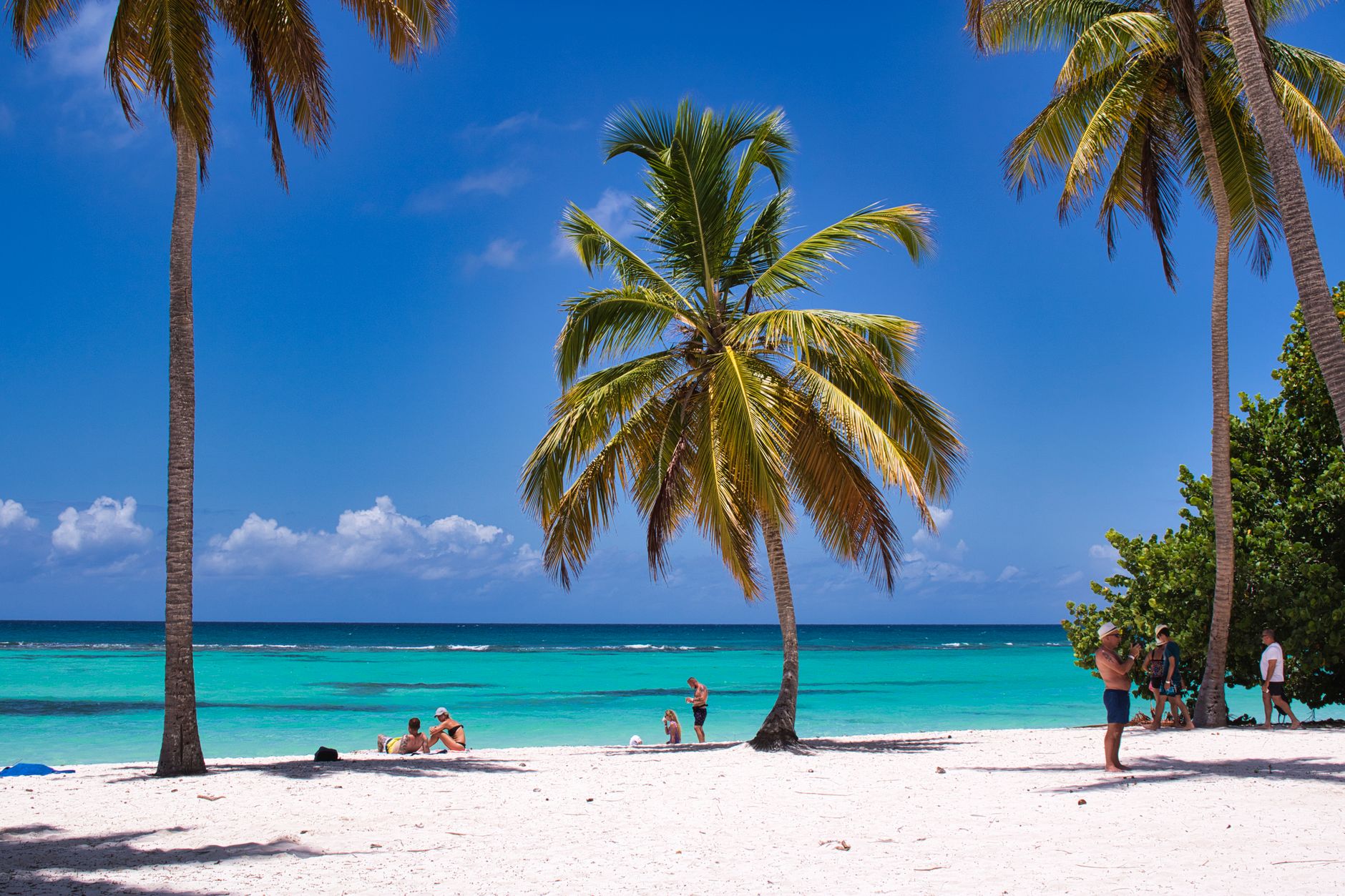
Who will live at the beach?
So, let us return to the question raised by the reader of my previous article.
Residential Preference Survey
Today, the answer is purchasing power and ownership. If you have enough money, you can acquire a beautiful beachfront property. In some parts of the world, you can even acquire private stretches of coastline. But interestingly, even today, many countries recognize the coastline itself as a public resource that cannot be privately owned.
But before we start discussing who should get to live at the beach in a moneyless society, perhaps we should establish how many people actually want to live there.
Imagine conducting a global residential preference survey in which we ask people where and how they would ideally like to live if money were not a consideration.
I suspect the results would surprise us. Our residential preferences are largely influenced by our upbringing, culture, experiences and personal interests. Some people love the mountains, others the countryside, others the energy of a city. Some want to live close to their families and the communities in which they grew up.
We might discover that our desires are considerably more geographically distributed than we imagine.
After I moved to Spain several of my Norwegian friends expressed no desire to live close to the Mediterranean in Spain like me. No, they liked the seasons , the cold and snow in Norway.
But what if an extraordinary number of people really do want to live close to the beach?
Designing a World Around Our Desires
First, we would have to determine which areas of the planet should be preserved as natural reserves and which could sustainably accommodate human habitation.
Where residential development is appropriate, we could then use our collective ingenuity to accommodate as many people’s desires as possible.
Imagine a coastal community designed specifically to maximize ocean views and beach access. The dwellings closest to the beach could be limited to two stories, while buildings farther inland gradually increase in height. Spacious apartments with generous balconies and terraces could provide thousands of people with magnificent ocean views.
Beautiful, landscaped pedestrian paths could connect these communities to the beach, perhaps only a few hundred meters away.
Rather than asking architects to maximize the financial return on a piece of land, we would ask them to maximize the quality of life of the people living there while respecting the surrounding natural environment.
Fair and Reasonable
Of course, there would eventually be limitations. Not everyone could live exactly where they wanted. Where competing desires could not be accommodated, we would have to agree upon fair and reasonable allocation principles.
Perhaps a draw. Perhaps a weighted draw that takes into consideration people’s historical and cultural connections to an area, Indigenous rights, family circumstances or particular needs.
And just as we have largely accepted purchasing power as the determining factor today, we could learn to accept the outcome of a collectively agreed allocation system tomorrow.
We would also have to grow up a little as a civilization and acknowledge that our individual desires cannot always take precedence over nature or the needs of others.
When Luxury Becomes Ordinary
But imagine the quality of the residential communities farther inland.
Beautiful architecture, spacious dwellings, large natural swimming pools, waterfalls, sunbeds, botanical gardens, shaded walking paths, restaurants, cultural venues and recreational facilities.
Our ordinary residential communities could have the flair of today’s luxury resorts.
And, of course, in these luxury residential resorts, we could have robots as our servants. They could clean our homes, prepare our meals, maintain our gardens, take care of the communal facilities and perform much of the routine work necessary to keep our communities functioning beautifully.
We would be free to do what we felt like doing. We could spend the morning swimming, the afternoon pursuing a personal interest and the evening enjoying the company of friends. Or we could devote ourselves to an exciting project, contribute to our community or learn something entirely new.
The important thing is that it would be our choice.
Why should we reserve our most imaginative architecture, beautiful surroundings and comfortable living conditions for wealthy people or for those few weeks of the year when we go on vacation?
Why shouldn’t we apply that same ingenuity to the places where we live our everyday lives?
Perhaps someone who initially wanted to live directly on the beach would visit one of these inland communities and discover that they actually preferred living there.
We would not merely be distributing existing desirable living conditions more fairly. We would be creating desirable living conditions everywhere, within the ecological boundaries of our planet.
An Unprecedented Diversity
One of the great misconceptions about a society based on collective cooperation is that it would lead to uniformity.
I envision precisely the opposite.
In the novel, Waking Up, Benjamin Michaels strolls through a park in New York, a hundred years into the future, in awe of the extraordinary diversity of human expression surrounding him. All kinds of people and personal creations exist side by side in harmony.
Imagine what would happen if billions of people were liberated from the pressure of making a living.
The musician would no longer have to consider whether their music would sell. The artist would not have to consider the commercial value of a painting. The inventor would not have to establish a profitable business around an invention.
People could pursue their own personal interests, however unconventional, eccentric or unique those interests might be.
And when they created something, they would not have to sell it.
They could simply share it.
We might witness a flowering of human creativity and individuality unlike anything we have ever experienced in history.
We would cooperate in providing the necessities of life so that we could be extraordinarily individual in how we live it.
Changing our minds
The fundamental change we need to make is surprisingly simple.
We need to change our minds about why we produce things, why we contribute and why we share the resources of this planet.
We already have the foundations of global cooperation. We have accumulated an extraordinary wealth of scientific knowledge, technological capabilities and human ingenuity.
Now imagine directing all of that toward fulfilling human needs and desires rather than generating financial returns.
There will be practical challenges, of course. But once we collectively agree on the objective, those challenges become things we can work together to resolve.
We are not aiming for uniformity.
We are aiming for freedom, diversity and voluntary contribution.
We are not trying to create a civilization without limitations. We are trying to create a civilization without unnecessary deprivation.
And perhaps what we consider an extraordinary life today could become the ordinary life of tomorrow.
The extraordinary ordinary life
Since you have read this far I assume you like to read. Perhaps you would enjoy exploring what such a world could actually look like?
In the novel, Waking Up: A Journey Towards a New Dawn for Humanity, the bewildered billionaire Benjamin Michaels is diagnosed with terminal cancer and decides to have his body cryonically preserved in the hope that future technology will be able to save him.
When he wakes up a hundred years later, he discovers not only that his body has been completely healed, but that humanity has undergone an extraordinary transformation.
He finds himself in a technologically advanced civilization without money, trading or ownership, where people the share the resources of the planet, contribute voluntarily and enjoy the freedom to pursue their own interests.
Through his eyes, we get to experience what life in such a civilization could be like.
Perhaps the first step toward creating a better world is becoming genuinely excited about living in it.