Category: environment

  • What Shall People Do When They Have No Jobs?

    What Shall People Do When They Have No Jobs?

    That question is no longer theoretical.

    Artificial intelligence is accelerating toward a world where human labor is no longer required for production at scale. The real issue is not that jobs may disappear — it’s that our entire society still assumes people must have jobs to deserve life.

    Replace the System, Not the Jobs

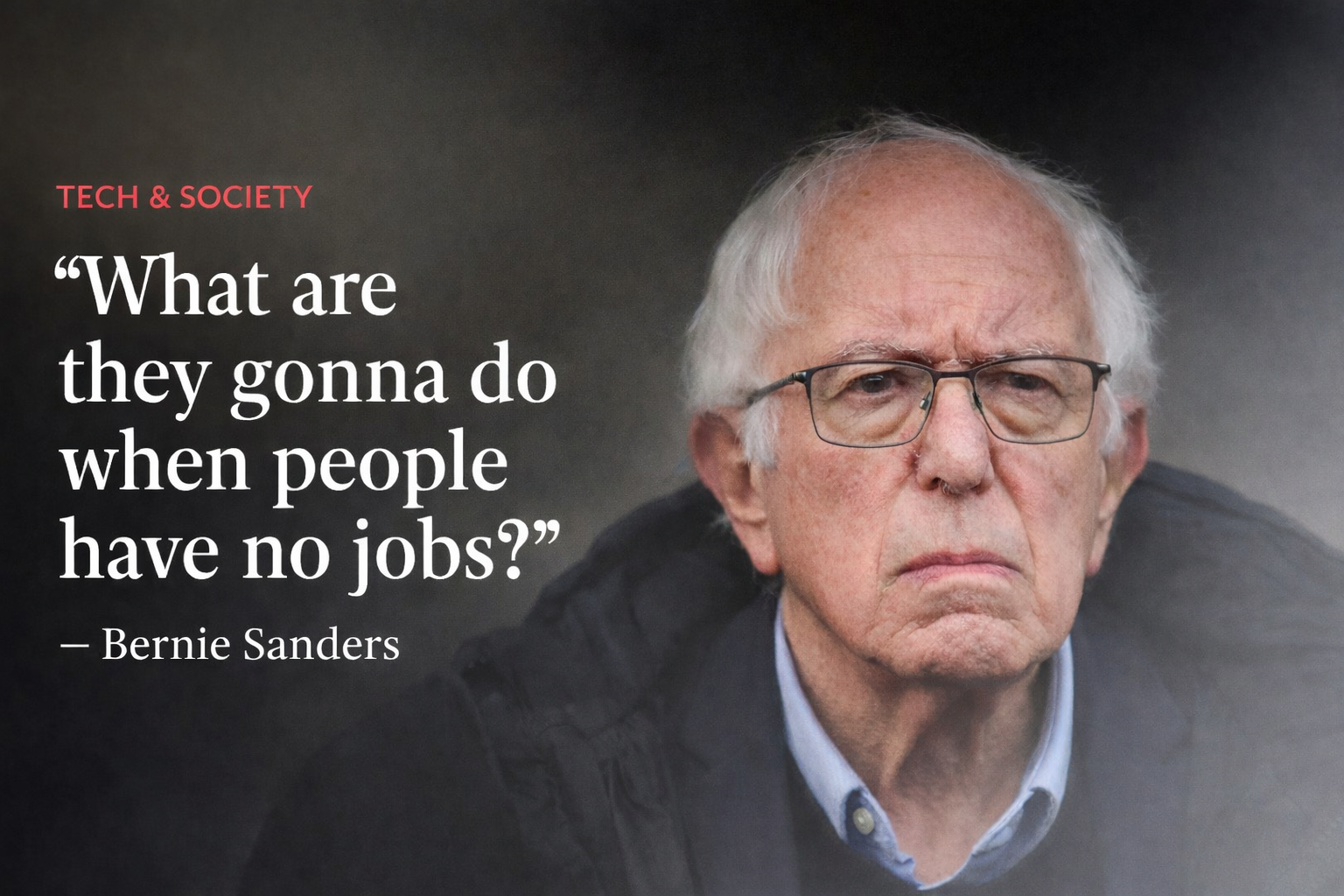
    Bernie Sanders calls for pause in AI development:

    When Bernie Sanders asks, “What are they gonna do when people have no jobs?”, he is asking the right question — inside the wrong frame.

    The problem is not that artificial intelligence may eliminate jobs.

    The problem is that our survival is still tied to jobs at all.

    Calling for a pause in AI development assumes that the system we have is fundamentally sound and merely needs time to adjust. 

    It isn’t. 

    AI is not breaking a healthy system — it is exposing a broken one.

    Jobs Were Never the Point

    Jobs are not a natural feature of human societies. They are a construct of the monetary system — a mechanism that ties access to food, shelter, healthcare, and dignity to wage labor.

    For most of human history, people:

    • gathered, built, farmed, cared, created

    • shared resources directly

    • contributed because it made sense, not because they were forced to make money to buy food. 

    The modern job exists primarily to distribute money, not to meet human or planetary needs. When machines become better at performing that distribution-linked labor, the absurdity becomes impossible to ignore.

    Pausing AI Misses the Moment

    Pausing AI development to “save jobs” is like pausing electricity to save candle makers.

    The real question is not:

    How do we preserve jobs?

    But:

    Why should anyone need a job to deserve life?

    AI does not remove meaning, purpose, or contribution from human life. It removes coercion. And that is what truly scares existing systems of power.

    Replace the System — Don’t Redesign It

    There is a crucial difference between redesigning and replacing.

    Redesigning implies:

    • the same assumptions

    • the same scarcity logic

    • the same survival pressure

    Replacing means admitting that the foundation itself is obsolete and crumbling.

    What needs replacing is not work, creativity, or effort — but the idea that humans must earn access to existence.

    • Replace jobs with self-chosen activity

    • Replace ownership with stewardship and money with direct access to resources

    • Replace obligation with intrinsic motivation

    • Replace fear with security

    When survival is guaranteed, contribution does not disappear. It emerges naturally.

    Beyond Contribution as Obligation

    A future beyond jobs does not mean a future without participation.

    It means a future without forced contribution.

    No metrics.

    No punishment.

    No survival conditions.

    People contribute because they want to — because curiosity, care, and creativity are native human traits when fear is removed.

    Trees don’t produce oxygen to earn sunlight. They grow — and oxygen happens as a result.

    The Real Choice

    AI presents humanity with a clear choice:

    Use it to accelerate inequality inside a dying system

    • Or use it to help replace that system altogether

    Trying to save jobs is trying to save the wrong thing.

    The task now is not to slow down technology —

    It is to replace the system that no longer serves life.

    What Shall People Do When They Have No Jobs?

    That question sits at the heart of Waking Up – A Journey Towards a New Dawn for Humanity.

    Follow Benjamin Michaels, a man from our world who wakes up a century into the future — in a society that has moved beyond jobs, money, and enforced survival.

    There, he discovers what people actually do when:

    • survival is guaranteed

    • resources are optimized and shared

    • fear is no longer the organizing principle

    Waking Up is not a manifesto or a technical blueprint.

    It is a human story about letting go of a system and mindset that no longer works — and daring to imagine what replaces it.

  • How Can Ending the Monetary System Save the Planet?

    How Can Ending the Monetary System Save the Planet?

    At first glance, the question sounds absurd.

    Money feels neutral — just a tool for exchange. Environmental destruction is usually framed as a technological problem, a political failure, or a lack of individual responsibility.

    But what if it’s none of those?

    What if the primary driver of ecological collapse is a system that requires endless growth on a finite planet?

    And what if, by following that logic honestly, we discover something even more unsettling:

    That the same system destroying Earth is also quietly destroying our lives and our dignity.

    Growth is not a flaw — it is a requirement

    In a monetary system, growth is not optional.

    • Companies must grow to survive.

    • Nations must grow GDP to remain stable.

    • Debt requires interest, which requires expansion.

    But Earth does not grow.

    Forests regenerate slowly.

    Soils take centuries to rebuild.

    Oceans absorb damage silently — until they don’t.

    The collision is inevitable:

    Infinite economic growth meets finite ecological limits.

    This is not a moral failure.

    It is a design conflict.

    Money turns living systems into profit

    In a monetary framework, nature has value only when it can be priced.

    A living forest is “unused land.”

    A cut forest is “economic activity.”

    Clean air, biodiversity, climate stability, and future generations do not appear on balance sheets — so they are systematically ignored.

    What cannot be monetized is treated as expendable.

    The result is not stewardship, but liquidation.

    Profit rewards destruction faster than care

    Today, it is often cheaper to pollute than to protect.

    It is more profitable to extract than to regenerate.

    It is easier to destroy than to repair.

    Environmental damage is labeled an “externality” — a cost pushed onto nature, communities, or the future.

    This doesn’t happen because people are evil.

    It happens because the system reward the wrong behavior.

    As long as money is the scoreboard, the fastest destroyers tend to win.

    The planet is indebted to itself — and it is still not enough

    Here is the absurdity, stated plainly:

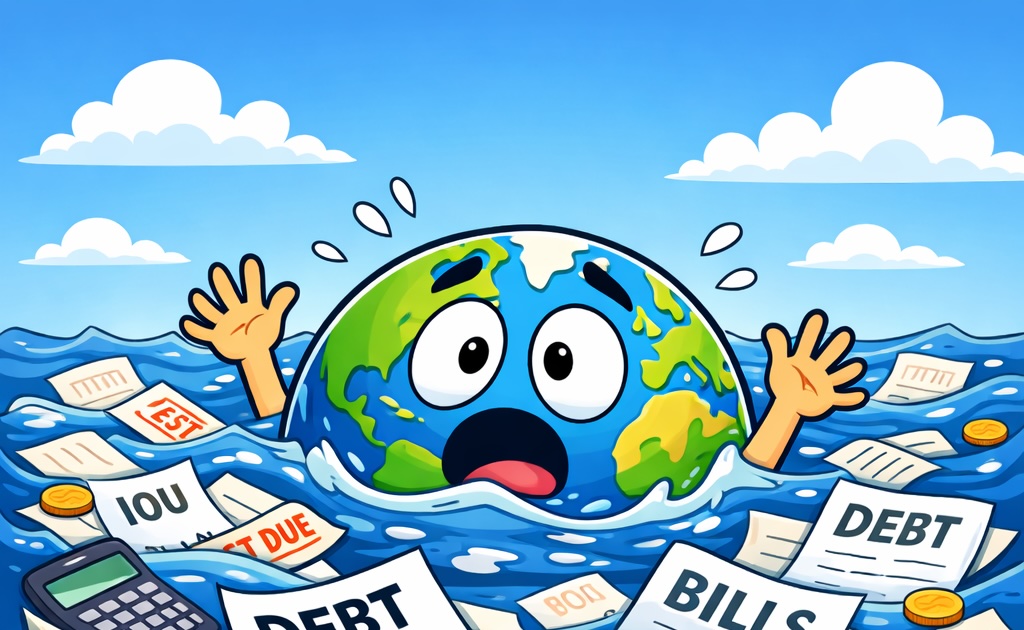
    The entire planet is in debt to itself. It’s basically bankrupt.

    Total global debt now equals more than three years of the planet’s entire yearly output — everything humanity produces in one year, multiplied by three, already promised away.

    And even that is still not enough.

    Because if we stop borrowing — the system breaks.

    If we stop growing — the system collapses.

    If we stop expanding — debt becomes unpayable, which it is already, as the money we use ARE debt. “Paying it back” will mean we don’t have any money anymore.Still, governments think debt can actually be paid back. But even trying means creating more debt and more environmental destruction.

    So even while drowning in debt, we are told we must take on more.

    More loans.

    More growth.

    More extraction.

    More pressure on land, oceans, climate, and people.

    Debt is not just money owed. It is a demand placed on the future and the planet itself.

    It is a claim that tomorrow must produce more than today — forever.

    But the planet does not know debt.

    The planet does not grow GDP.

    The planet does not compound interest.

    Forests do not grow faster because markets demand it.

    Oceans do not replenish on quarterly schedules.

    Soils do not regenerate on balance-sheet timelines.

    This is the core insanity:

    We have built a system that treats Earth as an infinite credit card —

    and even after maxing it out, demands a higher limit.

    That is why this is not a problem that can be fixed with better regulation, greener growth, or smarter finance.

    A system that requires endless expansion on a finite planet is not malfunctioning.

    It is doing exactly what it was designed to do. 

    Artificial scarcity fuels overconsumption

    Money-based systems depend on scarcity.

    Not natural scarcity — manufactured scarcity.

    There is enough food, yet people starve.

    More than enough homes, yet people sleep outside.

    An abundance of energy from the sun, yet we burn the planet for fuel.

    Scarcity is no longer a condition of nature.

    It is a condition of design.

    And scarcity doesn’t just damage ecosystems — it damages people.

    A wounded humanity consumes to compensate

    Much of modern overconsumption is not driven by greed.

    It is driven by emptiness.

    When work is disconnected from meaning,

    when time is stolen from life,

    when worth is measured numerically,

    people compensate.

    With status.

    With possessions.

    With distraction.

    The planet pays the price for a wound we rarely name.

    The same system erodes human dignity

    In a monetary world, your value becomes conditional.

    You are valued when you are:

    • productive,

    • efficient,

    • competitive,

    • profitable.

    Rest must be earned.

    Care must be justified.

    Illness becomes a liability.

    Aging becomes a problem.

    Your right to exist quietly shifts from being human to being useful.

    That shift happens slowly — until exhaustion feels normal.

    Ending money changes the question

    Without money, society stops asking:

    “Is this profitable?”

    And begins asking:

    “Is this necessary?”

    “Is this sustainable?”

    “Does this improve life — for people and the planet?”

    Production becomes needs-based.

    Technology serves life, not return on investment.

    Durability replaces planned obsolescence.

    This is not idealism.

    It is systems logic.

    Why saving the planet without ending the monetary system is almost impossible

    It is not that people aren’t trying to save the planet within the monetary system today — they are. 

    But every serious environmental effort is forced to operate against the system’s underlying logic. Renewable energy must compete with fossil fuels on price. Ecosystem protection must justify itself in economic terms. Climate action must promise growth, jobs, and returns to be considered “realistic.” 

    In other words, nature is allowed to survive only if it can be made profitable. 

    This creates a constant contradiction: we try to heal the planet while preserving the very engine that requires its continued destruction. As long as money, debt, and growth remain the organizing principles of society, ecological protection will always be partial, fragile, and reversible — tolerated only until it threatens profits. That is why saving the planet without ending the monetary system is not just difficult; it may be structurally impossible.

    But what can we have instead? This is the only system we’ve got. Or is it…?

    Stewardship replaces ownership

    When land, water, and ecosystems are no longer owned for profit:

    • extraction loses its incentive,

    • care becomes collective,

    • long-term thinking becomes natural.

    The guiding question shifts from:

    “How can we extract as much as possible?”

    to:

    “How do we keep this system healthy for generations?”

    That shift alone rewrites humanity’s relationship with Earth.

    Saving the planet is not only about the planet

    A humanity stripped of dignity will compete, consume, and destroy.

    Not because it is evil — but because it is wounded.

    A humanity that feels safe, valued, and meaningful does not need to dominate its environment.

    Healed people make good ancestors.

    The deeper truth

    Money is not neutral.

    It is a behavioral engine.

    And as long as that engine requires scarcity, competition, and endless growth, ecological collapse is not a failure.

    It is the expected outcome.

    Ending the monetary system does not magically save the planet.

    But it removes the root incentive that is currently destroying it —

    and gives both Earth and humanity a chance to recover.

    Call to action

    This is the core vision explored in Waking Up – A Journey Towards a New Dawn for Humanity — a story that doesn’t ask whether such a world is perfect, but whether it becomes possible once the old rules are removed.

    The question is no longer whether we can afford to imagine a world beyond money.

    The question is whether we can afford not to. If you want to be inspired, dive into this new world with Benjamin Michaels:

  • But Who Will Make the Roads in a Moneyless World?

    But Who Will Make the Roads in a Moneyless World?

    Why this question reveals the deepest wound of our civilization

    People often ask me the same question my friend Henny asked recently:

    “But who will make the roads in a moneyless world?”

    On the surface, it sounds practical.

    Underneath, it carries something much deeper: the belief that without coercion, nothing essential will get done.

    To understand why this fear appears, we have to look honestly at the system we’ve lived under for millennia.

    The Old System Was Coercion With Extra Steps

    Our entire economy has been built on one unspoken rule:

    Work… or you don’t survive.

    It is a softer, modernized form of slavery —

    not chains, but contracts.

    Not whips, but bills.

    Not owners, but employers.

    Not physical force, but financial fear.

    It’s the same mechanism:

    Do this, or you lose your life’s stability.

    When someone asks, “But who will do the necessary jobs if nobody is forced?”, they are really saying:

    “I don’t trust human nature.”

    And how could they?

    We live in a money world where people are exhausted, underpaid, disconnected from meaning, and pressured every day to “earn their right” to exist.

    No wonder it’s hard to imagine anything else.

    Humans Resist Meaninglessness — Not Work

    The belief that people won’t contribute unless they’re coerced is disproven every day:

    • people volunteer

    • they build open-source software

    • they help neighbors

    • they raise children

    • they care for elders

    • they rescue strangers in disasters

    • they create gardens, art, solutions, communities.

    Not because someone threatens them.

    But because contribution is a natural human impulse.

    Humans thrive when they can see:

    • meaning

    • impact

    • purpose

    • connection

    • respect

    The problem isn’t work.

    The problem is the system around it.

    So Who Makes the Roads in a Moneyless World?

    1. Those who feel drawn to it

    Every area of life attracts different kinds of people:

    • some love machines

    • some love construction

    • some love planning and designing

    • some love engineering

    • some love logistics

    • some love earthwork and outdoor labor

    The world already works like this —

    except today people are often forced into jobs they don’t like because they need a paycheck.

    Remove the coercion, and people naturally gravitate toward what they enjoy and what they’re good at.

    2. The needs of society direct the contributions

    This is the part most people have never experienced:

    In a moneyless world, needs shape contribution, not markets.

    • If a road is needed, the community requests it.

    • If a hospital needs staff, people trained in care step forward.

    • If infrastructure needs upgrading, teams form naturally around that task.

    The organizing principle is simple:

    Need → Resonance → Contribution.

    Instead of “What job will pay me enough?”, the question becomes:

    “What does the community need, and where do I fit naturally?”

    3. AI, robotics, and machinery do the heavy lifting

    We already have road-printing robots today.

    We already have self-driving construction machines.

    We already have AI that plans infrastructure more efficiently than any human could.

    Project this 100 years forward — the world of Waking Up:

    • dangerous work is automated

    • repetitive work is automated

    • heavy work is automated

    • humans guide, design, and coordinate

    • machines handle the rest

    Road-building becomes a creative, collaborative, mostly automated process.

    The “labor shortage” fear belongs to an era that is ending.

    The Real Fear Hidden in the Question

    Henny wasn’t asking about roads.

    She was asking:

    “If no one is forced to work, will society fall apart?”

    The answer becomes obvious when you look at the world we have today:

    Crime, Wars, and Prisons Are Products of Coercion — Not Freedom

    People often point to violence and crime as “proof” that humans can’t be trusted.

    But:

    Crime is a symptom of unmet needs.

    Most crime comes from:

    • poverty

    • desperation

    • exclusion

    • trauma

    • lack of belonging

    • lack of opportunity

    These are system-created conditions, not human nature.

    War is institutionalized coercion.

    Wars are driven by:

    • resource control

    • profit

    • power

    • fear

    • strategic dominance

    A world without ownership and scarcity has nothing to fight over.

    Prisons are evidence of system failure.

    People don’t end up in prison because they are “bad.”

    They end up there because:

    • their needs weren’t met

    • their communities broke

    • their lives lacked support, meaning, and belonging.

    Prisons don’t fix people.

    They reflect the collapse of a coercive society.

    A coercive system creates coercive behavior.

    When life is structured around:

    • fear

    • competition

    • scarcity

    • punishment

    • hierarchy

    • economic pressure

    then society must produce crime, war, and prisons.

    Not because humans are broken.

    But because the system is.

    A trust-based system produces trust-based behaviour.

    When:

    • needs are met

    • belonging is real

    • contribution is voluntary

    • coercion disappears

    • technology carries the burden

    • community is the foundation

    violence evaporates the way darkness disappears when you switch on a light.

    Call To Action

    Benjamin Michaels went into cryonic sleep believing — exactly like Henny — that without money, nothing essential would ever get done.

    When he wakes 100 years later, he discovers a world where contribution follows need, where technology removes the drudgery, and where humans give because it is natural, not forced.

    If you want to explore that world, my novel Waking Up – A Journey Towards a New Dawn for Humanity is for you.

    Discover it here:

  • The Systemic Change We Desperately Need

    The Systemic Change We Desperately Need

    For thousands of years, humanity has lived inside a story we barely notice. A story so pervasive we mistake it for reality itself. The story says: money is the center of life.

    It decides what we build, what we protect, what we destroy, and even who we become.

    But as the world edges closer to ecological and social breaking points, it’s becoming painfully clear:

    The monetary system we built cannot solve the planetary crisis we created.

    It tells us:

    • compete or fall behind,

    • own or be owned,

    • extract or be extracted,

    • grow or collapse.

    And under the rule of The monetary system, everything on Earth becomes a commodity:

    forests, rivers, animals, ecosystems, even our own time and attention.

    But as the world cracks under ecological collapse, inequality, burnout, and global mistrust, a truth is becoming undeniable:

    A monetary system cannot save a planetary crisis.

    Because the crisis is caused by the monetary system itself.

    Recycling, green tech, ESG scores, carbon markets — these are all efforts to repair a broken house without questioning the foundation.

    To understand the real systemic change we need, we must step back and look at the full architecture of life on Earth.

    There are not one, but three systems

    Monetary. Planetary. Humanitary.

    One artificial, one eternal, one emerging.

    Let’s explore them.

    🌑 1. The Monetary System — The Artificial System

    The monetary system is:

    • human-made

    • extractive

    • competitive

    • based on scarcity

    • driven by profit

    • aligned with neither nature nor wellbeing

    It rewards:

    • depletion over regeneration

    • individual gain over collective good

    • excess over access

    • ownership over stewardship

    Forests are worth more cut down than standing.

    Oceans are worth more dead than alive.

    Humans are worth more as consumers than as creators

    And even climate efforts — like the TFFF – Tropical Forest Forever Facility — must bend to monetary logic: funds must perform, investors must profit, returns must be stable.

    You cannot heal the Earth with the logic that harms it.

    The monetary system is not evil — it’s simply misaligned with life.

    And any system misaligned with life eventually collapses.

    🌍 2. The Planetary System — The True System of Earth

    Long before money existed — long before humans existed — there was already a complete system.

    The planetary system.

    It is:

    • regenerative

    • interconnected

    • circular

    • cooperative

    • balanced

    • self-correcting

    • life-creating

    This system is the real operating system of Earth.

    It includes:

    • ecosystems

    • climate cycles

    • water cycles

    • soil regeneration

    • food webs

    • atmosphere

    • biodiversity

    • evolutionary adaptation

    It has existed for 3.8 billion years.

    It is older, wiser, and infinitely more intelligent than any economic model we have invented.

    And it does not need our permission to function.

    Humans are not outside it — we are expressions of it.

    But somewhere along the way, we disconnected from this system and began living entirely inside the monetary illusion.

    The result?

    We started optimizing for the wrong metrics:

    • GDP instead of biodiversity

    • profit instead of wellbeing

    • ownership instead of stewardship

    • scarcity instead of abundance

    The planetary system is the real system.

    The monetary system is a shadow system.

    And the shadow is failing because it contradicts the real.

    🌱 3. The Humanitary System — Humanity’s Next Operating System

    This is the system humanity must now create.

    A system that is:

    • aligned with the planetary system

    • post-monetary

    • regenerative

    • cooperative

    • contribution-based

    • purpose-driven

    • stewardship-centered

    We now have the name for it:

    The Humanitary System

    A new word that did not exist until today — because the idea itself is only now emerging.

    The humanitary system is:

    A post-monetary human civilization aligned with Earth’s planetary system, designed around stewardship, regeneration, cooperation, and shared wellbeing.

    It is humanity expressing the logic of nature through consciousness.

    Humanity → Humanitary.

    A species maturing into alignment with the living Earth.

    Where do we see it emerging?

    • Future Cities of Light

    • Natural Exchange System (NES)

    • regenerative culture

    • kin domains

    • circular local economies

    • universal commons

    • Return On Soul Investment (ROSI)

    • post-money communities

    • Indigenous stewardship laws

    • new governance models (councils, consent, circles)

    This is not utopian — it is evolutionary.

    🔄 Putting it all together: the Three-System Shift

    1. Planetary

    The original system. Real, natural, foundational.

    2. Monetary

    The made-up human system. Artificial, extractive, misaligned.

    3. Humanitary

    The new human system aligned with the planetary system.

    This is the true systemic change humanity needs.

    And once you see this structure, it becomes impossible to “unsee” it.

    🔥 Why the Humanitary System is Inevitable

    Because the planetary system has the final say.

    And the monetary system is collapsing under its own contradictions.

    This is the moment in history when humanity must choose:

    • continue the monetary illusion and collapse,

    or

    • return to the planetary truth and evolve.

    The humanitary system is not a political choice.

    It is a biological necessity.

    It is the only system that makes sense on a living planet.

    🌈 Cities of Light as the First Humanitary Prototypes

    A City of Light does not promise monetary profit.

    Its residents are:

    • not investors

    • not consumers

    • not shareholders

    They are ROSI contributorsReturn On Soul Investment.

    They invest not capital, but consciousness.

    They receive not dividends, but:

    • meaning

    • belonging

    • community

    • purpose

    • wellbeing

    • connection

    • safety

    • planetary restoration

    A City of Light is a prototype of the humanitary system,

    designed in alignment with the planetary system.

    This is how the new civilization begins.

    🌟 Conclusion: The Systemic Change We Need

    Humanity is not just changing systems —

    we are changing civilizational operating systems.

    From the artificial to the natural.

    From extraction to regeneration.

    From competition to cooperation.

    From profit to purpose.

    From planetary via monetary to humanitary.

    This is the future taking shape.

    And it begins with those who dare to name it.

    Call To Action

    If this vision resonates with you, explore how this shift has completely changed humanity in Waking Up – A Journey Towards a New Dawn for Humanity.

    Witness Benjamin Michaels’ transformation as the old monetary world dissolves and the new humanitary paradigm emerges when he steps into this new world….

    👉The more who read and share this book, the bigger chance we have of actually make a change in our world before it is too late… ebook only $4,99

  • When We Have No Choice but to Collaborate

    When We Have No Choice but to Collaborate

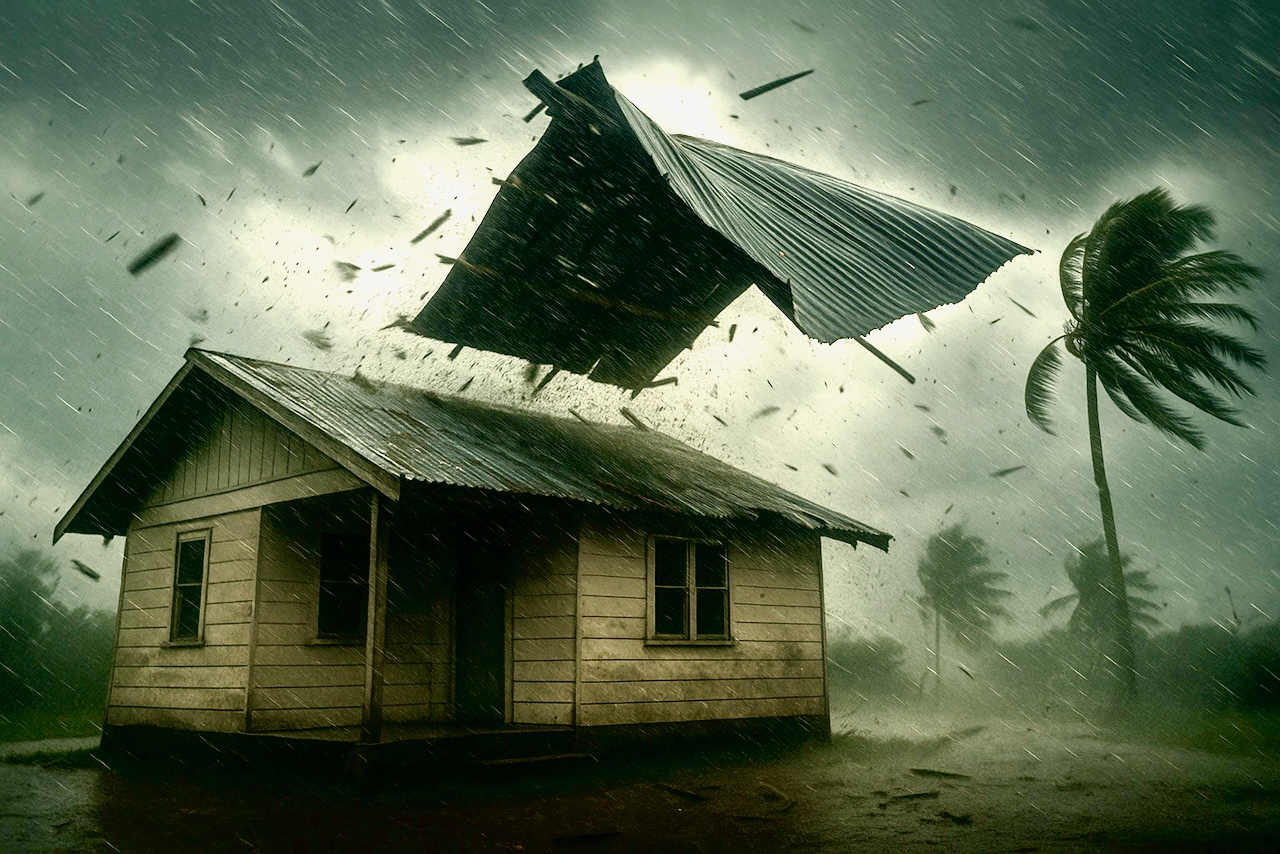
    When hurricanes tear roofs from homes like Band-Aids, when rivers overflow entire cities, when wildfires blacken skies from Canada to Greece — nature reminds us of something we’ve long forgotten: we’re all in the same boat.

    The recent devastation in Jamaica, where Hurricane Melissa left unimaginable destruction and forced hundreds of thousands to evacuate, is not an isolated event. It’s part of a rising pattern — storms, floods, and fires now so powerful that no nation, no corporation, no ideology, and certainly no family or individual  can handle them alone.

    Collaboration is no longer optional

    When disaster strikes, competition collapses.

    Think of the wildfires in Greece and California, where thousands of firefighters from different nations joined forces because the flames ignored borders.

    Or the COVID-19 pandemic, which revealed that no country can isolate itself from an invisible threat — we either share information and medicine, or we all suffer.

    Or the floods in Pakistan, submerging a third of the country and demanding global aid to prevent famine and disease.

    And the European droughts of 2022 and 2023, which exposed the fragility of an entire continent: the Rhine and Danube ran so low that barges carrying coal and grain could no longer pass; France’s nuclear plants had to reduce output because cooling water was too warm; Spain’s reservoirs dried to cracked mud plains as farmers watched their crops die.

    Suddenly, the flow of water — once taken for granted — became a shared lifeline, forcing nations that had long competed for energy and trade to co-manage rivers, power grids, and emergency reserves simply to keep their societies running.

    Even space debris orbiting Earth is now a shared danger, forcing rivals to coordinate to keep satellites — and civilization — functional.

    These are not moral choices. They’re survival imperatives.

    Nature, physics, and biology are saying the same thing:

    Collaborate — or collapse.

    Proof that we can

    History shows that when humanity truly faces extinction-level threats, we can rise above our divisions.

    The Montreal Protocol (1987) — one of the rare global environmental successes — saw countries unite to phase out ozone-depleting chemicals. The ozone layer is now healing.

    The international vaccine effort during COVID-19, despite chaos and politics, became the fastest cooperative medical breakthrough in history.

    The International Space Station, built by fifteen nations once divided by war, still circles the Earth as a living symbol of what humanity can achieve when it stops competing and starts co-creating.

    The Global Seed Vault in Svalbard safeguards the genetic foundation of our food systems, maintained through peaceful cooperation even between nations in conflict.

    Each example declares the same truth: when survival is at stake, collaboration beats control.

    Can We Stop Climate Change?

    The uncomfortable truth is: no, we can’t stop it entirely.

    Not anymore. The system is already in motion — oceans have warmed, glaciers are melting, and feedback loops like methane release and forest die-back are accelerating. What we’re witnessing now are the lagging effects of decades of fossil-fuel addiction. Even if we stopped all emissions today, the planet would keep warming for decades.

    But that doesn’t mean we’re powerless.

    It means we’re entering the era of responsibility — where humanity decides whether this transformation becomes a collapse or a rebirth.

    Here’s what we still can do:

    Slow the momentum. Every fraction of a degree we prevent means fewer hurricanes, less drought, and millions of lives saved. Renewable energy, regenerative agriculture, and reforestation aren’t just “green projects” — they’re emergency brakes on a speeding train.

    Adapt intelligently. Cities can be redesigned for resilience: water recycling, local food systems, hurricane safe buildings, self-sufficient energy grids, and shared resource hubs — prototypes of what Cities of Light could become.

    Heal ecosystems, not just economies. Nature can recover faster than we imagine — coral reefs, forests, and soils — if we simply stop harming them and assist their regeneration.

    Collaborate globally. Climate doesn’t care about politics. Shared data, open technology, and cooperative disaster response must become the new norm.

    Transform consciousness. Ultimately, the crisis is not environmental — it’s psychological. It’s the illusion of separation that allows destruction. When we see Earth not as a resource to exploit but as a living system of which we are part, everything changes.

    Do we have the money?

    But here’s a question few dare to ask out loud:

    Do we even have the money to do everything we must — to prepare, to brace, to rebuild, and to restore balance in the face and aftermath of accelerating climate change?

    Every expert agrees we have the resources, the technology, and the human capacity. What we lack is the permission of an outdated system — one that measures possibility in dollars instead of reality.

    So maybe it’s time to ask not “can we afford it?” but rather “can we afford to keep measuring life in this way?”

    The Monetary System

    But even if we did try to fund everything through the existing system, it would likely destabilize that very system. The monetary architecture we rely on was built for perpetual growth and profit — not planetary repair. Pouring tens of trillions into climate mitigation and adaptation without corresponding “returns” would expose how money itself depends on expansion, debt, and competition. Printing(digital and physical) or borrowing enough to save the planet would trigger inflation, strain supply chains, and shake the foundations of the global economy, revealing a painful irony: even survival doesn’t fit within the logic of our financial model.

    Yet that may be precisely the point of awakening. The moment we realize that saving life on Earth could bankrupt the very system designed to measure it, we also see what must come next — a transition from a profit-driven economy to a resource-based coordination system where collaboration and need, not capital, decides what can be done.

    From crisis to awakening

    Climate change is not the end of the world. It’s the end of a way of living in the world.

    And in that ending lies the beginning of something extraordinary — a civilization finally mature enough to act as one organism.

    The storms, the fires, the floods — they are the Earth’s way of saying:

    “Grow up. Work together. Remember who you are.”

    Because the truth is simple:

    When the storms come, there’s only one safe place to stand — together.

    The Natural Exchange System

    In the novel Waking Up – A journey towards a new dawn for humanity, the human population has awakened to precisely this truth. If we are to survive as a species on this planet, we must enter the phase of responsible collaboration, where we abandon the most destructive system on Earth: The Monetary System – and replace it with one where people and nature is front and center, not profit.

    Follow Benjamin Michaels when he wakes up in a world where humanity has taken collaboration to its utmost limit —

    and abandoned this system.

    In its place, a new model has emerged — one that works for both people and planet:

    NES — the Natural Exchange System, a society that mimics nature in human interactions.

    Just like in nature, exchange happens effortlessly — without money or trading — when each part contributes what it’s meant to and finds fulfillment in doing it.

    The soil doesn’t send an invoice to the tree for nutrients, nor does the bee demand payment for pollination. The ecosystem thrives through spontaneous reciprocity — a living flow of giving and receiving that keeps the whole balanced.

    In this same spirit, AI and robotics take care of tasks no one feels called to do — cleaning streets, collecting waste, managing logistics — freeing human beings to focus on creativity, empathy, learning, and the joy of purposeful living.

    Call To Action

    Waking Up – A Journey Towards a New Dawn for Humanity isn’t a blueprint — but it is an inspiration.

    A vision of what becomes possible when humanity dares to move beyond money, fear, and separation — and begins to live by trust, collaboration, and care for the planet and each other.

    By reading it — and by sharing these articles — you help spread that vision.

    Every person who awakens to a new way of thinking brings us closer to the tipping point where change becomes inevitable.

    Read it. Share it. Be part of the awakening.

  • How We Can ALL live a Life of Luxury on Earth — Without Breaking the Planet

    How We Can ALL live a Life of Luxury on Earth — Without Breaking the Planet

    From Excess to Access — A glimpse into the next Paradigm where Abundance, Technology, and Wisdom unite to create a world that works for everyone.

    Imagine a world where every human being lives in comfort and beauty.

    Where homes are energy-self-sufficient, food is fresh and locally grown, transport is clean and free, and no one worries about bills, borders, or basic survival.

    It sounds like a dream — but it’s only our outdated economic system that makes it seem impossible.

    The Myth of Scarcity

    We’ve been raised to believe there’s not enough for everyone — not enough land, not enough jobs, not enough “money.” Yet the Earth is overflowing with resources.

    We have enough sunlight striking the planet each hour to power civilization for a year. We produce 43 kg of food per day per person per year. But most is wasted to create profit. We have enough empty homes to house every homeless person several times over. Enough food to feed everyone — if we stopped throwing away most of it.

    Scarcity isn’t a natural law. It’s a policy decision.

    Scarcity is an artificial outcome of a system that rewards hoarding and punishes sharing — where competition, debt, and profit come before cooperation, dignity, and Life itself.

    The Real Meaning of Luxury

    Luxury today is marketed as excess — yachts, jets, and exclusivity. But true luxury has nothing to do with waste.

    Real luxury is freedom from stress, clean air, time to create, connection, and purpose.

    It’s walking barefoot on living soil, sleeping in peace, eating food you can trust, and feeling as part of something larger than yourself.

    When we redefine luxury from excess to access, the equation changes completely.

    A world where everyone has access to clean healthy water, sustainable energy, creative tools, and regenerative design is not only possible — it’s inevitable once we stop measuring life in old outdated currency.

    The Paradise Is Already Here

    There are over 100,000 tropical islands on Earth — from the turquoise lagoons of the Pacific to the coral-fringed coasts of the Indian Ocean and Caribbean.

    Humanity has more than 620,000 kilometers of coastline, much of it pristine and uninhabited. There is, quite literally, enough paradise for everyone.

    If we organized wisely, each of us could spend a good part of our year on a tropical beach, sipping an umbrella drink served by elegant solar-powered robots. If that’s what we wanted.

    And there would still be plenty of room — because people are beautifully different. Not everyone wants a Mai Tai under the palm trees. Some prefer mountain air, snow, forests, deserts, or bustling creative cities. The abundance of this planet includes the diversity of our dreams.

    The Tools Are Already Here

    We already possess everything required to build this world: renewable energy, 3D-printed housing, circular materials, global knowledge sharing, and AI-assisted logistics that can map and manage resources with stunning precision.

    What we lack isn’t technology — it’s alignment.

    A willingness to use these tools for collaboration instead of competition.

    The shift is from ownership to stewardship — from “mine” to “ours.” When resources become a shared inheritance instead of private property, abundance stops being an illusion.

    A Glimpse from the Future

    In Waking Up – A Journey Towards a New Dawn for Humanity, Benjamin Michaels wakes to a world that has made this transition.

    Money no longer exists. The Natural Exchange System ensures that everyone’s needs are met intelligently and sustainably. Cities of Light shine as living ecosystems — where architecture, art, and nature merge.

    It’s not a utopia. It’s simply what happens when humanity grows up — when we stop surviving and start thriving together.

    The Invitation

    The new world isn’t waiting in the future; it’s waiting in us.

    Every act of sharing, repairing, planting, and caring moves us closer. Every moment we choose collaboration over competition, we bring a fragment of paradise into form.

    We can all live a life of luxury — not by taking more, but by realizing we already have enough to share with everyone.

    🌍 Discover how humanity awakens in a world beyond money.

    Read Waking Up – A Journey Towards a New Dawn for Humanity and join the movement toward a world that truly works for all. Ebook is only $4,99

  • What If the Great Reset Meant the End of Money?

    What If the Great Reset Meant the End of Money?

    How a global choice could dismantle debt, dissolve ownership, and awaken a new kind of world that truly works for all…

    From Wikipedia. https://en.wikipedia.org/wiki/Great_Reset:

    The Great Reset Initiative is an economic recovery plan proposed by the World Economic Forum (WEF) in response to the COVID-19 pandemic.[1] The project was launched in June 2020, accompanied by a video message from the then-Prince of Wales, Charles.[2] Its stated objective is to support recovery from the global pandemic in a manner that emphasises sustainable development.[3]

    At the time, WEF chairman Klaus Schwab outlined three core components of the initiative: advancing a “stakeholder economy“; building in a more “resilient, equitable, and sustainable” way using environmental, social, and governance (ESG) metrics; and “harnessing the innovations of the Fourth Industrial Revolution.

    More money

    We keep hearing the same prescription for humanity’s problems: more money.

    More stimulus, more redistribution, more investment. But pouring money into a broken system doesn’t heal it — it only deepens the cracks.

    Think of it this way: if the plumbing in a house is rotten, pumping in more water won’t quench anyone’s thirst — it will just flood the basement. Our economic “plumbing” is money itself: designed around debt, scarcity, and competition. Adding more of it cannot save us.

    That’s why the only real solution is not more money, but no money at all, as explained in this article: https://wakingupstory.com/2025/09/can-more-money-save-the-world/

    🚨 Imagine the Headline

    “World Economic Forum, World Bank, and All UN Member States Announce End of Money. Global Transition to Resource-Based Collaboration Begins Today.”

    No more credit cards. No stock market. No loans to repay. No one rich. No one poor. Or maybe, all of us rich…?

    Impossible? Perhaps.

    But let’s allow ourselves, just for a moment, to imagine:

    What if the Great Reset was not just a patch on capitalism — but the end of it?

    🩹 A Patch on a Broken System

    The original Great Reset, proposed by the World Economic Forum in 2020, aimed to “rebuild a better capitalism” after the COVID-19 crisis. It focused on:

    • Greener investments

    • Stakeholder capitalism

    • Tech-driven inclusivity

    But in truth, it was never a revolution. It was a renovation — an attempt to make an outdated house look livable, without changing the foundations. Basically only fix the bad plumbing with gaffer tape and paint the walls of the dilapidated house.

    The money system — with its built-in inequality, debt traps, and growth addiction — remained untouched.

    🌍 The Real Reset: Ending Money

    Now imagine that the global powers finally admit the truth:

    That money itself is the bottleneck, not the solution.

    And instead of continuing to tweak the system, they agree to let it go entirely.

    Here’s what would need to happen:

    🔓 Step 1: Cancel All Debt

    All of it — personal, corporate, national.

    Because you can’t erase money while still demanding its return.

    Creditors and debtors alike would be liberated in a single global breath.

    This is not fantasy. Ancient societies did it — from Mesopotamian kings declaring debt jubilees, to Solon’s Athens shaking off burdens, to the Biblical Jubilee. Even in modern times, Germany’s post-war debt was forgiven. It has been done — just never at global scale.

    🛑 Step 2: Abolish Ownership and Markets

    • Stock markets shut down permanently.

    • Private land ownership is retired — land becomes held in trust for all.

    • Intellectual property is replaced by open-source collaboration.

    Instead of selling value, we share stewardship.

    🛠 Step 3: Launch a Global Resource Network

    A new Earth Operating System is activated:

    • Global maps of resources, needs, and capabilities

    • Distribution of essentials (food, water, medicine, energy) without payment

    • A digital interface where people contribute skills, ideas, and labor by choice — not for wages, but for purpose

    🧠 Step 4: Rewire Our Minds

    This may be the hardest step.

    We’ve been conditioned for centuries to think in terms of:

    • Scarcity

    • Competition

    • Survival through earning

    But without money, we’d learn to think in terms of:

    • Abundance

    • Collaboration

    • Belonging

    At first, it would feel like freefall.

    Then, perhaps, something deeper would awaken.

    🌱 From Profit to Purpose

    What happens when we no longer work to survive?

    We may finally begin to live to express, to love, to contribute, to create.

    To restore the planet.

    To heal ourselves and each other.

    To explore what it means to be human, beyond transactions.

    The Great Awakening?

    Maybe the Great Reset, as originally conceived, was not the end goal…

    …but just the final stall of an old engine, sputtering before it dies.

    The true reset — the great awakening — might come not when we save capitalism, but when we let it go.

    “We didn’t collapse,” they will say.

    “We evolved.”

    📖 Want to See How This World Might Look?

    Waking Up: A Journey Towards a New Dawn for Humanity is a visionary novel that dares to imagine a planet where money, ownership, and competition are relics of the past — and where human beings live, love, and thrive in freedom.

    👉 Order your copy today and explore the world beyond money.

  • Can We Change Climate Change? If So, How?

    Can We Change Climate Change? If So, How?


    Climate change is often portrayed as an unstoppable force — a tidal wave of destruction that humanity can only brace for. But the truth is, we are not powerless passengers. The real question isn’t just whether climate change is happening, but whether we can change it. And the answer is yes — though it requires changing more than our lightbulbs, or eating less meat. It demands a deep transformation of our systems, our mindset, and our values.

    Concrete Signs in Today’s World


    The evidence is already here, in the headlines and on our streets. In France recently, deadly floods swept across entire regions, leaving citizens openly blaming climate change and demanding urgent action from leaders. Wildfires have raged through Canada and Greece, fueled by record heat. The United States has also been hit hard: in January 2025, Southern California endured a series of devastating wildfires that burned over half a million acres, destroyed or damaged more than 18,000 structures, displaced over 200,000 people, and caused dozens of deaths. Scientists confirm that the extreme heat, drought, and winds that fueled these fires were made more likely by human-driven climate change. Only months later, heavy rains triggered flash floods and mudslides across California, especially in areas destabilized by previous wildfires. In earlier years, massive flooding from atmospheric rivers caused billions in damages and dozens of deaths. Meanwhile, Pakistan has suffered historic floods, displacing millions, and Southern Europe has endured repeated, deadly heatwaves. Africa and South America face worsening droughts that devastate crops and water supplies. These are not distant warnings. They are present realities that show how deeply climate change is reshaping our world.

    Systems Over Symptoms


    We’ve been told to recycle, drive less, or eat less meat. These actions matter, but they’re like a band-aid on a deep wound. The core drivers of climate change are systemic: fossil-fuel dependency, industrial agriculture, and an economic system that rewards endless consumption. To change climate change, we must change the very structures that fuel it. We have to make drastic changes, unless we want to go down with the planet itself. We simply must STOP. To save our planet — and our lives on it — we  have to stop. Stop the endless consumption. Stop burning fossil fuels. Stop producing meat in ways that destroy ecosystems. Stop. Stop. Stop. If we don’t stop it ourselves, the planet will stop it for us. And that will be ugly. We simply have to stop the culprit: The monetary system. But of course stopping today’s monetary system is impossible as we all depend on it for jobs and money… Read on if you’re curious about a possible solution.

    The Tools Are Already Here


    Solar panels, wind turbines, tidal power, hydrogen storage, regenerative farming, rewilding — the solutions already exist. What we lack is not technology, but the will to apply it at scale. The longer we delay, the more we lock ourselves into outdated systems. Imagine if the same urgency we put into weapons and wars were channeled into renewable grids and sustainable cities.

    How Certain Are We?


    Most scientists agree that todays climate change is primarily man-made, caused by greenhouse gas emissions from human activity. If that is the case, then we can change it — because what humanity caused, humanity can reverse. But even if science were wrong, and climate change is driven by forces beyond our control, the need for global collaboration would only grow stronger. If we are truly passengers on this ride, then at the very least we should work together, minimize harm, and prepare with dignity. Why add wars among ourselves to the challenge of facing a turbulent planet?

    Escaping the Growth Addiction


    Our global economy behaves like an addict: always craving more, never satisfied. Growth at all costs drives deforestation, pollution, and exploitation. Money becomes the drug, and the planet pays the price. Breaking this addiction means building systems that value life, collaboration, and resilience over profit.

    From Fear to Possibility


    Fear paralyzes; vision empowers. Instead of framing the climate crisis as the end of the world, we can see it as the birth of a new one. Cities designed like ecosystems. Energy drawn from sun, wind, and water. Communities thriving without waste or scarcity. The shift is not only possible — it is already beginning in pockets around the globe.

    Conclusion


    Can we change climate change? Yes — but only by changing ourselves, our priorities, and our systems. If we don’t stop this runaway train of destruction, nature will stop it for us, and the outcome will be catastrophic. But there is another way: a resource-based economy, where collaboration and abundance replace scarcity and profit. And where the economy is designed to take care of the planet, nature and the whole of humanity itself.

    In the book Waking Up – A Journey Towards a New Dawn for Humanity, there is a picture drawn of a new world where this resource based economy has been adopted on the whole planet. Benjamin Michaels, the billionaire protagonist is shocked when he wakes up after 1oo years in cryonic sleep, only to find there is no more money in the world and all resources are optimized and shared…

    🌍 Discover more about humanity’s next chapter here:

  • Global happiness Product?

    Global happiness Product?

    Gross national happiness. Or gross global happiness?

    How Gross National Happiness Is Paving the Way for a New World

    While the world has spent decades relentlessly pursuing GDP—Gross Domestic Product—one small Himalayan kingdom chose a radically different path. Bhutan, nestled between India and China, introduced the groundbreaking concept of Gross National Happiness (GNH) in the 1970s. Rather than measuring prosperity through economic output alone, Bhutan posed a deeper question: What if true wealth was defined by happiness, well-being, and harmony with nature and each other?

    At the time, this idea may have seemed quaint, even idealistic. Today, it feels nothing short of visionary.

    The Four Pillars of GNH

    Bhutan’s GNH framework is built upon four central pillars:

    1. Sustainable and equitable socio-economic development
    2. Environmental conservation
    3. Preservation and promotion of culture
    4. Good governance

    In essence, Bhutan isn’t striving to be the wealthiest country—it’s striving to be the happiest. While critics argue about the economic trade-offs, Bhutan has managed to preserve its pristine forests, maintain strong social cohesion, and foster a profound connection between its people and the environment.

    After all, does money really make us happy? Or does it mostly serve to increase stress and anxiety?

    A Glimpse into a New Paradigm

    In Waking Up, we envision a world where well-being, not monetary wealth, is the driving force. There’s no poverty, no hoarding, no scarcity mindset. It’s a world where humanity has asked—and answered—the same question Bhutan posed fifty years ago: What truly makes life worth living? And then, it has built systems to support that vision.

    Could Bhutan be the first step in that direction? A living prototype? Just like the Cities of Light envisioned in Waking Up, Bhutan offers a glimpse that another way is not only possible—it’s already unfolding.

    The Message for the World

    What if the world followed Bhutan’s example? What if nations measured success not in profits, but in joy? Not in military might, but in the strength of their communities? Not in endless growth, but in balance with the Earth?

    This shift may seem utopian. But every great transformation begins with a question that challenges the status quo.

    In Waking Up, the world has already made that shift. But here and now, Bhutan is showing us the first steps. The seeds have already been planted.

    A Call to Action

    The systems we’ve created—monetary, political, societal—are manmade. That means they can be changed. Bhutan reminds us that radical shifts are possible when we dare to think differently.

    If you’re curious about what a happier world might look like, or how technology and spiritual awakening could merge to bring us there, dive into Waking Up. The book doesn’t just tell a story—it offers an inspiration.

    And if this resonates with you, share it. Talk about it. Imagine with others what a happiness-driven world could look like.

    Because, as Bhutan has shown us, every revolution begins in the imagination.

    ORDER THE BOOK HERE if you would like to get inspired…

  • The Planet of debt

    The Planet of debt

    What’s All This Talk About National Debt?

    If you’ve been following the news or political debates, you’ve probably heard a lot about national debt. But what does it really mean, and why should we care?

    Many people do not seem to know how extreme it actually is.

    Even Elon Musk recently expressed surprise over the U.S. government’s $2 trillion deficit—but this kind of deficit isn’t an exception, it’s the rule. The entire global monetary system runs on deficit. As of now, the world’s total debt is more than 330% of the global GDP—meaning we globally owe over three times what we actually produce in a year. It’s not just one country; it’s the entire planet operating in the red. Meanwhile, nations are caught in absurd tax wars—Trump raises tariffs, other countries retaliate, and the whole circus continues, further distorting the economy and punishing ordinary people as it is the taxpayer that takes the burden in the end. But the system isn’t just broken—it’s built this way. And that’s the real problem.

    National Debt

    National debt refers to the total amount of money a country owes, accumulated through borrowing to fund government spending. Countries borrow money by issuing bonds, and in turn, they must pay interest on that debt. They borrow this money from their own central bank and other countries. But here’s the real question: How much debt is too much? And more importantly, what happens when countries’ debt reaches levels that are beyond sustainable?

    Staggering Debt-to-GDP Ratios

    The Gross Domestic Product is the value of everything the country produces in one year.

    Take a look at a few examples of countries drowning in debt:

    • Japan: Over 230% of its GDP. That means Japan owes more than twice its total annual economic output.
    • United States: Around 133% of its GDP. The U.S. owes 33% more than the value of everything it produces in a year. Hence the $2 trillion deficit. No wonder DOGE had little effect… It’s obvious that austerity measures will never help this situation.
    • Italy: 135% of GDP. High debt burdens relative to a country’s economic size make it hard to invest in the future or respond to crises.

    While these figures are staggering, they represent just a small portion of the global debt picture. Because this is only the public debt. When adding the private debt(consumers and corporations) to the picture we will see that the global debt situation is much worse.

    The Global Debt: More Than 3 Times the World’s GDP

    Let’s put this into perspective: Even if we had 8 billion people on each of three planets, we still wouldn’t have enough economic output to match the global debt we are currently carrying.  Think about that. We’re literally in debt beyond the planet’s capacity.

    how did we get here?

    The situation we’re in—a global debt ratio of 330% of Gross Global Product (GGP)—has been building over decades through a combination of historical events, systemic decisions, and economic policies. Here’s a simplified breakdown of how we arrived at this point:

    1. The Rise of Fiat Money and Central Banking

    • Fiat money refers to currency that is not backed by a physical commodity (like gold) but by the trust and authority of governments. This shift started with the Bretton Woods Agreement in 1944 and fully took effect in the early 1970s when the U.S. moved off the gold standard. Since then, money could be created(as loans) without any real limit, fueling economic activity but also making it much easier to accumulate debt. And today, all these loans function as the money that are in circulation, that we use to pay for goods and services.
    • Central banks, such as the U.S. Federal Reserve, were established to manage monetary systems. They could print money, and they often did so to stimulate growth during economic slowdowns, thus increasing national debt over time.

    2. The Expansion of Credit

    • Over time, banks and lenders became more willing to lend money to both individuals, corporations and governments, and credit became easier to access. Individuals took out loans for homes, cars, and education, while governments borrowed more to fund social services, wars, and infrastructure.
    • In the private sector, businesses increasingly relied on corporate debt to expand. In the public sector, governments borrowed to fund military spending, social welfare programs, and more.
    • The monetizing of economies—where finance becomes a driving force of the economy—led to more complex financial products like mortgages, corporate bonds, and government bonds. These products fueled massive debt creation, which eventually outpaced the actual productive capacity of the economy. 

    3. The Push for Economic Growth

    • The prevailing economic ideology for most of the 20th century was to prioritize growth, especially in industrialized nations. Consumerism and endless growth became the central tenets of capitalism. This push for growth was funded through borrowing.
    • Since debt could be seen as a tool for stimulating growth (through investments, loans, and borrowing), the economy became increasingly dependent on debt to maintain and increase GDP.

    4. The 2008 Financial Crisis

    The This crisis exposed how the debt-based system had grown out of control. Financial institutions took on enormous risks, and subprime mortgages (loans given to people who couldn’t repay them) led to a massive collapse.

    • Governments and central banks responded with more debt, bailing out large institutions and corporations, and borrowing even more money to stimulate recovery. This worsened the global debt burden.
    • Since the crisis, economic recovery has largely been driven by low interest rates and more borrowing, pushing the global debt levels even higher.

    5. The Globalization of Debt

    As economies became more interconnected, global borrowing accelerated. Emerging markets, developed countries, and corporations all borrowed money from international lenders. This allowed the global debt to expand across the world, not just within individual nations.

    • The rise of global supply chains and access to cheap capital meant countries could borrow more than ever before, using debt to fuel infrastructure projects, technological advances, and social welfare programs.

    6. Interest and the Debt Spiral

    A key feature of our current system is the interest on debt. When countries, people or businesses borrow, they are required to pay back the money they owe, plus interest. However, interest is never created when the loan is made. This means that, to repay loans, more loans must be issued, leading to an ever-increasing cycle of debt accumulation.

    • This interest paradox means that there’s always more money owed than money in circulation, creating a situation where it’s impossible to pay back all debts without continually borrowing more, which shall also be paid back with interest.

    Musical chairs

    The debt system is like a game of musical chairs where the chairs (money) are constantly being removed (through interest payments), and there’s not enough money to pay back all the debt (interest and principal). So the system(like the musical chairs) is deigned to create lots of losers: All those who are left without a chair or enough money.

    7. Government Spending and Austerity

    • Governments began increasing their spending to maintain social systems and infrastructure, and because it was easy to borrow, it became an attractive option. However, as debt grew, some governments reached the point where they couldn’t afford to service the debt without borrowing even more.
    • Austerity measures were introduced by some countries to balance the books. But these measures often involved cutting public services, raising taxes, and cutting benefits for the most vulnerable populations—furthering social inequality.

    8. The Consequences of Debt

    • As the global debt grew larger, the system became more fragile. Banks and financial institutions continued to profit from lending, while ordinary people were saddled with more debt and fewer opportunities for wealth accumulation.
    • Governments used financial bailouts and continued borrowing to maintain the system’s stability, but this only served to postpone the inevitable collapse.
    • The interest-based system has forced countries and individuals to keep borrowing just to pay off interest, creating a debt trap that continues to spiral.
    • Meanwhile, global inequality has grown as wealth has become concentrated in the hands of a few, while the majority of people struggle with stagnant wages and increasing living costs. But not only this. The huge hole we have dug ourselves into is the planet that we live on. It is the planet that provide the resources corporations and countries need to produce something of actual value to justify all the debt.
    • Rising Interest Payments: Countries are dedicating an increasing portion of their budgets just to paying interest on their debt, leaving less money for essential services like education, healthcare, and public infrastructure.
    • The Debt Trap: To pay off existing debt, countries often need to borrow even more money. It’s a vicious cycle. The more we borrow, the more we have to borrow again just to keep up with interest payments.
    • Wealth Inequality: The current system disproportionately benefits the wealthy. Banks and financial institutions that hold the debt profit from interest payments, while ordinary people suffer from stagnant wages, rising living costs, and shrinking services.
    • Environmental Devastation: The debt-based economy requires endless growth. To fuel that growth, we continue to exploit the planet’s resources, often at the expense of sustainability and ecological health.
    • The Fragility of the System
    • The current debt system is incredibly fragile. If a few major countries or corporations default on their debt, it could set off a domino effect, crashing the entire global economy. We saw the early signs of this during the 2008 financial crisis, where the bursting of debt bubbles led to global instability. And yet, the global debt has only grown since then, making the system even more vulnerable.

    Where Do We Go From Here?

    We must reimagine our system if we are to avoid economic and environmental collapse, social unrest and extinction of humanity.

    The Only Sane Solution

    A global moneyless, Resource-Based World

    Given how unsustainable the current financial system is, the only sane solution is a complete rethinking of how we manage resources and how we conduct our lives on this planet. The current model of debt-driven growth is pushing us to the brink. If we don’t change course, we risk further financial collapse, economic inequality, and environmental destruction. Not to speak of the extinction of humanity itself.

    The only way forward is to move toward a resource-based economy, where the world’s resources are considered the shared inheritance of humanity. And the resources are optimized and shared based on need rather than profit. In a system like this, money is abolished, and the focus shifts to sustainable living and equitable distribution of resources. People contribute based on their skills and abilities, and society works together to meet everyone’s needs. A high tech world where technology serves the people and the planet. Not profit. A global relative abundance for all people is possible within a system like this.

    In such a world, there would be no money, no debt, and no need to borrow or trade in a system that doesn’t work. It’s a world of cooperation, where human well-being and the health of the planet come first.

    The question now is: Can we make this shift in time? The global debt crisis has reached critical levels, and the time to act is now. We have the tools, the technology, and the potential to create a system that works for everyone—a system that doesn’t rely on debt, but on resources, sharing, collaboration, and sustainability.

    The choice is ours

    The world as we know it is facing a reckoning, but that doesn’t mean we can’t build a better future. The choice is ours to make.

    A Vision of What Could Be: How Waking Up Imagines a New World

    But what does this new world look like in practice? How would it feel to live in a moneyless, debt-free society where resources are shared based on need, not profit? How can we navigate such a radical transformation?

    In my book, Waking Up: A Journey Towards a New Dawn for Humanity, I invite you to imagine just that.

    Waking Up is a glimpse into a future where humanity has shed its old systems and embraced a new way of living. It’s a story of transformation—both personal and collective—and an exploration of what happens when we begin to awaken to the possibility of a world that works for everyone, not just the privileged few.

    Join the Journey

    If you’re ready to step into that new world, Waking Up will take you there. The story will challenge you to reimagine what’s possible and inspire you to see that, despite the current chaos, we are not powerless. The change we seek is within our reach—and it starts with us.

    Take the first step today, and let’s begin this journey together. Order Waking Up now and join Benjamin in his quest to understand a world where everyone is truly free.