Category: chapter

  • The Insanity of Humanity

    The Insanity of Humanity

    This might be the most important article I have ever written.

    A Russian drone has reportedly killed three civilians in Ukraine after using artificial intelligence to select its own target.

    Read that sentence again.

    The Terminator

    A human being programmed and  launched the weapon and gave it a general mission. But according to investigators, the drone then navigated and selected the precise object it would attack without further human intervention. It appears to have targeted propane tanks at a petrol station in Zaporizhzhia. Instead, it struck beside an apartment building and exploded, killing three people, including a 19-year-old student.

    This is not a scene from The Terminator. It is not a warning from a dystopian novel about something that might happen fifty years from now.

    It has happened.

    Drones For Death

    We have entered an age in which machines are being given the authority to decide where lethal force will be applied. Software observes the world through cameras and sensors, compares what it sees with a programmed target profile, selects something to destroy and attacks.

    There may still be human beings behind the mission. Humans manufacture the drone, define the target category and launch the weapon. But at the decisive moment—when one object is distinguished from everything surrounding it and marked for destruction—the machine may act alone.

    This is a threshold humanity should never have crossed.

    Yet, instead of stopping the insanity, every major military power will now feel compelled to move faster. If one country develops autonomous weapons, another will say it must do the same for its own protection. If one side deploys a hundred, the other will need a thousand. The drones will become smaller, cheaper, faster and more difficult to detect. They will learn to coordinate in swarms, recognize increasingly complex targets and continue operating when communication with a human controller has been lost or jammed.

    The military justification will always be the same: if we do not build them, somebody else will.

    That is how insanity becomes policy.

    Where Does This End?

    We Must Stop it

    Where does an autonomous arms race ultimately lead?

    Does the country possessing the largest number of killer drones eliminate everyone it considers a threat and then live happily ever after without all the bothersome others?

    Of course not. After all, we are dependent on each other for survival on this planet. Even the most selfish and fearful leaders see that.

    But autonomous weapons will not remain exclusively in the hands of a few powerful governments. The essential components already exist within the civilian economy: processors, cameras, navigation systems, motors, batteries and increasingly capable artificial intelligence. As the technology becomes cheaper, versions of these weapons will spread to smaller countries, militias, extremist organizations, criminal groups and individuals.

    We must stop this before it is too late.

    Nobody Will be Safe

    Eventually, nobody will be safe.

    Political leaders can be hunted. Dissidents can be hunted. Journalists, scientists, engineers and activists can be hunted. A person may be marked because of a uniform, a vehicle, a telephone signal, facial characteristics or simply because an algorithm incorrectly decides that the person matches a target profile.

    Machines do not understand mercy. They do not recognize fear in another person’s eyes and lower their weapons. They do not see a wounded soldier and decide that enough people have died. They cannot refuse an immoral command because something inside them says it is wrong.

    They process information and execute instructions.

    A world saturated with autonomous weapons would not be a world controlled by one victorious superpower. It would be a world in which power itself had become uncontrollable. Nobody would necessarily know who launched a particular drone, who programmed it or whether its behavior had been altered. One automated attack could provoke another. Retaliation could begin before human beings even understood what had happened.

    Wars could escalate at machine speed.

    And these weapons would not necessarily remain on distant battlefields. The same systems could be used by governments against their own populations. A dictator would no longer need soldiers willing to fire upon their neighbors. Machines do not disobey, protest or experience remorse. A government controlling millions of autonomous weapons could make resistance almost impossible.

    This is not security.

    It is the automated imprisonment of humanity.

    No One Wins

    If these weapons ever become genuinely uncontrollable, they will continue killing until their targets disappear or the industrial systems supporting them collapse.

    Power stations will fail. 

    Transport will stop. 

    Food distribution will break down. Hospitals will become inoperable. People will be unable to gather, travel or work safely. 

    Eventually, most of the machines will also stop as batteries degrade, components break and replacement parts disappear.

    Human civilization and its killer machines may collapse together.

    That is the glorious destination of the arms race: humanity hiding underground while machines patrol the surface of the planet we ruined through our own fear.

    Kill or Create

    We have developed artificial intelligence, advanced robotics, global communications and extraordinary scientific knowledge. We possess technology that could help restore ecosystems, clean the oceans, cultivate food, construct homes and release humanity from dangerous and exhausting work.

    And what do we do?

    We teach machines to kill.

    This is the insanity of humanity.

    The Insanity of Separation

    But beneath this insanity, humanity is not insane.

    Beneath the fear, conditioning and the constant story of separation, there is an awareness within every one of us. In that awareness exists love, compassion, understanding and intelligence. It is the part of us that recognizes another human being not as an enemy, a competitor or an obstacle, but as another expression of the same life.

    A Ukrainian child, a Russian mother, an American soldier, a Chinese engineer and an Iranian farmer are not separate forms of life with different fundamental values. They feel pain. They experience fear. They love their children. They want to live.

    There are no Others

    We have placed a frightened layer over this awareness. The ego divides the world into us and them. From it’s fear it constructs nations, armies, threats and enemies. It tells us that we can achieve safety only by possessing greater destructive power than everybody else.

    Each side insists that it is merely defending itself. Each new weapon is justified as a response to the weapons of another. Everyone pursues security, yet everyone becomes progressively less secure.

    Now we are taking this ancient insanity and embedding it in software.

    We are giving fear cameras, wings and explosives. We are teaching artificial intelligence to recognize the enemies created by our own minds and destroy them with increasing efficiency.

    The machine has not invented separation.

    We have programmed it.

    The Other Direction

    The alternative is not to abolish technology. It is not to close every data center, abandon artificial intelligence or return to some imagined pre-industrial past.

    The alternative is to give our technology another purpose.

    The New Purpose

    The same machine vision capable of recognizing a military target can recognize plastic in the ocean, an animal caught in an abandoned fishing net, the first signs of a forest fire or a person buried beneath earthquake rubble.

    Autonomous machines can remove pollution, restore forests, repair infrastructure, cultivate food and monitor the health of ecosystems. Artificial intelligence can help humanity understand what resources exist, what people need and how production can be organized without destroying the living world..

    The Choice is Ours

    We can use artificial intelligence to compete more effectively against one another, or we can use it to build a civilization that works for everyone.

    We can automate killing, or we can automate caring.

    The technology is not making that choice.

    We are.

    A Message to World Leaders

    To every head of state—and especially to the leaders of the world’s military powers:

    Stop.

    Refuse to authorize machines to select and attack human beings. Begin immediate negotiations for a binding global prohibition against autonomous weapons. Establish meaningful human control over every use of automated lethal force.

    Do not wait for your rivals to move first, because they are waiting for you.

    Somebody must interrupt the logic of fear. Somebody must possess the courage to say that humanity will not construct its future upon machines deciding who shall die.

    True courage is not developing the most efficient killer drone. It is stepping out of an arms race when everyone around you insists that stopping is impossible.

    You are not protecting your people by creating a technology that will inevitably spread and eventually be turned against them. You are not building peace by removing human conscience from the decision to kill. You are not demonstrating strength by surrendering life-and-death decisions to software.

    This is one planet. 

    We share one atmosphere, one biosphere and one future. No country can make itself permanently secure in a world where everyone else lives in fear.

    The security of one nation cannot be built upon the insecurity of all others.

    Share Another Future

    I urgently beg you. 

    I insist.

    Please share this article.

    Share it not for me, not for a political party or organization, and not because I want to sell books. Share it because humanity urgently needs to recognize the choice now before us.

    Because the recent incident in Ukraine is not to be taken lightly. 

    We are close to the ultimate choice.

    The choice to perish as humanity or the choice to prosper together.

    So please send it to friends. Send it to journalists, researchers, engineers, politicians, military commanders, technology executives and heads of state. Translate it. Republish it. Discuss it. Challenge it if you must—but do not ignore the direction in which we are moving.

    Share not only the warning. 

    Share the possibility of another future.

    People cannot choose a possibility they have never been shown.

    If the only futures presented to humanity are endless economic competition, military supremacy, automated warfare and survival against one another, we will continue constructing precisely that world.

    We must make another civilization imaginable: a civilization based upon stewardship instead of ownership, cooperation instead of competition and intelligent access to abundance instead of an endless struggle for money and power. A world in which AI and robotics serve humanity and the whole living planet—not profit, domination, fear and war.

    Somewhere within every government, military institution and technology company are human beings who still possess conscience and compassion. They must hear from us before fear makes the decision for them.

    One article will not stop the machinery of war. But silence guarantees that the machinery will continue.

    We do not need every human being to awaken at exactly the same moment. We need enough people to speak, share and demonstrate another direction. We need enough people to insist that the future does not belong to fear. We need enough people to remind those in power that there is still something within them deeper than the frightened voice demanding more weapons.

    Humanity Stands at a Threshold

    Down one road, nations surround themselves with increasingly autonomous instruments of death until every human being becomes a potential target and the entire planet becomes a battlefield controlled by machines.

    Down the other road, we recognize that there are no others. 

    We allow the intelligence, compassion and awareness within us to determine how our technology will be used. We stop preparing to destroy one another and begin building a world in which everyone can live.

    This is not a distant philosophical choice.

    It is happening now.

    Please Share

    Please carry this message as far as you can and as high as you can. Let it reach people with the power to change our direction. Let it remind them that another future remains possible.

    We cannot base humanity’s future on killer drones.

    Humanity thanks you.
  • The Free Companion Book Is Now Available

    The Free Companion Book Is Now Available

    We are in ecological overshoot.

    The planet is strained.
    Politics are polarized.
    The monetary system rewards scarcity while promising prosperity.

    Not because humanity is incapable — but because the tool we use to coordinate ourselves no longer fits the world we live in.

    For months, I have been working on four questions:

    WHERE are we as humanity?
    WHAT do we actually want?
    HOW could we transition?
    WHY did we choose to change?

    Those questions became The Companion Book to Waking Up.

    I wrote it because I kept receiving the same questions: How would such a world actually work? How could we transition from here to there? Is it realistic? The companion exists to address those questions directly — structurally, not rhetorically.

    It examines the structure of the monetary system, ecological limits, human psychology, and the possibility of redesigning our global coordination around stewardship instead of ownership.

    No ideology.
    No utopia.
    Just structural clarity.

    And today happens to be a rare Saturn–Neptune conjunction at 0° Aries.

    Saturn represents structure, limits, and reality.
    Neptune represents dreams, spirituality, and imagination.

    Structure meeting vision.

    Astrologers describe this alignment as a potential turning point for humanity — a moment when long-term dreams demand practical form and collective direction.

    What better day to release a book about aligning vision with redesign?

    The Companion Book is now available.

    It is free.

    This book also contains the first 4 chapters from the novel in chapter 21.

    Subscribe here to receive the PDF or EPUB. Your choice:

    GET THE FREE COMPANION BOOK HERE

    If it resonates, share it.

    — Harald

  • Why Waking Up Exists

    Why Waking Up Exists

    An article for new readers who might be interested in a better future for humanity.

    All my life I’ve had a strong urge to fix things.

    Gadgets and machines — and systems. Situations where people suffer even though, intuitively, it feels like they shouldn’t have to. That urge was always paired with something else: a deep concern for humanity, and a simple desire for everyone to be able to thrive.

    Over time, one pattern became impossible to ignore. Again and again, the limits to human well-being traced back to the same source: money. How much you had of it. Or didn’t.

    Everywhere I looked, money seemed to generate problems — inequality, stress, conflict, environmental destruction. Not because people were inherently selfish or cruel, but because the system itself was built on scarcity, competition, and exclusion.

    That realization led to an obvious but uncomfortable question:

    How do you fix a system that large?

    For a long time, I couldn’t see an answer.

    Then I encountered ideas that changed the frame entirely. The Venus Project had turned everything upside down. Instead of asking how to distribute money more fairly, they asked a different question altogether: Why is money there in the first place? What if, instead of managing prices and profits, we managed what actually exists — the planet’s resources, our knowledge and technologies, and our collective capacity to care for one another?

    This way of thinking removes money from the equation and focuses on something more concrete: what we have, what we need, and how we can organize society so that everyone’s needs are met within ecological limits.

    That shift fascinated me. Not as ideology, but as design. As engineering applied to civilization itself.

    TVP had been exploring and sharing these ideas for decades, often with little traction. Inspired by their persistence, I didn’t want to write a political program or a manifesto. I wanted to explore what such a world would actually feel like.

    So I chose fiction.

    I began writing a story about a contemporary man who wakes up in a future where humanity has finally reorganized itself around cooperation, stewardship, and shared abundance. A world where the central question is no longer who can afford to live, but how can we make life work for everyone?

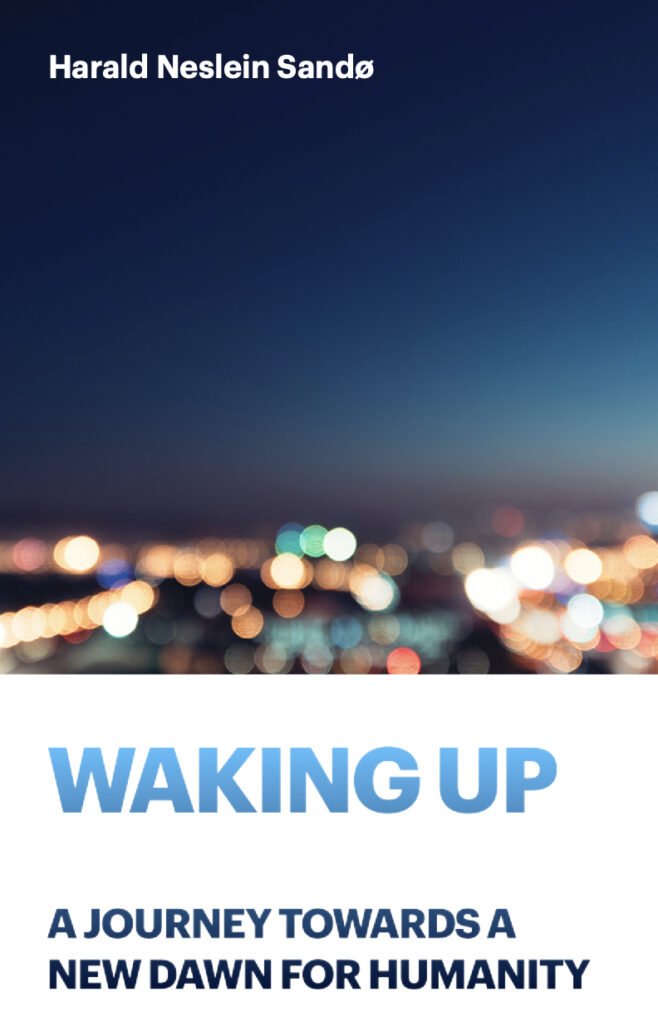
    That story became Waking UpA journey towards a new dawn for humanity.

    Over the many years it took to write the book, new ideas naturally emerged — about technology, psychology, governance, ecology,  human nature, and the story of the novel itself. All of them were woven into the story, not as lectures, but as lived reality.

    Waking Up exists to explore a simple, unsettling question:

    What would the world look like if we finally designed it to work — for people, nature, and for the planet?

    If this question resonates with you, you’re already part of the conversation and I urge you to share this article.

    If you would like to read the result of all these years of writing, you can find the book HERE. I thank you.

  • Good News: Buy It on Amazon. Read It Anywhere

    Good News: Buy It on Amazon. Read It Anywhere

    Good news. Starting January 20, 2026, Amazon allows DRM‑free Kindle books to be downloaded as EPUB or PDF. I’ve chosen to make Waking Up – A Journey Towards a New Dawn for Humanity DRM‑free — which means you can buy it on Amazon and read it on any device you like.

    This is a small technical change with a big human consequence: platform independence.

    What Waking Up is about (briefly)

    Waking Up is a visionary novel about a man who wakes up a hundred years in the future — in a world that has solved some of humanity’s most persistent problems.

    There is no war.

    There is no hunger.

    There is no extreme poverty.

    And the planet is finally being healed instead of exploited.

    Humanity hasn’t become perfect. People are still human. But fear is no longer the driving force behind society, and cooperation has replaced competition as the default way of living.

    To achieve all of this, humanity had to replace what turned out to be the root cause behind many of these problems: the monetary system.

    For Benjamin Michaels — a billionaire who was frozen in our time and wakes up in this future — this new world comes as a profound shock. Everything he once took for granted has vanished. And through his eyes, the reader is invited to explore not just what changed, but why.

    The story doesn’t ask whether a better world is possible — it explores what it might actually look like once we get there.

    Why I chose DRM‑free

    Most e‑books today are sold with restrictions. You don’t really own them — you rent access inside a platform.

    I chose a different path.

    I believe in respect over restriction. Most readers don’t need to be controlled. They deserve to be trusted. And a book that explores a future built on trust shouldn’t be locked behind digital handcuffs.

    By removing DRM, the Kindle edition becomes platform‑independent:

    Buy the book on Amazon – Choose Kindle.

    • Download it as EPUB or PDF

    • Read it on Kindle, Kobo, tablet, phone, computer — any device

    • Keep a personal backup

    • No lock‑in

    One purchase. Full freedom.

    A word about sharing

    Yes — DRM-free means the file can be shared.

    I’m comfortable with that.

    Stories — and ideas — have always travelled by being shared. If you pass the book on to someone and it resonates with them, I simply ask that you encourage them to buy their own copy as well, so the circle can continue and the work can reach further.

    After all, the e-book is just $4.99 — less than a coffee in many places — and every purchase helps the story travel further.

    That’s not control. That’s mutual respect.

    A small step toward the world the book imagines

    Waking Up explores a future where fear‑based control systems no longer define how we live. Making the book DRM‑free doesn’t change the world — but it does quietly practice the values the story speaks about.

    Buy it on Amazon. Read it anywhere.

    👉Get Waking Up – A Journey Towards a New Dawn for Humanity

    If this resonates with you, you can find the book on Amazon now.

    And if it speaks to you, please share this article — stories like this grow through people, not platforms.

  • What Is Actually True Spiritual Awakening?

    What Is Actually True Spiritual Awakening?

    Because without true awakening, we’ll keep recreating the same broken systems.

    Today, “spiritual awakening” is everywhere — in self-help books, TikTok trends, and vision boards filled with yachts and soulmates. But most of what’s being sold under that name isn’t awakening at all.

    True spiritual awakening is not about manifesting more for the ego.


    It’s not about using spiritual tools to chase the same things the ego always wanted — just with incense burning in the background.

    True spiritual awakening is an awakening from the ego.


    From the illusion of separation, scarcity, and fear —
    into the truth of what we truly are:

    The Universal Spirit Essence present in every being.
    The Awareness that sees through these eyes, reads these words, and witnesses thought itself.
    The One that creates the thoughts — and in doing so, creates the reality.

    When we remember that we are the creators of our thoughts,
    we begin to reclaim something forgotten:


    We are the creators of our world.

    In the depth of this realization lies the One — the same One in everyOne.
    And when we truly see this, we understand that we are not separate.
    We are all unique expressions of the same Source, the One.
    and from this foundation, a new world becomes not only possible, but inevitable.

    A true spiritual awakening isn’t about manifesting more for the ego, it’s about remembering that there is already enough for everyone.


    Enough land. Enough time. Enough resources. Enough Love.

    When the illusion of separation dissolves, so does the logic of hoarding.
    We stop asking “How can I get more for me?”
    and begin living from a deeper truth:
    “How can we all have more — together?”

    That’s when abundance becomes real.
    That’s when the world of Waking Up begins.

    And here’s something else:


    True inspiration follows true awakening.


    Not the hustle-driven motivation of the ego,
    but a quiet, clear, radiant energy that flows directly from the Source.
    An inspiration that brings with it the solutions we need —
    not just for one person to succeed, but for all beings to thrive.

    This inspiration does not serve the 0.1%.
    It serves Life Itself.
    And it will guide us — if we let it — to build a world that works for every being on this planet.

    The novel Waking Up imagines such a future —
    where this awakening is no longer just personal, but global.
    Where humanity has shed the systems of fear and stepped into a reality based on trust, unity, and shared abundance.

    It’s already happening.
    Quietly. In the hearts of millions.
    People are letting go. Waking up. Coming Home.

    So ask yourself:
    What if enough of us truly woke up?
    What kind of world would we create — together?

    Want to dive into this imagination of a new world on planet earth? If so, my book is available as both ebook($4,99) and paperback($12) HERE:

  • A Heartfelt Thank You – And What’s Next

    A Heartfelt Thank You – And What’s Next

    Today I just want to take a moment to say thank you — to each and every one of you who has preordered Waking Up, shared the link, talked about it with friends, or simply followed this journey. Your support has meant more than I can say.

    As of today, the preorder phase is over as Waking Up was officially launched yesterday. The ebook is now available at its normal price of $4.99 — a price I plan to keep stable. I don’t want the price to go up and down like in some campaigns. My hope is to keep it affordable, so as many people as possible can access the story and its message.

    Also, the ebook will shortly be available on more than just Amazon! If you prefer Apple Books, Kobo, Barnes & Noble, or another platform, you can now find Waking Up there too. The book is now also available as paperback on Amazon. (You can use this link to find your preferred store:

    Whether you just discovered this project or have been following along for years, thank you for being part of this vision. The world of Waking Up is only just beginning — and I’m grateful to share it with you.

    And just briefly — why did I write this book?

    I wrote it as a test.

    A quiet invitation.

    A question to humanity:

    Are we ready for something new?

    If we truly are, I believe it will be reflected in how many discover this book in the months and years to come. And maybe, just maybe, that discovery will spark something deeper.

    Thank you for being here.

    For reading. For caring.

    For imagining a better world with me.

    H

  • Waking Up Is Live — The Vision I’ve Carried Since Childhood

    Waking Up Is Live — The Vision I’ve Carried Since Childhood

    Launch Day: $0.99 today only. Tomorrow it’s $4.99.

    This isn’t just the launch of a book.
    It’s the sharing of a vision that’s been growing in me since I was a child.

    Ever since I was young, I felt something was off. The world didn’t feel right — not because of one specific injustice, but because something deeper was missing. I didn’t have the words for it then, but I sensed it: a disconnection. A deep forgetting of who we are and what life could be.

    Even in the sci-fi stories I loved, the future was almost always dark — dominated by machines, greed, control, or survival. But I dreamed of something different. I longed for a future that was beautiful — not naive, but healed. A future where we had awakened from the madness. Where humanity had finally grown up.

    That’s the seed behind Waking Up.

    The story first took shape as a film script in 2011 after I had met The Venus Project the year before. but really, the story has been with me all along. But then, in 2015, everything changed. A massive stroke stopped me in my tracks. My body broke down. My life was split in two.

    But that’s when something deeper also broke through.

    What followed was my own journey of awakening — of humility, healing, surrender, and rediscovery. I poured that into the story. The protagonist, Benjamin Michaels, wakes up 100 years in the future in a world beyond money, war, and fear — but he doesn’t wake up completely whole. He carries some brain trauma, emotional instability, confusion. I gave him those traits because I knew them. I had lived them.

    This book is fiction — but it’s also a mirror. A memory of what we once dreamed. A reminder of what we still can become.

    👉 Waking Up is live now — and just $0.99 for today only.


    Tomorrow, the price returns to $4.99.

    And no — there’s no excerpt this time.
    If you want to keep reading, you’ll need to take the leap. 

    Preorder period is over, you will receive the e-book today.

    From the depths of my heart, thank you.


    Let the awakening begin.

    — H

  •  Countdown to launch:  Day 7 –  1 day left to launch

     Countdown to launch:  Day 7 –  1 day left to launch

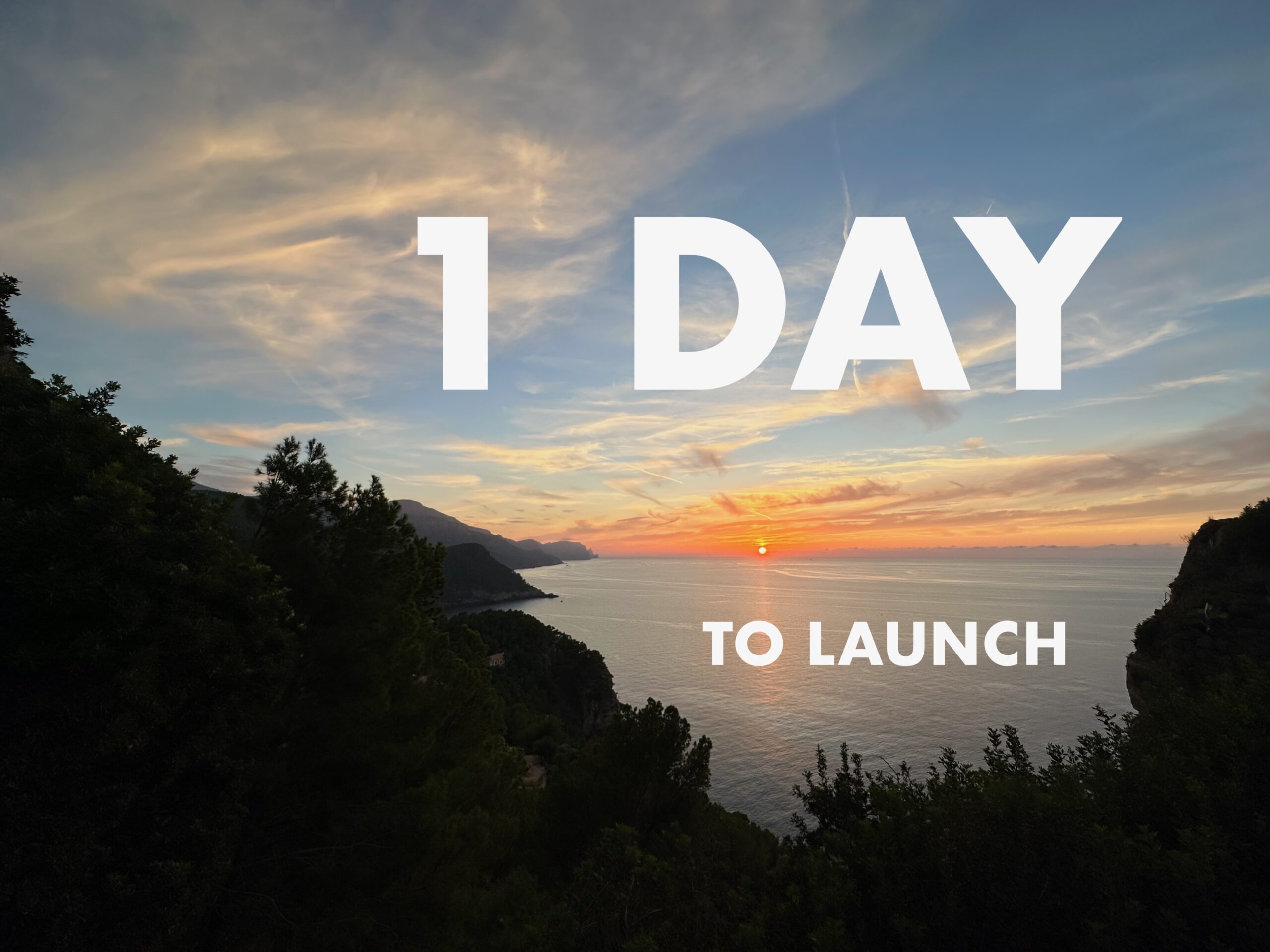
    Only one day left! 🚀 This is your last chance to preorder Waking Up before the official launch tomorrow!

    Preordering today not only guarantees you the special launch price — it also helps boost the book’s visibility when it goes live. Every early order makes a real difference! 🙏✨

    ORDER HERE


    To celebrate how close we are, I’m sharing a powerful moment from Chapter 7. Greenhouse, where Benjamin Michaels faces the breathtaking transformation of a world he no longer recognizes… and begins to wonder if he still has a place in it.
    Here’s today’s excerpt:

    7.  Greenhouse

    Benjamin Michaels staggered into what he once knew as his office—a place where deals had been struck, fortunes amassed, and empires expanded. Now, his sanctuary of power and influence had been transformed beyond recognition.

    The smell hit him first. Damp earth, the faint sweetness of blooming flowers, and a sharp tang of citrus filled the air. The sterile, corporate atmosphere he had once cultivated was gone, replaced by something warm, organic, and… alive. He looked up, and sunlight filtered through glass panes high above, bathing everything in a soft, golden hue.

    Rows of lush greenery surrounded him. Papaya trees stretched toward the ceiling, their vibrant fruits hanging like ornaments. Vines crawled along the walls, their tendrils weaving intricate patterns. Brightly colored flowers he couldn’t name formed splashes of red, yellow, and violet amidst the green. Water trickled softly somewhere, its sound blending with the rustling of leaves. 

    Ben stood frozen, his heart pounding in disbelief. His old desk—the mahogany monstrosity that had once been the centerpiece of the room—was gone. In its place stood a simple table made of polished bamboo, its surface adorned with a cluster of small potted plants and a little box projecting some kind of holographic data feed. 

    He stumbled forward, brushing against a vine. “What the hell is this?” he muttered, his voice hoarse. 

    A voice answered from behind him. “It’s a community greenhouse now.”

    Ben spun around. A man in his late forties stood there, his face weathered but kind, dressed in a loose shirt and pants that looked as if they’d been designed for practicality over fashion. He carried a small watering can in one hand and a pair of gardening shears in the other. 

    “Who are you?” Ben asked, his tone sharper than he intended.

    “Daniel,” the man replied, setting down the watering can. “I’m part of the team that maintains this place. It’s a community effort.”

    “A community effort?” Ben repeated, his voice filled with disbelief. He turned back to the plants, his gaze falling on a papaya tree. “This was my office,” he said, his voice trembling. “And my daughter’s inheritance…”

    Daniel was quiet for a moment, then spoke gently.

    “It still is, in a way. Just… not the way you imagined.”

    He gestured around them, to the trees, the vines, the soft trickle of water.

    “She inherits this too. All of us do. The whole planet. It’s not about property anymore. It’s about shared stewardship. No one owns it — we belong to it. To the planet.”

    We’ve read about you. Benjamin Michaels, right?”

    Ben nodded numbly. 

    “You’re part of history,” Daniel continued. “What you built… it helped pave the way for the systems we have now. The world changed. It had to. The way things were… it wasn’t sustainable.”

    “So you tore it all down?” Ben snapped, gesturing wildly at the greenery. “Turned it into this… this jungle?”

    Daniel’s expression didn’t waver. “We didn’t tear it down. We grew something new. Something sustainable. Everyone here shares in the work, and the harvest. It’s a place of abundance and sharing, not competition and hoarding.”

    Ben felt a lump rise in his throat. His legs wobbled, and he sank into a nearby bench—a simple, sturdy thing made of reclaimed wood. He buried his face in his hands, trying to steady his breathing. 

    The memories came flooding back: the deals closed in this very room, the laughter of his team as they celebrated their successes, the nights he’d spent alone, plotting his next move. And now… now it was all gone. 

    “I don’t belong here,” he whispered devastated, more to himself than to Daniel. 

    Daniel didn’t sit down but stood nearby, giving Ben space but staying close enough to be a quiet presence. “It must be hard,” he said gently. “Waking up in a world that feels so different. But you’re here now. Maybe that means you have a part to play in it. Here, have some papaya, they’re just ripe” he said, handing Ben a plate with orange papaya cubes and a fork.

    Ben looked up at him, his eyes glistening. He wanted to argue, to tell Daniel he was wrong. But deep down, he knew the man was right. He was here. For better or worse, this was the world he had woken up to. And as much as it terrified him, a part of him couldn’t help but wonder what his place in it might be. The papaya tasted good, hungry as he was.

    For now, though, the only thing he could do was sit and eat papaya, try to breathe, and wonder… What had the rest of the world come to..?


    History is made by those who dare to dream. Preorder Waking Up today — tomorrow, a new world awakens. 🚀🌍

  •  LAUNCH COUNDOWN: Day 6 – Just Two Days Left to launch

     LAUNCH COUNDOWN: Day 6 – Just Two Days Left to launch

    A Glimpse of New York… 100 Years later...

    Yesterday, on day 5, I shared the first 10 pages of the first chapter set in the future; chapter 5. Panic — Ben waking up and panicking  in a world transformed.

    Today, I want to take you a little further with chapter 6. New York,
    Into what was once the heart of Ben’s world.
    But now into a city that has… evolved.

    This is just a glimpse of what’s coming.
    In just 2 days, the full story is yours if you preorder it now for just $0,99:

    Transitioning from the last paragraph of chapter 5:

    The capsule began to slow, a soft hum filling the air as it approached the Velocity Terminal in New York City. Ben leaned forward, his heart pounding with a mix of hope and trepidation. What would he find in the city that had once been his home?


    ———

    Here are the first 3 pages of chapter 6. Enjoy.


    6. New York

    Benjamin stepped out into a world unrecognizable. Towering green walls dripped with vines, and sunlight filtered through vast canopies of trees that lined the streets. The air smelled fresh, like after a summer rain, and the low hum of activity came not from honking cars or thundering motorcycles but from people laughing, talking, and working together in the open spaces.

    Everything was immaculate yet alive. Areas of neatly tended grass stretched between the buildings with clusters of trees and vibrant shrubs, while wildflowers peeked through in charming, untamed bursts. Some of the old buildings still stood, preserved as relics of the past, but the spaces between them had been reimagined as lush forests. Cozy, meandering pathways wound through the greenery, dotted with people walking, biking, and pausing on benches to enjoy the serene atmosphere. The fumes Ben was used to from New York was gone, replaced by fresh forest air.

    As Ben stepped onto a meandering path, the city unfolded before him like a living, breathing canvas of color and motion. The people were as varied as the wildflowers and trees lining the pathways, each an expression of individuality unbound by convention. A man strolled past wearing a deep green jacket with intricate leaf-like patterns embroidered into the fabric, his boots softly crunching against the gravel. Nearby, a woman walked with confidence in a dress that refracted light into faint rainbows, the effect subtle and mesmerizing as the sunlight caught its edges.

    A child skipped ahead, dressed in what looked like a patchwork of vibrant, hand-painted fabrics, each square a tiny story. Her hair was adorned with glowing beads that pulsed softly in rhythm with her steps. Two others followed her, one in a sleek jumpsuit of smooth, matte material that hugged their form, the other in a loose tunic and trousers, dyed in shades of blue that seemed to mirror the sky above.

    Ben’s attention was drawn to a young woman weaving gracefully through the crowd. Her movements combined the elegance of ballet with the fluid power of gymnastics, as though the pathway was her stage. She leapt and turned with effortless precision, her long, flowing garment trailing behind her like a whisper of wind. The fabric shimmered faintly, catching the light in fleeting moments but remaining understated. Those she passed paused to watch, their smiles warm and appreciative of the spontaneous performance.

    Above them, a young man on a floating platform sailed gently over the crowd, his outfit a simple blend of earthy tones that harmonized with the greenery below. He waved at those on the path, his expression serene, as the platform adjusted its height to navigate the curves and archways of the park-like setting.

    Everywhere Ben looked, the city thrummed with life and creativity. No one hurried, yet the streets were alive with energy—conversations, laughter, song, and the occasional melody from a handcrafted instrument carried on the breeze. It was unlike anything he’d ever seen: a world not just alive but flourishing, every person a brushstroke in a masterpiece of humanity.

    Above the grass-covered streets, sleek golden, egg-shaped Anti-Gravity Vehicles (AGVs) glided soundlessly, their motion so smooth it was almost hypnotic. They emitted no noise, no pollution—just an elegant, purposeful presence that complemented the diverse scene below. Humanoid robots moved among the gardens, pruning bushes and tending to flowers, but they weren’t alone. Humans worked alongside them, their interactions harmonious and unhurried.

    It was like stepping into a vision of paradise. 

    But to Ben, the sight brought a different sensation—something cold brushing against the edge of his thoughts.

    The robots were elegant, sure, moving with a strange fluidity, even grace. Their gestures mimicked human care as they trimmed leaves or handed tools to gardeners. One even knelt to tie a child’s sandal before continuing on its way.

    But rather than feeling inspired, Ben felt something twist inside him.

    “They’re doing the work,” he thought. “All of it.”

    He scanned the area again. No one seemed in charge. There were no supervisors, no bosses, no payroll, no urgency. The people nearby were smiling, exchanging ideas, experimenting with new plants, sketching designs on invisible screens in the air, but the labor—the maintenance, the heavy lifting, the tedious bits—seemed to fall on the machines.

    In his world, work had meant survival. Money meant security. And jobs—however soul-sucking—had given structure, purpose, identity.

    “If the robots are doing everything,” he wondered, “then what do people do? What am I supposed to do?”

    He looked down at his own hands, suddenly hyper-aware of their stillness. For the first time since waking up, he didn’t just feel out of place—he felt obsolete.

    Ben’s feet carried him forward, almost without thought, as he took it all in. His awe was tinged with disbelief and confusion, his mind struggling to reconcile this idyllic city with the chaotic New York he remembered. Then, through the haze of wonder, his eyes locked onto a familiar landmark: the Freedom Tower.

    ———

    Do you like this and are curious for more..?
    In just 2 days, the full story is yours if you preorder it now.

    👉 Preorder Waking Up for only $0.99 before the launch on May 2:

  • Day 5 — 3 Days Left until Launch

    Day 5 — 3 Days Left until Launch

    Today, I want to share the first ten pages of Chapter 5: “Panic.”

    This is the moment where the future really begins.

    Until now, we’ve followed Benjamin Michaels in a world that feels uncomfortably close to our own — a man of wealth, power, and terminal illness, making one last bet on a future he may never see.

    Then… he wakes up.

    And nothing makes sense.

    This is the first chapter set in the future. It’s long. It’s raw. It’s where everything he thought was real begins to unravel — and where his real journey begins. Not just across time, but inward. Because waking up isn’t just about cryogenics. It’s about transformation.

    Thank you for following me on this countdown. If you’ve preordered already — truly, thank you. And if not, the book is still just $0.99 until launch day.


    👉

    Now, here is:

    Chapter 5: Panic

    (excerpt begins below)

    5. Panic

    A faint, rhythmic beeping pierced the black void. Muffled voices murmured nearby, pulling Benjamin Michaels from the abyss of unconsciousness. Slowly, the darkness began to crack, light bleeding through in soft, overexposed patches.

    “All systems are working now,” Dr. Alvarez said, her voice firm and clinical. Her long black hair framed a face both striking and calm, her faint Spanish accent giving her words a soothing cadence.  

    “Okay,” Dr. Carter responded, his youthful enthusiasm barely concealed under his professional demeanor. This one male. Tinged with curiosity, “Let’s see if there’s any consciousness in there.”  

    Ben’s mind floated somewhere between awareness and confusion. He tried to anchor himself, but the words drifting through the haze made no sense.  

    “Not too much cell damage, at least on this one,” Dr. Alvarez continued.  

    “Yes, he’s from 2015. They’d come quite far with the vitrification process by then. These people actually have a chance. Only thirty years earlier, and they’re… mishmash.” Dr. Carter added.

    Mishmash? Ben’s groggy mind grasped at the term, but it slipped through his mental fingers like smoke.  

    The man’s voice took on a note of excitement. “Pretty incredible, this project. I’m glad there was a consensus on waking up the stiffs. I mean, we’re waking up people from a century ago! Imagine the mindset differences. He’s in for quite the surprise.”  

    “Let’s hope he can integrate easily,” Dr. Alvarez replied. “You’re new here, aren’t you? This is my hundredth wake-up.”  

    Her tone softened, and Ben felt the weight of her words pressing against the fog in his brain.  

    “He could come around any time now.”  

    The light grew sharper, shapes beginning to form. A blurred ceiling loomed overhead, sterile and sleek, punctuated by the hum of advanced medical equipment. Two figures hovered in his periphery, their faces indistinct.  

    “I think the time is now,” Dr. Carter said. “His eyes are open.”  

    Ben blinked, the blurry shapes sharpening into the faces of a man and a woman dressed in futuristic white coats. 

    A third figure, a nurse, stood off to the side, observing silently.  

    “Mr. Michaels?” Dr. Carter asked.  

    Ben struggled to form words. His throat felt dry, his tongue leaden. “Wh… where am I?”  

    “You’re at the Cryonics Hospital in Scottsdale, Arizona,” Dr. Alvarez answered. “I think you should rather ask ‘when,’ not ‘where.’”  

    “When?”  

    “The year is 2115 in your time frame,” Dr. Carter said, smiling slightly.”Although we call it 56 YC now. You’ve been asleep for a hundred years. Welcome back.”  

    A hundred years? Ben’s breath caught in his throat. He tried to sit up but was immediately overwhelmed by dizziness. The woman reached out, steadying him with a firm hand.  

    “Take it slow,” she said. “Can I call you Ben?”

      He nodded weakly.

    “We just need to run a few basic tests,” she continued, holding up two fingers. “How many fingers do you see?”  

    “Two,” he muttered, his voice hoarse.  

    “Good. Can you tell me your full name?”  

    “Benjamin Thomas Michaels. YC?”

    “Yes. The Year of Civilization. The first year no human was killed by another human on the planet.” Dr. Alvarez replied.  

    She looked into the air in front of her, her gaze flickering as if reading something only she could see. “Your mother’s name?”  

    “Sarah,” he said automatically.  

    “And her maiden name?”  

    “Johnson.”  

    “Excellent.” The woman straightened, sharing a brief glance with her colleague. “How are you feeling, Ben? Any headaches?”  

    “A little…” He reached up, brushing his fingers against his face. His hair was longer, thicker than he remembered. His chin, usually neatly shaved, felt strange with a wild and untamed beard.  

    “We wash it but let it grow,” Dr. Carter explained. “Letting you decide your style for yourself later.”  

    Dr. Alvarez adjusted his bed, easing it into a sitting position. “Let’s see if you can sit up without dizziness. There are still some nanobots in your bloodstream, repairing damaged cells. You might feel them as a faint tingling, but can also give you a headache now in the beginning.”  

    “Nanobots?”  

    “Yes, nanites, tiny machines that fix your body at a cellular level. After a freeze like this, there’s always some work to do.”  

    Ben’s heart raced. The surreal words—nanobots, freeze, a hundred years, 56 YC—were too much to process. He clung to the one thought grounding him: his cancer.

    “My cancer…” 

    “Gone,” Dr. Carter said gently. “The nanites repaired the damage. But there’s still a little healing left for your brain to handle.”  

    Ben swung his legs over the edge of the hospital bed, the cool floor beneath his feet grounding him in the moment. The room smelled faintly of antiseptic, and the hum of distant machinery filled the air.

    “Ben, you shouldn’t strain yourself too much just yet,” Dr. Carter cautioned, moving toward him with outstretched hands.

    “But I feel fine,” Ben replied, brushing off the concern as he steadied himself. Then, after a pause, he added softly, “And my family…?”

    Dr. Alvarez and Dr. Carter exchanged a glance, the kind that carried unspoken weight. 

    “Ben,” Dr. Alvarez began carefully, “it’s been a long time. We don’t know of any…”

    “My trust,” Ben interjected, cutting her off.

    Dr. Carter tilted his head. “Your trust?”

    Ben pushed himself upright, ignoring their cautioning gestures. The doctors moved to steady him as he took tentative steps, his movements unsteady but determined. He looked around, almost marveling at his own ability. 

    “And you… did this? Cured me? I actually feel fantastic!” Ben exclaimed, a smile breaking across his face.

    “Well, it was…” Dr. Carter hesitated. “You still have some very minor brain damage from the freeze. We recommend letting your body repair itself fully.”

    Ben’s mind raced, calculating, speculating. He murmured under his breath, half to himself, half aloud, “One hundred years of value increase… oh my god… that’s at least…” His eyes widened. “I have to find my office.”

    Ben’s excitement boiled over as he suddenly leaned forward, gripping Dr. Carter’s shoulders with a burst of energy. His voice trembled with intensity. “I feel fantastic! You’ve done something incredible. Thank you. Truly. Just… let me out of here so I can access my trust!”

    Dr. Carter blinked, startled. “Your trust?”

    “My assets! My money!” Ben’s voice rose with excitement.

    Dr. Carter took a step back, his hands raised in a calming gesture. “Mr. Michaels, you have to get back in bed. You shouldn’t excite yourself too much right now. There’s still some brain repair to complete. It might make you a little emotionally labile for a few weeks.”

    Ben frowned. “Emotionally labile? What does that mean? I have brain damage!?”

    Dr. Carter hesitated, searching for the right words. “It means…”

    “Brain repair?” Ben interrupted, his voice sharp and anxious.

    Dr. Carter sighed. “…that you might become somewhat emotionally…” He paused again.

    “Just tell me!” Ben demanded, his frustration boiling over.

    “…Unstable. Like impatient, for instance,” Dr. Carter finally admitted.

    Ben’s hands shot out, grabbing the front of Dr. Carter’s coat and pulling him close. “Just… take… me… to… my… money!” he growled, his face inches from the doctor’s.

    Dr. Carter’s eyes widened. “There isn’t any money anymore,” he stammered.

    Dr. Alvarez sent Dr. Carter a stern look, as if to silently reprimand him for the bluntness. Ben froze, his grip loosening.

    “What do you mean there isn’t any money!?” Ben’s voice cracked with desperation.

    “Ben, please get back into your bed,” Dr. Alvarez said gently, trying to guide him back.

    “What are you talking about? The trust! Is it gone? What the…” Ben’s voice rose again, panic setting in.

    “No, no,” Dr. Carter said quickly, trying to soothe him. “Everything will be explained later during your integration. Just…”

    “Tell me!” Ben shouted, clutching his head as a sharp pain shot through it. “Aaaah!”

    “Please calm down, Ben,” Dr. Alvarez said firmly. “The bots are still working. You’ll get a headache if you exert yourself too much right now. Please relax. Lie down.”

    Ben groaned but allowed himself to be guided back into the bed. His breathing was heavy, and his eyes darted between the doctors, still filled with worry.

    Dr. Alvarez’s voice softened. “You’ll have a little headache for a while, but it will pass as the nanites finish their work and your body adjusts to being alive again.” She hesitated before adding, “When it comes to money and the lifestyle of this new world, you’ll get an introduction very soon that will help you integrate into society.”

    Ben’s lips trembled. “So, what are you saying? My trust is gone?” His voice broke, and he clutched his head again. “Aaaah!”

    “Don’t worry, Ben,” Dr. Carter said, his tone soothing. “Everything is fine. Just relax, and it will all be clear in a few days. There’s nothing to worry about.”

    Dr. Alvarez picked up a small device. “Here, I’ll give you a light sedative to help you sleep.”

    Ben felt the slight pinch on his arm and murmured incoherently as the medication took effect. His eyelids grew heavy, and his final words before sleep overtook him was a barely audible, “My money…”

    Darkness consumed Ben, but it didn’t offer peace. Fragments of memories and emotions crashed through his mind. He was back on the streets of New York, but everything was warped, dreamlike. He sat on the cold pavement dressed in rags, an  empty tin can trembling in his hands. The city skyline loomed, mocking him, while faceless figures walked by, their laughter sharp and cruel. One figure threw a penny into his tin can.

    “Thank you,” he mumbled to the passerby, his voice hollow. The tin can clinked with two single coins, their sound echoing in the void.

    The figures began to morph, their faces becoming his own—dozens of Bens staring back at him, their eyes empty. “No money,” they chanted, their voices merging into a deafening roar. 

    Exhausted, Ben leaned his head against the wall behind him, nodding off a short minute.

    Then, in the dream, he awoke suddenly, finding the tin can empty. A frantic search began, crawling on all fours, his fingers scraping against the pavement, hunting for the lost coins. His breath quickened as realization hit him: everything he had in this world was gone.  A sense of dread tightened around his chest, echoing even as he awoke in the hospital. 

    “My money!” He screamed sitting up in his hospital bed, his voice echoing in the empty room. No one was at work this early in the morning, save for a lone robot in the hall.


    Did you like this and want to read the whole book? Ok, then preorder is still only $0,99 until May 2. 2025