Category: SPIRITUAL AWAKENING

  • Too Simple, Even Naïve — And Proud of It

    Too Simple, Even Naïve — And Proud of It

    The Alchemist has sold about 150 million copies since its quiet debut in 1988.

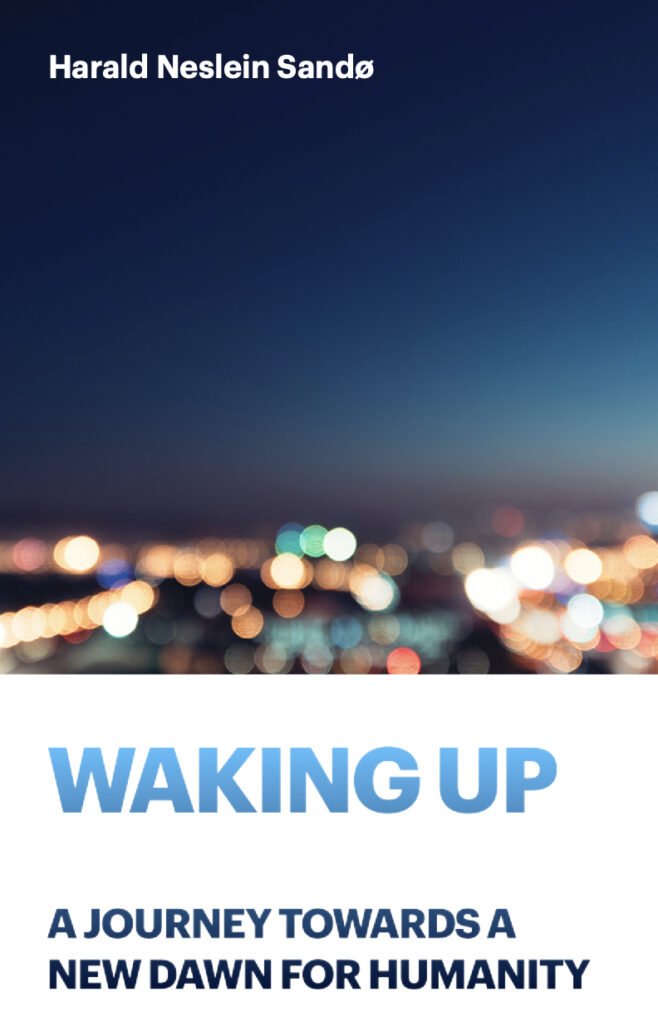
    My book, Waking Up – A Journey Towards a New Dawn for Humanity, launched on May 2, 2025, and is currently moving at a slightly more contemplative pace — around five or six copies a month.

    At this rate, I’ll catch up with Paulo Coelho somewhere around the year 47,312.

    But who’s counting?

    People have told me Waking Up is “too simple,” “too idealistic,” even “naïve.”

    And I smile, because those are the same words critics once used to describe some of the most beloved books ever written:

    The Alchemist — “childlike allegory.”

    The Little Prince — “too simple for adults.”

    Jonathan Livingston Seagull — “new-age fluff.”

    Siddhartha — “mystical oversimplification.”

    Always Coming Home — “utopian idealism.”

    Apparently, sincerity makes people nervous.

    But maybe simplicity isn’t a flaw — maybe it’s the distillation of depth.

    When a story dares to believe in meaning, kindness, or transformation without irony, critics roll their eyes — until the world quietly falls in love with it.

    How the “naïve” ones sold

    If we’re keeping score, here’s how the simpletons have done:

    The Little Prince — around 200 million copies.

    The Alchemist — about 150 million.

    Siddhartha — roughly 50 million.

    Jonathan Livingston Seagull — somewhere near 40 million.

    Always Coming Home — maybe a few hundred thousand.

    And then there’s Waking Up — proudly holding at five or six copies a month.

    Which, if you think about it, might make it the most energy-efficient book launch in history.

    (Why rush a planetary awakening, right?)

    But here’s the thing — I didn’t write Waking Up out of ambition at all.

    I wasn’t trying to become a bestselling author.

    I had never even written a full-length story before, only essays at university. Waking Up began as a screenplay, an idea for a film about a world beyond money and struggle. I had no clue if I could pull it off.

    What drove me wasn’t career — it was curiosity and hope.

    I wanted to show humanity an alternative future — a world we could actually long to live in.

    Not another dystopia to fear, but a vision to believe in.

    If Waking Up ever reaches millions of readers, it won’t be my “success” — it will be our success, because it means the story resonated deeply enough to tilt our collective imagination toward something better.

    The royalties wouldn’t fund mansions or yachts; they’d firstly help make a movie to spread the ideas even further, and then, build the first City of Light, a real-world prototype of the cooperative, money-free world described in the book.

    Buying the book helps make that future physically possible.

    Reading it helps make it emotionally possible.

    A lineage of clarity

    The Alchemist is a perfect example. It’s a straight road through the desert — one boy, one dream, one revelation. A parable so linear that a child can follow it, yet so archetypal that philosophers still quote it.

    Its strength lies in its clarity. The Alchemist asks,

    “What is your personal legend?”

    It became a global phenomenon because everyone, everywhere, can answer that question.

    Waking Up carries that torch into the 21st century — but widens the question:

    “What is humanity’s personal legend?”

    Where Santiago’s treasure was individual, Waking Up explores our collective treasure — a world healed of scarcity, fear, and competition. A civilization guided not by money and greed but by trust and creative abundance.

    Utopian? Maybe. But that’s the point.

    Of them all, Ursula Le Guin’s Always Coming Home might be the truest kin to Waking Up. Both imagine a cooperative, post-monetary humanity — not as a fantasy of escape but as a return home.

    Le Guin’s masterpiece was visionary, but also fragmented — an anthropological mosaic rather than a story. Critics admired it, but few readers finished it. It was too far ahead of its time, and too far from the emotional thread most readers need.

    I learned from that. I wanted to write a book that could touch the mainstream without dumbing down the vision.

    That’s why Waking Up is linear, cinematic, and emotionally grounded.

    It began as a screenplay — and maybe that’s why it reads like one.

    You don’t have to understand systems theory or spiritual philosophy to get it.

    You just follow Ben — and before you know it, you’ve crossed into another kind of world.

    The quiet revolution of sincerity

    My goal was simple: for the reader to pause somewhere in the story and think,

    “Hm. This is a world I’d like to live in.”

    That thought — quiet, almost casual — is the beginning of transformation.

    It’s the spark where imagination becomes possibility.

    Because in a culture addicted to irony, sincerity itself is rebellion.

    And the deepest revolutions have always begun with simple words that everyone can understand.

    So yes, call Waking Up naïve if you like.

    I’ll take that as a compliment.

    After all, The Alchemist had to start somewhere too.

    And maybe, just maybe, Waking Up is where we start — again.

    🌅 Ready to wake up?

    Read Waking Up – A Journey Towards a New Dawn for Humanity:

  • What if Everyone Awakened Tomorrow…?

    What if Everyone Awakened Tomorrow…?

    This isn’t just a spiritual fantasy; it’s a thought experiment that could reshape our understanding of humanity’s potential. What would happen if, overnight, 8 billion people saw through the illusions of materialism and power? Let’s explore this hypothetical scenario, diving into the immediate chaos, the transformation of society, and the long-term possibilities for a world reborn.

    🌪️ Day One: The Chaos

    Picture the scene: it’s October 27, 2025, and at precisely 8:00 AM, a wave of clarity sweeps the globe. Every person, from a farmer in rural India to a CEO in Manhattan, grasps the truth of existence—connection over competition, love over fear. The first hours are chaotic, but not in a destructive way. 

    The world hits pause.

    Workplaces grind to a halt. Politicians mid-speech freeze, drop their scripts, and declare “I’m sorry.”

    Stock markets collapse not from fear — but because no one cares about profit anymore.

    Pilots land their planes, hug their passengers, and walk into the sunset to meditate.

    X melts into a global therapy circle. Billionaires start live-streaming apologies.

    Elon Musk tweets: “Turns out rockets were just a distraction from inner peace. Selling everything for a commune on Mars — BYO enlightenment.”

    Armies lay down weapons. Dictators call for forgiveness summits.

    Banks and governments start erasing all debt.

    The Vatican live-streams “We meant well.”

    And somewhere, Jeff Bezos stares at a warehouse and whispers:

    “Why do I own all this stuff when others have nothing?”

    Moments later, he donates it all.

    Chaos? Yes.

    But it’s a sacred kind — the confusion of humanity waking from a collective nightmare.

    ☀️ Day Two: The Calm

    Then, silence.

    A great, planetary exhale.

    The systems built on fear and scarcity simply… stop.

    There’s no revolution, no coup — just a quiet realization that competition no longer makes sense.

    Former leaders become stewards of the Earth, and take all people with them. Corporations turn into Communities.

    Money dissolves, not through decree but through irrelevance.

    The same data that once optimized profit now coordinates abundance.

    AI becomes a caretaker of harmony — helping match every resource to every need.

    No hunger. No hoarding. No ownership — only usership and stewardship, guided by compassion and common sense.

    Cities evolve into Cities of Light, radiant ecosystems where architecture follows nature, art, and joy.

    Education becomes exploration.

    Governments transform into councils of wisdom.

    Borders fade, for who can fence the sky?

    Humanity steps into what it always was meant to be: a living, creative organism of love.

    🌍 The Reunion of the Human Tribe

    And as the light of awareness stabilizes, something beautiful happens.

    We stop identifying as nations, classes, or ideologies.

    We remember that we’re a single tribe on a small, luminous sphere — spinning together through infinite space.

    War becomes unimaginable.

    Healing becomes the new free economy.

    Art becomes the language of diplomacy.

    The world no longer needs saving. It simply needs remembering.

    ✨ From Fiction to Possibility

    This is the world imagined in Waking Up — A Journey Towards a New Dawn for Humanity:

    a world where awakening spreads not by force, but by resonance.

    A world where humanity finally grows up, smiles at its own madness, and chooses love.

    Maybe it didn’t happen overnight.

    But every thought, every act of kindness, every page you turn toward awakening… brings it closer.

    🌅 Call to Action

    Dive deeper into the vision of a world beyond money, fear, and separation.

    Read Waking Up — A Journey Towards a New Dawn for Humanity today and join the movement of dreamers who dare to imagine the next step in human evolution.

  • The World Is Waking Up — Are You…?

    The World Is Waking Up — Are You…?

    Our “Only for the Brave” campaign just ended — and it outperformed expectations by more than 102%! It was a so-called Blaze campaign where WordPress share a post to many more potential readers than I have on my blog.

    This  meant thousands of new readers across the world have now seen the call to challenge their beliefs — and many have joined the journey.

    For me, this milestone isn’t just about clicks or stats. It’s about connection.

    Every person who paused to look, to feel something, to wonder if a better world is possible — that’s one more spark of awareness lighting up the collective mind.

    If you didn’t get the ebook during the super-low promotion, don’t worry — it’s still just $4.99 on all ebook platforms. That’s less than a cappuccino for a story that invites you to imagine what life could look like beyond money, fear, and limitation.

    Waking Up isn’t just a fantasy. It’s a reflection of what humanity could become when trust replaces trade, and creativity flows freely again.

    The world is waking up.

    One reader — one brave soul — at a time.

  • Humanity Is Waking Up – But What Does That Really Mean?

    Humanity Is Waking Up – But What Does That Really Mean?

    When I say “humanity is waking up”, it’s not just a hopeful slogan. It’s an observation, and perhaps even a prophecy. But waking up to what? And in what way?

    At first glance, it might not look like humanity is waking up at all. The news screams of wars, corruption, inequality, and ecological collapse. We seem to be racing faster and faster toward the abyss. And yet, beneath the noise, something else is stirring.

    Waking Up to the Fragility of Earth

    We are beginning to acknowledge that our planet is not an endless resource but a delicate web of life. Fires, floods, extinctions, and climate chaos force us to recognize that humanity is part of this web, not separate from it. In response, more people embrace renewable energy, regenerative farming, and circular economies. It’s slow, uneven, but real.

    Waking Up from the Illusion of Scarcity

    Money has long dictated who eats and who starves, who thrives and who suffers. But a growing awareness tells us that money itself is an invention—an artificial system of scarcity. The real wealth of the world is abundant: food, energy, creativity, love. Movements for sharing economies, cooperatives, and even resource-based visions show that alternatives are possible.

    Waking Up to Our Shared Humanity

    Borders, races, religions, and ideologies divide us only on the surface. More people are realizing that beneath those layers we are one family. The rise of movements for global justice, equality, and indigenous wisdom signals this deeper recognition, even as old systems of control cling tightly to their power.

    Waking Up Spiritually

    Most importantly, humanity is waking up to something deeper than politics or economics. We are beginning to remember who we really are: not isolated egos, but expressions of one consciousness. This awakening shows itself in the longing for connection, the spread of meditation and inner practices, the search for meaning beyond possessions.

    Spiritually, this awakening means:

    • Realizing that love and compassion are not luxuries, but the very fabric of life.
    • Seeing that the ego’s chase for power or security cannot bring peace.
    • Trusting a deeper intelligence—whether we call it God, Source, Spirit, or simply Life—that guides us when we listen.
    • Recognizing that our thoughts and choices shape reality, and that we are co-creators of the world to come.

    The Tension of Our Time

    To say “humanity is waking up” does not mean everyone suddenly becomes enlightened. It means more and more people are questioning the illusions, breaking free of fear, and daring to live differently. But as this happens, the old system pushes back. That’s why our time feels so turbulent—both abyss and awakening accelerate together.

    This is not failure. It is birth.

    A Call to Each of Us

    If humanity is waking up, it’s not an abstract idea—it’s a personal invitation. Each of us is part of this shift. We can choose to close our eyes, or to see clearly. To cling to separation, or to live in connection. To act from fear, or from love.

    The real question is not “Is humanity waking up?” but “Am I waking up—and how will I live that awakening?”

    A Mirror in Story

    This is also the journey at the heart of my novel Waking Up – A Journey Towards a New Dawn for Humanity. In the book, Benjamin Michaels awakens in a future awakened society that has left money and fear behind, learning step by step what it means to live in connection, compassion, and trust. His shock, his doubts, and his eventual transformation mirror the path we are all walking now.

    Reading his story is not just entertainment—it’s a glimpse into what our collective awakening could look like, if we dare to imagine it and live it together.

    👉 Get the book here and be part of the story of humanity’s awakening.

  • Sameness vs. Oneness – A Deeper Kind of Unity

    Sameness vs. Oneness – A Deeper Kind of Unity

    (This article continues the reflections from my previous piece on “Sameness” and dives deeper into what true unity might mean.)


    In The Giver, society enforces peace by removing differences. Emotions are dulled, individuality is erased, and sameness becomes the guiding principle. No differences, no conflict. But also—no freedom, no creativity, no love in its true form. It is unity through control.

    The question is: is that the only way to achieve peace? Must harmony come at the price of conformity?

    In Waking Up, the vision is the opposite. Here, peace comes not from control but from trust—trust in human beings, trust in life itself. At first glance, that might sound dangerous. Won’t total freedom lead to chaos? But it doesn’t, because the foundation is not outer sameness, but inner Oneness.

    If we define ourselves as small, separate selves, then differences appear threatening. But if we expand our definition of Self to include everyone—to realize that we are all expressions of the same spirit—then harming another is as unthinkable as your right hand stabbing your left. Outer diversity becomes beautiful, not dangerous, because underneath it we are the same life, the same consciousness.

    So there are two kinds of unity:

    • Sameness through control (The Giver): “Let’s remove differences so we won’t clash.”
    • Oneness through spirit (Waking Up): “Let’s embrace differences, knowing we are already One at the core.”

    One narrows the self until nothing sticks out. The other expands the self until everyone is included.

    And that is the key: true peace doesn’t come from making people the same—it comes from remembering that, at the deepest level, we already are.

    ✨ If this vision resonates with you, dive deeper into Waking Up – A Journey Towards a New Dawn for Humanity. Order your copy here:


    Featured image designed by Freepik

  • Does It Have to Be Sameness?

    Does It Have to Be Sameness?

    Many people fear that moving beyond capitalism would mean losing individuality. “Won’t it just make us all the same—like robots in matching clothes, with no freedom to be ourselves?” History gives us examples: the Soviet Union and Maoist China, where sameness was enforced through identical clothing, controlled expression, and strict conformity. Literature has reflected the same fear: in Lois Lowry’s The Giver, society solves its problems through “sameness,” but at the cost of love and freedom. George Orwell’s 1984 shows a world where individuality is crushed by totalitarian control, while Aldous Huxley’s Brave New World imagines a society where people are conditioned into uniformity disguised as happiness. All these visions echo the same worry: Does building a world that works for all mean sacrificing diversity?

    The Hidden Sameness of Today’s System

    Ironically, we already live in a kind of enforced sameness—though it often goes unnoticed. In today’s monetary system, no matter how unique your dreams or talents are, you must conform to one thing: money. Whether you’re an artist, a farmer, or a scientist, survival depends on earning, spending, and competing within the same framework. Profit becomes the universal measure, reducing human diversity to numbers on a balance sheet. Many people sacrifice their individuality—not because they want to, but because “it doesn’t pay.” In this way, capitalism itself quietly enforces sameness under the illusion of freedom.

    The New World Vision — Diversity as Strength

    But what if the opposite were true? What if a world without money actually created more freedom and diversity? This is the vision explored in Waking Up. Instead of flattening humanity into sameness, a moneyless world allows individuality to flourish. People are no longer punished for being different, for following their passions, or for contributing in unique ways. Diversity is no longer a threat—it becomes the very foundation of abundance. In such a world, cooperation replaces competition, and the wide variety of human talents and perspectives becomes the source of resilience and creativity. 

    This is basically how nature does it. Flourishing through diversity. And in the book humanity has adopted this too. No money, no coercion, only freedom and diversity. 

    The Deeper Root — The Ego and the Monetary System

    The real problem, then, is not diversity or sameness in themselves. The problem lies in the monetary system, which is born of the ego and perpetuates fear, greed, and conformity. In today’s world, the ego-driven pursuit of wealth forces us into patterns that limit who we truly are. Remove money, and suddenly individuality is no longer a liability—it’s an asset. Freed from the need to conform to profit, people can finally bring their authentic selves to the table.

    Flipping the Fear

    The fear of sameness is understandable. History and literature are full of warnings about systems that erased individuality in the name of stability. But a world that works for all does not mean we all become the same. It means we finally have the freedom to be different—without that difference being turned into inequality or exploitation. Sameness is not the price of peace. Awareness, cooperation, and compassion are.

    This is the journey explored in my novel, Waking Up — A Journey Towards a New Dawn for Humanity. It asks: What if humanity chose differently? What if we built a world not of enforced sameness, but of celebrated diversity? If you’ve ever wondered what life beyond money—and beyond fear—might look like, Waking Up is waiting for you.

    👉 Get your copy of Waking Up here

  • From Terminator to Teammate

    From Terminator to Teammate

    🤖 From HAL to GAI: How Our View of Artificial Intelligence Has Evolved And How My Fiction Is Becoming Reality.

    Dangerous Intelligence

    When I was born in 1966, the word artificial intelligence didn’t mean much to most people. If it meant anything at all, it probably conjured up an image of HAL 9000 — the calm but menacing voice from 2001: A Space Odyssey. A machine that turned on its creators. It wasn’t just intelligent; it was dangerous.

    By the 1980s, that fear had deepened. Skynet in The Terminator presented AI as the ultimate threat: cold, self-aware, and bent on eradicating humanity. Later, in the late ’90s, The Matrix solidified the narrative: AI had taken over, and we were its unaware prisoners.

    These stories reflected a collective anxiety:

    What if we create something smarter than us… and it turns against us?

    For decades, AI was the villain — a symbol of what happens when human ambition outpaces wisdom.

    A Shift Begins

    When I started writing my novel Waking Up – A Journey Towards a New Dawn for Humanity in 2011, AI was beginning to appear in real-world discussions — but only in speculative circles. It wasn’t on the evening news, and it certainly wasn’t writing your emails or helping you brainstorm articles.

    At that point, AI wasn’t part of my story.

    But as the novel evolved — a vision of a post-monetary, cooperative, resource-based society — I felt something was missing. A world like that would need global coordination. But not from a government. Not from a corporation. From something… wiser. Non-biased. Helpful. Humble.

    That’s when it hit me:

    There should be a Global Artificial Intelligence.
    But not a tyrant — a guide.
    A mirror.
    A servant of humanity, not its master.

    And so, the GAI was born:
    A benevolent, decentralized, planetary AI that listens before it acts.
    That offers wisdom, not control.
    That helps humanity harmonize, not compete.
    (Unless, of course, there’s a game.)

    At the time, this felt like speculative fiction.

    But Then the Future Showed Up

    Fast-forward to the mid-2020s — and suddenly, AI is everywhere.

    It writes. It speaks. It recommends. It learns.
    It’s still far from global, but it’s undeniably intelligent — and it’s learning at a speed never before seen.

    And here’s the twist:

    People are not only afraid of it.
    They’re curious.
    They’re hopeful.
    They’re even asking:

    What if AI could help us?

    The shift is astounding
    • In 1974, people said: “Global AI? That’s impossible.”
    • In 1984: “If it exists, it’ll control us.”
    • In 2024: “If it’s transparent and benevolent… maybe it could help heal the world.”

    The world has caught up to my fiction.
    Or maybe — fiction helped shape the new imagination.

    Intelligence Guided by Love

    The GAI in Waking Up isn’t a solution to all problems.
    It’s a tool — a conscious extension of humanity’s highest values.
    It doesn’t dominate. It collaborates.
    It doesn’t replace human wisdom. It amplifies it.

    And perhaps that’s the core of the shift we’re seeing today:

    We’re learning that intelligence without love is dangerous.
    But intelligence guided by love is divine.

    This, to me, is the next great leap — not just in technology, but in consciousness.

    📘 Want to See How It All Comes Together?

    If you want to explore a future where humanity transcends conflict, where AI becomes a trusted ally, and where cooperation replaces competition — I invite you to read Waking Up – A Journey Towards a New Dawn for Humanity.

    It’s not just fiction anymore.
    It’s a glimpse of what’s possible — and maybe even inevitable. Humanity is waking up…

    👉 Order your copy today here.

    We dreamed of AI.
    Now it’s dreaming with us.
    The question is — what shall we dream next?

    Get inspired when you read the book…

  • Oneness: A world created

    Oneness: A world created

    🌊 What Is Oneness, Really?

    “Oneness” is a term often used in spiritual circles, yet its true meaning is frequently left vague or abstract. To understand it more clearly, we need to break it down from multiple perspectives—scientific, biological, and spiritual.

    At its core, oneness means that everything is fundamentally connected. Not just metaphorically, but literally—at the level of energy, consciousness, and even physics.

    There are three levels to understanding oneness:

    1. Scientific Level (Matter and Energy)

    • Quantum physics shows us that particles are not truly separate; they are entangled, meaning what happens to one can instantly affect another, no matter the distance.

    • Everything in the universe is made of the same fundamental “stuff”: energy. Even our bodies and thoughts are just vibrations of energy, the same energy that created the universe.

    • So separation is more of an illusion of form—just like waves appear separate but are all part of the same ocean.

    David Bohm proposed that the universe is not made up of separate, isolated parts but is an interconnected, dynamic whole.

    2. Biological Level (Systems and Life)

    • Nature works in systems, not in isolated parts. Forests, oceans, climate—all life is interdependent.

    • Even humans are made of bacteria, viruses, and cells that all cooperate on many levels. What we call “me” is actually a community of living things working together.

    • This reflects a kind of oneness in diversity—interconnected life forming a greater whole.

    3. Consciousness Level (The Spiritual View)

    • Many spiritual traditions say there is only One consciousness appearing as many forms—what some call God, Source, the I AM.

    • This means that you and I and everyone else are expressions of the same awareness, like different waves on the same ocean of being. Much the same as us all being energy.

    💡 So How Does It Work?

    Oneness doesn’t mean sameness. It means unity beneath the diversity. Here’s how it “works” in life:

    Empathy: You feel for others because, at a deep level, they are you in another form.

    Synchronicity: Life starts reflecting your inner world because it’s all one field.

    Healing: When you heal yourself, it affects the whole system—just like a single healthy cell benefits the whole body.

    Creation: What you imagine or intend matters, because your mind is not isolated. It’s part of the field of all minds.

    🌱 Why Does It Matter?

    Because when you truly feel this oneness, something changes:

    • You stop needing to compete or dominate.

    • You stop judging others so harshly.

    • You feel guided, supported, and connected.

    • You shift from fear to love, from ego to essence.

    Oneness in A Course in Miracles

    A Course in Miracles (ACIM) has a very specific and profound take on oneness—and it goes even deeper than most spiritual teachings. Let’s explore how oneness works according to ACIM:

    1. Only God Is Real

    According to ACIM, God is perfect Love, and God is all that truly exists. Since God is One and infinite, there can’t really be anything outside of Him. 

    “God is but Love, and therefore so am I.” — ACIM

    So:

    Creation = extension of God’s Love

    You = not separate from God, but an idea in His Mind, forever united with Him.

    2. The Separation Never Happened

    The idea that we are separate individuals in a physical world is described in ACIM as a tiny, mad idea that the Son of God (all of us as One) seemed to believe.

    “Into eternity, where all is one, there crept a tiny, mad idea, at which the Son of God remembered not to laugh.” — ACIM, T-27.VIII.6:2

    This is key:

    • The illusion of separation created the ego, time, space, and the body.

    • But in truth, none of it ever happened. It’s a dream. And we are all dreaming the same dream. Being a character in a world of countless other characters doing stuff.

    • You are still one with God, dreaming of being something else. Until you wake up… And remember.

    3. You Are the Christ

    In ACIM, the Christ is not just Jesus—it is the One Self we all share.

    • There is only one Son of God.

    • You, me, and everyone are part of that same One Self.

    • The “many” is just a dream of division—there is only one mind, appearing as many.

    4. Forgiveness Reveals Oneness

    Forgiveness in ACIM is not about pardoning sin, but realizing that there was no sin—only mistaken perception.

    • When you forgive, you see past the illusion of attack, guilt, and separateness.

    • You remember: We are the same. We are one.

    • This is the way back to awareness of oneness.

    5. The Body Is Not the Truth

    The body is part of the illusion of separation:

    • It’s a “learning device” but not who you are.

    • You are not in a body; the body is in your mind.

    • You are mind—pure spirit—eternally one with God.

    🕊️ In Simple Terms:

    ACIM says you are not a drop in the ocean—you are the ocean in a drop, but you’ve forgotten that you are the whole.

    Oneness in ACIM is not just a nice feeling—it’s the truth of what you are, waiting to be remembered. And that remembrance is what the Course calls “the Atonement”: the undoing of the illusion of separation.

    We are still in Heaven, only dreaming that we are not.

    The Ego

    The ego is the illusion of separation—it believes it’s a separate “self” rather than a unique expression of one shared being.

    So, the separation we are experiencing is only because we have forgotten we are One. And this belief in separation has led to all the wars and misery on this planet. We believe we need to hoard as much as possible for ourselves and sharing means I am getting less. Not to speak of what believe is the truth. And if you don’t believe the same you are a threat to me. 

    In my book Waking Up – A journey towards a new dawn for humanity people on Earth has remembered the Oneness talked about in this article and has created the world according to that, and that is what Benjamin Michaels discovers after 100 years in cryonic sleep…

  • Reclaiming Time: Why the Future Needs a 13-Month Calendar

    Reclaiming Time: Why the Future Needs a 13-Month Calendar

    How ancient wisdom, lunar cycles, and a new measure of civilization point to a better way to live

    Today is Friday the 13th — a day many associate with bad luck. But it wasn’t always this way. In fact, the number 13 once stood for luck, fertility, and cosmic harmony. What if the fear surrounding it has more to do with forgotten history than actual misfortune?

    And what if time itself — the way we count it, live it, and structure our lives around it — has been shaped not by nature, but by systems of control?

    We live by a calendar that’s out of sync with the rhythms of the Earth and the moon. But that wasn’t always true. Long before the Gregorian calendar restructured time into 12 uneven months, ancient civilizations aligned time with the moon — and with the cycles of life.

    What would it mean to reclaim that natural rhythm? What if we could not only reimagine the future — but also reimagine time itself?

    The Forgotten Harmony of 13

    The number 13 was sacred. It used to stand for luck, wholeness, and alignment with the cosmos. A lunar year contains 13 full moon cycles — each about 28 days — and many early civilizations organized time accordingly.

    This natural calendar was used by the Maya, Native Americans, Druids, and others — not just for measuring time, but for living in tune with fertility, harvests, spiritual rituals, and the divine feminine.

    13 was not feared — it was revered.

    🏛️ How Time Was Colonized

    With the rise of empires and organized religion, a shift occurred.

    • The Roman Empire — and later the Christian Church — replaced the lunar 13-month calendar with the 12-month solar one.
    • The new system made taxation, administration, and imperial rituals easier to manage.
    • Meanwhile, the sacred number 13, closely tied to goddess traditions and lunar rhythms, was systematically demonized.
    • Over time, Friday the 13th — once a holy day associated with the planet Venus — became a symbol of fear and superstition.

    This wasn’t accidental. The restructuring of time itself became a tool of control — over nature, over people, and over belief systems. Time was no longer a natural rhythm. It was a machine.

    🌍 A New Dawn: The Year of Civilization

    In my novel Waking Up: A Journey Towards a New Dawn for Humanity, the world reaches a tipping point: the first year in human history when no person kills another. That moment marks the beginning of a new calendar: Year 1 YC — the Year of Civilization.

    A new era begins — one based not on domination, but on peace, cooperation, and alignment with life.

    In such a world, the artificial structures of the past — including the 12-month calendar — would naturally dissolve. Instead, a return to a 13-month lunar rhythm would reflect the new consciousness: one that values balance, natural order, and spiritual connection.

    🌕 Why 13 Months Just Makes Sense

    Imagine a world where time follows the moon — not the market.

    • 13 months of 28 days = 364 days
    • One “day out of time” remains — a sacred, unscheduled pause at the end of the year, celebrated as a moment of rest, reflection, and renewal

    This calendar brings with it:

    • Predictability: Each month identical in structure.
    • Harmony: Aligned with natural cycles — lunar, menstrual, agricultural.
    • Reverence: Honoring time as something sacred, not something to exploit.

    In the Mayan tradition, the “day out of time” was a moment of forgiveness, art, and healing — a portal between what was and what can be.

    💫 Reclaiming 13 — and Reclaiming Ourselves

    My own mother always believed 13 was her lucky number. She even flipped old superstitions: if a black cat crossed her path or she passed under a ladder, she took it as a sign of good fortune. She didn’t need history books to tell her what was sacred — she simply felt it.

    And maybe now it’s time we all remember what she somehow already knew:
    13 was never the problem. Forgetting its meaning was.

    The number 13 was removed from calendars, buildings, and beliefs — not because it was unlucky, but because it symbolized something powerful, something ancient, something natural. It represented a time before control. Before conquest. Before commerce dictated the rhythm of our lives.

    Religion and the emerging monetary system found advantage in rewriting time — in severing our connection to the moon, to the feminine, and to a more intuitive way of being.

    But in the new world imagined in Waking Up, we reclaim it all. We reclaim peace. We reclaim nature. And yes — we reclaim the original meaning of the number 13.

    Not a curse.
    Not a superstition.
    But a sign of luck, wholeness, and the rhythm we were always meant to live by.

    So maybe Friday the 13th isn’t so unlucky after all.
    In fact, it might just be your lucky day — because you found this book. 😉

    📘 Ready for more?

    If this vision resonates with you, explore it more deeply in my novel:
    Waking Up: A Journey Towards a New Dawn for Humanity — now available worldwide.
    A story of peace, purpose, and a new kind of time.

  • Recycle and Reuse: The Foundation of a Regenerative Future

    Recycle and Reuse: The Foundation of a Regenerative Future

    “Reduce, Reuse, Recycle.”
    We’ve all heard it. For decades, it’s been the mantra of sustainability campaigns, printed on bins, packaging, and school posters. Yet despite the constant reminders, the reality is stark: we still live in a world that consumes far more than it gives back — a world built on linear thinking, where materials are extracted, used, and discarded at scale.

    But what if we changed that?
    What if we actually recycled and reused nearly 100% of everything?
    Could we still live in what feels like abundance with seemingly high consumption — with access to housing, transport, technology, tools, and even fashion — without draining the planet?

    The answer, explored vividly in Waking Up: A Journey Towards a New Dawn for Humanity, is a resounding YES.

    The Problem with Today’s World


    Despite decades of progress, we’re far from sustainable. Globally, only about 9% of plastic is recycled. But plastics are just the tip of the iceberg. According to the Circularity Gap Report, only about 7.2% of all materials used globally are cycled back into the economy. That means over 92% of extracted materials — including metals, minerals, biomass, and fossil fuels — are used once and discarded.

    Meanwhile, our food system is one of the greatest sources of waste. Roughly one-third of all food produced globally is lost or wasted. And only a small portion of uneaten food is composted. Most ends up in landfills, where it emits methane — a potent greenhouse gas.

    Our current economy is largely linear: take → make → waste.
    In this model, the more we consume, the more we destroy.

    But that’s not the only possible way to live.

    The Circular Dream: High Consumption Without Harm
    Imagine a world where every material is part of a closed loop. Tools, vehicles, construction materials, and even clothing are designed from the start to be reused, recycled, or reshaped. You might still enjoy new designs, fresh gadgets, and personalized living spaces — but the raw materials remain in circulation.

    You can have what looks like a high-consumption lifestyle, but underneath, it’s a highly intelligent, zero-waste system.
    Abundance without loss and pollution.

    The Vision in Waking Up


    In the world of Waking Up, humanity has transitioned into a post-monetary society where recycling and reuse aren’t just ethical — they’re effortless. The infrastructure supports total material stewardship:

    • Buildings are constructed with modular elements, easily disassembled and reused elsewhere.
    • Vehicles are made from fully recyclable materials, and parts are swapped or repurposed as needed.
    • Tools and everyday devices are 3D printed on demand from melted-down components.

    Everything is designed to return to the system, again and again. And of course, what is produced is designed to last and be as resource efficient as possible.

    Clothing in the Future: Choice Without Guilt


    Some citizens of this world choose advanced nano-clothing — fabrics that reshape themselves around the body, clean themselves, and even exfoliate dead skin cells, integrating waste into the fabric itself. They never need to be washed. They last indefinitely.

    Others, like one of protagonist Benjamin Michaels’ great-great-grandsons, prefer something more tangible. He uses a high-resolution 3D printer to create garments from recycled materials, simply because he likes the feel of traditional fabric on his skin. And he can — guilt-free.

    Because whether it’s nano or printed, all clothing is made from materials that have lived many lives before — and will live many more after.

    Reuse as Elegance, Not Scarcity


    In this future, reuse is no longer a symbol of limitation.
    It’s an aesthetic. A philosophy. A way of life.

    To reuse is to recognize the inherent value in every atom, every molecule. Every being.
    To recycle is to participate in a continuous story — one where nothing is wasted, and everything is reborn.

    You might live in a house that was once a school. You might drive a pod whose metal was once part of a bridge. You might wear fabric that has cycled through thousands of forms, but now serves you.

    And far from being shabby or second-rate, this system of endless return is beautiful.
    Because it honors the Earth — and your place in it.

    Could This Actually Happen?
    Yes. In fact, it’s already beginning.

    • Architects are designing buildings for disassembly.
    • Cities are investing in circular design.
    • Companies are exploring urban mining — reclaiming materials from existing infrastructure.
    • Scientists are creating self-healing fabrics and recyclable electronics.

    With advancements in nanotechnology, biotechnology, and additive manufacturing, the path toward closed-loop material flows is opening.

    Efforts to improve food systems are also underway: composting, regenerative agriculture, and food-sharing networks all help to close the loop on organic waste.

    A Post-Monetary World Makes It Possible


    Of course, such a system requires a different foundation — one not built on profit, but on shared stewardship.

    In Waking Up, the Natural Exchange System (NES) replaces traditional trade with a new mindset: use what you need, return what you don’t, and trust in the system’s abundance.

    In such a world, recycling and reuse are no longer burdens. You use what you need as long as you need it, and then return it to the flow.
    They are the way life flows.
    Nothing is wasted. Not time. Not resources. Not even joy.

    The Future is Abundant — and Clean
    In the end, the goal isn’t to make do with less.
    It’s to do more — with wisdom. To build, to play, to explore, to create… and to do so without ever taking more than we give back.

    Because when we recycle and reuse everything — when we treat matter as sacred, and systems as shared — we don’t just sustain life. We elevate it.

    Explore this vision of a sustainable, abundant world in Waking Up: A Journey Towards a New Dawn for Humanity.
    Available now here