Category: Nature

  • Can We Change Climate Change? If So, How?

    Can We Change Climate Change? If So, How?


    Climate change is often portrayed as an unstoppable force — a tidal wave of destruction that humanity can only brace for. But the truth is, we are not powerless passengers. The real question isn’t just whether climate change is happening, but whether we can change it. And the answer is yes — though it requires changing more than our lightbulbs, or eating less meat. It demands a deep transformation of our systems, our mindset, and our values.

    Concrete Signs in Today’s World


    The evidence is already here, in the headlines and on our streets. In France recently, deadly floods swept across entire regions, leaving citizens openly blaming climate change and demanding urgent action from leaders. Wildfires have raged through Canada and Greece, fueled by record heat. The United States has also been hit hard: in January 2025, Southern California endured a series of devastating wildfires that burned over half a million acres, destroyed or damaged more than 18,000 structures, displaced over 200,000 people, and caused dozens of deaths. Scientists confirm that the extreme heat, drought, and winds that fueled these fires were made more likely by human-driven climate change. Only months later, heavy rains triggered flash floods and mudslides across California, especially in areas destabilized by previous wildfires. In earlier years, massive flooding from atmospheric rivers caused billions in damages and dozens of deaths. Meanwhile, Pakistan has suffered historic floods, displacing millions, and Southern Europe has endured repeated, deadly heatwaves. Africa and South America face worsening droughts that devastate crops and water supplies. These are not distant warnings. They are present realities that show how deeply climate change is reshaping our world.

    Systems Over Symptoms


    We’ve been told to recycle, drive less, or eat less meat. These actions matter, but they’re like a band-aid on a deep wound. The core drivers of climate change are systemic: fossil-fuel dependency, industrial agriculture, and an economic system that rewards endless consumption. To change climate change, we must change the very structures that fuel it. We have to make drastic changes, unless we want to go down with the planet itself. We simply must STOP. To save our planet — and our lives on it — we  have to stop. Stop the endless consumption. Stop burning fossil fuels. Stop producing meat in ways that destroy ecosystems. Stop. Stop. Stop. If we don’t stop it ourselves, the planet will stop it for us. And that will be ugly. We simply have to stop the culprit: The monetary system. But of course stopping today’s monetary system is impossible as we all depend on it for jobs and money… Read on if you’re curious about a possible solution.

    The Tools Are Already Here


    Solar panels, wind turbines, tidal power, hydrogen storage, regenerative farming, rewilding — the solutions already exist. What we lack is not technology, but the will to apply it at scale. The longer we delay, the more we lock ourselves into outdated systems. Imagine if the same urgency we put into weapons and wars were channeled into renewable grids and sustainable cities.

    How Certain Are We?


    Most scientists agree that todays climate change is primarily man-made, caused by greenhouse gas emissions from human activity. If that is the case, then we can change it — because what humanity caused, humanity can reverse. But even if science were wrong, and climate change is driven by forces beyond our control, the need for global collaboration would only grow stronger. If we are truly passengers on this ride, then at the very least we should work together, minimize harm, and prepare with dignity. Why add wars among ourselves to the challenge of facing a turbulent planet?

    Escaping the Growth Addiction


    Our global economy behaves like an addict: always craving more, never satisfied. Growth at all costs drives deforestation, pollution, and exploitation. Money becomes the drug, and the planet pays the price. Breaking this addiction means building systems that value life, collaboration, and resilience over profit.

    From Fear to Possibility


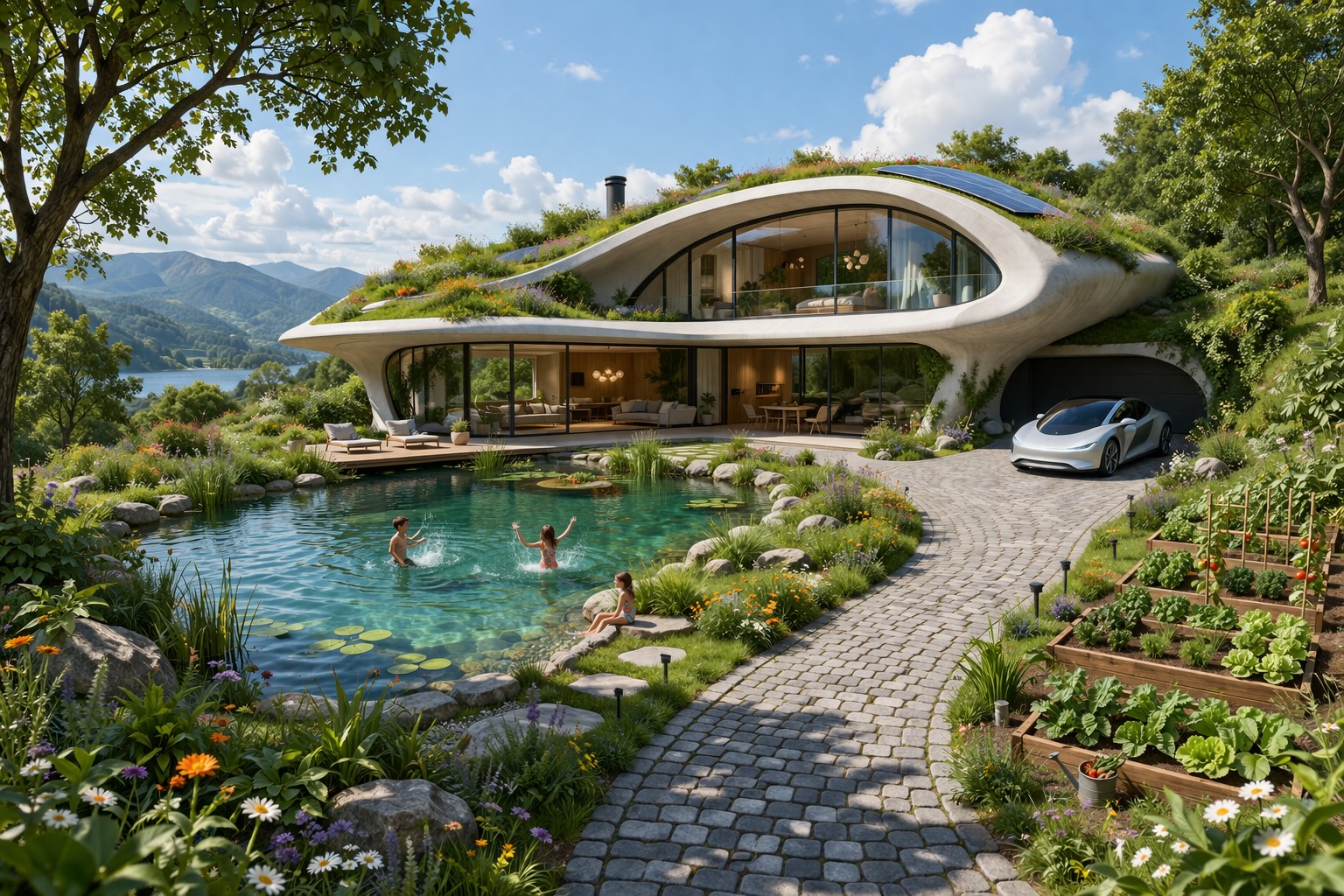
    Fear paralyzes; vision empowers. Instead of framing the climate crisis as the end of the world, we can see it as the birth of a new one. Cities designed like ecosystems. Energy drawn from sun, wind, and water. Communities thriving without waste or scarcity. The shift is not only possible — it is already beginning in pockets around the globe.

    Conclusion


    Can we change climate change? Yes — but only by changing ourselves, our priorities, and our systems. If we don’t stop this runaway train of destruction, nature will stop it for us, and the outcome will be catastrophic. But there is another way: a resource-based economy, where collaboration and abundance replace scarcity and profit. And where the economy is designed to take care of the planet, nature and the whole of humanity itself.

    In the book Waking Up – A Journey Towards a New Dawn for Humanity, there is a picture drawn of a new world where this resource based economy has been adopted on the whole planet. Benjamin Michaels, the billionaire protagonist is shocked when he wakes up after 1oo years in cryonic sleep, only to find there is no more money in the world and all resources are optimized and shared…

    🌍 Discover more about humanity’s next chapter here:

  • President Trunk Endorses “Cities of Light” After Reading Visionary Novel

    President Trunk Endorses “Cities of Light” After Reading Visionary Novel

    I was musing with ChatGPT about what might happen if my book Waking Up – A Journey Towards a New Dawn for Humanity suddenly jumped from 6 sales to 600 million. Things escalated quickly… and somehow we ended up here:

    President Trump Endorses “Cities of Light” After Reading Visionary Novel

    Washington, D.C. — In what commentators are calling “the most unexpected ideological shift in modern history,” President Donald J. Trump has publicly endorsed Norwegian author Harald Neslein Sandø’s groundbreaking novel Waking Up and its vision of Cities of Light — sustainable, post-monetary communities designed to free humanity from debt and exploitation.

    Speaking from the Oval Office, Trump declared in his trademark style:

    “Look, folks… I’ve read a lot of books. The best books. People always tell me I don’t read, but I do — I read this one. Waking Up. Incredible. Really tremendous. Nobody’s ever seen anything like it. It opened my eyes, okay? Opened my eyes. We don’t need all the debt, the fighting, the nonsense. We need Cities of Light. We’re gonna build them — and they’ll be beautiful, believe me. The best Cities. Everyone’s saying so.

    Money? Forget it. We’re moving past that. This is about people, about love, about the future. Nobody’s ever seen anything like it. Harald’s a genius.”

    The announcement shocked political analysts, who have long considered Trump a staunch defender of capitalism. Social media instantly lit up with memes under the hashtag #TrumpEnlightenmentTilt, while even late-night hosts admitted they were “lost for words.”

    For Sandø, whose novel recently surpassed 600 million copies sold worldwide, the statement was both surreal and inevitable:

    “From six to six hundred million. No in between. The world has already woken up.”

    If you’re wondering what this is all about you can order the book here and find out…

  • Humanity Is Waking Up – But What Does That Really Mean?

    Humanity Is Waking Up – But What Does That Really Mean?

    When I say “humanity is waking up”, it’s not just a hopeful slogan. It’s an observation, and perhaps even a prophecy. But waking up to what? And in what way?

    At first glance, it might not look like humanity is waking up at all. The news screams of wars, corruption, inequality, and ecological collapse. We seem to be racing faster and faster toward the abyss. And yet, beneath the noise, something else is stirring.

    Waking Up to the Fragility of Earth

    We are beginning to acknowledge that our planet is not an endless resource but a delicate web of life. Fires, floods, extinctions, and climate chaos force us to recognize that humanity is part of this web, not separate from it. In response, more people embrace renewable energy, regenerative farming, and circular economies. It’s slow, uneven, but real.

    Waking Up from the Illusion of Scarcity

    Money has long dictated who eats and who starves, who thrives and who suffers. But a growing awareness tells us that money itself is an invention—an artificial system of scarcity. The real wealth of the world is abundant: food, energy, creativity, love. Movements for sharing economies, cooperatives, and even resource-based visions show that alternatives are possible.

    Waking Up to Our Shared Humanity

    Borders, races, religions, and ideologies divide us only on the surface. More people are realizing that beneath those layers we are one family. The rise of movements for global justice, equality, and indigenous wisdom signals this deeper recognition, even as old systems of control cling tightly to their power.

    Waking Up Spiritually

    Most importantly, humanity is waking up to something deeper than politics or economics. We are beginning to remember who we really are: not isolated egos, but expressions of one consciousness. This awakening shows itself in the longing for connection, the spread of meditation and inner practices, the search for meaning beyond possessions.

    Spiritually, this awakening means:

    • Realizing that love and compassion are not luxuries, but the very fabric of life.
    • Seeing that the ego’s chase for power or security cannot bring peace.
    • Trusting a deeper intelligence—whether we call it God, Source, Spirit, or simply Life—that guides us when we listen.
    • Recognizing that our thoughts and choices shape reality, and that we are co-creators of the world to come.

    The Tension of Our Time

    To say “humanity is waking up” does not mean everyone suddenly becomes enlightened. It means more and more people are questioning the illusions, breaking free of fear, and daring to live differently. But as this happens, the old system pushes back. That’s why our time feels so turbulent—both abyss and awakening accelerate together.

    This is not failure. It is birth.

    A Call to Each of Us

    If humanity is waking up, it’s not an abstract idea—it’s a personal invitation. Each of us is part of this shift. We can choose to close our eyes, or to see clearly. To cling to separation, or to live in connection. To act from fear, or from love.

    The real question is not “Is humanity waking up?” but “Am I waking up—and how will I live that awakening?”

    A Mirror in Story

    This is also the journey at the heart of my novel Waking Up – A Journey Towards a New Dawn for Humanity. In the book, Benjamin Michaels awakens in a future awakened society that has left money and fear behind, learning step by step what it means to live in connection, compassion, and trust. His shock, his doubts, and his eventual transformation mirror the path we are all walking now.

    Reading his story is not just entertainment—it’s a glimpse into what our collective awakening could look like, if we dare to imagine it and live it together.

    👉 Get the book here and be part of the story of humanity’s awakening.

  • How Bad Is It, Really?

    How Bad Is It, Really?

    We go about our daily lives as if nothing is wrong. The sun is shining, sometimes it rains, and life goes on. Maybe a storm hits the news, a wildfire burns somewhere, or a flood takes a village—but then everything seems to return to normal. Shops are full, cars drive by, flights leave on time. So we ask: how bad is it, really?

    The Reality Beneath the Surface

    When we look closer, the picture changes.

    Eroded Land: In the American Midwest, decades of industrial farming have stripped away rich topsoil. Heavy plowing and chemical fertilizers have left the land fragile, so fertile soil washes into rivers after heavy rains. Scientists warn that U.S. farmland is losing soil up to 10 times faster than nature can replenish it. In parts of Spain, desertification is advancing so fast that villages are being abandoned, orchards dry out, and the land turns to dust. And in the Amazon and Southeast Asia, clear-cutting vast areas of rainforest leaves bare earth that quickly erodes when the rains come. Once the trees are gone, the land often dries out completely—lush ecosystems collapsing into desert-like landscapes within years.

    Ruined Rivers: The Colorado River once carved canyons and nourished ecosystems all the way to the sea. Today, it is drained to irrigate thirsty crops like alfalfa and cotton in the desert—fields planted because they are profitable, not sustainable. In many years, the river fails to reach the ocean at all. The Ganges River, sacred to millions, is choked with untreated sewage and factory runoff. Factories dump toxins because it is cheaper than cleaning their waste.

    Vanishing Waters: The Aral Sea, once the world’s fourth-largest lake, has been drained almost dry to irrigate cotton fields for global export. What remains is a toxic desert, scattered with rusting ships where fishing towns once thrived.

    Poisoned Lands and People: In the Niger Delta, oil companies found it more profitable to let pipelines leak than to fix them. Vast swamps are now covered in oil slicks, rivers are poisoned, and entire communities are left with dead fisheries and unsafe drinking water.

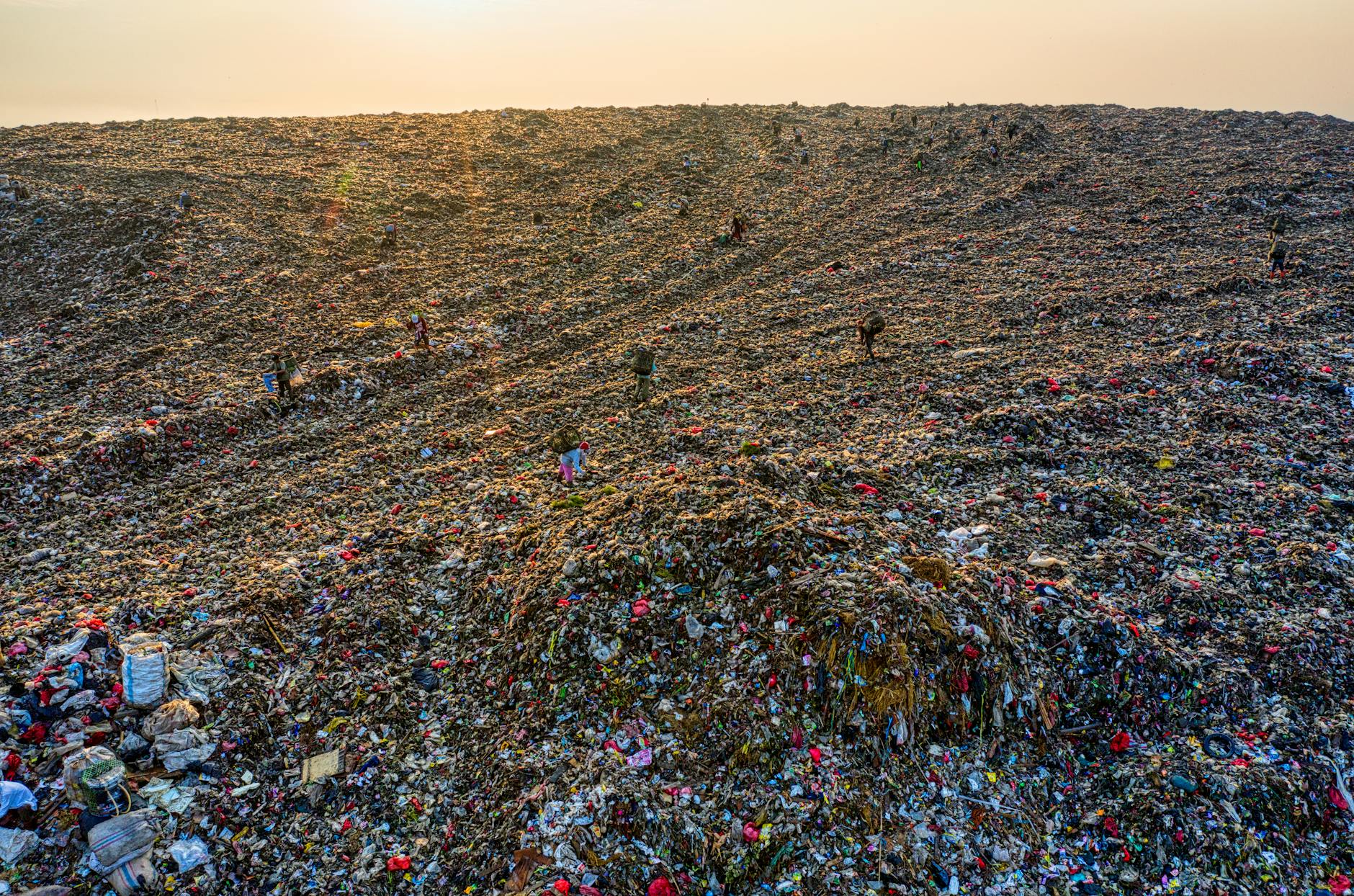
    Oceans and Reefs in Peril: The Great Pacific Garbage Patch—a swirling gyre of plastic waste twice the size of Texas—kills turtles, whales, seabirds, and fish. Microplastics are now found in human blood. Meanwhile, the Great Barrier Reef is bleaching again and again. Fossil fuels keep economies “growing,” but rising ocean temperatures are turning coral wonderlands into white graveyards.

    Toxic Air: In Delhi, the air sometimes rises to 20 times above safe levels. Children grow up with reduced lung capacity just from breathing.

    These are not isolated accidents. They are signs of systemic breakdown.

    Why Is It Like This?

    The logic is tragically simple.

    Profit over Planet: The Colorado is drained not by mistake, but because crops for export bring in money. The Ganges is polluted because cleaning up waste eats into profit margins. Much easier and cheaper to dump it into the Ganges. The Aral Sea disappeared so cotton could be sold worldwide. Oil continues to pour into the Niger Delta because safety measures cost more than they earn. Coral reefs bleach because burning coal and oil remains profitable, heating the planet and the oceans.

    Profit over People: While rivers dry and forests fall, millions of children go to bed hungry every night. In parts of Africa, families struggle to find enough food, while at the same time billions of dollars’ worth of grain are fed to livestock or wasted to keep prices stable. Extreme inequality means that a tiny fraction of humanity lives in obscene luxury while entire communities lack clean water, education, and basic healthcare. The system is designed to serve profit first, even when it means children starve while supermarket shelves in wealthy countries overflow.

    Growth at Any Cost: Governments measure success in GDP, not in clean rivers or healthy soil. Every factory, every shipment, every barrel of oil counts as “growth,” even when it subtracts from life itself. We are locked in this mindset. We have to make money. At any cost, it seems.

    Externalizing the Costs: Pollution is free. Companies dump waste and pocket the gains, while nature and communities pay the price.

    Consumer Culture: Our throwaway economy thrives on constant demand for more—fast fashion, gadgets, cars, and single-use plastic. The Great Pacific Garbage Patch is one inevitable result of this model.

    All of these examples—rivers, seas, reefs, people, air and land—are chapters of the same story: a system that rewards taking without giving back. A system that liquidates the Earth for short-term profit.

    Is There Any Hope?

    After seeing this, it is natural to ask: is there any solution? Or is it already too late?

    What if… it isn’t?

    What if humanity suddenly decided that enough is enough? That we will no longer sacrifice the living Earth and poor people for profit? What if we chose, together, to protect and optimize this planet so that humans, animals, and all of nature could thrive here—side by side, in balance?

    What if the same intelligence, creativity, and technology that once exploited the Earth were redirected to heal it?

    This is not fantasy. It is a choice. Humanity could decide tomorrow to change course. But this would mean a radical change. Ending the root cause of all of this: 

    The Monetary System. 

    But, but, how can we? We need it to live! What about jobs and income and everything?? Understandable arguments.

    But there is a way. We could end the monetary system and still thrive on planet earth. We could live without money and trading and instead focus on healing the planet and ourselves in the process. We could in fact, with the technology we have available today, build a paradise on Planet Earth. A world that works for all living beings.

    And that is exactly what has happened in Waking Up. When billionaire Benjamin Michaels wakes up in a world without money and trading, he is at first shocked, desperate, and lost. But then he realizes: this was the best decision humanity ever made. To stop the destruction. To stop chasing endless profit. To build a society where people and planet thrive together.

    The book is fiction. But the question is not. 

    Would you like to be inspired and get lost in how this future world would actually feel like to live in? If so, I invite you to read the book. You can get it here:

  • From Terminator to Teammate

    From Terminator to Teammate

    🤖 From HAL to GAI: How Our View of Artificial Intelligence Has Evolved And How My Fiction Is Becoming Reality.

    Dangerous Intelligence

    When I was born in 1966, the word artificial intelligence didn’t mean much to most people. If it meant anything at all, it probably conjured up an image of HAL 9000 — the calm but menacing voice from 2001: A Space Odyssey. A machine that turned on its creators. It wasn’t just intelligent; it was dangerous.

    By the 1980s, that fear had deepened. Skynet in The Terminator presented AI as the ultimate threat: cold, self-aware, and bent on eradicating humanity. Later, in the late ’90s, The Matrix solidified the narrative: AI had taken over, and we were its unaware prisoners.

    These stories reflected a collective anxiety:

    What if we create something smarter than us… and it turns against us?

    For decades, AI was the villain — a symbol of what happens when human ambition outpaces wisdom.

    A Shift Begins

    When I started writing my novel Waking Up – A Journey Towards a New Dawn for Humanity in 2011, AI was beginning to appear in real-world discussions — but only in speculative circles. It wasn’t on the evening news, and it certainly wasn’t writing your emails or helping you brainstorm articles.

    At that point, AI wasn’t part of my story.

    But as the novel evolved — a vision of a post-monetary, cooperative, resource-based society — I felt something was missing. A world like that would need global coordination. But not from a government. Not from a corporation. From something… wiser. Non-biased. Helpful. Humble.

    That’s when it hit me:

    There should be a Global Artificial Intelligence.
    But not a tyrant — a guide.
    A mirror.
    A servant of humanity, not its master.

    And so, the GAI was born:
    A benevolent, decentralized, planetary AI that listens before it acts.
    That offers wisdom, not control.
    That helps humanity harmonize, not compete.
    (Unless, of course, there’s a game.)

    At the time, this felt like speculative fiction.

    But Then the Future Showed Up

    Fast-forward to the mid-2020s — and suddenly, AI is everywhere.

    It writes. It speaks. It recommends. It learns.
    It’s still far from global, but it’s undeniably intelligent — and it’s learning at a speed never before seen.

    And here’s the twist:

    People are not only afraid of it.
    They’re curious.
    They’re hopeful.
    They’re even asking:

    What if AI could help us?

    The shift is astounding
    • In 1974, people said: “Global AI? That’s impossible.”
    • In 1984: “If it exists, it’ll control us.”
    • In 2024: “If it’s transparent and benevolent… maybe it could help heal the world.”

    The world has caught up to my fiction.
    Or maybe — fiction helped shape the new imagination.

    Intelligence Guided by Love

    The GAI in Waking Up isn’t a solution to all problems.
    It’s a tool — a conscious extension of humanity’s highest values.
    It doesn’t dominate. It collaborates.
    It doesn’t replace human wisdom. It amplifies it.

    And perhaps that’s the core of the shift we’re seeing today:

    We’re learning that intelligence without love is dangerous.
    But intelligence guided by love is divine.

    This, to me, is the next great leap — not just in technology, but in consciousness.

    📘 Want to See How It All Comes Together?

    If you want to explore a future where humanity transcends conflict, where AI becomes a trusted ally, and where cooperation replaces competition — I invite you to read Waking Up – A Journey Towards a New Dawn for Humanity.

    It’s not just fiction anymore.
    It’s a glimpse of what’s possible — and maybe even inevitable. Humanity is waking up…

    👉 Order your copy today here.

    We dreamed of AI.
    Now it’s dreaming with us.
    The question is — what shall we dream next?

    Get inspired when you read the book…

  • Global happiness Product?

    Global happiness Product?

    Gross national happiness. Or gross global happiness?

    How Gross National Happiness Is Paving the Way for a New World

    While the world has spent decades relentlessly pursuing GDP—Gross Domestic Product—one small Himalayan kingdom chose a radically different path. Bhutan, nestled between India and China, introduced the groundbreaking concept of Gross National Happiness (GNH) in the 1970s. Rather than measuring prosperity through economic output alone, Bhutan posed a deeper question: What if true wealth was defined by happiness, well-being, and harmony with nature and each other?

    At the time, this idea may have seemed quaint, even idealistic. Today, it feels nothing short of visionary.

    The Four Pillars of GNH

    Bhutan’s GNH framework is built upon four central pillars:

    1. Sustainable and equitable socio-economic development
    2. Environmental conservation
    3. Preservation and promotion of culture
    4. Good governance

    In essence, Bhutan isn’t striving to be the wealthiest country—it’s striving to be the happiest. While critics argue about the economic trade-offs, Bhutan has managed to preserve its pristine forests, maintain strong social cohesion, and foster a profound connection between its people and the environment.

    After all, does money really make us happy? Or does it mostly serve to increase stress and anxiety?

    A Glimpse into a New Paradigm

    In Waking Up, we envision a world where well-being, not monetary wealth, is the driving force. There’s no poverty, no hoarding, no scarcity mindset. It’s a world where humanity has asked—and answered—the same question Bhutan posed fifty years ago: What truly makes life worth living? And then, it has built systems to support that vision.

    Could Bhutan be the first step in that direction? A living prototype? Just like the Cities of Light envisioned in Waking Up, Bhutan offers a glimpse that another way is not only possible—it’s already unfolding.

    The Message for the World

    What if the world followed Bhutan’s example? What if nations measured success not in profits, but in joy? Not in military might, but in the strength of their communities? Not in endless growth, but in balance with the Earth?

    This shift may seem utopian. But every great transformation begins with a question that challenges the status quo.

    In Waking Up, the world has already made that shift. But here and now, Bhutan is showing us the first steps. The seeds have already been planted.

    A Call to Action

    The systems we’ve created—monetary, political, societal—are manmade. That means they can be changed. Bhutan reminds us that radical shifts are possible when we dare to think differently.

    If you’re curious about what a happier world might look like, or how technology and spiritual awakening could merge to bring us there, dive into Waking Up. The book doesn’t just tell a story—it offers an inspiration.

    And if this resonates with you, share it. Talk about it. Imagine with others what a happiness-driven world could look like.

    Because, as Bhutan has shown us, every revolution begins in the imagination.

    ORDER THE BOOK HERE if you would like to get inspired…

  • A world that works for all

    A world that works for all

    Maybe you’re doing well. Maybe you enjoy life as it is—with all the conveniences money brings. The freedom to travel. The thrill of investing. The comfort of knowing your needs are met.

    So… why change?

    Perhaps there are many like you. People who see no real reason to question the system. No urgent need to rock the boat.

    But… what if we have to?

    What if humanity simply can’t go on like this? With ballooning global debt, relentless overconsumption tearing the planet apart, rising pollution, worsening crime, constant conflict, and deepening inequality—what if these aren’t just unfortunate side effects, but warning signs that the whole  the model itself is wrong?

    And what if the alternative isn’t a dystopian global dictatorship, but something far more beautiful?

    What if we can choose? What if the future isn’t something that happens to us—but something we can shape, together? If so, why not create a world that works for everyone? Where we can live in peace and abundance.

     A world where no one needs to fight over resources, land, or belief. A world where trust, compassion, respect and collaboration replace fear, scarcity, and control.

    In my book Waking Up, humanity has done just that.
    They’ve chosen a different path—
    And it changed everything.

    A Different Future Begins with Imagination

    Waking Up isn’t just a story. It’s a window into possibility.

    It shows a world without money and borders, and stewardship instead of ownership. A world where needs are met, creativity is celebrated, and technology serves both people, nature and planet—not profit. A world where wisdom and empathy guide us, not greed or fear.

    If you’ve ever felt something is deeply off with the way we live—but didn’t quite know what could replace it—this book is for you.

    If you’ve ever dreamed of a better world, or longed to live in one, Waking Up will speak directly to your heart.

    And if you haven’t dreamed it yet—this is your invitation to begin.

    Because once enough of us can truly see a better way…
    We’ll begin to build it—together.
    That’s how real change happens.

    Start Here

    👉 Read the book.
    👉 Share it with others.
    👉 Sign up for the newsletter to stay in the loop.

    This isn’t just a book.
    It’s the beginning of a new story for humanity.
    It starts with a spark.

    Maybe that spark is us. 

  • What is true freedom?

    What is true freedom?

    In today’s world, we are surrounded by a sea of laws, rules, and regulations. Some of these are meant to guide human behavior in ways that align with moral principles, such as “Thou shalt not kill” from the Ten Commandments. But the majority of the rules we follow are designed to regulate the monstrous system we live under: the monetary system. Still, we consider ourselves free. But are we really? Is this true freedom? 

    On the surface, the idea of freedom seems clear. We seemingly have the ability to make choices, pursue our desires, and live according to our personal preferences. However, when we examine the foundations of the systems that govern us—systems that are grounded in the fears of lack and scarcity—we begin to see that this so-called freedom is an illusion.

    It is fear that fuels the creation of rules, laws, and regulations. The ego, in its struggle for control and safety, creates systems that attempt to manage this fear. The monetary system—perhaps the most powerful of all these constructs—is built on the idea that there is never enough. The ego’s fear of scarcity drives us to hoard, protect, and compete. In this state of fear, we can never truly experience freedom because we are constantly bound by the invisible chains of need and competition.

    Freedom vs Liberty

    It is important to distinguish between true freedom and liberty. Liberty, as understood in modern society, refers to the freedom to act within the confines of established rules. It is the permission to do certain things, but always within the framework of what has been deemed acceptable by the powers that be. Liberty is essentially freedom within a system of control. And in today’s world the strongest element of control liens in money. We are all forced to use it if we want to eat, have clothing and a shelter.

    True Freedom

    True freedom, on the other hand, transcends any system of control. It is the ability to exist without any imposed boundaries—without rules, laws, or regulations that restrict the way we live. Except the laws of nature of course. True freedom is the absence of these artificial constraints, allowing us to act from our deepest essence, unbound by fear or the need for permission. In a world of true freedom, we would be free to express our most authentic selves without limitation or judgment.

    Spiritual Freedom

    According to many spiritual traditions, such as A Course in Miracles (ACIM), true freedom lies at the core of our being. We are, at our essence, pure divine awareness, at peace and free from the limitations the ego imposes. The world we see with our physical eyes, governed by the rules of society, is nothing more than an illusion created by the ego—an ego driven by fear. Fear of lack. Fear of the unknown. Fear of others who don’t look or think like us.

    A World Without Rules?

    No laws, no rules and no regulations? Is that possible? Or would there be chaos and anarchy?

    The idea of a world without laws, rules, or regulations can seem frightening at first. We are so conditioned to think that rules are necessary to maintain order and prevent chaos that the notion of a society without them may feel impossible. Would we descend into chaos and anarchy, where everyone acts purely out of egotistical self-interest, without regard for the well-being of others?

    I believe that a world without many man made rules is not only possible, but it is the world we are meant to create. The key to this lies in the shift from fear to trust. If we allow ourselves to fully embrace radical freedom, if we release the grip of the ego and its fears, we would naturally begin to act in ways that benefit the whole including ourselves. Without the constraints of the monetary system, without the constant need to protect our narrow interests, we would be free to create something beautiful—a world based on love, compassion, and shared purpose.

    Imagine a world where the need for laws and rules no longer exists because everyone lives in alignment with their higher self, where cooperation and understanding guide our interactions rather than competition and fear. It may seem far-fetched, but it is what I envision in my book, Waking Up – A journey towards a new dawn for humanity, where the protagonist wakes up in such a world—a world where fear no longer dictates our behavior, and the systems that once enslaved us no longer exist.

    What if we gave ourselves radical freedom? And what if, instead of recreating a monster like the monetary system, we created a completely new system based on complete freedom and trust? Instead of building a world based on fear, we chose to build a world based on love.

    Radical Freedom

    In the film K-Pax, the main character Prot, an alien from another world, asserts that all beings in the universe know right from wrong instinctively. In many ways, I believe this is true. If we were to act from our deepest essence—our divine awareness, which transcends the ego—we would naturally create a world that reflects love, cooperation, and harmony. There would be no need for the arbitrary laws, rules and regulations that govern our every move today. Instead, we would simply live in alignment with the natural flow of life, driven by a higher understanding of our interconnectedness with one another and the world.

    This is what I call radical freedom: the freedom to live without fear, to act from our true nature, and to create a society not based on scarcity and control, but on abundance and trust. Radical freedom is not about doing whatever our egos want without regard for others. It is about creating a world where every action is rooted in the understanding that we are all One. It is the freedom to trust, to love, and to be guided by a deeper wisdom that transcends the ego’s limitations.

    A New System Based on Love

    What would it look like if, instead of recreating the monster of the monetary system, we chose to build a completely new system? A system based not on fear and scarcity, but on complete freedom and trust. A system where every individual is valued, where wealth is not measured by money, but by the richness of our relationships, our creativity, and our contributions to the collective well-being.

    This is not a utopian fantasy—it is a possibility that exists in each and every one of us. If we choose to act from our true nature, the ego will lose its grip on our world, and the illusion of separation will dissolve. Instead of living in a world where we hoard resources, we would live in a world where we optimize the resources and share freely, knowing that in the abundance of the universe, there is more than enough for all.

    True freedom is not the absence of rules, but the presence of love. It is the ability to act in alignment with our higher self, knowing that in doing so, we contribute to the greater good of all. It is a world where we are free from the constraints of the ego, free from the illusion of scarcity, and free to create a world of peace, harmony, and joy.

    In this world, we no longer need rules to tell us what is right or wrong, because we instinctively know the answer. We act from a place of love and understanding, and in doing so, we create a world that reflects these values. A world without fear. A world of true freedom.

    What if we could build that world? What if, instead of following the rules imposed by an ego-driven system, we allowed ourselves to live in the radical freedom of love and trust? The possibilities are limitless. And perhaps, just perhaps, it is time for us to begin. My book Waking Up- A journey towards a new dawn for humanity was written to serve as an inspiration for humanity and an invitation to envision such a world…

    ORDER THE BOOK HERE.

  • I am naïve. I have no illusions

    I am naïve. I have no illusions

    How Being Naïve Can Be Our Greatest Strength

    In a world addicted to fear and weapons, maybe trust isn’t naïve — maybe it’s the most powerful and courageous choice we have left.

    We call it naïve to trust. Foolish to disarm. Unrealistic to believe in peace.
    But maybe it’s even more foolish to believe that more weapons will bring safety.

    The world is arming itself again. Military budgets are growing fast. Politicians speak of strength and deterrence, and we’re told that spending billions on new weapons is the only way to stay safe.

    Fear is dressed up as wisdom. Distrust is sold as maturity.

    But what if the truly mature choice is something else entirely?
    What if the greatest courage today is to trust?

    What are Illusions?

    When I say I have no illusions, I mean this:

    I no longer believe in the stories of separation —
    that we are enemies, that fear protects us,
    that power comes from control or domination.

    These are illusions:
    the idea that we must always defend ourselves,
    that people cannot be trusted,
    that war is inevitable.

    I see through them now.

    To trust may look naïve,
    but to keep believing in fear and think that more weapons can keep us safe — that’s the real illusion.

    Truth=Love

    Illusion=Fear

    So yes, I am naïve.
    And I have no illusions.

    The “What If” Trap

    Whenever peace is brought up, the fear chorus begins:

    But what if Russia escalates? What if there’s a new war? What if we’re not prepared?

    Well — what if I get robbed tomorrow? What if a bear attacks me on my evening walk? What if a meteorite crashes through my roof?

    Should I wear armor everywhere? Carry a weapon at all times? Should I never trust anyone, just in case?

    That kind of life is not a life — it’s a prison of fear.
    And when nations think this way, the result is a planet locked in perpetual distrust, paralyzed by fear.

    We’ve normalized this insanity and called it “realism.”
    But there’s nothing realistic about believing that more weapons will finally bring us peace.
    That’s not wisdom — it’s fear speaking.

    I Walk Unarmed

    Call me naïve, but I walk through life completely unarmed.
    Through cities and forests, day and night.
    No gun. No sword. Not even a knife.

    All I carry is respect — and trust.
    Toward everyone I might meet, human or animal.

    And you know what?
    It works.

    I haven’t been mugged.
    I haven’t been attacked.
    Because most beings respond to the energy you bring.
    And when you lead with peace, peace often meets you.

    Some might say, “You can’t compare global politics to personal experience.”
    But I think you can.

    Because behind the suits and borders and weapons,
    we’re all still human.
    And respect and trust are universal.
    They work — on every level.

    Even the Cold War Ended with Trust

    We’ve been here before.

    The Cold War was a decades-long standoff fueled by fear, suspicion, distrust, and enough nuclear warheads to obliterate life on Earth several times.

    But how did it end?

    Not with war.
    Not with victory.
    It ended with Trust.

    When Reagan and Gorbachev sat down in Reykjavík and Geneva, something remarkable happened: they started listening.
    They didn’t agree on everything — far from it — but they broke the silence. They began to reduce arsenals. To sign treaties. To take steps.

    It wasn’t perfect. But it was enough. And so far, no one has launched a ballistic nuclear missile towards another country.

    The Berlin Wall didn’t fall because someone fired a missile.
    It fell because people on both sides stopped believing that war was the only way forward.

    Even that Cold War — one of the most dangerous stand-offs in history — ended when someone dared to trust.

    Peace Needs the “Naïve”

    To choose peace, you have to risk being called naïve.
    You have to be willing to believe in the good in people — not because they always show it, but because believing in it is the only way to help it grow.

    Real peace doesn’t come from preparing for war.
    It comes from preparing for peace.

    It comes from dialogue. From cooperation. From building systems that support life — not threaten it.

    Yes, it’s risky. But so is love. So is raising a child. So is walking out the door in the morning.

    Life is risk. But it’s also possibility.

    Every Great Leap Looked Naïve

    History is full of people who were mocked, dismissed, even imprisoned for being “unrealistic.”

    • Gandhi faced down an empire without violence. Naïve.
    • Nelson Mandela invited his former jailers to sit at the table of reconciliation. Naïve.
    • Visionaries who spoke of equality, human rights, or planetary peace were always told to “be realistic.” Naïve.

    And yet, they changed the world.
    Not by accepting fear as a guide, but by daring to dream beyond it.

    Maybe they weren’t naïve.
    Maybe they were simply free. Free from illusions.

    What If the Whole World Trusted?

    What if the whole world trusted each other?

    What if we built a global society — not on fear, control, or competition —
    but on something utterly naïve: trust?

    Trusting that our brothers and sisters take only what they need,
    and leave enough for the rest of us.
    And that we do the same.

    A world like that may sound impossible.
    But I’ve imagined it — and written it.

    In Waking UpA journey towards a new dawn for humanity, I describe a future where humanity has moved beyond money, beyond fear, beyond the illusion of separation.
    A world that works — not because people are perfect,
    but because they’ve remembered who they are.

    Naïve?
    Maybe.
    But I have no illusions.

    ORDER THE BOOK HERE:

  • The Greatest Paradox of Our Time

    The Greatest Paradox of Our Time

    We all know it. We all live inside it. But almost no one dares to speak it out loud.

    Consumerism is killing our planet.


    Every year we consume more, extract more, burn more, dump more, and waste more.
    Forests fall, oceans choke, temperatures rise and our spirit shrink as we are reduced from human beings to consumers — and still we consume, consume, consume and consume.

    We know it can’t go on. We know it’s unsustainable.
    And yet…

    To stop consuming is to threaten collapse.

    Because our entire economic system is built on endless consumption.
    Jobs depend on it.
    Pensions depend on it.
    Government budgets depend on it.
    Even “green growth” depends on it.

    It’s a trap.
    A loop.
    A paradox.

    To keep consuming is to destroy our planet and ourselves.
    To stop consuming is to destroy the system.

    This is the greatest paradox of our time.


    And it explains why, despite all the climate conferences, all the UN targets, all the inspiring nonprofits and planetary visions — nothing truly changes.

    The machine keeps running.

    🔥 The Extreme Paradox We Live In

    We are trapped in a system where the only way to keep society running… is to destroy the very foundation it stands on: Planet Earth.

    To keep people employed, companies profitable, governments funded, and pensions paid — we must keep buying things we don’t need, with money we often don’t have, at the cost of a planet we can’t replace.

    It’s not enough to have a TV — we need to want a bigger one next year.
    It’s not enough to have a car — we need to upgrade it every few years.
    Phones, fashion, furniture, kitchen appliances — the system doesn’t just want us to consume.
    It requires us to consume.

    Because if we stop spending, even for a little while, the machine begins to crack:

    • Shops close.
    • Jobs vanish.
    • Stocks fall.
    • Panic spreads.
    • Governments intervene — to make sure we start buying and consuming again.

    It’s estimated that just a 10% sustained drop in global consumption could send the world economy into freefall. That’s how fragile the system is. That’s how dependent we are.

    And yet — continuing on this path guarantees collapse.
    Not just economic collapse.
    But ecological, spiritual, and civilizational collapse.

    We are trapped between two forms of destruction — and the clock is ticking.

    We throw away a plastic wrapper after five minutes — but it stays on the Earth for 500 years.
    This is not just waste. It’s madness disguised as normality.
    And we call it progress.

    🛠️ “But What About the Workers?”

    It’s a fair question.

    Because it’s not just Apple or Amazon that need you to buy new gadgets — it’s the millions of people down the supply chain who depend on that consumption to survive.

    • The cobalt miner in Congo.
    • The factory assembler in China.
    • The truck driver, warehouse packer, and store clerk.
    • The app developer, marketing intern, and customer service rep.

    We are told we’re “supporting jobs.”
    And we are.
    Because we’re locked in a global machine where livelihoods depend on destruction.

    But it’s not just the worker who’s trapped.

    ⚙️ Not Even the Corporations Are Free

    Corporations aren’t inherently evil.
    They’re designed to do one thing: grow.

    • Maximize profit.
    • Outcompete rivals.
    • Please shareholders.

    If a CEO said,

    “Let’s prioritize planetary healing over quarterly growth,”
    they’d be replaced by Monday.

    Even the most ethical companies are stuck.

    If they reduce consumption, they die.
    If they keep pushing consumption, we all die — because the planet dies.

    It’s not a moral failure.
    It’s a failure of choice. Choice of the wrong system.

    🌍 The Planetary Awakening

    And yet, something is shifting.

    Movements like COPLAN, The Venus Project, Ubuntu Contributionism, Zeitgeist, and gift economies are rising.
    They may speak different languages, but they share the same truth:

    The system must evolve. Or rather, be replaced.
    Or we won’t survive.

    This paradox can’t be solved by better shopping.
    Or green labels.
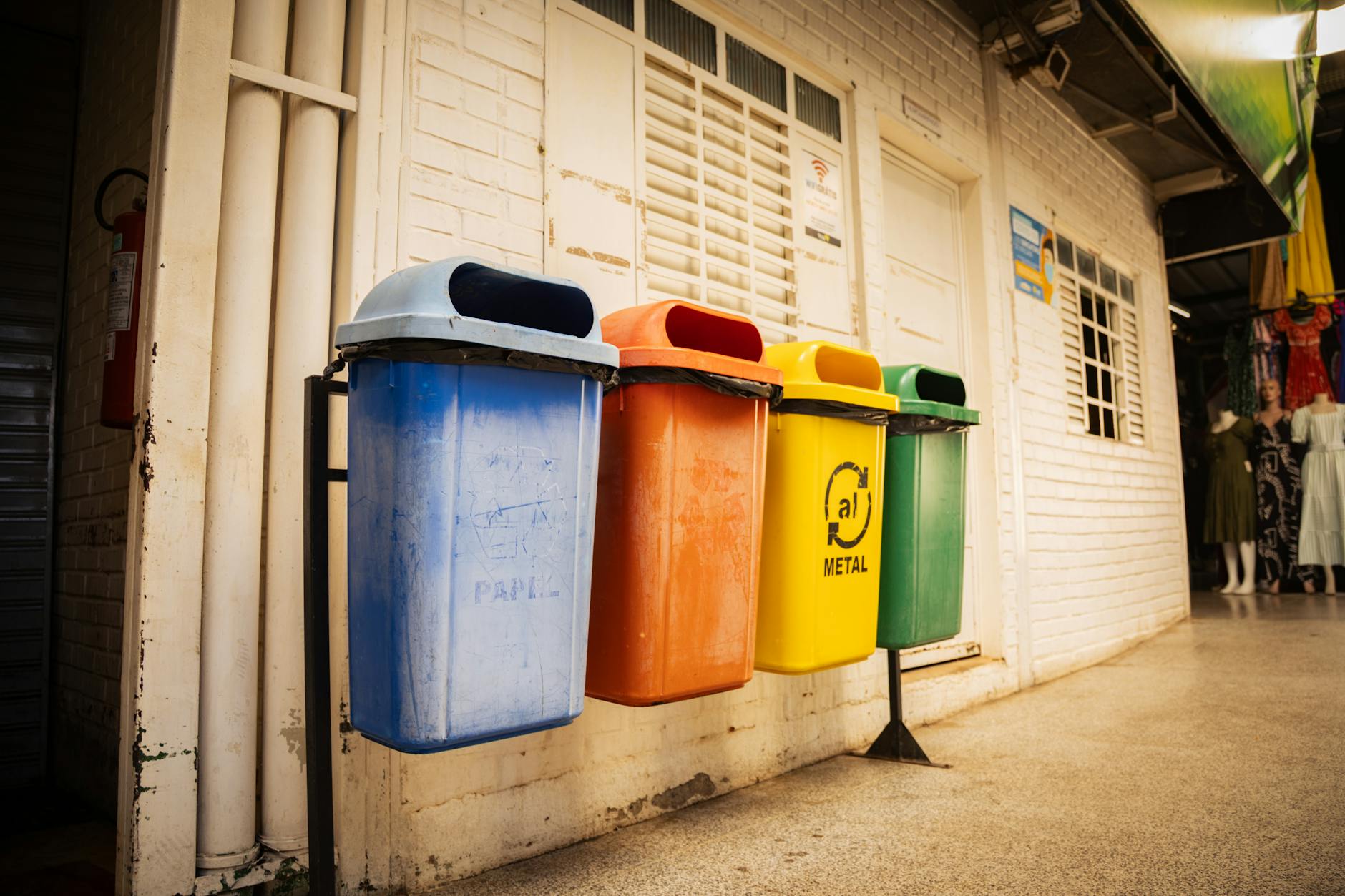
    Or more efficient waste sorting.

    It can only be solved by transformation.

    By designing a new system where:

    • Needs are met without trade and overconsumption.
    • Nature is not a resource, but a relative.
    • Work is expression, not survival.
    • Giving is the foundation, not the exception.

    That world is not a fantasy.
    It’s a choice.

    Yes, we have to consume to live — we need food, water, shelter, connection, joy.
    But we do not need to consume in order to prove our worth, maintain the GDP, or keep an insane system alive.

    We no longer live in order to consume.
    We consume in order to live — simply, sustainably, and sanely.

    In my novel Waking Up: A Journey Towards a New Dawn for Humanity, this transformation is not theory — it is lived reality.
    A society has emerged that hasn’t reformed the monetary system, but transcended it.

    Experience this new world through the confused and surprised eyes of Benjamin Michaels, the former multi-billionaire that tries to escape cancer through cryogenic preservation. He dreamt of awakening in a world where he could be healed and continue the expansion of his trillion dollar empire. Awaken he does, and healed he is, but the world? It’s not what he expected…

    The whole system he depended on for his empire is gone.

    There is no trade.
    No price tags.
    No ownership.

    No money.
    Only joyful giving and receiving and a global relative abundance.

    🌱 The Resolution of the Paradox has happened.

    💡 A Call to Courage

    We don’t have to solve everything today.
    But we do have to name the paradox.
    We do have to break the silence.
    We do have to imagine something truly new.

    Because behind the fear of collapse…
    is the opportunity for emergence.

    If you’re ready to explore that world, Waking Up is one possible inspiration.
    Not as fiction. But as a seed.

    🟣 And maybe that seed has already been planted in you. If this vision resonates with you, feel free to order the book and spread the vision.